

We use cookies to ensure our website works properly and to personalise your experience. Cookies policy
Department of Pharmaceutical Quality Assurance, B. K. Mody Government Pharmacy College Rajkot, Polytechnic Campus, Near Aji Dam Chokdi, Bhavnagar Road, Rajkot, Gujarat, India.
Biosimilars represents an affordable option to treat various disease and prove similarities with their counterparts. The manufacturing process of biosimilar drugs, starting from the complex process of manufacturing until the challenging one of duplicating large molecules using living cell is mentioned in the review article. In order to establish the similarity of the biosimilars, the significant step of assessing the quality of biosimilars has been elaborated in this article, especially complex analysis and structural characterization. Apart from that, the changing regulatory challenges in terms of producing biosimilars have been raised by the researchers along with the process of approval of biosimilars based on the totality of evidence approach.
Biosimilars are similar but different versions of biologic medications that have already received approval. They were developed to maintain clinical efficacy while lowering cost and increasing patient access to cutting-edge treatments. Biosimilars are produced in living systems such as bacteria, yeast, or mammalian cells and have intrinsic lot-to-lot variability in structure and function, in contrast to small molecule generics, which are chemically synthesized exact copies of reference drugs. Because of this fundamental similarity, biosimilarity cannot be proven by straightforward chemical equivalency but depends on methodical, science-driven “totality of evidence” that combines studies to show that there are no clinically significant differences in safety, purity, and potency when compared to the reference innovator product. [16,25,36]
2. What are Biosimilars and Why Are They Important?
Biologics have revolutionized the treatment of autoimmune diseases, diabetes, inflammatory disorders, and cancer; however, their high development and manufacturing costs frequently restrict their availability, particularly in health systems with limited resources. [25,32] Biosimilars provide a route to more sustainable access without losing therapeutic efficacy, as many originator biologic patents expire. In rheumatology, gastroenterology, dermatology, and oncology, well-developed biosimilars have demonstrated comparable safety and efficacy to their reference products, reducing healthcare costs and encouraging wider adoption. [12,15]
3. Biosimilars vs Generic
Table 1: Difference Between Generics and Biosimilars
| Characteristic | Generics | Biosimilars |
|---|---|---|
| Molecular type | Chemically synthesized small molecules[27,36] | Large, complex biological molecules[4,30,37] |
| Molecular weight | < 300 Da [27,36] | Up to ~ 270 kDa [4,30,37] |
| Structural similarity | Exactly same structure as reference medication[27,36] | Highly similar attributes like primary / higher order structure, glycosylation, and charge variants vary[4,30,37] |
| Manufacturing sensitivity | Stable and straightforward | Highly sensitive attributes depend heavily on cell line, culture conditions, purification, formulation, and storage. [4,30,37] |
| Regulatory approval | Approved by straightforward bioequivalence studies and identity checks. [27,36] | Strict comparability exercises are required, including extensive analytical similarity, functional assays, and comparative clinical pharmacology.[8,14,40] |
| Development time | Short[25,36] | Long (often 5 – 9 years) [25,36] |
| Development cost | Low[25,36] | More expensive[25,36] |
4. The Totality of Evidence Framework
The WHO, EMA, and USFDA regulatory frameworks all adopt a risk proportionate, totality of evidence methodology. [14, 16, 17, 20] The basis is analytical similarity, which is reinforced by non-clinical data and simplified clinical studies (comparative PK, PD, and immunogenicity, with efficacy studies). [10, 19, 21, 29] Modern orthogonal methods can resolve differences in primary sequence, post translational modifications, higher order structure and biological activity. [4,22,24] This allows regulators to accept minor, clinically inactive variations while ensuring no major differences in clinical performance. [8,18,20] This paradigm shifts the evidentiary burden from replicating chemical identity to demonstrating functional equivalence within predefined, clinically relevant margins. [11,29,30]
5. Ongoing Obstacles and Forward Path
Despite growing acceptance, different national regulatory pathways, interchangeability policies, and expectations for clinical evidence shape global biosimilar uptake.[7,17] These factors can delay market entry, particularly in developing nations where affordability needs are high but manufacturing and regulatory capacities vary.[28] To preserve confidence in the use of biosimilars, clinicians and regulators continue to monitor immunogenicity risks, product switching, indication extrapolation, and long-term pharmacovigilance.[6,13,27,35] All things considered, biosimilars are a significant development in the provision of healthcare, however, achieving their full potential will require solid science, unified regulation and ongoing post-marketing surveillance to maintain confidence and maximize patient benefit. [7,25]
6. Manufacturing Process for Biosimilars
The strictly regulated multistage process of biosimilar manufacturing aims to replicate the critical quality attributes (CQAs) of a reference biologic within the clinically acceptable range. [14,24,30]
Steps of manufacturing process of biosimilar: [1,30,37]
Since biologics are produced in living systems, even small modifications to the cell line, culture conditions, purification or formulation can change their structure, function, and immunogenicity. As a result, every stage is optimized and controlled to ensure that they are similar to the innovator. [14,37]
6.1. Cell Line Development and Cell Banking
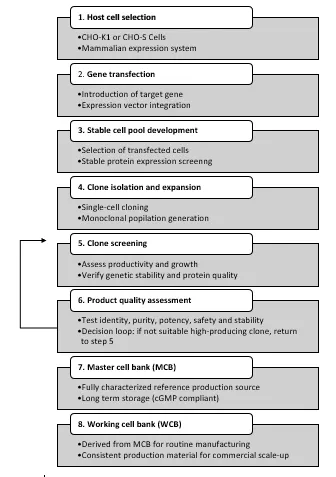
A stable, high-producing cell line, typically a CHO-K1 clone for monoclonal antibodies, created by gene transfection, clonal selection, and stringent product quality testing, is the cornerstone of biosimilar production.[1,30] Following the identification of a suitable clone, cGMP-compliant master and working cell banks are created and thoroughly characterized to function as the standard starting material for every manufacturing campaign. These banks facilitate comparability across scales and throughout the product lifecycle and serve as anchors for process consistency.[14,37]
6.2. Upstream Processing
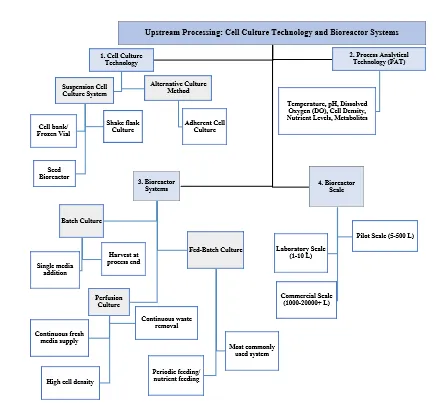
Upstream processing encompasses everything from the working cell bank to large-scale cell cultivation to produce the desired protein .[1,30] Modern processes utilize suspension-adapted cultures, which are initially small inoculum and then scaled up to large bioreactors. This expansion occurs under carefully controlled conditions, including temperature, pH, dissolved oxygen, and nutrients, with the aid of Process Analytical Technology (PAT) to detect deviations in real time. [1,14,30] Depending on productivity and quality requirements, bioreactors can run in batch, fed-batch, or perfusion modes, their scale varies from liters in development to thousand of liters in commercial manufacturing.[1,25] The control strategy maintaining specified range for critical process parameters (CPPs) to keep critical quality attributes (CQAs) within the similarity envelope is more important than the particular hardware.[14,37]
6.3. Downstream Processing
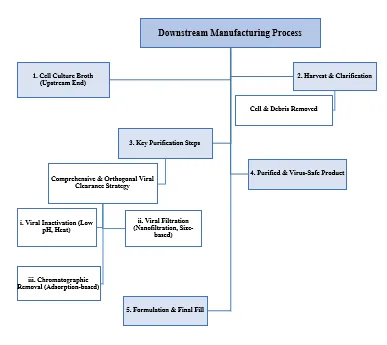
Approximately 60% of the total manufacturing cost is usually attributed to downstream processing (DSP), which separates, purifies, and concentrates the product from harvested cell culture fluid.[25,30] Harvest, multi-step chromatography (such as affinity, ion-exchange and size-exclusion for polishing) and sequential filtration (depth, ultrafiltration/TFF, and sterile filtration) to modify concentration, eliminate contaminants/aggregates, and guaranty sterility are all essential DSP steps. As required by regulations (such as ICH Q5A), viral clearance is accomplished by orthogonal, validated processes such as low pH / solvent detergent inactivation, nanofiltration and virus-removing chromatography, which together produce high log reduction values while maintaining protein integrity. [31,33,34]
6.4. Development of Formulation and Fill–Finish
The formulation is designed to maintain stability, safety and efficacy while matching the pharmaceutical form of the reference product (vial, pre-filled syringe and auto-injector). [3] Excipients (buffer, surfactant, stabilizers and tonicity agents) are selected to minimize aggregation, adsorption, degradation and immunogenic risk in compliance with quality by design (QbD) principles. The shelf life and distribution conditions were ascertained through real-time and accelerated stability studies.[9,25,30] Fill-finish converts the purified drug substance into the final sterile product through filtration, aseptic filling, closure and lyophilization under strict environmental controls, automation and modular lines improve traceability and speed to market.
6.5. Control Strategies
Owing to the inherent unpredictability of biological manufacturing, variables such as temperature, pH, media composition and purification conditions can influence CQAs, including glycosylation, charge variants and aggregation. Originator products exhibit batch-to-batch variability within predetermined bounds, and biosimilars must exhibit similar variability and sustain similarity over their lifetime.
Thus, the control strategies depend on the following:
7. Analysis and Quality Evaluation of Biosimilars
The development of biosimilar medication relies heavily on the analysis and characterization process, which compares the structural and functional characteristics of the reference drug and biosimilar. This aids in ensuring that the biosimilar medication’s characteristics, including protein sequence, protein modifications, charge changes and aggregation, fall within the acceptable range of the reference medications. [4,16,29] The “totality of evidence” concept is applied, whereby the data obtained from the analysis provide much of the information required without the need for clinical trials because of the high degree of similarity of the molecules. The methods that can be applied include mass spectroscopy, chromatography, electrophoresis, spectroscopy and biophysics [4,29,30]
7.1. Characterization of Physicochemicals
Physicochemical characterization focuses on the physicochemical characteristics of the protein, such as size, charge, hydrophobicity and conformation, to verify that the biosimilar is structurally similar to the reference product. Functional and therapeutic comparability, as well as any possible differences between the reference and biosimilar drugs that could impact safety and efficacy, were determined using these details.
The physicochemical characteristics must fall within the range of variation for numerous lots of reference proteins to demonstrate comparability.[4,16,29]
7.1.1. Primary Structure
The amino acid sequence of the biosimilar matched that of the reference product according to primary structure analysis. To separate the peptides and amino acid sequences, a peptide map was generated in conjunction with LC-MS/MS and MALDI-TOF analyses.
Any modifications to the amino acid structure must be examined because even a small alteration in an amino acid could lead to instability and decreased drug product efficacy. [4,24,29]
7.1.2. Higher Order Structure
Secondary, tertiary and quaternary folding make up higher-order structure (HOS). Biological activity, stability, aggregation and immunogenicity are all influenced by the existence of higher-order structures. Several methods, including circular dichroism, Fourier-transform infrared (FTIR) spectroscopy, and differential scanning calorimetry (DSC), may be used to analyze the structure and stability (CD).
Chromatographic methods, such as size exclusion chromatography and ion exchange, can be used to analyze higher-order structures. Charge heterogeneity and aggregation are two important quality attributes that can be evaluated using chromatography. The similar higher-order structures of biosimilar and reference proteins attest to the preservation of proper structure. [4,29]
7.2. Assay
One method for demonstrating biosimilarity is the assay for biological activity and functionality through potency measurement, which shows that the biosimilar acts biologically similarly to the reference product. Depending on the mode of action, ligand-binding tests, such as ELISA and SPR, cell-based tests, such as proliferation inhibition, and receptor-binding tests are examples of critical quality attributes (CQA). [22,24,29]
Cell-based inhibition of proliferation and HER2 receptor binding flow cytometry are two examples of biological activity and functional assays for trastuzumab biosimilar, where the relative potency was verified to be comparable to that of the original product. [5,24]
7.3. Immunochemical Characteristics
The capacity of a molecule to bind to antigens, bind to Fc receptors and initiate complement activation are few examples of immunochemical properties. Surface plasmon resonance (SPR), enzyme-linked immunosorbent assays (ELISA), and cellular assays are the techniques used to compare target antigen and immune receptor binding between biosimilars and reference products. [4,22,29]
It is anticipated that the two substances will have a similar profile in terms of glycosylation, aggregation and impurities, as the structure of the molecule determines its antigenicity. [4,19,29]
7.4. Impurity Profiles
Impurity and purity profiling includes the identification and measurement of host cell proteins, DNA, residuals from the process, and product-related impurities such as aggregates, fragments, misfolded proteins and low-level contaminants. High-resolution analytical methods, such as mass spectrometry, LC-MS and HPLC are necessary for the detection of impurities at low concentrations.[9,29,30]
The type and quantity of impurities in the biosimilar and its reference medication must be similar, which means that the biosimilar cannot produce any new contaminants.[9,16]
7.5. Stability Studies
The impact of time on the physical, chemical and biological characteristics of biosimilars under specific storage conditions was assessed in a stability study. Real-time stability tests, accelerated stability tests and degradation test are examples of stability test that can be conducted. These tests employ techniques such as exposure to high temperatures, freeze-thaw cycles, irradiation and mechanical agitation. [3,24,30]
Research comparing physicochemical and functional stability should be carried out using standards established by regulatory bodies (such as the FDA) to guarantee that the biosimilar has the same degradation characteristics and shelf life as the original product. [3,9,25]
7.6. Comparability Studies
Analytical, non-clinical and clinical data from biosimilar comparability studies contrast the biosimilar medications and their matching references are referred to as the totality of evidence of biosimilarity. The goal of biosimilar comparability studies is to demonstrate the high degree of similarity between the reference medication and the biosimilar medication, which exhibits no appreciable variations in terms of efficacy, safety or quality despite biological variability.[14,16,25]
This is accomplished through an iterative process in which prior data on comparability will show how much more work needs to be done in both clinical and non-clinical studies. Scaling up and switching locations are two more modifications that can be made to the production of these goods. Certain authorities, such as the FDA, WHO and EMA, have mandated that certain doses of the reference medication be taken to ensure comparability. [2,17,20]
7.7. Advance Analytical Techniques
Analytical tools play a major role in the current biosimilar development process because they can identify structural differences that were previously invisible. Post translational modifications and higher-order structure determination are made easier by high-resolution chromatography, spectroscopy and mass spectrometry techniques (intact mass analysis, peptide mapping, subunit analysis and glycan analysis). [4,29]
Analytical techniques are currently used in the process of developing biosimilars because they enable the identification of differences that were previously impossible to detect. The work is made convenient by high-resolution methods, such as spectroscopy, high-resolution chromatography and mass spectrometry methods, such as intact mass analysis, peptide mapping, subunit analysis and glycan analysis. [4,30]
8. Clinical and Non-Clinical Assessment
8.1 Non-Clinical Studies
Before first in human trials, non-clinical evaluation for biosimilars is a focused and methodical process that builds on physicochemical and analytical similarity to address any remaining doubts regarding safety and mechanism. EMA, FDA, WHO and CDSCO guidelines stress that in vitro functional and binding assays should be the main tools, with in vivo studies reserved for particular, unresolved issues. [2,8,20]
8.1.1. In Vitro Studies
In vitro comparability compares biosimilar and reference products for binding, potency and mechanism of action-related functions using identical analytical systems. Depending on the drug’s mode of action, common assays include cell-based proliferation inhibition, cytotoxicity, cytokine release, ligand binding (e.g. ELISA, surface plasmon resonance), and functional readouts, such as ADCC, CDC or apoptosis. [4,22] The goal is to demonstrate that any variations between biosimilars and reference products are within the innovator’s inherent batch-to-batch variability. [22,29]
8.1.2. In Vivo Studies
When analytical and in vitro data are strong, standard repeat-dose animal toxicity studies are often minimized or excluded because they are unable to resolve small structural or functional differences between biosimilars and their reference. [8,20] When in vivo research is warranted (for example, to answer a particular safety or mechanistic question), it is planned as a comparative, minimal study utilizing several batches of both products with the fewest possible animal numbers and duration. [8]
8.2 Clinical Studies
Using the established safety and efficacy of the reference biologic under the “totality of evidence” framework, regulators support a staged, risk-based clinical program that gives sensitive PK/PD studies priority over large phase III trials. [10,20,23]
8.2.1 Pharmacokinetics
PK studies use pre-specified bioequivalence criteria (usually 80-125 % for the ratio of means, 90% CI) to analyze key parameters (Cmax, AUC, half-life, and clearance) and compare absorption, distribution, metabolism and elimination following one or more doses. [10,23] PK is frequently assessed in healthy volunteers or well-defined patient populations to minimize confounding. It is also performed in conjugation with immunogenicity sampling (anti-drug antibodies, ADAs) to ensure that exposure variations are not caused by immune responses. The expectation of similar therapeutic exposure and effect is supported by PK similarity. [10]
8.2.1 Pharmacodynamics
PD studies use mechanism-linked biomarkers or functional endpoints (e.g., receptor occupancy, target/cytokine levels, enzyme activity and signaling assays) to evaluate biological effects in comparison to the reference. Robust PD similarity, along with PK and analytical data, can frequently replace a specific comparative efficacy trial when a validated, sensitive PD biomarker is available, allowing approval without a special phase III study. [10,20]
8.2 Efficacy Studies
A comparative clinical efficacy study is conducted in a sensitive, homogeneous population to rule out clinically significant differences if residual uncertainty persists following analytical, non-clinical and PK/PD work. Usually randomized, multi-center and powered, these pivotal trials use validated clinical endpoints pertinent to the disease and Moa to show non-inferiority within predetermined margins. [21,23] The majority of biosimilars meet non-inferiority criteria with no significant efficacy differences compared to the originators, according to a meta-analysis across oncology and inflammatory diseases. This supports the viability of shorter, smaller trials when the overall body of evidence is strong. [18,21]
8.3 Immunogenicity and Safety Assessment
With a growing focus on real-world and switching cohorts, safety evaluations incorporate adverse events (AEs), serious AEs and treatment emergent AEs across PK/PD and efficacy studies. Validated assays for total ADAs and neutralizing antibodies (NABs) are used to characterize immunogenicity and identify variations in immune response that may impact exposure, efficacy or safety. [19,27] To monitor immunogenicity and safety in larger populations and with longer use, post-marketing pharmacovigilance is advised: to date, meta-analyses have shown similar safety outcomes for switched and non-switched patients. [13]
8.4 Extrapolation of Indications
As long as the mechanism of action is consistent across diseases and the entire body of evidence supports similarity, indications without conducting individual efficacy trials for each. [35] before allowing extrapolation, regulators must have sufficient knowledge of the safety, PK and immunogenicity of each indication, as well as a positive benefit risk profile. This prevents unnecessary clinical duplication while preserving patient safety. [2,20,35]
8 Regulatory Concerns
A single scientific principle underpins biosimilar regulation worldwide: a biosimilar must be “highly similar” to an authorized reference biologic with no clinically significant variations in quality, safety or efficacy. [14,16] Major agencies (such as the FDA, EMA, PMDA, Health Canada and TGA) employ a risk-based, stepwise “totality of evidence” approach that prioritizes analytical similarity, followed by targeted non-clinical and clinical studies only when necessary to resolve residual uncertainty, although procedural details vary by region. [16,17] To promote global development and access, the ICH and the IPRP biosimilar working group are working to harmonize expectations on comparability, extrapolation and pharmacovigilance. [7,14]
9.1. Core Guidelines from FDA, EMA and WHO
Although they reflect the legal framework and terminology of each agency, the regulatory standards are consistent with science.
9.1.1. US FDA (BPCIA Pathway)
Under the biologics price competition and innovation act (BPCIA), biosimilars are granted licences through a streamlined 351 (k) process. In addition to a comparability package, sponsors must demonstrate high similarity through target PK/PD, immunogenicity and if necessary, clinical efficacy studies. When granted, a unique “interchangeable” designation allows pharmacy-level substitution in accordance with state law but requires additional proof (such as switching studies demonstrating no increased risk of diminished efficacy upon alteration). [17,36]
9.1.2. EMA (EU Framework)
To evaluate biosimilars as biological, the EMA developed the current biosimilar framework in 2005. It requires thorough quality characterization, justification of the mechanism of action (MoA) and PK/PD with efficacy studies specific to the product and reference. [2,17] The EMA continues to streamline requirements (e.g., reducing comparative efficacy trials when analytical/PK/PD similarity is robust) and supports indication extrapolation when MoA and target populations are consistent.[20]
9.1.3. WHO (SBP Guidelines)
For nations developing or improving national pathways, WHO’s “similar bio therapeutic products” (SBPs) guidance offers a risk-based, progressive model that emphasizes analytical similarity, appropriate non-clinical/clinical data, and reliance on the reference product’s proven safety/efficacy. [17,20] To facilitate consistent, science-driven approvals in settings with limited resources, WHO also encourages regulatory convergence and capacity building.[28]
9.2. Approval Process
An effective iterative procedure based on the established benefit-risk profile of the reference product is necessary for approval. [16,20] Early regulatory engagement is usually followed by the submission of a comparability package (analytical similarity) and targeted non-clinical and clinical studies (PK/PD, immunogenicity and if necessary, a sensitive population efficacy trial). [2] The final marketing application is submitted as a central/national MAA in the EU or BLA 351 (k) in the US, and decisions are based on the entirety of the evidence rather than on de novo efficacy replication. [16,17]
9.3. Interchangeability, Substitution and Extrapolation
Interchangeability and substitution: For multi-dose products, interchangeability means that switching does not raise risk or decrease efficacy and that a biosimilar can be anticipated to yield the same clinical outcome as the reference in any given patient. [11,19] In the EU, national policies control substitution at the pharmacy level, but once a biosimilar is approved, it is typically regarded as interchangeable at the prescriber level. Subject to state laws, only products that the FDA has officially designated as “interchangeable” may be substituted at the pharmacy without the involvement of prescriber. [11,17]
Indication extrapolation: When all available data points to similarities, the mechanism of action is consistent and safety, PK and immunogenicity are sufficiently understood for each indication, extrapolation permits approval across all reference indications without the need for separate efficacy trials. This preserves patient safety while preventing unnecessary clinical duplication. [19,35]
9.4. Pharmacovigilance and Traceability
Strong post marketing surveillance is necessary to identify uncommon or delayed adverse events because biosimilar are complex and may show minute product specific difference (e.g., immunogenicity and hypersensitivity) [6,27] When necessary, sponsors must carry out post approval studies, submit periodic safety reports (PSURs) and maintain Risk Management Plans (RMPs). To link signals to a particular product and to facilitate prompt risk-minimization measures, accurate traceability in spontaneous reporting using brand name, INN, marketing authorization holder and batch number is essential. [27]
9.5. Labelling and Nomenclature
Biosimilar labels clearly identify the biosimilar, its reference and any special status (such as “interchangeable” in the US) while mirroring the safety and efficacy information of the reference product. Different nonproprietary naming – a four letter suffix in the US and product specific identifiers in the EU, is used to support pharmacovigilance and prevent confusion among several biosimilars of the same reference. Traceability and communication between physicians, patients and regulators are improved by consistent nomenclature and labelling. [6,17,27]
9 Market Access and Intellectual Property
As the main gatekeeper of biosimilar are market entry, patent portfolios and statutory exclusivity periods for originator biologics are crucial factors in QA-linked planning. [3,26] In the past, the BPCIA in the US offered up to 12 years of data exclusivity in addition to layered blocking patents (molecule, formulation, use, process), which were frequently settled through licensing and patent dance negotiations. [25,36] The 12-years of exclusivity requirements for new biologics are anticipated to change starting in 2025 due to recent legislative changes, which could affect the timing of entry. Beyond intellectual property, high development cost, strict and varied regulatory frameworks (particularly in developing nations), and payer/PBM dynamics (such as rebate walls) that can impede uptake ever after approval all influence market access. [25,28,32] Clinically, complex contracting and switching inertia further restrict the quick displacement of originators, therefore, many biosimilars expand mainly through patient acquisition rather than widespread switching. [7,13]
The practical implication is that to support multi-product, multi-tender environments, product release, stability and comparability commitments must be upheld over longer, less predictable commercial ramps with strong pharmacovigilance traceability (brand/INN/MAH/batch). [6,27] For volume forecasting and supply continuity, pricing and global market trends (typical launch discounts of 15-40 %, deeper cuts under competition and rapid expansion in oncology/autoimmune biosimilars like adalimumab, infliximab, trastuzumab and bevacizumab) are important; however, they do not change the fundamental QA requirements for consistency, control and lifecycle comparability. [12,15,21]
10 Clinical Uses of Biosimilar
Areas where biosimilars used
| Therapeutic area | Example of biosimilar | Indication |
|---|---|---|
| Oncology [12,24] | Rituximab, trastuzumab, bevacizumab, filgrastim | Standard treatment of primary cancer and supportive care |
| Autoimmune disorders [15,21,35] | Infliximab, adalimumab (TNF-alpha inhibitors), interleukin-6 inhibitors. | Rheumatoid arthritis, psoriatic arthritis, ankylosing spondylitis and inflammatory bowel disease. |
| Endocrinology [25,32] | Basal insulin glargine (e.g., semglee and abasaglar). | Type 1 and 2 diabetes mellitus |
| Haematology [12] | Filgrastim (growth factor therapy) | Promoting recovery following chemotherapy or hematopoietic stem cell transplantation |
11 Challenges and Future Perspectives
11.2 Regulatory Challenges
The fragmented global requirements that biosimilar developers must deal with costs and lengthen the approval process. [16,17,38] divergent expectations for reference product selection, the requirement for in vivo or efficacy studies specific to a given region and inconsistent policies regarding interchangeability and indication extrapolation are some of the main problems. [11,17,35] Despite the WHO and other harmonization initiatives, some nations continue to struggle with weak regulatory capacity, restricted access to reference products and ambiguities in quality expectations or nomenclature, all of which impede market entry. [16, 28,38]
11.3 Scientific Challenges
Because biologics are inherently complex and sensitive, scientific evidence of similarity is difficult to obtain. [2,14,16] Minor variation in glycosylation, charge variants, aggregation or higher-order structure can result from modifications in cell line, media or processing, even in case where a biosimilar is analytically “highly similar”. However, these variations must be demonstrated to have no clinical significance. [4,14,29] Complex modalities (such as fusion proteins, bispecific and antibody-drug conjugates) and products aimed at rare disease, where reference materials and clinical data may be scarce, present even greater challenges. [1,2]
11.4 Production Challenges
The production of biosimilars requires stringent process control, strong validation and extensive use of process analytical technology (PAT) to monitor and correct deviations in real time because small process perturbations can change critical quality attributes (CQAs). [14,30,37] Increased variability and logistical challenges, such as cold chain management, raw material consistency and the requirement for large-scale, GMP-compliant capacity, are brought about by scaling up from laboratory to commercial bioreactors. [1,25,30] When combined, these elements make the production of biosimilars more technically challenging than that of small molecule generics. [1,14]
11.5 Future Innovation in Biosimilars
Next generation biosimilars (such as bispecific and ADCs) and advanced manufacturing (such as continuous bioprocessing, improved cell line engineering and enhanced PAT) are anticipated to lower costs and variability while tightening control over CQAs. [1,14,16] Regulatory science is developing to support biosimilars for rare disease and more individualized biologic therapies by further utilizing analytical similarity, which may eliminate needless clinical trials when data are strong enough. [8,18,20] Updated interchangeability standards and more robust international pharmacovigilance network will be necessary to realize these benefits to guarantee safety, traceability and long term confidence. [2,11,27]
REFERENCES


Dr. Nilesh Patel, Vini Prajapati, Yaksh Bavsar, Kashish Patel, Biosimilars: Manufacturing and Quality Evaluation to Regulatory Approval and Associated Challenges., Int. J. of Pharm. Sci., 2026, Vol 4, Issue 10, 2319-2331. https://doi.org/10.5281/zenodo.23391699
 10.5281/zenodo.23391699