

We use cookies to ensure our website works properly and to personalise your experience. Cookies policy
National College of Pharmacy, Manasseri, Mukkam, Kozhikode, Kerala
Camellia sinensis, the plant source of green, black, and oolong tea, is widely recognized for its rich content of polyphenolic compounds and long-standing medicinal value. Green tea, in particular, has attracted considerable scientific interest due to its potential role in the prevention and management of chronic diseases, including cancer. This review aims to critically summarize and evaluate existing preclinical and clinical evidence supporting the anticancer potential of Camellia sinensis against breast cancer. Numerous studies have demonstrated that bioactive constituents of green tea, especially catechins such as epigallocatechin-3-gallate (EGCG), exert inhibitory effects on breast cancer development through multiple biological mechanisms. These include suppression of cancer cell proliferation, induction of programmed cell death, modulation of estrogen-related signaling pathways, and inhibition of angiogenesis and metastasis. In addition, the strong antioxidant and anti-inflammatory properties of green tea polyphenols contribute to their protective role against oxidative stress-mediated breast carcinogenesis. Collectively, the available evidence highlights Camellia sinensis as a promising natural agent with potential complementary value in breast cancer prevention and therapy. However, further well-designed clinical studies are necessary to establish its clinical efficacy, safety, and optimal therapeutic application.
Green tea derived from leaves of the Camellia sinensis plant, belonging to the family Theaceae, is widely cultivated evergreen shrub whose leaves and buds are the source of one of the most consumed beverages globally. Originating from East Asia, C. sinensis has been traditionally used not only for its refreshing properties but also for its medicinal benefits. The plant is rich in bioactive compounds such as caffeine , xanthine’s, theobromine, and tannins , including flavonoids, polyphenols, fats and vitamin C. Tea extracts exhibit numerous properties , including antitumor, antioxidant, anticoagulant , antiviral etc.
Among these, the antitumor potential of green tea has gained significant attention in recent years, particularly in relation to breast cancer, which remains one of the most prevalent malignancies affecting women globally. The major polyphenol, epigallocatechin-3-gallate (EGCG), has been extensively studied for its ability to inhibit cancer cell proliferation, induce apoptosis, suppress angiogenesis, and interfere with metastasis.
METHODOLOGY OF LITERATURE REVIE
A comprehensive literature search was carried out using databases such as PubMed, Scopus, ScienceDirect, and Google Scholar. Keywords are used for the search. Studies involving in vitro, in vivo, and clinical evaluations of green tea or its bioactive compounds against breast cancer were prioritized.
Botanical aspect;
Scientific Classification:
Table:1-classification
|
Classification |
|
|
Kingdom |
Plantae |
|
Order |
Ericales |
|
Family |
Theaceae |
|
Genus |
Camellia |
|
Species |
C.sinensis |
|
Binomial name |
Camellia sinensis(L.)Kuntze |
Table 2-Common names
|
Common Names |
|
|
India |
Chha |
|
China |
Cha |
|
Russia |
Chai |
|
Africa |
Itye |
|
Italy |
Te |
|
England |
Tea plant |
|
United states |
Tea |
DESCRIPTION
Camellia sinensis is an evergreen shrub or small tree belonging to the family Theaceae, widely cultivated for its leaves and buds, which are processed to produce tea – one of the most consumed beverages worldwide. Leaves are simple, alternate, elliptic to lanceolate, 4–15 cm long and 2–5 cm wide, with finely serrated margins and glossy dark-green surface. Young leaves and buds are most commonly harvested for tea production. Flowers are white, fragrant, bisexual, solitary or in small clusters, about 2.5–4 cm in diameter, with 5–7 petals and numerous yellow stamens. Blooming usually occurs in autumn to winter. Fruits are small, round to oval capsule (1–2 cm in diameter), usually containing 1–3 seeds. Deep taproot system that helps the plant absorb water and nutrients, contributing to its drought tolerance. The growth Conditions of Camellia sinensis Prefers subtropical to tropical climates, well-drained acidic soils, and elevations ranging from lowlands to high altitudes (up to 2,000 m). Shade and rainfall greatly influence leaf quality and flavor.
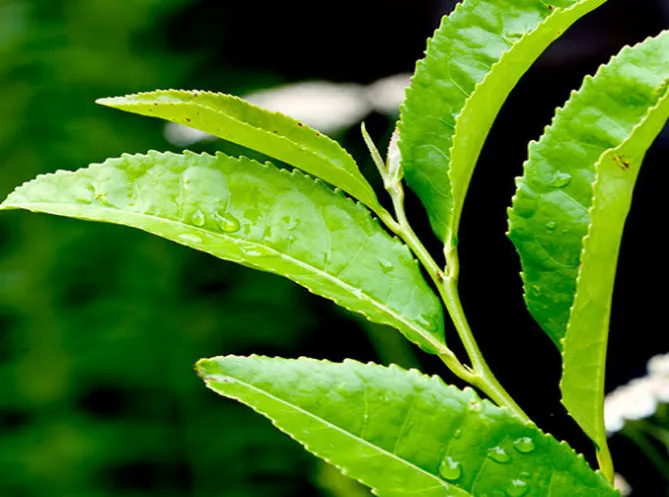
Figure number:1-Green tea
CHEMICAL CONSTITUENTS
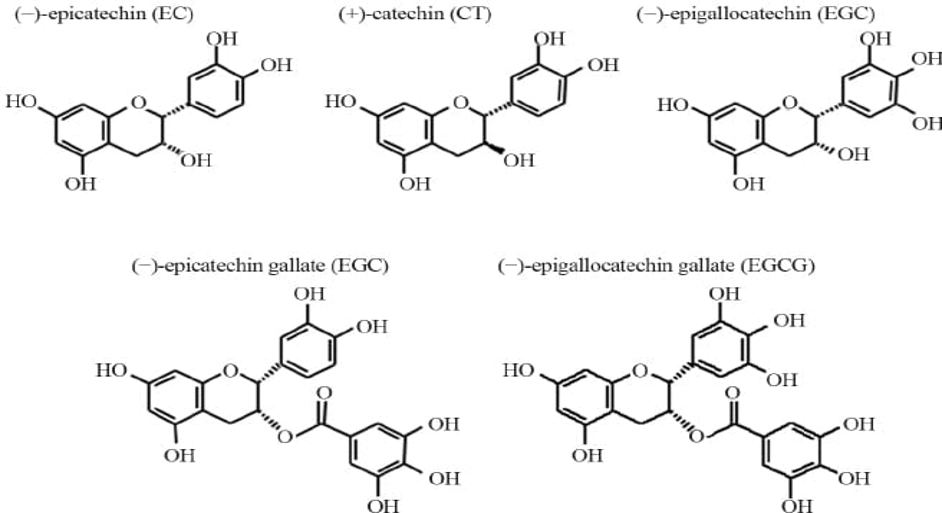
Green tea contains a wide variety of bioactive compounds responsible for its medicinal and therapeutic properties the major groups are polyphenols, alkaloids, amino acids, vitamins, minerals and trace elements, chlorophyll, volatile organic compounds, carbohydrates and proteins. Polyphenols include epigallocatechin-3-gallate (EGCG), epigallocatechin (EGC), epicatechin-3-gallate (ECG), epicatechin (EC). Alkaloids include Caffeine (2–5%), theobromine and theophylline. L-Theanine is a unique amino acid in tea.
Pharmacognostical studies
Macroscopic Characteristics
The leaves of Camellia sinensis are typically elliptic to lanceolate in shape and measure a few centimeters in length. They possess an acute to tapering apex and a wedge-shaped base. The leaf margin is distinctly serrated, which serves as an important identifying feature. The upper surface of the leaf appears dark green, smooth, and glossy, while the lower surface is comparatively lighter in color. The leaves are leathery in texture, emit a characteristic pleasant odor, and exhibit a bitter and astringent taste due to the presence of tannins.
Microscopic Characteristics
Microscopically, the transverse section of the leaf reveals a well-defined dorsiventral structure. The upper epidermis consists of a single layer of compact cells covered with a thick cuticle and generally lacks stomata. Beneath this layer lies the palisade mesophyll, composed of one to two rows of elongated, chlorophyll-rich cells that facilitate photosynthesis.
The spongy mesophyll is located towards the lower side and is made up of loosely arranged parenchymatous cells with prominent intercellular spaces, aiding gaseous exchange. The lower epidermis is thin-walled and contains numerous anomocytic stomata, which is a key diagnostic microscopic feature. Vascular bundles are collateral in nature, with xylem oriented towards the upper surface and phloem towards the lower surface, and are surrounded by a bundle sheath. Calcium oxalate crystals are commonly observed within the mesophyll cells.
In vitro Evidence supporting anticancer study (breast cancer):
Camellia sinensis has shown notable anticancer activity against breast cancer in various in vitro studies. Extracts of green tea, particularly those rich in catechins such as epigallocatechin gallate (EGCG), were tested on different human breast cancer cell lines (including estrogen receptor–positive and negative cells). These studies demonstrated that green tea polyphenols inhibit cancer cell proliferation and induce programmed cell death (apoptosis). The extracts were also found to cause cell cycle arrest and suppress signaling pathways involved in tumor growth and metastasis. Additionally, Camellia sinensis showed antioxidant activity and reduced oxidative stress in cancer cells, contributing to its protective and anticancer effects.
In vivo Evidence supporting anticancer study (breast cancer):
In vivo studies using experimental animal models of breast cancer have supported the anticancer potential of Camellia sinensis. Administration of green tea extract or isolated catechins to tumor-bearing animals resulted in a significant reduction in tumor size and tumor growth rate. These effects were associated with increased apoptosis of cancer cells, inhibition of angiogenesis, and modulation of hormone-related pathways involved in breast cancer progression. Camellia sinensis also improved antioxidant defense mechanisms and reduced inflammation, thereby protecting normal tissues from cancer-induced damage. Overall, these findings suggest that green tea may play a supportive role in breast cancer prevention and management.
Table Number:3- Major Bioactive Constituents of Camellia Sinensis and Their Reported Anticancer Effects Against Breast Cancer
|
Bioactive constituent |
Chemical class |
Reported anticancer effects |
Proposed mechanism of action |
|
Epigallocatechin-3-gallate (EGCG) |
Catechin (polyphenol) |
Inhibits breast cancer cell proliferation; induces apoptosis |
Cell cycle arrest, activation of apoptotic pathways, inhibition of angiogenesis |
|
Epigallocatechin (EGC) |
Catechin |
Reduces tumor cell growth |
Antioxidant activity, modulation of signaling pathways |
|
Epicatechin-3-gallate (ECG) |
Catechin |
Suppresses cancer cell proliferation |
Inhibition of tumor growth signaling |
|
Epicatechin (EC) |
Catechin |
Antioxidant and cytoprotective effects |
Reduction of oxidative stress |
|
Flavonoids |
Polyphenol |
Antitumor and anti-inflammatory effects |
Free-radical scavenging, inhibition of inflammatory mediators |
|
Caffeine |
Alkaloid |
Enhances anticancer activity when combined with polyphenols |
Modulation of cell cycle and apoptosis |
|
L-Theanine |
Amino acid |
Supports anticancer effects indirectly |
Enhancement of immune response and stress reductio |
ANTI BREAST CANCER ACTIVITY OF CAMELLIA SINENSIS: PRECLINICAL EVIDENCE
Camellia sinensis is widely recognized for its potential protective and therapeutic effects against breast cancer, mainly attributed to its rich content of polyphenolic compounds, especially catechins such as epigallocatechin gallate (EGCG) [19]. These bioactive constituents exert anticancer effects by inhibiting breast cancer cell proliferation, inducing apoptosis, and modulating key molecular pathways involved in tumor growth and progression [20].
Experimental evidence suggests that Camellia sinensis extracts interfere with estrogen-related signaling and suppress the activation of growth-promoting receptors in breast cancer cells. Green tea polyphenols have also been reported to inhibit angiogenesis and metastasis by downregulating vascular endothelial growth factors and matrix metalloproteinases, thereby limiting tumor expansion and invasion [21]. Both in vitro and in vivo studies consistently demonstrate that green tea constituents regulate cell cycle progression and enhance programmed cell death in malignant breast tissues [22].
In addition to direct anticancer activity, Camellia sinensis exhibits strong antioxidant and anti-inflammatory properties, which contribute to the protection of normal tissues and reduction of oxidative stress associated with breast carcinogenesis. Animal studies have shown that supplementation with green tea extract reduces tumor volume, improves antioxidant enzyme levels, and minimizes histopathological damage in breast tissue. When used as an adjunct to conventional anticancer therapies, Camellia sinensis has been reported to enhance therapeutic efficacy while reducing treatment-related toxicity.
CONCLUSION
Camellia sinensis demonstrates considerable potential as a complementary therapeutic agent in the prevention and management of breast cancer. Its rich composition of bioactive polyphenols, particularly catechins such as epigallocatechin gallate (EGCG), contributes to a broad spectrum of pharmacological activities including antioxidant, anti-proliferative, pro-apoptotic, and anti-inflammatory effects. Experimental studies provide strong evidence of its ability to inhibit breast cancer cell growth, regulate cell cycle progression, suppress angiogenesis, and induce programmed cell death in malignant cells.
Beyond direct anticancer activity, Camellia sinensis plays a protective role by reducing oxidative stress and inflammation, thereby limiting DNA damage and supporting normal cellular function. Preclinical investigations also suggest that green tea constituents may enhance the effectiveness of conventional chemotherapeutic agents while reducing therapy-associated toxicity. These findings support the potential role of Camellia sinensis as a safe and effective complementary approach in breast cancer management. However, further large-scale clinical trials and detailed molecular studies are required to confirm its clinical efficacy, establish optimal dosing strategies, and ensure long-term safety before its integration into evidence-based breast cancer therapy.
ACKNOWLEDGEMENT
The author of this manuscript express sincere gratitude to the National college of Pharmacy, KUHS, for providing the research facilities and the faculty members for their support and encouragement throughout the study.
CONFLICT OF INTEREST
There is no conflict of interest to be declared.
REFERENCES

Arathi Krishna K V, Anil Kumar V, Camellia Sinensis and its Potential Role in Breast Cancer Prevention and Management: A Review, Int. J. of Pharm. Sci., 2026, Vol 4, Issue 10, 2744-2750. https://doi.org/10.5281/zenodo.23425294
 10.5281/zenodo.23425294