

We use cookies to ensure our website works properly and to personalise your experience. Cookies policy
Research Scholar, P.R. Pote Patil College of Pharmacy, Kathora Road, Amravati - 444604, Maharashtra, India.
Carbon nanotubes are hollow small tubes made up of carbon atom arranged in a cylindrical shape like a wall of graphene. The carbon nanotubes have unique properties such as mechanical, electrical, thermal and chemical properties. For instance, they are highly resistant to tension, have high electronic conductivity and high thermal stability. Carbon nanotubes can be produced as single walls or multi-walls structures using chemical vapor deposition, arc discharge, or laser ablation. Carbon nanotubes (CNTs) have been considered in various applications including drug delivery, biosensors, bioimaging, tissue engineering, energy storage, cancer research etc. In the pharmaceutical and biomedical fields, the CNTs can serve as drug delivery carriers and diagnostic tools. However, there are many challenges associated with CNTs application in medical field including toxicity, safety, purification, functionalization, and large-scale production. In short, carbon nanotubes are considered as potential nanomaterials that can have a significant impact in a number of fields including pharmaceutical, biomedical, electronics, and energy.
Nanotechnology has become an important strategy in modern drug delivery because nanoscale systems can improve the solubility, stability, bioavailability, cellular uptake and site-specific delivery of therapeutic agents. These advantages are particularly relevant for drugs whose therapeutic performance is limited by poor physicochemical properties or nonspecific distribution. [1] Graphene sheets rolled up into nanoscale tubes are called carbon nanotubes. [2] Graphene can be described as “a two-dimensional (2D) allotrope of carbon consisting of a single layer of bonded carbon atoms arranged in a hexagonal lattice. [3]
Iijima discovered carbon nanotubes in 1991. [4] Also, CNTs are extremely thin, so they have a lot of surface area for their size. This makes it possible for them to carry biomolecules as tiny carriers. [5] Carbon nanotubes seem to be among the most promising nanomaterials of the 21st century, with a wide range of applications. [6] MWCNT is the type most commonly employed in targeted drug delivery applications. [5] In relation to the medical field, carbon nanotubes offer numerous advantages over other nanomaterials owing to their comparatively small size, high surface-area-to-volume ratio, and capacity for molecular functionalization. Their biocompatibility, in addition to the ability to functionalize their surface with specific ligands, may allow their use as targeted cancer therapeutics with fewer side effects. CNTs have demonstrated to possess exceptional properties, such as high biocompatibility, thermal and electrical conductivity, and surface area. CNTs have also been shown to penetrate various biological barriers, including cellular membranes, which could provide a considerable advantage for drug delivery. [7] The main limitations for the biomedical use of CNTs are their high toxicity and poor aqueous solubility. Due to their highly hydrophobic surface, carbon nanotubes exhibit poor solubility in a broad range of organic and inorganic solvents. However, CNT toxicity must be assessed for biomedical use; their physicochemical properties—synthesis conditions, surfactants, functionalization, and catalysts—affect solubility and toxicity. [8]
Structure of Carbon Nanotube
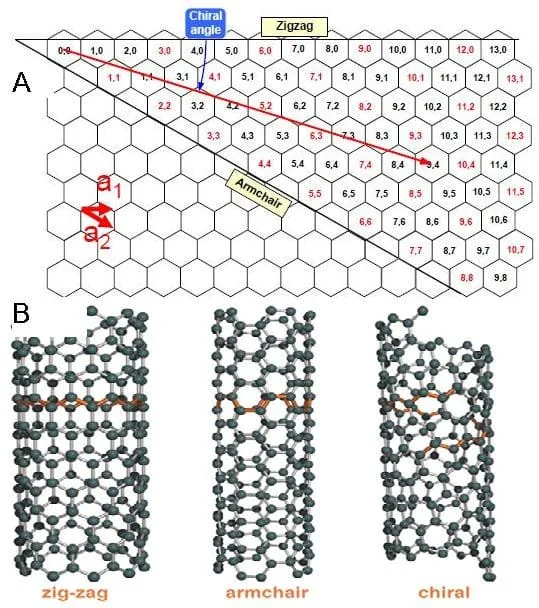
Figure 1: Different Forms of SWNTs. (a) the Chiral Vector C Also Determines the Tube Diameter. (B) Models of Three Atomically Perfect SWCNT Structures [9] .
Carbon nanotubes are one-dimensional nanomaterials that are made up of a hexagonally arranged carbon nanostructure. Their structure can best be imagined as a graphene sheet rolled into a cylindrical shape, forming a hollow cavity in the center and a graphitic wall around it. The classification of carbon nanotubes depends on the number of graphitic layers that make up the structure, which can range from single-, double- and multi-walled carbon nanotubes.
The structure of single-walled carbon nanotubes (SWCNT) is determined by the so-called chiral vector. C h = na 1 + ma 2 , with a 1 and a 2 being graphene basis vectors. The chiral indices (n, m) determine the specific winding pattern of the graphene sheet, hence its diameter and chirality.
The angle between the chiral vector and zigzag direction is called the chiral angle, which determines whether the SWCNT is zigzag, armchair, or chiral. Zigzag carbon nanotubes have a chiral angle of 0°, while armchairs have a chiral angle of 30°, and chiral nanotubes have a chiral angle in between [10]. The chirality of carbon nanotubes determines the electron transport properties of the material, because of the different arrangement of carbon atoms on the surface. As a result, depending on the chirality, carbon nanotubes can be metallic or semiconducting [11].
Types of Carbon Nanotube
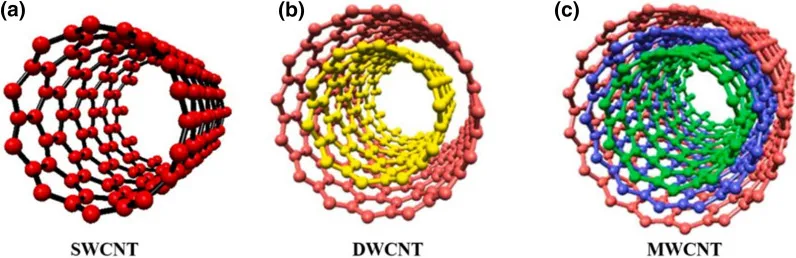
Figure 2: Surface and Internal View of (a) Single-Walled CNTs, (B) Double-Walled CNTs, and (C) Multi-Walled CNTs [12]
(a) Single Walled Carbon Nanotube
Single-Wall Carbon Nanotubes (SWCNTs) are structures formed by rolling a layer of graphene into a tube. These tubes are hollow. Have very small diameters, typically between 0.4 nm and 2 nm according to current studies in biomedicine. However some reports show a range from 0.4 nm to 3 nm depending on the material and how they are produced . SWCNTs have a high aspect ratio. Show unique electrical, mechanical, thermal and optical properties [13,14].
(b) Double Walled Carbon Nanotube
Double-walled carbon nanotubes (DWCNTs) consists of two concentric, single-walled carbon nanotubes (SWCNTs) where one nanotube is enclosed within the other. The inner and outer tubes are aligned such that their axes are parallel and separated, with an inter-wall distance of approximately 0.33 to 0.42 nm. The inner and outer tubes are connected mainly by van der Waals forces and not by covalent bonds. [15]
(c) Multi Walled Carbon Nanotube
Multiwall carbon nanotubes (MWCNTs) are formed by rolling several graphene sheets over each other in the shape of a cylinder. In other words, a few carbon nanotube walls are positioned within each other to form a hollow cylinder. Each graphene wall is separated from the others by an interlayer distance of approximately 0.34 nm, similar to that in graphite. [16] MWCNTs can generally be classified according to their arrangement into different forms. The most common structures are the Russian-doll (concentric) model and the parchment (scroll-like) model. In the Russian-doll model, several individual graphene cylinders are concentrically arranged one inside the other. In the parchment model, a single graphene sheet is rolled repeatedly in a scroll-like arrangement [17].
Production Method of Carbon Nanotube
1. Arc Discharge Method
Arc discharge is an electrical breakdown of gas which produces plasma. In the traditional method, two graphite electrodes are placed near each other in an inert-gas atmosphere. The anode has the carbon precursor/catalyst and the cathode is generally graphite [18]. A high current electrical discharge is created between the electrodes. The intense heat vaporizes carbon from the anode and produces carbon vapour. This vapour then condenses and CNTs are deposited, commonly along with soot, on the cathode [19]. The arc produces an extremely high-temperature plasma with approximately 4000–6000 K reported during the process [20] . MWCNTs can generally be synthesized without catalyst precursors whilst SWCNT synthesis commonly uses metal catalyst precursors [21]. Arc-discharge products contain impurities such as amorphous carbon, metallic particles and graphitized carbon materials making purification necessary [22]
2. Laser Ablation Method
Laser ablation involves irradiating a graphite target with a high power laser in an inert-gas atmosphere. The ablated carbon vapour is transported and condensed to form CNTs [23-25] . For the synthesis of SWCNTs, Ni–Co and Ni–Fe catalysts have been used. One study reported the ablation process at 1200°C for 1 h [26]. Laser ablation is influenced by laser power and wavelength, gas type and pressure, catalyst composition, temperature and gas flow, which contribute to the variation in diameter, yield and quality of the produced CNTs [26-28] Laser ablation can yield high quality CNTs with low impurities, although branched CNTs are often formed. High cost of equipment, high energy consumption and limited scalability are significant limitations [29]
3. Chemical Vapor Deposition
In the CCVD technique, transition metals are used to decompose hydrocarbon molecules at high temperatures (500-1000 °C). [30] A CVD reactor begins with the stage of preparing metal nanoparticles on a substrate. In the pretreatment stage, the nanoparticles are synthesized while either hydrogen or NH₃ flows through. The final step involves feeding hydrocarbon gas into the furnace and depositing carbon through the catalytic dissociation of hydrocarbon molecules within the metal nanoparticles at 500-1200°C. [31]
The interaction between the catalytic material and the substrate governs the growth of CNTs. For larger catalyst nanoparticles the growth process may shift to tip-growth, while for smaller ones it may switch to base-growth. This shift in the growth processes results from the differing adhesion force between the catalyst and the substrate. [32] Physical and chemical conditions such as the temperature, the catalyst composition, and H₂ availability influence both the internal and external diameters of CNTs. The growth mode is also affected by the chemical state of the catalyst. [32,33]
Functionalization of Carbon Nanotube
The main purpose of CNT functionalization is not only to improve the physical properties of CNTs (e.g., solubility and dispersity), but also to enhance the bio-performance of CNTs. Poor dispersity and significant aggregation of CNTs may result in their being more cytotoxic in the body. [34] CNT functionalization can be generally classified into covalent and non-covalent functionalization’s. [35]
• Covalent Bond Functionalization
Covalent functionalization is the modification procedure through forming stable covalent bonds between specific functional groups and carbon atoms in CNT. By controlling the types and amounts of functional groups introduced into the CNTs, the surface properties of CNT can be tailored for a specific purpose, such as for biomedical applications [35,36]. One common method for covalently functionalizing CNTs is introducing carboxyl or hydroxyl groups in the wall of CNT, which can be achieved by oxidation procedures, such as acid treatment or electrochemical oxidation [37].
• Non Covalent Bond Functionalization
Non-covalent functionalization methods make use of weaker and reversible interactions like π-π stacking, hydrophobic interactions or electrostatic ones for attaching functional groups onto CNT surface. [38] Unlike covalent functionalization, non-covalent functionalization is generally less destructive to the CNTs as it does not significantly affect the CNT structures. [39] One commonly used non-covalent functionalization method is using surfactant molecules capable of adsorbing or wrapping around the surface of CNTs, stabilizing their dispersion in aqueous solutions [36,40]
Non-covalent functionalization has many advantages, which include simplicity, versatility, and reversibility of the process. However, the stability of the non-covalently functionalized CNTs under physiological conditions might be problematic and may cause the premature release of drugs or aggregation. Besides, the appropriate selection of the surfactant or biomolecule should be done in order to avoid the immunogenic or cytotoxic effect on biological systems [41]
Properties of Carbon Nanotube
Carbon nanotubes (CNTs) possess several unique properties, including high mechanical strength, excellent electrical and thermal conductivity, chemical stability, and biological compatibility. [42] These properties make CNTs multifunctional materials with a wide range of applications. In the biomedical field, CNTs have great potential in drug and gene delivery, regenerative medicine, bio sensing, and bioimaging. [43]
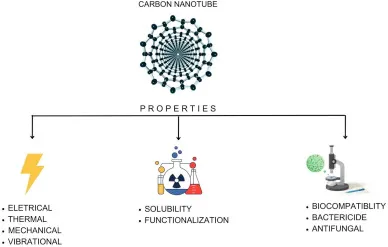
Figure 3: Carbon Nanotubes Main Properties. Authors Own Drawing Inspired by Gupta Et Al. (2019) [6] and Basheer Et Al. (2020) [44]
Table 1: Example of CNTs Used for the Delivery of Molecule
| CNTs | Molecules | Functional Group | Particle Size | Release Control | In vitro/in vivo | Ref. |
|---|---|---|---|---|---|---|
| SWCNTs | Carnosine dipeptide | Modified with PEG at the lysine residues via amide bonds | – | – | – | [45] |
| SWNTs | DOX | Modified with oxidative acid and PEG-g-PEI | Diameter 1–2 nm, length 1–3 nm, SSA 380 m2/g | Acidic pH | In vitro | [46] |
| MWCNTs | DOX | Functionalized with (TAT)-chitosan (MWCNTs-TC) | – | – | In vivo, in vitro | [47] |
| SWCNT | DTX | Functionalized with iron oxide NPs and coated by PLA co-mPEG micelles | ~ 15–50nm | External magnetic fields | In vivo, in vitro | [48] |
| SWCNT | EGFP (nEGFP) | Functionalized with streptavidin | ~ 200 nm in length | Light-responsive | In vivo, in vitro | [49] |
| MWCNT | Zolpidem (ZM) | Modified with D-glucose (Gl) | Diameter of MWCNTCOOH 10 nm, 27 nm in MWCNT-Gl | - | In vitro | [50] |
| SWNTs | DOX | Non-covalently functionalized with PL-PEG | ~ 1 nm and ~1.2 nm inner and outer diameters, 50–200 nm PEG-coated SWNTs | NIR irradiation | In vitro | [51] |
| MWCNT | DTX | Chitosan-folate (CHI-FA) conjugated MWCNT | ~ 230 to 483 nm in length | – | In vivo, in vitro | [52] |
| MWCNTs | Antigenic protein (OVA) | Modified with lentinan | 9–10 nm in diameter, 1–2 μm in length | – | In vivo, in vitro | [53] |
Application of Carbon Nanotube
Carbon nanotubes (CNTs) have unique mechanical, electrical, optical, and physical properties, which endow them with applicability in various biomedical fields. Functionalization of CNTs can change their properties, increase their solubility, and reduce their toxicity. In recent years, CNTs have been investigated for drug delivery, biosensors, bioimaging, tissue engineering, and cancer treatment. [54]
1. Drug Delivery
Carbon nanotubes (CNTs) have been explored as drug-delivery vehicles because of their large surface area, good biocompatibility, and ease of functionalization. CNTs can be internalized by different types of cells and can deliver anticancer drugs to cancer cells. Docetaxel, doxorubicin, methotrexate, paclitaxel, and gemcitabine are examples of anticancer drugs delivered by CNT-based systems. [55] For example, docetaxel-loaded functionalized SWCNTs have been investigated for pH-responsive drug release. [56] Doxorubicin has also been delivered by functionalized CNTs, with studies demonstrating pH-dependent release and enhanced anticancer activity. [57] Paclitaxel has been incorporated into a CNT-based system for controlled release of the drug. [58,59] Methotrexate has been incorporated into a CNT-containing hydrogel for controlled and sustained release of the drug. [60]
2. Biosensors
Carbon nanotubes (CNTs) have been proposed as transducers for biosensors because of their high sensitivity, electrical conductivity, mechanical robustness, chemical stability, and biocompatibility, allowing for their use as highly sensitive Nano transducers, resulting in biosensors with improved performance and long-term stability. [61] Multi-walled carbon nanotubes (MWCNTs) permit immobilization of proteins while maintaining their bioactivity and enzymatic activity. [62] CNT-based biosensors have been developed for a variety of applications, including glucose, protein, nucleic acids, immunoassays, and infection sensing. [63] CNT-based biosensors have been developed for the detection of Influenza A virus [64] and SARS-CoV-2. [65]
3. Bio Imaging
Carbon nanotubes have been proposed as bioimaging agents because of their optical properties such as near-infrared photoluminescence and photostability. [66] Functionalized SWCNTs have been investigated as photoacoustic contrast agents for tumor imaging with enhanced signal intensity and improved penetration depth. [67]
Carbon nanotubes have been explored as contrast agents for a variety of imaging techniques such as Raman, fluorescence imaging, magnetic resonance imaging (MRI), photoacoustic imaging, and nuclear imaging. [68] Their unique optical properties including strong absorption in the near-infrared (NIR) region and photostability make them promising candidates for optical and photoacoustic imaging. [68,69] On the other hand, radiolabeled SWCNTs show high sensitivity and are suitable for nuclear imaging due to the absence of limitations associated with tissue penetration-depth. [70]
4. Tissue Engineering
Carbon nanotubes (CNTs) have drawn much interest in tissue engineering due to excellent mechanical properties and nanoscale surface characteristics that make them ideal for tissue engineered scaffolds. Composite scaffolds with CNTs have been found to improve mechanical properties and promote cell adhesion and proliferation in particular for bone tissue engineering. [71] Moreover, scaffolds containing CNTs have been demonstrated to be able to support cell viability, proliferation and osteogenic differentiation suggesting potential for bone regeneration. [72,73] Three dimensional scaffolds made from CNTs have also been demonstrated to have interconnected porous structure that facilitates cell attachment and infiltration, supporting its use in tissue engineering. [74]
5. Cancer Treatment
CNTs have drawn much interest as nanoscale carriers for cancer therapy due to huge surface area and modifiable surfaces that can carry anticancer drugs. Functionalized single walled CNTs have been successfully used to deliver paclitaxel and result in enhanced tumor accumulation and suppression of tumor growth in a mouse breast-cancer model. [64] Scaffolds containing CNTs have been studied for targeted delivery of anticancer drugs where surface functionalization enhances preferential uptake by cancer cells. In addition, single walled CNTs bearing additional chemical groups absorb near-infrared light effectively and are able to convert the light into heat that destroys tumor cells. [75] The combination of CNT mediated drug delivery with photothermal therapy has further shown enhanced anti-cancer effects indicating that CNTs can act as multifunctional platforms for cancer therapy. [75,76]
Toxicity of Carbon Nanotube
Carbon nanotubes could induce adverse effects that may depend on their size, shape, surface chemistry, aggregation state, and concentration, as well as the route of exposure. Exposure to carbon nanotubes was reported to cause oxidative stress, inflammation, cell injury, and cell death. It was also noted that exposure to carbon nanotubes could cause diverse responses in several biological systems such as the respiratory, cardiovascular, renal, splenic, and central nervous systems. Therefore, despite a number of potential applications in biomedical technologies, such as drug-delivery, the toxicological and biological fate of carbon nanotubes should be considered in order to evaluate their clinical benefit. [77] A number of physical and chemical properties of carbon nanotubes could affect their biological activity, stability, and interactions with cell membranes. The toxicological potential of carbon nanotubes could lead to the development of inflammatory reactions, oxidative stress, and adverse effects related to the accumulation of carbon nanotubes in specific tissues and cells. Indeed, both in vitro and in vivo experiments demonstrated the biological effects and safety risks of carbon nanomaterials. Thus, the evaluation of carbon nanotubes’ in vivo safety profile is of particular importance for their potential application in biomedical technologies. It was shown that exposure to carbon nanotubes could trigger a cascade of adverse effects at the cellular level, which include the generation of reactive oxygen species (ROS), oxidative stress, mitochondrial malfunction, DNA damage, cell death (apoptosis and necrosis), as well as inflammatory responses. The biological effects of carbon nanotubes on the cellular level and their impact on different tissues and organs are of particular importance for their application in biological research and drug-delivery systems. Therefore, the assessment of these effects is essential for the analysis of the safety profile of carbon nanotubes in biomedical technologies. [78]
CONCLUSION
Carbon nanotubes (CNTs) are of interest as Nano carriers for drug delivery owing to their unique properties (high surface area, hollow tubular structure, nanoscale dimensions). Functionalized CNTs have shown great promise as targeted drug delivery vehicles, in particular for the delivery of therapeutics to cancer cells. They also have potential applications in gene delivery, bio-imaging, biosensors and tissue engineering. However there are a number of issues that need to be overcome before they can be used in a pharmaceutical context. The CNTs themselves may be toxic, have poor water solubility, be prone to aggregation and have limited biodegradability. Appropriate purification, functionalization and assessment of their biocompatibility and toxicity are therefore all essential. At the moment there is no CNT based drug delivery formulation that has been approved by regulators and is commercially available as a pharmaceutical product. The research in this area is still predominantly at the laboratory and preclinical stage (in-vitro and animal work). There are no human clinical trials that have been conducted to date which have established CNT based drug delivery as a standard clinical approach. CNTs have huge potential for targeted and controlled drug delivery. There's clearly still a lot of work to be done in terms of establishing long term safety, optimizing formulations, developing a standardized manufacturing process and navigating the regulatory hurdles. With further research, CNT based drug delivery systems could well become a useful tool in the future of drug development
REFERENCES


Taiba Anam Syed Farooque, Amit R. Jaiswal, Carbon Nanotube Based Drug Delivery System, Int. J. of Pharm. Sci., 2026, Vol 4, Issue 11, 5818-5829. https://doi.org/10.5281/zenodo.24644443
 10.5281/zenodo.24644443