

We use cookies to ensure our website works properly and to personalise your experience. Cookies policy
1,2Sri Kakatiya institute of pharmaceutical sciences, Warangal, Telangana.
3Department of Pharmaceutics ,SRR College of Pharmaceutical sciences,Warangal,Telangana.
4Assistant Professor SRR College of Pharmaceutical sciences.
The present study aimed to formulate and evaluate fast-dissolving sublingual films of Frovatriptan to achieve rapid drug release and improve patient compliance. Films were prepared by the solvent-casting method using hydroxypropyl methylcellulose (HPMC E15) and polyvinyl alcohol (PVA) as film-forming polymers, glycerine as plasticizer, Polysorbate 80 as surfactant, sodium saccharin as sweetener, and vanillin as flavouring agent. A calibration curve was developed in phosphate buffer (pH 6.8) and demonstrated good linearity. Eight formulations (F1–F8) were prepared using varying concentrations of HPMC E15 and PVA, with or without 2% Polysorbate 80. The films were evaluated for appearance, weight variation, surface pH, thickness, drug content, disintegration time, and in-vitro dissolution. All formulations were transparent, smooth, flexible, homogeneous, and free from visible defects. Weight variation ranged from 56.8 ± 0.49 to 66.3 ± 0.51 mg, surface pH from 6.72 ± 0.05 to 7.04 ± 0.02, and thickness from 0.14 ± 0.01 to 0.20 ± 0.02 mm. Drug content ranged from 97.35 ± 0.84% to 99.26 ± 0.48%, while disintegration time ranged from 29 ± 0.91 to 65 ± 1.54 seconds. Formulations containing Polysorbate 80 showed faster disintegration and improved drug release than those without surfactant. F5 was identified as the optimized formulation, exhibiting the shortest disintegration time (29 ± 0.91 seconds) and highest cumulative drug release (99.94 ± 0.31%) within 30 minutes. These findings indicate that combining HPMC E15 with 2% Polysorbate 80 may be a suitable approach for developing Frovatriptan sublingual films with desirable physical properties and enhanced in-vitro drug release overall.
Migraine is a common neurological disorder characterized by recurrent episodes of moderate to severe headache, frequently accompanied by nausea, vomiting, photophobia, and phonophobia. It is one of the leading causes of disability worldwide and can significantly affect an individual's quality of life, daily activities, and productivity. The management of acute migraine attacks primarily involves the use of non-steroidal anti-inflammatory drugs (NSAIDs), analgesics, and selective serotonin receptor agonists, commonly known as triptans. Among these therapeutic agents, frovatriptan is a second-generation triptan widely used for the acute treatment of migraine with or without aura. It acts as a selective agonist at serotonin 5-HT₁B and 5-HT₁D receptors, producing cranial vasoconstriction and inhibiting the release of pro-inflammatory neuropeptides involved in migraine pathophysiology [1,2].
Frovatriptan possesses a relatively long elimination half-life of approximately 26 hours, which may provide sustained therapeutic activity and reduce the likelihood of headache recurrence compared with certain other triptans. However, conventional oral administration is associated with certain limitations, including delayed absorption, variable gastrointestinal transit, and relatively low oral bioavailability. The time required to achieve peak plasma concentrations is generally 2–3 hours, which may be undesirable when rapid symptom management is required. These pharmacokinetic characteristics have encouraged the investigation of alternative drug delivery approaches capable of improving the rate of drug release and facilitating absorption [1,2].
The sublingual route represents a promising alternative for delivering drugs requiring rapid systemic availability. The sublingual mucosa is highly vascularized, relatively permeable, and supplied with an extensive network of blood vessels, facilitating drug absorption directly into the systemic circulation. Drugs absorbed through this route can partially avoid gastrointestinal degradation and hepatic first-pass metabolism, depending on the extent of transmucosal absorption. Furthermore, sublingual administration offers several advantages, including rapid drug absorption, ease of administration, improved patient convenience, and avoidance of swallowing difficulties. These characteristics make sublingual delivery particularly attractive for drugs intended for the management of acute conditions [3–5].
Oral thin films (OTFs) have emerged as innovative pharmaceutical dosage forms designed to improve drug administration and patient acceptability. These thin, flexible polymeric strips rapidly hydrate, disintegrate, or dissolve upon contact with saliva, releasing the incorporated drug within the oral cavity. Unlike conventional tablets and capsules, oral films generally do not require water for administration and are particularly beneficial for patients experiencing dysphagia, nausea, or difficulty swallowing conventional dosage forms. Their advantages include portability, accurate dosing, rapid disintegration, improved patient convenience, and the possibility of delivering drugs through the oral mucosa. The formulation characteristics of oral films depend considerably on polymer selection, plasticizer concentration, drug–excipient compatibility, and manufacturing conditions [6,10,11].
The selection of suitable film-forming polymers is an important consideration in developing oral thin films with desirable mechanical strength, flexibility, uniformity, and drug-release characteristics. Hydroxypropyl methylcellulose (HPMC) is a widely employed hydrophilic polymer because of its excellent film-forming ability, aqueous solubility, compatibility, and capacity to produce transparent and uniform films. Polyvinyl alcohol (PVA) is another versatile polymer that provides desirable mechanical strength, flexibility, and film integrity. Combining HPMC with PVA may help achieve an appropriate balance between film flexibility, structural integrity, hydration, and disintegration properties. Glycerin is commonly incorporated as a plasticizer to reduce brittleness and improve film flexibility by modifying polymer-chain interactions. Additionally, suitable sweetening and flavouring agents can improve the palatability and acceptability of oral film formulations [10,11].
Surfactants also play an important role in improving the wetting characteristics and dissolution behaviour of poorly water-soluble or slowly dissolving drug formulations. Polysorbate 80, a non-ionic surfactant, can reduce interfacial tension, facilitate wetting, and improve drug dispersion within the aqueous environment. In sublingual formulations, appropriate surfactant incorporation may additionally influence drug permeation across the oral mucosa. Previous investigations involving frovatriptan sublingual films demonstrated the potential of surfactant-containing formulations for improving drug delivery. Singh et al. reported the development of TPGS-stabilized frovatriptan sublingual films, while subsequent research demonstrated the potential of HPMC-based composite films for frovatriptan delivery [7,8].
Previous research has also explored alternative rapidly disintegrating dosage forms of frovatriptan. Mennini et al. investigated the development and optimization of frovatriptan orally disintegrating tablets using quality-by-design strategies [9]. Bhatt et al. developed fast-dissolving buccal strips containing frovatriptan succinate monohydrate using HPMC-based film-forming systems [12]. These studies demonstrate the potential of alternative oral dosage forms for improving the administration and release characteristics of frovatriptan. However, further investigation of polymer combinations and formulation variables is warranted to develop sublingual films with desirable physicochemical properties and rapid drug release.
Therefore, the present investigation was undertaken to formulate and evaluate fast-dissolving sublingual films of frovatriptan by the solvent-casting method using HPMC E15 and PVA as film-forming polymers, glycerin as a plasticizer, and Polysorbate 80 as a surfactant. Sodium saccharin and vanillin were incorporated as sweetening and flavouring agents, respectively. The prepared formulations were systematically evaluated for physical appearance, weight variation, thickness, surface pH, drug content, disintegration time, and in-vitro dissolution. The study further aimed to identify an optimized formulation exhibiting acceptable physicochemical characteristics, rapid disintegration, and enhanced drug release within 30 minutes.
MATERIALS AND METHODS
Frovatriptan, Hydroxypropyl Methylcellulose (HPMC E15), Polyvinyl Alcohol (PVA), Glycerin, Polysorbate 80, Sodium Saccharin, and Vanillin. All chemicals and excipients used in the study were of pharmaceutical or analytical grade.
METHODOLOGY
Determination of λmax of Frovatriptan
An accurately weighed quantity of frovatriptan (10 mg) was dissolved in a small volume of phosphate buffer. The resulting solution was suitably diluted to obtain an absorbance within the range of 0–1. The prepared solution was scanned over a wavelength range of 200–400 nm using a UV–Visible spectrophotometer to determine the maximum wavelength of absorption (λmax) [13,14].
Preparation of Phosphate Buffer (pH 6.8)
Phosphate buffer (pH 6.8) was prepared by dissolving 8 g of sodium hydroxide in 1000 mL of distilled water to obtain a 0.2 M sodium hydroxide solution. Similarly, 27.218 g of potassium dihydrogen phosphate was dissolved in 1000 mL of distilled water to prepare a 0.2 M potassium dihydrogen phosphate solution. Subsequently, 112 mL of 0.2 M sodium hydroxide was added to 250 mL of 0.2 M potassium dihydrogen phosphate solution, and the final volume was adjusted to 1000 mL with distilled water. The pH was verified using a calibrated pH meter [15,16].
Preparation of Calibration Curve of Frovatriptan in Phosphate Buffer (pH 6.8)
An accurately weighed quantity of frovatriptan (100 mg) was dissolved in phosphate buffer, and the volume was made up to 100 mL to obtain the primary stock solution (1000 µg/mL). From this solution, 10 mL was transferred into another 100 mL volumetric flask and diluted with phosphate buffer to obtain the secondary stock solution (100 µg/mL). Aliquots of the secondary stock solution were further diluted separately to obtain concentrations of 2, 4, 6, 8, 10, 12, and 14 µg/mL. The absorbance of each dilution was measured at 226 nm using a UV–Visible spectrophotometer. A calibration curve was constructed by plotting absorbance against the corresponding drug concentrations [13,14].
Solubility Studies
Solubility studies of frovatriptan were performed in distilled water and buffers of different pH values. An excess quantity of frovatriptan was added separately to 5 mL of each dissolution medium in 10 mL vials. The samples were agitated continuously using a mechanical shaker at room temperature for 24 hours to attain equilibrium. The resulting solutions were filtered, and suitable dilutions were prepared. The absorbance was measured at 230 nm using a UV–Visible spectrophotometer to determine the drug concentration. All experiments were performed in triplicate, and the solubility was expressed as the mean value .
Formulation of Fast-Dissolving Sublingual Films
Fast-dissolving sublingual films of frovatriptan were prepared by the solvent-casting method, a widely employed technique for manufacturing oral thin films [18,22,23]. Eight formulations (F1–F8) were developed using different concentrations of hydroxypropyl methylcellulose (HPMC E15) and polyvinyl alcohol (PVA) to investigate their influence on the physicochemical characteristics of the prepared films. The effect of incorporating Polysorbate 80 at a concentration of 2% on disintegration and in-vitro drug release was also investigated.
HPMC E15 and PVA were used as film-forming polymers, while glycerin served as a plasticizer to impart flexibility to the films. Polysorbate 80 was incorporated as a surfactant, sodium saccharin as a sweetening agent, and vanillin as a flavouring agent to improve the acceptability of the formulations [19,20,22].
Preparation of Casting Solutions
The required quantities of HPMC E15 and PVA were accurately weighed and allowed to swell overnight in distilled water. The polymers were subsequently dissolved with gentle heating, wherever necessary, to obtain a uniform polymeric solution. Frovatriptan was separately dissolved in distilled water and incorporated into the polymer solution under continuous stirring. Glycerin and Polysorbate 80 were then added to the mixture and stirred using a magnetic stirrer until a homogeneous casting solution was obtained. The prepared solution was degassed using a bath sonicator to remove entrapped air bubbles. The resulting bubble-free solution was used for film casting [18,20,22].
Preparation of Fast-Dissolving Sublingual Films
An accurately measured quantity of 10 mL of the prepared casting solution was transferred into individual Petri plates and dried in a hot-air oven at 40°C for 24 hours to facilitate solvent evaporation. The dried films were carefully removed from the Petri plates and cut into uniform dimensions of 2 × 2 cm² (4 cm²). Visible imperfections were eliminated to obtain uniform films. The prepared films were further dried in a desiccator for 48 hours to remove residual moisture. Finally, the films were wrapped in aluminium foil and stored in self-sealing covers until further evaluation [18,22,23].
Table 1: Formulation Composition of Fast-Dissolving Sublingual Films of Frovatriptan
| Ingredients | F1 | F2 | F3 | F4 | F5 | F6 | F7 | F8 |
|---|---|---|---|---|---|---|---|---|
| Frovatriptan (mg) | 40 | 40 | 40 | 40 | 40 | 40 | 40 | 40 |
| HPMC E15 (mg) | 200 | 300 | – | – | 200 | 300 | – | – |
| PVA (mg) | – | – | 200 | 300 | – | – | 200 | 300 |
| Glycerin (%) | 15 | 15 | 15 | 15 | 15 | 15 | 15 | 15 |
| Polysorbate 80 (%) | – | – | – | – | 2 | 2 | 2 | 2 |
| Sodium saccharin (mg) | 30 | 30 | 30 | 30 | 30 | 30 | 30 | 30 |
| Vanillin | q.s. | q.s. | q.s. | q.s. | q.s. | q.s. | q.s. | q.s. |
| Distilled water (mL) | 10 | 10 | 10 | 10 | 10 | 10 | 10 | 10 |
Evaluation of Fast-Dissolving Sublingual Films
The prepared frovatriptan sublingual films were evaluated for various physicochemical and pharmaceutical parameters, including appearance, weight variation, thickness, tackiness, folding endurance, surface pH, drug content uniformity, disintegration time, and in-vitro dissolution [18,22,23].
Appearance
The prepared films were visually inspected for their physical appearance, transparency, uniformity, smoothness, flexibility, and presence of any visible defects. The films were examined for transparency or opacity to assess their overall physical characteristics [22,23].
Weight Variation
Three film strips measuring 2 × 2 cm² were cut from different locations of each cast film. Each strip was individually weighed using an analytical balance, and the mean weight and percentage weight variation were determined to assess the uniformity of the prepared films [18,22].
Film Thickness
The thickness of each film was measured using a calibrated micrometer screw gauge at different predetermined locations. The average thickness was calculated from the individual measurements. Thickness uniformity is an important parameter for ensuring consistency in film dimensions and drug distribution [18,22,23].
Tackiness
Six films were randomly selected from each formulation to evaluate their tackiness. Each film strip was gently pressed against the fingertips, and its tendency to adhere to the fingers was observed. The results were recorded qualitatively as tacky or non-tacky [22,23].
Folding Endurance
Folding endurance was determined to assess the flexibility and mechanical strength of the prepared films. A film strip measuring 2 × 2 cm² was repeatedly folded at the same position until visible cracks developed or the film broke. The number of folds required to produce visible damage was recorded as the folding endurance value. Higher folding endurance indicates better flexibility and resistance to mechanical stress [18,22].
Surface pH
Surface pH was determined to assess the suitability of the prepared films for sublingual administration and minimize the possibility of mucosal irritation. A film strip was placed in a Petri dish and moistened with 0.5 mL of distilled water. After 30 seconds, the electrode of a calibrated pH meter was brought into contact with the moistened film surface. The pH was recorded after allowing one minute for equilibration. The experiment was performed in triplicate, and the mean surface pH was calculated [18,22,23].
Drug Content Uniformity
A film strip measuring 2 × 2 cm² was transferred into a volumetric flask containing 100 mL of phosphate buffer (pH 6.8). The solution was stirred using a magnetic stirrer for one hour to ensure complete drug extraction. The resulting solution was filtered, and suitable dilutions were prepared using phosphate buffer. The absorbance was measured at 226 nm using a UV–Visible spectrophotometer. Drug content was calculated using the previously established calibration curve and expressed as a percentage of the theoretical drug content [18,22].
Disintegration Time
The disintegration time of the prepared films was determined using a modified Petri-dish method. A Petri dish containing 10 mL of distilled water was used as the disintegration medium. A film strip was carefully placed at the centre of the Petri dish, and the time required for the film to completely disintegrate into fine particles was recorded as the disintegration time [18,22,23].
In-Vitro Dissolution Studies
In-vitro dissolution studies of frovatriptan sublingual films were performed using a USP basket-type dissolution apparatus. The dissolution medium consisted of 300 mL of phosphate buffer (pH 6.8), maintained at a temperature of 37 ± 0.5°C and a rotational speed of 50 rpm throughout the experiment. Samples of 5 mL were withdrawn at predetermined time intervals, and an equivalent volume of fresh phosphate buffer was added immediately to maintain a constant dissolution volume. The collected samples were suitably diluted, and their absorbance was measured at 226 nm using a UV–Visible spectrophotometer. The amount of drug released at each time interval was calculated using the calibration curve and expressed as cumulative percentage drug release [18–20,22].
RESULTS AND DISCUSSION
Determination of λmax of Frovatriptan
The λmax of pure frovatriptan was determined using a UV–Visible spectrophotometer. The drug exhibited maximum absorption at 246 nm in the selected medium [13,14].
Calibration Curve of Frovatriptan in Phosphate Buffer (pH 6.8)
The calibration curve demonstrated a linear relationship between drug concentration and absorbance over the range of 0–14 µg/mL. The regression equation was y = 0.0481x + 0.0004, with an R² value of 0.999, indicating excellent linearity. The calibration curve was used for quantitative estimation of frovatriptan [13,14].
Table 2: Absorbance Values of Frovatriptan in Phosphate Buffer pH 6.8
| Concentration(µg/ml) | Absorbance |
|---|---|
| 0 | 0 |
| 2 | 0.097 |
| 4 | 0.194 |
| 6 | 0.291 |
| 8 | 0.388 |
| 10 | 0.486 |
| 12 | 0.582 |
| 14 | 0.662 |
[Figure - see the formatted PDF]
Figure 2: Calibration Curve of Frovatriptan in Phosphate Buffer pH 6.8.
Solubility Analysis
Frovatriptan was found to be freely soluble in water, slightly soluble in 0.1 N HCl and pH 4.5 acetate buffer, and comparatively more soluble in phosphate buffers at pH 6.8 and 7.4. Therefore, phosphate buffer (pH 6.8) was selected as the analytical and dissolution medium
Evaluation of Frovatriptan Fast-Dissolving Sublingual Films
All formulations were transparent, smooth, homogeneous, and free from visible defects. Weight variation ranged from 56.8 ± 0.49 to 66.3 ± 0.51 mg, while folding endurance ranged from 90 ± 1.07 to 129 ± 2.27. Surface pH values ranged from 6.72 ± 0.05 to 7.04 ± 0.02, indicating values close to physiological salivary pH. These results demonstrated satisfactory physical characteristics and flexibility of the prepared films represented in table 3
Table 3: Evaluation Parameters of Frovatriptan Fast Dissolving Sublingual Films
| Formulation Code | Appearance | Weight Variation (mg) | Folding Endurance | Surface pH |
|---|---|---|---|---|
| F1 | Transparent | 58.2 ± 0.65 | 102 ± 1.51 | 7.01 ± 0.08 |
| F2 | Transparent | 63.4 ± 0.56 | 129 ± 2.27 | 6.93 ± 0.05 |
| F3 | Transparent | 56.8 ± 0.49 | 90 ± 1.07 | 6.85 ± 0.07 |
| F4 | Transparent | 62.7 ± 0.57 | 112 ± 2.57 | 7.04 ± 0.02 |
| F5 | Transparent | 60.9 ± 0.47 | 120 ± 2.17 | 6.72 ± 0.05 |
| F6 | Transparent | 66.3 ± 0.51 | 113 ± 1.93 | 6.87 ± 0.09 |
| F7 | Transparent | 59.8 ± 0.50 | 105 ± 3.04 | 7.00 ± 0.04 |
| F8 | Transparent | 65.6 ± 0.61 | 117 ± 2.89 | 6.91 ± 0.01 |
Thickness, Drug Content and Disintegration Time
Film thickness ranged from 0.14 ± 0.01 to 0.20 ± 0.02 mm, indicating uniform film formation. Drug content varied from 97.35 ± 0.84% to 99.26 ± 0.48%, demonstrating satisfactory drug distribution. Disintegration time ranged from 29 ± 0.91 to 65 ± 1.54 seconds. F5 exhibited the shortest disintegration time (29 ± 0.91 seconds), possibly due to improved wetting in the presence of Polysorbate 80. F4 showed the longest disintegration time (65 ± 1.54 seconds), potentially because of its higher PVA concentration represented in table 4
Table 4: Evaluation Parameters of Frovatriptan Fast Dissolving Sublingual Films
| Formulation Code | Disintegration Time (sec) | Film Thickness (mm) | Drug Content (%) |
|---|---|---|---|
| F1 | 42 ± 1.28 | 0.14 ± 0.01 | 97.84 ± 0.72 |
| F2 | 56 ± 1.42 | 0.18 ± 0.02 | 98.16 ± 0.68 |
| F3 | 51 ± 1.16 | 0.15 ± 0.01 | 97.35 ± 0.84 |
| F4 | 65 ± 1.54 | 0.19 ± 0.02 | 98.74 ± 0.56 |
| F5 | 29 ± 0.91 | 0.15 ± 0.01 | 99.26 ± 0.48 |
| F6 | 38 ± 1.12 | 0.18 ± 0.01 | 99.08 ± 0.63 |
| F7 | 35 ± 0.97 | 0.16 ± 0.02 | 98.62 ± 0.59 |
| F8 | 47 ± 1.23 | 0.20 ± 0.02 | 98.91 ± 0.52 |
In vitro drug release study:
Among all the formulations, F5 exhibited the highest cumulative drug release (99.94 ± 0.31%) within 30 minutes, which may be attributed to the combined effect of HPMC E15 and 2% Polysorbate 80, resulting in improved wettability and rapid drug dissolution. F6 and F7 also showed excellent drug release, achieving more than 98% cumulative release within 30 minutes. In contrast, F4 exhibited the lowest drug release (89.76 ± 0.72%), which may be due to the higher concentration of PVA, producing a denser polymeric matrix that retarded drug diffusion. Overall, formulations containing Polysorbate 80 demonstrated faster and higher drug release than those without the surfactant, with F5 identified as the optimized formulation. The drug release profiles of all formulations showed in Fig.3&4
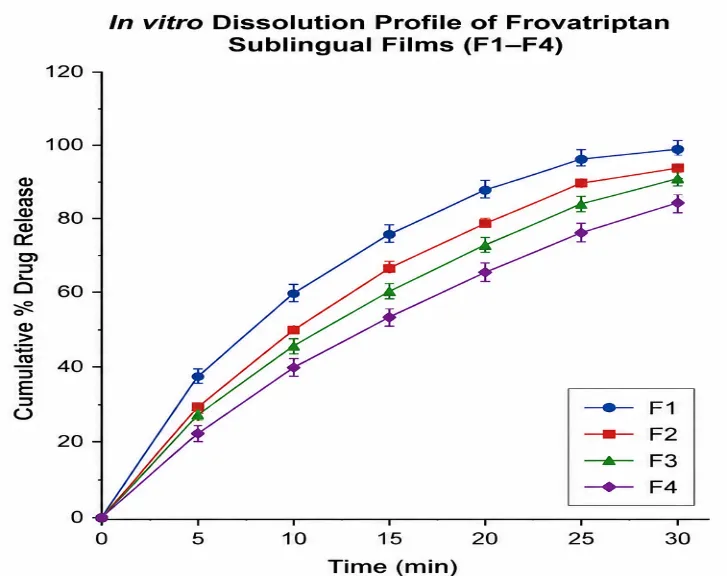
Figure 3: Dissolution Profiles of Frovatriptan FDSFs Formulations F1-F4
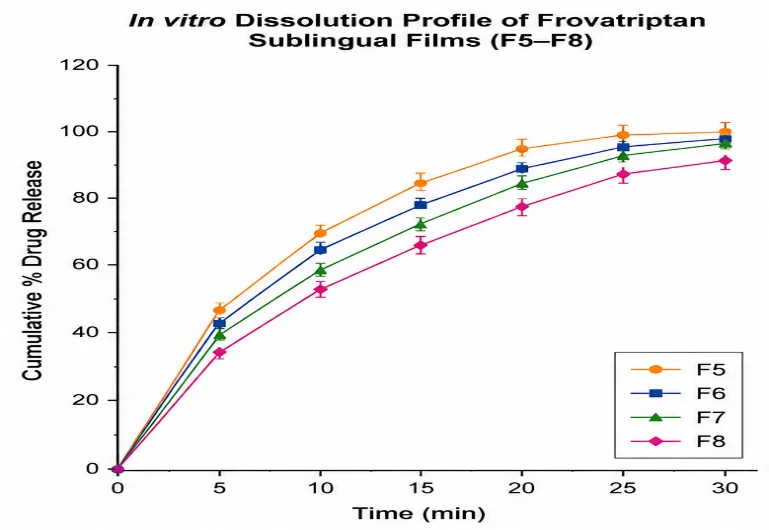
Figure 4: Dissolution Profiles of Frovatriptan FDSFs Formulations F5-F8
Based on physicochemical characteristics, disintegration time, drug content, and dissolution performance, F5 was identified as the optimized formulation. It exhibited a disintegration time of 29 ± 0.91 seconds, drug content of 99.26 ± 0.48%, and cumulative drug release of 99.94 ± 0.31% within 30 minutes. The combination of 200 mg HPMC E15 and 2% Polysorbate 80 provided favourable film characteristics and enhanced in-vitro drug release.
CONCLUSION
The present study successfully developed and evaluated Frovatriptan fast-dissolving sublingual films using the solvent-casting method. All eight formulations (F1–F8) exhibited satisfactory physicochemical properties, including uniform weight, thickness, surface pH, flexibility, and drug content. Among them, formulation F5 was identified as the optimized formulation, demonstrating the shortest disintegration time (29 ± 0.91 seconds) and highest drug release (99.94 ± 0.31%) within 30 minutes. The incorporation of 2% Polysorbate 80 enhanced film disintegration and drug dissolution. Overall, the combination of HPMC E15 and Polysorbate 80 proved suitable for developing Frovatriptan sublingual films with rapid disintegration and enhanced in vitro drug release, offering potential benefits in patient convenience and compliance. Further studies are required to establish their stability and in vivo performance.
REFERENCES

Dr. P. Sravanthi, J. Sravanthi, J. Sravanthi, S. Ramya Krishna, Formulation and Evaluation O Frovatriptan Sublingual Films, Int. J. of Pharm. Sci., 2026, Vol 4, Issue 11, 5873-5882. https://doi.org/10.5281/zenodo.24644715
 10.5281/zenodo.24644715