

We use cookies to ensure our website works properly and to personalise your experience. Cookies policy
Department of Pharmaceutical Chemistry, Al Shifa College of Pharmacy, Kizhattur, Perinthalmanna, Kerala
Chalcones contain a 1,3-diaryl-2-propen-1-one backbone that makes them relatively simple to synthesize. The ease and variety of subsequent modifications, along with a wide scope of potential medical applications, has captured the interest of both natural products chemists and medicinal chemists. Additional studies have shown that chalcones may have a positive effect on the neurodegenerative and the neuropsychiatric processes. This is due to their ability to block MAO, their anti-oxidant and anti-neuroinflammatory effects, and by regulating neurotrophic signaling. Most studies on chalcones in the context of neuropharmacology have been concerned with the treatment of Alzheimer’s and Parkinson’s diseases, while the scarce but highly significant research outcomes exist with respect to the use of chalcones in the therapies underlying ADHD and major depressive disorder, because both of these disorders are featured by catecholaminergic and monoaminergic disturbances very similar to those observed in other degenerative diseases. In this review, the major findings related to chalcones are summarized; the comparison of chalcone chemistry and pharmacotherapy of ADHD and depression currently exploited is provided with emphasis on the most recent primary articles published in this field before concluding with the evaluation of the shortcomings.
Neurodegenerative disorders and neuropsychiatric disorders show their connection through disturbances in neurotransmission, oxidative balance and neuroinflammatory activity. Alzheimer’s and Parkinson’s diseases are typical representatives of such disorders owing to their evident neuronal loss; however, the scope of disorders is wider than that since ADHD and MDD also have a common biochemical background, which includes disturbed dopaminergic and noradrenergic tone, changed activity of monoamine oxidase and low-grade neuroinflammation among others [1,2]. Because of the similarity of mechanisms, medicinal chemists started paying attention to drugs that can influence more than one disease pathway.
ADHD is a neurodevelopmental disorder characterized by inattention, hyperactivity and impulsivity. The disorder is also manifested due to the underactivity of the dopaminergic and noradrenergic system that links the prefrontal cortex, the striatum and the cerebellum [3]. Depression, on the other hand, is a mood disorder that is traditionally linked to deficit of monoamines and the monoaminergic theory of depression; however, a neuroinflammatory approach could also be used to explain this condition [4,5,6]. Despite existing differences in clinical manifestation, in both cases monoamine oxidase, the enzyme that is responsible for degradation of dopamine, noradrenaline and serotonin, as well as oxidative and inflammatory processes are disturbed [7,8].
Chalcones, natural and synthetic compounds classified as 1,3-diarylprop-2-en-1-ones, have been recognized for a long time as potential antioxidants, anti-inflammatory and enzyme-modulating compounds, thanks to their unbelievably convenient combination of synthetic simplicity and structural versatility [9,10]. Their ability to inhibit the MAO isoforms selectively and reversibly and to pass the blood-brain barrier due to their relatively small polar surface areas has made the scientific community interested in their neuropharmacological properties beyond the already proven anticancer, antibacterial, and anti-diabetic properties of chalcones [11,12]. The present review combines chemical aspects of chalcones, connects them to the modern treatment of ADHD and depression, and evaluates current studies that assess pharmacological properties of chalcones regarding their engagement in the neurobiology of ADHD and depression, as well as evaluates possible limitations connected with their medical use and plans for further studies.
2. CURRENT MEDICATIONS FOR ADHD AND DEPRESSION
2.1 Pharmacotherapy of ADHD
Methylphenidate and amphetamines are the stimulant drugs, which is commonly prescribed as medications for treating ADHD. The mechanism of action of this category of drugs consists in blocking of dopamine transporter (DAT) and noradrenaline transporter (NET), which causes an increase in the levels of these neurotransmitters in those cortico-striatal circuits that control attention and impulse control. Methylphenidate can help improve ADHD symptoms and emotional dysregulation but is associated with a number of side effects that might lead to loss of appetite, sleeping difficulties, heart problems, and some other limitations [13].
Alternative medications, for instance, atomoxetine, is a selective NET blocker, and some alpha-2 agonists, guanfacine, and clonidine, are less likely to serve as first-choice medications due to their prolonged effects when compared to stimulants. Additionally, clinical benchmarks have shown that one-third of patients do not respond appropriately to the treatment with stimulants. The occurrences of shortages of supplies of methylphenidate and amphetamine encourage patients to consider medications alternative to the traditional ones [14, 15].
2.2 Pharmacotherapy of Depression
SSRIs, including although not limited to sertraline and escitalopram, are still the first response in the treatment of major depressive disorder due to their tolerability in comparison to older medications [16]. SNRIs such as venlafaxine and duloxetine, bupropion, mirtazapine, and other similar antidepressants are also available but are preferred based on side-effect profile, co-existent conditions, or personal preferences instead of superior effectiveness. Older TCAs and MAOIs are still considered in difficult-to-treat cases where they are known for their good performance despite the limitations on their use because of adverse events related to them [17] .
Despite availability of different treatment options only one third of patients achieve remission during acute treatment, and a few patients develop treatment-resistant depression after two adequate treatment attempts [18]. New approaches to achieve antidepressant effect, including glutamategic agents or other mechanisms, were introduced into practice for cases with insufficient response to SSRIs or SNRIs [19].
3. CHALCONES: CHEMICAL AND BIOLOGICAL OVERVIEW
3.1 Chemical Structure and Synthesis
Chalcones (1, 3-diaryls-2-propen-1-ones), which have two aromatic rings that are connected through a three-carbon α, β- unsaturated ketone bridge, are represented as ring A (having the carbonyl group) and ring B [20]. Due to its unique open-chain form, chalcones differ from cyclic flavonoids, because in the process of biosynthesis, chalcone can be converted into cyclic flavonoids; however, there is the presence of reactive enone bridge which acts as a Michael-acceptor site in the interaction of chalcone with nucleophilic residues found in the active sites of the enzymes [21]. Chalcones are known for their flexibility regarding substitutions which may take place both on the aromatic rings, since different substituents may be introduced to the structure and this unique feature is the reason for the use of chalcone for structure-activity relationship (SAR) studies [8]. Chalcones are generated by the chalcone synthase enzyme through one p-coumaroyl-CoA reacting with three molecules of malonyl-CoA and forms the intermediate, naringenin chalcone, which can undergo a similar reaction in reverse to be converted to its flavonoid analogue [22]. It would be useful to discuss that the most widely recognised method for producing chalcones in the laboratory involves the Claisen-Schmidt condensation which is an acid- or base-catalysed aldol condensation between aromatic methyl ketone and aromatic aldehyde, proceeding through enolate formation, and aldol addition and subsequent dehydration of the product to the unsaturated conjugated ketone [21,22]. More contemporary green synthesis variations that involve, for example, microwave-, ultrasound- and mechanochemistry- aided synthetic approaches, have been employed with notable success; they increase yield and decrease solvent requirements without modifying the underlying condensation chemistry [23].
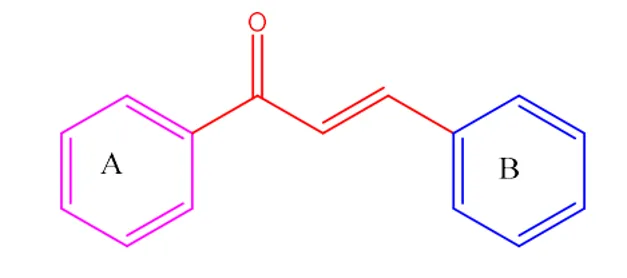
Fig 1: Structure of Chalcones
3.2 Biological Activity Profile
Chalcones have various pharmacological effects on inflammation, oxidation, microbes and parasite infections, anticancer, antidiabetes, neuroprotective, and so on. Chalcones can act as antioxidants due to the presence of an enone conjugated structure and hydroxyl or methoxy groups which are able to scavenge the radical species and activating the Nrf2 signaling pathway which has also been identified to contribute in the neuroprotection provided by chalcone molecules in diseases as like of neuro-inflammation on Alzheimer and Parkinson diseases. Furthermore we also want to highlight the possible impact of Chalcones on inhibiting the MAO enzyme which helps in metabolism of number of neurotransmitters namely nor-adrenalin, serotonin, dopamine…Etc.
As for chalcone derivatives they can be use to specifically inhibits either one isozyme of MAO i.e. MAO-A that is implicated in the regulation of level of neurotransmitters like serotonin and norepinephrine with depression or anxious disorders or MAO-B isozyme responsible in dopamine regulation involved in the etiologic process on neuro degenerative disorders like Alzheimer, Parkinson, ADHD diseases In addition to inhibitory role of enzymes Chalcones regulates neuro inflammation signaling by restraining liberation of cytokines via NF–kB Signaling; also mediate the neuro trophic signaling as a result of regulation in BDNF levels; and since some natural chalcones have an appropriate and a suitable level of lipid solubility which allow them to diffuse in a significant amount cross the blood–brain barrier, there’s an increasing interest on utilizing of this subclass compounds for neuroscience field [3,4].
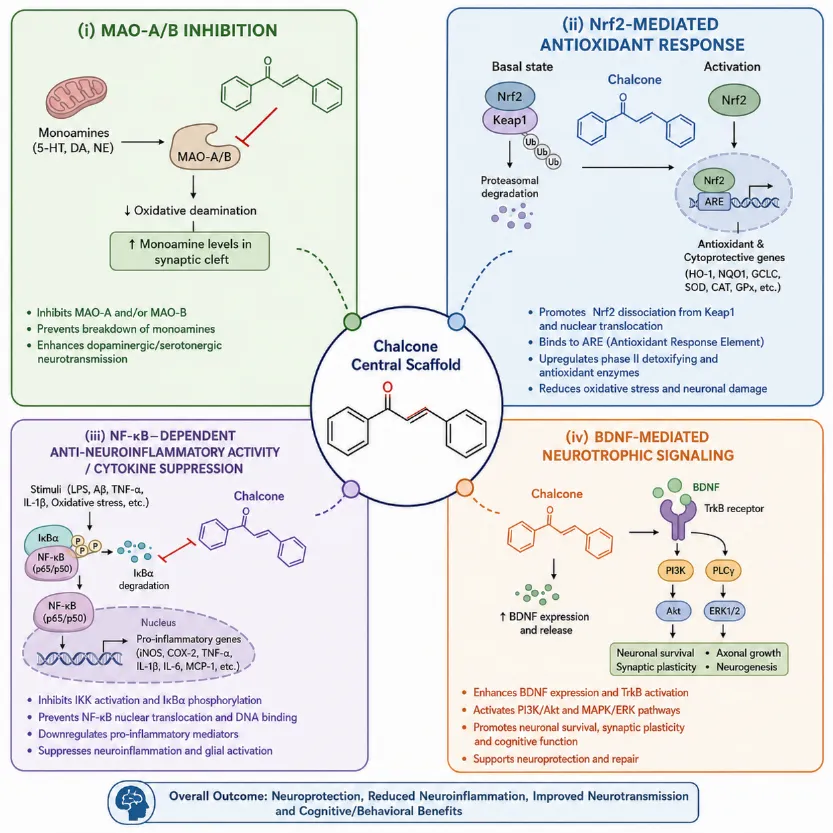
Fig 2: Overall outcome: Neuroprotection, reduced neuroinflammation, improved neurotransmission and cognitive/behavioral benefits
4. CHALCONES AS ADHD AGENTS: RECENT ADVANCEMENTS
Direct clinical or even preclinical behavioural studies naming chalcones as ADHD therapeutics remain scarce; the case for chalcones in ADHD is at present largely mechanistic, built on their well-characterised MAO-B and catecholamine-modulating pharmacology and increasingly reinforced by in silico drug discovery efforts explicitly targeting ADHD-relevant proteins. The five studies summarised below represent the most directly relevant recent primary literature connecting the chalcone scaffold to the catecholaminergic and oxidative mechanisms implicated in ADHD.
“Design, synthesis, and biological evaluation of chalcone derivatives as selective Monoamine Oxidase-B inhibitors with potential neuroprotective effects” (European Journal of Medicinal Chemistry, 2025).
Chalcone derivatives were obtained by Giorgio Facchetti et al, starting with the Claisen-Schmidt condensation, after which followed subsequent chemical modifications including selective reductions, and amide couplings, allowing these molecules to interact with monoamine oxidase B (MAO-B).The investigation of the synthesized compounds against the recombinant form of human MAO-B yielded potent compounds 4a, 4b, 4e and 5a, whose inhibition constants (Kᵢ) were characterized by submicromolar values. The structure–activity relationship (SAR) indicated the importance of having α,β-unsaturated carbonyl moiety in the compound, as well as the presence of aromatic substituents. The analysis of the data obtained from the crystal structure of MAO-B revealed the presence of conserved interaction patterns for MAO-B with the new inhibitors. The molecular modeling confirmed the favorable interactions and the flexibility of compound 5a acting in the enzyme’s binding site. As for the results of the cytotoxicity assays performed in both the normal and cancer cell lines, compound 5a displayed negligible cytotoxic properties. Additionally, the properties of this compound also proved its neuroprotective activity against the action of 6-hydroxydopamine (6-OHDA), the agent used for disease modeling [24].

Fig 3: General synthetic scheme for the preparation of substituted chalcone derivatives through Claisen–Schmidt condensation.
“Chalcone Derivatives with a High Potential as Multifunctional Antioxidant Neuroprotectors”
Pérez-González and co-workers used a computer-assisted rational design protocol (CADMA-Chem) to identify chalcone derivatives, most notably dCHA-553, with strong predicted binding to MAO-B and multifunctional antioxidant behaviour. 558 derivatives of chalcone were synthesized. Selection scores were generated from ADME, toxicity, and manufacturability descriptors, thus allowing selection of 23 compounds with drug-like properties. Reactivity indexes were calculated allowing to estimate both electronic and hydrogen donating properties of these compounds which are vital in antioxidant efficacy. dCHA-279, dCHA-568, dCHA-553, and dCHA-283 are considered to be active electron and hydrogen donors comparing to the reference antioxidants: Trolox, ascorbic acid, and α-tocopherol. Moreover, based on the results of computer docking they act as catechol-O-methyltransferase, acetylcholinesterase, and monoamine oxidase B inhibitors, thus confirming their multifunctional antioxidant activity and neuroprotective properties [25].
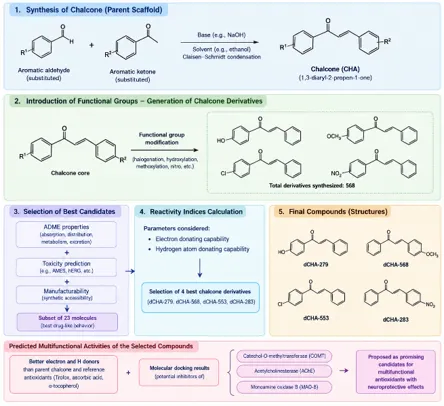
Fig 4: General synthetic scheme for the preparation of substituted chalcone derivatives through Claisen–Schmidt condensation.
“Design, synthesis, and evaluation of 1, 4-benzodioxan-substituted chalcones as
selective and reversible inhibitors of human monoamine oxidase B”
Zhuo Kong et al., designed, synthesized and evaluated a series of 1,4-benzodioxan-substituted chalcone derivatives as an effective approach for the treatment of various neurological disorders. Majority of these compounds showed inhibitory activity and high selectivity. Of these, compound (E)-1-(3-bromo-4-fluorophenyl)-3-(2,3-dihydrobenzo[b][1,4]dioxin-6-yl)prop-2-en-1-one showed an IC50 value of 0.026 mM with a selectivity index more than 1538. The kinetic and reversibility studies showed that the active compounds acted as competitive and reversible inhibitors of hMAO-B, which are typical characteristics of the active compounds. The enzyme-inhibitor interactions were studied by molecular docking studies to give the rationale. These potent hMAO-B inhibitors showed low neurotoxicity and good drug-like properties [26].
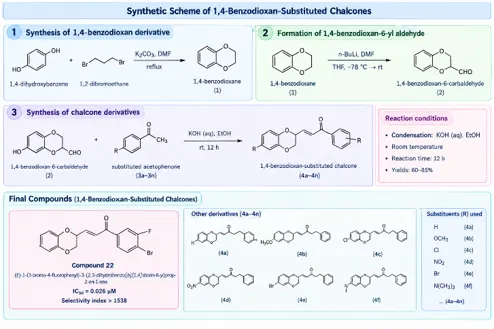
Fig 4: General synthetic scheme for the preparation of 1,4-Benzodioxan-substituted chalcone derivatives through Claisen–Schmidt condensation.
“Discovery of potential attention deficit and hyperactivity disorder (ADHD) drug molecules from natural compounds: In silico studies with Tanimoto similarity”
Onur Ertik compared methylphenidate with 790,096 natural compounds using Tanimoto similarity. He filtered the molecules based on their ability to cross the blood-brain barrier and docked these molecules with the dopamine transporter (DAT) and found compounds that bind better than methylphenidate. The best candidates were further tested with molecular dynamics simulations to check their stability. The study also included docking and simulations for monoamine oxidase A and B (MAO-A and MAO-B) to address depression, which often occurs in people with ADHD. The results point to one compound, 3706153 ((octahydro-1H-quinolizin-1-yl)methyl 2-(naphthalen-1-yl)acetate), as a promising inhibitor of DAT, MAO-A, and MAO-B. This compound could serve as a base for developing new ADHD drugs from natural sources [27].
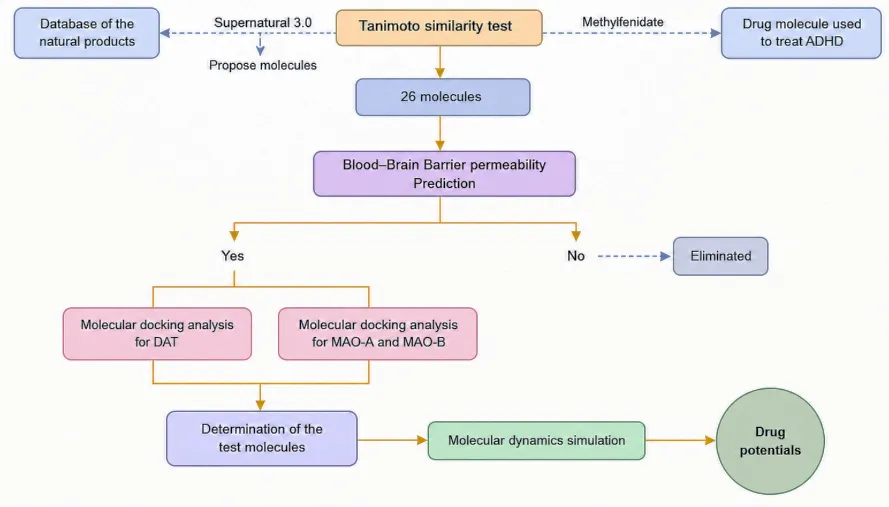
Fig 5: Flowchart of the study
Taken together, these four studies indicate that the case for chalcones in ADHD currently rests on mechanistic plausibility, principally selective and reversible MAO-B inhibition and catecholamine preservation, together with early in silico validation against dopamine-transporter-related targets, rather than on dedicated behavioural or clinical ADHD trials. This represents a genuine gap in the literature and a clear opportunity for hypothesis-driven preclinical work using established ADHD models such as the spontaneously hypertensive rat [27,33].
5. CHALCONES AS ANTIDEPRESSANT AGENTS: RECENT ADVANCEMENTS
In contrast to the ADHD literature, a modest but more direct body of preclinical work has evaluated chalcone derivatives specifically for antidepressant-like activity, using established rodent behavioural despair models and, more recently, neuroinflammatory and neurotrophic readouts. Five representative recent studies are summarised below.
“Antidepressant-like Effect of a Chalcone Compound, DHIPC and Its Possible Mechanism”
Wang et al., synthesised the chalcone compound DHIPC (2,4-dichloro-2′-hydroxy-4′,6′-diisoprenyloxychalcone) and examined it with mice using force swimming test and tail suspension test, a type of animal model of depression. When given orally, DHIPC caused immobility to be dose-dependently decreased and, at dose 30 mg/kg, had equivalent efficacy as the approved drug fluoxetine (positive control). By determining monoamine neurotransmitter levels of the brains of mice and rats, they observed increases in serotonin, noradrenaline, and 5-hydroxyindoleacetic acid in the hippocampus, hypothalamus, and cortex regions of the brains after DHIPC administration, suggesting that the antidepressant-like activity is related to increase in serotonin and noradrenaline signaling in the brain [28].
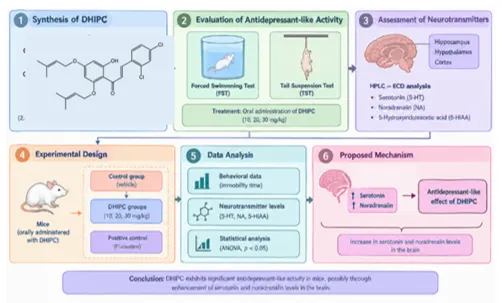
Fig 6: Antidepressant-like effect of DHIPC and its possible mechanism
“Evaluation of Potential Antidepressant-Like Activity of Chalcone-1203 in Various Murine Experimental Depressant Models”
Li-Ping Guan et al., evaluated chalcone-1203 across the FST, TST and open-field test in mice, finding significant reductions in immobility time at doses of 1-10 mg/kg in both behavioral despair paradigms, with oral bioavailability confirmed in the FST [20,21]. Furthermore, chalcone-1203 displayed strong oral
activity in the FST in mice and significantly decreased ambulation in the open-field test in non-habituated mice, but did not affect locomotor activity in habituated mice. The main monoamine neurotransmitters and their metabolites in mouse brain regions were also simultaneously quantified by HPLC–ECD, and the results showed that chalcone-1203 significantly increased the concentrations of 5-HT and NE in the hippocampus, hypothalamus and cortex, and significantly decreased the ratio of 5-HIAA/5-HT in the hippocampus and cortex (decreased 5-HT metabolism) compared to those mice treated with stress vehicle. Overall, chalcone-1203 showed significant antidepressant-like activity, and the antidepressant-like action may be mediated by increased 5-HT and NE in the mouse hippocampus and cortex [29].
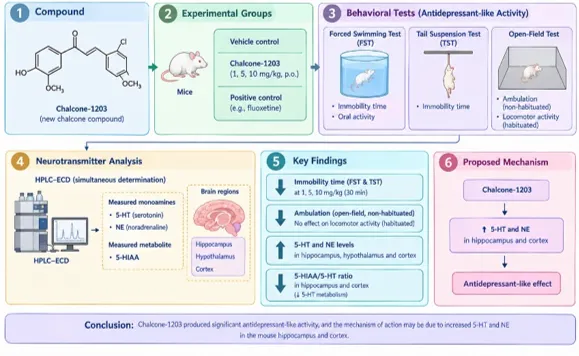
Fig 7: Antidepressant-like activity of chalcone-1203 and its possible mechanism
“Isoliquiritin ameliorates depression by suppressing NLRP3-mediated pyroptosis via miRNA-27a/SYK/NF-κB axis”
The NLRP3-mediated pyroptosis, potentially regulated by miRNA-27a, plays an important role in depression. Isoliquiritin is a phenolic flavonoid compound that was shown to inhibit NLRP3-mediated pyroptosis, but the antidepressant activity of isoliquiritin via decreasing NLRP3-mediated pyroptosis by upregulating miRNA-27a remains unknown. Therefore, the current study aimed to investigate the antidepressant activity of isoliquiritin and its mechanism of action. The levels of miRNA-27a in depressed patients or mice were determined by qRT-PCR. The relationship between miRNA-27a and SYK was demonstrated by luciferase reporter assay. LPS and CSDS depression models were established to examine the antidepressant actions of isoliquiritin. The changes in the miRNA-27a/SYK/NF-κB axis and NLRP3-mediated pyroptosis were examined. This work situates chalcone-class molecules within the neuroinflammatory model of depression, complementing the older monoamine-elevation studies [30].
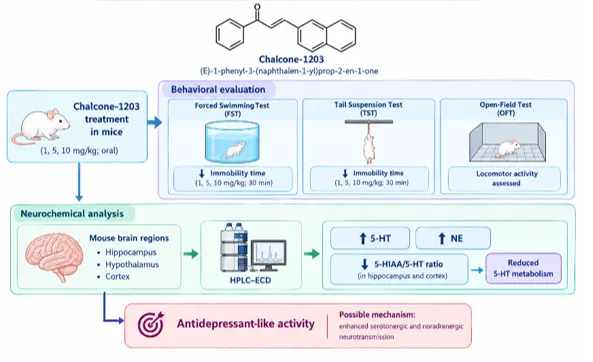
Fig 8: Antidepressant-like Activity of Chalcone-1203
“Exploration of chlorinated thienyl chalcones: A new class of monoamine oxidase-B inhibitors”
Bijo Mathew et al., synthesized a series of 11 para-substituted chlorinated thienyl chalcone and screened for hMAO-A and -B inhibition. Except for compound (2E)-1-(4-chlorocyclopenta-1,3-dien-1-yl)-3-(4-nitrophenyl) prop-2-en-1-one (TC7), which was a selective MAO-A inhibitor, all the other derivatives potently and selectively inhibited hMAO-B, with a competitive mode of inhibition, and the most potent compound (2E)-1-(4-chlorocyclopenta-1,3-dien-1-yl)-3-(4-ethylphenyl) prop-2-en-1-one (TC6) exhibited the best activity and higher selectivity towards hMAO-B with Ki and SI values of 0.31 ± 0.02 μM and 16.84, respectively. All the compounds reported in the present study are nontoxic, with 74-88% viable cells to hepatic cells at 100 μM concentration. This structure-activity dataset demonstrates that comparatively small substituent changes on the chalcone scaffold can shift isoform selectivity between a Parkinsonian/ADHD-relevant MAO-B profile and a depression-relevant MAO-A profile, reinforcing the scaffold's utility as a tunable multi-indication pharmacophore [31].
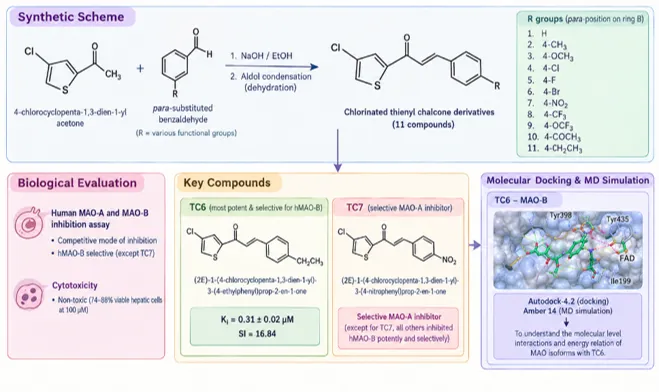
Fig 9: Synthesis of Chlorinated Thienyl Chalcone Derivatives and their evaluation as MAO inhibitors
Collectively, these four studies illustrate a more mature evidence base for chalcones in depression than in ADHD, spanning classical monoamine-elevation behavioural pharmacology (DHIPC, chalcone-1203), neuroinflammatory and pyroptosis-based mechanisms (isoliquiritin), and structure-activity-driven MAO-A/MAO-B isoform selectivity work that provides a rational chemical basis for depression-oriented chalcone design [10,16,19,20,24].
6. FUTURE PERSPECTIVES
Some priorities have emerged after this synthesis. Firstly, behaviour validation of ADHD chalcone within the spontaneously hypertensive rat model is required to test the existing rationale of the mechanism involving MAO-B and the dopamine transporter, which can then be assessed against functional measurements as opposed to only enzymatic assays.
Secondly, given the clinical comorbidity of ADHD and depression, single/matched compound pairs could be designed to address the catecholaminergic deficit of ADHD as well as the monoamine and neuroinflammatory dysfunctions associated with depression. Pharmacokinetics is the main barrier for translation of the ADHD chalcone. Several natural chalcones show blood-brain barrier penetrability due to a small polar surface area. Nevertheless, there is limited information on the exposure of these compounds in the central nervous system along with their metabolic stability and chronic toxicity, when compared to the extensive data on the inhibition of enzymes. Also, the neuroinflammatory and neuroprotective effects of isoliquiritin on the NLRP3/pyroptosis pathway suggest that the negligence of chalcone research in depression could also provide a novel approach to monoamine oxidase inhibition in ADHD, especially since there have been no clinical trials of chalcone for depression or ADHD.
7. CONCLUSION
Chalcones occupy a unique position in neuropharmacology as a chemically simple structure that is flexible for synthesis. They are able to cross the blood - brain barrier and have selective binding abilities towards monoaminoxidase A, antioxidant, anti-neuroinflammatory, and anti-neuroinflammatory properties. The evidence for chalcones with regard to depression is well constructed, and several derivatives have demonstrated antidepressant-like activity through both classical mechanisms as well as neuroinflammatory and pyroptosis mechanisms. The evidence for chalcones and ADHD is less constructed and more speculative, and relies on the scaffold's monoaminoxidase B and catecholamines conserving pharmacology and early in silico drug discovery for the dopamine transporter. Given the monoaminergic, oxidative and neuroinflammatory disturbances that are associated with both disorders as well as the current employed pharmacotherapeutics that are suboptimal for tolerability, abuse liability and lack of efficacy, chalcones have good justification to be studied as future pharmacotherapeutics for ADHD and depression with the aim of being multi-targeted. This will require further research on the behavioral and clinical effects of chalcones
REFERENCES



Amrutha P Anil, Sanal Dev, Alagha K, Artha Rajagopal K, Fathima C, Hiba Abdul Razak, Megha Santhosh M, Chalcones as Modulators of Neurodegenerative Processes: Role in ADHD and Depression, Int. J. of Pharm. Sci., 2026, Vol 4, Issue 10, 919-931. https://doi.org/10.5281/zenodo.23202694
 10.5281/zenodo.23202694