

We use cookies to ensure our website works properly and to personalise your experience. Cookies policy
Mahatma Gandhi Vidyamandir's Pharmacy College, Nashik, 422003
Varicose veins are a common vascular disorder characterized by dilated and tortuous superficial veins, particularly in the lower extremities, and may cause pain, itching, swelling, skin discoloration, venous ulceration, and thrombosis in advanced cases. Herbal ingredients with antioxidant and anti-inflammatory properties may provide a potential approach for topical management of associated symptoms. The present study aimed to formulate and evaluate a herbal anti-varicose cream containing grape seed (Vitis vinifera) extract and Bacopa monnieri extract. Both extracts were prepared using an aqueous extraction process and incorporated into a cream base containing beeswax, glycerin, cetostearyl alcohol, and sodium benzoate. Two formulations, F1 and F2, were prepared by varying the concentrations of beeswax and glycerin. The formulations were evaluated for physical appearance, colour, odour, texture, washability, pH, spreadability, phase separation, greasiness, and homogeneity. Preliminary phytochemical screening of grape seed extract indicated the presence of steroids and polyphenolic constituents, including flavonoids and proanthocyanidin-related components. Both formulations exhibited a faint yellow colour, aromatic odour, smooth texture, and semisolid consistency. F1 and F2 were easily washable, non-greasy, homogeneous, and showed no phase separation. The pH values were 6.0 and 6.5, while spreadability values were 18 and 16 cm for F1 and F2, respectively. Overall, the developed grape seed–Bacopa monnieri herbal cream demonstrated acceptable preliminary physicochemical characteristics and physical stability during the evaluation period. Further studies involving standardized phytochemical characterization, antioxidant and anti-inflammatory assays, accelerated stability testing, and clinical evaluation are warranted to establish its therapeutic potential for managing varicose-vein-associated symptoms.
Varicose veins are dilated, elongated and tortuous superficial veins that commonly occur in the lower extremities. They are associated with abnormalities of venous valves and impaired venous return, resulting in venous pooling and increased venous pressure. Although varicose veins may initially present as a cosmetic concern, patients may experience pain, discomfort, itching, swelling, skin discoloration and, in severe cases, complications such as venous ulceration, thrombosis and bleeding (1,2).
Normal venous circulation in the lower limbs depends on the coordinated function of the venous valves and the calf-muscle pump. Venous valves permit blood to move toward the heart while preventing retrograde flow. Dysfunction of these valves can result in reflux and pooling of blood, ultimately contributing to venous hypertension and venous dilation (3,4). Risk factors reported for varicose veins include increasing age, family history, obesity, pregnancy, hormonal influences and prolonged periods of standing or sitting (1,5).
Treatment approaches for varicose veins include conservative measures, compression therapy, sclerotherapy, endovenous procedures and surgery. Sclerotherapy is one established intervention, although treatment selection depends on disease severity and individual clinical circumstances (6). Consequently, interest has increased in complementary approaches based on naturally occurring phytoconstituents with antioxidant and anti-inflammatory properties.
Grape seed obtained from Vitis vinifera is rich in phenolic compounds, flavonoids and proanthocyanidins. Grape seed-derived polyphenols have been investigated for antioxidant, anti-inflammatory and cardiovascular-related effects (7–9). Proanthocyanidins are particularly important constituents of grape seeds and contribute substantially to their antioxidant activity (8,9).
Bacopa monnieri, commonly known as Brahmi, contains bioactive constituents including bacosides and triterpenoid saponins. Various pharmacological activities have been reported for B. monnieri, including antioxidant and anti-inflammatory effects (10,11). The uploaded project selected grape seed extract as an anti-inflammatory component and B. monnieri extract as an antioxidant component for incorporation into a topical herbal cream.
Topical cream provides a convenient dosage form for application to the skin and may facilitate localized delivery of botanical constituents. Cream formulations can additionally provide emollient and moisturizing effects, which may improve skin comfort and appearance. The present study therefore focused on the formulation and preliminary physicochemical evaluation of a grape seed–B. monnieri herbal cream intended as a potential supportive topical formulation for varicose-vein-associated symptoms. (17,18)
2. AIM AND OBJECTIVES
2.1 Aim
To formulate and evaluate an anti-varicose herbal cream using grape seed extract.
2.2 Objectives
3. MATERIALS AND METHODS
3.1 Materials
Grape seeds of Vitis vinifera and Bacopa monnieri powder were selected as herbal materials. Beeswax, glycerin, cetostearyl alcohol and sodium benzoate were used as formulation excipients. (8,10)
Table 1. Herbal ingredients used in the formulation
|
Sr. No. |
Plant |
Scientific name |
Part used |
Intended role |
|
1 |
Grape |
Vitis vinifera |
Seeds |
Anti-inflammatory |
|
2 |
Brahmi |
Bacopa monnieri |
Stem/ powder |
Antioxidant |
The source thesis identifies grape seed extract as an anti-inflammatory component and B. monnieri extract as an antioxidant component.
Table 2. Excipients and their roles
|
Sr. No. |
Ingredient |
Role |
|
1 |
Grape seed extract |
Herbal active |
|
2 |
Bacopa monnieri extract |
Herbal active |
|
3 |
Glycerin |
Humectant |
|
4 |
Beeswax |
Thickening/ consistency agent |
|
5 |
Cetostearyl alcohol |
Emulsifying/ consistency agent |
|
6 |
Sodium benzoate |
Preservative |
|
7 |
Purified water |
Vehicle |
These ingredient roles were specified in the original formulation plan.
4. PREPARATION OF EXTRACTS
4.1 Preparation of Grape Seed Extract
Grape seed powder, approximately 30 g, was taken and extracted with 800 mL of water. The mixture was heated/boiled for approximately 2 h and subsequently filtered. The filtrate was evaporated to obtain the extract in powdered form. (20)
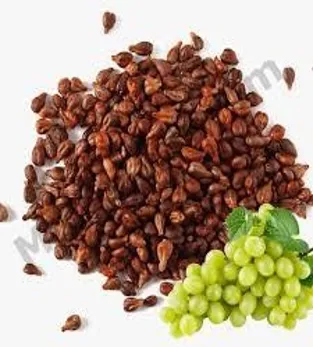

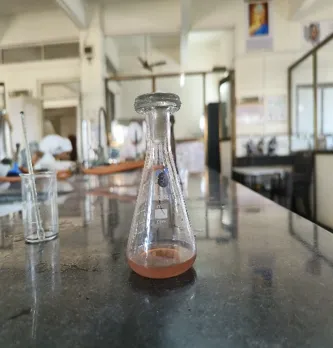
Figure 1. Schematic representation of grape seed extraction
Grape seeds → Powdering → 30 g powder + 800 mL water → Heating for 2 h → Filtration → Filtrate → Evaporation → Grape seed extract
4.2 Preparation of Bacopa monnieri Extract
Approximately 30 g of B. monnieri powder was extracted using 800 mL water. The mixture was heated for approximately 2 h and filtered. The filtrate was evaporated to obtain the powdered extract. (10)
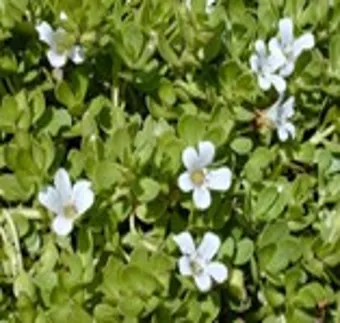

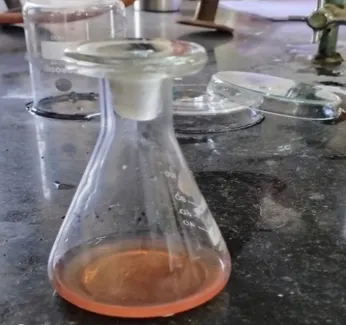
Figure 2. Schematic representation of Bacopa monnieri extraction
Brahmi powder → 30 g powder + 800 mL water → Heating for 2 h → Filtration → Filtrate → Evaporation → B. monnieri extract
5. FORMULATION DEVELOPMENT
Two formulations, F1 and F2, were prepared. The formulations differed mainly in the concentrations of beeswax and glycerin.
Table 3. Composition of herbal cream formulations
|
Ingredient |
F1 |
F2 |
Function |
|
Grape seed extract |
3 g |
3 g |
Herbal active |
|
B. monnieri extract |
4 g |
4 g |
Herbal active |
|
Beeswax |
5 g |
4 g |
Thickener |
|
Glycerin |
6 g |
7 g |
Humectant |
|
Cetostearyl alcohol |
1 g |
1 g |
Emulsifier/ consistency agent |
|
Sodium benzoate |
1 g |
1 g |
Preservative |
|
Water |
q.s. |
q.s. |
Vehicle |
The formulation composition was taken from the experimental formulation table in the uploaded thesis.
6. PREPARATION OF HERBAL CREAM
The required quantities of grape seed extract, B. monnieri extract, beeswax, glycerin, cetostearyl alcohol and sodium benzoate were weighed accurately. (15–17)
6.1 Preparation of oil phase
Beeswax and cetostearyl alcohol were mixed and heated to approximately 70°C in a hot-water bath. (15–17)
6.2 Preparation of aqueous phase
Glycerin, sodium benzoate and water were mixed and heated to approximately 70°C. (15–17)
6.3 Incorporation of herbal extracts
Both herbal extracts were incorporated into the aqueous phase. The aqueous phase was subsequently combined with the heated oil phase with continuous mixing. Mixing was continued until a uniform cream consistency was obtained. The formulation was allowed to cool and subsequently transferred into suitable containers for storage. (15–17)
6.4 Formulation development workflow
Weighing of ingredients
↓
Preparation of oil phase at ~70°C
(Beeswax + cetostearyl alcohol)
↓
Preparation of aqueous phase at ~70°C
(Glycerin + sodium benzoate + water)
↓
Addition of herbal extracts
↓
Mixing of aqueous and oil phases
↓
Continuous homogenization/mixing
↓
Cooling
↓
Filling into container
↓
F1 / F2 herbal cream
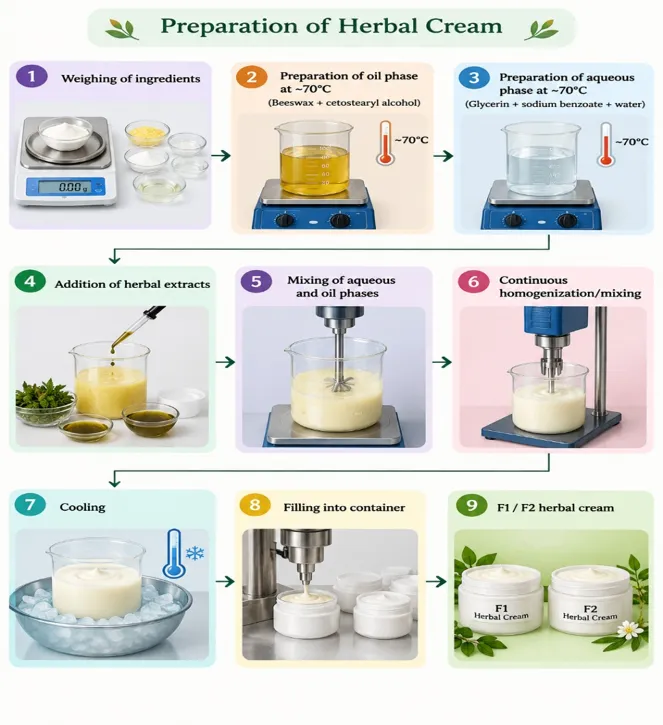
Figure 3. Formulation development workflow
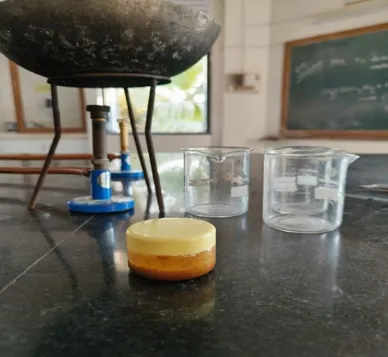
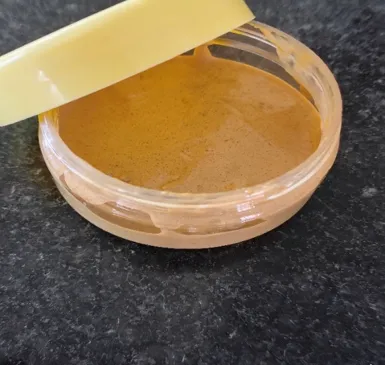
Formulation Batch 1 Formulation Batch 2
Figure 4. Formulation Batches
7. Preliminary Phytochemical Evaluation
The grape seed extract was subjected to preliminary phytochemical tests.
7.1 Salkowski Test for Steroids
The grape seed extract was treated with chloroform and concentrated sulfuric acid. A reddish-brown colour was observed, indicating a positive reaction for steroids.
7.2 Tests for Polyphenolic Constituents
The extract was subjected to different qualitative reactions involving sulfuric acid, boric acid, hydrochloric acid and ferric chloride. The observations reported in the source thesis indicated the presence of polyphenolic/flavonoid-related constituents and proanthocyanidin-related compounds.
Table 4. Preliminary phytochemical screening of grape seed extract
|
Test |
Treatment |
Observation |
Inference |
|
Salkowski test |
Extract + chloroform + conc. H₂SO₄ |
Reddish-brown colour |
Steroids present |
|
Polyphenol test |
Extract + H₂SO₄ |
Brown colour |
Oxidation of polyphenolic constituents |
|
Boric acid test |
Extract + boric acid |
Pinkish colour |
Flavonoid/ polyphenol-related constituents |
|
HCl test |
Extract + HCl |
Dark yellow colour |
Polyphenols present |
|
Ferric chloride test |
Extract + FeCl₃ |
Blue colour |
Polyphenol/ proanthocyanidin-related constituents |
8. Evaluation of Herbal Cream
The formulations were evaluated for physical appearance, washability, pH, phase separation, irritancy, greasiness, homogeneity and spreadability. (15–17)
8.1 Physical Evaluation
Colour, odour, texture and physical state of the cream were examined visually. (15–17)
8.2 Washability
A small quantity of cream was applied to the hand and washed under running water. The ease with which the formulation was removed was recorded. (17)
8.3 pH
Approximately 0.5 g of cream was dispersed in 50 mL distilled water and the pH was determined using a digital pH meter. (17)
8.4 Phase Separation
The formulations were observed for evidence of phase separation during the reported stability observation period. (17)
8.5 Irritancy
The source methodology describes application to a marked skin area followed by observation for irritation over 24 h. (17)
8.6 Greasiness
The cream was applied to the skin as a thin smear and examined for an oily or greasy residue. (17)
8.7 Homogeneity
Homogeneity was assessed visually and by touch for uniform distribution and smoothness. (17)
8.8 Spreadability
Spreadability was determined using two glass slides. A quantity of cream was placed between the slides and a load was applied. After removing excess formulation, the upper slide was allowed to move under the applied weight. The time required for movement was recorded. (15–17)
The reported equation was: (15–17)
S=M×LT

Where:
9. RESULTS
9.1 Physical Evaluation
Both formulations showed acceptable physical characteristics. F1 and F2 were described as faint yellow, aromatic, smooth and semisolid.
Table 5. Physical characteristics of F1 and F2
|
Parameter |
F1 |
F2 |
|
Colour |
Faint yellow |
Faint yellow |
|
Odour |
Aromatic |
Aromatic |
|
Texture |
Smooth |
Smooth |
|
Physical state |
Semisolid |
Semisolid |
9.2 Evaluation of Formulations
Table 6. Comparative evaluation of F1 and F2
|
Sr. No. |
Evaluation parameter |
F1 |
F2 |
|
1 |
Physical appearance |
Faint yellow, aromatic, smooth, semisolid |
Faint yellow, aromatic, smooth, semisolid |
|
2 |
Washability |
Easily washable |
Easily washable |
|
3 |
pH |
6.0 |
6.5 |
|
4 |
Spreadability |
18 cm |
16 cm |
|
5 |
Phase separation |
Not observed |
Not observed |
|
6 |
Greasiness |
Non-greasy |
Non-greasy |
|
7 |
Homogeneity |
Uniform distribution |
Uniform distribution |
The values above reproduce the experimental observations reported in the source thesis.
10. RESULTS AND DISCUSSION
The present investigation was undertaken to develop a topical herbal cream containing grape seed and B. monnieri extracts. The selection of these botanical ingredients was based on the presence of bioactive constituents and their reported antioxidant and anti-inflammatory properties. Grape seeds contain polyphenols, flavonoids and proanthocyanidins, which have been associated with antioxidant and vascular-supportive properties (7–9). B. monnieri contains bacosides and other constituents and has been investigated for antioxidant and anti-inflammatory effects (10,11).
The preliminary phytochemical screening of the grape seed extract gave positive reactions for steroids and polyphenolic/flavonoid-related constituents. In particular, the ferric chloride reaction was reported to produce a blue colour interpreted in the source study as indicative of polyphenolic/proanthocyanidin-related constituents. These findings are consistent with the established phytochemical profile of grape seeds, which are recognized as a source of polyphenolic compounds and proanthocyanidins (8,9).
Two cream formulations were developed by maintaining the quantities of the two herbal extracts while varying the proportions of beeswax and glycerin. F1 contained 5 g beeswax and 6 g glycerin, whereas F2 contained 4 g beeswax and 7 g glycerin. The variation was therefore intended to modify the consistency and humectant characteristics of the cream.
Both formulations demonstrated a faint yellow colour and aromatic odour. Their smooth texture and semisolid consistency indicated satisfactory preliminary physical characteristics. Both formulations were also reported to be easily washable and non-greasy, characteristics that are desirable for topical preparations because excessive greasiness may reduce patient acceptability.
The pH values of F1 and F2 were 6.0 and 6.5, respectively. The relatively small difference between the two formulations indicates that modification of beeswax and glycerin concentration within the tested range did not substantially alter the measured pH.
Spreadability was reported as 18 cm for F1 and 16 cm for F2. The higher reported spreadability of F1 may be associated with its formulation characteristics; however, because the source data do not provide the corresponding load, slide length and time measurements, a quantitative mechanistic comparison should be interpreted cautiously. The source thesis defines spreadability in terms of the relationship between applied weight, slide length and movement time.
Neither formulation showed phase separation during the reported evaluation. Both formulations also demonstrated uniform distribution of ingredients and satisfactory homogeneity. These observations suggest acceptable preliminary physical stability of the prepared cream under the reported conditions.
The findings are broadly consistent with the rationale for developing topical herbal formulations containing plant extracts with antioxidant and anti-inflammatory properties. Previous literature has discussed the potential role of grape-derived polyphenols in antioxidant and cardiovascular health and has described herbal approaches as an area of interest in the management of varicose-vein-associated symptoms (7,12–14).
However, the present study primarily establishes formulation feasibility and preliminary physicochemical acceptability. The reported results do not by themselves establish clinical efficacy against varicose veins. Further investigations such as quantitative marker estimation, antioxidant assays, anti-inflammatory assays, rheological characterization, microbial testing, accelerated and long-term stability studies, skin-safety studies and appropriately designed clinical studies would be necessary before therapeutic claims can be established.
11. COMPARATIVE INTERPRETATION OF F1 AND F2
Table 7. Interpretation of formulation characteristics
|
Parameter |
F1 |
F2 |
Interpretation |
|
Grape seed extract |
3 g |
3 g |
Same herbal active concentration |
|
B. monnieri extract |
4 g |
4 g |
Same herbal active concentration |
|
Beeswax |
5 g |
4 g |
Higher in F1 |
|
Glycerin |
6 g |
7 g |
Higher in F2 |
|
pH |
6.0 |
6.5 |
Both showed comparable pH |
|
Spreadability |
18 cm |
16 cm |
F1 showed greater reported spreadability |
|
Phase separation |
No |
No |
Acceptable preliminary physical stability |
|
Greasiness |
Non-greasy |
Non-greasy |
Suitable topical characteristic |
|
Homogeneity |
Uniform |
Uniform |
Good physical uniformity |
|
Washability |
Easy |
Easy |
Good topical acceptability |
Because the original work does not report statistical replicates or inferential statistical analysis, the difference between F1 and F2 should be regarded as an observed formulation difference rather than a statistically established superiority.
12. PROPOSED MECHANISTIC RATIONALE
The proposed rationale of the formulation can be represented as follows:
Grape seed extract
↓
Polyphenols + flavonoids + proanthocyanidin-related constituents
↓
Antioxidant and potential anti-inflammatory activity
↓
Potential reduction of oxidative/inflammatory burden associated with symptoms +
Bacopa monnieri extract
↓
Bacosides and other phytoconstituents
↓
Antioxidant/anti-inflammatory potential
↓
Potential supportive effect on vascular/skin health +
Topical cream base
↓
Localized application + moisturizing/emollient effect
↓
Potential improvement in skin comfort and formulation acceptability
Figure 4. Proposed mechanism of action
Overall proposed outcome:
Herbal topical formulation → potential supportive management of varicose-vein-associated discomfort and skin symptoms
This represents a research hypothesis/rationale, not proof of clinical therapeutic efficacy.
13. LIMITATIONS OF THE STUDY
The study has several limitations that should be considered when interpreting the findings:
14. FUTURE SCOPE
Further research may focus on:
The source thesis similarly identifies standardization, mechanistic studies, clinical trials and further investigation of grape seed formulations as future research directions.
CONCLUSION
A herbal cream containing grape seed extract and Bacopa monnieri extract was successfully formulated using beeswax, glycerin, cetostearyl alcohol and sodium benzoate as formulation components. Preliminary phytochemical screening of grape seed extract indicated the presence of steroidal and polyphenolic/flavonoid-related constituents, including proanthocyanidin-associated reactions.
Both F1 and F2 demonstrated acceptable preliminary physical characteristics, including smooth texture, semisolid consistency, easy washability, non-greasy nature, uniform homogeneity and absence of observed phase separation. The pH values were 6.0 and 6.5, while reported spreadability values were 18 cm and 16 cm for F1 and F2, respectively.
The findings support the feasibility of developing a grape seed–B. monnieri herbal cream as a topical formulation. Nevertheless, the present findings are preliminary and should not be interpreted as clinical proof of anti-varicose efficacy. Further standardized phytochemical, pharmacological, stability, safety and clinical investigations are required to establish its therapeutic potential.
REFERENCES


Tanishq Padole, Trupti Nikhade, Formulation and Evaluation of a Herbal Anti-Varicose Cream Containing Grape Seed and Bacopa monnieri Extracts, Int. J. of Pharm. Sci., 2026, Vol 4, Issue 10, 932-943. https://doi.org/10.5281/zenodo.23202808
 10.5281/zenodo.23202808