

We use cookies to ensure our website works properly and to personalise your experience. Cookies policy
PG & Research Department of Zoology, Mar Ivanios College (Autonomous), Thiruvananthapuram -695015
Sesamum indicum (Sesame) seeds are a rich source of bioactive compounds, of which terpenoids are a major one. Terpenoids derived from plants make them a sustainable alternative to synthetic chemicals. Terpenoids are also biodegradable, reducing environmental pollution. The Soxhlet extraction of Sesamum indicum seed using petroleum ether yielded 165 g of crude oil from 200 g of sample (82.5% yield), indicating a high lipid content. The isolation of terpenoids from Sesamum indicum crude extract using ethanol and petroleum ether resulted in a yield of 8.26 mg of terpenoids per 100 mg of dry extract. The presence of terpenoids was estimated by qualitative analysis. Antibacterial activity of terpenoids of petroleum ether seed extract of Sesamum indicum (TPS) were assessed against human pathogenic bacterial species Staphylococcus aureus and Escherichia coli by the agar well diffusion method. The minimum zone of inhibition was found in S. aureus with a diameter of 10 mm and 9 mm corresponding to concentration 250 and 100 µg/mL respectively. The obtained result suggests that the terpenoids of the petroleum ether seed extract of Sesamum indicum (TPS) were very much effective against E. coli than S. aureus. The antifungal activity of TPS against Aspergillus niger and Epidermiphyton floccosum showed no activity. A dose dependent antioxidant activity was seen in the terpenoids of the petroleum ether seed extract of Sesamum indicum. The GC-MS analysis revealed the presence of fifteen bioactive compounds which include 9-Octadecenoic acid (Z)- oxiranyl methyl ester, 9-Desoxo-9-x-acetoxy-3,8,12-tri-O-acetylingol, and 3a-Trimethylsiloxy-5a,6a-Epoxycholestane. The antibacterial, antioxidant and GC-MS profiling of the terpenoids of petroleum ether seed extract of Sesamum indicum revealed the presence of bioactive compounds with important medicinal properties.
Sesamum indicum L. is the oldest oil-seed crop (Bisht et al., 1998). It belongs to family Pedaliaceae and is a perennial plant with opposite, broad lanceolate leaves. It is classified into black, yellow, and white based on germplasm colour, with white and black being the most common (Wei et al., 2022). It is commonly called as sesame (in Malayalam, Ellu). The seeds are small, ovate, slightly flattened and thinner at the hilum (Tunde-Akintunde and Akintunde, 2004). It is believed to be of African origin and is widely grown in India, China and Malaysia and China (Mili et al., 2021). Sesame plant products have anti-inflammatory, antioxidant, antimicrobial and anti-hypersensitive activities. (Elleuch et al., 2011; Namiki, 2007).
Terpenoids are the most numerous and structurally diverse natural products in many plants. They display a wide range of pharmacological properties and applications which are confirmed through several in vitro, preclinical and clinical studies (Ludwiczuk et al., 2017; Yang et al., 2020). Terpenoids are derived from Isoprene, a five-carbon compound which is serving as secondary metabolites in plants and lower invertebrates (Jahangeer et al., 2021).
Sesamum indicum exhibits antimicrobial properties against various bacteria, fungi, and other pathogens. The bioactive compounds present in the Sesamum indicum helps in its anti-microbial activities. Some of the key aspects contributing to the antimicrobial effects of Sesamum indicum are sesamol, sesamin, sesamolin, tochopherols and polyphenols. (Ref). Due to the nutritional and therapeutical values, sesame seeds are widely used as a functional food. The biological properties of sesame seeds correlate with the metabolites (Dossou et al., 2022). Sesame lignans are reported as an effective anticancer chemotherapeutics (Min He et al., 2025)
Terpenoids derived from plants are considered a sustainable alternative to synthetic chemicals due to biodegradability and multiple bioactivities such as antimicrobial, antioxidant, and anti-inflammatory properties, and have applications in pharmaceuticals, food, or agriculture. Consumers increasingly prefer natural products over synthetic ones, so researches on terpenoids from plants such as seeds of Sesamum indicum could lead to new discoveries and can increase the economic value of sesame seeds thereby making them an attractive alternative. The main objective of the present study is to validate the bioactive components of Sesamum indicum seeds by preliminary phytochemical screening and GC-MS analysis.
Materials And Methods
Collection of plant material
The plant material used for the study was the seeds of Sesamum indicum which was collected from Horticorps Stall, Thiruvananthapuram and was authenticated by Dr.Preetha S.S., Assistant Professor, Department of Botany, Mar Ivanios College, Thiruvananthapuram with the literature available.
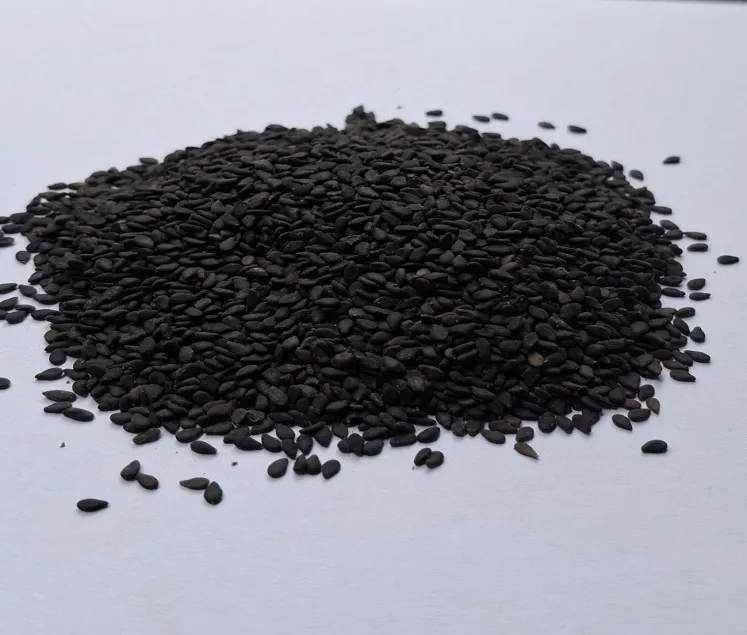
Figure 1: Seeds of Sesamum indicum
Preparation of Sesamum indicum seed extract
The plant seeds were ground to a uniform powder and stored in an airtight container for further use. A 200 g sample of the crushed seeds was subjected to hot extraction using Soxhlet apparatus for 48 hours using Petroleum Ether. The solvent from the extract was removed using a rotary vacuum evaporator under reduced pressure and stored in sterile, pre-weighed screw- capped containers at 4°C until ready for use.
Isolation of Terpenoids fraction under crude extract
Dried plant extract 100 mg was soaked in 9 mL of ethanol for 24 hours. The extract after filtration, was extracted with 10 mL of petroleum ether using a separating funnel. The solvent from the ether extract was removed by rotary vacuum evaporator under reduced pressure until dry and separated into pre-weighed glass vials. The ether extract was treated as total terpenoids (Indumathi et al., 2014).
Test for Terpenoids of Petroleum ether seed extract of Sesamum indicum (TPS)
The extract is mixed with 2 ml of chloroform, warm gently, cooled and then concentrated sulphuric acid is carefully added through the sides of the test tube to form a separate lower layer. Formation of reddish-brown color/precipitate at the interface indicates the presence of terpenoids.
Antioxidant activity
DPPH (1–1-diphenyl–2–picryl hydrazine) Free Radical Scavenging Assay
Free radical scavenging activity of the terpenoid extracts of S. indica was measured by the method of Mensor et al., (2001) with minor modifications. A methanolic solution of 1 mL of DPPH (0.1 mM) was added to 1 mL of different concentrations of the sample and allowed to react at room temperature for 30 min in the dark. Absorbance was measured at 517 nm. All the experiments were carried out in triplicates. Methanol served as blank and ascorbic acid was used as the positive control. Percent inhibition was determined according to the equation:
% of radical scavenging activity = [(Absorbance of blank – Absorbance of the Sample) / Absorbance of blank)] x100
IC50 value (mg extract/ml) (inhibitory concentration at which DPPH radicals were scavenged by 50%) was calculated from a graph plotting the percentage inhibition against the sample concentration. The smaller the IC50 higher the antioxidant activity of the sample.
Selection of microbial strains
Two bacterial strains Staphylococcus aureus (MTCC 87), Escherichia coli (MTCC 443) and two fungi Aspergillus niger (MTCC 1344) and Epidermiphyton floccosum (MTTC 7880) were obtained from the collections maintained at Biovent Innovations Pvt. Ltd., Department of Biotechnology, University of Kerala, Thiruvananthapuram.
Antibacterial activity
The antimicrobial activity of the different extracts of the plant was assayed by Agar Well Diffusion Method as described in European pharmacopeia with slight modification (Thankamani et al, 2011; Wayne, 2009). Sterile MHA plates were used for the test. Petri plates containing 20ml nutrient agar medium was seeded with bacterial strains. Wells of approximately 8 mm was bored using a well cutter. Plant extracts were prepared in DMSO (stock: 1mg/ml DMSO). The plant extracts of 100 and 250 µl concentrations were added. Streptomycin (0.125µl) and DMSO (100µl) were used as positive and negative controls respectively. The plates were then incubated at 37 °C for 24 h. The antimicrobials present in the plant extract are allowed to diffuse out into the medium and interact with the test organisms in the freshly seeded plate. The diameter of the zone of inhibitions was measured in millimeters after 24h.
Antifungal activity
The Agar Well Diffusion Method as described in European pharmacopeia with slight modification was used for antifungal testing (Berkow et al., 2020). Sabouraud Dextrose Agar (SDA) plates were prepared and inoculated with a fungal culture. Wells of approximately 8 mm was bored using a sterile cork borer and a volume of 100 µL extract solution at the desired volume is introduced into the well. The Antifungal activity was observed after incubating the plates for 3-7 days at 370C and the zone of inhibition surrounding the well was noted in mm. and samples of different concentration was added. The zone of inhibition was measured in millimeters after overnight incubation and compared with that of standard antimycotic (Clotrimazole) (10µl) which was used as positive control and DMSO (10%) as the negative control.
The percentage of inhibition (% I) was calculated by using the following formula:

The diameter of the test sample of 100 µl concentration of plant extract was taken for calculating the inhibition %.
Gas Chromatography-Mass Spectroscopy Analysis
The terpenoids of petroleum ether seed extract of Sesamum indicum (TPS) was analyzed for their chemical composition by Gas Chromatography-Mass Spectroscopy (Shimadzu Model QP2020) with Column SH-Rxi-5Sil MS). The oven temperature was maintained at 60°C for 8 minutes and 1.0µl of sample was injected for analysis. Helium was the carrier gas used which is having a flow rate 1 ml/mint. The sample injector temperature was maintained at 250 °C and the split ratio as 10 throughout the experimental periods. The ionization mass spectroscopic analysis was done with 70eV. The mass spectra were recorded for the mass range 10-20 m/z for about 8 minutes. The identity and quantity of the measured active compounds was correlated with that present in the database.
Identification of the phytoconstituents
The sample molecules were analyzed according to their mass-to-charge ratios. The chemical constituents of the components in the extract was determined by comparing the retention indices with their mass spectral fragmentation pattern of the known compounds stored in the National Institute of Standards and Technology (NIST) 17 library. As individual compounds eluted from the Gas chromatographic column, they entered the electron ionization detector where they bombarded with a stream of electrons causing them to break apart into fragments. The fragments were actually charged ions with a certain mass. The m/z ratio obtained was calibrated from the graph obtained which was called as the mass spectrum graph which is the fingerprint of the molecule. The phytochemical compounds are identified based on peak area, molecular weight and molecular formula. The relative percentage amount of each component was calculated by comparing its average peak area to the total areas.
Statistical analysis
The results were expressed in mean ± standard error mean (SEM) of the triplicates. The IC50 value of free radical scavenging activity was calculated using probit analysis method in SPSS (version 19).
RESULT
The present investigation has reported the in-vitro antioxidant activity, antimicrobial activity and GC-MS analysis of terpenoids of petroleum ether seed extract of Sesamum indicum (TPS). Total terpenoid content in the petroleum ether extract (TPS) was 8.26 mg/100 mg of dry extract.
Qualitative Test for Terpenoids of Petroleum ether seed extract of S. indicum (TPS) was done and revealed the strong presence of terpenoids in the dried extract.
Free Radical Scavenging Activity
Free radical scavenging activity of the crude extracts of TPS and ascorbic acid was carried out by DPPH assays which was found to be dose-dependent and the results were compared with the standard, ascorbic acid (Figure:3 & Figure 4). The TPS at concentration 1000 µg/mL showed 75% activity compared to that of standard, ascorbic acid 91.67%. Percent (%) scavenging activity was plotted against log concentration and from the graph IC50 (Inhibition concentration 50) value was calculated by linear regression analysis. IC50 value of ascorbic acid and sample were found 12.49 ± 0.21 µg/mL and 621.74 ± 0.02 µg/mL respectively. The percentage of DPPH scavenging capacity of the extract indicates the antioxidant activity of the plant.
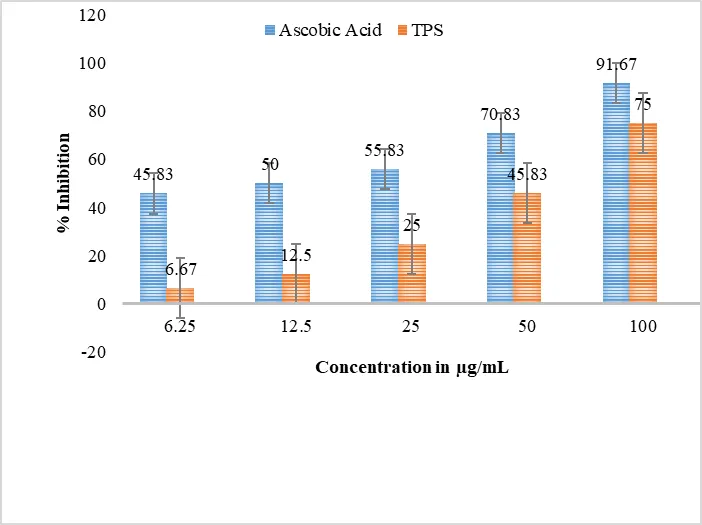
Figure 2: DPPH free radical scavenging activity of Terpenoids of Petroleum ether seed extract of S. indicum
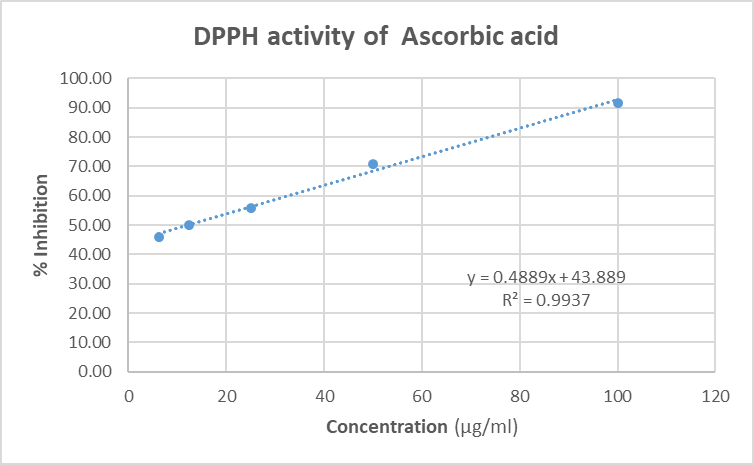
Figure 3: The graphical representation of % of inhibition v/s concentration of DPPH activity for ascorbic acid.
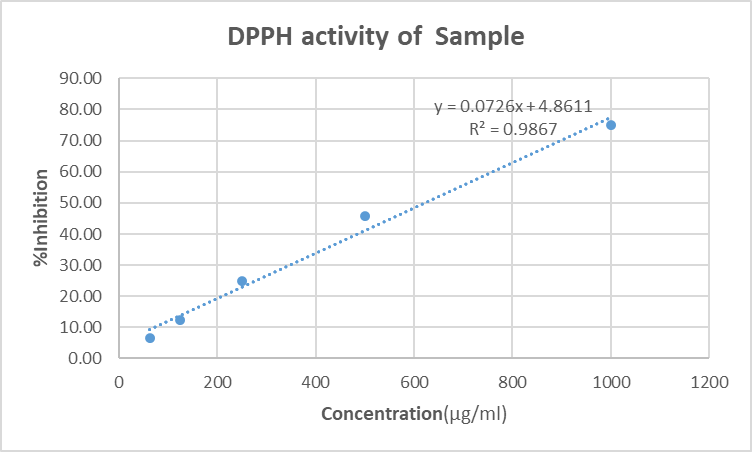
Figure 4: The graphical representation of % of inhibition v/s concentration of DPPH activity for sample
Antibacterial activity of TPS
The in-vitro antibacterial activity of Terpenoids of Petroleum ether seed extract of S. indicum under different concentration with the standard are given in the table 1. The zone of inhibition against Staphylococcus aureus was with a diameter of 9 mm and 10 mm corresponding to 100 and 250 µg/mL respectively. Similarly, in case of Escherichia coli, the zone of inhibition was obtained as diameter of 10 and 11 mm for 100 and 250 µg/mL respectively.
The percentage of inhibition by TPS extract showed maximum activity against E. coli (40 %) followed by S. aureus (33.1 %).
Table 1: Antibacterial activity of TPS
|
Sample Concentration (µg/mL) |
Zone of Inhibition (mm in diameter) |
|
|
Staphylococcus aureus |
Escherichia coli |
|
|
250 |
10 ± 031 |
11 ± 0.14 |
|
100 |
9 ± 0.12 |
10 ± 0.04 |
|
Streptomycin +CN |
27 ± 0.13 |
25 ± 0.42 |
|
DMSO -CN |
No activity |
No activity |
+CN: positive control, -CN: negative control. Values are mean± SE of triplicates.
Antifungal property of TPS
Table 2 data shows that biologically extracted terpenoids have no antifungal efficiency against clinically isolated Aspergillus niger and Epidermiphyton floccosum .
1 mg/mL concentration of sample was used for the screening. 100µg/mL of Clotrimazole was used as the standard drug (positive control) and 0.05% DMSO was used as the negative control. The antifungal activity was observed after incubating the plates for 3-7 days at 370 C and the zone of inhibition surrounding the well was noted in mm.
Table 2: Antifungal activity of TPS
|
Sample Concentration (mg/mL) |
Zone of inhibition (mm in diameter) |
|
|
Aspergillus niger |
Epidermiphyton floccosum |
|
|
100 |
No activity |
No activity |
|
250 |
No activity |
No activity |
|
Clotrimazole (+CP) |
15 ± 0.15 |
23 ± 0.12 |
|
DMSO (-CN) |
No activity |
No activity |
+CN: positive control, -CN: negative control. Values are mean± SE of triplicates.
Gas Chromatography/Mass Spectroscopy (GCMS) Analysis
GC-MS technique helps to identify the volatile matter present in the extract. The GC-MS analysis of Terpenoids of Petroleum ether seed extract of Sesamum indicum reveals the presence fifteen phytochemical constituents that could contribute to the medicinal property of the plant. The phytochemicals with their Retention time (RT), peak area in percentage, compound nature and its biological activity are given in the table. 1
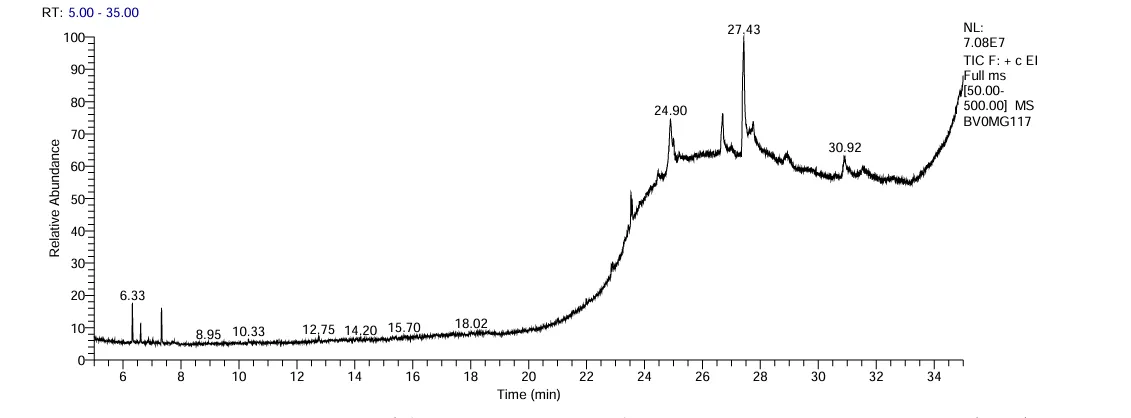
Figure 5: Chromatogram of GC-MS Analysis of Terpenoids of Petroleum ether seed extract of Sesamum indicum
Table 3: Phytochemical components identified in the terpenoids of Petroleum ether seed extract of Sesamum indicum by GC-MS
|
Sl.No.. |
Retention Time (RT) |
Area% |
Name of compound |
Compound Nature |
Biological Activity |
|
1 |
6.33 |
2.71
|
Hexadecylmethylglycerol |
Lipid |
Inhibits protein kinase C activity in human neutrophils, anticancer properties and can modulate immune response |
|
2 |
7.33 |
2.30
|
Cyclohexane (2-nitro-2-propenyl)- |
Hydrocarbon |
Antimicrobial, anti-inflammatory and anticancer properties |
|
3 |
23.53 |
3.64
|
Ethyl iso-allocholate |
Steroid |
Antimicrobial, anti-inflammatory and antioxidant properties |
|
4 |
23.57 |
2.18 |
1,1',2,2'-tetrahydro-1,1'-dimethoxy |
Carotenoid |
Antioxidant, antimicrobial and anticancer properties |
|
5 |
24.90 |
16.94 |
9-Desoxo-9-x-acetoxy-3,8,12-tri-O-acetylingol |
Diterpenoid |
Ani-inflammatory, antimicrobial and cytotoxic effects |
|
6 |
25.00 |
3.07 |
9,10-Secocholesta-5,7,10(19)-triene-3,24,25-t |
Steroid |
Anticancer properties, antioxidant activy, hormonal activity and anti-inflammatory activity |
|
7 |
26.70 |
9.53 |
Dasycarpidan-1-methanol, acetate (ester) |
Ester |
Antimicrobial, anti-inflammatory and antioxidant properties |
|
8 |
27.43 |
27.30 |
9-Octadecenoic acid (Z)-, oxiranylmethyl ester |
Fatty acid |
Anti-inflammatory and cardiovascular benefits |
|
9 |
27.50 |
3.15 |
psi.,.psi.-Carotene |
Carotenoid |
Antioxidant activity |
|
10 |
27.76 |
3.44 |
Rhodopin |
Carotenoid |
Anti-inflammatory and antioxidant activity |
|
11 |
35.10 |
13.29 |
3a-Trimethylsiloxy-5a,6a-Epoxych olestane |
Steroid |
Cytotoxicity and apoptosis, anticancer property |
|
12 |
35.12 |
6.58 |
Spirost-8-en-11-one, 3-hydroxy- |
Steroid |
Anticancer; anti-inflammatory, antimicrobial and neuroprotective effects |
|
13 |
36.40 |
2.41 |
Methyl glycocholate, 3TMS derivative |
Glycoholic acid |
Cholesterol metabolism, liver and gut health, signaling, antioxidant property |
|
14 |
36.41 |
1.80 |
Hexasiloxane |
Organosiloxane |
Antimicrobial, antiseptic, antioxidant and anti-inflammatory properties |
|
15 |
36.43 |
1.66 |
Androsta-1,4-dien-3-one |
Steroid |
Aromatase inhibition, anti-estrogenic effects, androgenic effects |
DISCUSSION
The Soxhlet extraction of Sesamum indicum seed with petroleum ether yielded 165 g from 200 g of sample (82.5%), indicating a high extracting efficiency. Tiwari et al., (2011) emphasized Soxhlet method’s role in exhaustive extraction of lipophilic substances. The result confirms the Soxhlet method’s reliability for efficient recovery of petroleum ether-soluble materials. Overall, the high yield confirms effective extraction and supports the oil-rich nature of sesame seeds. Soxhlet remains a reliable method for comprehensive oil extraction, especially for research purposes. The isolation of terpenoids from Sesamum indicum using ethanol and petroleum ether resulted in a yield of 8.26 mg of terpenoids per 100 mg of dry extract, indicating a significant presence of non-polar compounds in the plant material. This yield is consistent with previous studies on the extraction of bioactive compounds from plant seeds. The use of petroleum ether as a solvent effectively targeted the non-polar terpenoids, which are known for their biological activities, including antimicrobial and anti-inflammatory properties. Similar to other studies, such as those by Ogunsola et al., (2014) extended extraction times have been shown to improve yield, which aligns with our 24-hour extraction process. The high yield supports the effectiveness of the extraction method and highlights the therapeutic potential of Sesamum indicum as a source of bioactive terpenoids. Further analysis is recommended to identify the specific terpenoid compounds and evaluate their medicinal value (Indumathi et al., 2014). Presence of terpenoids in the extract was identified by the formation of reddish brown colour/precipitate at the interface. This is obtained by adding 2 ml of chloroform to the extract, it is then warmed slightly. After cooling, con. H2SO4 is added through the sides of the test tube to observe the colour change.
The TPS were assessed for their antibacterial activity against human pathogenic bacterial species through the measurement of zone of inhibition by the agar well diffusion method. The zone of inhibition found in Staphylococcus aureus was with a diameter of 9 mm and 10 mm corresponding to 100 and 250 µg/mL concentrations of the TPS respectively. Similarly, in case of Escherichia coli, the zone of inhibition was obtained with a diameter of 10 mm and 11 mm for 100 and 250 µg/mL concentrations respectively. The obtained result suggests that the terpenoids of the petroleum ether seed extract of Sesamum indicum were very much effective against E. coli than S. aureus. Darshika Nigam et al., (2015) also demonstrated the antibacterial activity of methanolic seed extract of Sesamum indicum against E. coli and S. aureus. Yoghinni Manogaran et al., (2022) studied about antimicrobial activity of new synthetic derivative of sesamol and Sesamum indicum seeds extract against meningitis causing bacteria, namely S. aureus and E. coli.
The TPS were assessed for their antifungal activity against clinically isolated Aspergillus niger and Epidermiphyton floccosum. 100 µl of the pure culture of the test strain was swabbed uniformly using a sterile swab on the surface of the SDA plate to obtain an even inoculum. 1mg/ml concentration of sample was used for the screening. The biologically extracted terpenoids have no antifungal efficiency against clinically isolated Aspergillus niger and Epidermiphyton floccosum. Similar studies have been conducted on the antifungal properties of terpenoids extracted from the seeds of Sesamum indicum and it was concluded that no antifungal activity was observed (Syed et al., 2015)
The number of free radicals in human body are increasing excessively due to present day’s environment. Excessive free radicals can lead to oxidative stress, contributing to various diseases and aging. Antioxidants are widely distributed in medicinal plants. Their effective extraction from plants helps to assess their antioxidant properties (Dong-Ping Xu et al., 2017). It has been reported earlier that Terpenoids of seed extract of S. indicum showed antioxidant property (Darshika et al., 2015). Therefore, terpenoids of petroleum ether seed extract of S. indicum (TPS) was analyzed for its antioxidant property. DPPH free radical scavenging activity of TPS was done using Ascorbic acid as standard. Both ascorbic acid and sample showed a dose dependent activity. The TPS at concentration 1000 µg/mL showed 75% activity compared to that of standard ascorbic acid 91.67%. IC50 value of ascorbic acid and sample were found 12.49 µg/mL and 621.74 µg/mL respectively. From the results, it can be observed that TPS exhibited antioxidant property. However, it has been reported earlier that antioxidant property depended on the nature of the solvents used for extraction (Mercy Badu et al., 2024).
A total of 15 compounds were identified in the crude extract by GCMS method. These compounds had several biological activities such as antimicrobial, anti-inflammatory, antioxidant and anticancer. Of the 15 compounds, the highest Area % was shown by 9-Octadecenoic acid (Z)-, oxiranylmethyl ester (fatty acid) and the lowest by Androsta-1,4-dien-3-one (steroid). Abdul Qadir et al., (2018) reported that the presence of phenolic, lignin and unsaturated fatty acids contribute for antioxidant activity of seed extract.
From the current work, terpenoids were isolated from the seed extract of Sesamum indicum. The present study conclusively proves that the terpenoids isolated from the seed extract of Sesamum indicum have potential antibacterial property.
CONCLUSION
The Soxhlet extraction of Sesamum indicum seed using petroleum ether yielded 165 g of crude oil from 200 g of sample (82.5% yield), indicating a high lipid content. The isolation of terpenoids from Sesamum indicum crude extract using ethanol and petroleum ether resulted in a yield of 8.26 mg of terpenoids per 100 mg of dry extract. Further analysis is recommended to identify the specific terpenoid compounds and evaluate their medicinal value.
Presence of terpenoids in the extract was identified by the formation of reddish brown colour precipitate at the interface. This is obtained by adding 2 ml of chloroform to the extract, it is then warmed slightly. After cooling, con. H2SO4 is added through the sides of the test tube to observe the colour change.
The TPS were assessed for their antibacterial activity against human pathogenic bacterial species Staphylococcus aureus and Escherichia coli by the measurement of zone of inhibition by the agar well diffusion method. While the minimum zone of inhibition was found in S. aureus with a diameter of 10mm and 9mm corresponding to concentration 250 and 100 µg/mL respectively. The obtained result suggests that the terpenoids of the petroleum ether seed extract of Sesamum indicum (TPS) were very much effective against E. coli than S. aureus. The TPS were assessed for their antifungal activity against clinically isolated Aspergillus niger and Epidermiphyton floccosum. 1mg/ml concentration of sample was used for the screening. The biologically extracted terpenoids have no antifungal efficiency against clinically isolated Aspergillus niger and Epidermiphyton floccosum. A dose dependent antioxidant activity was seen in the terpenoids of the petroleum ether seed extract of Sesamum indicum. IC50 value of ascorbic acid and sample were found 12.49 µg/mL and 621.74 µg/mL respectively.
A total of 15 compounds were identified in the crude extract by GCMS method. Of the 15 compounds, the highest Area% was shown by 9-Octadecenoic acid (Z)-, oxiranyl methyl ester (fatty acid) and the lowest by Androsta-1,4-dien-3-one (steroid).
From the current work, terpenoids were isolated from the seed extract of Sesamum indicum. The present study conclusively proves that the terpenoids isolated from the seed extract of Sesamum indicum have potential as an antibacterial and antioxidant agent.
REFERENCES

Susan Kurian*, Jayalekshmi J., Jefin Justin, Parvathy T.M, Ann Mariam Thomas, Pavithra Naveen, Stoic William Johnson, Characterization And Bioactivity Validation Of Partially Isolated Terpenoids From Sesamum Indicum Seeds, Int. J. of Pharm. Sci., 2026, Vol 4, Issue 7, 5014-5027. https://doi.org/10.5281/zenodo.21619396
 10.5281/zenodo.21619396