

We use cookies to ensure our website works properly and to personalise your experience. Cookies policy
Siddhi’s Institute of Pharmacy, Nandgaon, Maharashtra, India.
Medicinal and aromatic plants (MAPs) occupy an important position in traditional healthcare, modern herbal products, nutraceuticals, cosmetics, foods, flavours and fragrances. Their commercial value depends not only on the availability of plant biomass but also on botanical authenticity, reproducible phytochemical quality, safety, traceability and sustainable production. Commercial cultivation can provide a more predictable and controllable source of raw material, whereas wild collection remains important for species that are difficult to cultivate or are naturally associated with specific habitats. The quality of MAP raw materials is affected by genotype, production area, soil, climate, agronomic practices, irrigation, nutrition, pest and disease pressure, harvest stage, drying, storage and transportation. Consequently, commercial production requires an integrated rather than a focus on yield alone. WHO Good Agricultural and Collection Practices (GACP), the European Medicines Agency's updated GACP guideline, and India's National Medicinal Plants Board initiatives provide important frameworks for improving consistency and sustainability . This review presents an expanded discussion of species selection, site preparation, propagation, nursery management, crop establishment, irrigation, nutrient management, weed and pest control, harvesting, wild collection, post-harvest processing, quality control, marketing, value addition, certification, conservation and future prospects. Particular emphasis is placed on the Indian context, where NMPB promotes cultivation and sustainable management and supports quality planting material, post-harvest infrastructure and market linkages.
Medicinal plants are plant species or plant-derived materials used for therapeutic, preventive or health-supporting purposes, while aromatic plants are characterized by volatile or fragrant constituents that are valuable in pharmaceuticals, foods, cosmetics and perfumery. Many species fall into both categories. The commercial sector therefore covers a broad spectrum, from dried crude drugs and powders to essential oils, standardized extracts and finished herbal formulations. Historically, a substantial proportion of medicinal plant material has been obtained from natural habitats. Increasing demand, habitat loss and inconsistent collection have encouraged greater attention to organized cultivation. NMPB states that cultivation is promoted in India to generate raw material and reduce pressure on collection from wild forest habitats [1].
The current policy environment also recognizes that cultivation alone is insufficient unless quality planting material, post-harvest management, testing, certification and market linkages are developed together [2]. Medicinal plant production is different from ordinary agricultural commodity production because the final value can depend on a specific chemical profile. Two lots of the same species may have different concentrations of marker compounds because of genetics, geography, climate, soil, agronomic inputs and harvest conditions. A commercial producer therefore needs to manage both biological productivity and pharmaceutical quality. Recent research emphasizes that production area, genetic resources, field management, pest and disease control, and harvesting/processing/storage interact to determine medicinal-material quality [3].
2. IMPORTANCE AND SCOPE OF MEDICINAL AND AROMATIC PLANTS
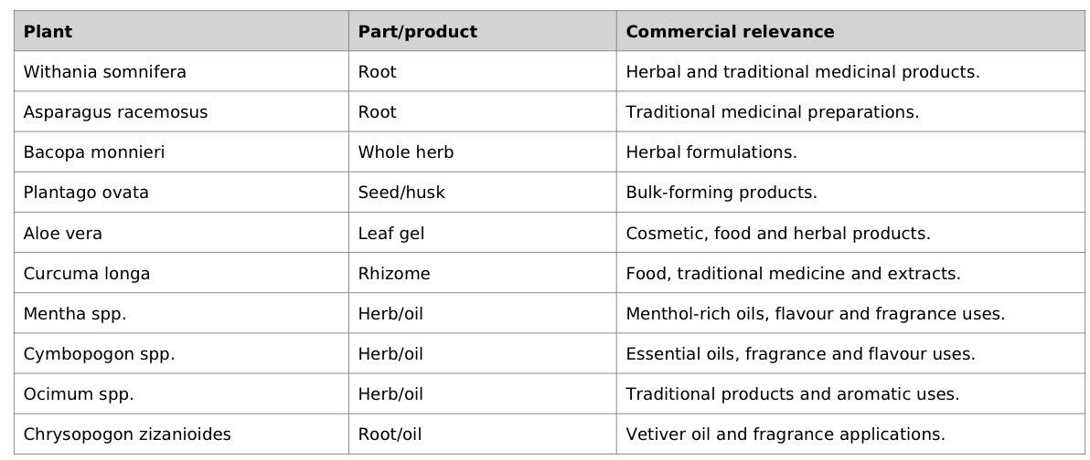
MAPs are important raw materials for Ayurveda, Siddha, Unani and other traditional systems, as well as for modern herbal and natural-product industries. Their commercial uses include crude drugs, extracts, essential oils, fragrances, flavouring agents, cosmetic ingredients and nutraceutical preparations. Aromatic plants such as mint, lemongrass, citronella, vetiver, basil and eucalyptus can be processed into essential oils, while medicinal species such as ashwagandha, shatavari, brahmi, senna and isabgol are traded as dried plant materials or processed ingredients. The economic value of a plant is determined by the complete value chain. A low-value dried herb may become substantially more valuable after cleaning, grading, powdering, extraction, standardization and formulation. Consequently, commercial cultivation should be linked to downstream processing and market requirements rather than undertaken only because a plant has a high traditional reputation [2,4].
3. COMMERCIAL CULTIVATION AND COLLECTION OF MEDICINAL AND AROMATIC PLANTS
3.1 Selection of Species for Commercial Cultivation
Species selection is the first major commercial decision. Important criteria include established market demand, availability of authenticated planting material, suitability to the local agro-climate, crop duration, expected yield, harvestable plant part, susceptibility to pests and diseases, processing requirements, price stability and availability of buyers. NMPB maintains prioritized cultivation lists under its programmes and provides categories of medicinal plants associated with cultivation support [5,6]. Examples include Aloe Vera, Asparagus racemosus, Bacopa monnieri, Withania somnifera, Plantago ovata and other species [6].
However, subsidy eligibility or traditional popularity should not by itself be interpreted as proof of profitability. A farmer should conduct a local feasibility assessment covering production cost, crop cycle, expected yield, buyer specifications, transportation and post-harvest losses.
3.2 Site Selection and Agro-Climatic Planning
Site selection should consider temperature, rainfall, humidity, altitude, sunlight, wind, soil type, soil pH, drainage and water availability. Medicinal species originating from particular ecological zones may perform poorly when moved to unsuitable environments. The same species can also show chemical variation across production regions. The production area should be protected from contamination. Potential sources include industrial emissions, sewage, polluted irrigation water, heavily contaminated soil and nearby activities that introduce hazardous residues. GACP guidance emphasizes appropriate site selection and control of agricultural inputs [7,8]. Site history should be recorded, especially where land has previously been used for crops with high pesticide or heavy-metal exposure.
3.3 Soil Preparation and Fertility Management
Soil preparation commonly includes primary tillage, secondary tillage, removal of perennial weeds, incorporation of organic matter, levelling and preparation of beds or ridges. The exact operation depends on the species and whether the commercial product is a root, rhizome, leaf, flower, fruit, seed or whole herb. Soil testing is useful for understanding pH, organic matter and nutrient status. Organic manures, compost and other amendments can improve soil structure and nutrient supply, while mineral fertilizers may be used where appropriate. Excessive nutrient application should be avoided because high vegetative growth does not necessarily correspond to optimal concentrations of desired secondary metabolites. Integrated nutrient management is therefore preferable to indiscriminate fertilizer use [3,7].
3.4 Quality Planting Material and Nursery Management
Quality planting material is one of the most important foundations of commercial medicinal-plant production. NMPB identifies lack of quality planting material as a major reason for slow expansion of large-scale commercial cultivation and notes that genetically heterogeneous material can lead to instability in productivity and quality [9]. Planting material should be correctly identified, healthy, vigorous, free from pests and diseases and suitable for the target agro-climatic region[8]. Propagation may be sexual through seeds or asexual through cuttings, rhizomes, bulbs, tubers, suckers, layering, grafting or tissue culture[1]. Nursery records should include source, batch, date of propagation, treatment, identification and distribution[7]. Where chemical consistency is important, selection of appropriate genetic material or chemotypes can be especially valuable[3].
3.5 Crop Establishment and Planting
Planting density influences light interception, air circulation, weed pressure, disease development and biomass production. Too high a density may increase humidity and disease, whereas very low density may waste land and encourage weeds. Planting depth, spacing and season should therefore be standardized for each species. Transplanting is used in many crops where seedlings are raised in nurseries before field establishment. Hardening seedlings before transplanting can reduce shock. Direct sowing may be preferred where plants have suitable seed characteristics and do not tolerate transplanting. Proper field labeling is important for traceability, especially when several species or varieties are cultivated in the same production area[7].
3.6 Irrigation and Water Management
Water availability affects both growth and secondary metabolism. Insufficient water may reduce biomass and cause stress, while excessive irrigation can create waterlogging, root disease and nutrient leaching. Drip or other efficient irrigation systems can improve water-use efficiency in suitable crops. Water quality should also be considered because irrigation water can introduce microbial or chemical contaminants. Irrigation scheduling should be adapted to soil type, crop stage, weather and root-zone moisture. GACP principles support the controlled use of agricultural inputs and the maintenance of production conditions that protect raw-material quality [7,8].
3.7 Weed Management
Weeds compete for water, nutrients, light and space and can act as alternative hosts for pests and pathogens. Weed control can include manual weeding, mechanical methods, mulching, crop rotation and carefully selected herbicides where legally permitted and appropriate. For medicinal crops, chemical weed control requires additional caution because residues can affect the safety and acceptance of the harvested material. Preventive measures, clean planting material, proper spacing and timely mechanical control should therefore form the foundation of integrated weed management[7,8].
3.8 Pest and Disease Management
Pests and diseases can reduce both yield and chemical quality. Integrated Pest Management (IPM) combines prevention, monitoring and targeted intervention. Important measures include healthy planting material, field sanitation, crop rotation, removal of infected material, biological control and monitoring of pest populations. Where pesticides are used, the product, dose, application interval and pre-harvest interval must comply with applicable regulations and buyer requirements. Records of all treatments should be maintained. For medicinal raw materials, pesticide residues are not simply an agricultural issue; they are part of the safety and quality profile of the final herbal ingredient [7,8,10].
3.9 Factors Affecting Phytochemical and Pharmacological Quality
The quality of medicinal plant material is multidimensional. Genetic factors determine biosynthetic potential, while environment influences growth and stress responses. Soil, temperature, rainfall, altitude and light may modify secondary-metabolite accumulation. Agronomic practices such as nutrition, irrigation, plant density and pest control can further influence composition. Finally, harvest stage, drying temperature, storage humidity and exposure to light or oxygen can change the final chemical profile [3]. For commercial production, it is therefore useful to establish target specifications for the raw material. These may include botanical identity, moisture range, foreign matter, extractive value, marker-compound content, chromatographic fingerprint and contaminant limits[11-13]. This approach helps connect farming decisions to the quality specifications of the pharmaceutical or herbal manufacturer.
4. HARVESTING AND COLLECTION OF MEDICINAL PLANTS:
4.1 Harvesting of Cultivated Medicinal Plants
Harvesting should occur when the desired plant part contains an appropriate quantity of target constituents and has reached suitable physical maturity. The optimum stage differs among species and plant parts. Roots and rhizomes are usually harvested after sufficient underground development; leaves may be collected when fully expanded; flowers are harvested according to flowering stage; fruits and seeds are collected according to maturity. Harvesting should be performed in clean conditions, using suitable tools and containers. Soil contact, contamination with other species and unnecessary mechanical damage should be minimized. Harvested material should be moved promptly to the primary processing area because prolonged exposure to heat and moisture can accelerate deterioration [7,8].
4.2 Collection from the Wild
Wild collection is distinct from cultivation because the producer does not control the entire growing environment. It remains important for species that are difficult to domesticate, grow slowly, occur in specialized habitats or have established wild trade. The first requirement is correct identification. Collectors should understand the species, plant part, local population status and permitted collection area. Destructive collection can be particularly damaging when roots, bulbs or whole plants are removed. For trees, excessive bark removal can cause mortality. Sustainable collection therefore requires harvest methods that leave enough reproductive individuals and allow regeneration [14,15].
4.3 Sustainable Collection and Conservation
Sustainable collection should be based on biological regeneration rather than simply on the quantity available at one time. Collection plans should consider population density, reproductive biology, growth rate, harvestable plant part, season and historical collection pressure. Conservation can be supported by in-situ protection, ex-situ cultivation, seed banks, germplasm conservation, medicinal plant gardens, tissue culture and community-based management. Cultivation of selected species can reduce pressure on natural populations, but cultivation itself should not be considered automatically sustainable if it involves excessive water, fertilizers, pesticides or habitat conversion [2,14,15].
5. GOOD AGRICULTURAL AND COLLECTION PRACTICES (GACP)
GACP is the central quality framework connecting cultivation and collection to herbal raw-material quality. WHO published its GACP guideline in 2003 [7]. EMA's current effective Revision 1 was first published in August 2025 and addresses cultivation, wild collection and primary processing of herbal starting materials [8]. The updated guideline reflects developments in production practices, including indoor cultivation technologies[8]. GACP includes appropriate site selection, plant identification, propagation, agricultural inputs, harvesting, primary processing, hygiene, personnel training, documentation, storage and traceability. The objective is to minimize variability and contamination before the material enters pharmaceutical manufacturing[7,8].
5.1 Collection Equipment, Hygiene and Documentation
Harvesting and collection equipment should be clean and maintained. Containers used for different species should be managed to avoid cross-contamination. Workers should receive training on plant identification, hygiene, harvesting technique, foreign-material removal and safe handling. Documentation is a major component of traceability[7,8]. A batch record may include farm or collection-site identification, species, variety or chemotype, planting or collection date, field inputs, harvest date, plant part, quantity, drying method, storage conditions and dispatch details. Such records can help investigate deviations and support quality certification[8].
6. POST HARVESTING MANAGEMENT:
6.1 Primary Processing and Cleaning
Primary processing begins immediately after harvest or collection. It may involve sorting, removal of foreign matter, washing when appropriate, cutting or slicing, blanching for selected materials, drying and grading[7,11]. Washing is not universally suitable because excess moisture may promote microbial growth or remove water-soluble constituents. Sorting removes soil, stones, insects, diseased parts and unrelated plant material[11]. Size reduction can improve drying efficiency but may also increase surface area and accelerate oxidation. The processing method should therefore be selected according to the chemical stability of the plant material[7,11].
6.2 Drying of Medicinal and Aromatic Plants
Drying is one of the most critical post-harvest operations. Its principal purpose is to reduce water activity sufficiently to limit microbial growth and unwanted enzymatic reactions while retaining desired constituents. Methods include shade drying, solar drying, controlled hot-air drying and other mechanical systems. Aromatic plants require careful temperature control because volatile constituents may evaporate or degrade during excessive heating. Light-sensitive compounds also require protection from direct sunlight. Drying conditions should be standardized and recorded, including temperature, duration, airflow and final moisture content where applicable [7,8].
6.3 Storage and Packaging
Dried materials should be stored in clean, dry, ventilated areas protected from insects, rodents, excessive humidity and direct light. Packaging should be selected according to the physical and chemical characteristics of the material. Materials that readily absorb moisture require packaging with suitable moisture-barrier properties. Storage lots should be identified and segregated to support traceability. Periodic inspection can detect mould, insects, unusual odour, discoloration or packaging damage. The principle of first-in-first-out or an appropriate expiry/retest system can help reduce prolonged storage[7,8,11].
7. QUALITY CONTROL AND STANDARDIZATION
Quality control begins with identity and extends to purity, strength or marker content, safety and stability. Pharmacognostic methods include macroscopic and microscopic examination. Physicochemical evaluation can include moisture content, total ash, acid-insoluble ash, water- or alcohol-soluble extractive values and volatile-oil content when relevant. Chemical analysis may use TLC or HPTLC for identity and fingerprinting, HPLC for non-volatile marker compounds, and GC or GC-MS for volatile constituents and essential oils. Spectroscopic methods such as FTIR and UV-visible analysis can provide additional information. DNA-based authentication may support identification where morphological differentiation is difficult. Analytical methods should be appropriate to the plant material and intended use [4,11].
7.1 Contaminants and Safety
Medicinal plant materials can be contaminated with microorganisms, pesticides, heavy metals, aflatoxins, foreign plant material or environmental pollutants. Contamination may occur during cultivation, collection, drying, transport or storage[12]. Safety specifications should therefore be established according to applicable pharmacopoeial, regulatory and purchaser requirements. Prevention is more effective than attempting to remove contaminants later. Appropriate site selection, clean water, controlled agricultural inputs, hygienic handling, rapid drying and protected storage reduce risk. Quality testing should be risk-based and linked to the known hazards of the crop and production area[7,11,12].
8. COMMERCIAL IMPORTANCE AND ECONOMICAL ASPECTS
8.1 Commercially Important Medicinal and Aromatic Plants
India's diverse agro-climatic conditions permit cultivation of numerous MAPs. NMPB's prioritized lists include species such as Aloe vera, Asparagus racemosus, Bacopa monnieri, Withania somnifera, Plantago ovata, Andrographis paniculata and others [5,6]. Aromatic crops include several Mentha species, Cymbopogon species, basil, vetiver and eucalyptus. The commercial product can differ greatly between species: roots, rhizomes, leaves, flowers, fruits, seeds, bark, whole herb or essential oil may be the target. Therefore, cultivation, harvest and processing should be designed around the final product specification rather than around general crop biomass alone[7,8].
8.2 Economics of Commercial Cultivation
Economic feasibility depends on establishment cost, planting material, labour, irrigation, fertilizers, pest control, crop duration, yield, drying or distillation costs, transportation, market price and rejection due to quality defects. Perennial crops may require substantial initial investment but can provide multiple harvests, whereas annual crops may provide faster turnover. A realistic enterprise plan should include sensitivity analysis for yield and price fluctuations. Producers should also estimate post-harvest losses and the cost of testing. A crop with a high nominal market price may be unattractive if the buyer requires strict specifications that the producer cannot consistently meet[1,2].
8.3 Value Addition
Value addition can improve farm-level returns and reduce dependence on bulk raw-material prices. Potential operations include cleaning, grading, powdering, drying, essential-oil distillation, solvent or aqueous extraction, concentration, standardization and formulation. For aromatic plants, distillation quality depends on plant species, harvest stage, moisture, distillation equipment and process conditions. For medicinal plants, extraction yield and marker-compound concentration are important. Small-scale primary processing facilities can therefore help producers capture more value, provided they operate with appropriate hygiene, quality control and legal compliance [2].
8.4 Supply Chain and Market Linkages
The medicinal plant supply chain may include growers or collectors, local aggregators, traders, primary processors, extract manufacturers, herbal-product companies and final consumers. Each additional handling step can introduce quality variation or adulteration. NMPB's current operational framework emphasizes forward and backward supply-chain linkages, quality planting material, training, post-harvest management, value addition, marketing, testing and certification [2]. Digital records and traceability systems can further improve transparency. Reliable market information is especially important because production decisions should be based on demand rather than speculative planting.
8.5 Certification and Institutional Support in India
NMPB, under the Ministry of AYUSH, promotes cultivation and sustainable management of medicinal plants and aims to reduce pressure on wild collection [1]. Its programmes include support related to cultivation, prioritized species, quality planting material and post-harvest infrastructure [1–2]. NMPB and the Quality Council of India have also established the Voluntary Certification Scheme for Medicinal Plant Produce (VCSMPP), which promotes Good Agricultural Practices and Good Field Collection Practices and aims to enhance quality and safety [10]. Certification can help distinguish better-managed raw material and strengthen confidence among organized buyers.
9. CULTIVATION VERSUS WILD COLLECTION
Cultivation generally provides better control over genotype, site,inputs, harvest time and traceability. Wild collection can reduce cultivation costs and may be essential for plants that are difficult to cultivate, but it involves greater ecological and quality variability. The choice between the two should therefore be species-specific. A useful commercial strategy is a mixed approach: cultivate species with established agronomy and strong demand while applying sustainable collection protocols to suitable wild species. Such integration can support conservation and maintain supply diversity [14,15].
10. MAJOR CHALLENGES
Major challenges include insufficient quality planting material, inadequate technical knowledge, inconsistent raw-material quality, pest and disease pressure, climate variability, post-harvest losses, contamination, adulteration, weak market organization and price fluctuations. NMPB specifically identifies quality planting material as a major constraint and supports nursery and germplasm-bank development [9]. Climate change may further affect species distribution, water availability, flowering or harvest timing and secondary-metabolite production. Commercial systems should therefore incorporate climate-resilient cultivation practices, water-efficient irrigation, diversified cropping and appropriate selection of planting material[3].
11. FUTURE PROSPECTS
Future MAP production is likely to become more standardized and data-driven. Precision irrigation, controlled-environment cultivation for selected high-value species, molecular authentication, chemotype selection, digital traceability and rapid chemical fingerprinting can improve consistency. Biotechnology and tissue culture may help multiply selected material, although field performance and genetic stability must be demonstrated. The 2025 EMA GACP revision reflects continuing development of production technologies and regulatory expectations [8]. In India, stronger farmer–industry linkages, post-harvest infrastructure, testing facilities, certification and quality planting material can help translate cultivation into a more reliable industrial supply chain [2].
12. RECOMMENDED COMMERCIAL PRODUCTION FLOW
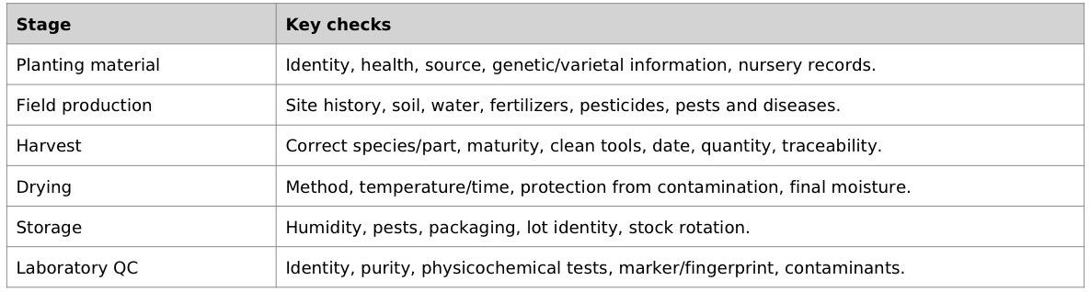
A practical commercial workflow is: market assessment → species selection → authenticated planting material → site and soil assessment → nursery/field establishment → irrigation and nutrient management → IPM → crop monitoring → harvest at defined maturity → cleaning/sorting → drying or distillation → grading → quality testing → packaging → traceable storage → buyer linkage → value addition. This sequence shows that commercial cultivation is a complete production system rather than simply planting and harvesting.
13. CONCLUSION
Medicinal and aromatic plants represent a valuable interface between agriculture, pharmacognosy, traditional medicine, pharmaceutical manufacturing and rural enterprise. Commercial cultivation can improve continuity, traceability and control of raw-material quality, while sustainable wild collection remains important for selected species and local livelihoods. The most important lesson is that medicinal-plant quality is established throughout the production chain. Genetic identity, site, soil, water,
nutrition, pest management, harvest stage, drying, storage and transportation can all influence the final material. GACP, appropriate quality-control testing and traceability therefore need to be incorporated from the beginning rather than applied only at the manufacturing stage. For India, the combined development of quality planting material, farmer training, sustainable collection, primary processing, testing, certification, value addition and organized marketing offers a practical route toward a stronger MAP sector. Commercial success should ultimately be measured by four linked outcomes: consistent quality, economic viability, environmental sustainability and long-term resource availability.
14. REPRESENTATIVE COMMERCIAL SPECIES AND PRODUCTS :
15. KEY QUALITY-CONTROL CHECKLIST PLANT
REFERENCES

Namrata Isame, Girish Kokate, Pragati Tekade, Supriya Tekde, Renuka Rothe, Vaishali Javare, Commercial Cultivation and Collection Aspects of Medicinal and Aromatic, Int. J. of Pharm. Sci., 2026, Vol 4, Issue 10, 2713-2722. https://doi.org/10.5281/zenodo.23424793
 10.5281/zenodo.23424793