

We use cookies to ensure our website works properly and to personalise your experience. Cookies policy
1,3,4,5,6B. Pharm Scholar- Jagadambha Institute of Pharmacy & Research, Kalamb.
2Associate Professor- Department of Pharmaceutical Chemistry - Jagadambha Institute of Pharmacy & Research, Kalamb.
Computer-aided drug design (CADD) is an important computational approach in modern drug discovery and development. Conventional drug discovery is time-consuming, costly, and complex, with a high risk of failure. CADD supports the identification, design, evaluation, and optimization of potential drug candidates through computational tools and molecular modelling techniques. This review outlines the principal methods, applications, advantages, limitations, and recent advances in CADD. It discusses the two major approaches—structure-based drug design (SBDD) and ligand-based drug design (LBDD)—along with molecular docking, virtual screening, quantitative structure–activity relationship (QSAR) analysis, pharmacophore modelling, molecular dynamics simulation, de novo drug design, and ADMET prediction. These methods can support target identification, hit discovery, lead optimization, drug repurposing, and the early assessment of pharmacokinetic and toxicity-related properties. The review also considers the growing role of artificial intelligence (AI) and machine learning (ML) in predicting molecular properties, prioritizing candidate compounds, and informing drug-design strategies. Despite their potential, CADD methods face challenges involving data quality, prediction accuracy, computational demands, and model validation. Experimental studies therefore remain essential to confirm the biological activity, safety, and therapeutic potential of computationally predicted compounds.
Drug discovery and development is a multidisciplinary process involving medicinal chemistry, molecular biology, pharmacology, toxicology, computational science, and clinical research. Its purpose is to identify therapeutic compounds that produce the intended pharmacological effect while maintaining an acceptable safety profile. A promising candidate must demonstrate suitable biological activity and selectivity together with appropriate physicochemical, pharmacokinetic, and toxicological properties. The development pathway generally progresses from target identification and validation through hit identification, lead optimization, preclinical assessment, and clinical evaluation. Every stage involves uncertainty, expense, and a risk of failure [1].
Conventional drug discovery approaches—including natural-product investigation, chemical synthesis, and biological screening—have made major contributions to medicine. Nevertheless, the size and diversity of chemical space make exhaustive experimental testing impractical. High-throughput screening can assess large compound collections, but initial activity alone does not guarantee a successful medicine. Compounds may fail because of poor solubility, limited absorption, rapid metabolism, inadequate selectivity, toxicity, or an unsuitable formulation. These challenges have encouraged computational strategies that help researchers prioritize experiments and make better-informed decisions [2].
Computer-aided drug design applies computational methods to analyze molecular structures, predict interactions with biological targets, estimate selected properties, and prioritize candidates for further testing. Its development has been supported by improvements in computing, structural biology, bioinformatics, chemical databases, and molecular modelling. Three-dimensional target structures can reveal the geometry and chemical environment of ligand-binding sites, while chemical and bioactivity databases help identify relationships between molecular features and biological effects. CADD predictions remain hypotheses rather than proof: laboratory studies are required to confirm activity, and clinical research is needed to establish safety and therapeutic benefit [3].
This review outlines the principal strategies and computational techniques used in CADD, considers their applications in drug discovery, discusses current limitations, and highlights future opportunities arising from AI and ML.
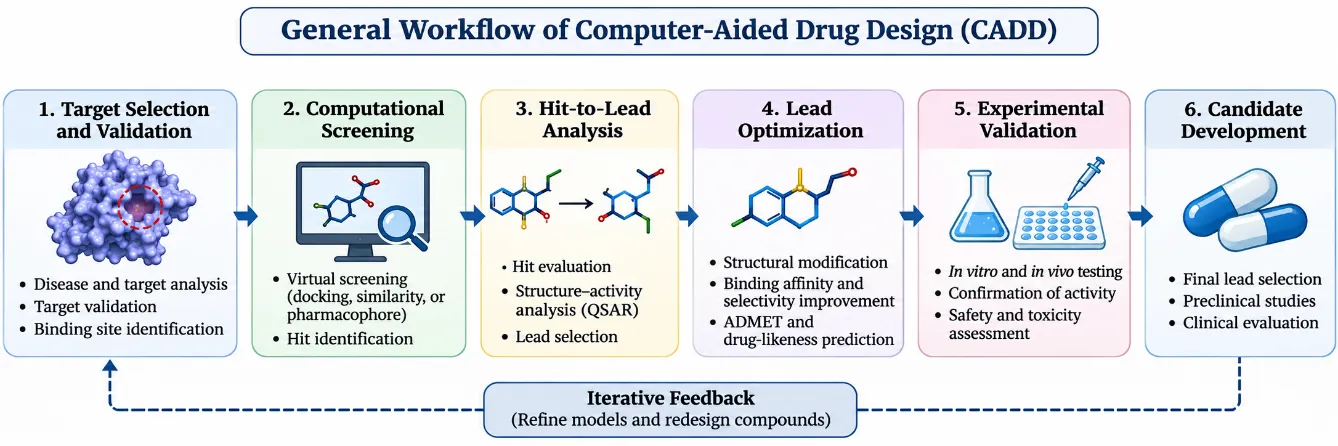
Figure 1: General Workflow of Computer-Aided Drug Design[2]
Table 1: Major CADD Approaches: Principles and Limitations[3]
| Approach | Main application | Key limitation |
|---|---|---|
| SBDD | Uses target 3D structure to guide ligand identification and optimization. | Depends on target structure quality and representation of flexibility. |
| LBDD | Uses known active compounds and their properties to identify candidates. | Requires reliable, sufficiently diverse ligand and assay data. |
| Docking / virtual screening | Ranks ligand poses or screens libraries for experimental follow-up. | Scoring errors and false-positive or false-negative results. |
| QSAR / AI-ML | Predicts activity or properties from descriptors and learned patterns. | May generalize poorly beyond training data. |
| Pharmacophore modelling | Represents spatial and chemical features for molecular recognition. | Can oversimplify binding and depends on model quality. |
| Molecular dynamics | Explores molecular motion and protein–ligand behaviour. | Computationally demanding and sensitive to setup. |
| ADMET prediction | Flags potential pharmacokinetic and toxicity liabilities early. | Predictions require experimental confirmation. |
2. Major approaches in computer-aided drug design
CADD is commonly organized into structure-based drug design (SBDD) and ligand-based drug design (LBDD). SBDD uses information about the three-dimensional structure of a biological target, whereas LBDD uses known active compounds and their associated data. These approaches can be applied independently or combined, depending on the availability and quality of structural and ligand information [4].
2.1. Structure-based drug design
SBDD uses the three-dimensional structure of a biological target, such as a protein or enzyme, to guide the identification and optimization of ligands. Target structures may be obtained through experimental methods, including X-ray crystallography, nuclear magnetic resonance spectroscopy, and cryo-electron microscopy, or through computational prediction. Structural information can help identify binding pockets and characterize features that may influence ligand recognition [5].
Molecular docking is a widely used SBDD method. It predicts plausible orientations of a ligand within a binding site and uses scoring functions to estimate the relative favourability of candidate binding poses. Docking can help prioritize compounds for experimental testing and generate hypotheses about possible molecular interactions. However, docking scores are approximations and should not be interpreted as direct measurements of binding affinity or biological activity [6].
2.2. Ligand-based drug design
LBDD is useful when the target structure is unavailable or insufficiently characterized, but information about known active compounds is available. It uses the chemical structures and measured properties of ligands to identify relationships that may help discover or optimize other compounds. Common LBDD methods include QSAR analysis, pharmacophore modelling, and similarity-based screening [7].
The reliability of LBDD depends on the quality, diversity, and consistency of the available ligand and assay data. Models developed from limited or biased datasets may not perform well when applied to chemically different compounds or new biological contexts. Therefore, data curation and appropriate validation are essential parts of ligand-based modelling [8].
2.3. Integration of SBDD and LBDD
SBDD and LBDD provide complementary information. Structural analysis can suggest how a ligand may interact with a target, while ligand-based models can identify chemical features associated with activity across known compounds. Combining these methods may provide a broader basis for prioritizing molecules, but the usefulness of an integrated workflow depends on the reliability of its input data and predictions [4].
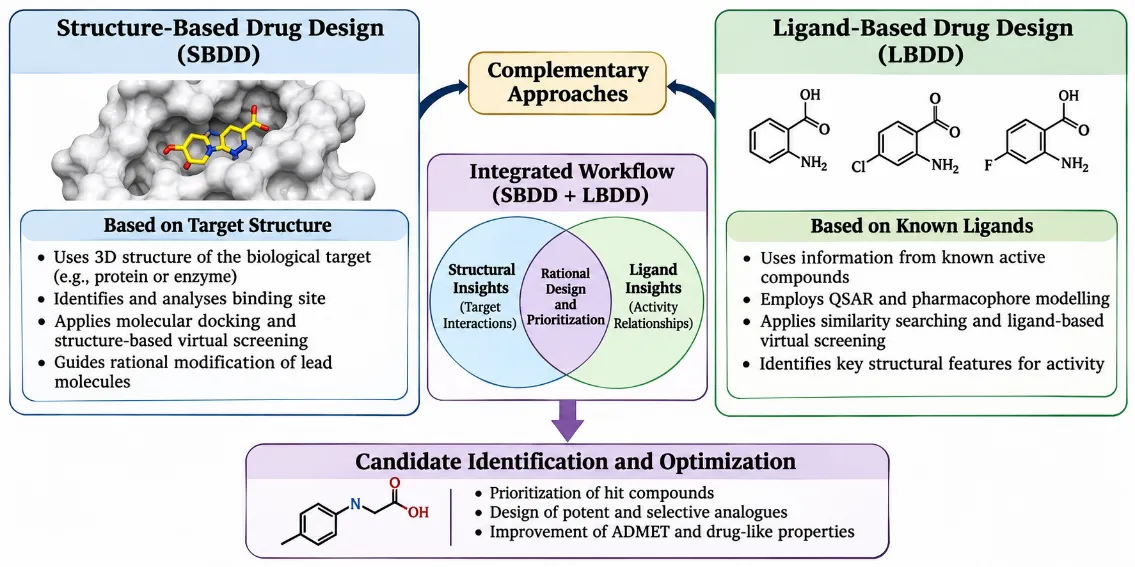
Figure 2: Complementary Roles of Structure-Based and Ligand-Based Drug Design in Candidate Identification and Optimization[4].
3. Important computational techniques
3.1. Molecular docking
Molecular docking predicts how a small molecule may fit into a binding site and estimates the relative favourability of different poses. A typical workflow includes preparation of the target and ligand structures, identification of the binding region, docking, and evaluation of the predicted poses. Docking can support virtual screening and help researchers formulate hypotheses about potential ligand–target interactions [9].
Docking results depend on structural preparation, the treatment of molecular flexibility, and the scoring function. Incorrect protonation states, incomplete structural information, or inadequate representation of solvent and protein motion can affect the predicted pose. For this reason, docking should be used as a prioritization tool rather than as conclusive evidence of activity [6].
3.2. Virtual screening
Virtual screening uses computational methods to evaluate large collections of compounds and identify molecules that may be suitable for experimental testing. Structure-based virtual screening often includes docking, while ligand-based screening may use molecular similarity, pharmacophore models, or predictive models trained on known compounds. Screening can reduce the number of compounds selected for laboratory assessment, but its success depends on the quality of the library, the chosen method, and the criteria used to rank candidates [8].
A screening workflow may include library preparation, filtering, computational evaluation, ranking, and selection of compounds for experimental follow-up. Combining complementary methods can help reduce dependence on a single scoring approach. Nevertheless, screening may produce false-positive or false-negative results, so experimentally testing selected compounds remains necessary [9].
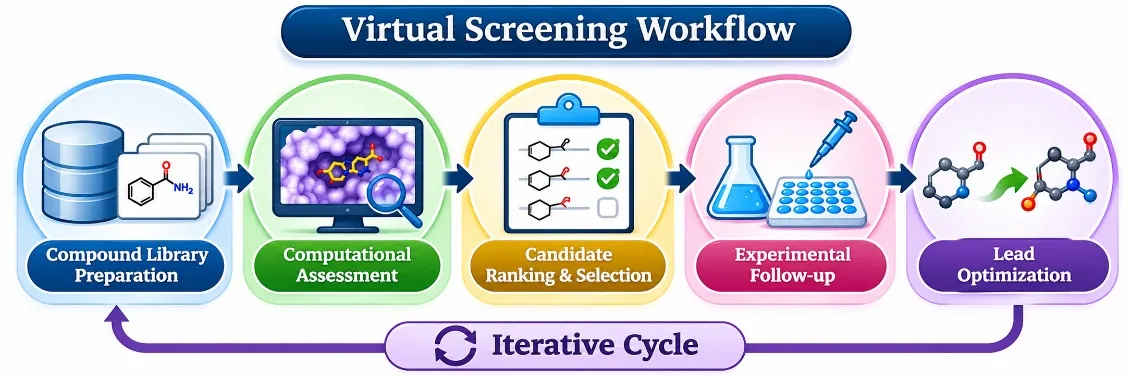
Figure 3: Virtual-screening Workflow Showing Compound-Library Preparation, Computational Assessment, Candidate Ranking, and Experimental Follow-Up[9].
3.3. QSAR and pharmacophore modelling
QSAR establishes statistical or machine-learning relationships between molecular descriptors and measured endpoints such as potency, solubility, or toxicity. Properly validated models can rank compounds and guide structural optimization. A robust workflow includes curation of the dataset, selection of relevant descriptors, appropriate separation of training and test data, external validation where possible, and assessment of the model’s applicability domain [10].
Pharmacophore models represent the spatial and chemical features thought to be required for molecular recognition. They can be used to identify structurally diverse compounds that share a common feature pattern. Both QSAR and pharmacophore methods can simplify complex biological interactions and therefore require careful model construction and validation [11].
3.4. Molecular dynamics simulation
Molecular dynamics (MD) simulation models the time-dependent movement of atoms and molecules. It can provide information about protein flexibility, conformational changes, solvent effects, and the persistence of interactions in a protein–ligand complex. MD may complement docking by exploring whether a proposed binding pose remains plausible during a simulated trajectory [12].
The conclusions depend on the force field, system preparation, solvent and ion conditions, simulation length, and adequacy of conformational sampling. Because MD can be computationally demanding, results should be interpreted in the context of the model assumptions and other evidence [12].
3.5. ADMET and drug-likeness prediction
Computational ADMET tools estimate absorption, distribution, metabolism, excretion, and toxicity-related properties. Early predictions can flag possible liabilities, such as poor permeability, metabolic instability, or toxicity alerts, before costly downstream testing. Drug-likeness filters, including Lipinski’s Rule of Five, provide useful heuristics for selected molecular properties but are not universal rules and do not determine whether a compound will become a successful drug [13].
Prediction tools cannot capture every physiological process and may be unreliable for molecules that differ from their training data. Computational predictions must be assessed alongside experimental pharmacokinetic and toxicological findings [14].
3.6. De novo design and AI/ML
De novo design seeks to propose new molecular structures with desired features, sometimes using a target binding site, known ligands, or predefined property objectives. AI and ML methods can analyze chemical and biological datasets to predict molecular properties, activity, and drug–target relationships. Generative models can suggest candidate structures, while learned ranking systems can prioritize molecules for testing [15].
These approaches broaden chemical-space exploration but may generate compounds that are difficult to synthesize, unstable, insufficiently selective, or biologically inactive. Model outputs require medicinal-chemistry assessment and experimental verification [16].
Table 2: Challenges in CADD and Approaches to Improve Reliability[14]
| Challenge | Recommended practice |
|---|---|
| Uncertain target structures and protein flexibility | Use suitable structural preparation and complementary conformational analyses when justified. |
| Biased or inconsistent datasets | Curate data and document assay context, data diversity, and exclusions. |
| Overfitting and unreliable scores | Use external validation, uncertainty estimates, and applicability-domain assessment. |
| False-positive or false-negative screening | Combine complementary methods and experimentally test prioritized compounds. |
| Poor reproducibility | Report software, versions, parameters, preparation steps, and validation procedures. |
| ADMET uncertainty | Combine predictions with experimental pharmacokinetic and toxicity testing. |
4. Applications of CADD in drug discovery
CADD can contribute at several stages of the discovery pipeline. During target assessment, bioinformatics and structural analysis help characterize disease-associated proteins and identify potential binding sites. During hit identification, virtual screening and docking narrow large libraries to a manageable set of compounds for laboratory testing. Ligand-based models can identify analogues or chemically distinct molecules with predicted activity, and pharmacophore approaches can search for compounds that share important interaction features [1].
During lead optimization, computational tools help compare analogues and formulate hypotheses about how chemical modifications may affect potency, selectivity, and physicochemical properties. QSAR models can support compound ranking, while docking and molecular simulations may help explain plausible interaction patterns. ADMET prediction can identify potential developability concerns earlier in the process. The strongest workflows are iterative: computational predictions guide synthesis and testing, experimental results are used to update the model, and the next round of compounds is selected based on combined evidence [17].
CADD is also used in drug repurposing, where existing medicines are investigated for possible activity against new targets or indications. Screening known drugs may help prioritize hypotheses, but a predicted interaction does not establish clinical benefit for a new indication. Computational approaches have been reported across infectious diseases, oncology, and other therapeutic areas. Historical examples often discussed in the literature include structure-guided development of HIV protease inhibitors and neuraminidase inhibitors for influenza; these illustrate the contribution of structural knowledge, while the final success of any medicine depends on experimental and clinical evidence [2].
5. Advantages and limitations
5.1. Advantages
CADD can reduce the number of compounds selected for initial experimental screening, enable systematic comparison of molecules, and provide hypotheses about drug–target interactions. It supports the exploration of large chemical libraries, may help identify potential liabilities early, and can guide rational lead modification. By prioritizing experiments, computational methods may improve the allocation of laboratory time and resources. These benefits are context-dependent and rely on suitable data, sound modelling, and integration with experimental research rather than computational prediction alone [18].
5.2. Limitations and challenges
A major challenge is prediction uncertainty. Protein structures may not represent the biologically relevant conformation, and simplified models may not capture protein flexibility, solvent effects, or the cellular environment. Docking scores are imperfect proxies for binding affinity, while screening methods can produce false-positive and false-negative results. ADMET predictions may not reflect complex physiology, and promising computational results can be contradicted by experimental observations [6].
Data quality is equally important. Inconsistent assay conditions, missing values, errors, limited chemical diversity, and biased datasets can weaken model performance. Overfitting can make a model appear accurate on familiar compounds but fail on new chemical series. Advanced simulations may require substantial computing resources and specialist expertise. Reproducibility is compromised when authors do not report software versions, input preparation, parameters, validation procedures, or data sources. Good practice includes transparent reporting, independent validation, uncertainty assessment, applicability-domain analysis, and experimental confirmation before compounds advance [19].
6. Future perspectives
Future CADD workflows are likely to integrate structural and ligand-based methods with improved AI models, larger curated datasets, and more powerful computing. Combining docking, MD, pharmacophore analysis, QSAR, and ADMET prediction can assess candidates from complementary perspectives. More reliable prediction systems should emphasize external validation, calibration, uncertainty estimation, and interpretability rather than relying on a single score [6].
Generative AI may expand exploration of chemical space, while cloud and high-performance computing can support larger screens and more detailed simulations. Better integration of chemical, biological, genomic, and clinical information could improve target selection and potentially support precision medicine. However, patient-specific applications require careful attention to data privacy, biological relevance, and clinical validation. Drug repurposing may also benefit from computational prioritization, but new indications must be established through appropriate preclinical and clinical studies [15].
The most effective future systems will connect prediction to reproducible experiments and learn from their outcomes. Data provenance, standardized benchmarks, transparent model reporting, and collaboration among computational scientists, medicinal chemists, pharmacologists, toxicologists, and clinicians will be essential. AI should augment—not replace—expert judgement and experimental science [18].
CONCLUSION
Computer-aided drug design plays an important role in modern drug discovery by helping identify, design, and optimize potential drug candidates. Techniques such as molecular docking, virtual screening, QSAR, and ADMET prediction support efficient drug development. Recent advances in artificial intelligence and machine learning have further improved its potential. However, computational predictions require experimental validation to confirm the safety and effectiveness of drug candidates. Overall, integrating CADD with experimental research can contribute to the development of safer and more effective medicines.
REFERENCES

Palak Shende, Dr. Suraj Rajurkar, Aditya Rudarkar, Bhushan Pote, Tejas Kakad, Samiksha Patil, Computer-Aided Drug Design: Current Approaches, Challenges, and Future Perspectives, Int. J. of Pharm. Sci., 2026, Vol 4, Issue 11, 3841-3848. https://doi.org/10.5281/zenodo.24414542
 10.5281/zenodo.24414542