

We use cookies to ensure our website works properly and to personalise your experience. Cookies policy
Jagadambha institute of pharmacy and research, kalam Publish as.
Diabetes mellitus is a chronic metabolic disorder characterized by elevated blood glucose levels due to insufficient insulin production or impaired insulin action. Conventional insulin administration mainly involves subcutaneous injections, which may cause pain, discomfort, needle fear, and difficulties in maintaining proper blood glucose control. To overcome these limitations, micro needle-based transdermal drug delivery has emerged as a promising alternative for insulin administration. Microneedles are micronized structures designed to penetrate the outer skin barrier and create microscopic pathways for drug delivery. This review focuses on microneedle patches for transdermal insulin delivery in diabetes management. It discusses the different types of microneedles, including solid, hollow, coated, dissolving, hydrogel, and biodegradable microneedles, along with their materials and manufacturing methods. The mechanism of insulin release from different polymeric microneedle systems, advantages, challenges, and limitations are also discussed. Furthermore, clinical readiness and safety aspects are highlighted. Microneedle patches offer potential benefits such as minimally invasive administration, improved patient convenience, and controlled insulin delivery. However, further research is required to improve their drug loading capacity, mechanical strength, insulin stability, and long-term safety. Overall, microneedle-based patches represent a promising approach for the future of transdermal insulin delivery in diabetes management. Furthermore, this review highlights the role of different polymeric microneedle systems in insulin release,including dissolvable, nanoparticle-loaded, bio-erodible, and hydrogel microneedles. It also emphasizes the importance of suitable materials and fabrication techniques for improving drug delivery performance. Although microneedle technology shows considerable potential, further research and clinical studies are needed to overcome existing limitations and support its future clinical application.
Transdermal drug delivery systems (TDDS) are designed to transport an active pharmaceutical ingredient across the skin and, where intended, into the systemic circulation. Compared with oral administration, the transdermal route can avoid gastrointestinal degradation and hepatic first-pass metabolism. It may also provide sustained delivery and avoid the use of conventional hypodermic needles. These features have made transdermal delivery an important area of pharmaceutical research [1–3].
The principal barrier to transdermal administration is the stratum corneum, the outermost layer of the epidermis. It restricts the passage of many compounds, particularly hydrophilic molecules and macromolecules. Insulin is a peptide with properties that make passive diffusion across intact skin difficult. Consequently, conventional insulin treatment is generally delivered by subcutaneous injection using syringes, pens or infusion devices. Repeated injections can be associated with pain, injection-site discomfort, needle fear and reduced treatment adherence [4,5].
Microneedles are micron-scale projections arranged in an array and designed to cross the outer skin barrier with limited tissue disruption. They create transient microchannels through which a drug can enter viable skin. Depending on their design, MNs may create pathways before application of a drug formulation, carry drug on their surface, contain drug within the needle matrix, or provide a conduit for liquid formulations. Their potential use for insulin delivery has prompted investigation of several designs and polymeric systems [6–9].
This review consolidates the material presented in the supplied source document on MN-mediated transdermal insulin delivery. It covers the biological basis, MN types, materials, fabrication, release mechanisms, benefits, challenges and clinical readiness. The discussion is a narrative review of the cited material; it does not claim a systematic search or meta-analysis.
2. DIABETES MELLITUS AND THE NEED FOR ALTERNATIVE INSULIN DELIVERY
Diabetes mellitus comprises metabolic disorders characterized by chronic hyperglycaemia arising from defects in insulin secretion, insulin action, or both. Sustained elevation of blood glucose can contribute to damage involving the eyes, kidneys, nerves, heart and blood vessels. The source document describes type 1 diabetes, type 2 diabetes, gestational diabetes and other specific forms, including monogenic disorders, exocrine pancreatic diseases and drugassociated diabetes [10].
In type 1 diabetes, destruction of pancreatic beta cells results in severe or absolute insulin deficiency. Type 2 diabetes is associated with insulin resistance and progressive impairment of beta-cell function. Gestational diabetes is diagnosed during pregnancy, while other specific forms arise from identifiable genetic, pancreatic or drug-related causes. Insulin requirements vary according to diabetes type, disease progression and individual clinical circumstances.
Subcutaneous insulin is indispensable for many people with diabetes, but repeated administration can be burdensome. The source document highlights injection pain, needle phobia, injection-site problems and challenges in matching insulin action to physiological requirements. These limitations provide a rationale for investigating alternative delivery platforms. MN systems are intended to reduce the invasiveness associated with conventional needles while facilitating delivery of a peptide that does not readily cross intact skin.
3. TRANSDERMAL DELIVERY AND SKIN BARRIER
The skin consists of three principal layers: epidermis, dermis and hypodermis. The epidermis is the outer epithelial layer and contains keratinocytes, melanocytes, Langerhans cells and Merkel cells. The dermis is connective tissue containing nerves, blood vessels and structural components that support the skin. The hypodermis lies beneath the dermis and contains adipose and connective tissue, larger vessels and nerves. The stratum corneum within the epidermis is the major barrier to passive penetration.
Conventional transdermal patches generally rely on drug diffusion through intact skin. They can provide controlled delivery and avoid gastrointestinal exposure, but the route is not suitable for every drug. Molecular size, dose requirement, solubility, partition behaviour and skin compatibility influence feasibility. Local irritation, contact dermatitis, variable skin permeability and difficulty maintaining long-term patch adhesion are additional limitations [1,2].
Microneedles address the barrier by creating microscopic channels or by placing drug within the skin. Because the projections are short and narrow relative to conventional injection needles, they are designed to minimize tissue trauma. The extent of delivery nevertheless depends on needle geometry, insertion force, skin site, application technique and the formulation.
4. MICRONEEDLE SYSTEMS FOR INSULIN DELIVERY
4.1 Solid microneedles
Solid MNs can be used in a ‘poke-and-patch’ approach. The array is first inserted to create temporary microchannels, after which an insulin-containing formulation or patch is applied. Drug then diffuses through the channels into the skin. Solid MNs may also be coated with insulin to permit delivery during insertion. Modelling work discussed in the source document indicates that needle geometry can influence delivery; however, theoretical predictions should not be interpreted as proof of clinical superiority [7,8].
4.2 Hollow microneedles
Hollow MNs contain an internal lumen through which a liquid formulation can be delivered. They may be connected to a syringe, pump or other pressure-generating device, allowing the administered volume and flow to be controlled. The source document reports lumen dimensions in the micrometre range and describes pump-assisted delivery in which pressure drives insulin through the needle array. Hollow systems can offer greater dose flexibility than surfacecoated designs, but their performance depends on reliable insertion, lumen patency, flow control and device complexity [8].
4.3 Coated microneedles
Coated MNs are solid projections carrying a drug-containing layer on their surface. Following insertion, the coating dissolves or is deposited in the skin. Delivery capacity is constrained by the available surface area and coating thickness. Uniform coating, reproducible drug content and rapid transfer from the needle surface are important formulation requirements. Residual drug and the possibility of cross-contamination make single-use design and appropriate disposal important considerations.
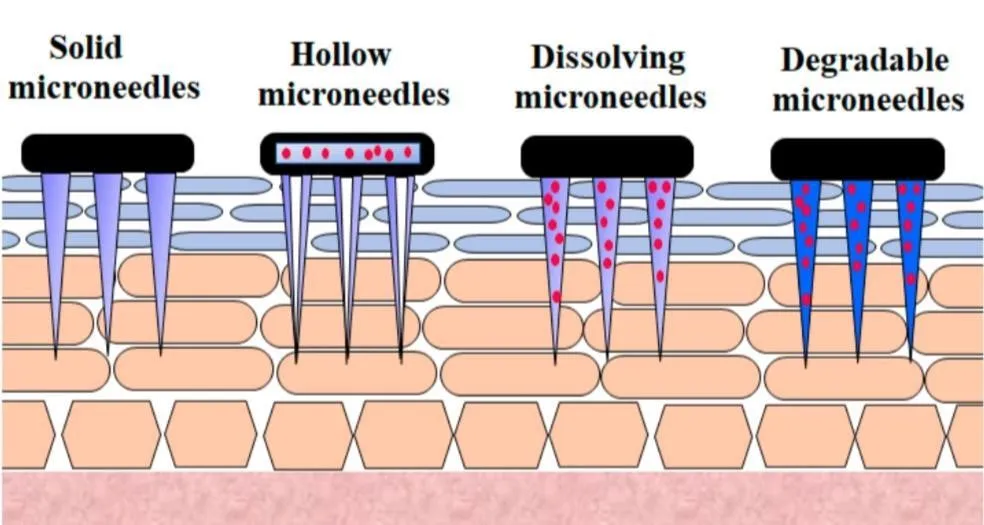
Figure 1: Various Microneedles Employed for Transdermal Insulin Delivery
4.4 Dissolving microneedles
Dissolving MNs incorporate insulin into a water-soluble or biodegradable polymer matrix. After insertion, interstitial fluid hydrates and dissolves the matrix, releasing insulin into the surrounding tissue. Drug may be distributed throughout the array, concentrated in the needle region or localized at the needle tips. This flexibility can help direct the drug to the part of the array most likely to enter the skin. Release can be influenced by polymer composition, dissolution rate, drug loading and the spatial distribution of insulin [9,11].
The source document identifies hyaluronic acid, poly-γ-glutamic acid, starch–gelatin mixtures and fish gelatin– sucrose mixtures as materials investigated for dissolving systems. A major formulation concern is insulin stability: processing temperatures and other manufacturing conditions must be selected to avoid loss of biological activity.
Micromoulding can support array production, although preparation of master patterns and moulds adds process steps.
4.5 Hydrogel-forming microneedles
Hydrogel-forming MNs are prepared from hydrophilic polymers that swell after absorbing interstitial fluid. Swelling can establish aqueous pathways through which insulin diffuses from a drug reservoir or through the hydrogel structure. The swelling behaviour and release profile can be modified by polymer selection and crosslinking density. The source document describes intact removal of crosslinked hydrogel needles as a way to reduce polymer residue in the skin. The choice of crosslinking chemistry is important because it must not adversely interact with insulin or compromise its activity [12].
4.6 Biodegradable microneedles
Biodegradable MNs are designed to release insulin as the polymer matrix degrades or erodes in the skin. Drug release may occur through diffusion, polymer swelling and degradation processes. Compared with rapidly dissolving matrices, polymers with higher molecular weight or greater crosslinking may provide increased mechanical strength and a longer degradation period. The source document describes calcium-ion-crosslinked alginate/maltose composite MNs as an example, reporting swelling and subsequent dissolution in an experimental system. Such formulationspecific observations require confirmation under standardized conditions before they can be generalized [12,13].
4.7 Nanoparticle-loaded microneedles
In nanoparticle-loaded systems, insulin is first incorporated into nanoparticles, which are then dispersed within a dissolving or erodible MN matrix. Following insertion, the needle matrix dissolves or degrades and releases the insulinloaded nanoparticles. Subsequent changes in the nanoparticle carrier permit insulin release and may support a more sustained profile. The source bibliography includes research on insulin-nanoparticle dissolving patches and nanovesicleloaded MNs, illustrating the development of carrier-assisted approaches [14,15].
5. MATERIALS USED IN MICRONEEDLE FABRICATION
Material selection determines whether an MN array can penetrate skin without bending or fracturing, whether it is biocompatible, and whether it can provide the required drug-release behaviour. The principal material groups described in the source document are silicon, metals, ceramics and polymers.
6. MANUFACTURING METHODS
The manufacturing process is selected according to the material, geometry, desired production scale and cost. The source document describes the following approaches:
For insulin-containing systems, manufacturing conditions deserve particular attention. Heat, solvents, pH, drying and crosslinking conditions may affect peptide integrity. Process development should therefore evaluate both the physical quality of the array and the biological activity of the insulin after manufacture and storage.
7. MECHANISMS OF INSULIN RELEASE
Insulin release from MN systems depends on the composition and structure of the needle matrix. Four mechanisms are emphasized in the source document:
These mechanisms can be adjusted by changing polymer type, molecular weight, crosslinking density, drug distribution, needle geometry and the presence of carrier particles. The desired release profile must be matched to the clinical insulin regimen. A formulation that releases insulin rapidly is not automatically appropriate for every therapeutic requirement; controlled release must be demonstrated experimentally.
8. POTENTIAL ADVANTAGES
MN-based insulin delivery may offer several advantages over conventional injection-based administration. The small projections are intended to reduce pain and needle-related anxiety, while the patch format may simplify selfadministration. MNs can create pathways for macromolecules that do not readily cross intact skin. Drug placement within a polymer matrix or reservoir may also permit control over release, depending on the design. In addition, dissolving and biodegradable systems may reduce the need to retrieve sharp needles after use. These are potential benefits, and their magnitude will depend on device design, patient factors and clinical evidence [6,8,9].
A further potential benefit is the possibility of integrating MN arrays with responsive or carrier-based systems. Research on glucose-responsive patches and nanovesicle-mediated insulin delivery illustrates approaches intended to couple drug release with biological conditions. Such technologies remain formulation- and evidence-dependent and should not be assumed to provide autonomous glucose control in routine clinical practice [14,15].
9. CHALLENGES AND LIMITATIONS
Despite their promise, MN systems face technical and translational challenges. First, the array must penetrate the skin consistently without bending, breaking or causing unacceptable tissue injury. Skin thickness, hydration, anatomical site, age and individual variability can affect insertion and drug absorption. Second, the amount of insulin that can be loaded into an array may be limited by needle number, dimensions, surface area and polymer properties. Third, insulin is sensitive to formulation and processing conditions; loss of structural integrity or biological activity during manufacture and storage would undermine therapeutic performance.
Other concerns include local irritation, inflammation, contact dermatitis, infection risk if the skin barrier is not managed appropriately, and variability in drug release. Hollow devices require reliable fluid delivery and may be more complex than passive patches. Coated systems need uniform coating and adequate transfer of the full dose. Dissolving and biodegradable systems require control of dissolution or degradation rates and assurance that residual materials are safe. Polymer crosslinkers and other excipients must be compatible with insulin and suitable for dermal use.
Manufacturing reproducibility and quality control are also central. Critical quality attributes include needle dimensions, mechanical strength, insertion performance, drug content uniformity, dissolution or swelling behaviour, insulin potency, sterility or microbial quality as appropriate, packaging integrity and stability. Scale-up must preserve these attributes across production batches. The source document identifies drug loading, mechanical strength, skin variability, insulin stability and manufacturing conditions as important barriers [8,12,16–18].
10. CLINICAL READINESS AND SAFETY
The source document reports that clinical investigations of insulin delivery using MN devices have largely involved intradermal delivery with hollow MN systems. Early studies have suggested that intradermal delivery may alter insulin pharmacokinetic and pharmacodynamic behaviour and may reduce needle-related concerns. However, the participant numbers described in the source are small (approximately 8–30), limiting the strength and generalizability of conclusions. These findings should therefore be interpreted as early clinical evidence rather than confirmation of routine clinical effectiveness.
Further studies should evaluate dose accuracy, pharmacokinetic and pharmacodynamic profiles, glycaemic outcomes, reproducibility within and between individuals, ease of application, adherence, skin reactions and long-term safety. Comparisons with established insulin delivery methods should use clinically meaningful outcomes and adequately powered study designs. Safety assessment should include local irritation, inflammation, infection, material-related reactions, device failure and the consequences of incomplete insertion or incomplete dose delivery [19].
At present, the information in the supplied document does not establish that MN patches are an approved or widely available substitute for standard insulin injections. Their clinical role will depend on robust evidence, manufacturing quality, regulatory assessment and demonstration of reliable performance in intended patient populations.
11. FUTURE PERSPECTIVES
Future development should focus on improving drug-loading capacity while preserving insulin stability and biological activity. Needle geometry and material composition should be optimized to achieve reproducible insertion across different skin sites and users. Formulations should be designed to provide predictable release profiles, and studies should characterize the relationship between polymer swelling or degradation and insulin exposure.
Manufacturing research should prioritize scalable methods that avoid damaging insulin during processing. In-process controls and validated tests are needed for mechanical strength, insertion, dose uniformity, release, stability and biological potency. Long-term stability studies under realistic storage conditions are particularly important for a patch intended for convenient use.
Clinical translation will require larger, well-designed studies that compare MN delivery with standard care. Research should assess not only pharmacokinetics and glucose control but also patient experience, adherence, usability, skin tolerability, cost and the practical requirements of storage and disposal. Integration with glucose monitoring or responsive release systems may be explored, but claims of closed-loop or glucose-responsive control require direct clinical validation.
CONCLUSION
. Microneedle patches represent a promising approach for transdermal insulin delivery in Diabetes management. They provide an alternative to conventional subcutaneous insulin Injections by creating microscopic pathways through the skin for insulin administration. Different types of microneedles, such as solid, hollow, coated, dissolving, hydrogel, and Biodegradable microneedles, offer different drug-release characteristics and delivery Approaches. The selection of suitable materials and manufacturing methods plays an Important role in their performance, mechanical strength, and drug release properties.
Despite their potential advantages, several challenges remain, including limited drug-Loading capacity, variations in skin permeability, possible skin irritation, insulin stability, And manufacturing difficulties. Clinical studies are still limited, and further investigations Are necessary to establish their long-term safety, effectiveness, and reproducibility. Improvements in formulation development, fabrication techniques, and controlled drugrelease systems may help overcome these limitations. Therefore, microneedle patches have considerable potential as an innovative and patientfriendly approach for insulin delivery, although further research and clinical evaluation are required before their widespread clinical application.
DECLARATIONS
Funding: Not stated in the source document.
Conflicts of interest: To be completed by the author (s).
Author contributions: To be completed by the author (s). Ethics approval: Not applicable to this narrative review.
Data availability: Not applicable.
REFERENCES

Simran Yunus Sheikh, Aishwarya Deshmukh, Krutika Sanjay Bisen, Sakshi Anil Raut, Dr. Rahul Bijwar, Microneedle-Based Transdermal Insulin Delivery: A Novel Drug Delivery Approach, Int. J. of Pharm. Sci., 2026, Vol 4, Issue 11, 3869-3876. https://doi.org/10.5281/zenodo.24414829
 10.5281/zenodo.24414829