

We use cookies to ensure our website works properly and to personalise your experience. Cookies policy
Department of Pharmacology, Acharya & BM Reddy College of Pharmacy, Bengaluru 560107, Karnataka, India.
This study evaluated and compared the skeletal muscle relaxant properties of Thiocolchicoside and Chlorzoxazone using validated in vivo experimental rodent models. Wistar albino rats (150–200 g) and mice (20–35 g) were divided into three groups for each assay: Group I (control) received normal saline, Group II was administered thiocolchicoside (2 mg/kg), and Group III received chlorzoxazone (150 mg/kg), all via oral gavage. Muscle relaxation was assessed using five established tests: the rota-rod, inclined plane, beam-walk, wire-hang, and thiopentone-induced sleep tests. Both drugs demonstrated significant muscle-relaxant effects, as indicated by impaired motor coordination and increased susceptibility to muscle fatigue. Chlorzoxazone exhibited superior efficacy across all models, showing greater reductions in motor performance and prolonging thiopentone-induced sleep duration more than thiocolchicoside. These results highlight the pronounced central and peripheral relaxant properties of chlorzoxazone. The study concluded that while both agents are effective skeletal muscle relaxants, chlorzoxazone has a more potent pharmacological profile, making it better suited for conditions requiring extensive muscle relaxation. These findings provide a comparative understanding of their therapeutic potential, underscoring the need for further mechanistic studies and clinical evaluations to optimise their use in treating neuromuscular disorders. This study conducted a comparative evaluation of the muscle relaxant effects of Thiocolchicoside and Chlorzoxazone using validated in vivo rodent models. Wistar albino rats (150–200 g) and mice (20–35 g) were divided into three groups: a control group receiving normal saline, a Thiocolchicoside group administered 2 mg/kg, and a Chlorzoxazone group administered 150 mg/kg, both given orally.
Myorelaxants are drugs that alleviate unwanted spasms or spasticity without altering consciousness or voluntary movement. They are useful for a range of neurological and musculoskeletal conditions that cause pain.1 These relaxants are commonly used to treat two conditions: spasticity and localised muscle spasms.2
Spasticity is a condition in which the muscle tissue is continuously contracted, resulting in stiffness or tightness that can hinder movement and speech. It is often caused by damage to the spinal cord, which controls voluntary movements. 3 Although spasticity and spasms have different causes, both conditions respond differently to specific medications. Spasms are involuntary, localised muscle contractions that result from acute trauma or muscle strain.2,4
Spasms frequently occur in young individuals during intense exercise and in the elderly, particularly when they are lying in bed. Some individuals are particularly prone to cramps during exercise. Cramps are also more common in certain diseases, especially neurogenic diseases such as peripheral neuropathies and amyotrophic lateral sclerosis (ALS). 5
Thiocolchicoside is a skeletal muscle relaxant used to treat orthopaedic, traumatic, and rheumatic conditions. It acts selectively, showing a strong affinity for gamma-aminobutyric acid-A (GABAA) receptors and targeting muscle contractures by activating inhibitory GABA pathways, thereby providing potent muscle relaxation. 6 Chlorzoxazone (CLZ), along with other muscle relaxants, is used to manage musculoskeletal pain and as an analgesic. CLZ acts centrally as a muscle relaxant, primarily by inhibiting multisynaptic reflex arcs involved in the generation and maintenance of skeletal muscle spasms at the spinal cord and subcortical areas of the brain. 7
This study provides valuable insights into the comparative efficacy of Thiocolchicoside and Chlorzoxazone as skeletal muscle relaxants, emphasizing their potential applications in treating conditions characterized by spasticity and localized muscle spasms. In clinical practice, skeletal muscle relaxants are essential for managing painful musculoskeletal and neurological conditions, where reducing muscle spasms or spasticity can significantly improve patient mobility, comfort, and QoL.
In this study, we aimed to compare the effects of Thiocolchicoside and Chlorzoxazone as skeletal muscle relaxants.
MATERIALS AND METHODS
Drugs and Chemicals
Thiocolchicoside (Myoril® 8 mg, Sanofi, India), chlorzoxazone (Parafon® 250 mg, Johnson & Johnson, USA), and thiopentone sodium (Thiosol® 500 mg, Neon Laboratories Ltd., India) were used. All chemicals were of analytical grade.
Experimental Animals
Healthy Wistar albino rats (150-200 g) and mice (20-35 g) were selected for in vivo studies. Animals were housed under standard environmental conditions and provided with standard food pellets and water ad libitum, with a 12-hour light/dark cycle, a temperature of 25±2°C, and controlled humidity. The experiment was conducted according to the guidelines of the CPCSEA, New Delhi, India, and approved by the Institutional Animal Ethical Committee (IAEC) of Acharya & BM Reddy College of Pharmacy (IAEC/ABMRCP/2020-2021/22).
Experimental Design
Animals were randomly allocated into three groups (n = 5 per group) for each experimental model:
Rota Rod Test
Wistar albino rats (150–200 g) were divided into three groups as described above. Motor coordination was assessed using a rota rod apparatus programmed to accelerate from 4 rpm to 40 rpm over 300 s. Each animal was placed on the rotating rod, and the latency to fall was recorded. Observations were made 30 min after oral administration of the respective treatments. Three trials were conducted for each animal, and the mean fall-off time was considered for analysis. 8
Inclined Plane Test
Albino mice (20–35 g) were divided into three groups corresponding to control, thiocolchicoside-treated, and chlorzoxazone-treated animals. Thirty minutes after oral drug administration, each mouse was placed on an inclined plane, and the time taken to slip or fall was recorded as a measure of muscle relaxation. 9
Beam Walk Test
Albino mice (20–35 g) were allocated into three groups as per the experimental design. Following drug administration, animals were placed at one end of a narrow beam, and the time required to traverse the beam and reach the opposite end was recorded. This test was used to assess motor coordination and balance.9,10
Wire Hang Test
Wistar albino rats (150–200 g) were divided into three treatment groups as previously described. Each animal was allowed to grasp a horizontal wire using its forelimbs, and the duration for which it could maintain its grip was recorded 30 min after drug administration. A reduction in hanging time indicated muscle relaxant activity. 11
Thiopentone-Induced Sleep Test
Wistar albino rats (150–200 g) were assigned to three groups according to the experimental design. Thirty minutes after oral administration of saline, thiocolchicoside, or chlorzoxazone, thiopentone sodium (40 mg/kg, i.p.) was administered. The duration of sleep was recorded to evaluate the potentiation of thiopentone-induced hypnosis and central muscle relaxant activity. 12
Statistical Analysis
The results are expressed as mean ± SEM (n=5). Data were analyzed using one-way ANOVA followed by Dunnett’s test, with p<0.05 considered statistically significant. Statistical analyses were performed using GraphPad Prism 5.
RESULTS
Rota Rod Test
In this test, animals treated with Thiocolchicoside and Chlorzoxazone exhibited a significant reduction in the time spent on the torsion bar compared with the normal saline–treated control group, indicating muscle relaxant activity. Notably, the chlorzoxazone-treated group demonstrated the greatest degree of muscle relaxation (53.20 ± 3.569***), which was significantly higher than that observed in the thiocolchicoside-treated group (124.0 ± 2.408***).
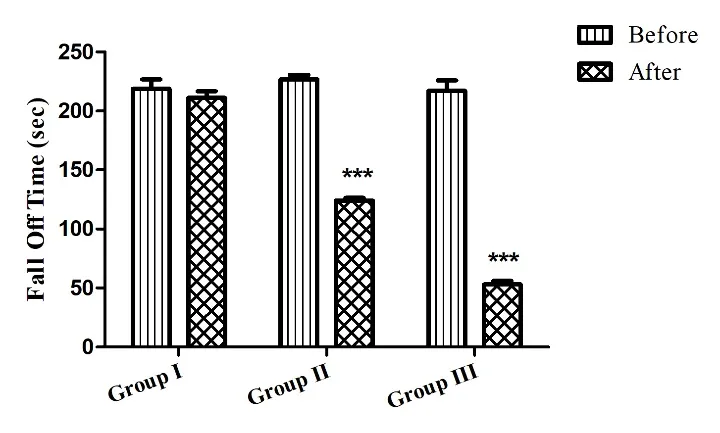
Figure 1: Effects of Thiocolchicoside and Chlorzoxazone Using Rota Rod Test
The results were expressed as Mean ± SEM (n=5). Data were analysed using one-way ANOVA followed by Dunnett's test. Values are expressed in mean ±SEM. Where n=5. *p<0.05, **p<0.01 and ***p<0.001; compared with normal control group.
Inclined Plane Test
In the inclined plane test, animals treated with Thiocolchicoside and Chlorzoxazone showed a highly significant reduction in the time spent on the inclined plane compared with the normal saline–treated control group, indicating muscle relaxant activity. The greatest degree of muscle relaxation was observed in the Chlorzoxazone-treated group (8.200 ± 1.114***), which was significantly greater than that produced by Thiocolchicoside (17.40 ± 3.473*).
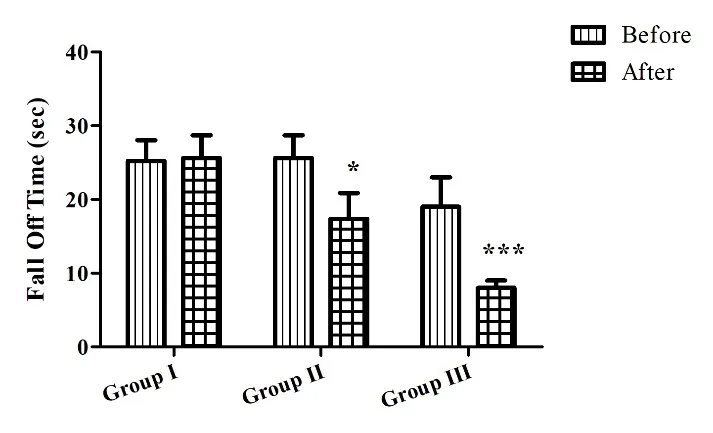
Figure 2: Effects of Thiocolchicoside and Chlorzoxazone Using the Inclined Plane Test
The results were expressed as Mean ± SEM (n=5). Data were analysed using one-way ANOVA followed by Dunnett's test. Values are expressed in mean ±SEM. Where n=5. *p<0.05, **p<0.01 and ***p<0.001; compared with normal control group.
Beam Walk Test
The time required to traverse the beam was significantly increased in Groups II and III compared with Group I, indicating impairment of motor coordination. Both drug-treated groups exhibited greater muscle relaxation than the normal saline–treated control group. Notably, maximal muscle relaxation was observed in the chlorzoxazone-treated group (30.80 ± 1.068***), which was significantly higher than that seen in the thiocolchicoside-treated group (23.20 ± 0.3742**).
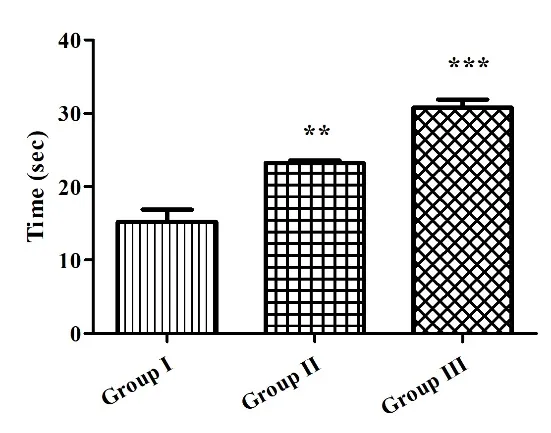
Figure 3: Effects of Thiocolchicoside and Chlorzoxazone Using the Beam Walk Test
The results were expressed as Mean ± SEM (n=5). Data were analysed using one-way ANOVA followed by Dunnett's test. Values are expressed in mean ±SEM. Where n=5. *p<0.05, **p<0.01 and ***p<0.001; compared with normal control group.
Wire Hang Test
Animals in Groups II and III exhibited a significant increase in the latency to grasp the wire with their forelimbs, along with a significant reduction in the duration of wire hanging compared with Group I, indicating impaired motor coordination. Both drug-treated groups demonstrated marked muscle relaxation, with maximal relaxation observed in the chlorzoxazone-treated group (18.80 ± 2.267***), which was significantly greater than that observed in the thiocolchicoside-treated group (36.20 ± 2.107***).
Table 1: Effects of Thiocolchicoside and Chlorzoxazone Using Wire Hang Test
| Groups (n=5) |
Treatment | Fall-off Time (sec) | % Fall-off Time | |
|---|---|---|---|---|
| Before | After | |||
| Group I | Normal Saline (1 ml/100g, p.o.) |
139.6±6.539 | 131.6±5.793 | - |
| Group II | Thiocolchicoside (2 mg/kg, p.o.) |
141.0±4.266 | 36.20±2.107*** | 74.33 |
| Group III | Chlorzoxazone (150 mg/kg, p.o.) |
137.4±5.134 | 18.80±2.267*** | 86.32 |
The results were expressed as Mean ± SEM (n=5). Data was analysed using one-way ANOVA followed by Dunnett's test. Values are expressed in Mean ± SEM. Where n=5. *p<0.05, **p<0.01 and ***p<0.001; compared with normal control group.
Thiopentone Induced Sleep
From these observations, it is evident that Groups II and III exhibited significant myorelaxant activity compared with Group I. Moreover, the duration of thiopentone-induced sleep was significantly prolonged in the chlorzoxazone-treated group (1.880 ± 0.3499**) compared with the thiocolchicoside-treated group (1.200 ± 0.1844), indicating a stronger central muscle relaxant effect.
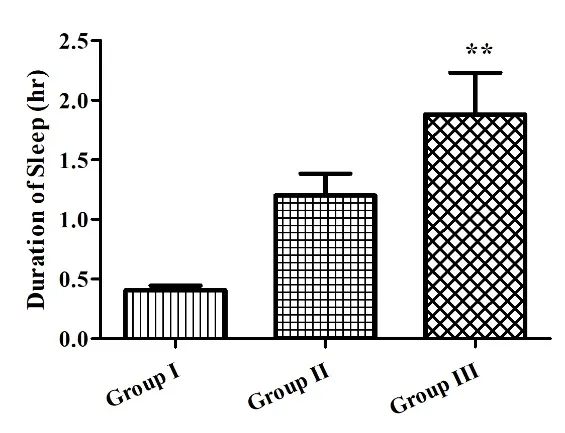
Figure 4: Effects of Thiocolchicoside and Chlorzoxazone Using Thiopentone Induced Sleep
The results were expressed as Mean ± SEM (n=5). Data were analysed using one-way ANOVA followed by Dunnett's test. Values are expressed in mean ±SEM. Where n=5. *p<0.05, **p<0.01 and ***p<0.001; compared with normal control group.
DISCUSSION
From our study results, we see that the comparison of the pharmacodynamics of Thiocolchicoside and Chlorzoxazone includes the effectiveness of their use as skeletal muscle relaxants, along with different impacts on motor coordination and muscle strength. The data obtained from this analysis agree with other existing scientific reports on the difference between the mechanisms of action of these drugs.
The considerable decrease in motor coordination seen in rotarod, inclined plane and beam-walk tests in chlorzoxazone-treated animals agrees with its central action on polysynaptic reflex arcs in the spinal cord and subcortical structures, causing a widespread reduction of muscle tone.2,8 Such a powerful central inhibition can be effective in muscle relaxation but at the same time cause motor coordination impairment, as seen from our results and the results of the previous studies of the impact of this drug.8,13
On the contrary, the selective impact of thiocolchicoside on motor coordination is explained by the specific impact of this medication on GABAA receptors.6,14 The impact of thiocolchicoside on GABAergic signalling causes only a reduction in muscle tone and does not interfere with voluntary motor control, as evidenced by less noticeable impairment of motor coordination in our experiment and according to previously obtained results.14,15 The fact that chlorzoxazone caused a significant increase in sleep duration suggests that it acts through CNS mechanisms. The findings are consistent with the wider activity of chlorzoxazone on the central nervous system that includes not only muscle relaxation but also induces drowsiness and impaired attention.8,9 In turn, the lesser impact of thiocolchicoside on sleep time indicates more selective activity that mainly involves muscle relaxation without notable central nervous system depression.6,14 Based on the results, thiocolchicoside could be considered for use in situations where cognitive abilities should remain intact, while chlorzoxazone may prove to be more beneficial when dealing with severe spasticity or muscular pain. The better performance of the thiocolchicoside group of animals in the wire-hang test is another indication of the more moderate impact of the former agent on the motor system. The lower grip endurance in the chlorzoxazone-treated animals is related to its more powerful inhibitory effects on reflexes, as shown earlier.13
These results are significant from the clinical point of view regarding muscle spasticity and sudden musculoskeletal spasms. The use of chlorzoxazone seems to be preferable for conditions requiring high muscle relaxation potency and wide CNS activity, like severe spasticity or pain, although the possible side effect may affect motor coordination. Thiocolchicoside is more effective in applications where balanced muscle relaxation is necessary while avoiding the effects on voluntary movements and consciousness.6,7,8
Further investigations may include translational research on humans to evaluate the efficacy and safety profile of these substances at different doses in certain conditions. Combination therapy utilising the properties of both drugs might lead to positive outcomes. Comparative analysis of these two medicines in the specified cases will help determine their appropriate clinical application.
CONCLUSION:
In conclusion, although both thiocolchicoside and chlorzoxazone are good muscle relaxants, they exhibit major differences in their pharmacodynamics. Chlorzoxazone induces more potent muscle relaxation due to the induction of general CNS depression, which, in turn, results in poor motor coordination. On the other hand, thiocolchicoside exhibits selective muscle relaxation without causing any motor impairment, muscle weakness, or alterations in mental abilities. Hence, thiocolchicoside is more suitable for patients where motor skills and cognition need to remain intact, while chlorzoxazone is more useful when more muscle relaxation is required.
CONFLICT OF INTEREST:
The authors have no conflicts of interest regarding this investigation.
ACKNOWLEDGEMENT:
The authors would like to thank the management and Principal of Acharya & BM Reddy College of Pharmacy, Bengaluru, for their support and for providing infrastructure facilities and chemicals to conduct the research.
REFERENCES

Nageena Taj, Hari Shankar Gupta, Anvitha Welda Sequeira, Kallis Xavier Dsouza, Sujit Kumar Sah, Manjunatha P. Mudagal, Uday Raj Sharma, Surendra Vada, T. Hari Babu, Gayathri S. V., Myorelaxant and Soporific Effects of Thiocolchicoside and Chlorzoxazone in Experimental Animals: A Comparative Approach, Int. J. of Pharm. Sci., 2026, Vol 4, Issue 11, 3850-3856. https://doi.org/10.5281/zenodo.24414609
 10.5281/zenodo.24414609