

We use cookies to ensure our website works properly and to personalise your experience. Cookies policy
Department of Pharmacology, Channabasweshwar Pharmacy College (Degree), Latur
Background: Gastrointestinal spasms associated with irritable bowel syndrome, intestinal colic, and hypermotility are commonly treated with synthetic antispasmodic agents that may cause adverse effects. Azadirachta indica (Neem) has been traditionally used for gastrointestinal disorders; however, the antispasmodic potential of its flowers remains inadequately explored.Objective: To evaluate the antispasmodic activity of the aqueous extract of Azadirachta indica flowers using an isolated chicken ileum model and investigate its possible mechanism against acetylcholine-induced contractions.Methods: Fresh Neem flowers were shade-dried, powdered, and extracted by hot aqueous extraction. Preliminary phytochemical screening was performed using standard qualitative tests. Isolated chicken ileum segments were mounted in an organ bath containing aerated Tyrode’s solution at 37°C. Acetylcholine concentration-response curves (0.1–6.4 µg/mL) were generated, and the inhibitory effects of Neem flower extract (10–160 mg/mL) were evaluated and compared with atropine sulphate. Results: Phytochemical analysis revealed the presence of alkaloids, flavonoids, terpenoids, saponins, and carbohydrates. Acetylcholine produced concentration-dependent contractions, with a maximum response at 1.6 µg/mL. The Neem flower extract significantly inhibited acetylcholine-induced contractions in a concentration-dependent manner, producing 13.88–63.88% inhibition across the tested concentrations. Atropine sulphate produced 33.33–69.44% inhibition, confirming the validity of the experimental model. The observed relaxant effect suggests involvement of muscarinic receptor antagonism and/or calcium channel modulation. Conclusion: The aqueous extract of Azadirachta indica flowers exhibited significant antispasmodic activity in isolated chicken ileum, supporting its traditional use in gastrointestinal disorders and highlighting its potential as a natural source of safer antispasmodic agents. Further mechanistic and in vivo studies are warranted.
Gastrointestinal (GI) spasmodic disorders, including irritable bowel syndrome, intestinal colic, and hypermotility-associated diarrhoea, are characterized by excessive contraction of intestinal smooth muscle, resulting in abdominal pain, cramping, and altered bowel habits [1,2]. Acetylcholine (ACh), the principal excitatory neurotransmitter of the parasympathetic nervous system, mediates intestinal smooth muscle contraction through activation of muscarinic M₃ receptors and subsequent intracellular calcium mobilization [3]. Therefore, agents that inhibit cholinergic signaling or calcium influx remain important therapeutic options for the management of GI spasms [3].
Conventional antispasmodic drugs such as atropine, hyoscine butylbromide, dicyclomine, and mebeverine are effective in reducing intestinal hypercontractility. However, their clinical use is often limited by adverse effects, including dry mouth, constipation, blurred vision, urinary retention, and cardiovascular complications[1,4]. These limitations have increased interest in medicinal plants as potential sources of safer and effective antispasmodic agents [5].
Azadirachta indica A. Juss. (Neem; Family: Meliaceae) is a widely used medicinal plant with documented antimicrobial, antioxidant, anti-inflammatory, antidiabetic, gastroprotective, and immunomodulatory properties [5,6,7,8]. These activities have been attributed to various phytoconstituents, including flavonoids, terpenoids, limonoids, tannins, and phenolic compounds [6,7]. While the pharmacological activities of Neem leaves, bark, and seeds have been extensively studied, the medicinal potential of Neem flowers remains relatively underexplored [7,8].
Recent studies suggest that Neem flower extracts possess antioxidant and smooth muscle relaxant properties. Bioactive compounds such as quercetin, kaempferol, and other flavonoids have been reported to modulate calcium influx and cholinergic signaling, thereby reducing smooth muscle contractility [8,9,10]. However, experimental evidence regarding the antispasmodic activity of aqueous Neem flower extract remains limited.
The isolated chicken ileum is a well-established in vitro model for evaluating gastrointestinal smooth muscle responses and screening antispasmodic agents. It provides reproducible cholinergic responses and offers an economical and ethically acceptable alternative to mammalian tissues [11,12].
Therefore, the present study aimed to evaluate the antispasmodic activity of the aqueous extract of Azadirachta indica flowers against acetylcholine-induced contractions in isolated chicken ileum and to identify major phytochemical constituents that may contribute to the observed activity. The findings may provide scientific evidence supporting the traditional use of Neem flowers in gastrointestinal disorders and contribute to the development of plant-derived antispasmodic agents.
Fresh flowers of Azadirachta indica A. Juss. were collected from local regions, authenticated, and a voucher specimen was deposited at the institutional herbarium [13,14]. The flowers were carefully shade-dried, pulverized into a coarse powder, and subjected to hot aqueous extraction using a Soxhlet apparatus (or reflux condensation). The resulting extract was filtered, concentrated under reduced pressure using a rotary evaporator, and stored at 4°C until further pharmacological evaluation [15,16].
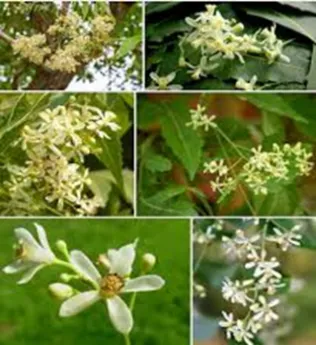
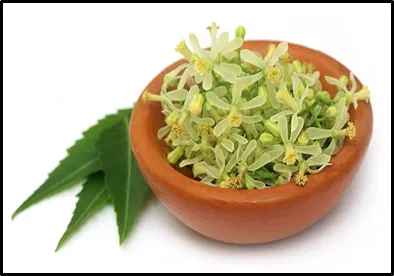

Fig. 1. Fresh Neem Flowers and Powdered Neem Flower Material
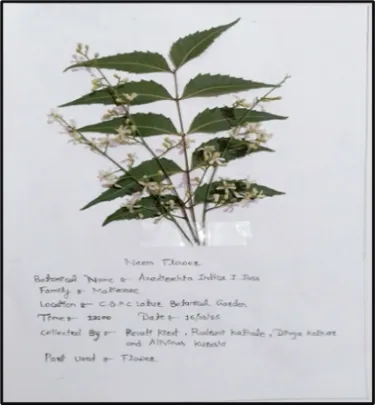
Fig. 2. Authentication of Neem Flower
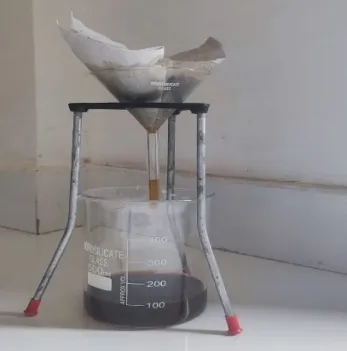
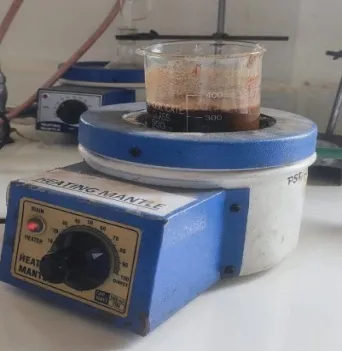
Fig. 3. Extraction of Neem flower powder
The crude aqueous extract of A. indica flowers was subjected to qualitative phytochemical screening following standard protocols to identify major classes of secondary metabolites, including alkaloids (Wagner’s test), flavonoids (Lead acetate test), terpenoids (Salkowski test), saponins (Froth test), and carbohydrates (Fehling's test) [17,18].
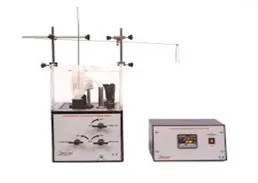
Isolated chicken ileum segments were obtained from a local registered slaughterhouse, transported immediately in ice-cold physiological solution, and processed within 30 minutes [19,20]. Sections of the ileum (approx. 2–3 cm) were carefully flushed and mounted vertically in a 25 mL organ bath containing Tyrode’s physiological salt solution. The solution was continuously aerated with atmospheric air (or carbogen) and maintained at a constant physiological temperature of 37 ± 0.5°C. The tissue was allowed to equilibrate under a resting tension of 1.0 g for 30 minutes before drug administration [19,20,21].
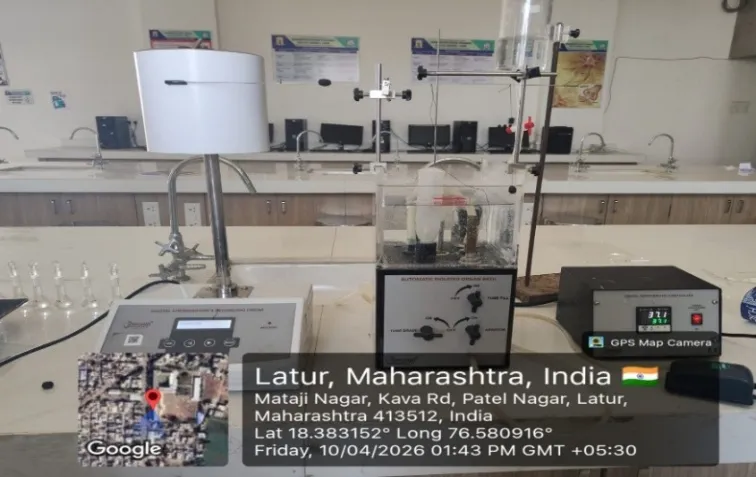

Fig. 4. Isolated Chicken Ileum mounted on organ bath
To evaluate the antispasmodic activity, tissue contractility was recorded using an isometric force transducer connected to a data acquisition system [20,21].
|
Extensive literature survey |
|

|
|
Selection of disease, tissue and plant |
|

|
|
Collection of Neem flower, authentication, Extraction and phytochemical screening |
|
|
|
Organ bath setup with mounting of chicken ileum |
|
|
|
Administration of Neem flower extract |
|
|
|
Compare the results of test with standard drug |
|
|
|
Data analysis and Interpretation of result |
|
|
|
Conclusion |
All experimental data are expressed as Mean ± SEM (n = 3). Statistical evaluation was performed using GraphPad Prism software. Differences between experimental groups were analyzed using one-way or two-way analysis of variance (ANOVA) followed by Tukey’s post-hoc test, where p < 0.05 was considered statistically significant.
Table 1. Qualitative phytochemical screening of aqueous Neem flower extract
|
Phytochemical |
Test employed |
Observation |
Result |
|
Carbohydrates |
Molisch's test |
Violet ring at interface |
+ |
|
Reducing sugars |
Fehling's test |
Brick-red precipitate |
+ |
|
Alkaloids |
Mayer's test |
Cream precipitate |
+ |
|
Alkaloids |
Wagner's test |
Reddish-brown precipitate |
+ |
|
Flavonoids |
Sulphuric acid/Alkaline reagent test |
Yellow-orange coloration |
+ |
|
Terpenoids |
Liebermann–Burchard test |
Green coloration |
+ |
|
Saponins |
Foam test |
Persistent froth |
+ |
|
Tannins |
Ferric chloride test |
Blue-black coloration |
± |
|
Glycosides |
Keller–Killiani test |
Characteristic brown ring |
+ |
|
Proteins |
Biuret test |
No violet colour |
– |
|
Amino acids |
Ninhydrin test |
No purple colour |
– |
(Present +, Absent -)
The phytochemical profile obtained in the present investigation demonstrates that the aqueous extract of A. indica flowers contains several biologically active secondary metabolites that may collectively contribute to its antispasmodic activity. Among these, flavonoids are recognized for their ability to inhibit calcium influx through voltage-dependent calcium channels and reduce intracellular calcium availability, thereby producing smooth muscle relaxation. Terpenoids and limonoids have also been reported to possess spasmolytic, anti-inflammatory, and antioxidant activities through modulation of calcium homeostasis and cholinergic neurotransmission.
Alkaloids present in the extract may contribute to smooth muscle relaxation by interacting with cholinergic receptors or ion channels involved in excitation–contraction coupling. Saponins are known to stabilize biological membranes and may enhance the bioavailability and synergistic effects of other phytoconstituents. Carbohydrates, although not directly associated with antispasmodic activity, may contribute to the physicochemical characteristics of the extract.
Previous phytochemical investigations of Azadirachta indica flowers have identified several important constituents, including quercetin, kaempferol, rutin, nimbin, nimbidin, nimbolide, azadirachtin derivatives, catechin, gallic acid, β-sitosterol, and other polyphenolic compounds. These metabolites exhibit antioxidant, anti-inflammatory, antimicrobial, gastroprotective, and smooth muscle relaxant activities, supporting the traditional medicinal use of Neem in gastrointestinal disorders.
The concentration-dependent inhibition of acetylcholine-induced contractions observed in the present study is therefore likely attributable to the synergistic action of these phytochemicals. In particular, flavonoids and terpenoids may inhibit muscarinic receptor-mediated signaling and calcium entry into intestinal smooth muscle cells, resulting in reduced contractility. Nevertheless, isolation and characterization of the individual bioactive constituents using chromatographic techniques such as HPLC, LC–MS/MS, or GC–MS are required to identify the compounds primarily responsible for the observed pharmacological activity.
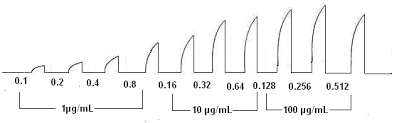
Acetylcholine produced a concentration-dependent increase in the contractile response of isolated chicken ileum (Table 2, Figure 1). The response increased progressively from 1.5 ± 0.03 cm at 0.1 μg/mL to a maximum contraction of 3.6 ± 0.05 cm at 1.6 μg/mL, after which no further increase in contraction was observed, indicating saturation of muscarinic receptors.
|
Dose (μg/mL) |
Response (cm) |
% Maximum Response |
|
0.1 |
1.5 |
41.66 |
|
0.2 |
1.7 |
47.22 |
|
0.4 |
1.9 |
52.77 |
|
0.8 |
3.5 |
97.22 |
|
1.6 |
3.6 |
100 |
|
3.2 |
3.6 |
100 |
|
6.4 |
3.6 |
100 |

The cumulative concentration–response curve demonstrated the typical sigmoidal pattern expected for acetylcholine-induced intestinal contraction, confirming tissue viability and reproducibility of the organ bath preparation.Acetylcholine activates muscarinic M₃ receptors on intestinal smooth muscle, stimulating phospholipase C-mediated formation of IP₃ and increasing intracellular Ca²⁺ concentration. Elevated intracellular calcium activates myosin light chain kinase, ultimately producing smooth muscle contraction. The plateau observed beyond 1.6 μg/mL suggests maximal receptor occupancy and saturation of the contractile machinery.
Pretreatment with aqueous Neem flower extract produced a significant concentration-dependent inhibition of acetylcholine-induced contractions (Table 3). The contractile response progressively decreased from 3.1 cm at 10 mg/mL to 1.3 cm at 160 mg/mL, corresponding to 13.88% and 63.88% inhibition, respectively.
|
Concentration (mg/mL) |
Response (cm) |
% Inhibition |
|
10 |
3.1 |
13.88 |
|
20 |
2.8 |
22.22 |
|
40 |
2.4 |
33.33 |
|
80 |
1.9 |
47.22 |
|
160 |
1.3 |
63.88 |
The inhibition increased proportionally with concentration, indicating a dose-dependent antispasmodic effect. The concentration–response relationship suggests that the extract contains pharmacologically active constituents capable of reducing intestinal smooth muscle contractility. The observed activity may result from inhibition of muscarinic receptor-mediated signaling, suppression of extracellular calcium influx, or modulation of intracellular calcium release. Flavonoids such as quercetin and kaempferol are known calcium antagonists, whereas limonoids and terpenoids present in Neem have been reported interfere with excitation–contraction coupling in smooth muscle.
Atropine sulphate, the standard muscarinic receptor antagonist, produced marked inhibition of acetylcholine-induced contractions, reducing contraction amplitude from 2.4 cm at 0.1 μg/mL to 1.1 cm at 0.4 μg/mL, corresponding to 33.33–69.44% inhibition.
|
Concentration |
Response (cm) |
% Inhibition |
|
0.1 μg/mL |
2.4 |
33.33 |
|
0.2 μg/mL |
1.8 |
50.00 |
|
0.4 μg/mL |
1.1 |
69.44 |
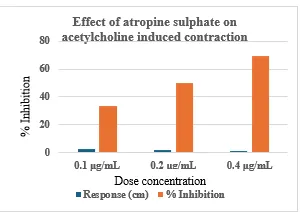
Although atropine exhibited greater potency than the Neem flower extract, the highest concentration of the extract produced inhibition approaching that of atropine, suggesting substantial antispasmodic activity.
The present investigation demonstrated that the aqueous extract of Azadirachta indica flowers possesses significant concentration-dependent antispasmodic activity against acetylcholine-induced contractions in isolated chicken ileum [22,25]. The experimental model employed is widely accepted for evaluating smooth muscle relaxant agents because acetylcholine reliably induces muscarinic receptor-mediated contractions [19,22,26].
The concentration-dependent inhibition observed in the present study suggests that the extract acts through pharmacological mechanisms involving suppression of cholinergic neurotransmission and/or calcium-dependent excitation–contraction coupling [22,25]. Because acetylcholine-induced contraction depends predominantly on activation of muscarinic M₃ receptors and intracellular calcium mobilization, inhibition of these pathways provides a plausible explanation for the observed relaxant activity [22,27].
The phytochemical screening supports this hypothesis by demonstrating the presence of flavonoids, terpenoids, alkaloids, and saponins [14,17]. Flavonoids have been reported to inhibit L-type calcium channels and reduce calcium influx into smooth muscle cells [23,28,29]. Terpenoids and limonoids, including nimbolide and nimbin, possess smooth muscle relaxant and anti-inflammatory properties that may contribute to the reduction of intestinal contractility [6,14,30]. The synergistic interaction among these phytochemicals is likely responsible for the overall pharmacological effect of the extract [30,31].
The findings of the present study are consistent with previous reports demonstrating that Neem-derived extracts inhibit acetylcholine- and potassium chloride-induced contractions in isolated intestinal preparations [14,30,32]. Similar spasmolytic activity has also been reported for other medicinal plants rich in flavonoids and terpenoids, including Foeniculum vulgare, Mentha piperita, and Matricaria chamomilla [33,34,35]. These studies indicate that calcium channel blockade and muscarinic receptor antagonism are common mechanisms underlying plant-derived antispasmodic activity [28,33,35].
The aqueous extract achieved 63.88% inhibition of acetylcholine-induced contraction at the highest tested concentration, whereas atropine sulphate produced 69.44% inhibition. Although the extract was less potent than the standard drug, its substantial inhibitory effect suggests promising pharmacological activity [24,25]. Moreover, herbal preparations may provide therapeutic benefits with fewer anticholinergic adverse effects than conventional synthetic agents [4,36].
A limitation of the present study is that the precise molecular mechanism could not be confirmed because receptor-binding studies, calcium-free medium experiments, and selective antagonist assays were not performed. Furthermore, the active compounds responsible for the observed activity were not isolated or quantified. Future studies should employ HPLC or LC–MS/MS for phytochemical characterization, investigate receptor-specific interactions, determine EC₅₀/IC₅₀ values, and validate efficacy in animal models of gastrointestinal hypermotility [15,30,31].
Overall, the findings provide pharmacological evidence supporting the traditional use of Azadirachta indica flowers in gastrointestinal disorders and indicate that the aqueous flower extract represents a promising natural source of antispasmodic agents for further drug development [5,14,30].
4. CONCLUSION
In conclusion, this study demonstrates that the aqueous extract of Azadirachta indica flowers exhibits potent, concentration-dependent antispasmodic activity in an isolated chicken ileum model. The extract significantly attenuates acetylcholine-induced contractions, likely via muscarinic receptor antagonism and the modulation of calcium channel pathways driven by its rich profile of secondary metabolites, including flavonoids and terpenoids. While further bio-guided isolation and in vivo mechanistic studies are required to identify specific active lead compounds, these findings provide robust pharmacological validation for the traditional use of Neem flowers in managing gastrointestinal hypermotility disorders and highlight its potential as a safer, natural therapeutic alternative to synthetic antispasmodics.
REFERENCES



Snehal Jogdand*, Revati Kirat, Rudrani Kathale, Alinvas Khureshi, Divya Kelkar, Deciphering The Spasmolytic Blueprint Of Azadirachta Indica: Cholinergic Suppression And Smooth Muscle Relaxation In An Isolated Myenteric Model, Int. J. of Pharm. Sci., 2026, Vol 4, Issue 7, 4721-4732. https://doi.org/ 10.5281/zenodo.21508954
 10.5281/zenodo.21508954