

We use cookies to ensure our website works properly and to personalise your experience. Cookies policy
Anurag College of Pharmacy, Warthi, Bhandara, Maharashtra..
Allium sativum, Curcuma longa, Aloe barbadensis, and Azadirachta indica ethanolic extracts have been used to create gel mixtures. Allium sativum buds, Curcuma longa rhizomes, Aloe barbadensis and Azadirachta indica leaves have been used to cure a variety of bacterial illness. Create a Polyherbal gel and test its antibacterial efficacy against P.aeruginosa and E. coli using ethanolic extracts of Allium sativum, Curcuma longa, Aloe barbadensis, Azadirachta indica. The plant material was first extracted using an ethanolic solvent utilizing the maceration method of extraction. The extract was evaluated for antibacterial activity against P. aeruginosa, and E. coli. The last phase involves the creation and assessment of polyherbal gel. The effective antimicrobial activity of polyherbal gel against P. aeruginosa and E. coli was reported. The antimicrobial activity observed is attributed to the active compounds found in the plant material. The antimicrobial efficacy was evaluated using the disc diffusion method, along with the gels pH, viscosity, spreadability, homogeneity and skin irritancy test. The results demonstrated that the developed formulation is effective in treating skin diseases
For the treatment of numerous skin conditions about 80% of the world’s population still heavily relies on traditional remedies. Earlier reports said that herbal medicines are safe and have few side effects, particularly when compared to the modern pharmaceuticals. There has been a slow growth of interest in the use of medicinal plants in developing nations in recent years. Due to its widespread use and benefit ratio of topical herbal therepies of have attracted a lot of research focus . Topical administration of gels at pathological locations offers significant advantages in terms of the quicker release of a medicine straight to the site of the action[1].Different Formulations, ranging from solid to liquid dosage form, have been employed by medical professionals to treat dermatological infections. Polyherbal gel is most widely used formulation among all of these because of high efficacy against skin infection[2].
Polyherbal formulations exhibit enhanced efficacy and potency against various human dermatological disorders due to active phytochemicals-such as steroids, alkaloids, tannins, triterpenes, flavonoids and glycosides derived from Allium sativum, Curcuma longa, Aloe barbadensis and Azadirachta indica which possess proven antibacterial, antimicrobial, antioxidant and wound healing properties.
Skin Diseases:-
A skin diseases is any condition that affects the skins appearance, structure or function. It can be caused by infections, allergies, autoimmune disorders, genetics, environmental factors and irritation.
some common skin diseases include:-
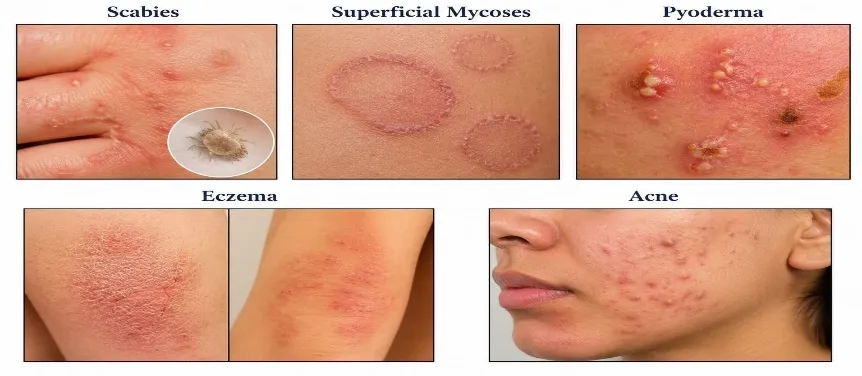
Fig.No.1:- Skin Diseases
Kumar et al. (2025): Developed a herbal antibacterial gel in which they studied physiochemical characteristics and stability. Manoj A. Suva et al. (2024): Reported that hydroalcoholic extract exhibits antimicrobial, anti-inflammatory, antioxidant and antiacne activities. Salwa M. Raweh et al. (2024) Evaluated the antimicrobial activity of Azadirachta indica extract against Pseudomonas aeruginosa and Escherichia coli. Dalia A. Pondini et al. (2023): Reported that ethanolic extract of Curcuma longa possesses antioxidant, anti-inflammatory and antimicrobial activities beneficial for skin healing. Gurning Kaste et al. (2023): Rhizomes of Curcuma longa were found to contain phytochemicals such as alkaloids and tannins with performed antimicrobial activity. Femy Safri et al. (2020): Reported that Carbopol 940 is a suitable gelling agent and significantly identified gel pH, viscosity and spreadability. Although individual plant extracts have been studied extensively, there is limited research on polyherbal gels that combine multiple extracts into one formulation. The synergistic potential of combining Curcuma longa, Azadirachta indica, Aloe barbadensis and Allium sativum in a Carbapol-based gel has Carbopol-based gel has not been systematically explored. Most studies focus on single herbs or isolated compounds, leaving a gap in developing and evaluating a comprehensive polyherbal gel for skin diseases. That’s why my aim of this research paper is To Formulate and Evaluate Polyherbal gel for Skin Diseases and objectives are to identify components required for making the polyherbal gel, to develop the polyherbal gel, to determine the Physiochemical properties, pH, Viscosity, Spreadability of polyherbal gel.
Plant Profile:-
One of the traditional medicines that can be used to treat skin diseases. Garlic (Allium sativum) contains essential chemical compounds which are good for the body.
Organoleptic Properties:-
Colour: Pinkish white
Odour: Odoriferous
Taste: Soft, Sweet buttery flavour
Size: 1.5-2.5 cm
Biological Functions:-
T
able No.1:- Taxonomical classification of Allium sativum
|
Kingdom |
Plantae |
|
Division |
Mangnoliophyta |
|
Class |
Liliopsida |
|
Order |
Asparagales |
|
Family |
Alliaceae |
|
Subfamily |
Alliodeae |
|
Tribe |
Allieae |
|
Genus |
Allium |
|
Species |
A. sativum |
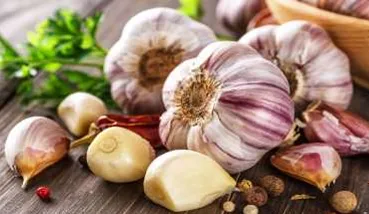
Fig.No.2:- Garlic
Turmeric (Curcuma longa) is also a traditional medicine which is used in the various skin diseases. It uses as an antiseptic for cuts, burns & brises and as an antibacterial agent.
Organoleptic Properties:-
Colour: Yellow
Odour: Earthy, Woody
Taste: Bitter
Size: 1m
Biological Functions:-
Table No.2:- Taxonomical classification of Curcuma longa
|
Kingdom |
Plantae |
|
Division |
Magnoliophyta |
|
Class |
Liliopsida |
|
Order |
Zingiberales |
|
Family |
Zingiberaceae |
|
Genus |
Curcuma |
|
Species |
Curcuma longa |
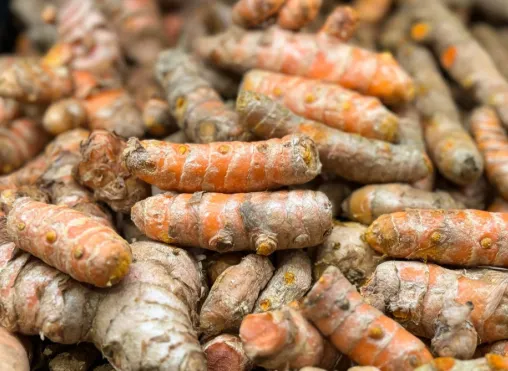
Fig.No.3:- Turmeric
Aloe Vera (Aloe barbadensis) is a semi-tropical with a broad range of applications in the foods, drugs and cosmetic industries. The aloe vera contains various health benefits which are important for the human body.
Organoleptic Properties:-
Colour: Green
Odour: None
Taste: Bitter
Size: 60-100 cm
Biological Functions:-
Table No.3:- Taxonomical classification of Aloe barbadensis
|
Kingdom |
Plantae |
|
Clade |
Tracheophytes |
|
Clade |
Angiosperms |
|
Clade |
Monocots |
|
Order |
Asparagales |
|
Family |
Asphodelaceae |
|
Subfamily |
Asphodeloideae |
|
Tribe |
Aloeae |
|
Genus |
Aloe |
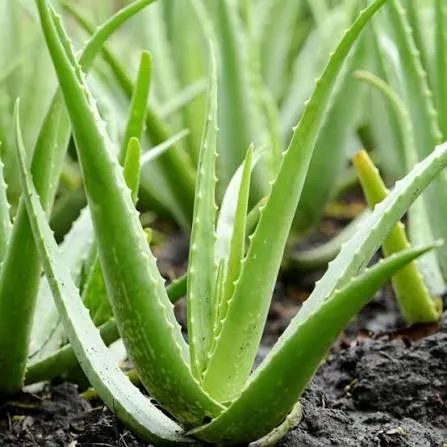
Fig.No.4:- Aloe Vera
The Neem is one of the most versatile medicinal plant known for its numerous health benefits. The Neem tree is used for skin care and improve the skins beauty.
Organoleptic Properties:-
Colour: Yellowish Green
Odour: Indistinct
Taste: Bitter
Size: 15-20 m
Biological Functions:-
Table No.4:- Taxonomical classification of Azadirachta indica
|
Kingdom |
Plantae |
|
Class |
Dicotyledonae |
|
Order |
Rutales |
|
Family |
Meliaceae |
|
Subfamily |
Mellioideae |
|
Tribe |
Melieae |
|
Genus |
Azadirachta |
|
Species |
Indica |
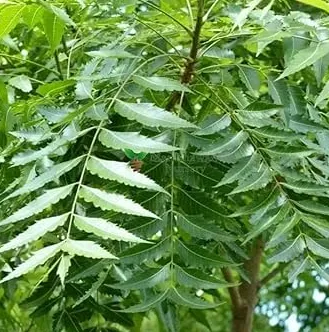
Fig.No.5:- Neem
MATERIALS AND METHODOLOGY
Materials:-
Ethanol, Nutrient agar, Carbopol-940, Propylene glycol., Methyl paraben, Propyl Paraben, Triethanolamine, Plant extracts (Allium sativum, Curcuma longa, Aloe barbadensis and Azadirachta indica), Rose water, Distilled Water.
Instruments:-
Digital pH meter (alpha-01d), Digital Brookfield Viscometer (DV-E)
Methodology:-
Collection
Leaves of Aloe barbadensis, Azadirachta indica was collected from college premises and dried rhizomes of Curcuma longa and fresh buds of Allium sativum was brought from market of Warthi, Bhandara.
Authentication
Authentication of leaves of Aloe barbadensis, Azadirachta indica, buds of Allium sativum and dried rhizomes of Curcuma longa was done by Dr. Mrs Sayeda Qureshi, Associate Professor and Head of Botany Department, J. M, Patel College, Bhandara.
Extraction:-
By using the process of maceration, the extract of Aloevera, Garlic, Neem and Turmeric was prepared.
Aloevera leaves were washed and homogenized using a blender. The homogenate was dissolved in a ratio of 1:1 of distilled water and methanol respectively for 48 hours. The solutions were filtered and the filtrate
was evaporated at 45℃ in an obtain aqueous and methanol extract of Aloevera[8].
The Turmeric rhizome was cleaned and cut into small pieces. Samples of black rice bran and turmeric dried in an oven at 35-40℃ to a constant weight, then ground and sieved through a 40- mesh sieve. 500 g of rice bran and 60g of turmeric powder soaked in a 96% ethanol solvent (1:10 weight/volume) for 2 days samples (24h) with occasional stirring. The filtrate with Whatman paper No. Yield (%) of evaporated dried extracts was calculated as Distilled Water extracts/Distilled Water×100% Where Distilled Water sample is the dry weight of the sample and Distilled Water is the weight of the extracts after drying[9].
Neem extraction of mature fresh neem leaves collected from farm in Warthi. The fresh neem leaves were washed under tap water to remove the dust and foreign particles then dried in shade for 4 hours and then in oven at 50℃ for 1 hr. The dried leaves were used to make neem powder. 30 g of neem powder was extracted with 95% ethanol, methanol or distilled water. The solutions were incubated for 24 h in shaker incubator. Subsequently, the mixture was boiled in hot water bath for 30 min and further incubated vin shaker incubator for 24 h. After incubation the solution was filtered under vacuum through Whatman No. 1 filter paper. The organic solvents were removed by rotary evaporator under reduced pressure at 40℃ to give crude extract. The aqueous extract was evaporated by freeze dry machine to remove the solvent[10]
The garlic was first dried then grind into a fine mash. This mash was soaked in 96% ethanol at a ratio of 1:10 and left to macerate for 24 hours. The process was repeated three times to ensure through extraction. Afterward, the liquid extract was concentrated using a rotary vacuum evaporator, leaving behind a thick garlic extract. To prepare different strengths the concentrated extract was diluted with distilled water to create solutions of 20%, 40%, 60% and 80%. These preparations were then examined for their organoleptic properties such as colour, smell and subjected to phytochemical screening to identify the presence of secondary metabolites in a qualitative manner[11].
Preparation of Polyherbal Gel
Polyherbal gel formulations are made by combining Carbopol-940, Propylene glycol, Methyl paraben, Propyl paraben and Triethanolamine. After that the dried crude extract of all Four plant ingredients was added and the mixture was stirred continuously to ensure the extracts blended evenly throughout the gel resulting in consistent formulation[12].
Table No.5:- Composition of Polyherbal Gel
|
Ingredients |
Gel 1 (gm) |
Gel 2 (gm) |
Gel 3 (gm) |
|
Carbopol-940 |
0.5 |
0.5 |
0.5 |
|
Plant extract |
0.05 |
o.15 |
0.2 |
|
Propylene glycol |
0.1 |
0.1 |
0.1 |
|
Methyl paraben |
0.02 |
0.02 |
0.02 |
|
Propyl paraben |
0.01 |
0.01 |
0.01 |
|
Triethanolamine |
0.2 |
0.2 |
0.2 |
|
Rose water |
4 drops |
4 drops |
4 drops |
|
Distilled water |
To make 50 gm |
To make 50 gm |
To make 50 gm |
Phytochemical Screening for Extracts:-
Ferric chloride Test: Add extract and 2ml of ferric chloride which develops black colour and it shows positive test.
Mayer Test: Add extract and 2 ml of Mayer reagent which develops cream colour precipitate and it shows positive test.
Hager Test: Add extract and 2 ml of Hager Reagent which gives white precipitate and it shows positive test.
Modified Borntrager Test: Add extract and 2 ml of ferric chloride,2 ml of dilute Hydrochloric acid and heat it for 5 minutes for boiling then filter, cool and add benzene which separates organic layer and due to ammonia, it develops pink colour it shows positive result.
Biuret Test: Add extract and water, 2ml of 1% potassium hydroxide, few drops of copper sulphate which develops violet colour and it gives positive test[13].
Anti-microbial Activity of Extract:-
Test Micro-organisms
In this work, two prevalent pathogenic micro-organisms the gram-negative bacteria Pseudomonas aeruginosa and Escherichia coli were employed. Antibacterial activity was assessed using both bacterial strains that were acquired from an Anurag College of Pharmacy in Warthi, Bhandara.
Anti-microbial Activity Screening
The anti-microbial activity of the four extracts was determined according to the agar well diffusion method. In this method pure isolates of micro-organisms were subcultured on the recommended specific medium at 37℃ for 24 hours. One hundred microliters of inoculum of each test organism was spread onto the specific media plates (containing Mueller Hinton Agar) and 6 mm diameter wells were bored with a sterile borer in the inoculated agar plates 100 microliters of each extract were injected directly into wells (in triplicates) of inoculated specific media agar plates for each test organism. The plates were left to stand for 10 minutes to allow diffusion of the extract and incubated at 37℃ for 24 hours. Sterile Distilled water and 20% DMSO were used as negative controls and 0.2% Chlorhexidine as a positive control. The antimicrobial activity was indicated by the presence of an inhibition zone around the well containing the extract. The zone of inhibition was measured in millimeters by means of vernier caliper[14].
Evaluation of Polyherbal Gel:-
The prepared polyherbal gels were inspected for their colour, greasiness, consistency and odour[15].
The pH of all formulated herbal gels was measured by using digital pH meter[16].
The spreadability of the formulated gels were assessed using the glass slide technique, a widely adopted method for evaluating topical preparations. In this procedures, approximately 0.5 g of gel was carefully placed between two clean glass slides. A weight of125 g was applied for five minutes to allow the gel to spread evenly, forming a uniform thin film. Following this, any excess gel was removed and a smaller weight of 20 g was attached to upper slide. The time required for the two slides to separate under this load was recorded as an indicator of spreadability. The spreadability value was then calculated using the standard equation providing a quantitative measure of the ease with which the gel can be applied over a surface.
S= M / T
Where,
S= Spreadability (g/s)
M= Applied weight (g)
T = Time taken for slide separation (s)[17].
Gels viscosity was studied using Brookfield Viscometer[18].
The homogeneity of the gel formulations was examined visually after the gel set in their containers. The evaluation focused on their overall appearance of any visible aggregates with a smooth and uniform textures indicating good homogeneity[19].
The formulations were applied on the skin and then ease and extent of washing with water were determined manually[1].
The formulation was applied to a marked area on the dorsal surface of the skin and observed for erythema, oedema or irritation over 2 hours[20].
Pseudomonas aeruginosa and Escherichia coli strains were produced from the microbiology laboratory and cultured on nutrient agar medium (Merck Millipore). Thon nutrient agar medium (Merck Millipore). The plates were incubated under anaerobic conditions for 48 hours to promote bacterial growth. For the human swab sample, a volunteer clinically diagnosed with acne vulgaris was selected. The volunteer’s face was rinsed with distilled water and dried using a sterile cotton wipe. A visible comedone was carefully punctured with a sterile acne needle, A visible acne needle, and the exudate was collected using a sterile cotton swab. This swab was then immersed in 5 ml of distilled water for five minutes, After which the suspension was evenly spread onto freshly prepared agar plates. The plates were incubated at 37℃ for 48 hours, allowing distinct bacterial colonies to develop.
The antibacterial efficacy of the gel formulation was tested using the disc diffusion method against the two bacterial stains. Bacterial stain cultures were standardized in Brain Heart Infusion broth to achieve a density of approximately 108 cells /ml. From this suspension , 10 ml was uniformly spread onto agar plates. Sterile filter paper discs (1 cm diameter) were soaked for five minutes in either the prepared polyherbal gel or a Standard Clindamycin gel. The treated discs were then placed at the centre of the inoculated plates and incubated for 72 hours. After incubation the zones of inhibition were measured in millimeters, starting from the edge of the disc to the boundary where bacterial growth was halted[21].
The polar mobile phase was formulated using equal volumes of glacial acetic acid, propanol, water and ethanol (20:20:20:20, v/v/v/v). For the non-polar mobile phase, a mixture of hexane and acetone in the ratio of 70:30 was prepared and adjusted to a final volume of 100 ml. Silica gel60 Tlc plates served as the stationary phase. After development, the plates were examined under UV light at 254 nm, and Rf values were determined. To visualize amino acid derivatives, ninhydrin and anisaldehyde were applied as spraying reagents[22].
A standard solution was prepared by dissolving 10 mg of the reference compounds in 10 ml of methanol. The mixture was filtered to eliminate any insoluble particles and the clear filtrate was subsequently used for spotting onto silica gel plates. The test solution was prepared by dissolving 0.5 g of the extract in 100 ml of methanol. The mixture was then filtered to remove any insoluble material and the resulting filtrate was applied for spotting onto silica gel plates After development, the plates were examined under UV light at 256 nm, and Rf values were determined.[23].
TLC plates were prepared using silica gel as absorbent. To make the coating slurry 15 g of silica gel-G was blended with 30 ml of distilled water and promptly spread onto the plates. These were left to air-dry for 1 hour followed by heat treatment at 100℃ for 90 minutes to fix the layer. Using a micropipette approximately 10 microliters of extract were carefully applied to the plates and allowed to dry. Development was carried out with two solvent systems: system 1 composed of chloroform and methanol (12:2) while system 2 consisted of ethyl acetate, toluene and formic acid in the ratio of 2:2:1:1:1:1 After development, the plates were examined under UV light at 254 nm, and Rf values were determined.[24].
RESULT AND DISCUSSION:-
Evaluation Test for Extract
Table No.6:- Phytochemical screening for extracts
|
Sr. No. |
Tests |
Reagents
|
Observation |
Result |
|
1. |
Alkaloids |
Hagner’s Reagent |
Gives Yellow Precipitate |
+ |
|
Mayer’s Reagent |
Gives White Precipitate |
+ |
||
|
2. |
Ferric Chloride Test |
Ferric Chloride |
Gives Brownish Blue Colour |
- |
|
3. |
Glycosides (Borntreger Test) |
Ferric Chloride, Benzene, Ammonia |
Gives Pink Precipitate |
++ |
|
4. |
Flavonoids |
Magnesium, Hydrochloric acid |
Pink to Blue Colour |
++ |
|
5. |
Tannins |
1% Ferric Chloride |
Gives Black Precipitate |
++ |
|
6. |
Biuret Test |
Copper sulphate, Potassium Hydroxide |
Gives Purple/ White Precipitate |
+++ |
Note: (+++) Highly present, (++) Moderately present, (+) Weakly Present, (-) Absent.
Table No.7:- Rf value of Extracts
|
Drugs |
Allium sativum |
Curcuma longa |
Azadirachta indica |
Aloe barbadensis |
||||
|
Standards |
Alliin |
Curcumin |
Azadirachtin |
Aloin |
||||
|
Mobile phase |
Glacial acetic acid: Propanol:Water:Ethanol (20:20:20:20) |
Chloroform:methanol (9.5 : 5) |
Diehyl ether : ether (8.1 : 1.9) |
Chloroform:methnol (12 : 2) |
||||
|
Rf value |
Standard |
Sample |
Standard |
Sample |
Standard |
Sample |
Standard |
Sample |
|
0.33 |
0.32 |
0.7 |
0.71 |
0.74 |
0.78 |
0.68 |
0.66 |
|
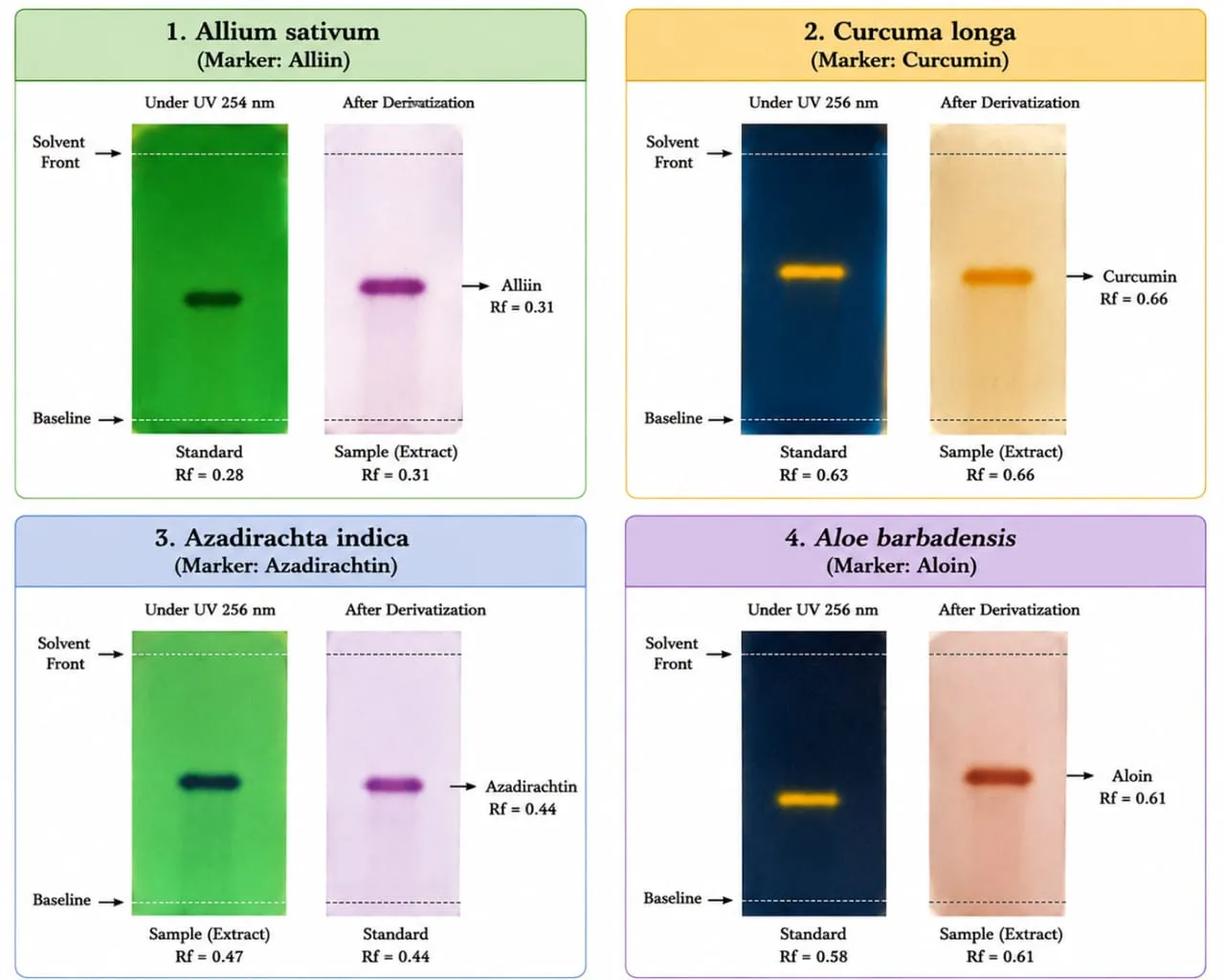
Fig.No.6:- Rf Value of Extracts
Evaluation Test for Polyherbal Gel
Table No.8:- Physiochemical Properties of Polyherbal Gel
|
Sr. No.
|
Physical Parameters |
Standard Values |
Observations
|
||
|
Gel 1 |
Gel 2 |
Gel 3 |
|||
|
|
Colour |
Pale Yellow to Yellow |
Pale Yellow |
Light Yellow |
Light Yellow |
|
|
Odour |
Characteristics |
Rose like |
Rose like |
Rose like |
|
|
pH |
5.0-7.0 |
5.81 |
6.08 |
5.95 |
|
|
Washability |
Easily Washable |
Easily Washable |
Easily Washable |
Easily Washable |
|
|
Texture |
Smooth |
Smooth |
Smooth |
Smooth |
|
|
Homogeneity |
Uniform |
Uniform |
Uniform |
Uniform |
|
|
Skin Irritancy Test |
No Irritation |
No |
No |
No |
Table No.9:- Spreadability of Polyherbal Gel
|
Formulation |
Mass (gm) |
Length (cm) |
Time (sec) |
Spreadability (gm cm/sec) |
|
Gel 1 |
20 gm |
8.5 |
10.33 |
16.45 |
|
Gel 2 |
20 gm |
6.5 |
9.00 |
14.44 |
|
Gel 3 |
20 gm |
4.5 |
7.38 |
12.19 |
Table No.10:- Viscosity of Polyherbal Gel
|
Formulation |
Viscosity (cP) |
|
Gel 1 |
9093.33 |
|
Gel 2 |
8720 |
|
Gel 3 |
7770 |
Table No.11:- Antimicrobial Activity of Polyherbal gel
|
Plant Extract, Trials and Standards (Clindamycin gel) |
Microbial Zone of Inhibition |
|
|
Escherichia coli |
Pseudomonas aeruginosa |
|
|
Aloevera |
10 mm |
10 mm |
|
Neem |
15 mm |
13 mm |
|
Turmeric |
10 mm |
10 mm |
|
Garlic |
13 mm |
07 mm |
|
Gel 1 |
10 mm |
09 mm |
|
Gel 2 |
13 mm |
10 mm |
|
Gel 3 |
11 mm |
09 mm |
|
Clindamycin gel |
17 mm |
15 mm |
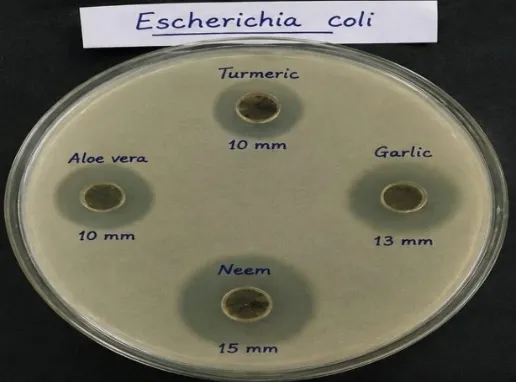
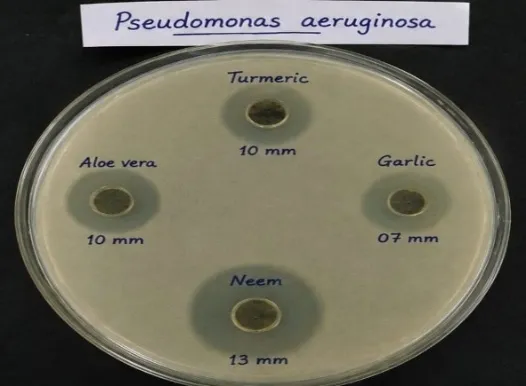
Fig.No.07:- Zone of Inhibition of Extracts
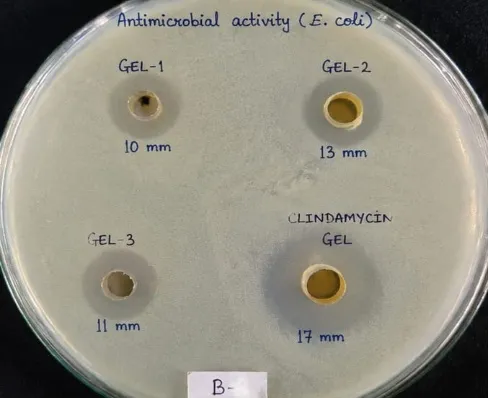
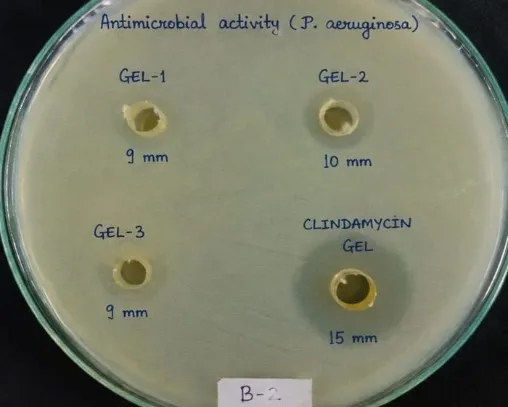
Fig.No.08:- Antimicrobial Activity of Polyherbal gel
DISSCUSION
The polyherbal gel turned out to be both stable and effective. Its pH (5.8–6.0) matched skin compatibility, meaning it’s gentle and unlikely to cause irritation. The gel had a smooth texture, spread easily, washed off without difficulty, and showed good consistency making it practical for everyday use.In antibacterial testing, the gel inhibited E. coli and P. aeruginosa with zones of 9–13 mm. While this was slightly less than the standard clindamycin gel, it still showed strong antimicrobial potential. Among the individual extracts, neem was the most powerful, followed by garlic, turmeric, and aloe vera. When combined, the extracts worked together to provide balanced, broad-spectrum activity. Overall, the study confirms that this polyherbal gel is a safe, natural, and cost-effective alternative to synthetic topical agents. It highlights how traditional medicinal plants can be successfully integrated into modern formulations to manage skin infections and improve therapeutic outcomes.
CONCLUSION
From the present work it is concluded that formulated gel has positive antimicrobial effect when applied topically. It contains natural ingredients and is safer with no side effects. The potential antimicrobial activity observed for the formulation may be due to the presence of active constituents such as allicin, azadirachtin, aloin and curcumin. The widespread acceptance of natural remedies due to the belief that they are safer and have less side effects makes herbal extracts very feasible. In this study, antimicrobial property of each herbal extract was verified.
The pH, Spreadability, Viscosity, Homogeneity and overall appearance of the prepared gel were evaluated and the formulation showed desirable characteristics. It also exhibited a strong antimicrobial activity indicating its potential as a therapeutic product. Further in vivo testing and clinical evaluation will be critical for translating the formulation into a commercially viable product to take this work forward. The observed antibacterial effects are probably due to active phytoconstituents present in the ethanolic extracts of Aloe barbadensis leaves, Azadirachta indica leaves, Allium sativum buds and Curcuma longa rhizomes. Importantly, these bioactivities were retained when incorporated into the gel base, which is a promising indication for future development. Based on these findings, the polyherbal gel could serve as an effective topical treatment for skin infections including acne vulgaris, once its safety and efficacy are confirmed through clinical and toxicological studies.
ACKNOWLAGEMENT
I would like to express my heartfelt gratitude to my guide, Dr. Anshuman Borkar, Associate Professor of Pharmaceutical Chemistry, Anurag College of Pharmacy, Warthi, Bhandara, for his constant guidance , encouragement and valuable suggestions throughout the course of this research work. His expertise and support were instrumental in shaping this study.
I am deeply thankful to Dr. Mrs. Sayeda Qureshi, Associate Professor and Head of Botany Department, J. M. Patel College, Bhandara, for her assistance in authenticating the plant materials used in this research.
My sincere appreciation goes to the faculty members and staff of Anurag College of Pharmacy for providing the necessary facilities and a supportive environment to carry out this work.
I also extend my gratitude to my colleagues and friends for their cooperation, motivation and constructive feedback during the preparation of this project.
Finally, I am indebted to my family for their unwavering support, encouragement and understanding, which give me strength to complete this research work successfully.
REFERENCES






Yamini Lanjewar, Sumit Meshram, Anshuman Borkar, Dineshkumar Lende, Sachin Lohe, Sanjay Wate, Formulation And Evaluation Of Polyherbal Gel For Skin Diseases, Int. J. of Pharm. Sci., 2026, Vol 4, Issue 10, 1392-1406, https://doi.org/10.5281/zenodo.23256555
 10.5281/zenodo.23256555