

We use cookies to ensure our website works properly and to personalise your experience. Cookies policy
Department of Pharmaceutics, St. Soldier institute of pharmacy, Lidhran Campus, Behind NIT (R.E.C.), Jalandhar –Amritsar by pass, NH-1, Jalandhar -144011, Punjab, India.
Objectives: Preparation of gastro-retentive floating tablets of Alendronic Acid by direct compression method polymers or combination of these. Methods: In this study, Alendronic acid, the most commonly used bisphosphonate for treating osteoporosis, was formulated as gastro retentive dosage form (GRDF) tablets to enhance its oral bioavailability. A prolonged dissolution profile of Alendronic acid GRDF tablets developed in this study was observed for its thickness, friability, hardness, drug content and in-vitro drug release. The evaluation of pre-compressional parameters for granules were performed. Conclusion: It can be concluded that these dosage forms serve the best in the treatment of diseases related to the GIT and for extracting a prolonged action from a drug with a short half life. Formulated Floating tablets of Alendronic acid gave satisfactory results for various physicochemical parameters like hardness, friability, thickness, weight variation and content uniformity. Sodium bicarbonate has predominant effect on the buoyancy lag time, while HPMC K15M has predominant effect on total floating time and drug release.
Osteoporosis is a chronic skeletal disorder characterized by a progressive reduction in bone mass and density which can lead to an increased risk of fracture and the amount and variety of proteins in bone are altered. Osteoporosis is a common age-related skeletal disorder, affecting more women than men, particularly after menopause. Its prevalence increases with advancing age, leading to a substantial risk of fragility fractures.1,2
Osteoporosis is an age-related disorder that causes the gradual loss of bone density and strength. This results in kyphosis, an excessive curvature of the thoracic region. Fractures are the most dangerous aspect of osteoporosis. The increased risk of falling associated with aging leads to fractures of the wrist, spine, and hip.3
Osteoporosis develops due to an imbalance between bone formation by osteoblasts and bone resorption by osteoclasts, resulting in progressive loss of bone mass, deterioration of bone microarchitecture, reduced bone strength, and increased fracture risk. The underlying mechanism in all cases of osteoporosis is an imbalance between bone resorption and bone formation.4,5
The most popular method of measuring BMD is dual-energy x-ray absorptiometry. In addition to the detection of abnormal BMD, the diagnosis of osteoporosis requires investigations into potentially modifiable underlying causes; this may be done with blood tests.6,7
Administration: Must be taken on an empty stomach with plain water (no food, coffee, tea, or medicine for at least 30 minutes afterward).
Alendronic acid is a bisphosphonate that inhibits the activity of osteoclasts, which are the cells responsible for breaking down bone tissue. By inhibiting these cells, it reduces the rate of bone loss, increases bone density, and reduces the risk of fractures. Alendronic Acid is a white, crystalline, nonhygroscopic powder. It is soluble in water, very slightly soluble in alcohol, and practically insoluble in chloroform.8
It is As with all potent bisphosphonates, the systemic bioavailability after oral dosing is low, averaging only 0.6–0.7% in women and in men under fasting conditions. Intake together with meals and beverages other than water further reduces the bioavailability.9
Alendronate inhibits osteoclast-mediated bone-resorption. Like all bisphosphonates, it is chemically related to inorganic pyrophosphate, the endogenous regulator of bone turnover. 10
Treatment of osteoporosis in postmenopausal women; prevention of osteoporosis in postmenopausal women at risk of developing osteoporosis; increase bone mass in men; treatment of glucocorticoid-induced osteoporosis in men and women; treatment of Paget disease of the bone. 11
Risk of upper GI adverse reactions is increased by concomitant use of aspirin and alendronate doses over 10 mg/day.12
Gastro-retentive dosage forms (GRDFs) are oral drug delivery systems designed to remain in the stomach for an extended period, thereby improving drug absorption and therapeutic effectivenessVarious approaches have been proposed to increase the gastric residence of the drug delivery that includes floating drug delivery system (FDDS), mucoadhesion or bioadhesion system, high density system, expansion system, magnetic system, superporous huydrogel, raft forming system and floating ion exchange resins.13
Mucus is a complex viscous adherent secretion which is synthesized by specialized goblet cells. These goblet cells are glandular columnar epithelium cells and line all organs that are exposed to the external environment.14
Floating drug delivery systems are used to prolong gastric residence time, improve drug absorption, enhance bioavailability, reduce dosing frequency, and provide sustained drug release.15
Method of evaluation 13,16
Fourier transform infrared analysis: This technique is used to identify functional groups and chemical bonds in a drug or formulation and to assess possible drug–excipient interactions. Fourier transform infrared spectroscopy is mostly used to identify organic, polymeric, functional group, and some inorganic materials as well. FT-IR measurement of pure drug, polymer and drug-loaded formulations are obtained by using this technique. The pellets are prepared on kbr press under hydraulic pressure of 150kg/cm2 and the spectra are scanned over the wave number range of 3600-400cm-1 at ambient temperature.
Differential scanning calorimetry: DSC is a thermal analysis technique used to study the melting point, thermal behavior, and compatibility of a drug with excipients. DSC are performed to characterize water of hydration of pharmaceuticals. Thermograms of formulated preparations are obtained using DSC instrument equipped with an inter cooler zinc standards are used to calibrate the DSC temperature and enthalpy scale. The sample preparations are sealed in aluminium pan and heated at a constant rate of 10ºC/min over a temp range 25ºC-65ºC.
Invitro 13
a) Particle size analysis and surface characterization (for floating microspheres and beads)
The particle size and size distribution of beads or microspheres are determined in the dry state using optical microscopy method. The external and cross sectional morphology is done by scanning electron microscope.
b) Floatation studies
The in vitro buoyancy is characterized by floating lag time and total floating time. The FLT and TFT are measured by placing the tablets in a 250 ml beaker containing 200ml of 0.1N HCL. The time required by the to rise to the surface and float is known as floating lag time and the time period up to which the tablet remained buoyant is called total floating time.
c) Swelling studies
Swelling of tablet excipients particles involves the absorption of a liquid resulting in increase in weight and volume . Liquid uptake by the particles may be due to saturation of the capillary spaces within the particles or hydration of macromolecules. The liquid enters the particles through pores and bind to large molecules, breaking the hydrogen bond and resulting in the swelling of particles. Tablet is weighed and placed in a beaker containing 200 ml of 0.1N HCL. After each interval the tablet is removed from the beaker, soaked by using filter paper and weighed again.
Swelling index (SI) = (Wt-WO)/WO × 100
Wt – weight of the tablet at time t
WO – initial weight of the tablet
d) Determination of drug content
Percentage drug content provides how much amount of drug is present in the formulation. It should not exceed the limit acquired by the monograph. Drug content is determined by using HPLC, HPTLC methods, micro-titrimetric methods, and also by using spectroscopy techniques. To determine drug content 10 tablets are triturated in the mortar and .10 mg of powdered tablet dissolved in 10 ml of 0.1N HCL and after that drug sample is analyzed under u.v. spectrophotometer.
e) Dissolution studies
The dissolution test are generally performed for calculating the amount of drug release using USP dissolution apparatus. The test is performed using 900ml of 0.1 N HCL, at 37ºC and 100 rpm. A sample of 10 ml is withdrawn hourly and analysed under u.v and absorbance is measured. The sample is replaced by the dissolution media Cumulative percentage is calculated using equation obtained from standard curve.
IN-Vivo Evaluation Test:- 16
a) Radiology:-
X-ray is widely used for examination of internal body systems. Barium Sulphate is widely used Radio Opaque Marker. So, BaSO4 is incorporated inside dosage form and X-ray images are taken at various intervals to view GR.
b) Scintigraphy:-
Similar to X-ray, emitting materials are incorporated into dosage form and then images are taken by scintigraphy. Widely used emitting material is 99Tc.
c) Gastroscopy:-
Gastroscopy is peroral endoscopy used with fiber optics or video systems. Gastroscopy is used to inspect visually the effect of prolongation in stomach. It can also give the detailed evaluation of GRDDS.
d) Magnetic Marker Monitoring:-
In this technique, dosage form is magnetically marked with incorporating iron powder inside, and images can be taken by very sensitive bio-magnetic measurement equipment. Advantage of this method is that it is radiation less and so not hazardous.
e) Ultrasonography:-
Used sometimes, not used generally because it is not traceable at intestine.
f) 13C Octanoic Acid Breath Test:-
13C Octanoic acid is incorporated into GRDDS. In stomach due to chemical reaction, octanoic acid liberates CO2 gas which comes out in breath. The important Carbon atom which will come in CO2 is replaced with 13C isotope. So time up to which 13CO2 gas is observed in breath can be considered as gastric retention time of dosage form. As the dosage form moves to intestine, there is no reaction and no CO2 release. So this method is cheaper than other.
METHODS
Direct Compression method is used.17
Formulation of Floating Tablet
Each floating tablets containing 50 mg Alendronic Acid were prepared by direct compression method. Alendronic Acid pure drug was mixed with required quantity of HPMC K15M, sodium CMC, carbopol 974P, sodium bicarbonate and lactose by geometric mixing in mortar and pestle for 10 min. The above powder was lubricated with magnesium stearate in mortar and pestle for 2min. The lubricated blend was compressed into tablets using 12 mm flat-face round tooling on CLIT Pilot Press rotary tablet machine. Compression force was adjusted to obtain tablets of hardness 6-9 kg/cm2 with 4.0 mm tablet thickness.
Evaluation methods of Floating Drug delivery system
1. Fourier transform infrared analysis13
Fourier transform infrared spectroscopy is mostly used to identify organic, polymeric, functional group, and some inorganic materials as well. FT-IR measurement of pure drug, polymer and drug loaded formulations are obtained by using this technique. The pellets are prepared on kbr press under hydraulic pressure of 150kg/cm2 and the spectra are scanned over the wave number range of 3600-400cm-1 at ambient temperature.
2. Differential scanning calorimetry13
DSC are performed to characterize water of hydration of pharmaceuticals. Thermo grams of formulated preparations are obtained using DSC instrument equipped with an inter cooler zinc standards are used to calibrate the DSC temperature and enthalpy scale. The sample preparations are sealed in aluminium pan and heated at a constant rate of 10ºC/min over a temp range 25ºC-65ºC.
3. Evaluation of powder blend18
a) Angle of repose
Angle of repose is defined as “the maximum angle possible between the surface of the pile of powder and the horizontal plane.” Lower the angle of repose, better the flow properties. The angle of repose may be calculated by measuring the height (h) of the pile and the radius of the base (r) with ruler.
Tan θ = h/r ................. 1
b) Bulk density
Bulk density denotes the total density of the material. It includes the true volume of inter-particle spaces and intra-particle pores. The packing of particles is mainly responsible for bulk. Bulk density is defined as:
Bulk density = Weight of the powder / Bulk volume of powder...................2
When particles are packed, it is possible that a large amount of gaps may be present between the particles. Therefore, trapping of powder allows the particles to shift and remove the voids to minimum volume. The volume occupied by the powder in this condition represents the bulk volume. Substituting this volume for a given weight of powder in equation (2) gives the bulk density.
c) Percentage porosity
Whether the powder is porous or nonporous, the total porosity expression for the calculation remains the same. Porosity provides information about hardness, disintegration, total porosity etc.
% porosity, € = void volume x100
Bulk volume
% porosity, € = (bulk volume true volume) x100
True density
4. Evaluation of floating tablets16
a) Measurement of buoyancy capabilities of the FDDS:
The floating behaviour is evaluated with resultant weight measurements. The experiment is carried out in two different media, deionised water and simulated meal. The results showed that higher molecular weight polymers with slower rate of hydration had enhanced floating behaviour and it was observed more in simulated meal medium compared to deionised water.
b) In Vitro floating and dissolution behaviour:
The dissolution tests are generally performed on various drugs using USP dissolution apparatus. In vitro dissolution test is generally done by using USP apparatus with paddle and GRDDS is placed normally as for other conventional tablets. As floating dosage form not rotates may not give proper result and also not reproducible results. Similar problem occur with swellable dosage form, as they are hydrogel may stick to surface of vessel or paddle and gives irreproducible results. To prevent sticking at vessel or paddle and to improve movement of dosage form, method suggested is to keep paddle at surface and not too deep inside dissolution medium.
Other modification is to make floating unit fully submerged under ring or mesh assembly and paddle is just over ring that gives better force for movement of unit. In previous methods unit have very small area, which can inhibit 3D swelling of swellable units, another method suggest the change in dissolution vessel that is indented at some above place from bottom and mesh is place on indented protrusions, this gives more area for dosage form.
c) Weight variation:
In practice, composite samples of tablets (usually 10) are taken and weighed throughout the compression process. The composite weight divided by 10, however provides an average weight but contains a problem of averaged value. The USP provides the weight variation test by weighing 20 tablets individually, calculating the average weight, and comparing the individual tablet weights to the average. The tablets meet the USP test if no more than 2 tablets are outside the percentage limit, and if no tablet differs by more than 2 times the percentage limit.
d) Hardness & friability:
Hardness is defined as the “force required to break a tablet in diametric compression test.” Hardness is hence, also termed as the tablet crushing strength. The laboratory friability tester is known as the Roche Friabilator. This consists of a device which subjects a number of tablets to the combined effects of abrasion and shock by utilizing a plastic chamber that revolves at 25 rpm & drop the tablet to a distance of six inches with each revolution. Normally, a pre-weighed tablet sample is placed in the friabilator which is then operated for 100 revolutions. Conventional compressed tablets that lose less than 0.5 to 1.0 % of their weight are generally considered acceptable. Most of the effervescent tablets undergo high friability weight losses, which accounts for the special stack packaging, that may be required for these types of tablets.
5. Swelling systems:-18
a) Swelling Index:-
After immersion of swelling dosage form into SGF at 370C, dosage form is removed out at regular interval and dimensional changes are measured in terms of increase in tablet thickness / diameter with time.
b) Water Uptake:-
It is an indirect measurement of swelling property of swellable matrix. Here dosage form is removed out at regular interval and weight changes are determined with respect to time. So it is also termed as weight Gain.
Water uptake = WU = (Wt – Wo) * 100 / Wo
Where, Wt = weight of dosage form at time t.
Wo = initial weight of dosage form.
RESULTS (TABLES & GRAPHS)
FTIR spectrum and Values
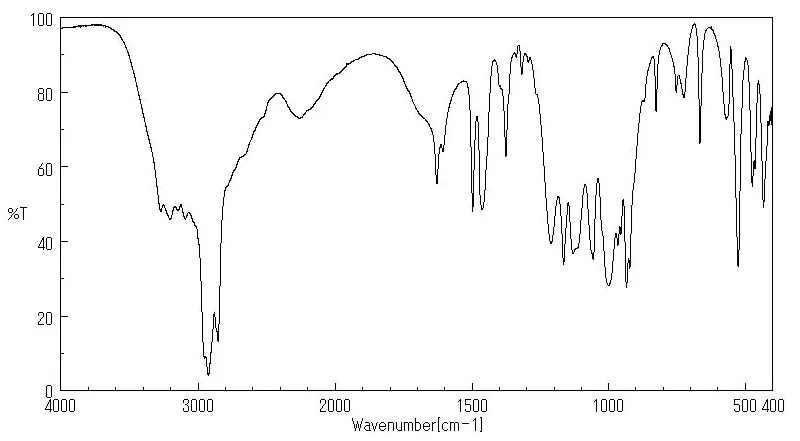
Figure 1: IR Spectrum of Alendronic Acid
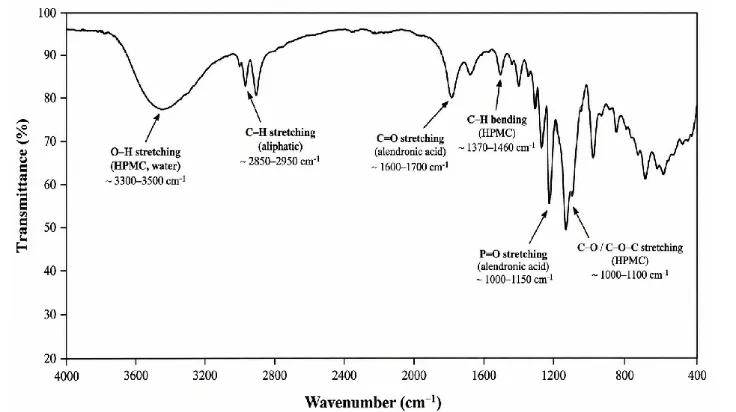
Figure 2: IR Spectra of Mixture of Alendronic Acid + HPMC K15M
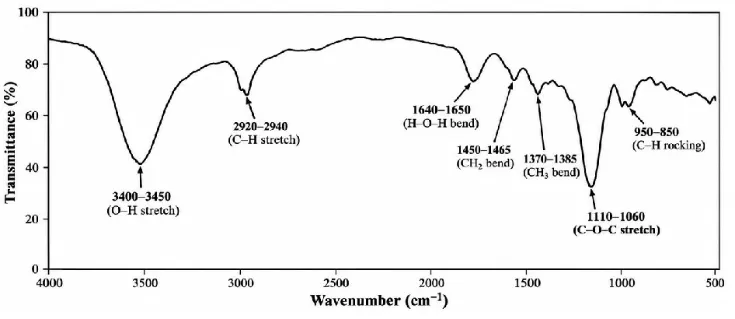
Figure 3: Infrared Spectrum of Hydroxypropylmethyl Cellulose K15M
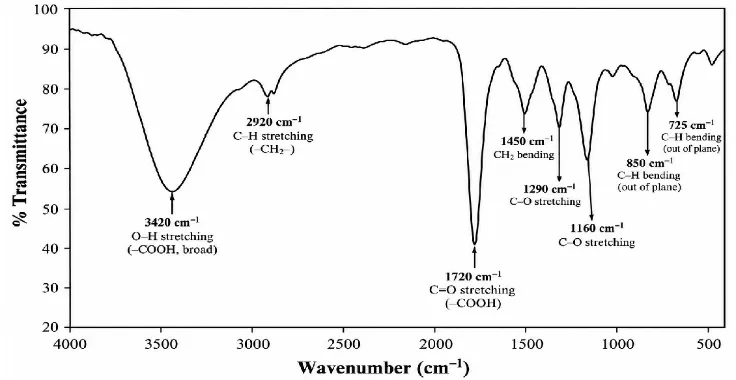
Figure 4: Infrared Spectrum of Carbopol 974
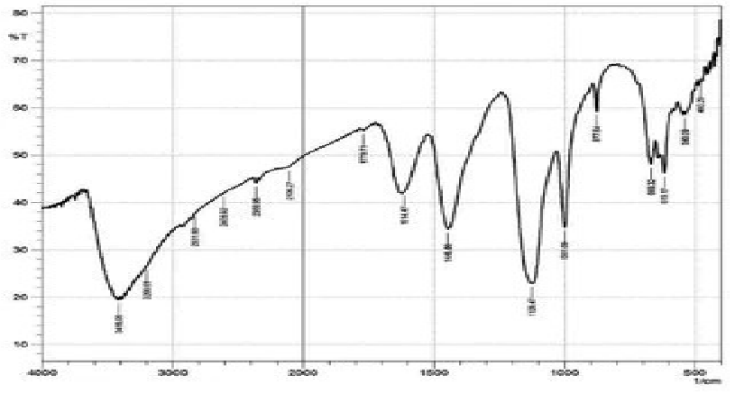
Figure 5: FTIR Spectrum of the CMC Sample
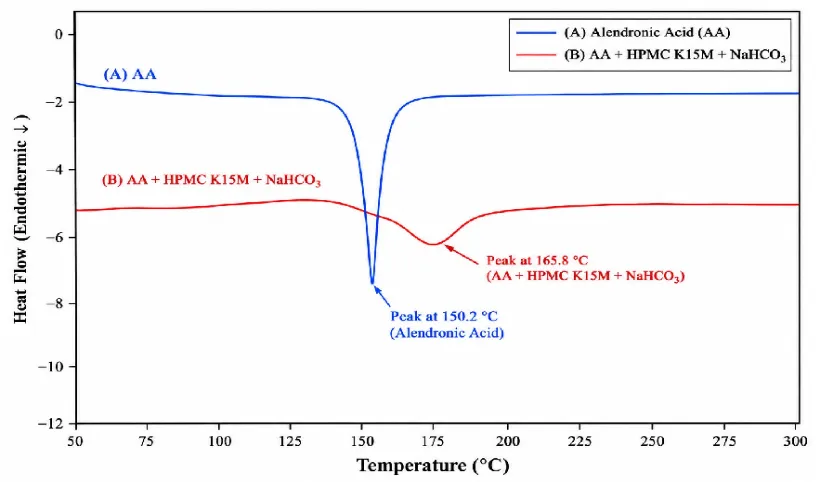
Figure 6: DSC Thermograms (a) Alendronic Acid (AA)W (B) AA+HPMC K15M + Sodium Bicarbonate
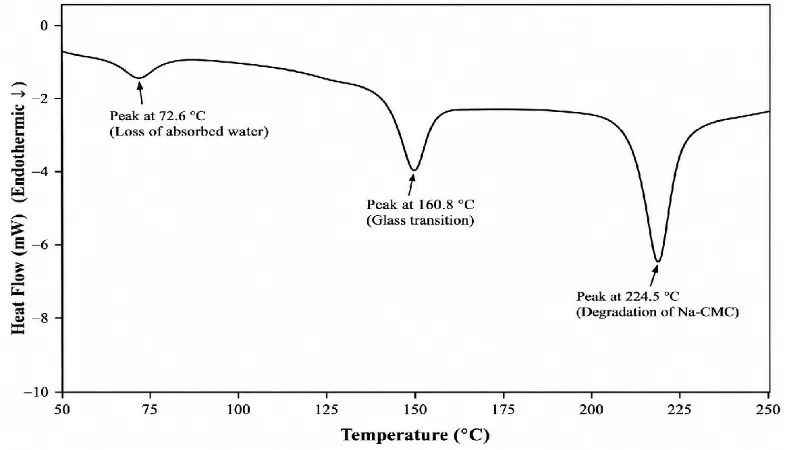
Figure 7: DSC Curve of the Na-CMC Film from 50 to 2500C.
Table 1: Results of the Study of Physical Parameters of Alendronic Acid Formulations a1-A7
| Formulation | Angle of | Bulk Density | Tapped Density | Carr’sIndex | Hausner ratioHR | |
|---|---|---|---|---|---|---|
| Repose ( ) | (g/cm3) | (g/cm3) | (%) | (n=3) | ||
| (n=3) | (n=3) | (n=3) | ||||
| (n=3) | ||||||
| A1 | 29.3±0.64 | 0.584±0.008 | 0.736±0.006 | 20.86±0.75 | 1.29± 0.06 | |
| A2 | 30.4±0.36 | 0.585±0.006 | 0.734±0.006 | 24.75±0.5 | 1.29± 0.02 | |
| A3 | 30.8±0.19 | 0.579±0.006 | 0.728±0.008 | 21.47±0.54 | 1.26±0.02 | |
| A4 | 29.8±0.44 | 0.574±0.007 | 0.728±0.003 | 23.58±0.46 | 1.28±0.04 | |
| A5 | 28.7±0.68 | 0.584±0.005 | 0.736±0.006 | 18.15±0.64 | 1.38±0.02 | |
| A6 | 27.6±0.49 | 0.588±0.005 | 0.736±0.007 | 19.35±0.75 | 1.38±0.04 | |
| A7 | 26.6±0.68 | 0.586±0.003 | 0.746±0.005 | 23.26±0.11 | 1.36±0.03 |
Table 2: Composition of Floating Tablets of Alendronic Acid
| Ingredient (mg) | A1 | A2 | A3 | A4 | A5 | A6 | A7 | |||
|---|---|---|---|---|---|---|---|---|---|---|
| Alendronic acid | 50 | 50 | 50 | 50 | 50 | 50 | 50 | |||
| HPMC K15M | 100 | 100 | 100 | 100 | 100 | 100 | 100 | |||
| Sodium CMC | 30 | 30 | 30 | _ | 30 | 30 | 30 | |||
| Carbopol 974P | 50 | 45 | 40 | 30 | 35 | 25 | 20 | |||
| Lactose | 109 | 109 | 109 | 144 | 104 | 109 | 109 | |||
| Sodium bicarbonate | 55 | 60 | 65 | 70 | 75 | 80 | 85 | |||
| Magnesium stearate | 6 | 6 | 6 | 6 | 6 | 6 | 6 | |||
| Total weight of tablets | 400 | 400 | 400 | 400 | 400 | 400 | 400 |
Table 3: Physicochemical Properties of Alendronic Acid Floating Tablets
| Batch | Average wt | Thickness | Diameter | Hardness | Friability (%) | Drug content (%) | |
|---|---|---|---|---|---|---|---|
| code | (mg) | (mm) | (mm) | (kg/cm2) | |||
| A1 | 400 | 4.18 ± 0.06 | 12.16 ± 0.06 | 7.6± 0.04 | 0.68±0.09 | 102.05 ± 0.16 | |
| A2 | 405 | 3.99 ± 0.04 | 12.09 ± 0.04 | 8.5± 0.08 | 0.79±0.06 | 99.65 ± 0.16 | |
| A3 | 395 | 4.08 ± 0.09 | 12.08 ± 0.06 | 9.2± 0.08 | 0.79±0.04 | 104.79 ± 0.24 | |
| A4 | 400 | 4.19 ± 0.04 | 12.09 ± 0.07 | 7.4± 0.06 | 0.98±0.08 | 106.98 ± 0.15 | |
| A5 | 410 | 4.14 ± 0.08 | 12.08 ± 0.04 | 7.9± 0.04 | 0.74±0.06 | 107.49 ± 0.11 | |
| A6 | 395 | 4.09 ± 0.04 | 12.08 ± 0.08 | 8.8± 0.06 | 0.68±0.02 | 108.46 ± 0.16 | |
| A7 | 405 | 4.24 ± 0.06 | 12.06 ± 0.06 | 7.6± 0.04 | 0.78±0.05 | 96.34 ± 0.14 |
[Figure - see the formatted PDF]
Figure 8: Drug Release Profile of a1, a2, a3, a4, a5, a6, A7
[Figure - see the formatted PDF]
Figure 9: Relationship Between Swelling Index and Time of a1 to A7
Table 4: Floating Ability of Various Alendronic Acid Tablet Formulations
| Batch Code | Floating Lag time (min) | Floating duration (min) | Integrity |
|---|---|---|---|
| A1 | Not float | Not float | Intact |
| A2 | Not float | Not float | Intact |
| A3 | 33 | 21 | Intact |
| A4 | 29 | 42 | Broken after 6-8Hrs |
| A5 | 21 | 62 | Intact |
| A6 | 42 | >725 | Intact |
| A7 | 50 sec | >726 | Intact |
All values are expressed as mean ± SD, n=3, A1-A7= Formulation codes.
DISCUSSION
The reported melting point values for Alendronic acid was in the range of 273-2770C.The observed melting point ranged between 274-2780C. The absorption maxima of the standard solution were scanned between 400-800 nm region on shimazdu 1800 spectrophotometer. The absorption maxima were found to be 525 nm. Infrared spectrum shows all prominent peaks of Alendronic acid. IR spectrum indicated that characteristics peaks belonging to measured functional groups, such as principle peak.
The infrared spectrum of physical mixture of polymers (HPMC K15M) and Alendronic acid was studied and confirmed that there is no interaction with each other. The spectra show all the prominent peaks of drug as well as polymer. IR spectrum indicated characteristics peaks belonging to measure functional group such as principle peaks.
Hence it can be concluded that there were no any significant changes in the physical mixture of Alendronic Acid and HPMC K15M. DSC thermogram of Alendronic shows endothermic peak at 150.20C. Whereas HPMC K15M shows melting endothermic at 165.80C. shown in figure 6.
Result of study of physical parameters of Alendronic Acid formulation A1-A7 is summarized in table no. 1 and Composition of Floating tablets of Alendronic acid is summarized in Table no. 2.
All formulation from A1 to A7 was evaluated with thickness and diameter of tablets measured by vernier caliper. Thickness and diameter was in range of 3.99 ±0.04 to 4.24±0.06. The hardness was in range of 7.4±0.06 to 9.2±0.08kg/cm 2, which was measured on Monsanto hardness tester.
Drug content release was in the range of 96.34±0.14 to 107.49±0.11 shown in (Table 3). The percentage drug release was found 50% after 7 hrs. for all the formulations A1-A7. After 12 hrs. it showed 79.401% drug release shown in table.
The swelling index was calculated with respect to time. As time increase, the swelling index was increased because weight gain by tablet was increased proportionally with rate of hydration, later on, it decreased gradually due to dissolution of outermost gelled layer of tablet into dissolution medium. The direct relationship was observed as shown in Figure 9.
The drug release profile of all 7 formulations from A1 to A7 is shown in (Fig. 8). The release rate can be controlled depending upon the type and concentration of the polymer that swells, leads to diffusion and erosion of the drug. In view of this absorption characteristics, the hypothesis of current investigation is that if the gastric residence time of the alendronic acid-containing formulation is prolonged and allow to float in the stomach for a long period, the oral bioavailability might be increased hence the present research work was to study systematically the effect of formulation variable on the release and floating properties of Alendronic acid drug delivery system.
For floating drug delivery system,the polymers used must be highly swellable in shortest time. Hence, HPMC was chosen as a main swellable polymeric material. In order to get the longer duration of floating time the high viscosity polymer selected, HPMC K15M was chosen and it was found that, increased viscosity of a polymer prolongs the drug delivery from the dosage form. In order to retain the dosage form in the stomach for a long period of time and to avoid gastric emptying dosage form, carbopol 974P was included.
It was reported earlier that, Carbopol belongs to the class of swellable and adhesive polymers and to utilize this property of carbopol, it was included in the formulation with the intention of adhering the dosage form to the inner wall of the stomach and also possibly to control the release of Alendronic acid from the dosage form. In the 7 series formulation, batch A7 gave the highest floating time compared to A6, A5, A4, A3, A2 and A1 (Table no.4).
Total floating time depends upon the amount of HPMC as the polymer content increased the floating time was increased due to the formation of thick gel which entrapped the gas formed due to NaHCO3 firmly. Due to high viscosity and content of the polymer bursting effect of the tablet was decreased and float for longer duration of time. From the result of floating lag time it was concluded that, as the concentration of the gas-generating agent increase the floating lag time get shortens this finding were supported by study of Park et al., reported that as the concentration of the gas-generating agent (NaHCO3) was increased the floating lag time get shortened and at the same time floating ability get increased.
Carbopol was used as a swelling agent, which also helped in gastric retention due to its adhesive properties. But carbopol affected floating properties. Physicochemical evaluation i.e. the prepared tablets were subjected to preliminary characterization such as hardness, thickness, % weight variation, friability and drug content. The evaluated parameters were within acceptable range for all the formulations.
Results of Water uptake study showed that the order of swelling in these polymers could indicate the rates at which the preparations are able to absorb water and swell. Maximum liquid uptake and swelling of polymer was achieved up to 10 hrs and then gradually decreased due to erosion.
CONCLUSION
In the field of gastric retention, we have seen that there are many obstacles that need to be overcome in order to be able to claim true gastric retention. Considering the advantages for improved delivery of drugs, some companies have undertaken the considerable task of developing these types of devices, some with success and others with failure due to the unpredictability of the human GI tract. However, we are as close as we have ever been to seeing a greater transition of gastric retention devices from developmental level to the manufacturing and commercial stage.
Under certain circumstances, the prolongation of gastric residence time of a delivery system is desirable for achieving a better therapeutic benefit of the drug substance. For instance the drugs that show absorption in the proximal part of the gastrointestinal tract and the drugs which are degraded or less soluble in alkaline pH may be benefitted by prolonging the gastric residence time. Prolnged gastric retention of therapeutic moiety offers many advantages like improved bioavailability, reduction of drug wastage and possible reduction of dose size.
A controlled drug delivery system with prolonged gastric retention may have great practical importance for the drugs which have narrow absorption window in the upper small intestine. Ciprofloxacin, levodopa, sotalol HCL, furosemide are examples of such drugs. Drugs like chlorpheniramine maleate which is locally used in the treatment of Helicobacter Pylori requires longer residence time in the stomach which can be achieved by designing gastro-retentive dosage forms.
It can be concluded that these dosage forms serve the best in the treatment of diseases related to the GIT and for extracting a prolonged action from a drug with a short half-life.
Recently, many drugs have been formulated as floating drug delivery systems with an objective of sustained release and restricting the region of drug release to stomach. The principle of buoyant preparation offers a simple and practical approach to achieve increased gastric residence time for the dosage form and sustained drug release. The currently available polymer mediated non-effervescent and effervescent FDDS, designed on the basis of delayed gastric emptying and buoyancy principles, appear to be a very much effective approach to the modulation of controlled oral drug delivery.
The most important criteria which has to be looked into for the productions of a floating drug delivery system is that the density of the dosage form should be less than that of gastric fluid. And hence, it can be concluded that these dosage forms serve the best in the treatment of diseases related to the GIT and for extracting a prolonged action from a drug with a short half life. Formulated Floating tablets of Alendronic acid gave satisfactory results for various physicochemical parameters like hardness, friability, thickness, weight variation and content uniformity. Sodium bicarbonate has predominant effect on the buoyancy lag time, while HPMC K15M has predominant effect on total floating time and drug release. Carbopol 974P also shows significant effect on drug release which was given extra adhesion property and helped to maintain the integrity of the tablet. Lactose also shows significant effect on the drug release. Sodium CMC has given extra adhesion property and helped to maintain the integrity of the tablet.
From the study it is evident that a promising controlled release floating tablets of Alendronic acid can be developed to increase gastric residence time and there by increasing its bioavailability. All the formulations found to be stable over the storage period and conditions tested. Further detailed investigations are required to establish efficacy of these formulations and fix the required dose.
ACKNOWLEDGMENT
It’s our privilege to express the profound sense of gratitude and cordial thanks to our respected Chairman Mr. Anil Chopra, Vice Chairperson Ms. Sangeeta Chopra and Managing Director Prof. Manhar Arora, St. Soldier Educational Society, Jalandhar for providing the necessary facilities to complete this review/research work.
CONFLICTS OF INTERESTS
There are no conflicts of interest.
FUNDING
Nil
AUTHORS CONTRIBUTIONS
All the authors have contributed equally.
REFERENCES

Muskan Sharma, Rajesh Kumar, Ajeet Pal Singh, Amar Pal Singh, Design and Characterization of Gastro-Retentive Floating Tablets of Alendronic Acid, Int. J. of Pharm. Sci., 2026, Vol 4, Issue 11, 592-603. https://doi.org/10.5281/zenodo.23938383
 10.5281/zenodo.23938383