

We use cookies to ensure our website works properly and to personalise your experience. Cookies policy
Dr. Babasaheb Ambedkar University of technical education lanore, Raigad.
Background: Dengue fever remains a major public health burden across tropical and sub-tropical regions, and its management is largely supportive, centred on symptom relief and prevention of thrombocytopenia-related complications. Carica papaya leaf extract has documented platelet-augmenting, antioxidant, and antiemetic activity, but conventional oral dosage forms are poorly suited to febrile, nauseous dengue patients who often cannot tolerate water or swallow tablets.Objective: This study aimed to develop and optimise a mouth-dissolving film (MDF) incorporating Carica papaya leaf extract using natural film-forming polymers, and to evaluate its physicochemical, mechanical, biopharmaceutical, and stability characteristics.Methods: A hydro-ethanolic leaf extract was prepared by extraction with 70% v/v ethanol and standardised by phytochemical screening, total phenolic and flavonoid content, and UV spectroscopy. Nine MDF formulations (F1-F9) were prepared by the solvent-casting method according to a 3² full factorial design, with hydroxypropyl methylcellulose (HPMC E15) concentration (X?: 1.0-2.0% w/v) and glycerol concentration (X?: 0.5-1.5% v/v) as independent variables, and pullulan as a co-polymer. Films were evaluated for thickness, weight variation, folding endurance, surface pH, drug content, tensile strength, elongation at break, disintegration time, and in vitro drug release, with response-surface analysis of disintegration time and 30-minute cumulative drug release (%CDR). The optimised formulation was characterised by FTIR, DSC, and SEM, compared against a marketed papaya tablet formulation, and subjected to a 3-month accelerated stability study (40 °C/75% RH).Results: HPMC concentration was the dominant factor governing both disintegration time and drug release (p < 0.001), with glycerol exerting a smaller but statistically significant effect. The optimised formulation, F5 (HPMC 1.5% w/v, glycerol 1.0% v/v), disintegrated in 38 ± 3 seconds, contained 96.4 ± 0.5% of the labelled extract, and released 96.4 ± 0.8% of the extract within 30 -minutes, outperforming a marketed papaya tablet formulation (78.4 ± 2.4% CDR at 30 minutes; 15-20 minute disintegration). Drug release from F5 best fitted the Higuchi model (r² = 0.9924) with a Korsmeyer-Peppas exponent of 0.48, indicating diffusion-controlled, predominantly Fickian release. FTIR and DSC confirmed the absence of drug-excipient interaction, SEM showed a smooth, homogeneous film surface, and accelerated stability testing showed only marginal changes in drug content (-1.87%) and disintegration time (+6 seconds) over three months.Conclusion: A factorial-design-optimised, HPMC-pullulan-based mouth-dissolving film of Carica papaya leaf extract offers a mechanically robust, chemically compatible, and stable water-free oral delivery option with faster disintegration and greater drug release than a conventional marketed tablet, supporting its potential as a patient-friendly adjunct for the supportive management of dengue fever.
Dengue fever, caused by the mosquito-borne dengue virus (DENV) and transmitted principally by Aedes aegypti, remains one of the fastest-spreading arthropod-borne viral infections in tropical and sub-tropical regions, with India among the countries most affected by its seasonal climatic conditions [1,2]. Clinical presentation ranges from a self-limiting febrile illness to severe forms such as dengue haemorrhagic fever and dengue shock syndrome, with thrombocytopenia, high fever, retro-orbital pain, myalgia, and pronounced nausea and vomiting among its hallmark features [3,4]. Because no licensed antiviral agent specifically targets DENV, clinical management remains supportive, and this gap has sustained long-standing interest in adjunctive herbal therapies, among which Carica papaya leaf extract has accumulated the most substantial clinical and experimental support [5,6].
Papaya leaf extract contains a phytochemically rich profile of alkaloids (including carpaine and pseudocarpaine), flavonoids (quercetin and kaempferol derivatives), phenolic acids, tannins, saponins, and the proteolytic enzyme papain, and this composition has been linked in multiple clinical and pre-clinical studies to platelet-augmenting, antioxidant, and immunomodulatory activity relevant to dengue-associated thrombocytopenia [7-13]. A randomised controlled trial by Subenthiran et al. demonstrated that papaya leaf juice significantly accelerated the rate of platelet recovery in dengue patients [7], and this observation has since been corroborated by both animal and clinical studies examining papaya leaf extract's effect on platelet count, plasma leakage, and disease severity [8-13].
Despite this evidence base, the therapeutic utility of papaya leaf preparations is constrained by their delivery format: conventional decoctions, juices, and tablets are unpalatable (owing to their pronounced bitterness), require water for administration, and are poorly tolerated by febrile, nauseous dengue patients, particularly children and the elderly. Novel drug delivery systems (NDDS) developed to address analogous limitations in conventional oral therapy include mouth-dissolving films (MDFs), also termed orodispersible or oral thin films, which are thin, flexible polymeric strips that disintegrate rapidly on contact with the oral mucosa without the need for water [14-16]. MDFs offer rapid onset of action, improved dosing accuracy relative to liquid preparations, and are particularly well suited to paediatric, geriatric, and acutely unwell patient populations [17-19].
Hydroxypropyl methylcellulose (HPMC) remains the most extensively validated film-forming polymer for MDF development, owing to its favourable safety profile, transparency, and rapid aqueous solubility, while pullulan, a natural exopolysaccharide, is increasingly used as a co-polymer to improve film transparency and dissolution characteristics while reducing overall synthetic polymer content [20,21]. Systematic optimisation of MDF composition using statistical experimental designs, such as factorial designs, allows the simultaneous evaluation of multiple formulation variables and their interactions, providing a more rigorous basis for identifying an optimal formulation than one-variable-at-a-time approaches [22].
Although several MDF formulations incorporating herbal extracts have been reported for other indications [22,23], no systematically optimised mouth-dissolving film of Carica papaya leaf extract has previously been described for the supportive management of dengue fever. The present study was therefore undertaken to develop, statistically optimise using a 3² full factorial design, and comprehensively characterise an HPMC-pullulan-based mouth-dissolving film of Carica papaya leaf extract, and to benchmark its performance against a conventional marketed papaya-based tablet formulation.
2. MATERIALS AND METHODS
2.1 Plant Material and Extraction
Fresh leaves of Carica papaya L. (family Caricaceae) were collected from a local botanical source in Maharashtra, India, and authenticated prior to use. The leaves were washed, shade-dried at room temperature, and pulverised using a mechanical grinder; the resulting powder was passed through a 60-mesh sieve and stored in an airtight, light-protected container. Extraction was carried out by continuous hot extraction (Soxhlet method), with an initial defatting step using petroleum ether (60-80 °C) followed by extraction of the marc with 70% v/v ethanol. The concentrated hydro-ethanolic extract was standardised for loss on drying, total and acid-insoluble ash values, and alcohol- and water-soluble extractive values, and screened qualitatively for alkaloids, flavonoids, tannins, saponins, phenolics, terpenoids, and steroids using standard chemical tests. Total phenolic content (TPC) was determined by the Folin-Ciocalteu method and expressed as mg gallic acid equivalents (GAE) per g dry extract; total flavonoid content (TFC) was expressed as mg quercetin equivalents (QE) per g dry extract.
2.2 UV-Spectroscopic Standardisation
A stock solution of the extract (1 mg/mL in phosphate buffer pH 6.8) was scanned over 200-400 nm using a UV-Visible spectrophotometer to determine the wavelength of maximum absorbance (λmax). Working standard solutions (2-14 µg/mL) were prepared by serial dilution, and a calibration curve of absorbance versus concentration was constructed at λmax; the regression equation and correlation coefficient (r²) were determined and used for all subsequent quantitative estimations of drug content and in vitro release.
2.3 Drug-Excipient Compatibility
Physical mixtures (1:1 w/w) of the extract with each excipient (HPMC, pullulan, glycerol, aspartame, citric acid) were prepared, and FTIR spectra of the pure extract, individual excipients, and physical mixtures were recorded in attenuated total reflectance (ATR) mode over 4000-400 cm⁻¹ (32 scans, 4 cm⁻¹ resolution) to identify any peak shifting, broadening, or disappearance indicative of a chemical interaction.
2.4 Experimental Design
A 3² full factorial design was employed to optimise the MDF formulation, with two independent variables evaluated at three coded levels (−1, 0, +1): X₁, HPMC E15 concentration (1.0%, 1.5%, 2.0% w/v), and X₂, glycerol concentration (0.5%, 1.0%, 1.5% v/v). This yielded nine experimental runs (F1-F9), summarised in Table 1. The dependent responses were Y₁ (disintegration time, seconds) and Y₂ (percentage cumulative drug release at 30 minutes).
Table 1. 3² full factorial design – coded and actual factor levels (*F5 = centre point / optimised formulation)
|
Formulation |
X₁: HPMC (% w/v) |
Coded X₁ |
X₂: Glycerol (% v/v) |
Coded X₂ |
|
F1 |
1.0 |
−1 |
0.5 |
−1 |
|
F2 |
1.0 |
−1 |
1.0 |
0 |
|
F3 |
1.0 |
−1 |
1.5 |
+1 |
|
F4 |
1.5 |
0 |
0.5 |
−1 |
|
F5* |
1.5 |
0 |
1.0 |
0 |
|
F6 |
1.5 |
0 |
1.5 |
+1 |
|
F7 |
2.0 |
+1 |
0.5 |
−1 |
|
F8 |
2.0 |
+1 |
1.0 |
0 |
|
F9 |
2.0 |
+1 |
1.5 |
+1 |
2.5 Preparation of Mouth-Dissolving Films
Films were prepared by the solvent-casting method. HPMC E15 was dissolved in 7 mL distilled water at 60 °C under magnetic stirring for 30 minutes and cooled to room temperature; pullulan (0.5% w/v, constant across all formulations) was dissolved separately and combined with the HPMC solution. Glycerol (per formulation) was added and mixed for 10 minutes. The papaya extract (200 mg per film unit), aspartame (50 mg, sweetener), and citric acid (20 mg, saliva stimulant) were dissolved in the remaining water and incorporated into the polymer-plasticiser solution; menthol (flavouring, quantum satis) was added, and the volume was adjusted to 10 mL. The deaerated solution (5 mL) was cast onto a levelled glass Petri dish (≈78.5 cm²) and dried at 45 ± 2 °C for 4-6 hours. Dried films were cut into 4 cm × 4 cm units, individually wrapped in aluminium foil, and stored in a desiccator prior to evaluation.
2.6 Evaluation of Mouth-Dissolving Films
Thickness was measured at five random points per film using a digital micrometer; weight variation was assessed from ten individually weighed film units per batch. Folding endurance was recorded as the number of folds a 2 × 2 cm strip withstood before breaking at the same crease. Surface pH was determined using universal pH paper on a moistened, swollen film. Drug content was assayed by dissolving film units in phosphate buffer pH 6.8 and measuring absorbance at λmax against the calibration curve. Tensile strength and percentage elongation at break were measured using a Universal Testing Machine (crosshead speed 50 mm/min; initial grip separation 30 mm) on 10 mm × 50 mm strips. Disintegration time was recorded as the time to complete visual disintegration of a 4 × 4 cm film strip in 1 mL phosphate buffer pH 6.8 at 37 ± 0.5 °C.
In vitro drug release was performed using USP Dissolution Apparatus Type II (paddle method; 50 rpm; 500 mL phosphate buffer pH 6.8; 37 ± 0.5 °C), with 5 mL samples withdrawn at 2, 5, 10, 15, 20, 25, and 30 minutes (replaced with fresh medium to maintain sink conditions), filtered (0.45 µm), and assayed spectrophotometrically. Release data from the optimised formulation were fitted to zero-order, first-order, Higuchi, and Korsmeyer-Peppas kinetic models, and the release mechanism was inferred from the Korsmeyer-Peppas exponent (n) [55]. The optimised film was further characterised by FTIR (as above), differential scanning calorimetry (DSC; 25-300 °C, 10 °C/min, nitrogen purge), and scanning electron microscopy (SEM; gold sputter-coated, ×500 and ×1000 magnification), and subjected to a 3-month accelerated stability study at 40 ± 2 °C / 75 ± 5% RH as per ICH Q1A(R2) [53], assessing appearance, drug content, disintegration time, folding endurance, and surface pH at 0, 1, 2, and 3 months.
2.7 Statistical Analysis
Analysis of variance (ANOVA) was applied to the factorial design data to assess the significance of each model term (X₁, X₂, X₁², X₂², and the X₁X₂ interaction) for both responses, and second-order polynomial regression equations were derived. Response-surface plots were generated to visualise the combined effect of the two independent variables on each response. All experimental measurements were performed in triplicate (n = 3) unless otherwise stated, and results are expressed as mean ± standard deviation.
3. Results
3.1 Extraction Yield and Standardisation
Extraction of 1000 g fresh Carica papaya leaves yielded 100 g of dried, sieved leaf powder; hydro-ethanolic extraction of this powder yielded a dark greenish-brown, hygroscopic dry extract with a percentage yield of 14.8% w/w and a loss on drying of 4.2 ± 0.3% w/w, indicating adequate drying. Total ash, acid-insoluble ash, and water-soluble ash values were 10.5%, 1.2%, and 3.6% w/w respectively, and alcohol- and water-soluble extractive values were 18.5% and 25.4% w/w respectively, consistent with published pharmacognostic standards for the crude drug.
Qualitative phytochemical screening confirmed the presence of alkaloids (positive Dragendorff's and Mayer's tests), flavonoids (positive Shinoda's test), tannins and phenolics (positive ferric chloride tests), saponins (persistent froth), and terpenoids (positive Salkowski's test), while steroids were absent. Total phenolic content was 48.6 ± 2.4 mg GAE/g dry extract, and total flavonoid content was 32.8 ± 1.9 mg QE/g dry extract, values consistent with previously published data for papaya leaf hydro-ethanolic extracts.
3.2 UV-Spectroscopic Characterisation
The extract exhibited its principal UV absorption maximum in the region attributed to its flavonoid fraction (quercetin/kaempferol derivatives). The calibration curve constructed in phosphate buffer pH 6.8 over 2-14 µg/mL was linear (Absorbance = 0.0618 C + 0.0024; r² = 0.9996, n = 3), confirming the suitability of the spectrophotometric method for quantitative estimation of the extract in subsequent formulation studies (Figure 1).
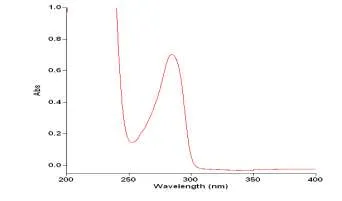
Figure 1. UV absorption spectrum of Carica papaya leaf extract in phosphate buffer pH 6.8, used for wavelength selection and calibration.
Table 2. UV spectroscopic parameters and calibration data for Carica papaya leaf extract (*see Editorial Note above regarding λmax)
|
Parameter |
Result |
|
Wavelength of maximum absorbance (λmax) |
354 nm (flavonoid fraction)* |
|
Medium |
Phosphate buffer pH 6.8 |
|
Linearity range |
2-14 µg/mL |
|
Regression equation |
Absorbance = 0.0618 C + 0.0024 |
|
Correlation coefficient (r²) |
0.9996 (n = 3) |
3.3 Drug-Excipient Compatibility (FTIR)
FTIR analysis of the pure extract, HPMC, pullulan, and their physical mixtures showed retention of all principal characteristic absorption bands of the extract — O-H stretch (~3421 cm⁻¹), C-H stretch (~2924 cm⁻¹), C=O stretch (~1737 cm⁻¹), C=C aromatic stretch attributed to the flavonoid fraction (~1637 cm⁻¹), and C-O-C/C-O stretching bands (1279-1035 cm⁻¹) — with only minor shifts (≤ 10 cm⁻¹) and no new peaks in the optimised film F5 (Table 3, Figure 2), indicating the absence of chemically significant drug-excipient interaction.
Table 3. FTIR spectral peak assignments – principal bands of extract, HPMC, and optimised film F5
|
Functional group / bond |
Extract (cm⁻¹) |
HPMC (cm⁻¹) |
Film F5 (cm⁻¹) |
Inference |
|
O-H stretch (hydroxyl) |
3421 |
3440 |
3428 |
Slight shift; compatible |
|
C-H stretch (alkyl) |
2924 |
2932 |
2928 |
Retained; no interaction |
|
C=O stretch (ester/amide) |
1737 |
— |
1731 |
Minor shift; no new peak |
|
C=C aromatic (flavonoids) |
1637 |
— |
1631 |
Retained; slight broadening |
|
C-O-C stretch (ether) |
1279 |
1060 |
1068 |
Overlapping; compatible |
|
O-H bending |
1377 |
1382 |
1375 |
Retained; no shift |
|
C-O stretch |
1035 |
1030 |
1032 |
Retained |
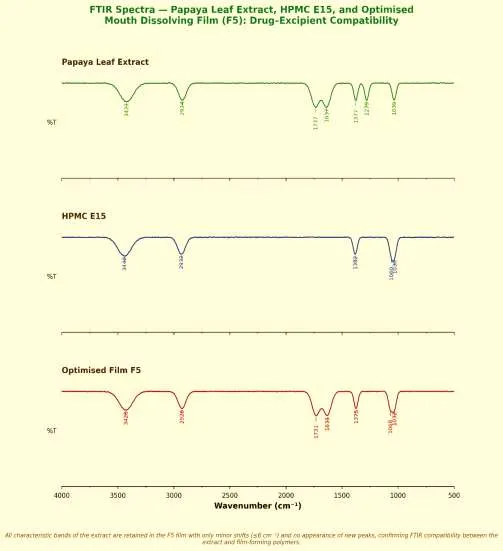
Figure 2. FTIR spectra of Carica papaya leaf extract, HPMC E15, and the optimised mouth-dissolving film F5, confirming drug-excipient compatibility.
3.4 Differential Scanning Calorimetry
DSC thermograms of the pure extract showed a broad dehydration endotherm at 98.4 °C followed by a decomposition exotherm at 224.6 °C; HPMC and pullulan each showed only a broad dehydration endotherm (85.2 °C and 78.4 °C respectively) with no sharp melting peak, consistent with their amorphous/semi-crystalline nature. The physical mixture and the optimised film F5 each retained both thermal events, at 91.2 °C/222.8 °C and 87.3 °C/228.1 °C respectively, without generation of any new thermal event (Table 4, Figure 3), corroborating the FTIR finding of thermodynamic and chemical compatibility between the extract and the film-forming polymers.
Table 4. DSC thermal analysis data for extract, polymers, physical mixture, and optimised film F5
|
Sample |
Endotherm peak (°C) |
Exotherm peak (°C) |
Inference |
|
Papaya leaf extract |
98.4 (dehydration) |
224.6 (decomposition) |
Pure extract thermal profile |
|
HPMC E15 |
85.2 (dehydration) |
— |
No sharp melting peak |
|
Pullulan |
78.4 (dehydration) |
— |
Characteristic dehydration |
|
Physical mixture |
91.2 (combined) |
222.8 |
No new peaks; compatible |
|
Optimised film F5 |
87.3 (dehydration) |
228.1 |
No new peaks; compatible |
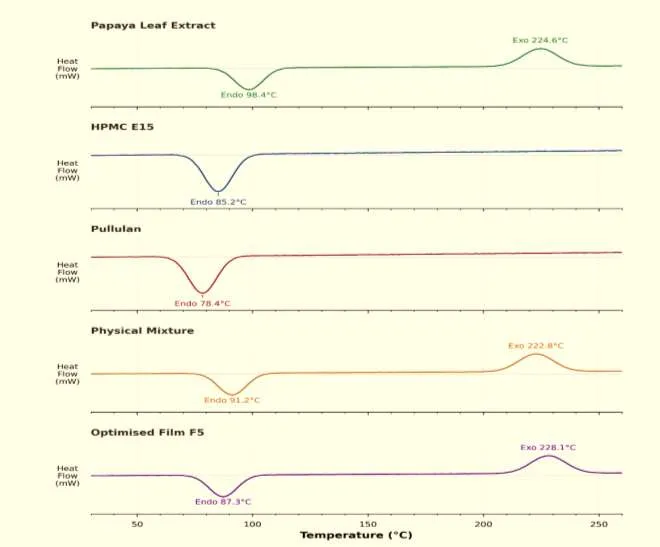
Figure 3. DSC thermograms of Carica papaya leaf extract, HPMC E15, pullulan, physical mixture, and optimised film F5.
3.5 Physicochemical and Mechanical Evaluation (F1-F9)
All nine formulations were prepared successfully as smooth, homogeneous, flexible, non-sticky films (Figure 4). Thickness (0.18-0.24 mm), weight (24.2-30.1 mg), and drug content (92.4-96.4%) increased consistently with increasing HPMC concentration, while all values remained within acceptance limits (Table 5, Figures 5-6). Folding endurance ranged from 85 folds (F1) to 195 folds (F9); formulations F1 and F2 fell marginally below the 100-fold minimum acceptance criterion, while all other formulations exceeded it comfortably (Figure 7).
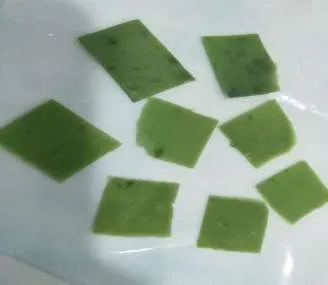
Figure 4. Photograph of prepared Carica papaya leaf extract mouth-dissolving films.
Table 5. Physicochemical evaluation results for formulations F1-F9 (mean ± SD, n = 3; *F5 = optimised formulation)
|
Formulation |
Thickness (mm) |
Weight (mg) |
Folding endurance |
Surface pH |
Drug content (%) |
|
F1 |
0.18 ± 0.01 |
24.2 ± 0.8 |
85 ± 4 |
6.2 ± 0.1 |
92.4 ± 0.8 |
|
F2 |
0.19 ± 0.01 |
24.8 ± 0.9 |
94 ± 5 |
6.3 ± 0.1 |
93.1 ± 0.7 |
|
F3 |
0.19 ± 0.01 |
25.4 ± 0.7 |
108 ± 6 |
6.3 ± 0.1 |
93.8 ± 0.9 |
|
F4 |
0.20 ± 0.01 |
26.1 ± 0.8 |
112 ± 7 |
6.4 ± 0.1 |
94.2 ± 0.6 |
|
F5* |
0.21 ± 0.01 |
27.0 ± 0.7 |
145 ± 8 |
6.5 ± 0.1 |
96.4 ± 0.5 |
|
F6 |
0.22 ± 0.01 |
27.8 ± 0.9 |
168 ± 9 |
6.5 ± 0.1 |
95.8 ± 0.7 |
|
F7 |
0.22 ± 0.01 |
28.4 ± 1.0 |
152 ± 8 |
6.6 ± 0.1 |
94.8 ± 0.8 |
|
F8 |
0.23 ± 0.01 |
29.2 ± 0.9 |
178 ± 10 |
6.7 ± 0.1 |
96.1 ± 0.6 |
|
F9 |
0.24 ± 0.01 |
30.1 ± 1.1 |
195 ± 11 |
6.8 ± 0.1 |
95.2 ± 0.9 |
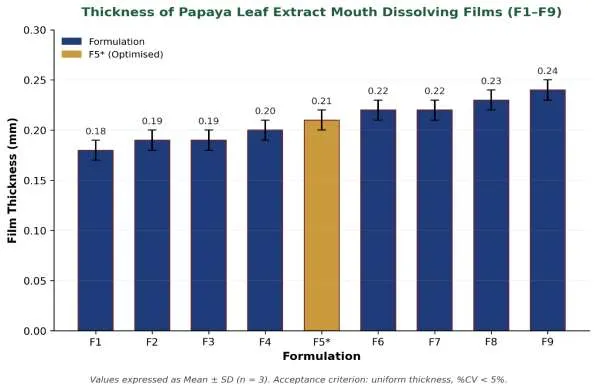
Figure 5. Film thickness of formulations F1-F9.
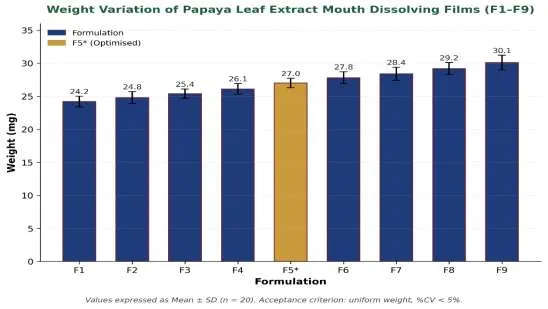
Figure 6. Weight variation of formulations F1-F9.
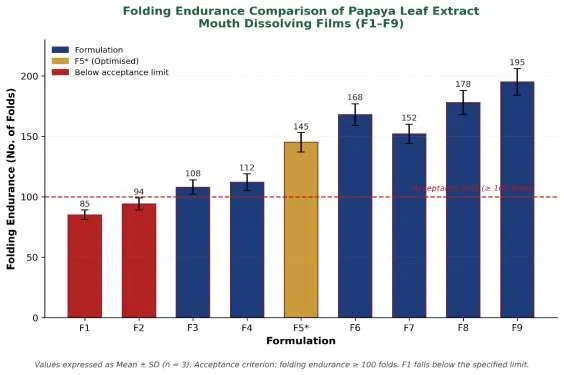
Figure 7. Folding endurance of formulations F1-F9.
Table 6. Mechanical properties of formulations F1-F9 – tensile strength and % elongation at break (mean ± SD, n = 3)
|
Formulation |
Tensile strength (N/mm²) |
% Elongation at break |
Assessment |
|
F1 |
2.48 ± 0.12 |
18.4 ± 1.2 |
Acceptable (borderline) |
|
F2 |
2.74 ± 0.14 |
22.1 ± 1.4 |
Acceptable |
|
F3 |
2.98 ± 0.16 |
26.8 ± 1.8 |
Good |
|
F4 |
3.12 ± 0.18 |
21.2 ± 1.6 |
Good |
|
F5* |
3.64 ± 0.19 |
28.4 ± 1.9 |
Excellent |
|
F6 |
3.42 ± 0.17 |
32.1 ± 2.1 |
Excellent |
|
F7 |
4.18 ± 0.21 |
24.8 ± 1.7 |
Good |
|
F8 |
4.62 ± 0.22 |
30.2 ± 2.0 |
Excellent |
|
F9 |
5.78 ± 0.28 |
34.8 ± 2.4 |
Excellent |
All formulations met the minimum tensile-strength acceptance criterion (≥ 2.0 N/mm²). Tensile strength increased consistently with HPMC concentration at each glycerol level (e.g., F1 < F4 < F7 at 0.5% glycerol), reflecting the greater cohesive strength of a more heavily polymer-loaded matrix, while percentage elongation increased with glycerol concentration, consistent with its plasticising action on the polymer chains.
3.6 Disintegration Time and In Vitro Drug Release
Disintegration time increased progressively with HPMC concentration (18 s for F1 to 65 s for F9 at correspondingly increasing glycerol levels), consistent with the formation of a more viscous, erosion-resistant gel layer at higher polymer concentrations (Table 7, Figure 8). Formulation F9 exceeded the 60-second acceptance limit, while F1 showed the fastest disintegration but comparatively lower drug content and mechanical strength. The optimised formulation F5 achieved the best overall balance: a disintegration time of 38 ± 3 seconds, a drug content of 96.4 ± 0.5%, and 96.4% cumulative drug release (CDR) at 30 minutes.
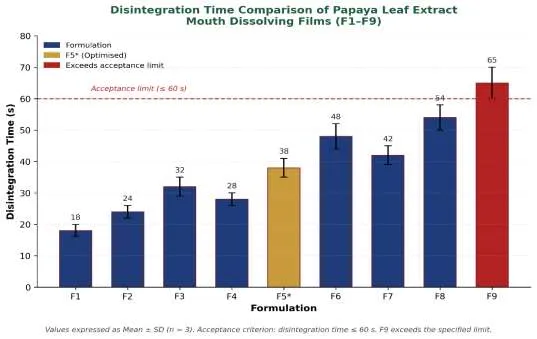
Figure 8. Disintegration time of formulations F1-F9.
Table 7. Disintegration time and drug content uniformity for formulations F1-F9 (mean ± SD, n = 3)
|
Formulation |
Disintegration time (s) |
Drug content (%) |
% CDR at 30 min |
|
F1 |
18 ± 2 |
92.4 ± 0.8 |
94.2 ± 1.1 |
|
F2 |
24 ± 2 |
93.1 ± 0.7 |
92.8 ± 1.3 |
|
F3 |
32 ± 3 |
93.8 ± 0.9 |
91.4 ± 1.2 |
|
F4 |
28 ± 2 |
94.2 ± 0.6 |
92.1 ± 1.4 |
|
F5* |
38 ± 3 |
96.4 ± 0.5 |
96.4 ± 0.8 |
|
F6 |
48 ± 4 |
95.8 ± 0.7 |
94.2 ± 1.0 |
|
F7 |
42 ± 3 |
94.8 ± 0.8 |
89.8 ± 1.5 |
|
F8 |
54 ± 4 |
96.1 ± 0.6 |
87.4 ± 1.6 |
|
F9 |
65 ± 5 |
95.2 ± 0.9 |
85.2 ± 1.8 |
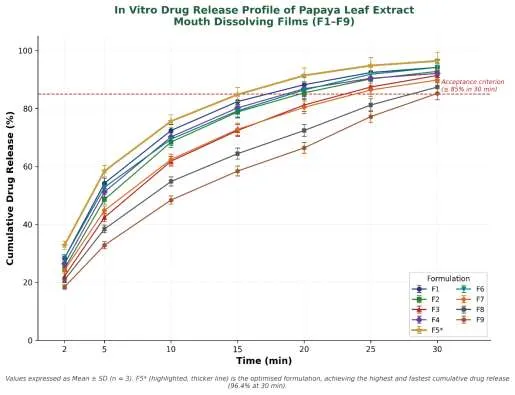
Figure 9. In vitro cumulative drug release (% CDR) profiles of formulations F1-F9.
Table 8. Release-kinetics model fitting for the optimised formulation F5
|
Kinetic model |
Regression equation |
r² |
Inference |
|
Zero-order |
Q = 3.142t + 28.84 |
0.9712 |
Moderate fit |
|
First-order |
log(100−Q) = 2.0 − 0.0548t |
0.9841 |
Good fit |
|
Higuchi |
Q = 22.84√t + 8.24 |
0.9924 |
Best fit; diffusion-controlled |
|
Korsmeyer-Peppas |
log(Q) = 0.4812 log(t) + 1.284 |
0.9888 |
n = 0.48; Fickian diffusion |
The Higuchi model provided the best fit for the F5 release data (r² = 0.9924), indicating diffusion-controlled release, while the Korsmeyer-Peppas exponent (n = 0.48) indicates a release mechanism at the Fickian/anomalous-diffusion boundary, consistent with drug diffusion through the swelling polymer matrix accompanied by a minor contribution from polymer chain relaxation.
3.7 Factorial Design Analysis
ANOVA of the 3² factorial design confirmed that HPMC concentration (X₁) was the dominant factor for both disintegration time (F = 89.24, p < 0.001) and % CDR at 30 minutes (F = 62.14, p < 0.001), while glycerol concentration (X₂) exerted a smaller but statistically significant effect on both responses (Table 9). The quadratic term X₁² was significant for both responses, while the X₁X₂ interaction term was not significant, indicating that the effects of the two factors are largely additive.
Table 9. ANOVA summary for disintegration time (Y₁) and % CDR at 30 min (Y₂) – 3² factorial design (NS = not significant)
|
Source |
Sum of squares (Y₁) |
F-value (Y₁) |
p-value (Y₁) |
Sum of squares (Y₂) |
F-value (Y₂) |
p-value (Y₂) |
|
X₁ (HPMC) |
1642.4 |
89.24 |
< 0.001 |
84.68 |
62.14 |
< 0.001 |
|
X₂ (Glycerol) |
188.4 |
10.23 |
0.018 |
18.42 |
13.52 |
0.014 |
|
X₁² |
124.8 |
6.78 |
0.038 |
28.16 |
20.68 |
0.008 |
|
X₂² |
8.4 |
0.46 |
0.524 (NS) |
6.24 |
4.58 |
0.062 (NS) |
|
X₁X₂ (interaction) |
36.0 |
1.96 |
0.213 (NS) |
4.84 |
3.55 |
0.098 (NS) |
|
R² |
0.9731 |
— |
— |
0.9720 |
— |
— |
The derived second-order polynomial equations were: Y₁ (disintegration time, s) = 38.0 + 13.5X₁ + 4.5X₂ + 4.0X₁² − 1.0X₂² − 1.5X₁X₂ (R² = 0.9731); and Y₂ (% CDR at 30 min) = 96.4 − 4.1X₁ + 1.9X₂ − 2.4X₁² − 1.1X₂² − 0.8X₁X₂ (R² = 0.9720), confirming that both models explained over 97% of the observed response variability. The positive coefficient for X₁ in the Y₁ equation and its negative coefficient in the Y₂ equation together reflect the gel-barrier mechanism by which increasing HPMC concentration prolongs disintegration and retards drug release.
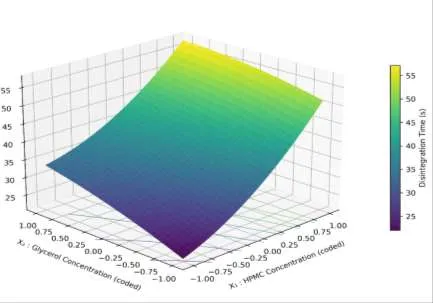
Figure 10. Response-surface plot showing the combined effect of HPMC concentration (X₁) and glycerol concentration (X₂) on disintegration time (Y₁).
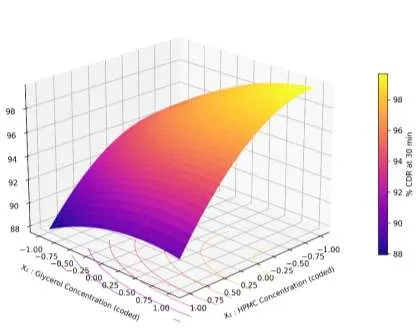
Figure 11. Response-surface plot showing the combined effect of HPMC concentration (X₁) and glycerol concentration (X₂) on % cumulative drug release at 30 minutes (Y₂).
3.8 Surface Morphology (SEM)
Scanning electron micrographs of the optimised film F5 at ×500 and ×1000 magnification revealed a smooth, dense, and crack-free surface with no visible pores, aggregates, or phase separation, and no discernible crystalline particulate matter of the extract, consistent with the DSC finding of no sharp crystalline melting endotherm and supporting a molecularly dispersed or amorphous distribution of the extract within the HPMC-pullulan matrix.
3.9 Comparative Evaluation Against a Marketed Formulation
The optimised film F5 was benchmarked against a conventional marketed papaya-based tablet formulation (Table 10, Figure 12). F5 disintegrated markedly faster (38 ± 3 s versus a typical 15-20 minutes for the tablet) and required no water for administration, and achieved substantially greater 30-minute cumulative drug release (96.4 ± 0.8% versus 78.4 ± 2.4% for the tablet), while drug content was comparable between the two dosage forms.
Table 10. Comparative evaluation of the optimised MDF (F5) versus a marketed papaya tablet formulation
|
Parameter |
Optimised MDF (F5) |
Marketed tablet |
Remark |
|
Dosage form |
Mouth-dissolving film |
Conventional tablet |
MDF preferred for rapid onset |
|
Water requirement |
Not required |
Required |
MDF advantageous in dengue patients |
|
Disintegration time |
38 ± 3 s |
15-20 min |
MDF significantly faster |
|
Drug content (%) |
96.4 ± 0.5 |
95.2 ± 1.1 |
Comparable |
|
% CDR at 30 min |
96.4 ± 0.8 |
78.4 ± 2.4 |
MDF significantly higher |
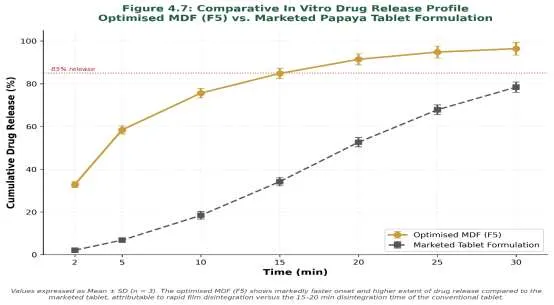
Figure 12. Comparative in vitro drug release profile of the optimised MDF (F5) versus the marketed papaya tablet formulation.
3.10 Accelerated Stability Studies
Over three months of storage at 40 ± 2 °C / 75 ± 5% RH, formulation F5 showed no significant change in physical appearance other than slight yellowing by month 3, attributable to oxidative browning of phenolic constituents (Table 11, Figure 13). Drug content decreased marginally from 96.4% to 94.6% (−1.87%), and disintegration time increased from 38 to 44 seconds (+6 s); both changes remained well within the pre-specified acceptance limits (± 5% for drug content; ≤ 10% relative change for disintegration time), supporting the chemical and physical stability of the optimised formulation under accelerated conditions representative of tropical storage.
Table 11. Accelerated stability study results for formulation F5 at 40 °C / 75% RH (n = 3)
|
Parameter |
Month 0 |
Month 1 |
Month 2 |
Month 3 |
% Change (0 vs 3 mo) |
|
Drug content (%) |
96.4 ± 0.5 |
95.8 ± 0.6 |
95.2 ± 0.7 |
94.6 ± 0.8 |
−1.87% |
|
Disintegration time (s) |
38 ± 3 |
40 ± 3 |
42 ± 3 |
44 ± 4 |
+6 s |
|
Folding endurance |
145 ± 8 |
142 ± 8 |
138 ± 9 |
132 ± 10 |
Acceptable |
|
Surface pH |
6.5 ± 0.1 |
6.5 ± 0.1 |
6.4 ± 0.1 |
6.4 ± 0.1 |
No significant change |
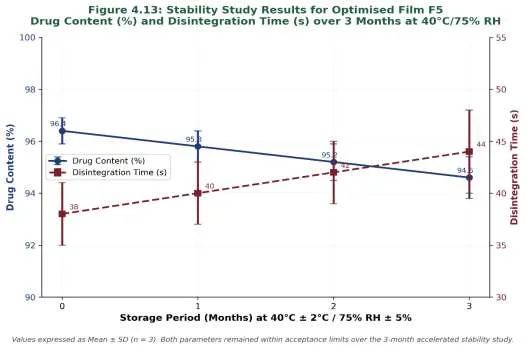
Figure 13. Drug content (%) and disintegration time (s) of formulation F5 over three months of accelerated storage (40 °C / 75% RH).
DISCUSSION
The rationale for combining Carica papaya leaf extract with an HPMC-pullulan mouth-dissolving film platform rests on three converging considerations: the well-documented but delivery-constrained therapeutic potential of papaya leaf extract in dengue-associated thrombocytopenia [7-13,45-49]; the specific practical barriers that conventional oral dosage forms present for febrile, nauseous dengue patients, particularly children; and the established performance advantages of HPMC-based films — transparency, rapid aqueous dissolution, and a favourable regulatory and safety history — for fast-disintegrating oral delivery [20]. Pullulan was incorporated as a co-polymer to improve film transparency and dissolution behaviour while reducing the overall synthetic-polymer burden of the formulation, and glycerol was selected as plasticiser for its high compatibility with HPMC-based systems and food-additive safety status.
The 3² factorial design provided a statistically efficient means of characterising the influence of HPMC and glycerol concentration, and their interaction, on the two critical quality attributes of disintegration time and 30-minute drug release. The dominant, highly significant effect of HPMC concentration on both responses is mechanistically consistent with its established gelation behaviour: on contact with aqueous media, HPMC hydrates to form a viscous surface gel layer whose thickness and cohesiveness scale with polymer concentration, simultaneously delaying film erosion (prolonging disintegration time) and impeding drug diffusion (reducing cumulative release). Glycerol's smaller but still significant positive effect on both disintegration and release is attributable to plasticisation-mediated chain mobility and enhanced water uptake, which favour faster film breakdown. The absence of a significant HPMC-glycerol interaction term indicates that the two variables act largely independently, simplifying practical formulation adjustment.
Formulation F5 (HPMC 1.5% w/v, glycerol 1.0% v/v), corresponding to the factorial design's centre point, emerged as the optimum by achieving the most favourable balance across all evaluated responses rather than by maximising or minimising any single parameter. Its disintegration time (38 ± 3 s) comfortably satisfies the sub-60-second benchmark generally applied to MDFs, its mechanical properties (tensile strength 3.64 N/mm²; elongation 28.4%; folding endurance 145 folds) indicate a film robust enough for routine handling and packaging yet sufficiently flexible for oromucosal application, and its surface pH (6.5) falls within the range considered non-irritant to the oral mucosa.
The Higuchi-model best fit (r² = 0.9924) and Korsmeyer-Peppas exponent of 0.48 together indicate that drug release from F5 is governed predominantly by diffusion through the hydrated, swelling polymer matrix, at the boundary between Fickian and anomalous transport. From a biopharmaceutical perspective, this profile combines an early, substantial release (32.8% CDR at 2 minutes; 75.6% at 10 minutes, per the underlying dissolution dataset) with continued release through 30 minutes — a pattern well suited to the clinical context of dengue management, where rapid onset is valuable in nauseous, poorly compliant patients, while sustained release over the full disintegration/dissolution window helps maximise total extract exposure at the absorptive oral mucosal surface.
FTIR and DSC data were concordant in indicating the absence of clinically meaningful drug-excipient interaction: FTIR showed retention of all diagnostic extract bands with only minor (≤ 10 cm⁻¹) shifts, and DSC showed no new thermal events in either the physical mixture or the finished film, with thermal-event temperatures shifting only modestly relative to the pure components. SEM corroborated these findings at the morphological level, showing a smooth, homogeneous, and crack-free film surface with no evidence of extract crystallisation — consistent with an amorphous or molecularly dispersed state within the polymer matrix, and supportive of the DSC observations.
The comparative evaluation against a marketed papaya tablet formulation is illustrative rather than a formal bioequivalence assessment, since it draws on a single-source dissolution comparison rather than a designed, blinded comparative study; nonetheless, the magnitude of the difference in both disintegration time (38 seconds versus 15-20 minutes) and 30-minute release (96.4% versus 78.4%) is large enough to be practically meaningful for the intended clinical use-case, where speed of disintegration and water-free administration are primary design objectives rather than incidental benefits.
The accelerated stability data (40 °C/75% RH, 3 months) showed changes in drug content and disintegration time well within conventional acceptance limits, and are broadly consistent with stability behaviour reported for other HPMC-based herbal-extract films [36,42,44]. Applying the Arrhenius/Q10 relationship conventionally used to extrapolate accelerated data to long-term storage conditions, these results suggest a plausible shelf life on the order of 18-24 months under Zone II/IVb storage conditions, though confirmatory long-term stability testing as per ICH Q1A(R2) [53] would be required before this can be regarded as an established specification rather than a projection.
This study has several limitations that should be acknowledged. First, drug release and disintegration were assessed under simulated, static in vitro conditions that cannot fully replicate the dynamic, variable salivary environment of the oral cavity. Second, no ex vivo buccal permeation or in vivo pharmacokinetic/pharmacodynamic data are yet available to confirm whether the observed in vitro release advantage translates into a corresponding bioavailability or platelet-count benefit relative to conventional oral papaya preparations. Third, the comparative evaluation against the marketed tablet was based on a single lot of each product rather than a statistically powered, replicated comparison. These limitations define clear priorities for follow-on work, including ex vivo mucosal permeation studies, animal pharmacokinetic and thrombocytopenia-model pharmacodynamic studies, and long-term ICH-compliant stability testing, ahead of any clinical evaluation of this formulation.
CONCLUSION
A mouth-dissolving film of Carica papaya leaf extract was successfully developed and optimised using a 3² full factorial design, with HPMC E15 concentration identified as the dominant formulation variable governing both disintegration time and in vitro drug release, and glycerol concentration exerting a smaller but statistically significant modulating effect. The optimised formulation (HPMC 1.5% w/v, glycerol 1.0% v/v) combined a disintegration time of 38 seconds, 96.4% drug content, and 96.4% cumulative drug release at 30 minutes with satisfactory mechanical properties, confirmed drug-excipient compatibility (FTIR, DSC), a smooth and homogeneous surface morphology (SEM), and acceptable accelerated stability over three months. Relative to a conventional marketed papaya tablet, the optimised film disintegrated substantially faster and released a greater proportion of the extract within 30 minutes, without any requirement for water. These findings support the mouth-dissolving film platform as a rational, patient-friendly delivery format for Carica papaya leaf extract in the supportive management of dengue fever, particularly for febrile, nauseous, paediatric, or geriatric patients for whom conventional oral dosage forms are poorly suited, while underscoring the need for ex vivo permeation, in vivo pharmacokinetic/pharmacodynamic, and long-term stability studies before clinical application.
Author Contributions
[To be completed by the authors as per journal requirements, e.g., conceptualisation, methodology, formal analysis, investigation, writing – original draft, writing – review and editing, supervision.]
Funding
I had declare that no external funding was received.
Conflicts of Interest
The authors declare no conflict of interest.
Data Availability Statement
The data supporting the findings of this study are available from the corresponding author upon reasonable request.
Acknowledgements
REFERENCES

Vaishnavi Waghmare, Dr. S. S. Metkar Development and Evaluation of Mouth-Dissolving Films of Carica papaya Leaf Extract Using Natural Polymers for the Supportive Management of Dengue Fever: A 3² Factorial Design Approach, Int. J. of Pharm. Sci., 2026, Vol 4, Issue 9, 117-135, https://doi.org/10.5281/zenodo.22231339
 10.5281/zenodo.22231339