

We use cookies to ensure our website works properly and to personalise your experience. Cookies policy
Department of Biotechnology, Sri Shakthi Institute of Engineering and Technology, Coimbatore.
Purple sweet potato (Ipomoea batatas L.) is considered one of the richest natural sources of Anthocyanins, a class of bioactive flavonoid pigments known for their strong antioxidant, anti-inflammatory, antimicrobial, and skin-protective properties. In recent years, the cosmetic industry has shown increasing interest in the utilization of plant-derived compounds in skincare formulations due to growing consumer awareness regarding the harmful effects of synthetic cosmetic ingredients. The present study was aimed at the development and evaluation of a natural herbal face wash powder enriched with Anthocyanin extracted from purple sweet potato for skin brightening and antioxidant applications.Anthocyanin extraction was carried out using acidified ethanol solvent extraction under controlled dark conditions to prevent degradation of the pigments. The extracted Anthocyanins was incorporated into a herbal face wash powder formulation containing natural cleansing and skin-beneficial ingredients such as green gram powder, rice flour, Fuller’s Earth, neem powder, Aloe Vera powder, and rose petal powder. Each ingredient was selected based on its functional role in cleansing, exfoliation, oil absorption, moisturizing, antimicrobial activity, and skin soothing effects.The prepared formulation was evaluated for various physicochemical and functional parameters including colour, odour, texture, pH, foamability, spreadability, skin irritation, stability, and FTIR characterization. The formulation exhibited a pleasant natural odour, smooth texture, and characteristic light purple coloration due to the successful incorporation of Anthocyanins pigments. The pH of the formulation was found to be within the skin-compatible range of 5.5–6.5, indicating its suitability for topical application without disturbing the natural skin barrier. Moderate foamability and good cleansing efficiency were observed, confirming its practical applicability as a herbal face wash product. Stability studies revealed no significant changes in physical appearance, odour, or texture under different storage conditions. FTIR analysis confirmed the presence of phenolic hydroxyl groups and aromatic flavonoid structures associated with Anthocyanins.The formulation may possess antioxidant and skin-protective potential due to the presence of anthocyanin-rich purple sweet potato extract. The findings of this study suggest that the developed herbal face wash powder can serve as a safe, eco-friendly, cost-effective, and sustainable alternative to synthetic cosmetic formulations with potential applications in herbal cosmeceutical industries.
Skin is the largest organ of the human body and acts as a protective barrier against environmental pollutants, microbial infections, ultraviolet radiation, and harmful chemicals. Continuous exposure to pollution, sunlight, oxidative stress, and synthetic cosmetic products can lead to various skin problems including dryness, irritation, acne, pigmentation, premature aging, and loss of skin elasticity. Therefore, maintaining healthy skin has become an important aspect of personal healthcare and cosmetic science. Conventional skincare products commonly contain synthetic surfactants, preservatives, artificial fragrances, and chemical additives that may cause allergic reactions, skin sensitivity, and long-term adverse effects. Due to these concerns, the demand for natural and herbal cosmetic products has increased considerably worldwide.
Herbal cosmetics are formulations containing plant-derived ingredients that provide cosmetic benefits along with therapeutic effects. These products are generally considered safer, biodegradable, eco-friendly, and more compatible with human skin compared to synthetic formulations. Among the various plant bioactive compounds, Anthocyanins have gained significant attention in cosmetic and pharmaceutical research because of their strong antioxidant, anti-inflammatory, antimicrobial, and anti-aging properties.
Anthocyanins are water-soluble flavonoid pigments responsible for the red, purple, and blue coloration in many fruits, vegetables, and flowers. These compounds possess the ability to neutralize free radicals and reduce oxidative stress, thereby protecting skin cells from damage. Purple sweet potato (Ipomoea batatas L.) is one of the richest natural sources of Anthocyanins and is widely cultivated due to its nutritional and medicinal value. In addition to antioxidant activity, Anthocyanins are reported to improve skin tone, reduce pigmentation, protect against UV-induced damage, and support collagen stability.
The present study focuses on the extraction of Anthocyanins from purple sweet potato and its incorporation into a herbal face wash powder formulation. Powder-based herbal face wash products offer several advantages including improved shelf life, reduced microbial contamination, minimal preservative requirement, ease of storage, and eco-friendly formulation characteristics. The aim of this study was to formulate a stable, skin-friendly, antioxidant-rich herbal face wash powder using natural ingredients and to evaluate its physicochemical and functional properties for potential cosmeceutical applications.
MATERIALS AND METHODS
Collection of Raw Materials
Fresh purple sweet potatoes were procured from the local market and authenticated based on their characteristic purple pigmentation. The collected samples were washed thoroughly with distilled water to remove dirt and contaminants. The sweet potatoes were peeled using sterile knives, cut into small uniform pieces, and stored under refrigerated conditions until extraction. Other herbal ingredients including green gram powder, rice flour, Fuller’s Earth, neem powder, Aloe Vera powder, and rose petal powder were collected from authenticated herbal suppliers.
Extraction of Anthocyanins
Anthocyanin extraction was carried out using an acidified ethanol solvent extraction method. Fresh purple sweet potato tubers were washed thoroughly, peeled, and cut into small pieces. Approximately 100 g of purple sweet potato was ground into a fine paste using a sterile blender. The paste was mixed with 500 mL of acidified ethanol (70% ethanol containing 1% citric acid) in a sterile conical flask.
The extraction mixture was maintained under dark conditions for 24 h at 25°C with intermittent stirring to maximize pigment extraction and prevent Anthocyanins degradation. After extraction, the mixture was filtered through Whatman No.1 filter paper. The filtrate was concentrated using a water bath at 40°C until a concentrated Anthocyanin extract was obtained. The extract was transferred into amber-colored bottles and stored at 4°C until further use.
Preparation of Herbal Face Wash Powder
The herbal face wash powder was prepared according to the composition shown in Table 1.30 g of green gram powder, 20 g of rice flour, 15 g of Fuller’s Earth, 10 g of neem powder, 10 g of Aloe Vera powder, and 10 g of rose petal powder were weighed accurately using a digital balance.
The powdered ingredients were individually sieved through a 60 - mesh sieve to obtain a uniform particle size. Subsequently, 5g of concentrated Anthocyanin extract was incorporated into the formulation and mixed thoroughly using a sterile mortar and pestle to obtain a homogeneous blend. The prepared formulation was packed in airtight containers and stored at room temperature (25 ± 2°C) under dry conditions for further evaluation.
TABLE 1.COMPOSITION OF HERBAL FACE WASH POWDER
|
Quantity |
Ingredient |
Function |
|
5g |
Purple Sweet Potato Anthocyanin extract |
Antioxidant, Natural Colorant |
|
30g |
Green Gram Powder |
Cleansing Agent |
|
20g |
Rice Flour |
Exfoliating Agent |
|
15g |
Fuller’s Earth |
Oil Adsorbent |
|
10g |
Neem powder |
Antimicrobial Agent |
|
10g |
Aloe Vera Powder |
Moisturizer |
|
10g |
Rose Petal Powder |
Fragrance and Skin Smoothing |
RESULTS AND DISCUSSION
Anthocyanin extraction
The extraction process resulted in the formation of a deep, purple-colored extract, visually confirming successful extraction of Anthocyanins pigments from purple sweet potato. The use of acidified ethanol significantly improved extraction efficiency and pigment stability. Anthocyanins are highly sensitive to environmental conditions such as pH, temperature, oxygen, and light; therefore, maintaining acidic and dark conditions during extraction was essential for preserving their structural integrity and antioxidant activity.
Physicochemical Evaluation
The developed face wash powder exhibited desirable physicochemical properties suitable for cosmetic applications. The formulation showed an attractive light purple coloration due to Anthocyanins incorporation, enhancing its natural aesthetic appeal without the need for artificial dyes. The odour was found to be mild and pleasant because of the natural herbal ingredients present in the formulation. Texture analysis revealed that the powder was smooth, fine, and free-flowing, ensuring ease of mixing and application on the skin surface.
The pH of the prepared formulation was found to be within the range of 5.5–6.5, which is considered ideal for maintaining the natural acid mantle of human skin. Maintaining appropriate pH is important to prevent irritation, dryness, and disruption of normal skin barrier function. Foamability studies indicated moderate and stable foam formation, which is sufficient for effective cleansing without excessive removal of natural skin oils.
Table 2. Physicochemical Evaluation of Herbal Face Wash Powder
|
Parameter |
Observation |
|
Colour |
Light Purple |
|
Odour |
Pleasant |
|
Texture |
Smooth |
|
pH |
5.5 -6.5 |
|
Foamability |
Moderate |
|
Skin Irritation |
Nil |
|
Stability |
Stable |
FTIR Analysis
FTIR analysis was performed to identify the characteristic functional groups present in the purple sweet potato anthocyanin extract and the formulated herbal face wash powder. The FTIR spectrum exhibited characteristic absorption bands corresponding to phenolic hydroxyl groups, aromatic flavonoid structures, and glycosidic linkages associated with Anthocyanin-rich compounds. These findings confirmed the successful extraction of anthocyanins and their incorporation into the herbal formulation.
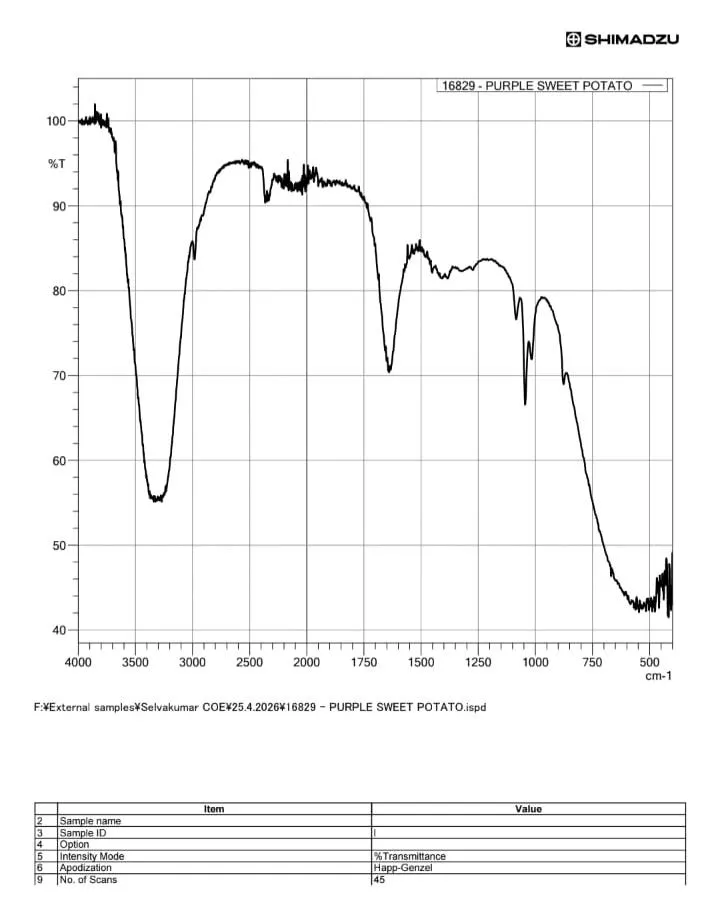
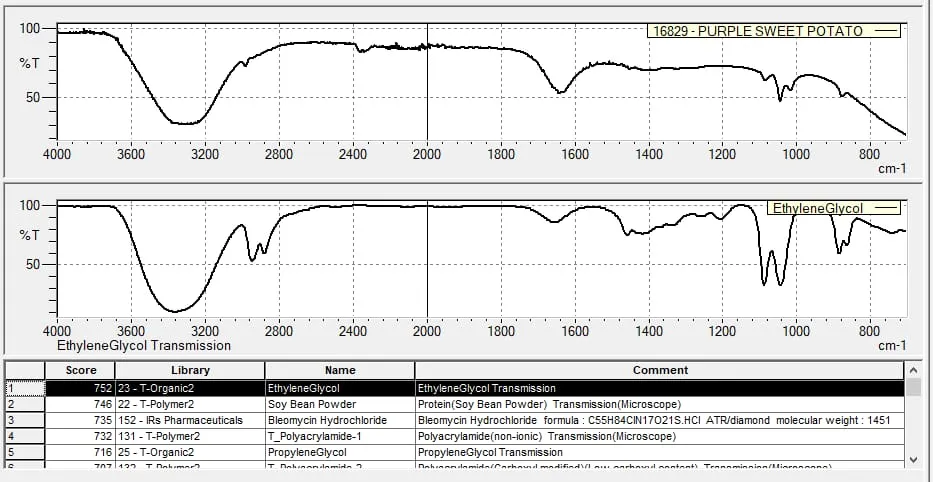
Figure 1. FTIR Spectrum of Purple Sweet Potato Anthocyanin extract
The FTIR spectrum of the purple sweet potato anthocyanin extract revealed characteristic absorption bands between 3200–3400 cm⁻¹, corresponding to O–H stretching vibrations of phenolic hydroxyl groups. Absorption peaks observed around 1600–1650 cm⁻¹ were attributed to aromatic C=C stretching vibrations, indicating the presence of flavonoid structures. Additional peaks in the region of 1000–1200 cm⁻¹ were associated with C–O stretching vibrations and glycosidic linkages commonly found in Anthocyanin-rich compounds. These characteristic functional groups are consistent with previously reported FTIR profiles of anthocyanin-rich plant extracts and support the successful extraction of anthocyanins from purple sweet potato.
Stability Study
The stability study demonstrated that the formulation remained physically stable under room temperature and refrigerated storage conditions. Stability studies were carried out by storing the formulated face wash powder at room temperature (25 ± 2°C) and refrigerated conditions (4 ± 2°C) for 30 days. Samples were evaluated periodically for changes in colour, odour, texture, and physical appearance. The stability of Anthocyanins pigments in the formulation indicates the suitability of the selected extraction and storage conditions for maintaining product quality and shelf life.
Skin irritation test
Skin irritation was evaluated by applying a small quantity of the prepared formulation on the inner forearm skin of healthy volunteers. The test area was observed for 24 hours for signs of redness, itching, swelling, or irritation. No adverse reactions were observed.
CONCLUSION
The present study successfully achieved its objective of developing and evaluating a natural herbal face wash powder enriched with Anthocyanin extracted from purple sweet potato (Ipomoea batatas L.). The research was undertaken with the aim of utilizing a natural and sustainable source of bioactive compounds in cosmetic formulations as an alternative to synthetic ingredients commonly used in commercial skincare products. Purple sweet potato was selected due to its high Anthocyanins content and well-documented antioxidant properties, making it a promising candidate for cosmetic and cosmeceutical applications.
Anthocyanin extraction was successfully carried out using acidified ethanol extraction under controlled conditions, resulting in a stable, purple-coloured extract rich in phenolic compounds. The extracted Anthocyanins was effectively incorporated into a herbal face wash powder formulation containing green gram powder, rice flour, Fuller’s Earth, neem powder, Aloe Vera powder, and rose petal powder. The combination of these natural ingredients contributed not only to cleansing and exfoliation but also to moisturizing, antimicrobial, soothing, and skin-nourishing effects.
The formulated product exhibited desirable physicochemical characteristics including an attractive natural colour, pleasant odour, smooth texture, and good flowability. Evaluation studies demonstrated that the formulation possessed a skin-friendly pH range of 5.5–6.5, which is compatible with the natural acid mantle of human skin and helps maintain skin health without causing irritation. foamability studies indicated satisfactory cleansing performance, while skin irritation tests confirmed the safety and compatibility of the formulation for topical application. Stability studies further revealed that the product remained stable under different storage conditions without significant changes in colour, odour, texture, or overall quality, indicating good shelf-life potential.
FTIR analysis provided scientific confirmation of the presence of Anthocyanins-associated phenolic and flavonoid functional groups within the extract and formulation. The observed characteristic absorption peaks corresponding to hydroxyl groups, aromatic ring structures, and glycosidic linkages verified the successful extraction and incorporation of Anthocyanin-rich compounds. These findings support the antioxidant potential of the developed formulation and demonstrate its suitability as a natural source of skin-protective bioactive molecules.
The formulation may possess antioxidant and skin-protective potential due to the presence of anthocyanin-rich purple sweet potato extract; however, further antioxidant and clinical studies are required to confirm these effects. Such protective effects can contribute to improved skin appearance, enhanced skin brightness, prevention of premature aging, and maintenance of overall skin health. In addition, the use of plant-derived ingredients aligns with the growing global demand for eco-friendly, sustainable, and chemical-free cosmetic products.
Overall, the findings of this study clearly indicate that purple sweet potato-derived Anthocyanins can be effectively utilized in herbal cosmetic formulations. The developed herbal face wash powder demonstrated excellent physicochemical properties, stability, safety, and potential skin-beneficial effects, making it a promising candidate for future cosmeceutical development. Further studies involving advanced analytical characterization, antioxidant quantification, microbial evaluation, and clinical trials on human volunteers are recommended to strengthen the scientific evidence and support large-scale commercialization. The present work provides a strong foundation for the development of innovative, natural, and sustainable skincare products based on Anthocyanins-rich plant resources.
LIMITATIONS
The present study was limited to formulation development, physicochemical evaluation, FTIR characterization, and preliminary stability assessment. Quantitative antioxidant activity, antimicrobial evaluation, tyrosinase inhibition studies, and clinical efficacy testing were not performed. Further investigations are required to establish the biological activity and skin-brightening efficacy of the developed formulation.
FUTURE SCOPE
The present study has successfully demonstrated the extraction of Anthocyanins from purple sweet potato and their incorporation into a herbal face wash powder formulation. Although the developed product showed promising physicochemical characteristics, stability, and skin compatibility, several opportunities exist for further research and product enhancement. Future investigations can focus on improving the scientific validation, functionality, and commercial potential of the formulation.
One of the major future directions involves the application of advanced analytical techniques such as High-Performance Liquid Chromatography (HPLC), Liquid Chromatography-Mass Spectrometry (LC-MS), and Nuclear Magnetic Resonance (NMR) spectroscopy for the precise identification, characterization, and quantification of individual Anthocyanin-rich compounds. Such studies would provide deeper insight into the bioactive profile of purple sweet potato extracts and strengthen the scientific credibility of the formulation.
Further research can be directed toward optimizing the Anthocyanin extraction process by evaluating different extraction solvents, extraction temperatures, pH conditions, extraction durations, and emerging green extraction technologies such as ultrasound-assisted extraction and microwave-assisted extraction. Optimization studies may improve extraction efficiency, increase Anthocyanins yield, and enhance the overall antioxidant potential of the final product.
The stability of Anthocyanins remains a significant challenge due to their sensitivity to light, heat, oxygen, and pH fluctuations. Therefore, future studies can explore advanced stabilization approaches such as microencapsulation, nanoencapsulation, liposomal delivery systems, and biopolymer coatings. These techniques may improve Anthocyanins stability, prolong shelf life, and enhance the effectiveness of the active compounds during storage and application.
In addition, the present powder-based formulation can be further developed into other commercially attractive dosage forms such as herbal face wash gels, cleansing creams, facial scrubs, peel-off masks, face packs, foaming cleansers, and multifunctional skincare products. Such modifications may improve consumer acceptance, convenience, and market competitiveness while expanding the application of purple sweet potato Anthocyanins in the cosmetic industry.
Future work should also include comprehensive biological evaluations such as antioxidant activity assays (DPPH, ABTS, FRAP), antimicrobial studies against skin-associated microorganisms, anti-inflammatory investigations, and skin-brightening assessments through tyrosinase inhibition studies. Clinical trials involving a larger population of volunteers can be conducted to evaluate product safety, efficacy, consumer satisfaction, dermatological compatibility, and long-term effects under real-world conditions. Furthermore, industrial-scale production, economic feasibility analysis, regulatory approval studies, and sustainable packaging development can be explored to facilitate successful commercialization of the product.
Overall, the future prospects of purple sweet potato Anthocyanins-based skincare formulations are highly promising. With further scientific validation, technological advancements, and product optimization, the developed herbal face wash powder has the potential to emerge as a novel, sustainable, and commercially successful cosmeceutical product in the growing natural skincare market.
ACKNOWLEDGEMENT
The authors express their sincere gratitude to the Department of Biotechnology, Sri Shakthi Institute of Engineering and Technology, Coimbatore, for providing the necessary laboratory facilities, infrastructure, and technical support required for carrying out this research work. The authors also acknowledge the valuable guidance and encouragement provided by faculty members throughout the project. Special thanks are extended to the laboratory personnel for their assistance in sample preparation, analytical studies, FTIR characterization, and evaluation of the developed formulation.
CONFLICT OF INTEREST
The authors declare that there is no conflict of interest regarding the publication of this research work.
REFERENCES


Snega N, Arularasi V, Shri Varsha S, Varshini M, Yashika Shri E, Development and Evaluation of Purple Sweet Potato Anthocyanins-Enriched Herbal Face Wash Powder for Skin Brightening, Int. J. of Pharm. Sci., 2026, Vol 4, Issue 6, 6964-6972, https://doi.org/10.5281/zenodo.20958002
 10.5281/zenodo.20958002