

We use cookies to ensure our website works properly and to personalise your experience. Cookies policy
Shree Dev Bhoomi institute of education science and technology, Veer madho Singh Bhandari Uttarakhand technical university dehradun
Mucoadhesive buccal drug-delivery systems have gained significant attention as an alternative to conventional oral dosage forms due to their ability to bypass hepatic first-pass metabolism, enhance bioavailability, and provide controlled systemic drugq delivery. The present review focuses on the formulation and evaluation of a mucoadhesive buccal film containing liothyroxine and formoterol for the management of goiter. Liothyroxine, a synthetic thyroid hormone, is essential for correcting hypothyroidism and regulating thyroid enlargement, whereas formoterol, a long-acting ??-adrenergic agonist, may assist in relieving respiratory discomfort associated with thyroid swelling and airway compression. Incorporation of these drugs into a mucoadhesive buccal film offers advantages such as sustained drug release, improved patient compliance, reduced gastrointestinal degradation, and precise dose control.The review discusses the selection of suitable polymers, plasticizers, and permeation enhancers; commonly employed preparation techniques such as solvent casting and multilayer film formation; and critical evaluation parameters including physicochemical characterization, mucoadhesive strength, in-vitro drug release, and ex-vivo permeation studies. Available literature suggests that buccal films provide stable formulation characteristics, effective mucosal adhesion, and predictable release kinetics, supporting their potential for chronic endocrine therapy. Overall, a combined liothyroxine–formoterol mucoadhesive buccal film represents a promising and patient-friendly therapeutic strategy for improved management of goiter, although further experimental and clinical investigations are required to confirm safety, efficacy, and long-term stability.
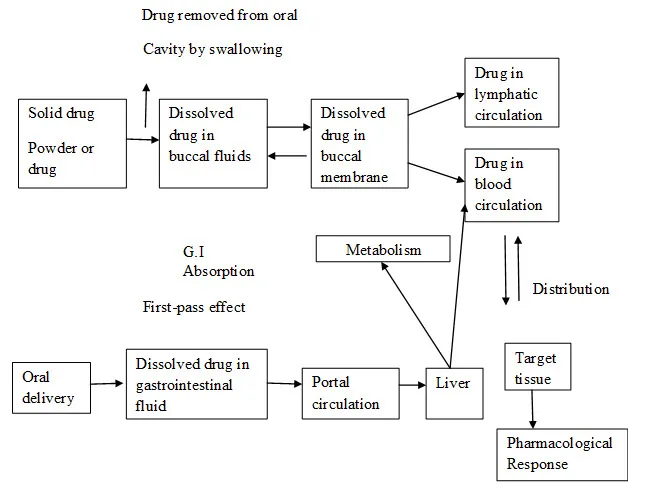
Mucoadhesive buccal drug-delivery systems represent an advanced and patient-centric pharmaceutical strategy aimed at enhancing systemic drug absorption through the oral mucosal membrane while effectively avoiding hepatic first-pass metabolism and enzymatic degradation in the gastrointestinal tract. Conventional oral dosage forms often suffer from variable absorption, delayed onset of action, and reduced bioavailability due to metabolic transformation in the liver and harsh gastric conditions. In contrast, buccal delivery enables direct transport of drug molecules into systemic circulation via the rich vascular network present beneath the buccal epithelium, thereby improving therapeutic efficiency and reducing dose variability. This unique pharmacokinetic advantage has made buccal drug-delivery technology an important focus of modern pharmaceutics research. (Patel et al., 2011; Dixit & Puthli, 2009)
In addition to pharmacokinetic benefits, mucoadhesive buccal dosage forms provide significant clinical and patient-related advantages. These systems are thin, flexible, and easy to administer, which enhances compliance among geriatric, pediatric, and dysphagic patients who may have difficulty swallowing conventional tablets or capsules. The ability of mucoadhesive polymers to adhere to the mucosal surface for prolonged periods allows sustained and controlled drug release, thereby maintaining consistent plasma drug concentrations and minimizing fluctuations associated with repeated oral dosing. Such controlled delivery is particularly valuable in chronic disorders where stable therapeutic levels are essential for effective disease management and prevention of complications. (Andrews et al., 2009; Khutoryanskiy, 2011)
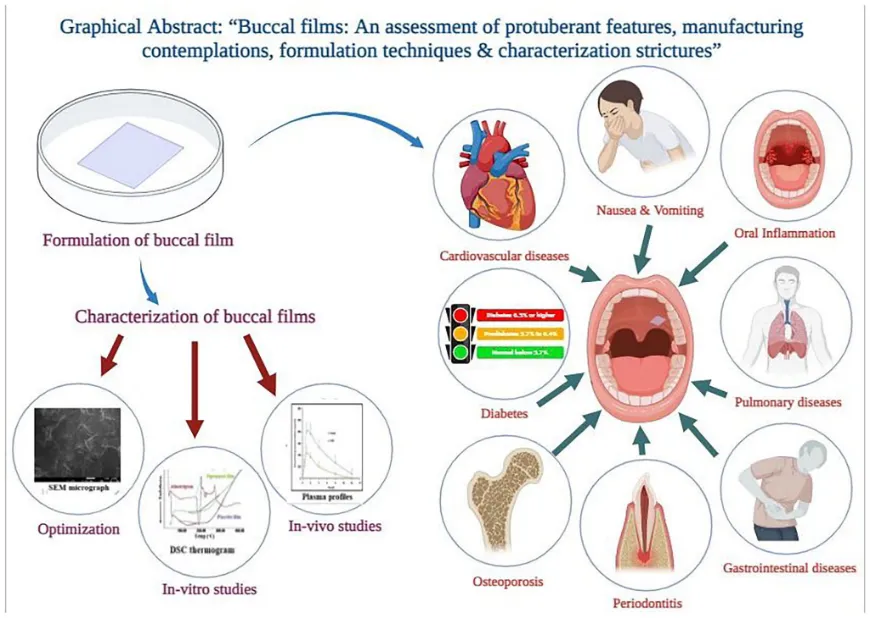
The structural and physiological characteristics of the buccal mucosa further support its suitability as a systemic drug-delivery route. The mucosal membrane consists of a non-keratinized stratified squamous epithelium with relatively high permeability compared with skin, along with an abundant blood supply that facilitates rapid drug absorption. Moreover, the buccal cavity maintains a relatively neutral pH and lower enzymatic activity than the gastrointestinal tract, which helps preserve drug stability during administration. These features collectively enable faster onset of pharmacological action, improved bioavailability, and reduced systemic side effects, making buccal films especially beneficial for drugs requiring precise plasma concentration control. (Boateng et al., 2008; Morales & McConville, 2011)
Recent pharmaceutical investigations increasingly emphasize mucoadhesive buccal films as a promising, non-invasive, and patient-friendly platform for systemic therapy in chronic diseases such as endocrine disorders, cardiovascular conditions, neurological illnesses, and pain management. Advances in polymer science, nanotechnology, and film-forming techniques have enabled the development of multifunctional buccal systems capable of controlled release, enhanced permeation, and improved stability. As research continues to evolve, mucoadhesive buccal delivery is expected to play a crucial role in next-generation drug-delivery design, offering safer, more efficient, and personalized therapeutic options. (Perioli et al., 2007; Siepmann & Siepmann, 2012)
Rationale for Mucoadhesive Buccal Films
Mucoadhesive buccal films are specifically engineered to adhere firmly to the buccal mucosal surface for a prolonged duration, thereby enabling sustained and controlled drug release directly into systemic circulation. This prolonged residence time is a critical factor distinguishing buccal films from conventional oral dosage forms, as it allows continuous diffusion of the drug across the mucosal membrane while reducing the need for frequent dosing. The mucoadhesive behavior primarily results from hydration-induced swelling of hydrophilic polymers, which promotes intimate contact with the mucus layer and facilitates interpenetration of polymer chains with mucin glycoproteins. Such interactions, including hydrogen bonding, van der Waals forces, and mechanical interlocking, collectively enhance adhesion strength and improve drug permeation across the epithelial barrier. (Andrews et al., 2009; Khutoryanskiy, 2011)
Beyond simple adhesion, the controlled-release capability of mucoadhesive buccal films plays a vital role in maintaining consistent plasma drug concentrations over extended periods. Sustained drug delivery minimizes peak-to-trough fluctuations commonly associated with immediate-release oral formulations, thereby improving therapeutic efficacy and reducing dose-related adverse effects. This property is particularly important in chronic conditions requiring long-term pharmacotherapy, where stable systemic exposure is essential for optimal disease control. Furthermore, controlled release from buccal films can be modulated by polymer composition, film thickness, cross-linking density, and incorporation of release-modifying excipients, allowing formulation scientists to tailor drug-release kinetics according to therapeutic requirements. (Andrews et al., 2009; Khutoryanskiy, 2011)
Recent advancements in material science have significantly expanded the functional capabilities of mucoadhesive buccal systems. Bioinspired adhesive polymers modeled on natural adhesion mechanisms, along with nanoparticle-embedded or nanofiber-reinforced films, have demonstrated markedly improved mucoadhesion, permeability enhancement, and drug-loading efficiency compared with traditional polymeric films. These innovations not only enhance bioavailability but also enable protection of labile drug molecules from degradation within the oral environment. Consequently, modern mucoadhesive buccal films are increasingly viewed as multifunctional drug-delivery platforms capable of combining adhesion, controlled release, and permeation enhancement within a single dosage form. (Andrews et al., 2009; Khutoryanskiy, 2011)
The growing body of pharmaceutical research indicates that such advanced buccal delivery technologies hold substantial promise for the long-term management of endocrine, respiratory, cardiovascular, and neurological disorders. By improving drug stability, enhancing systemic absorption, and increasing patient adherence through non-invasive administration, mucoadhesive buccal films may overcome several limitations associated with conventional oral and parenteral therapies. Continued progress in polymer engineering, nanotechnology, and translational clinical research is therefore expected to further strengthen the therapeutic relevance of buccal drug-delivery systems in modern medicine. (Andrews et al., 2009; Khutoryanskiy, 2011)
Advantages Over Conventional Drug Delivery
Compared with traditional oral administration, mucoadhesive buccal films offer several significant pharmacokinetic and therapeutic advantages that contribute to improved clinical outcomes. One of the primary benefits is the avoidance of enzymatic degradation and harsh acidic conditions present in the gastrointestinal tract, which often reduce the stability and bioavailability of many drugs. In addition, buccal delivery bypasses hepatic first-pass metabolism, allowing a greater fraction of the administered dose to reach systemic circulation in an active form. This results in more predictable plasma drug concentrations and reduces variability associated with gastric emptying time, intestinal motility, and metabolic enzyme activity. Consequently, buccal films can achieve therapeutic efficacy at lower doses compared with conventional oral dosage forms. (Boateng et al., 2008; Morales & McConville, 2011)
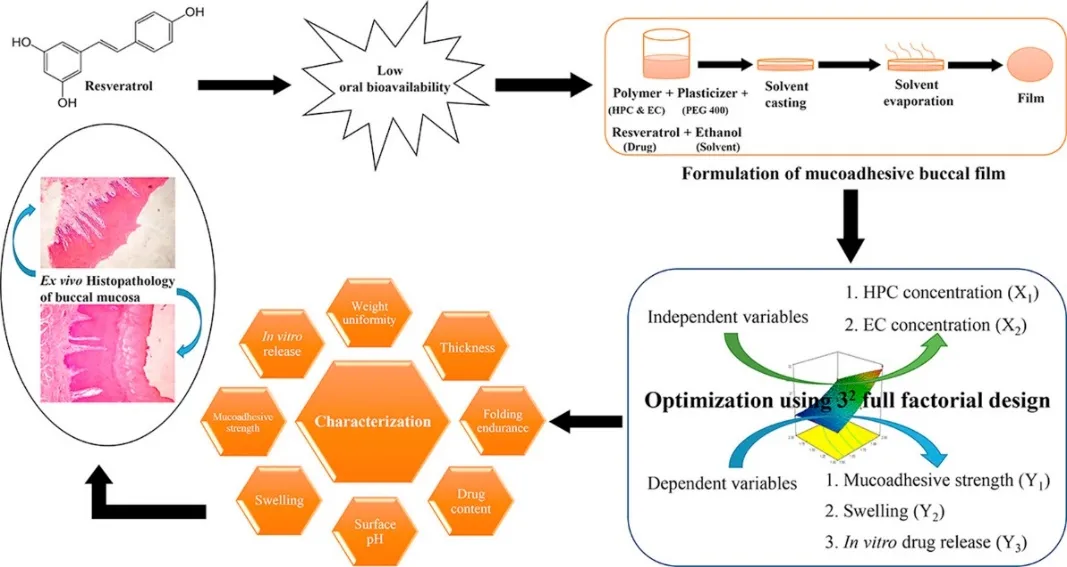
Another important advantage of buccal films is their ability to provide sustained and controlled drug release over an extended period, which minimizes fluctuations in plasma drug levels commonly observed with immediate-release tablets or capsules. Maintaining steady therapeutic concentrations not only enhances treatment effectiveness but also reduces the risk of dose-related systemic adverse effects. This property is particularly beneficial in chronic diseases requiring long-term pharmacotherapy, where consistent drug exposure is essential for disease control. Furthermore, reduced dosing frequency improves medication adherence, especially among elderly patients, pediatric populations, and individuals with swallowing difficulties. (Boateng et al., 2008; Morales & McConville, 2011)
From a patient-centric perspective, buccal films are thin, flexible, non-invasive, and easy to administer without the need for water, making them highly convenient and comfortable during routine use. Their discreet nature enhances patient acceptance and compliance in comparison with injectable or bulky oral dosage forms. Despite these notable advantages, certain limitations still hinder widespread commercialization, including restricted drug-loading capacity for high-dose medications, challenges in effective taste masking of bitter drugs, potential irritation of the oral mucosa, and concerns regarding long-term physicochemical stability during storage. Addressing these challenges through advanced formulation strategies and novel polymer technologies remains an important focus of ongoing pharmaceutical research. (Boateng et al., 2008; Morales & McConville, 2011)
Formulation Components of Buccal Films
The successful development of mucoadhesive buccal films relies heavily on the careful selection and optimization of formulation components, including film-forming polymers, plasticizers, permeation enhancers, stabilizers, and other functional excipients. Film-forming polymers constitute the structural backbone of the buccal film and play a decisive role in determining mechanical strength, swelling behavior, mucoadhesive properties, and drug-release kinetics. Hydrophilic polymers such as hydroxypropyl methylcellulose, carbopol, sodium carboxymethylcellulose, and polyvinyl alcohol are widely used due to their excellent film-forming ability, biocompatibility, and capacity to interact with mucin through hydrogen bonding and chain entanglement. These interactions promote strong adhesion to the buccal mucosa and facilitate controlled diffusion of the incorporated drug. (Perioli et al., 2007; Cilurzo et al., 2008)
Plasticizers are another essential component, as they improve the flexibility, elasticity, and handling characteristics of the film while preventing brittleness and cracking during storage or application. Commonly employed plasticizers such as glycerol, polyethylene glycol, and propylene glycol function by reducing intermolecular forces between polymer chains, thereby enhancing film pliability and mechanical stability. The concentration of plasticizer must be carefully optimized, since insufficient amounts lead to fragile films, whereas excessive levels may cause stickiness, reduced mucoadhesion, or altered drug-release behavior. (Perioli et al., 2007; Cilurzo et al., 2008)
Permeation enhancers are incorporated to facilitate efficient transport of drug molecules across the buccal epithelium, which naturally acts as a protective barrier limiting drug absorption. These agents temporarily modify membrane permeability through mechanisms such as lipid fluidization, protein interaction, or opening of intercellular tight junctions, thereby improving transmucosal drug flux. In recent years, advanced approaches including nanocarrier incorporation, solid dispersions, and lipid-based delivery systems have been explored to further enhance drug solubility, stability, and absorption within the buccal environment. Such innovations contribute to the development of more efficient and reliable buccal drug-delivery platforms capable of meeting modern therapeutic requirements. (Perioli et al., 2007; Cilurzo et al., 2008)
Manufacturing Techniques
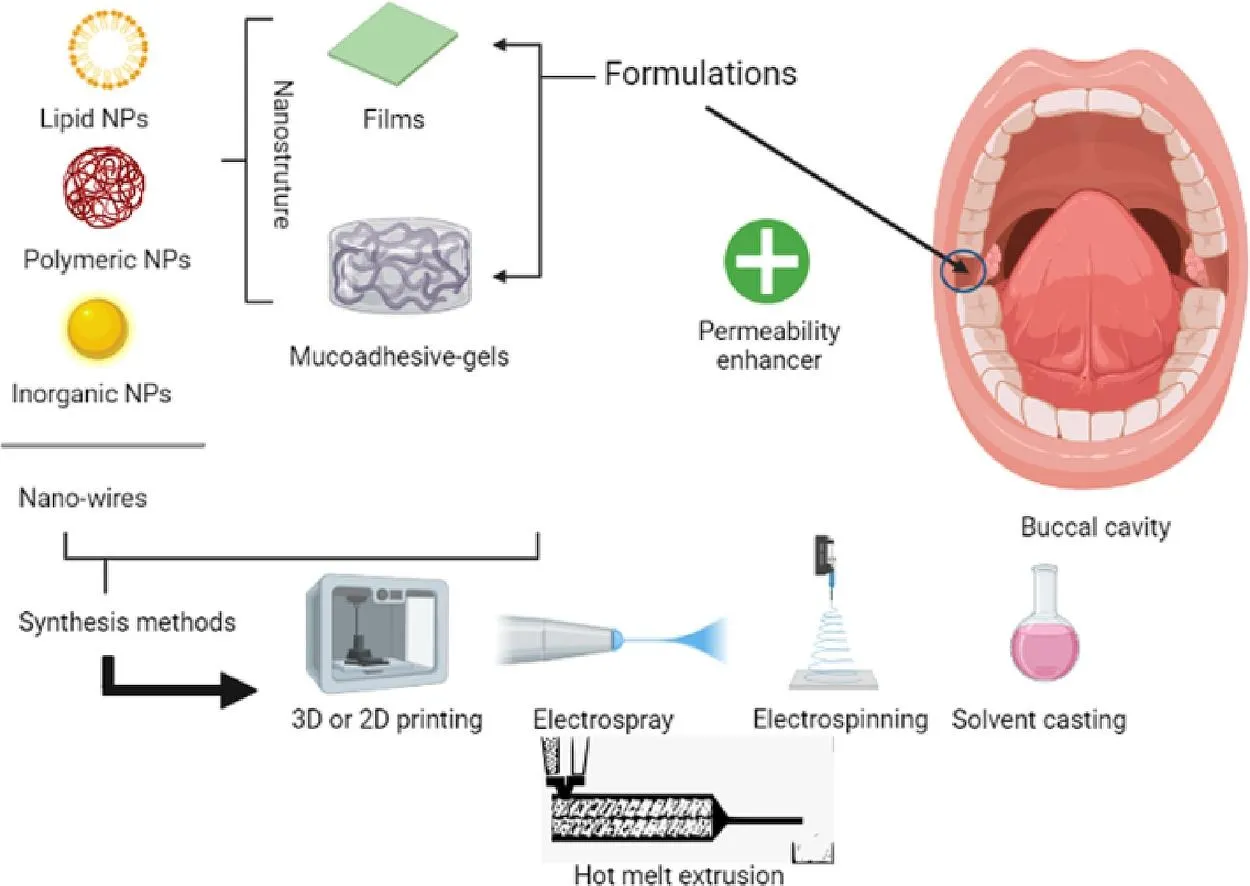
A variety of manufacturing techniques are available for the preparation of mucoadhesive buccal films, each offering specific advantages in terms of film uniformity, scalability, drug stability, and production efficiency. Commonly employed methods include solvent casting, hot-melt extrusion, semisolid casting, inkjet printing, and three-dimensional printing. Among these, solvent casting remains the most widely used and extensively studied technique because of its simplicity, cost-effectiveness, and ability to produce smooth, transparent films with uniform thickness and homogeneous drug distribution. This method is particularly suitable for thermolabile drugs since it avoids exposure to high temperatures during processing. (Kumar et al., 2013; Bala et al., 2013)
In the solvent-casting method, selected polymers are dissolved in an appropriate volatile solvent to form a clear viscous solution, followed by incorporation of the active pharmaceutical ingredient, plasticizer, and other excipients under continuous stirring to ensure uniform dispersion. The resulting solution is then poured or cast into flat molds or petri dishes and subjected to controlled drying conditions to allow gradual solvent evaporation and formation of a thin polymeric film. After complete drying, the film is carefully peeled off and cut into आकार-specific units containing an accurate drug dose. Critical formulation variables such as polymer concentration, plasticizer ratio, drying temperature, and casting thickness must be precisely optimized to achieve desirable mechanical strength, flexibility, surface smoothness, and moisture balance necessary for patient comfort and consistent therapeutic performance. (Kumar et al., 2013; Bala et al., 2013)
Alternative techniques such as hot-melt extrusion eliminate the need for solvents and are advantageous for large-scale industrial production; however, they may not be suitable for heat-sensitive drugs. Emerging technologies including inkjet printing and three-dimensional printing enable precise control over drug loading, multilayer film design, and personalized dosing, representing significant advancements in buccal drug-delivery manufacturing. Continued innovation in fabrication technologies is expected to enhance reproducibility, scalability, and commercial feasibility of mucoadhesive buccal films in the pharmaceutical industry. (Kumar et al., 2013; Bala et al., 2013)
Evaluation Parameters
Comprehensive evaluation of mucoadhesive buccal films is essential to ensure their physicochemical stability, mechanical integrity, safety, and therapeutic effectiveness. Physicochemical characterization typically includes measurement of thickness uniformity, weight variation, surface pH, moisture content, and swelling index, all of which influence drug release behavior, mucoadhesion, and patient comfort. Uniform thickness and weight confirm dose accuracy, while an appropriate surface pH close to that of saliva minimizes irritation to the buccal mucosa. Moisture content and swelling behavior are particularly important because excessive hydration may weaken the film structure, whereas insufficient swelling can reduce mucoadhesion and drug diffusion. (Semalty et al., 2008; Nafee et al., 2003)
Mechanical properties such as folding endurance, tensile strength, and percentage elongation are evaluated to determine the film’s resistance to breaking, cracking, or deformation during handling and application. Adequate mechanical strength ensures that the film can withstand stresses encountered during packaging, storage, and placement in the buccal cavity without compromising integrity. In addition, drug-polymer compatibility studies are performed using analytical techniques such as Fourier transform infrared spectroscopy, differential scanning calorimetry, and X-ray diffraction to confirm the absence of chemical interactions that could affect drug stability or release characteristics. (Semalty et al., 2008; Nafee et al., 2003)
In-vitro drug-release studies are conducted using suitable dissolution media to determine release kinetics, mechanism of diffusion, and duration of sustained drug delivery. Mathematical modeling helps identify whether the release follows zero-order, first-order, Higuchi, or Korsmeyer–Peppas kinetics. Furthermore, ex-vivo permeation studies using animal buccal mucosa provide valuable insight into the extent and rate of drug transport across the mucosal membrane, thereby predicting potential systemic absorption in vivo. Collectively, these evaluation parameters form a critical quality-assessment framework that ensures the developed mucoadhesive buccal film is safe, stable, and therapeutically effective for clinical application. (Semalty et al., 2008; Nafee et al., 2003)
Therapeutic Relevance to Goiter Treatment
Management of goiter commonly necessitates long-term thyroid hormone replacement therapy aimed at restoring normal metabolic activity and preventing further thyroid enlargement. Achieving and maintaining consistent plasma hormone concentrations is crucial for effective disease control, as fluctuations in hormone levels may lead to persistent symptoms, metabolic imbalance, or progression of thyroid dysfunction. Liothyroxine, a synthetic form of triiodothyronine (T3), provides rapid onset of hormonal action and is particularly useful in conditions requiring prompt correction of hypothyroid states. However, conventional oral administration of thyroid hormones is often associated with variable absorption, gastrointestinal degradation, and the influence of food or drug interactions, which may compromise therapeutic reliability. (Braverman & Cooper, 2012)
In addition to endocrine imbalance, enlarged thyroid tissue in goiter may exert mechanical pressure on surrounding anatomical structures, including the trachea and upper airway, leading to respiratory discomfort, cough, or breathing difficulty in certain patients. Formoterol, a long-acting β₂-adrenergic agonist, possesses bronchodilatory activity that can help alleviate airway resistance and improve respiratory comfort. Incorporating both liothyroxine and formoterol into a single mucoadhesive buccal film offers a synergistic therapeutic approach by simultaneously addressing hormonal deficiency and respiratory symptoms associated with thyroid enlargement. Such combination therapy may enhance overall patient outcomes while simplifying the treatment regimen. (Rang et al., 2016)
Delivery of these drugs through a mucoadhesive buccal film provides several pharmacokinetic and clinical advantages over conventional dosage forms. Buccal administration bypasses hepatic first-pass metabolism and reduces gastrointestinal degradation, thereby improving systemic bioavailability and ensuring more predictable drug absorption. Sustained drug release from the mucoadhesive matrix can maintain steady therapeutic plasma concentrations for extended durations, reducing dosing frequency and enhancing patient adherence during chronic therapy. Furthermore, localized administration within the oral cavity may minimize gastrointestinal side effects and improve tolerability. Collectively, these benefits highlight the potential of a dual-drug mucoadhesive buccal system as a novel, patient-friendly, and clinically meaningful strategy for comprehensive management of goiter and related complications. (Braverman & Cooper, 2012; Rang et al., 2016)
FUTURE PERSPECTIVES
Rapid advancements in pharmaceutical technology are expected to significantly transform the design and performance of mucoadhesive buccal drug-delivery systems in the coming years. Emerging approaches involving nanotechnology-based carriers—such as nanoparticles, nanofibers, and lipid-based vesicular systems—offer improved drug solubility, protection from degradation, and enhanced permeation across the buccal mucosa. Simultaneously, the development of smart bioresponsive polymers capable of responding to physiological stimuli such as pH, temperature, or enzymatic activity may enable site-specific and controlled drug release tailored to individual patient needs. These innovations collectively support the evolution of buccal films from simple delivery matrices to multifunctional therapeutic platforms. (Khutoryanskiy, 2011)
Another promising direction involves the fabrication of multilayered, compartmentalized, or personalized buccal films using advanced manufacturing technologies such as three-dimensional printing and precision casting. Such systems can be engineered to provide immediate release of one drug alongside sustained release of another, thereby optimizing combination therapy for complex chronic conditions like goiter. Personalized dosing strategies based on patient-specific physiological or pharmacokinetic parameters may further enhance therapeutic effectiveness while minimizing adverse effects. Continued integration of material science, biomedical engineering, and clinical pharmacology will be essential to realize these next-generation delivery systems. (Siepmann & Siepmann, 2012)
Despite promising laboratory-scale outcomes, successful clinical translation and commercialization of mucoadhesive buccal films will require rigorous evaluation of long-term safety, stability, large-scale manufacturing feasibility, and regulatory acceptance. Well-designed clinical trials are necessary to confirm therapeutic superiority over conventional formulations and to establish standardized quality-control parameters. With sustained research efforts and technological innovation, mucoadhesive buccal films hold substantial potential to emerge as a mainstream, non-invasive delivery platform for hormones and other therapeutics used in chronic systemic diseases, including goiter. (Khutoryanskiy, 2011; Siepmann & Siepmann, 2012)
REFERENCES


Nitish Kumar, Arti Kori, Dr. Shivanand Patil, Formulation And Evaluation of Mucoadhesive Buccal Film of Liothyroxine and Formoterol for Goiter, Int. J. of Pharm. Sci., 2026, Vol 4, Issue 8, 951-960, https://doi.org/10.5281/zenodo.21820767
 10.5281/zenodo.21820767