

We use cookies to ensure our website works properly and to personalise your experience. Cookies policy
Department of Pharmacy Practice, Channabasweshwar College of Pharmacy, Latur, Maharashtra, India.
Breast cancer is one of the most frequently diagnosed cancers among women worldwide and remains a major public health concern despite continuous advances in diagnosis and treatment. Patients often show considerable variation in their response to anticancer drugs because of differences in their genetic makeup. Pharmacogenomics, which studies the influence of genetic variations on drug response, has become an essential component of personalized medicine. It helps clinicians select the most appropriate therapy, optimize drug dosage, and reduce the risk of adverse drug reactions. In breast cancer, genetic biomarkers such as BRCA1, BRCA2, HER2 (ERBB2), CYP2D6, PIK3CA, ESR1, and DPYD play an important role in guiding treatment decisions. These biomarkers support the use of targeted therapy, endocrine therapy, chemotherapy, and immunotherapy according to the molecular characteristics of individual patients. Pharmacogenomic-guided treatment improves therapeutic outcomes, minimizes toxicity, and enhances the quality of life. This review highlights the principles of pharmacogenomics, major genetic biomarkers, their clinical applications in breast cancer therapy, current challenges, and future perspectives in precision oncology [1–8].
Breast cancer is the most common malignancy among women and is one of the leading causes of cancer-related deaths worldwide. According to recent global cancer statistics, millions of new cases are diagnosed each year, making breast cancer a major healthcare challenge [1–3]. Improvements in screening programs, imaging techniques, surgery, chemotherapy, endocrine therapy, and targeted therapy have significantly increased survival rates. However, many patients still experience disease recurrence, drug resistance, or severe treatment-related toxicity [4–6].
Traditionally, patients with similar clinical features received similar treatment regimens. Clinical experience has shown that the effectiveness and safety of these therapies vary considerably among individuals. Some patients achieve an excellent response, whereas others develop resistance or serious adverse effects. These differences are largely influenced by inherited and acquired genetic variations that affect drug metabolism and tumor biology [7–10].
Pharmacogenomics integrates pharmacology with genomics to understand how genetic differences influence drug efficacy, metabolism, and toxicity. By identifying clinically relevant genetic biomarkers before treatment, healthcare professionals can select the most suitable therapy for each patient. This personalized approach has become an important component of precision medicine and is increasingly incorporated into breast cancer management [7,8].
Several genes, including BRCA1, BRCA2, HER2 (ERBB2), CYP2D6, PIK3CA, ESR1, and DPYD, have demonstrated significant clinical value in predicting treatment response, identifying drug toxicity, and selecting targeted therapies. As genomic technologies continue to advance, pharmacogenomics is expected to further improve treatment outcomes and patient survival [11–20].
Pharmacogenomics: An Overview
Pharmacogenomics is the study of how genetic variations influence an individual’s response to medications. Its primary objective is to provide the right drug, at the right dose, for the right patient, thereby maximizing therapeutic benefit while reducing adverse drug reactions [7–10].
Genetic differences affect both pharmacokinetics and pharmacodynamics. Pharmacokinetics involves the absorption, distribution, metabolism, and excretion of drugs, whereas pharmacodynamics refers to the interaction of drugs with their biological targets. Variations in genes encoding drug-metabolizing enzymes, transport proteins, and receptors may alter drug effectiveness and safety [8,9].
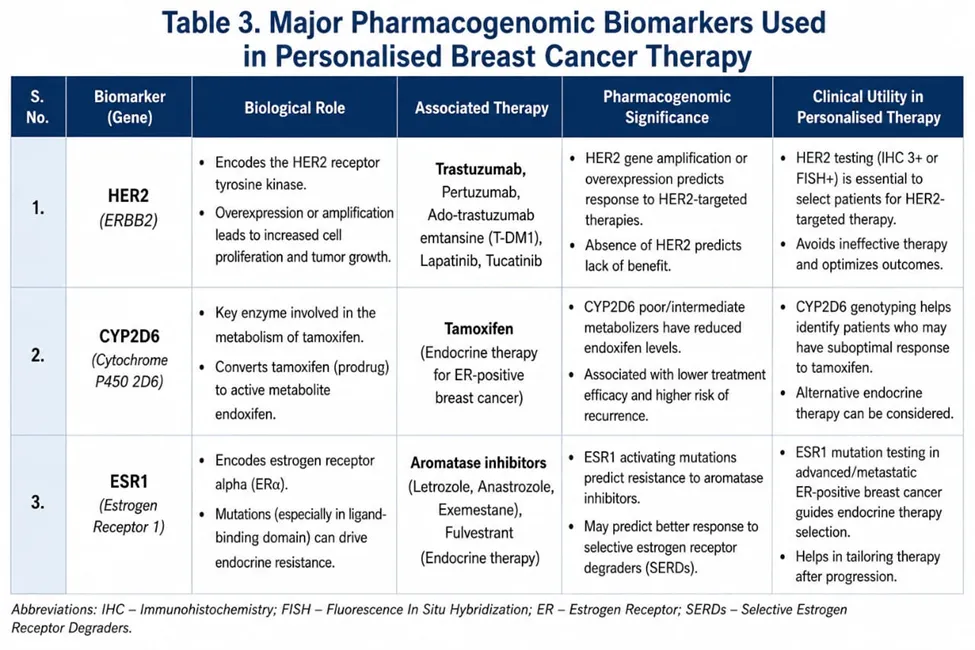
A well-known example in breast cancer is the CYP2D6 gene. Tamoxifen is administered as a prodrug and requires metabolic activation by the CYP2D6 enzyme to form its active metabolite, endoxifen. Patients carrying reduced-function CYP2D6 variants produce lower endoxifen concentrations, which may reduce the effectiveness of tamoxifen therapy [11–13].
With advances in genomic sequencing and molecular diagnostics, pharmacogenomics has become an essential component of precision oncology. It enables clinicians to personalize treatment strategies according to each patient’s genetic profile, improving treatment outcomes while minimizing unnecessary toxicity and healthcare costs [7,8].
Breast Cancer
Breast cancer develops when normal breast cells acquire genetic alterations that result in uncontrolled cell growth and tumor formation. Most breast cancers arise from the epithelial cells lining the milk ducts (ductal carcinoma), while a smaller proportion originates from the milk-producing lobules (lobular carcinoma) [1,25,26].
Breast cancer is a heterogeneous disease and is classified according to the expression of hormone receptors and HER2 status. Molecular classification plays an important role in selecting appropriate treatment and predicting prognosis.
Risk Factors
The major risk factors associated with breast cancer include:
Molecular Classification of Breast Cancer
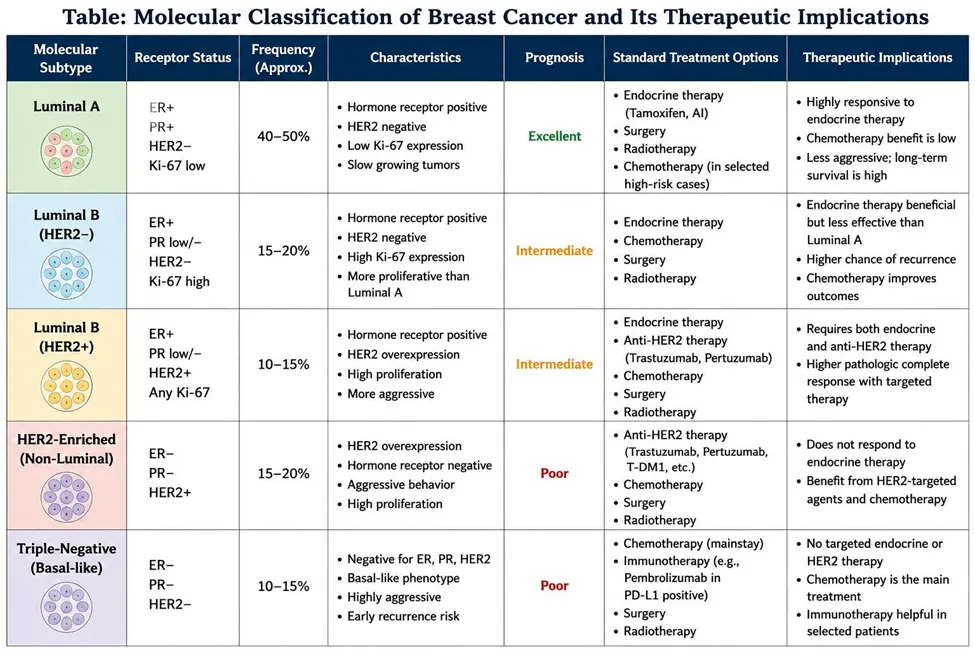
Table 1. Molecular classification of breast cancer and its therapeutic implications [4–6,25,26].
Breast cancer develops as a result of inherited or acquired genetic alterations that disrupt normal cell growth, DNA repair, and cell-cycle regulation. These genetic changes not only contribute to cancer development but also influence treatment response and prognosis. Identification of specific genetic biomarkers has become an essential part of precision medicine because it helps clinicians select the most effective therapy for individual patients [7–10].
4.1 BRCA1 and BRCA2
BRCA1 and BRCA2 are tumor suppressor genes involved in repairing damaged DNA through homologous recombination. Germline mutations in these genes significantly increase the lifetime risk of breast and ovarian cancer. Patients carrying BRCA mutations are more likely to benefit from PARP inhibitors, such as olaparib and talazoparib, which selectively target cancer cells with defective DNA repair mechanisms [18,19].
4.2 HER2 (ERBB2)
The HER2 (ERBB2) gene encodes a receptor involved in cell growth and proliferation. Amplification or overexpression of HER2 occurs in approximately 15–20% of breast cancers and is associated with aggressive disease. Patients with HER2-positive tumors respond well to HER2-targeted therapies such as trastuzumab, pertuzumab, trastuzumab emtansine (T-DM1), and trastuzumab deruxtecan [15–17].
4.3 PIK3CA
The PIK3CA gene encodes a catalytic subunit of phosphatidylinositol-3 kinase (PI3K). Mutations in this gene activate the PI3K/AKT signaling pathway, promoting tumor growth and survival. Patients with hormone receptor-positive, HER2-negative advanced breast cancer carrying PIK3CA mutations may benefit from the PI3K inhibitor alpelisib [20].
4.4 ESR1
The ESR1 gene encodes the estrogen receptor alpha. Mutations in ESR1 are commonly observed in metastatic breast cancer after prolonged endocrine therapy and are associated with resistance to aromatase inhibitors. Such patients may respond better to selective estrogen receptor degraders like fulvestrant [21–24].
4.5 CYP2D6
The CYP2D6 enzyme is responsible for converting tamoxifen into its active metabolite, endoxifen. Individuals with reduced CYP2D6 activity produce lower endoxifen concentrations, which may decrease the therapeutic effectiveness of tamoxifen. Pharmacogenomic testing can help identify patients who may require alternative endocrine therapy [11–13].
5. Pharmacogenomics in Breast Cancer Therapy
5.1 Role of Pharmacogenomics
Pharmacogenomics has transformed breast cancer management by enabling treatment to be tailored according to an individual’s genetic profile. Instead of using the same treatment for all patients, clinicians can now select therapies based on genetic biomarkers that predict drug response, toxicity, and resistance. This personalized approach improves treatment effectiveness while minimizing unnecessary adverse effects [7,8].
The major objectives of pharmacogenomics are to:
5.2 Pharmacogenomics of Hormonal Therapy
Hormonal therapy is the standard treatment for hormone receptor-positive breast cancer.
Tamoxifen
Tamoxifen is a selective estrogen receptor modulator (SERM) used in estrogen receptor-positive breast cancer. Since it is a prodrug, it requires activation by the CYP2D6 enzyme to form endoxifen, its active metabolite. Patients with reduced CYP2D6 activity may have lower endoxifen levels and a poorer response to treatment. Therefore, CYP2D6 genotyping may assist in selecting the most appropriate endocrine therapy [11–13].
Aromatase Inhibitors
Drugs such as anastrozole, letrozole, and exemestane reduce estrogen synthesis in postmenopausal women. Although variations in the CYP19A1 gene may influence treatment response, routine pharmacogenomic testing is not currently recommended [21–24].
Fulvestrant
Fulvestrant is a selective estrogen receptor degrader that blocks and degrades estrogen receptors. It is particularly useful in patients with ESR1 mutations who develop resistance to conventional endocrine therapy [21–24].
5.3 Pharmacogenomics of Chemotherapy
Despite the availability of targeted therapies, chemotherapy remains an important treatment option for many breast cancer patients. Genetic variations can influence both treatment response and toxicity.
DPYD and Fluoropyrimidines
The DPYD gene encodes dihydropyrimidine dehydrogenase (DPD), the enzyme responsible for metabolizing fluoropyrimidines such as 5-fluorouracil and capecitabine. Patients with reduced DPD activity are at increased risk of severe toxicity, including diarrhea, mucositis, neutropenia, and bone marrow suppression. DPYD testing before treatment helps clinicians adjust drug dosage or select alternative therapy [14].
Anthracyclines
Anthracyclines such as doxorubicin and epirubicin are widely used in breast cancer treatment. Genetic factors may influence treatment response and susceptibility to cardiotoxicity, although routine pharmacogenomic testing has not yet become standard clinical practice [25,26].
Taxanes
Paclitaxel and docetaxel inhibit cell division by stabilizing microtubules. Genetic variations in ABCB1, CYP2C8, and CYP3A4 may affect drug metabolism and toxicity; however, their routine clinical use requires further evidence [25,26].
5.4 Pharmacogenomics of Targeted Therapy
Targeted therapy has significantly improved the management of breast cancer by specifically acting on molecular abnormalities present in tumor cells. Pharmacogenomic testing helps identify patients who are most likely to benefit from these therapies, leading to better treatment outcomes and fewer unnecessary side effects [15–20].
HER2-Targeted Therapy
HER2-positive breast cancer is characterized by overexpression of the HER2 receptor, resulting in rapid tumor growth. Patients with HER2-positive tumors respond well to targeted agents such as trastuzumab, pertuzumab, trastuzumab emtansine (T-DM1), and trastuzumab deruxtecan. Therefore, HER2 testing is mandatory before initiating these treatments [15–17].
PARP Inhibitors
Patients carrying BRCA1 or BRCA2 mutations have impaired DNA repair mechanisms. PARP inhibitors, including olaparib and talazoparib, block an alternative DNA repair pathway, causing selective death of BRCA-mutated cancer cells while sparing normal cells [18,19].
PI3K Inhibitors
Mutations in the PIK3CA gene activate the PI3K signaling pathway, promoting tumor growth. The PI3K inhibitor alpelisib, combined with endocrine therapy, has shown improved outcomes in patients with hormone receptor-positive, HER2-negative advanced breast cancer carrying PIK3CA mutations [20].
5.5 Pharmacogenomics of Immunotherapy
Immunotherapy has emerged as a promising treatment option, particularly for triple-negative breast cancer (TNBC). The immune checkpoint inhibitor pembrolizumab is recommended for selected patients with PD-L1-positive tumors. Biomarkers such as PD-L1 expression, tumor mutational burden (TMB), and microsatellite instability (MSI) may help predict the likelihood of response to immunotherapy and support personalized treatment decisions [25,26].
6. Clinical Applications of Pharmacogenomics
Table 2. Major pharmacogenomic biomarkers used in personalized breast cancer therapy.
7. Advantages of Pharmacogenomics
8. Limitations and Challenges
9. FUTURE PERSPECTIVES
CONCLUSION
Pharmacogenomics has transformed the management of breast cancer by enabling treatment strategies that are tailored to each patient’s genetic profile. Genetic biomarkers such as BRCA1, BRCA2, HER2, CYP2D6, PIK3CA, ESR1, and DPYD play a vital role in predicting treatment response, minimizing drug toxicity, and guiding the selection of targeted and endocrine therapies. Personalized treatment has improved clinical outcomes, reduced unnecessary adverse effects, and enhanced patients’ quality of life.
Although challenges such as high testing costs, limited accessibility, and ethical concerns remain, continuous advances in genomic technologies are making pharmacogenomic testing more practical and widely available. In the future, integration of pharmacogenomics with artificial intelligence, comprehensive genomic profiling, and precision oncology is expected to further improve individualized breast cancer care and establish personalized medicine as the standard approach to treatment [7–26].
REFERENCES
Waks AG, Winer EP. Breast cancer treatment: A review. JAMA. 2019;321(3):288–300


Shaikh Sadiya, Savidhan Kamble, Vaishnavi Jadhav, Dr. Prajakta Kelgaonkar, Pharmacogenomics in Breast Cancer Therapy: A Review, Int. J. of Pharm. Sci., 2026, Vol 4, Issue 8, 932-939, https://doi.org/10.5281/zenodo.21820507
 10.5281/zenodo.21820507