

We use cookies to ensure our website works properly and to personalise your experience. Cookies policy
Kamalakshi Pandurangan College of Pharmacy, Ayyampalayam, Tiruvannamalai 60603, Tamilnadu, India.
This article provides a comprehensive overview of Glimepiride, a potent, third-generation sulfonylurea widely prescribed for the management of Type 2 Diabetes Mellitus (T2DM). Glimepiride exerts its therapeutic effect primarily by binding to the sulfonylurea receptor 1 (SUR1) subunits on pancreatic beta cells, thereby blocking ATP-sensitive potassium (K_{ATP}) channels, triggering cell depolarization, and stimulating calcium influx to enhance glucose-dependent insulin secretion. Beyond its primary pancreatic action, the drug exhibits significant extra pancreatic benefits, including improving peripheral insulin sensitivity via glucose transporter (GLUT4) translocation and displaying a lower risk of prolonged hypoglycaemia and weight gain compared to traditional sulfonylureas. This paper delves into the drug's pharmacokinetic profile, highlighting its rapid gastrointestinal absorption, high bioavailability, and hepatic metabolism via the CYP2C9 enzyme, alongside its clinical efficacy both as a monotherapy and in combination with other oral hypoglycemic agents like metformin. Furthermore, the article addresses crucial clinical considerations, including safety profiles, cardiovascular outcomes, and the management of secondary failure, ultimately reinforcing Glimepiride’s enduring role as a cost-effective, frontline cornerstone in individualized glycemic control strategies.
Glimepiride stands as a highly potent, third-generation oral sulfonylurea that has long served as a cornerstone in the pharmacological management of Type 2 Diabetes Mellitus (T2DM). Introduced to overcome the limitations of earlier-generation antidiabetic agents, this medium-to-long-acting insulin secretagogue primarily exerts its therapeutic effect by binding to specific sulfonylurea receptors on pancreatic beta cells, leading to the closure of ATP-sensitive potassium (K_{ATP}) channels and a subsequent glucose-dependent stimulation of insulin secretion. Beyond its pancreatic efficacy, Glimepiride is distinguished by significant extra pancreatic actions, including the upregulation of glucose transporter proteins (GLUT4) to enhance peripheral insulin sensitivity, while maintaining a lower risk of severe prolonged hypoglycemia and weight gain compared to traditional sulfonylureas. As global T2DM prevalence continues to surge, optimizing glycemic control remains vital to preventing devastating microvascular and macrovascular complications, making Glimepiride a highly reliable, cost-effective, and versatile option both as a first-line monotherapy and in combination with other oral hypoglycemic agents like metformin.
2.HISTORICAL BACKGROUND
The historical evolution of Glimepiride is deeply rooted in the mid-20th-century discovery of sulfonylureas, which began when French researcher Marcel Janbon noticed the hypoglycemic side effects of synthetic sulfonamide antibiotics in 1942. This accidental breakthrough led to the development of first-generation sulfonylureas like tolbutamide in the 1950s, followed by more potent second-generation agents like glibenclamide (glyburide) and glipizide in the 1970s and 1980s. Recognizing the persistent clinical challenges of these earlier agents—specifically their high propensity for causing severe, prolonged hypoglycemia and significant weight gain due to continuous insulin secretion—pharmaceutical researchers at Hoechst AG (later becoming Hoechst Marion Roussel, and subsequently Aventis/Sanofi) initiated chemical modifications to create a safer, more receptor-specific compound. This intensive research culminated in the synthesis of Glimepiride, classified as a novel, third-generation sulfonylurea engineered to exhibit faster receptor association and dissociation kinetics. Following rigorous preclinical and clinical trials that demonstrated its distinct pancreatic and extrapancreatic advantages, Glimepiride received formal approval from the United States Food and Drug Administration (FDA) in December 1995 under the brand name Amaryl, quickly establishing itself as a global therapeutic standard and a highly cost-effective mainstay in individualized Type 2 Diabetes management.
3.CHEMICAL STRUCTURE AND PHYSIOCHEMICAL PROPERTIES
1-[[p-[2-(3-ethyl-4-methyl-2-oxo-3-pyrroline-1-carboxamido)ethyl]phenyl]sulfonyl]-3-(trans-4-methylcyclohexyl)urea, Glimepiride is a structurally unique, high-molecular-weight third-generation sulfonylurea with the molecular formula C_{24}H_{34}N_{4}O_{5}S and a molecular mass of 490.62 \text{ g/mol}. Its complex chemical architecture is characterized by a central sulfonylurea core—consisting of a sulfonyl group (\text{-SO}_2\text{-}) linked to a urea moiety (\text{-NH-CO-NH-})—which is heavily substituted to optimize its pharmacodynamics. Specifically, one end of the core features a lipophilic trans-4-methylcyclohexyl ring that enhances its unique binding affinity to the 1 \times 10^5 \text{ Da} subunit of the pancreatic beta-cell receptor, while the opposing end is extended by an ethyl-phenyl spacer attached to a 3-ethyl-4-methyl-2-oxo-3-pyrroline-1-carboxamide heterocyclic system. In terms of physical appearance, Glimepiride is a white to practically white, odourless, crystalline powder that demonstrates a high melting point range between 207^\circ\text{C} and 209^\circ\text{C}, indicating a stable crystalline lattice structure. Classified under the Biopharmaceutics Classification System (BCS) as a Class II drug, it exhibits low solubility and high permeability; it is practically insoluble in water and acidic aqueous buffers, sparingly soluble in dichloromethane, and slightly soluble in methanol and ethanol. The compound has an acidic dissociation constant (pK_a) of approximately 6.2, meaning its solubility increases slightly in alkaline environments, which significantly influences its dissolution rate and formulation development in solid oral dosage forms.
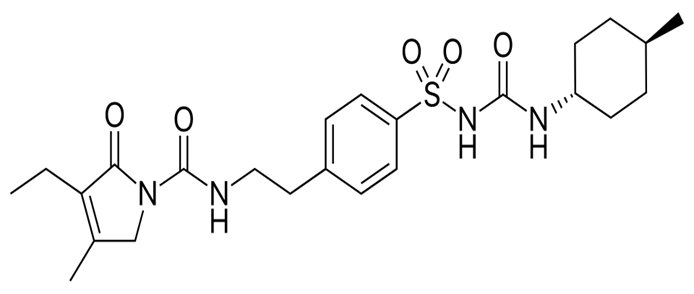
FIG NO.1 STRUCTURE OF GLIMIPRIDE
4.CLASSIFICATION
Pharmacologically and therapeutically, Glimepiride is classified as a potent oral hypoglycemic agent belonging to the sulfonylurea class, specifically categorized as a third-generation sulfonylurea. While it shares the primary mechanism of action with older generations, it is strictly distinguished as a third-generation agent due to its unique chemical modifications that provide distinct pancreatic and extrapancreatic advantages, faster receptor binding kinetics, and a significantly lower risk of prolonged hypoglycemia. Under the Anatomical Therapeutic Chemical (ATC) classification system developed by the World Health Organization (WHO), Glimepiride is assigned the code A10BB12, placing it under the hierarchy of Alimentary Tract and Metabolism (A), Drugs Used in Diabetes (A10), Blood Glucose Lowering Drugs, excl. Insulins (A10B), and Sulfonylureas (A10BB). From a biopharmaceutical standpoint, according to the Biopharmaceutics Classification System (BCS), Glimepiride is categorized as a Class II drug, which denotes that it possesses low solubility and high permeability. This means its therapeutic absorption rate is fundamentally dissolution-limited within the gastrointestinal tract. Furthermore, based on its physiological function, it is classified as an insulin secretagogue because it directly stimulates pancreatic beta-cells to secrete insulin, and it can also be classified as a secondary insulin sensitizer due to its ability to upregulate peripheral GLUT4 transporter activity independently of insulin levels.
5.MECHANISM OF ACTION
At the molecular level, Glimepiride functions as a highly efficient oral insulin secretagogue by targeting the ATP-sensitive potassium (K_{ATP}) channels located on the plasma membrane of pancreatic beta cells. Unlike traditional second-generation sulfonylureas, Glimepiride binds specifically to a distinct 1 \times 10^5 \text{ Da} regulatory subunit of the sulfonylurea receptor-1 (SUR1) complex rather than the standard 1.4 \times 10^5 \text{ Da} subunit, allowing for significantly faster association and dissociation kinetics. This specific binding blocks and closes the K_{ATP} channels, preventing the outward efflux of potassium ions (K^+) and leading to an accumulation of positive charge inside the cell, which induces membrane depolarization. This electrical shift triggers the opening of voltage-gated L-type calcium channels, prompting a rapid influx of extracellular calcium (Ca^{2+}) into the cytosol, which directly activates the micro filamentous system to drive the exocytosis and release of pre-stored insulin granules into the portal circulation in a glucose-dependent manner. Crucially, Glimepiride also exerts potent extra pancreatic or insulin-sensitizing actions; it mimics insulin signaling by stimulating glycosyl-phosphatidylinositol-specific phospholipase C (GPI-PLC), which upregulates the translocation of glucose transporter-4 (GLUT4) isoforms in skeletal muscle and adipose tissues, thereby enhancing peripheral glucose uptake and reducing hepatic glucose output independently of active insulin secretion.
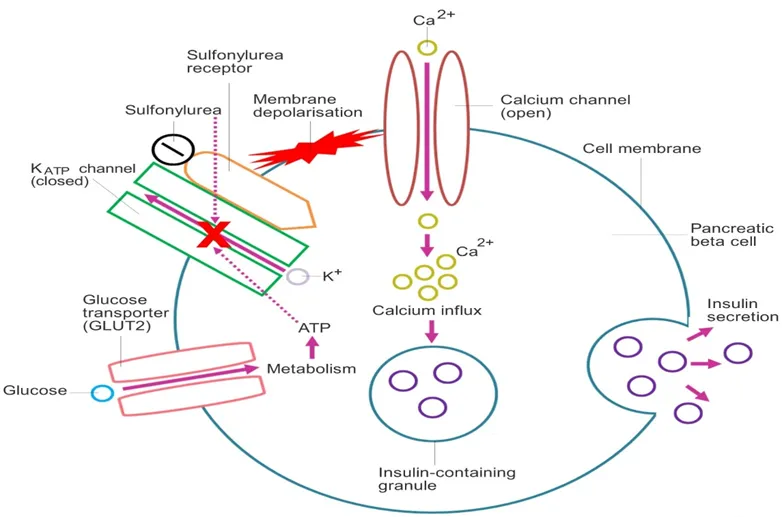
FIG.NO.2 MECHANISM OF GLIMIPRIDE
6. PHARMACOKINETIC
The pharmacokinetic profile of Glimepiride is characterized by excellent oral bioavailability, highly predictable plasma kinetics, and metabolic pathways that support a convenient once-daily dosing regimen. Following oral administration, Glimepiride exhibits complete (100\%) gastrointestinal absorption, with peak plasma concentrations (C_{max}) consistently achieved within 2 to 3 hours. When administered with food, there is a slight increase in the time to reach maximum concentration (T_{max}), though the overall extent of absorption (AUC) remains unaffected. Within the circulatory system, the drug displays a relatively low volume of distribution (V_d \approx. 8.8 \text{ Liters}) and is exceptionally bound to plasma proteins, primarily albumin, at a rate exceeding 99.5\%, which minimizes its tissue displacement risk. Glimepiride undergoes extensive hepatic biotransformation via the cytochrome P450 enzyme system, driven predominantly by the CYP2C9 isoenzyme. This metabolic process transforms the parent drug into two primary metabolites: the cyclohexyl-hydroxymethyl derivative (M1), which retains roughly one-third of the drug's pharmacological activity, and the further oxidized carboxyl derivative (M2), which is completely inactive. The elimination half-life (t_{1/2}) of Glimepiride ranges between 5 and 9 hours under steady-state conditions, though its biological effect lasts significantly longer. Clearance is safely distributed between two excretion routes, with approximately 60\% of the metabolites eliminated through the kidneys in urine and the remaining 40\% excreted through the feces, demanding cautious dose titration in patients with underlying renal impairment.
7.PHARMACODYNAMIC
The pharmacodynamics of Glimepiride revolve around its highly selective, time-dependent modulation of insulin secretion and its unique ability to regulate peripheral glucose homeostasis with minimal physiological disruption. Upon binding to pancreatic beta cells, Glimepiride induces a physiological, biphasic insulin response that preserves the natural postprandial insulin peak while preventing the excessive, prolonged basal hyperinsulinemia frequently observed with older sulfonylureas. This glucose-dependent secretagogue activity drastically reduces the clinical risk of nocturnal or fasting hypoglycemia. Beyond its pancreatic actions, the drug exhibits profound insulin-mimetic and insulin-sensitizing effects in peripheral tissues; it stimulates glycogen synthesis and lipogenesis in adipocytes and skeletal muscle cells by activating key downstream signalling molecules, such as protein kinase B (Akt) and glycogen synthase, completely bypassing the damaged insulin receptor pathways. Clinically, these combined mechanisms culminate in a significant, dose-dependent reduction in glycosylated haemoglobin (HbA1c) levels by 1.0\% to 1.5\%, alongside substantial decreases in both fasting plasma glucose (FPG) and postprandial glucose (PPG) concentrations. Furthermore, Glimepiride exhibits a favourable cardiovascular pharmacodynamic profile; unlike glibenclamide, it demonstrates low affinity for ischemic preconditioning receptors (SUR2A/SUR2B) in cardiac myocytes and vascular smooth muscle, thereby preserving the heart's natural protective responses to hypoxia and structural ischemic stress.
8.SPECTRUM ACTIVITY
The spectrum of activity of Glimepiride is primarily defined by its dual pancreatic and extrapancreatic mechanisms, establishing it as a highly effective agent for broad glycemic control across multiple physiological pathways. Within its pancreatic spectrum, Glimepiride functions efficiently as a multi-phasic insulin secretagogue, stimulating both the first and second phases of postprandial insulin release from functioning beta-cells, thereby tackling acute glucose spikes as well as maintaining steady basal glycemic levels. This target profile is highly specific to Type 2 Diabetes Mellitus (T2DM), making it clinically ineffective in Type 1 Diabetes or diabetic ketoacidosis where functional beta-cell mass is absent. Extrapancreatically, its spectrum extends to peripheral metabolic hubs; it accelerates glucose clearance from the bloodstream by upregulating GLUT4 translocation in skeletal muscles and adipose tissues, while simultaneously suppressing hepatic gluconeogenesis to restrict baseline liver glucose output. Furthermore, its pharmacodynamic spectrum demonstrates clinical efficacy both as a potent monotherapy and as a versatile partner in combination therapy. It acts synergistically with insulin sensitizers like Metformin or Pioglitazone, providing a multi-target clinical reduction of baseline HbA1c by up to 1.5\% to 2.0\%, while selectively sparing cardiac tissue receptors to preserve myocardial safety during ischemic stress.
9.RESISTANCE MECHANISM
The development of resistance to Glimepiride, frequently referred to clinically as secondary sulfonylurea failure, is a multi-factorial process driven primarily by the progressive, inexorable decline of pancreatic beta-cell mass and function. Over years of chronic administration, the persistent pharmacological overstimulation of beta-cells by Glimepiride to release insulin induces accelerated beta-cell exhaustion, apoptosis, and amyloid polypeptide deposition, ultimately leaving fewer functional cells capable of responding to the drug’s secretagogue action. At the molecular level, resistance is further exacerbated by the down-regulation or desensitization of the sulfonylurea receptor-1 (SUR1) subunits and the underlying ATP-sensitive potassium (K_{ATP}) channels on the beta-cell membrane, which blunts the drug’s capacity to initiate membrane depolarization and subsequent calcium influx. Concurrently, worsening peripheral insulin resistance in skeletal muscles and adipose tissues—characterized by impaired downstream insulin receptor substrate (IRS-1) signalling and decreased GLUT4 transporter translocation—creates a high metabolic demand that overpowers Glimepiride’s moderate extrapancreatic sensitizing effects. Additionally, genetic polymorphisms in the CYP2C9 hepatic enzyme can lead to ultra-rapid metabolism and clearance of the drug, while lifestyle factors, poor dietary compliance, and glucose toxicity from chronic hyperglycemia further diminish the therapeutic efficacy of Glimepiride, necessitating an eventual transition to combination therapies or exogenous insulin.
10.ADVERSE EFFECT AND SAFETY PROFILE
While Glimepiride is generally well-tolerated, its clinical deployment requires a comprehensive understanding of its adverse effect profile and safety parameters to optimize patient outcomes. The most frequent and clinically significant adverse reaction associated with Glimepiride is hypoglycemia, which arises directly from its primary mechanism of insulin secretion; however, due to its rapid receptor dissociation kinetics, the incidence and severity of these hypoglycemic episodes are notably lower than those induced by older-generation sulfonylureas like glibenclamide. Mild to moderate weight gain is another common side effect, driven by the anabolic effects of increased circulating insulin levels. Less frequently, patients may experience transient gastrointestinal disturbances, including nausea, vomiting, epigastric fullness, and diarrhea, as well as temporary visual accommodations during the initiation of therapy due to rapid shifts in blood glucose levels. Rare but severe idiosyncratic reactions include hypersensitivity responses ranging from skin rashes, pruritus, and urticaria to potentially life-threatening conditions like Stevens-Johnson syndrome, alongside rare hematological abnormalities such as leukopenia, agranulocytosis, thrombocytopenia, and aplastic anemia. From a safety perspective, Glimepiride exhibits a favourable cardiovascular profile as it does not blunt ischemic preconditioning in cardiac tissues, but it requires strict clinical caution and down-titration in patients with severe hepatic or renal impairment due to the elevated risk of drug accumulation and prolonged toxicity, and it remains contraindicated during pregnancy and lactation.
11.THERAPEUCTIC INDICATION
The primary therapeutic indication for Glimepiride is the pharmacological management of Type 2 Diabetes Mellitus (T2DM) in adult patients whose hyperglycemia cannot be adequately controlled through structured lifestyle interventions alone, such as dietary modifications, physical exercise, and weight reduction. As a highly versatile third-generation sulfonylurea, it is clinically indicated as a monotherapy to achieve optimal glycemic targets (such as reducing HbA1c, fasting plasma glucose, and postprandial glucose levels) in patients who have a functioning pancreatic beta-cell mass but suffer from progressive insulin secretory defects. Furthermore, Glimepiride is extensively indicated for dual or triple oral combination therapy, most frequently paired with insulin sensitizers like Metformin or Thiazolidinediones (e.g., Pioglitazone), as well as newer agents like SGLT2 inhibitors or DPP-4 inhibitors, producing a powerful synergistic effect that addresses both insulin resistance and secretory failure simultaneously. In advanced stages of T2DM progression where oral medications yield sub-optimal results, Glimepiride is also indicated for use in combination with exogenous insulin therapy (such as basal insulin), allowing for lower daily insulin requirements and minimizing the risk of excessive weight gain. However, its therapeutic spectrum strictly excludes the treatment of Type 1 Diabetes Mellitus, diabetic ketoacidosis, or gestational diabetes, as these conditions represent absolute contraindications where its underlying mechanism of action is either ineffective or clinically unsafe.
12.DOSAGE AND ADMINISTRATION
The dosage and administration of Glimepiride must be strictly individualized based on the patient’s current glycemic status, therapeutic response, and underlying metabolic tolerance. Glimepiride is available in oral tablet formulations with standard strengths ranging from 1 mg, 2 mg, 3 mg, 4 mg, to 6 mg. For patients who are treatment-naïve or transferring from other oral antidiabetic agents, the recommended initial starting dose is 1 mg to 2 mg once daily. To avoid sudden drops in blood sugar, dose titrations should be conducted cautiously in increments of 1 mg or 2 mg at intervals of 1 to 2 weeks, based on regular self-monitoring of fasting blood glucose and glycosylated haemoglobin (HbA1c) levels. While the standard maintenance dose typically ranges between 1 mg and 4 mg daily, the maximum recommended therapeutic dose is 8 mg once daily, although clinical data indicates that doses above 4 mg rarely provide additional significant efficacy. For optimal pharmacokinetics and safety, Glimepiride must be administered orally once a day with breakfast or the first main meal of the day; skipping the associated meal after taking the medication is strictly contraindicated due to the high risk of precipitating severe hypoglycemia. Furthermore, special clinical caution and lower initial dosing (starting strictly at 1 mg) are mandatory for vulnerable patient populations, including the elderly, individuals with severe renal insufficiency, or those with hepatic impairment, to prevent drug accumulation and prolonged toxicity.
13.DRUG INTERACTION
The clinical efficacy and safety of Glimepiride are significantly influenced by a wide array of drug interactions that can either potentiate its hypoglycemic effect, increasing the risk of severe blood sugar drops, or attenuate its efficacy, leading to loss of glycemic control. Pharmacodynamic interactions that dangerously enhance Glimepiride’s glucose-lowering activity occur when it is co-administered with other antidiabetic agents (such as insulin, metformin, or SGLT2 inhibitors), nonsteroidal anti-inflammatory drugs (NSAIDs like phenylbutazone), salicylates (aspirin), sulfonamide antibiotics, sulfonamides, coumarin anticoagulants, and selective serotonin reuptake inhibitors (SSRIs), which can collectively precipitate severe hypoglycemia. Conversely, its therapeutic effect is reduced and blood glucose levels may rise when co-administered with drugs that induce hyperglycemia, such as corticosteroids, thiazide diuretics, estrogens, oral contraceptives, thyroid hormones, phenothiazines, and sympathomimetic agents (e.g., epinephrine). From a pharmacokinetic perspective, because Glimepiride is extensively metabolized in the liver by the cytochrome P450 isoenzyme CYP2C9, potent inhibitors of this enzyme (such as fluconazole, amiodarone, or miconazole) can significantly delay its clearance, leading to elevated plasma concentrations and prolonged drug toxicity. Additionally, beta-blockers present a unique clinical hazard; they not only moderately impair glucose tolerance but also mask the vital physiological warning signs of hypoglycemia, such as tachycardia, tremors, and palpitations, making concurrent therapy exceptionally high-risk and demanding rigorous patient monitoring.
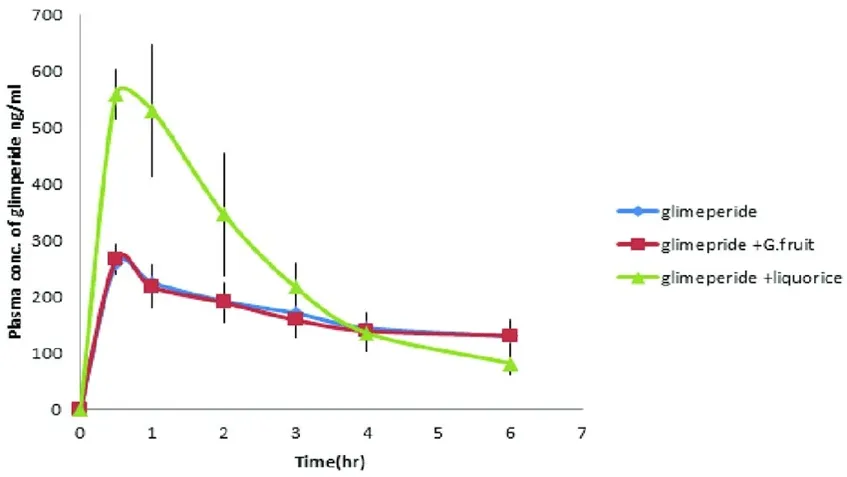
FIG.NO.3 DRUG INTERACTION OF GLIMIPRIDE
DISCUSSION
The comprehensive clinical evaluation of Glimepiride highlights its status as a highly sophisticated, third-generation sulfonylurea that successfully bridges the gap between potent glycemic control and optimal patient safety in the management of Type 2 Diabetes Mellitus (T2DM). The defining asset of Glimepiride lies in its distinct structural configuration, which allows for rapid binding and dissociation kinetics at the pancreatic beta-cell receptor interface; by specifically targeting the 1 \times 10^5 \text{ Da} regulatory subunit rather than the standard 1.4 \times 10^5 \text{ Da} site utilized by older sulfonylureas, it triggers a physiological, glucose-sensitive insulin secretion that effectively dampens postprandial glucose spikes without inducing the prolonged basal hyperinsulinemia that frequently precipitates severe, unpredictable hypoglycemia. This pancreatic efficiency is further augmented by its pronounced extrapancreatic actions—specifically the upregulation of GLUT4 transporter translocation in peripheral tissues via insulin-mimetic signaling pathways—which provides a dual-action mechanism that addresses both insulin secretory defects and peripheral insulin resistance simultaneously. Clinically, this translates to a robust and dose-dependent reduction in HbA1c levels by up to 2.0\%, while its minimal affinity for cardiac SUR2A/SUR2B receptors safeguards myocardial ischemic preconditioning, presenting a remarkably favorable cardiovascular safety profile compared to traditional agents like glibenclamide. However, the long-term therapeutic utility of Glimepiride must be carefully balanced against the inevitable challenge of secondary treatment failure, driven by progressive beta-cell exhaustion, down-regulation of membrane K_{ATP} channels, and accelerating peripheral insulin resistance over years of chronic overstimulation. To overcome this resistance and mitigate risks like mild weight gain, contemporary clinical guidelines heavily support the transition from monotherapy to early dual or triple combination regimens, where Glimepiride acts synergistically with metformin, pioglitazone, or SGLT2 inhibitors to achieve multi-pathway metabolic control. Ultimately, despite the therapeutic emergence of newer, more expensive macromolecular antidiabetic agents, Glimepiride maintains a commanding position in global diabetes care; its established clinical reliability, highly predictable cytochrome P450 (CYP2C9) metabolic profile, convenient once-daily compliance, and profound cost-effectiveness ensure it remains a practical, accessible, and high-yielding foundation for individualized, patient-centric glycemic strategies worldwide
CONCLUSION
Glimepiride remains an indispensable, highly effective cornerstone in the long-term therapeutic management of Type 2 Diabetes Mellitus (T2DM), representing a pivotal evolutionary leap in sulfonylurea therapy. As a distinct third-generation agent, its clinical superiority is structurally driven by its unique dual mechanism of action: it exhibits exceptionally rapid association and dissociation kinetics with the 1 \times 10^5 \text{ Da} regulatory subunit of the pancreatic beta-cell receptor to stimulate physiological, glucose-dependent insulin secretion, while simultaneously exerting potent extrapancreatic effects by upregulating GLUT4 transporter translocation in skeletal muscles and adipose tissues to counteract peripheral insulin resistance. By providing robust, sustained reductions in glycosylated hemoglobin (HbA1c) by 1.0\% to 2.0\% and stabilizing both fasting and postprandial blood glucose levels, Glimepiride strikes an optimal clinical balance between aggressive glycemic control and patient safety, drastically minimizing the risks of prolonged hyperinsulinemia, excessive weight gain, and severe nocturnal hypoglycemia. Furthermore, its highly selective tissue affinity spares the SUR2A/SUR2B cardiac receptors, preserving myocardial ischemic preconditioning and ensuring a favorable cardiovascular safety profile that sets it apart from second-generation counterparts like glibenclamide. Although the inexorable, long-term progression of pancreatic beta-cell apoptosis and secondary resistance poses a challenge to its durability as a monotherapy, Glimepiride displays exceptional pharmacokinetic and pharmacodynamic versatility, making it a powerful, synergistic partner in dual and triple combination regimens alongside metformin, thiazolidinediones, or SGLT2 inhibitors. Looking ahead into the future landscape of metabolic medicine, as the global healthcare and economic burdens of diabetes continue to escalate exponentially, Glimepiride’s established clinical reliability, highly predictable ADME profile, convenient once-daily oral dosing regimen, and exceptional cost-effectiveness guarantee that it will maintain a vital, permanent, and foundational role in individualized, patient-centric glycemic control strategies across diverse patient populations worldwide.
REFERENCES






R. V. Sivaprakash, M. Gowtham, S. Arunagiri, S. Mahalakshmi, G. Nanasekar, D. Rajalingam , Glimepiride: A Comprehensive Clinical and Pharmacological Review of Its Spectrum, Efficacy, Resistance, and Safety Profile , Int. J. of Pharm. Sci., 2026, Vol 4, Issue 8, 940-950, https://doi.org/10.5281/zenodo.21820652
 10.5281/zenodo.21820652