

We use cookies to ensure our website works properly and to personalise your experience. Cookies policy
Department of Pharmaceutics, Anuradha College of Pharmacy, Chikhli-443201, Dist. Buldhana (MS), India.
Self-microemulsifying drug delivery systems (SMEDDS) have emerged as an effective formulation approach to enhance the oral bioavailability of poorly water-soluble drugs, particularly those belonging to Biopharmaceutical Classification System (BCS) classes II and IV. SMEDDS are isotropic mixtures of oils, surfactants, and co-surfactants or co-solvents that spontaneously form fine oil-in-water microemulsion upon mild agitation in gastrointestinal fluids. This spontaneous emulsification results in improved drug Solubilization, increased interfacial surface area, and enhanced intestinal absorption.The present review provides a comprehensive overview of SMEDDS, focusing on formulation strategies, mechanisms of self-emulsification, and key physicochemical parameters influencing system performance. Various solidification techniques for liquid SMEDDS, including spray drying, adsorption onto solid carriers, melt granulation, and extrusion–spheronization, are critically discussed with respect to improving stability, patient compliance, and industrial feasibility. In addition, the review summarizes commonly employed in vitro and in vivo evaluation methods, regulatory considerations, and recent advancements in targeted and controlled drug delivery using SMEDDS.Overall, this review highlights SMEDDS as a versatile and promising drug delivery platform capable of overcoming solubility-related challenges in oral drug delivery and supporting the development of effective pharmaceutical formulations.
A large proportion of newly developed therapeutic agents exhibit poor oral absorption, characterized by a low rate and extent of bioavailability. This limitation is primarily attributed to inadequate aqueous solubility, with nearly 40% of drug candidates showing poor water solubility. (1) Following oral administration, drugs enter the systemic circulation either through the portal blood circulation or via the lymphatic pathway. Compounds absorbed through the portal circulation are subjected to first-pass hepatic metabolism due to enzymatic activity in the liver, which can significantly reduce their systemic availability. This challenge is particularly prominent in drugs classified under Biopharmaceutical Classification System (BCS) Class II. The Biopharmaceutical Classification System, proposed by Amidon and co-workers, categorizes drug substances into four classes based on their solubility and intestinal permeability characteristics.
These four classes are shown in figure 1.
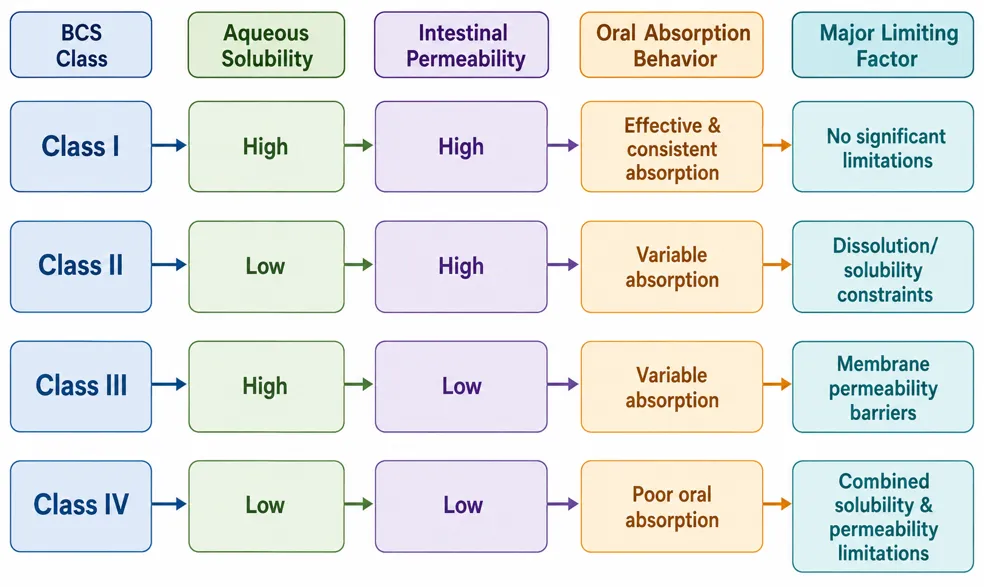
Fig.01 The Biopharmaceutical Classification System of Drugs.
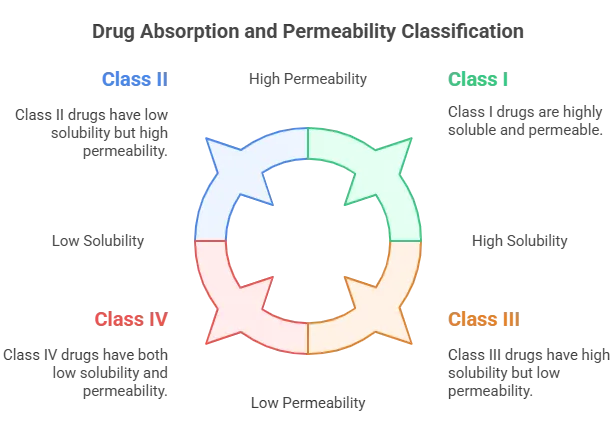
Fig. 02. BCS Classification of Drugs
Although drugs belonging to BCS Class II can be administered via the parenteral route, this approach is often associated with poor patient compliance and limited long-term acceptability. Consequently, enhancing oral bioavailability has emerged as a rational and widely preferred strategy for achieving effective oral drug delivery. A key objective in improving oral bioavailability is the minimization of first-pass hepatic metabolism, which can be accomplished through several approaches such as co-administration with metabolic enzyme inhibitors, prodrug design, and the development of lipid-based drug delivery systems (LBDDS). LBDDS can be formulated in a variety of dosage forms, including solutions, emulsions, suspensions, microemulsions, solid lipid nanoparticles, liposomes, self-emulsifying drug delivery systems (SEDDS), self-microemulsifying drug delivery systems (SMEDDS), self-nanoemulsifying drug delivery systems (SNEDDS), dry emulsions, dry microemulsions, melt-based microemulsions, and solid dosage forms incorporating lipid formulations. Among these, SMEDDS have gained considerable attention due to their formulation simplicity, enhanced drug solubilization, and potential to improve oral bioavailability.Drug absorption from microemulsion-based systems is governed by multiple factors, including droplet size; the drug’s partitioning behavior between immiscible phases, its localization at the interfacial region, the route and site of absorption, the presence of formulation components capable of enhancing membrane permeability, and the solubility of the drug within the microemulsion constituents.(2)
The following points outline the key reasons for the enhancement in bioavailability when utilizing SMEDDS.
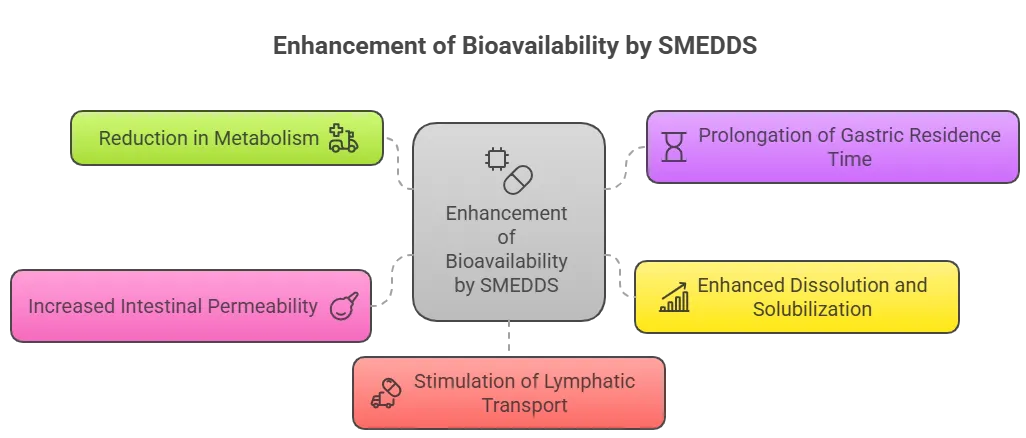
Fig. 03 .Reasons of Bioavailability Enhancement by SMEDDS.
The improvement in oral bioavailability achieved through self-microemulsifying drug delivery systems (SMEDDS) can be attributed to several interrelated mechanisms. One of the primary advantages of SMEDDS is their ability to promote drug absorption via the intestinal lymphatic pathway, thereby reducing exposure to first-pass hepatic metabolism and increasing the fraction of drug reaching systemic circulation. In addition, SMEDDS formulations may prolong gastric residence time, providing an extended window for drug dissolution and subsequent absorption.Upon contact with gastrointestinal fluids, SMEDDS spontaneously form fine microemulsions, leading to a significant enhancement in drug dissolution and solubilization. This rapid formation of a solubilized drug reservoir increases the concentration gradient across the intestinal membrane, facilitating absorption. Furthermore, surfactants and co-surfactants present in SMEDDS can transiently alter intestinal membrane integrity, resulting in increased permeability and improved drug transport across the epithelium. Another important mechanism involves the stimulation of lymphatic transport, particularly for highly lipophilic drugs. By enhancing lymphatic uptake, SMEDDS enable greater drug loading into the systemic circulation, ultimately resulting in elevated plasma drug levels and improved overall bioavailability.(3)
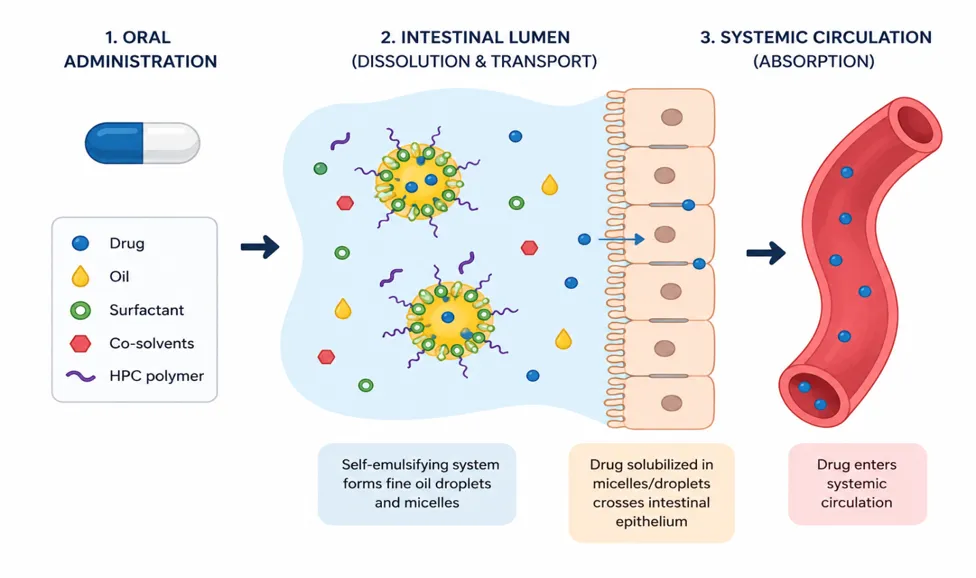
Fig.04 Mechanism of Action of SMEDDS
Furthermore, the uptake of both lipophilic and hydrophilic drug molecules can be improved through mechanisms such as increased intestinal membrane fluidity, which promotes transcellular transport, modulation of tight junctions to enable paracellular passage, and inhibition of efflux transporters, including P-glycoprotein..(4)
To address challenges associated with poor aqueous solubility and low oral bioavailability, a wide range of formulation strategies have been explored, including the use of surfactants, cyclodextrin complexes, nanoparticles, solid dispersions, lipid carriers, and permeation enhancers. Over the past decade, particulate drug delivery systems such as nanoparticles and microspheres have been extensively investigated for this purpose. Among these approaches, lipid-based drug delivery systems (LBDDS), particularly self-microemulsifying drug delivery systems (SMEDDS), have emerged as a highly promising strategy. The advantages of SMEDDS include excellent thermodynamic stability, high drug solubilization efficiency, enhanced oral bioavailability, and protection of drug molecules from enzymatic degradation. Furthermore, SMEDDS enable rapid and uniform drug release at the site of absorption, thereby contributing to improved therapeutic performance.(5)
Self-micro emulsifying drug delivery systems (SMEDDS) and other lipid- and surfactant-based self-emulsifying formulations have been extensively investigated as an efficient method for improving the solubility, dissolution behavior, and oral absorption of poorly water-soluble medications. These methods produce thin, nanoscale dispersions upon water dilution, which greatly increase medication availability at the absorption site. Pharmaceutical medicines including chemicals with poor aqueous solubility have been developed effectively using the notion of self-dispersing lipid formulations. In addition to improving the oral bioavailability of integrated medications, SMEDDS enable dose reduction, which may subsequently minimize side effects and lower the risk of dose-related toxicity and drug resistance.(6)Since the development of micro emulsions in the early 1940s, there has been a growing interest in lipid-based carriers for pharmaceuticals that are poorly soluble in water. Because they eliminate the hazards associated with invasive drug delivery approaches and enhance patient compliance, these devices are especially useful for oral administration. Because of its huge surface area and advantageous permeability characteristics, the small intestine is the primary site for drug absorption after oral ingestion. The medication, oil, surfactant, and co-surfactant can be combined to create liquid, semi-solid, or solid preparations for self-micro emulsifying drug delivery systems (SMEDDS). SMEDDS spontaneously generate microscopic microemulsion droplets, usually less than 100 nm, when subjected to aqueous fluids and gastrointestinal motility, which promotes effective medication absorption.(7)
Self-microemulsifying drug delivery systems (SMEDDS) provide a number of formulation benefits, such as improved Solubilization of poorly water-soluble medicines, thermodynamic stability, ease of manufacturing, and creation of ultrafine droplets. These systems readily dispersed throughout the gastrointestinal tract upon oral delivery, offering consistent medication distribution. By stimulating lymphatic uptake and boosting gastrointestinal membrane permeability, SMEDDS have been reported to improve both the rate and amount of the drug absorption. Moreover, compared to traditional emulsions, SMEDDS have increased physical stability and are often easier to formulate and process.(8)
By using SMEDDS, drugs with low solubility can be administered in oral, intranasal and vaginal routes.(9)The important principle of this system is its ability to form an oil-in-water microemulsion under mild conditions. Digestive motility of stomach and intestine produces agitation required for self-emulsification. Drug absorption can be improved due to large surface area provided by smaller droplet size.(10)
SMEDDS can form fine oil in water droplets after mild agitation with diameter less than 50 nm.
It has capacity to entrap 100% drug also it provide protection to drug from gastrointestinal degradation.(11)Study proves that SMEDDS is also suitable for ocular delivery because of its ability to formation of emulsion on dilution with tear spontaneously. Also it provides drug in small droplet size and dissolved form which gives larger surface area for drug absorption.(12)
In essence, SEDDS are a fairly broad category of formulations with a variety of characteristics. In 1999, Pouton and his colleagues classified the lipid system into four groups: Type I, Type II, Type IIIA, and Type IIIB.
A medication is dissolved in triglycerides or mixed triglycerides at the proper dosage in the Type I system. This system is a well-known illustration of biocompatibility and simplicity. Lipophilic surfactants with an HLB value of less than 12 are present in type II formulations in concentrations ranging from 20 to 60%.
This enhances the formulation's solvent capacity and encourages emulsification. They lack a component that is soluble in water. The term "self-microemulsifying system" refers to type III formulations. Precipitation is possible because this kind has a higher percentage of hydrophilic components. Type III formulas fall into two subcategories: Type IIIA and Type IIIB.The Type IIIB formulation yields the best emulsion among them because of its high percentage of water-soluble ingredients.(13)
All these types of lipid base formulations with their advantages and limitations are summarized in the table.(14)(15)
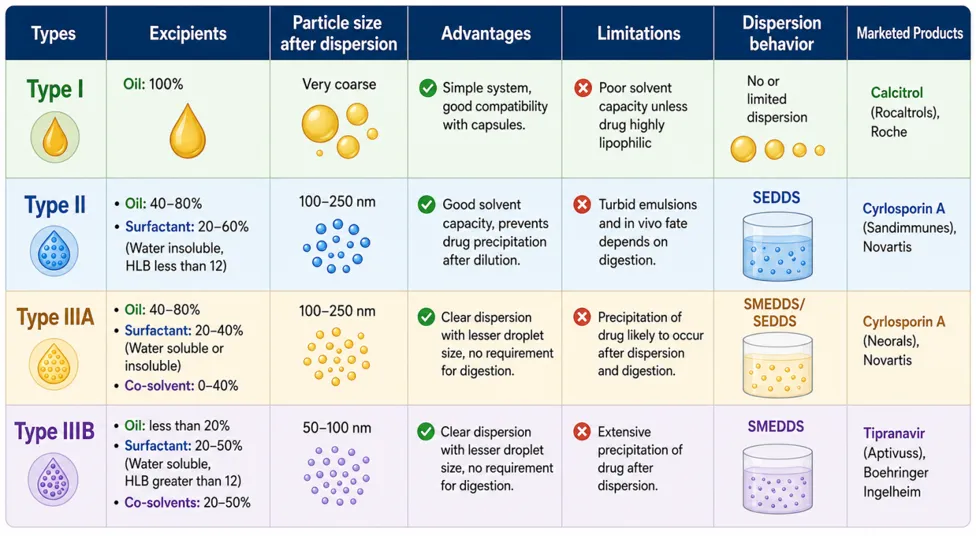
Figure 05. Types of lipid formulations
Table 1. Types of lipid formulations.
|
Types |
Excipients |
Particle size after dispersion |
Advantages |
Limitations |
Dispersion behavior |
Marketed Products |
|
Type I |
Oil: 100%
|
Very coarse |
Simple system, good compatibility with capsules. |
Poor solventcapacity unlessdrug highly lipophilic |
No or limited dispersion |
Calcitrol (Rocaltrols), Roche |
|
Type II |
Oil: 40-80% Surfactant: 20-60% (Water insoluble, HLB less than 12) |
100-250 nm |
Good solventcapacity, prevents drug precipitation after dilution. |
Turbid emulsionsand in vivo fate depends on digestion. |
SEDDS |
Cyrlosporin A (Sandimmunes), Novartis |
|
Type IIIA |
Oil: 40-80% Surfactant: 20-40% (Water soluble or insoluble) Co-solvent: 0-40% |
100-250 nm |
Clear dispersion with lesser droplet size, no requirement for digestion |
Precipitation of drug likely to occur after dispersion and digestion. |
SMEDDS/ SEDDS |
Cyrlosporin A (Neorals), Novartis |
|
Type IIIB |
Oil: less than 20% Surfactant: 20-50% (Water soluble, HLB greater than 12) Co-solvents: 20-50% |
50-100 nm |
Clear dispersion with lesser droplet size, no requirement for digestion |
Extensive precipitation of drug after dispersion. |
SMEDDS |
Tipranavir(Aptivuss), BoehringerIngelheim |
Types of Lipid-Based Drug Delivery Systems
Type I
Excipients: Oil: 100%
Particle Size after Dispersion: Very coarse
Advantages: Simple system, good compatibility with capsules.
Limitations: Poor solvent capacity unless the drug is highly lipophilic.
Dispersion Behavior: No or limited dispersion.
Marketed Products: Calcitrol (Rocaltrols), Roche
Type II
Excipients: Oil: 40-80%, Surfactant: 20-60% (Water insoluble, HLB less than 12)
Particle Size after Dispersion: 100-250 nm
Advantages: Good solvent capacity, prevents drug precipitation after dilution.
Limitations: Turbid emulsions and in vivo fate depend on digestion.
Dispersion Behavior: SEDDS
Marketed Products: Cyrlosporin A (Sandimmunes), Novartis
Type IIIA
Excipients: Oil: 40-80%, Surfactant: 20-40% (Water soluble or insoluble), Co-solvent: 0-40%
Particle Size after Dispersion: 100-250 nm
Advantages: Clear dispersion with lesser droplet size, no requirement for digestion.
Limitations: Precipitation of drug likely to occur after dispersion and digestion.
Dispersion Behavior: SMEDDS/SEDDS
Marketed Products: Cyrlosporin A (Neorals), Novartis
Type IIIB
Excipients: Oil: less than 20%, Surfactant: 20-50% (Water soluble, HLB greater than 12), Co-solvents: 20-50%
Particle Size After Dispersion: 50-100 nm
Advantages: Clear dispersion with lesser droplet size, no requirement for digestion.
Limitations: Extensive precipitation of drug after dispersion.
Dispersion Behavior: SMEDDS
Marketed Products: Tipranavir (Aptivuss), Boehringer Ingelheim.
SMEDDS preparations are often appropriate for drugs with limited permeability and poor solubility that fall under BCS Class II and Class IV. Additionally, medicines have the issue of quick metabolism and volatility. A suitable self-emulsifying formulation is chosen based on the drug's solubility in different components, the phase diagram's effective self-emulsifying region, and the final emulsion's droplet size distribution. (16)
Because SMEDDS formulations don't contain water, they are frequently referred to as preconcentrates. Only when they come into touch with the gastrointestinal (GI) tract's aqueous environment following oral administration can they create an emulsion or microemulsion. Co-surfactants are added to SMEDDS to enhance emulsification, and organic solvents are added to boost solubility.(17)
In last few years solid SMEDDS are gaining more popularity instead of liquid SMEDDS (L-SMEDDS). Solid SMEDDS are prepared by adding inert pharmaceutical excipients in liquid SMEDDS.Various techniques have been employed to prepare solid SMEDDS (S-SMEDDS) including,
1. Adsorption on solid carrier
2. Spray drying
3. Melt extrusion
4. Nanoparticle technology etc.
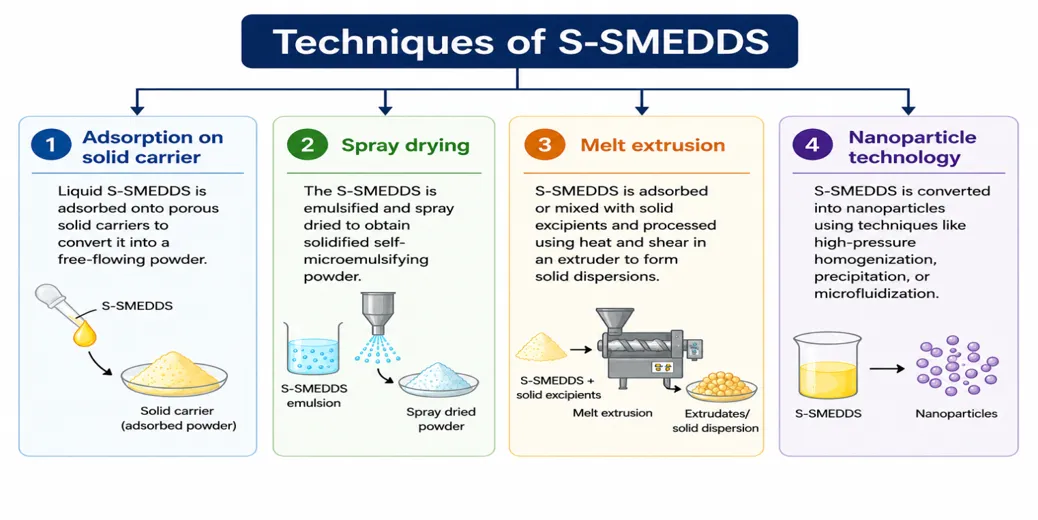
Fig. 03. SMEDDS Solidification Techniques
Out of these techniques adsorption on solid carrier is the most economical and simplest one.
The ideal adsorbing agent should be capable to adsorb high amount of liquid and should high porous in nature. Commonly used adsorbing agents are Florite RE, Nusilin US2, Aerosil 200, Sylysia 350, Syloid 244 FP (porous silicon dioxide).
Solid SMEDDS (S-SMEDDS) can be easily formulate in the form of hard gelatin capsule by using these adsorbing agents.(18)
In SMEDDS mostly plant oil and fatty acid ester are used as an oil phase because of its good fluidity, dissolution, and self-emulsifying properties. Also non-ionic surfactants with high hydrophilic-lipophilic balance (HLB) like TWEEN 80 are used to reduce interfacial tension.
But high concentration of these surfactants in formulation may cause irritation in GIT. To overcome this problem, suitable co-surfactant like Polyethylene Glycol 400 (PEG 400) is use to reduce the concentration of surfactant and to dissolve hydrophobic drug.(19)
SMEDDSs have properties of both Lipid based formulations and microcarriers with ability to promote drug solubilization in the gastrointestinal tract.(20)Few researchers identified that SMEDDS can solubility as well as transport of drug across plasma membrane during digestive process. Most important features of SMEDDS that they are isotropic and thermodynamically stable in gastrointestinal tract.SMEDDS immediately emulsify into small particles when oil phase comes in contact with aqueous environment of GI tract.(21)These small particles and droplets can readily disperse in blood and lymph, by this way SMEDDS can avoid hepatic first-pass effect.(22)Few study reveals that SMEDDS have ability to increase Drug-lymphatic transport. The lymphatic transport is depending upon type of carriers. It is greater for digestible carrier than non-digestible carrier. Presence of longer fatty acid chain and high degree of unsaturation of lipid in a carrier increase the percentage of drug-lymphatic transport. Drug-lymphatic transport is directly proportional to carrier dispersion. For example is more for micelles than emulsion than lipid solution.(23)
SMEDDS form microemulsion of 20-200 nm globular size which get easily dispersed in gastrointestinal tract due to gentle gastric motility. This transfer the drug into soluble form which leads to fast dissolution and rapid absorption of the drug. By this way SMEDDS enhance solubility as well as permeability of drug through intestinal membrane. SMEDDS also promotes transcellular and paracellular absorption of drug, enhance lymphatic transport. It also reduces metabolism of CYP/CYP450 by gastrointestinal enzymes. Which leads to protection of drug from first-pass metabolism.(24)
SMEDDS are best popular amongst all the lipid based formulations. To improve the drug absorption and maximize bioavailability, digestion of lipid is very important. During GI transit, the presence of endogenous and exogenous lipids, lipid digestion products and the formed colloidal phases upon interaction of the lipid digestion products with endogenous components often results into enhanced solubilization of poorly water-soluble and highly membrane permeable active compounds. (25)
Formation of colloidal phase during dispersion and digestion is pre-requisite for overall performance of lipid based formulations. (26)
After oral administration, LBFs are exposed to GI fluid where the self-dispersing formulation forms small-sized oil droplets and the presence of endogenous and exogenous dietary formulation components stimulates the secretion of endogenous amphiphilic components (i.e. bile salts,phospholipids and cholesterol) and digestive enzymes. (27)
The secretion of endogenous amphiphilic components and the generation of the colloidal phases further boost the solubilization capacity of the GI fluid for poorly water-soluble lipophilic drugs and subsequently enhance the oral bioavailability of drugs. (28)
Dispersion, digestion and structure formation are all important aspects of SMEDDS formulations. SMEDDS has great potential to overcome the challenge of low oral bioavailability of poorly water soluble lipophilic drugs by various mechanisms like presenting the drugs into pre-dissolved form at the site of absorption, delaying gastric emptying process, promoting the lymphatic transport pathways and avoiding the first-pass metabolic effect and by driving the lymphatic update of some highly lipophilic drugs from the small intestine. (29)(30)
SMEDDS after agitation forms O/W emulsion provides submicron-sized droplets resulting to low interfacial tension, large interfacial area and enhanced solubilization capacity for poorly water-soluble lipophilic compounds (due to the presence of hydrophilic surfactants) that ultimately contributes towards the improved drug absorption and oral bioavailability. (31)
SMEDDS offer the advantages of enhanced oral bioavailability by reducing the dose, avoidance of gastric irritation caused by the prolonged contact between the drug and the GI wall, better stability compared to emulsions, less-production time and the protection of the drugs from the degradation by chemical and enzymatic means in the gut. The lipid forms the core of the droplets and hydrophilic surfactants provide the emulsification efficiency upon dispersion in an aqueous fluid under mild agitation. In some cases, lipophilic surfactants and co-solvents are also utilized in order to improve the emulsification and dispersion efficiency.(32)
The key challenges in formulating SMEDDS formulations are to identify and select the appropriate excipients that can solubilize the drugs in an acceptable volume. The emulsification of SMEDDS is known to be specific to the nature of lipid, surfactant and co-surfactant, the ratio of lipid to surfactant and/or co-surfactant and the self-emulsification temperature.(33)
It has been well reported that only specific combinations of the components can potentially result in efficient self-emulsification systems. Additionally, the selection of excipients can significantly impact on the solubility of drugs in the formulation, the kinetics of dispersion, kinetics of digestion and thereby solubilization of drugs during digestion, as well as the absorption and bioavailability of poorly water-soluble active compounds.
Consequently, SMEDDS formulation development is often initiated by constructing the pseudo-ternary phase diagram to determine the best suitable combinations of the substances. Conventionally, SMEDDS are in liquid state at ambient temperature due to the liquid state of the most of the formulation components at theroom temperature. Depending on the compatibility of the formulation components with capsule shell and the volume of the required dose, liquid SMEDDS are typically encapsulated into either soft or hard shell gelatin capsules for an ease of dosing. But there are some potential drawbacks associated with capsule. (34)
The solidification of liquid-based SMEDDS into solid-based SMEDDS formulations has gained an increased interest in recent years in order to overcome the drawbacks associated with liquid-based formulations and to have the additional advantages of SMEDDS in the wide range of dosage forms like powder, sachets, suspension and tablet. The solid-based formulations further offer the benefits of improved stability, better control over the dose, better reproducibility, low production cost and better patient compliance.(35)(36)
COMPONETS OF SMEDDS
Following criteria need to be considered in selection of components for SMEDDS.
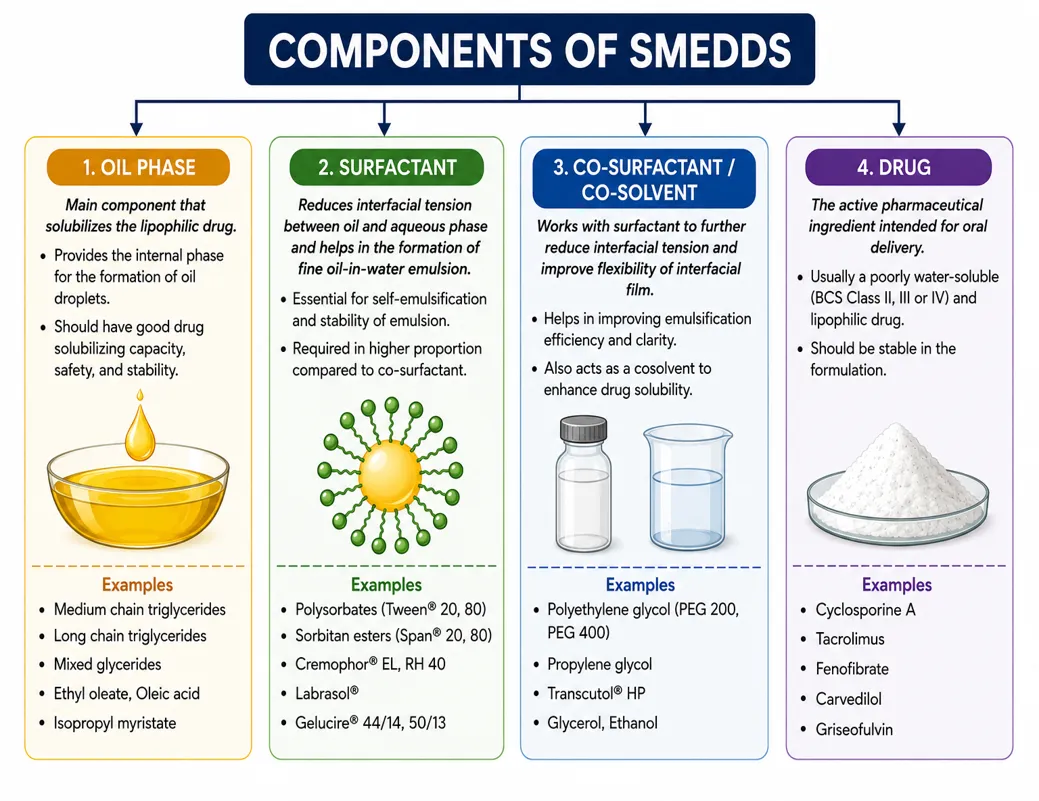
Fig. 04 General selection criteria for SMEDDS.(37)
The choice of oils is depends on its drug dissolving capacities.In oils medium chain triglycerides (MCT) have been preferred for Lipid Based Drug Delivery Systems (LBDDS) due to their better solubilization properties, self-emulsification ability,and better chemical stability of active ingredients compared to long chain triglycerides(LCT). MCT shows a good solubilizing capacity for less lipophilic drugs and good self-dispersing ability. Semisynthetic MCT with hydrogenated doublebonds are resistant to oxidation.(37) MCTs have been preferred due to their higher fluidity, better solubility and self-emulsification ability. Also MCTs are directly transported into the portal blood vessel.(38) Again because of higher ester content per gram in MCTs, most of the drugs show higher solubility and enhanced bioavailability in MCT as compared to LCT. MCT do not require bile salts for digestion. Apart from this many studies reveals that MCT has more drug dissolution ability compared to LCT.
List of most common examples of oils used in SMEDDS are,
Castor Oil, Capryol 90 Oil, Capryol PGMC, Corn oil, Labrafil M 2125, Labrafil M, Labrafac PG Oil, Labrafac Lipophile WL, Olive oil, Oleic acid Oil, Soyabean oil etc.(39)
Role of oils in SMEDDS can be summarized as follows.
Suitable surfactant selection is most important factor in the proper designing of Lipid based drug delivery systems (LBDDS). Surfactant is a surface active agent which acts by reducing interfacial tension at oil water interface. Surfactants are classified on the basis of HLB value.(37)
|
Low HLB (˂10) |
High HLB (˃ 10) |
|
Labrafil M1944 CS Labrafil M2125CS Sorbitan esters Capmul Capmul S Span 20 Span 40 Polyethoxylated alkyl ethers Brijs |
Polyoxyethylene sorbitan esters (polysorbates) Tweens 20, 40, 60, 80 Polyethoxylated fatty acid ester Myrj 52 Solutol HS15 Polyethoxylated alkyl ethers Brijs Polyethoxylated glycerides Caprylo/caproil macrogolglyceride: Labrasol Polyoxyl castor oil derivatives Polyoxyl 35 castor oil: Cremophor EL, Polyoxyl 40 hydrogenated castor oil: Cremophor RH40 Polyoxyethylene polyoxypropylene block copolymer Poloxamer 188 Poloxamer 407 Saturated polyglycolized glycerides Lauroyl macrogolglycerides: Gelucire 44/14 Stearoyl macrogolglycerides: Gelucire 50/13 |
Surfactants which are shown in bold with High HLB (˃ 10) are used in the formulation of SEDDS and SMEDDS. They are basically hydrophilic, Non-ionic surfactants having HLB value 12. They have tendency of formation of oil water dispersion spontaneously with droplet size less than 100 nm on dilution with fluids in GIT. Surfactants are selected on the basis of following characteristics.

Co-surfactants play a crucial role in stabilizing SMEDDS formulations and enhancing their performance. There are various co-surfactants used in SMEDDS. Co-surfactants are amphiphilic compounds that assist surfactants in reducing the interfacial tension between oil and water phases. They help in the formation of stable microemulsions by Enhancing Flexibility, Reducing Surface Tension, and Improving Drug Solubilization.
Several types of co-surfactants are commonly used in SMEDDS formulations, including:
1. Short-Chain Alcohols: Examples: Ethanol, Propylene Glycol, and Butanol.
2. Surfactants with Lower Hydrophilic-Lipophilic Balance (HLB): Examples: Polysorbates (e.g., Tween 20, Tween 80).
3. Fatty Acids and Their Esters: Examples: Caprylic acid, Oleic acid.
4. Glycerol Esters: Examples: Glyceryl monooleate.
Other examples areLauroglycol FCC, Lauroglycol 90, PEG 300 and Plurol Oleique CC 497.
PREPARATION OF LIQUID SMEDDS
For preparation of liquid SMEDDS, the best formulation is optimized by using experimental mixture design consisting of Oil, SMix and water. In this optimized preparation, the drug of therapeutic dose dissolved in minimum necessary volume of liquid SMEDDS. Resulting mixture is then stirred until drug is completely dissolved.(40)
SATURATION SOLUBLITY STUDY
The saturation solubility of selected drug is evaluated in various oils, surfactants, and co-surfactants. In this study, an excess amount of drug added to 2 ml of each of vehicle in screw capped glass vials and the mixture heated to 60°C in a water bath under continuous stirring using a vortex mixture to facilitate drug solubilization. The mixture kept at ambient temperature for 72 h to attain equilibrium. The equilibrated sample centrifuged at 2,000 rpm for 10 min to remove the undissolved drug. Supernatant fluid diluted with methanol and drug content quantified using an high performance liquid chromatography (HPLC) technique.(35)
PSEUDO TERNARY PHASE DIAGRAM
SMEDDS formulation optimized by using phase diagram of oil, surfactant/cosurfactant (Smix) and water.This is done to calculate approximate concentration range of components in the formation of microemulsion. Fixed Smix proportion (1:1, 1:2, 1:3. 3:1and 2:1) with varied proportion of oil is taken to construct diagram.The mixtures of surfactant and co-surfactant with oil were prepared at ratios of 10:0, 9:1, 8:2, 7:3, 6:4, 5:5, 4:6, 3:7, 2:8, 1:9, and 0:10. CHEMIX 3.51™ software (Arne Standnes, Norway) used to construct a pseudoternary phase diagram.(41) .In this mixture of oil and surfactant are titrated with water in a drop wise manner, flowability and phase clarity is visually observed. It is important to check whether microemulsion form immediately on mixing oil, surfactant and water. Region of microemulsion is determined by water titration method. (38)
CHARACTERIZATION OF LIQUID SMEDDS
Microemulsion system was diluted to 100 times of its volume and checked for its transparency by visual assessment.
Percentage transmittance was checked against distilled water using UV for presence of any precipitation.
In this, the samples are centrifuged at 7500 rpm for 10 min at room temperature (25°C) and then were examined for phaseseparation.
Accurately measured volume of the optimized formulation is diluted with methanol up to 100 ml andabsorbance was measured at certain wavelength using methanol as blank.
The assay is generally performed in triplicate.(3)
It is a time required to form homogeneous mixture upon dilution. 1 gm of optimized formulation added in to 250 ml of water at 370C with gentle agitation with magnetic stirrer. Then formulation examined visually for rate of emulsification and appearance of emulsion.(41)
pH of the microemulsion was measured using calibrated pH meter.
The viscosity was determined using rotational viscosity measuring device called Brookfield viscometer. Viscosity measurement was done at 60 rpm using spindle no. 61 at 25°C.
It is also known as the stain test. Staining tests, in which adye is sprinkled onto the surface of the emulsion. These testsessentially identify the continuous phase. In this, two to three drops of water-soluble dye added to the optimized formulation and after 5 minutes visual observation was done.(3)
Upon dilution, there are chances of phase separation in SMEDDS. This can be checked by diluting the selected formulation with various diluents like deionized water, 0.1N HCl and phosphate buffer pH 6.8. The diluted microemulsions stored for 8 h at 25C and observed by eye for phase separation or drug precipitation.(39)
SMEDDS subjected to the droplet size measurement. The formulation is diluted with 20 ml deionized water and droplet size measured by using zetasizer.(39)
This study is performed to check the effect of temperature variation on the stability of SMEDDS. In this study SMEDDS formulations diluted with deionized water, centrifuged at 10000 rpm for 20 min and observed visually for phase separation. Formulations that showed signs of phase separation rejected and the remaining formulations subjected to a freeze–thaw study.Selected formulations diluted with deionized water at a ratio of 1:20 and subjected to two freeze–thaw cycles between - 200C and + 250C, with storage at each temperature for not less than 4 h.(39)
This study performed to check droplet morphology. In this study selected SMEDDS formulations diluted with water at a ratio of 1:100. A drop of the diluted microemulsion was directly deposited on the holey filmgrid to observe the morphology of formulations.(39)
Dynamic light scattering (DLS) method and Small angle neutron scattering (SANS) are used to perform globule size analysis.(41)
This study performed by following procedure,
SMEDDS are dispersed in water (100 ml) with constant stirring on a magnetic stirrer.
Microemulsion formed is visually observed form turbidity.
Then microemulsion is allowed to stand for 2 hours.
Finally, its transmittance (%) measured by using UV spectrophotometer against distilled water as blank.
In this test, SMEDD formulation diluted to 250-fold using distilled water or 0.1 N
HCl.The diluted microemulsions were observed after 1 hour, 6 hour and 24 h for any sign of phase separation or drugprecipitation and clarity.
The cloud point is the temperature above which the formulation clarity turns cloudy in appearance. At higher temperatures, phase separation can occur.
In this test, SMEDDS formulation assessed for its stability with respect to phase separation at higher temperature. The formulation diluted with water in a ratio of 1:100 and placed in a water bath whose temperature was gradually increased. The cloud point was characterized by drop in transmittance measured spectrophotometrically.(42)
The in vitro dissolution studies are performed in order to ensure the quick release of the drug in dissolution medium. Furthermore, in vitro dissolution studies also give an idea about the self-micro emulsification efficiency of the developed system.
The formulations are subjected to stability study for a period of three months at room temperature and refrigeration conditions.After three months of storage the microemulsion is subjectedto test for physical stability, accelerated centrifugation cycle,drug content and particle size and zeta potential determination.(3)
Stability study is designed to identify and avoid the metastable SMEDDS formulations. In thermodynamic stability studies, optimized formulations subjected to different stress tests liketemperature and centrifugation.
METHODS SOLIIDIFICATION OF SMEDDS
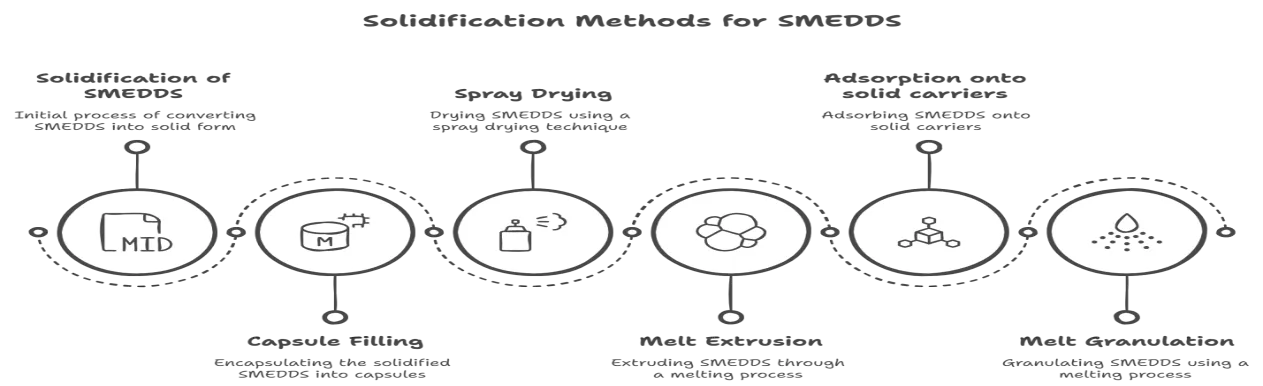
SMEDDS are innovative formulations that enhance the bioavailability of poorly soluble drugs.
Solidification techniques are crucial for transforming liquid SMEDDS into solid forms, which can improve stability, ease of handling, and patient compliance. The following sections detail five prominent methods used in the solidification process of SMEDDS.
1. Capsule Filling
Capsule filling is a straightforward method where liquid SMEDDS are encapsulated in hard or soft gelatin capsules. This technique allows for precise dosing and protects the formulation from environmental factors. The capsules can be designed to dissolve at specific rates, enhancing the release profile of the drug.
2. Spray Drying
Spray drying involves converting liquid SMEDDS into a dry powder by rapidly evaporating the solvent. The process entails atomizing the liquid into fine droplets and exposing them to hot air, which evaporates the solvent, leaving behind solid particles. This method is efficient and can produce uniform particle sizes, making it suitable for large-scale production.
3. Melt Extrusion
Melt extrusion is a process where the liquid SMEDDS are mixed with excipients and then extruded through a die to form solid strands. The heat applied during extrusion helps in the melting of the components, leading to a homogeneous solid product. This method is advantageous for producing continuous solid forms and can be tailored to control the release of the drug.
4. Adsorption onto Solid Carriers
In this method, liquid SMEDDS are adsorbed onto solid carriers such as silica or starch.
The solid carriers help in immobilizing the liquid formulation, transforming it into a solid state.
This technique not only enhances the stability of SMEDDS but also allows for easy handling and storage.
5. Melt Granulation
Melt granulation involves the use of a binder that melts upon heating, allowing the liquid SMEDDS to be granulated into solid particles. The process enhances the flow properties of the formulation and can improve the dissolution rate of the drug. Melt granulation is particularly useful for formulating solid dosage forms that require specific release characteristics.(44)
CHARACTERIZATION OF SOLID-SMEDDS
Evaluation of solid Self-Microemulsifying Drug Delivery Systems (S-SMEDDS) involves assessing both the properties of the solid formulation and its performance after dilution or dispersion. Here's a comprehensive list of evaluation tests given below,
1. Solid-State Characterization
This tests are performed to confirm successful solidification and maintain SMEDDS properties includes,
A) Differential Scanning Calorimetry (DSC)
Use to determine thermal transitions and confirms absence of crystalline drug (amorphous state).
B) Powder X-ray Diffraction
In this test, assessment of crystallanity or amorphous nature of the drug in the solid matrix is done.
C) Fourier Transform Infrared Spectroscopy (FTIR):
This is performing to detect possible drug–excipient interactions.
D) Scanning Electron Microscopy (SEM)
Carried out to examine surface morphology and particle size.
E) Thermogravimetric Analysis (TGA):
In this study, moisture content and thermal stability is measured.
2. Flow Properties
A) Angle of Repose
B) Bulk and Tapped Density
C) Carr’s Index and Hausner Ratio
Angle of repose, Bulk and Tapped Density and Carr’s Index and Hausner Ratio are done to evaluate flowability, which affects manufacturing processes like capsule filling or tableting.
3. Reconstitution Properties
This is done to ensure the formulation retains SMEDDS properties upon dispersion.
In this, following tests are performed.
A) Self-emulsification Time
It is a time required to form microemulsion upon dilution in aqueous media.
B) Droplet Size and PDI (Polydispersity Index):
Dynamic light scattering is used to measure Droplet Size and PDI after dilution.
C) Zeta Potential
It indicates emulsion stability upon dispersion.
D) Transmission/Clarity Test
Measures turbidity or % transmittance to assess microemulsion clarity.
4. Drug Content and Uniformity
A) Assay of Drug Content
Assay is carried out by using HPLC, UV-spectroscopy etc.
B) Content Uniformity Test:
This tests is only for capsule or tablet forms.
5. In Vitro Dissolution and Release Studies
A) Dissolution Test (using USP Apparatus)
B) Dialysis Bag Method:
6. Stability Studies
This study is conducted under ICH guidelines to evaluate:
7. Additional Tests
A) Redispersibility Test
To assess how well the solid form redistributes in aqueous media.
B) In Vitro Lipolysis Study
Simulates digestion in GI conditions to study drug release from lipidic formulation.(45)
RECENT ADVANCEMENTS
Recent research has focused on improving the performance of SMEDDS through novel excipients, nanotechnology, and targeted delivery systems. Innovations such as the use of solid SMEDDS and the incorporation of nanoparticles have shown promise in enhancing the efficacy of SMEDDS.
CONCLUSION
It is considered that the main cause of poor oral absorption of drug is low water solubility.
There are many conventional approaches have been tried to overcome this problem which includes, Micronization, Nanonization, Supercritical fluid recrystallization, Spray freezing, Evaporative precipitation, Use of surfactants, Use of salt form, Selective adsorption on insoluble carries, Solid solutions, eutectic mixtures, Solid dispersions, Molecular encapsulation, Permeation enhancers etc. However apart from all these conventional approach, self microemulsifying drug delivery system (SMEDDS) is one of the most promising, simple and novel approach to enhance the solubility of poor water soluble drugs. Nowadays SMEDDS is emerging as a most successful approach to improve solubility and bioavailability of poorly water soluble drugs especially from BCS Class II and Class IV.
SMEDDS is one of the promising delivery system for the efficient oral administration and enhancement of oral absorption of drugs. However SMEDDS represent a significant advancement in drug delivery systems, particularly for poorly soluble drugs. Ongoing research and development in this field are expected to yield new formulations that can further improve drug bioavailability and therapeutic outcomes. Future studies should focus on addressing the challenges associated with SMEDDS to facilitate their widespread adoption in clinical practice.
The main aim of present review is to focus on valuable insights related to SMEDDS.(46)
REFERENCES


Rahul Kalwe, Dr. Kailash Biyani, Advances in Self-Microemulsifying Drug Delivery Systems: Enhancing Bioavailability of Poorly Soluble Drugs, Int. J. of Pharm. Sci., 2026, Vol 4, Issue 10, 65-87, https://doi.org/10.5281/zenodo.23074393
 10.5281/zenodo.23074393