

We use cookies to ensure our website works properly and to personalise your experience. Cookies policy
R.G Sapkal College of Pharmacy, Sapkal Knowledge Hub, Kalyani Hills, Anjaneri, Trimbakeshwar Rd, Nashik, 422213, Maharashtra, India.
Amlodipine besylate, a long-acting dihydropyridine calcium channel blocker widely prescribed in the management of hypertension and angina pectoris, requires a rapid, sensitive and environmentally responsible analytical method for routine quality control. In the present study, a reversed-phase high-performance liquid chromatographic (RP-HPLC) method was developed and validated for the estimation of Amlodipine in bulk drug and tablet dosage form using an Analytical Quality-by-Design (AQbD) framework. A 3² central composite design (CCD) comprising nine experimental runs was employed to study the combined effect of mobile-phase acetonitrile composition (X1) and flow rate (X2) on the retention time (Y1) of Amlodipine, using Design-Expert® software (version 13, State-Ease Inc., Minneapolis, USA). Chromatographic separation was achieved on a C18 column (250 × 4.6 mm, 5 µm) using a mobile phase composed of phosphate buffer and acetonitrile (40:60, v/v) delivered at a flow rate of 1.0 mL/min, with UV detection at 238 nm. Under the design-space-verified optimum conditions, Amlodipine eluted with a retention time of 4.6 min. The method was validated as per ICH Q2(R2) guidelines for specificity, precision (repeatability and intermediate precision), accuracy, linearity/range, and solution stability. The method was linear from 80-120% of the target concentration (correlation coefficient 0.999), accurate (mean recovery 100.19%), precise (%RSD < 1.0 for both system precision and intermediate precision), and specific, with no interference from tablet excipients. By restricting the mobile phase to a low-toxicity buffer-acetonitrile system in reduced proportion and a short 6-minute run time, the method also conforms to green analytical chemistry principles. The developed AQbD-based RP-HPLC method is simple, rapid, economical, and robust, and is suitable for the routine quality control of Amlodipine in bulk drug and tablet dosage forms in the pharmaceutical industry.
Hypertension remains one of the leading modifiable risk factors for cardiovascular morbidity and mortality worldwide, and calcium channel blockers occupy a central place in its pharmacological management. Amlodipine, chemically 3-O-ethyl 5-O-methyl 2-(2-aminoethoxymethyl)-4-(2-chlorophenyl)-6-methyl-1,4-dihydropyridine-3,5-dicarboxylate (C20H25ClN2O5, molecular weight 408.9 g/mol), is a long-acting dihydropyridine calcium channel blocker that inhibits the transmembrane influx of calcium ions into vascular smooth muscle and cardiac muscle by blocking voltage-dependent L-type calcium channels, thereby producing arterial vasodilation and reduced peripheral resistance. Owing to its extensive clinical use in bulk drug and tablet dosage forms, a rapid, precise and economical analytical method for its routine estimation and quality control is essential to the pharmaceutical industry.
Reversed-phase high-performance liquid chromatography (RP-HPLC) is the most widely preferred technique for the quantitative estimation of pharmaceutical actives on account of its high resolution, sensitivity, precision and adaptability to complex sample matrices, and is routinely used in regulatory and quality control laboratories.1-6
The choice of stationary phase and sound chemometric treatment of the resulting data further determine the sensitivity and reliability of a chromatographic assay.7,8
Conventionally, analytical methods have been developed using a one-factor-at-a-time (OFAT) approach, in which each chromatographic parameter is varied individually while others are held constant. This strategy is time- and resource-intensive and often fails to capture interactions between variables. The Quality by Design (QbD) paradigm, first articulated for pharmaceutical product and process development and subsequently extended to analytical procedures as Analytical Quality by Design (AQbD), addresses this limitation by building quality into the method through a systematic, risk-based understanding of how method variables affect method performance.9-11
In an AQbD workflow, an Analytical Target Profile (ATP) is first defined, followed by identification of Critical Quality Attributes (CQAs) of the method (e.g., retention time, resolution, tailing factor), Critical Material Attributes (CMAs) and Critical Method Parameters (CMPs). Design of Experiments (DoE) tools, particularly response surface methodology using central composite, Box-Behnken or factorial designs, are then used to model the relationship between CMPs and CQAs, culminating in the establishment of a design space and a control strategy within which the method is guaranteed to perform reliably.12-20
For structurally related compounds or degradation-product profiling, hyphenated techniques such as liquid chromatography-mass spectrometry can offer additional selectivity, although RP-HPLC with UV detection remains the method of choice for routine assay and quality-control work owing to its simplicity, speed and lower cost.21
An additional and increasingly important consideration in modern method development is environmental sustainability. Green analytical chemistry seeks to minimise the consumption and toxicity of organic solvents, reduce sample and reagent volumes, and shorten analysis time without compromising method performance. The RP-HPLC method reported here uses an aqueous phosphate buffer-acetonitrile mobile phase in a moderate, non-excessive organic proportion, a short run time of about 6 minutes, and small injection and sample volumes, in keeping with this approach.
The present work therefore aimed to develop and validate an eco-friendly, AQbD-based, stability-indicating RP-HPLC method for the estimation of Amlodipine in bulk drug and tablet dosage form, using a central composite design to optimise mobile-phase composition and flow rate, followed by full validation as per ICH Q2(R2) guidelines for specificity, precision, accuracy, linearity/range and solution stability.
2. LITERATURE REVIEW:
Alaama et al. developed and validated an RP-HPLC method for Amlodipine in tablet dosage form using ammonium acetate buffer (pH 4.0) and acetonitrile (60:40, v/v) on a C18 column at 1.0 mL/min with UV detection at 248 nm, reporting a retention time of 3.44 ± 0.41 min and a method suitable for routine quality control.22
Dai et al. reported an RP-HPLC method for simultaneous estimation of ramipril and Amlodipine using acetonitrile, methanol and buffer (15:35:50, v/v/v) at 1.0 mL/min with detection at 237 nm, demonstrating good linearity, accuracy and precision as per ICH guidelines.23
Similar stability-indicating and simultaneous-estimation RP-HPLC methods for Amlodipine in combination with ramipril, lisinopril, perindopril, atenolol and other antihypertensive actives have been reported by several groups, all of which confirm RP-HPLC as an accurate, precise and robust technique for Amlodipine analysis.24-29
Comprehensive reviews of analytical methods for Amlodipine, spanning RP-HPLC, HPTLC, LC-MS and spectrophotometric techniques, have consistently concluded that RP-HPLC remains the preferred method because of its sensitivity, precision, robustness and compliance with ICH validation guidelines, and have highlighted continuing interest in shorter, more sustainable chromatographic conditions for combination antihypertensive products.30-32
Further RP-HPLC methods have been reported for Amlodipine in combination with valsartan, as a stability-indicating assay cross-validated against UV spectroscopy, and for related dihydropyridine-ACE-inhibitor combinations such as amlodipine-benazepril and perindopril-amlodipine with possible degradants, together confirming the versatility of RP-HPLC across the amlodipine class of antihypertensive formulations.33-38
While these reports establish RP-HPLC as a reliable platform for Amlodipine estimation, most were developed using conventional OFAT optimisation, and few have applied a formal AQbD/DoE framework or explicitly considered the environmental footprint of the mobile phase. The present study addresses this gap by using a central composite design to optimise and characterise the design space of an eco-friendly RP-HPLC method for Amlodipine.
3. MATERIALS AND METHODS:
3.1 Drug and Reagents
Amlodipine working standard (20 mg) was procured from Arni Analytical Lab. HPLC-grade acetonitrile, methanol and water were obtained from Fisher Scientific, and analytical-reagent (AR)-grade potassium dihydrogen orthophosphate was obtained from Loba Chemie. A commercially marketed Amlodipine tablet formulation was used as the sample for assay and validation studies.
3.2 Instrumentation
Chromatographic separation was carried out on a Shimadzu LC-2010CHT HPLC system equipped with LC Solution software and a C18 analytical column (250 × 4.6 mm, 5 µm, Agilent). Solutions were prepared using an analytical balance (WebMan), a digital pH meter (Lab India) and a bath sonicator (Life Care Instruments Pvt. Ltd.).
3.3 Drug Profile
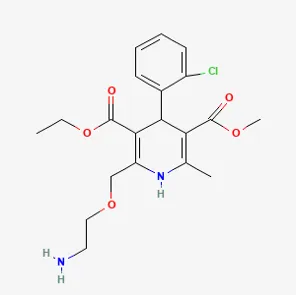
Fig. 1: Chemical structure of Amlodipine
Amlodipine is a white, odourless, crystalline powder (CAS Registry No. 88150-42-9; pKa ~8.6; log P ~2.22-3.0; melting point 55-58 °C; plasma half-life 30-50 h), slightly soluble in water, sparingly soluble in ethanol and freely soluble in methanol. It belongs to the dihydropyridine class of calcium channel blockers and is administered orally as a tablet dosage form.
3.4 Preliminary Characterization
Prior to method development, Amlodipine was subjected to preliminary characterization comprising physical description (colour, odour, appearance), melting point determination by the open capillary method, solubility assessment in water, methanol, ethanol and chloroform, and UV spectroscopic scanning (200-400 nm in methanol) to select the analytical wavelength.
3.5 Analytical Quality by Design-Based Method Development
An Analytical Target Profile was defined to guide method development, targeting a simple, specific, precise, accurate, robust and eco-friendly RP-HPLC method capable of estimating Amlodipine in bulk and tablet dosage form within a short analysis time. Based on preliminary risk assessment, mobile-phase acetonitrile composition and flow rate were identified as the Critical Method Parameters (CMPs) most likely to influence the Critical Quality Attribute of interest, namely the retention time of Amlodipine.
A 3² randomized response-surface central composite design (CCD) with two factors, each studied at five levels, was applied using Design-Expert® software (version 13, State-Ease Inc., Minneapolis, MN, USA) to generate nine experimental runs. Mobile-phase acetonitrile percentage (X1) and flow rate (X2) were selected as independent variables, and retention time (Y1) was selected as the dependent response.
Table 1: Coded levels of the critical method parameters used in the central composite design
|
Level of Variable |
Flow Rate (mL/min) |
Mobile Phase (% ACN) |
|
Low level (-1) |
0.9 |
55 |
|
High level (+1) |
1.1 |
65 |
3.6 Method Validation
The optimized RP-HPLC method was validated as per ICH Q2(R2) guidelines for specificity, precision (repeatability and intermediate precision), accuracy, linearity and range, and solution stability.
Acceptance criteria applied were: % RSD ≤ 2.0 for precision; mean recovery 98-102% for accuracy; correlation coefficient ≥ 0.99 for linearity; and % difference ≤ 2.0 for solution stability, in accordance with ICH Q2(R2), and following general validation practices for chromatographic and electrophoretic methods.11,39,40
4. RESULTS AND DISCUSSION:
4.1 Preliminary Characterization
Amlodipine was found to be a white, odourless, crystalline powder, consistent with pharmacopoeial description. The observed melting point was 55-58 °C, in agreement with reported literature values. Amlodipine was found to be slightly soluble in water, soluble in methanol and chloroform, and sparingly soluble in ethanol. On UV scanning between 200-400 nm in methanol, Amlodipine exhibited maximum absorbance at 238 nm, which was selected as the detection wavelength for the RP-HPLC method.
4.2 Method Optimization by Central Composite Design
The retention time data obtained from the nine CCD runs are summarised in Table 2.
Table 2: Central composite design layout with observed retention time of Amlodipine
|
Std |
Run |
X1: Mobile Phase (% ACN) |
X2: Flow Rate (mL/min) |
Retention Time (min) |
|
8 |
1 |
55 |
0.9 |
5.12 |
|
3 |
2 |
60 |
0.9 |
4.86 |
|
7 |
3 |
65 |
0.9 |
4.58 |
|
1 |
4 |
55 |
1.0 |
4.95 |
|
2 |
5 |
60 |
1.0 |
4.69 |
|
4 |
6 |
65 |
1.0 |
4.43 |
|
9 |
7 |
55 |
1.1 |
4.32 |
|
6 |
8 |
60 |
1.1 |
4.08 |
|
5 |
9 |
65 |
1.1 |
3.84 |
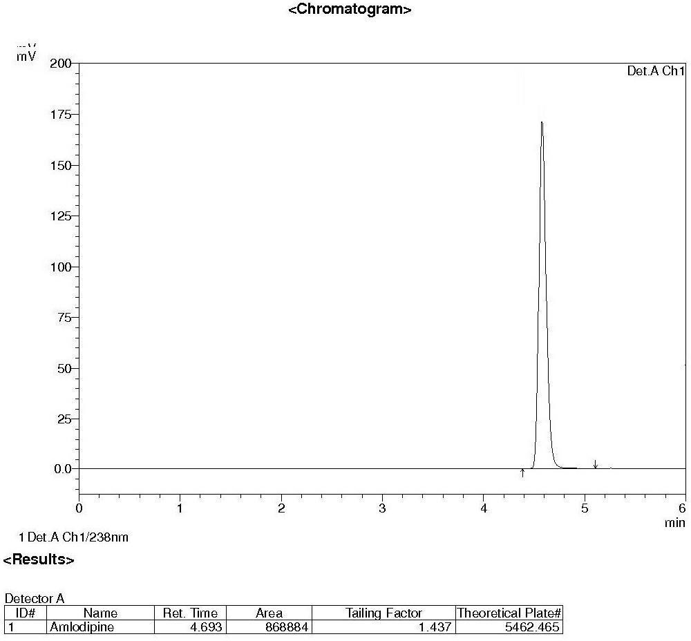
Fig. 2: Representative chromatogram of Amlodipine obtained under the design run corresponding to the final optimized mobile phase (buffer:acetonitrile, 40:60 v/v; flow rate 1.0 mL/min)
On fitting the data in Design-Expert software, the linear model was suggested over the two-factor-interaction, quadratic and cubic models on the basis of sequential p-value, lack-of-fit p-value and adjusted/predicted R² criteria (Table 3).
Table 3: Model fit summary for retention time of Amlodipine
|
Source |
Sequential p-value |
Lack-of-Fit p-value |
Adjusted R² |
Predicted R² |
Remark |
|
Linear |
0.212 |
0.0005 |
0.876 |
0.621 |
Suggested |
|
2FI |
0.278 |
<0.0001 |
0.624 |
0.488 |
|
|
Quadratic |
0.354 |
<0.0001 |
0.410 |
0.234 |
|
|
Cubic |
0.0016 |
0.0178 |
0.9966 |
0.9285 |
Aliased |
Analysis of variance (ANOVA) confirmed the significance of the linear model (Table 4). The model F-value of 174.65 indicated that the model was significant, with only a 0.01% probability that an F-value of this magnitude could arise from noise; both mobile-phase composition (A) and flow rate (B) were significant model terms (p < 0.0001).
Table 4: ANOVA for the linear model fitted to retention time of Amlodipine
|
Source |
Sum of Squares |
df |
Mean Square |
F-value |
p-value |
Remark |
|
Model |
1.68 |
2 |
0.8419 |
174.65 |
<0.0001 |
Significant |
|
A - Mobile phase |
0.6337 |
1 |
0.6337 |
131.47 |
<0.0001 |
|
|
B - Flow rate |
1.05 |
1 |
1.05 |
217.83 |
<0.0001 |
|
|
Residual |
0.0289 |
6 |
0.0048 |
|
|
|
|
Cor. Total |
1.71 |
8 |
|
|
|
|
The final equation in terms of coded factors was:
Retention Time = 4.69 − 0.277 A − 0.354 B
indicating that an increase in acetonitrile proportion and an increase in flow rate both reduced the retention time of Amlodipine, with flow rate exerting a marginally greater influence than mobile-phase composition.
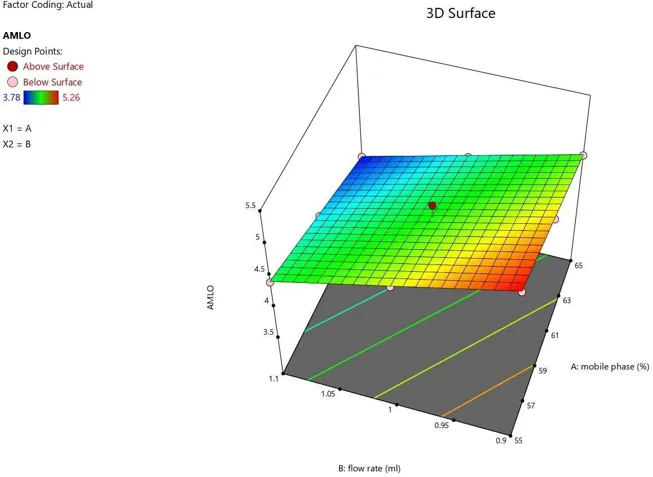
Fig. 3: Three-dimensional response surface plot showing the effect of mobile phase composition and flow rate on the retention time of Amlodipine
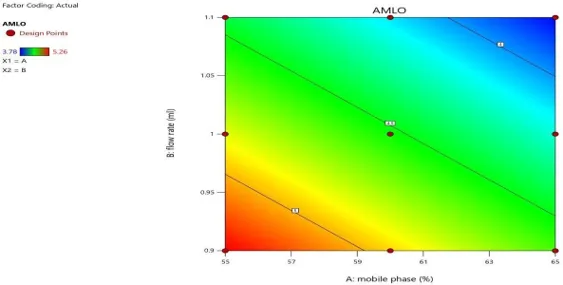
Fig. 4: Predicted versus actual plot for the retention-time response, confirming the adequacy of the fitted model
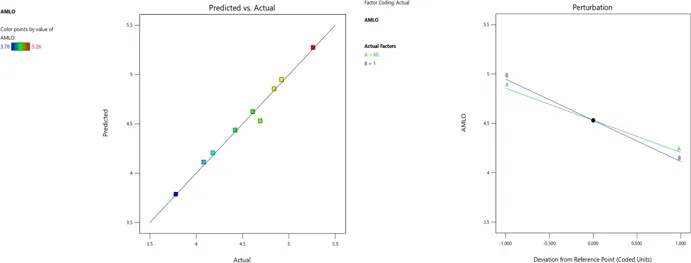
Fig. 5: Perturbation plot showing the relative sensitivity of retention time to mobile phase composition (A) and flow rate (B)
The response-surface (Fig. 3), predicted-versus-actual (Fig. 4) and perturbation (Fig. 5) plots collectively show that the retention time of Amlodipine decreases as the acetonitrile proportion in the mobile phase increases and as the flow rate increases, and that the experimental points lie close to the predicted-value line, confirming that the fitted model was robust and accurate.
4.3 Design Space and Optimum Method Selection
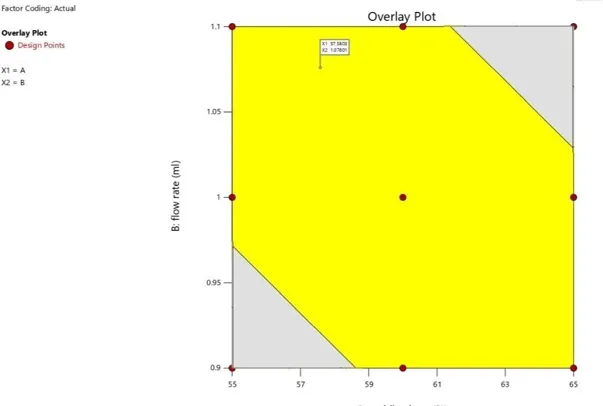
Fig. 6: Overlay plot defining the design space for mobile phase composition and flow rate
The overlay plot (Fig. 6) delineates the design space within which the target retention time can be reliably achieved (shaded region), as distinct from the restricted region outside which the target response cannot be met.
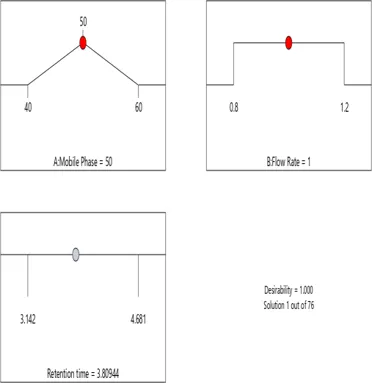
Fig. 7: Desirability ramp function showing the software-suggested optimum levels of mobile phase composition and flow rate
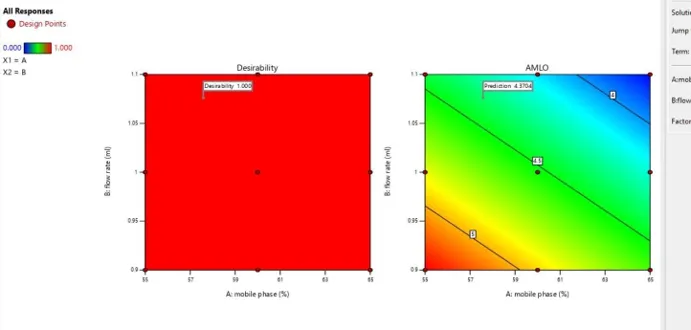
Fig. 8: Three-dimensional desirability plot for the optimized RP-HPLC method
Numerical optimization generated 76 candidate solutions, all with a desirability value of 1.000, indicating a globally optimal combination of criteria across the design space. The solution selected for further validation used a mobile phase of phosphate buffer and acetonitrile in the ratio 40:60 (v/v) at a flow rate of 1.0 mL/min, giving a retention time of 4.6 min for Amlodipine — consistent with the final optimized chromatographic conditions summarised in Table 5.
Table 5: Final optimized chromatographic conditions for estimation of Amlodipine
|
Parameter |
Optimized Condition |
|
Instrument |
Shimadzu LC-2010CHT |
|
Column |
C18 (250 × 4.6 mm), 5 µm |
|
Mobile phase |
Phosphate buffer : Acetonitrile (40:60 v/v) |
|
Flow rate |
1.0 mL/min |
|
Detection wavelength |
238 nm |
|
Injection volume |
20 µL |
|
Retention time |
4.6 min |
4.4 Method Validation
Specificity: No interference was observed at the retention time of Amlodipine in the blank chromatogram, and the retention times of standard (4.492 min) and sample (4.489 min) solutions were in close agreement, confirming the specificity of the method for Amlodipine in the presence of tablet excipients (Fig. 9).
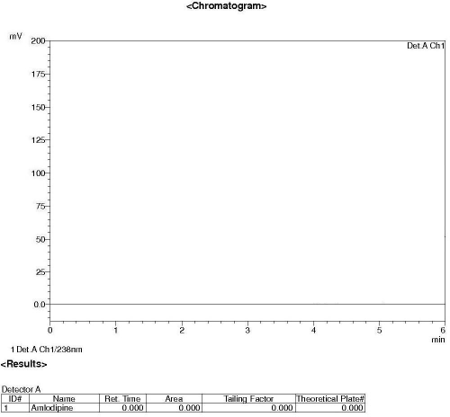
Fig. 9(a): Specificity chromatogram — Blank
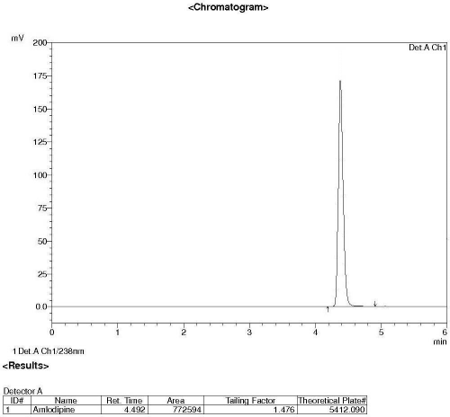
Fig. 9(b): Specificity chromatogram — Standard solution
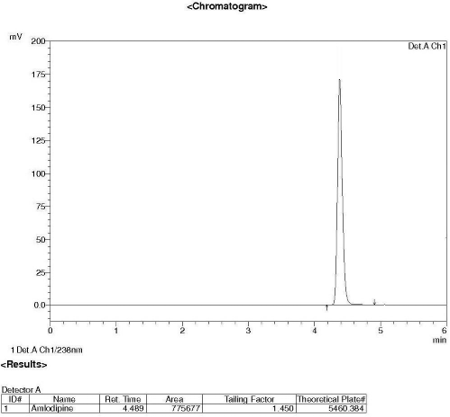
Fig. 9(c): Specificity chromatogram — Sample (tablet) solution
Precision: System precision, evaluated from replicate injections of the standard solution, gave an average peak area of 767242 with % RSD of 0.43, well within the acceptance limit of ≤ 2.0%. The corresponding % assay of the sample was 99.25% (average). Intermediate precision, performed on a different occasion, gave % RSD of 0.76 for system suitability and a % assay of 99.57%, with a difference of only 0.32% between the two precision determinations (Table 6), demonstrating that the method is reproducible.
Table 6: Precision (repeatability and intermediate precision) results for Amlodipine
|
Precision Study |
System Suitability % RSD |
% Assay (mean) |
|
Repeatability (System precision) |
0.43 |
99.25 |
|
Intermediate precision |
0.76 |
99.57 |
Accuracy: Recovery studies performed at 80%, 100% and 120% of the target concentration gave individual recoveries of 100.62%, 100.17% and 99.78%, with a mean recovery of 100.19% and % RSD of 0.42 (Table 7), all within the acceptance range of 98-102%, confirming that the method is accurate.
Table 7: Recovery (accuracy) data for Amlodipine
|
Level (%) |
% Recovery |
|
80 |
100.62 |
|
100 |
100.17 |
|
120 |
99.78 |
|
Mean ± %RSD |
100.19 ± 0.42 |
Linearity and Range: The method was found to be linear over the concentration range corresponding to 80-120% of the target concentration (32-48 ppm), with peak area increasing proportionally with concentration and a correlation coefficient of 0.999, exceeding the acceptance criterion of ≥ 0.99 (Fig. 10, Table 8).
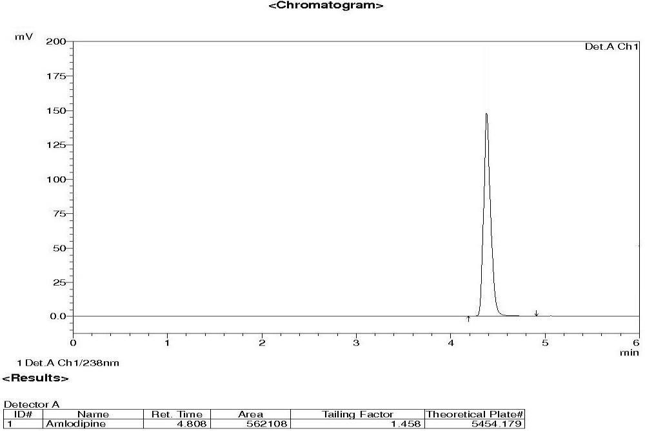
Fig. 10: Linearity plot of Amlodipine (peak area versus concentration, 80-120%)
Table 8: Linearity data for Amlodipine
|
Concentration (%) |
Concentration (ppm) |
Peak Area |
|
80 |
32.0 |
562108 |
|
90 |
36.0 |
621972 |
|
100 |
40.0 |
682934 |
|
110 |
44.0 |
753958 |
|
120 |
48.0 |
816929 |
Solution Stability: The standard and sample solutions of Amlodipine were found to be stable at room temperature up to 24 h, with a % difference in assay of 0.54% at 4 h and 1.47% at 24 h relative to the initial value, both within the acceptance limit of ≤ 2.0%.
4.5 Summary of Validation Parameters
Table 9: Summary of RP-HPLC method validation parameters as per ICH Q2(R2)
|
Validation Parameter |
Result |
Acceptance Criterion |
|
Specificity |
No interference from blank/ excipients |
No interference at Amlodipine RT |
|
Precision (system suitability, %RSD) |
0.43 |
≤ 2.0% |
|
Precision (% Assay) |
99.25% |
90.0 - 110.0% |
|
Intermediate precision (% Assay) |
99.57% |
90.0 - 110.0% |
|
Accuracy (mean % recovery) |
100.19% |
98.0 - 102.0% |
|
Linearity (correlation coefficient) |
0.999 |
≥ 0.99 |
|
Solution stability (% difference, 24 h) |
1.47% |
≤ 2.0% |
4.6 Discussion
The AQbD-based method reported here achieves a retention time of 4.6 min for Amlodipine, comparable to or shorter than several previously reported RP-HPLC methods, including 3.44 min, 12.3 min and 4.65 min in other mobile-phase systems22,23,26, while additionally providing a mechanistic, design-space-based justification for the selected chromatographic conditions rather than conditions arrived at solely by trial and error. Compared with methods that employ higher proportions of organic modifier or additional solvents such as methanol in ternary mixtures23, the present method uses a simpler binary phosphate buffer-acetonitrile system in a moderate 40:60 ratio, in line with green analytical chemistry objectives of reduced solvent consumption and toxicity without sacrificing resolution, sensitivity or run time.
The central composite design confirmed that both mobile-phase composition and flow rate significantly influence retention time, with the linear model providing an adequate and statistically significant fit (F = 174.65, p < 0.0001). The design space and desirability-based optimization approach used here is consistent with recommendations for AQbD in RP-HPLC method development12,14,18, and offers a more defensible basis for regulatory submission than conventional OFAT-optimized methods, since the design space itself constitutes evidence of method robustness across the studied operating range.
Overall, the developed method meets all ICH Q2(R2) validation requirements for specificity, precision, accuracy, linearity and solution stability, and is well suited for routine quality control application in the pharmaceutical industry.
5. CONCLUSION
A simple, rapid, precise, accurate and eco-friendly RP-HPLC method was successfully developed and validated for the estimation of Amlodipine in bulk drug and tablet dosage form using an Analytical Quality by Design approach. A central composite design was used to study the effect of mobile-phase composition and flow rate on the retention time of Amlodipine, and the resulting design space and desirability analysis identified phosphate buffer:acetonitrile (40:60, v/v) at a flow rate of 1.0 mL/min as the optimum condition, giving a retention time of 4.6 min. The method was validated as per ICH Q2(R2) guidelines and was found to be specific, precise (%RSD < 1.0), accurate (mean recovery 100.19%), linear (r = 0.999) over 80-120% of the target concentration, and stable for up to 24 h at room temperature. The AQbD-based optimization strategy, combined with a reduced-solvent, short-run-time mobile phase, makes this method both scientifically robust and environmentally responsible, and it can be reliably employed for routine quality control of Amlodipine in bulk drug and tablet dosage form in the pharmaceutical industry.
6. FUTURE SCOPE:
The design-space-based validation approach makes the method well suited to regulatory submissions for new formulations and generic products..
REFERENCES

Nikita Rathod, S. A. Jadhav, Development and Validation of an Eco-Friendly, Quality-by-Design (QbD)-Based RP-HPLC Method for Estimation of Amlodipine in Bulk and Tablet Dosage Form, Int. J. of Pharm. Sci., 2026, Vol 4, Issue 9, 322-336. https://doi.org/10.5281/zenodo.22237258
 10.5281/zenodo.22237258