

We use cookies to ensure our website works properly and to personalise your experience. Cookies policy
Surabhi Dayakar Rao College of Pharmacy, Rimmanaguda, Telangana, India, 502312
A simple, precise, and reliable RP-HPLC method was developed and optimized for the quantitative estimation of Baloxavir in pharmaceutical dosage forms. Chromatographic separation was achieved using a Platisil C18 column (250 × 4.6 mm, 5 µm) with a mobile phase composed of Methanol and KH?PO? buffer (pH 3.5) in the ratio of 65:35 v/v. The detection wavelength was set at 247 nm with a flow rate of 1.0 ml/min and an injection volume of 20 µL. The method optimization was carried out using a Quality by Design (QbD) approach employing a Box-Behnken design to evaluate the influence of critical method parameters such as organic phase ratio, buffer pH, and flow rate. The optimized method demonstrated good system suitability with acceptable tailing factor and high theoretical plate count, ensuring efficient separation and peak symmetry. The developed method was validated according to ICH guidelines for parameters including linearity, precision, accuracy, sensitivity, and robustness. The method exhibited excellent linearity over the concentration range of 10–50 µg/ml with a correlation coefficient (R²) of 0.999. Precision studies showed %RSD values less than 2%, indicating good repeatability and intermediate precision. Accuracy studies revealed recovery within the range of 98–102%, confirming the reliability of the method. The LOD and LOQ values indicated adequate sensitivity, while robustness studies confirmed the stability of the method under small deliberate variations. Hence, the developed RP-HPLC method is suitable for routine quality control analysis of Baloxavir in pharmaceutical formulations.
High Performance Liquid Chromatography is now one of the most powerful tools in analytical chemistry. It has the ability to separate, identify, and quantify the compounds that are present in any sample that can be dissolved in a liquid. High performance liquid chromatography (HPLC) is the most accurate analytical methods widely used for the quantitative as well as qualitative analysis of drug product. [1]
The principle is that a solution of the sample is injected into a column of a porous material (stationary phase) and a liquid (mobile phase) is pumped at high pressure through the column. The separation of sample is based on the differences in the rates of migration through the column arising from different partition of the sample between the stationary and mobile phase. Depending upon the partition behaviour of different components, elution at different time takes place. [2] The sample compound with the greater affinity to the stationary layer will travel slower and for a shorter distance in comparison to compounds with less affinity which travel faster and for a longer distance.
In normal phase chromatography, mobile phase is non-polar and stationary phase is polar. Hence, the station phase retains the polar analyte. An increase in polarity of solute molecules increases the adsorption capacity leading to an increased elution time. Chemically modified silica (cyanopropyl, aminopropyl and diol) is used as a stationary phase in this chromatography. [7] For example. A typical column has an internal diameter of around 4.6 mm, and a length in the range of 150 to 250 mm. Polar compounds in the mixture that are passed through the column will stick longer to the polar silica than the non-polar compounds. Therefore, the non-polar ones will pass more quickly through the column. [8]
RP-HPLC has a non-polar stationary phase and polar or moderately polar mobile phase. RP-HPLC is based on the principle of hydrophobic interaction [9]. In a mixture of components those analytes which are relatively less polar will be retained by the non-polar stationary phase longer than those which are relatively more polar. Therefore, the most polar component will elute first. [10]
METHOD DEVELOPMENT ON HPLC
Physicochemical properties of a drug molecule play an important role in method development. For Method development one has to study the physical properties like solubility, polarity, pKa and pH of the drug molecule. Polarity is a physical property of a compound. It helps an analyst, to decide the solvent and composition of the mobile phase. The solubility of molecules can be explained on the basis of the polarity of molecules. Polar, e.g. water, and nonpolar, e.g. benzene, solvents do not mix. In general, like dissolves like i.e., materials with similar polarity are soluble in each other. The selection of mobile phase or diluents is based on the solubility of analyte. The analyte must be soluble in diluents and must not react with any of its component. PH and pKa plays an important role in HPLC method development. The pH value is defined as the negative of the logarithm to base 10 of the concentration of the hydrogen ion.
pH = - log10[H3O+].
Selecting a proper pH for ionizable analytes often leads to symmetrical and sharp peaks in HPLC. Sharp, symmetrical peaks are necessary in quantitative analysis in order to achieve low detection limits, low relative standard deviations between injections, and reproducible retention times. [11-12]
2. Selection of chromatographic conditions:
Selection of column: Selection of the stationary phase/column is the first and the most important step in method development. The development of a rugged and reproducible method is impossible without the availability of a stable, high performance column. To avoid problems from irreproducible sample retention during method development, it is important that columns be stable and reproducible. A C8 or C18 column made from specially purified, less acidic silica and designed specifically for the separation of basic compounds is generally suitable for all samples and is strongly recommended.
Buffer Selection
Choice of buffer is governed by the pH that is desired. The typical pH range for reversed phase on silica-based packing is pH 2 to 8. It is important that the buffer has a pKa close to the desired pH since buffer controls pH best at their pKa.
While developing the analytical method on RP-HPLC the first step which is followed is the selections of various chromatographic parameters like selection of mobile phase, selection of column, selection of flow rate of mobile phase, selection of pH of mobile phase. All of these parameters are selected on the basis of trials and followed by considering the system suitability parameters. Typical parameters of system suitability are e.g. retention time should be more than 5 min, the theoretical plates should be more than 2000, the tailing factor should be less than 2, resolution between 2 peaks should be more than 5, % R.S.D. of the area of analyte peaks in standard chromatograms should not be more than 2.0 %. like other.
4. Sample preparation:
Sample preparation is an essential part of HPLC analysis, intended to provide a reproducible and homogenous solution that is suitable for injection onto the column. The aim of sample preparation is a sample aliquot that, is relatively free of interferences, will not damage the column, and Is compatible with the intended HPLC method that is, the sample solvent will dissolve in the mobile phase without affecting sample retention or resolution. Sample preparation begins at the point of collection, extends to sample injection onto the HPLC column. [30]
5. Method optimization:
Identify the “weaknesses” of the method and optimize the method through experimental design. Understand the method performance with different conditions, different instrument set ups and different samples. [31]
6. Method Validation: Validation is the confirmation by examination and the provision of objective evidence that the particular requirements for a specific intended use are fulfilled.
DRUG PROFILE BOLOXAVIR
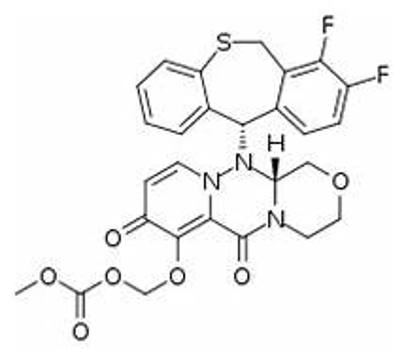
CHEMICAL STRUCTURE OF BOLOXAVIR
Table 1 : DRUG PROFILE
|
Property |
Value |
|
Molecular Formula |
C₂₇H₂₃F₂N₃O₇S |
|
Molecular Weight |
571.549 Da |
|
IUPAC Name |
({(12aR)-12-[(11S)-7,8-difluoro-6,11-dihydrodibenzo[b,e]thiepin-11-yl]-6,8-dioxo-3,4,6,8,12,12a-hexahydro-1H-[1,4]oxazino[3,4-c]pyrido[2,1-f][1,2,4]triazin-7-yl}oxy)methyl methyl carbonate1. |
|
ChemSpider ID |
59718643 |
|
Generic Name |
Baloxavir marboxil |
|
Brand Names |
Xofluza |
|
Drug Category |
Miscellaneous antivirals |
|
Indications |
Treatment of influenza A and B |
|
Pharmacology |
Polymerase acidic endonuclease inhibitor used to treat uncomplicated influenza123 |
|
Availability |
Available as an oral tablet (40 mg; 80 mg) |
MATERIALS AND METHODS
EXPERIMENTAL METHOD
Table 2: Instruments used
|
Sr. No |
Instrument |
Model |
|
1 |
HPLC |
WATERS, software: Empower, 2695 separation module.2487 UV detector. |
|
2 |
UV/VIS spectrophotometer |
LABINDIA UV 3000+ |
|
3 |
pH meter |
Adwa – AD 1020 |
|
4 |
Weighing machine |
Afcoset ER-200A |
|
5 |
Pipettes and Burettes |
Borosil |
|
6 |
Beakers |
Borosil |
Table 3: Chemicals used
|
Sr. No |
Chemical |
Brand |
|
1 |
Baloxavir |
Supplied by MSN LAB |
|
2 |
KH2PO4 |
FINAR chemical LTD |
|
3 |
Water and Methanol for HPLC |
Standard solutions Ltd |
|
4 |
Acetonitrile for HPLC |
Standard solutions Ltd |
|
5 |
HCl, H2O2, NaOH |
MERCK |
HPLC METHOD DEVELOPMENT:
Wave length selection : UV spectrum of 10 µg / ml each drug of Baloxavir in diluent (mobile phase composition) was recorded by scanning in the range of 200nm to 400nm. From the UV spectrum wavelength selected as 247nm. At this wavelength both the drugs show good absorbance.
PREPARATION OF BUFFER AND MOBILE PHASE:
Preparation of KH2PO4 pH 3.5:
To prepare phosphate buffer solution, by adding 0.1ml of formic acid in 1000ml water. Adjust this solution to pH 3.5 by using sodium hydroxide.
Preparation of mobile phase:
Mix a mixture of above buffer 650ml (65%), 350 ml Methanol (35%) and degas in ultrasonic water bath for 5 minutes. Filter through 0.45 µ filter under vacuum filtration.
Diluent Preparation:
Methanol: KH2PO4 PH 3.5 (65:35) ratio.
System Suitability:
Tailing factor for the peaks due to Baloxavir in Standard solution should not be more than 2.0
Theoretical plates for the Baloxavir peaks in Standard solution should not be less than 2000
Calculation: (For Baloxavir)

Where:
AT = average area counts of sample preparation.
AS = average area counts of standard preparation.
WS = Weight of working standard taken in mg.
P = Percentage purity of working standard
LC = Label Claim mg/ml.
VALIDATION PARAMETERS
Standard Solution Preparation: Accurately weigh and transfer 25 mg of Baloxavir working standard into two 25 ml clean dry volumetric flasks add Diluents and sonicate to dissolve it completely and make volume up to the mark with the same solvent. (Stock solution). Further pipette 0.3ml of each of the above stock solutions into a two 10ml volumetric flasks and dilute up to the mark with Diluents.
Sample Solution Preparation: Accurately weigh and transfer equivalent to 25 mg of Baloxavir equivalent weight of the sample into two 25 ml clean dry volumetric flasks add about 7ml of Diluents and sonicate to dissolve it completely and make volume up to the mark with the same solvent. (Stock solution).Further pipette 0.3ml of each of the above stock solution into a two 10ml volumetric flasks and dilute up to the mark with Diluents.
Procedure: Inject 10 µL of the standard, sample into the chromatographic system and measure the areas for the Baloxavir peaks and calculate the % Assay by using the formulae.
2. LINEARITY :
Preparation of stock solution: Accurately weigh and transfer 25 mg of Baloxavir working standard into two 25 ml clean dry volumetric flasks add Diluents and sonicate to dissolve it completely and make volume up to the mark with the same solvent. (Stock solution)
Preparation of Level – I (10ppm of Baloxavir): 0.1ml of stock solution has taken in 10ml of volumetric flask dilute up to the mark with Diluents.
Preparation of Level – II (20ppm of Baloxavir): 0.2ml of stock solution has taken in 10ml of volumetric flask dilute up to the mark with Diluents.
Procedure : Inject each level into the chromatographic system and measure the peak area.Plot a graph of peak area versus concentration (on X-axis concentration and on Y-axis Peak area) and calculate the correlation coefficient.
3.PRECISION:
Preparation of stock Solution:Accurately weigh and transfer 25 mg of Baloxavir working standard into a 25 ml clean dry volumetric flask add Diluents and sonicate to dissolve it completely and make volume up to the mark with the same solvent. (Stock solution)
Further pipette 0.3ml of the above stock solution into a 10ml volumetric flask and dilute up to the mark with Diluents.
Procedure: The standard solution was injected for six times and measured the area for all six injections in HPLC. The %RSD for the area of six replicate injections was found to be within the specified limits.
4. PRECISION/RUGGEDNESS:
To evaluate the intermediate precision (also known as Ruggedness) of the method, Precision was performed on different day within the laboratory.
Preparation of stock solution: Accurately weigh and transfer 25 mg of Baloxavir working standard into a 25 ml clean dry volumetric flask add Diluents and sonicate to dissolve it completely and make volume up to the mark with the same solvent. (Stock solution)Further pipette 0.3ml of the above stock solution into a 10ml volumetric flask and dilute up to the mark with Diluents.
Procedure:
The standard solution was injected for six times and measured the area for all six injections in HPLC. The %RSD for the area of six replicate injections was found to be within the specified limits.
5.ACCURACY:
For accuracy determination, three different concentrations were prepared separately i.e. 50%, 100% and 150% for the analyte and chromatograms are recorded for the same.
Preparation of Standard stock solution:
Accurately weigh and transfer 25 mg of Baloxavir working standard into a 25 ml clean dry volumetric flask add Diluents and sonicate to dissolve it completely and make volume up to the mark with the same solvent. (Stock solution)
Further pipette 0.3ml of the above stock solution into a 10ml volumetric flask and dilute up to the mark with Diluents.
Preparation Sample solutions:
For preparation of 50% solution (With respect to target Assay concentration):
Accurately weigh and transfer 12.5mg of Baloxavir working standard into a 25 ml clean dry volumetric flask add Diluents and sonicate to dissolve it completely and make volume up to the mark with the same solvent. (Stock solution)
Further pipette 0.3ml of the above stock solution into a 10ml volumetric flask and dilute up to the mark with Diluents.
For preparation of 100% solution (With respect to target Assay concentration):
Accurately weigh and transfer 25 mg of Baloxavir working standard into a 25 ml clean dry volumetric flask add Diluents and sonicate to dissolve it completely and make volume up to the mark with the same solvent. (Stock solution)
Further pipette 0.3ml of the above stock solution into a 10ml volumetric flask and dilute up to the mark with Diluents.
For preparation of 150% solution (With respect to target Assay concentration):
Accurately weigh and transfer 37.5 mg of Baloxavir working standard into a 25ml clean dry volumetric flask add Diluents and sonicate to dissolve it completely and make volume up to the mark with the same solvent. (Stock solution)
Further pipette 0.3ml of the above stock solution into a 10ml volumetric flask and dilute up to the mark with Diluents.
Procedure:
Inject the standard solution, Accuracy -50%, Accuracy -100% and Accuracy -150% solutions.
Calculate the Amount found and Amount added for Baloxavir and calculate the individual recovery and mean recovery values.
6. LIMIT OF DETECTION:
Preparation of Baloxavir solution:
Preparation of 0.6 µg/ml solution: Accurately weigh and transfer 25 mg of Baloxavir working standard into a 25 ml clean dry volumetric flask add Diluents and sonicate to dissolve it completely and make volume up to the mark with the same solvent. (Stock solution). Further pipette 1ml of the above stock solution into a 10ml volumetric flask and dilute up to the mark with Diluents. Further pipette 0.6 ml of the above stock solution into a 10ml volumetric flask and dilute up to the mark with Diluent. (0.6 ppm).
Preparation of Baloxavir solution:
Preparation of 2.2µg/ml solution:
Accurately weigh and transfer 25 mg of Baloxavir working standard into a 25 ml clean dry volumetric flask add Diluents and sonicate to dissolve it completely and make volume up to the mark with the same solvent. (Stock solution). Further pipette 1ml of the above stock solution into a 10ml volumetric flask and dilute up to the mark with Diluents. Further pipette 2.2ml of the above stock solution into a 10ml volumetric flask and dilute up to the mark with Diluent. (2.2 ppm).
Standard solution 30 µg/ml of Baloxavir prepared and analyzed using the varied flow rates along with method flow rate.
Standard solution 30 µg/ml of Baloxavir was prepared and analyzed using the varied Mobile phase composition along with the actual mobile phase composition in the method.
RESULTS AND DISCUSSION
DEVELOPMENT BY QBD OPTIMIZATION
Table 4: SOFTWARE INFORMATION
|
File Version |
22.0.4.0 |
|
|
|
Study Type |
Response Surface |
Subtype |
Randomized |
|
Design Type |
Box-Behnken |
Runs |
17 |
|
Design Model |
Quadratic |
Blocks |
No Blocks |
|
Build Time (ms) |
4.00 |
|
|
Table 5: FACTORS
|
Factor |
Name |
Type |
Low Actual |
High Actual |
Low Coded |
High Coded |
Mean |
Std. Dev. |
|
A |
organic ratio |
Numeric |
60.00 |
70.00 |
-1.000 |
1.000 |
65.000 |
3.430 |
|
B |
buffer ph |
Numeric |
3.00 |
4.00 |
-1.000 |
1.000 |
3.500 |
0.343 |
|
C |
flow rate |
Numeric |
0.90 |
1.10 |
-1.000 |
1.000 |
1.000 |
0.069 |
Table 6: RESPONSES
|
Response |
Name |
Obs |
Analysis |
Minimum |
Maximum |
Mean |
Std. Dev. |
Ratio |
Trans |
Model |
|
Y1 |
Tailing factor |
17 |
Polynomial |
1.06 |
1.19 |
1.08 |
0.030 |
1.12 |
None |
Mean |
|
Y2 |
PLATE-COUNT |
17 |
Polynomial |
3232.00 |
3305.00 |
3257.41 |
20.76 |
1.02 |
None |
Linear |
TRIAL 1
Instrument used : High performance liquid chromatography equipped with Auto Sampler and PDA detector
Temperature : Ambient
Column : Platisil C18, (250×4.6mm, 5mm)
Mobile phase : 60% Methanol: 40% KH2PO4 PH-3.5
Flow rate : 0.90 ml per min
Injection volume : 20 ml
λmax : 247 nm.
Run time : 10 min.
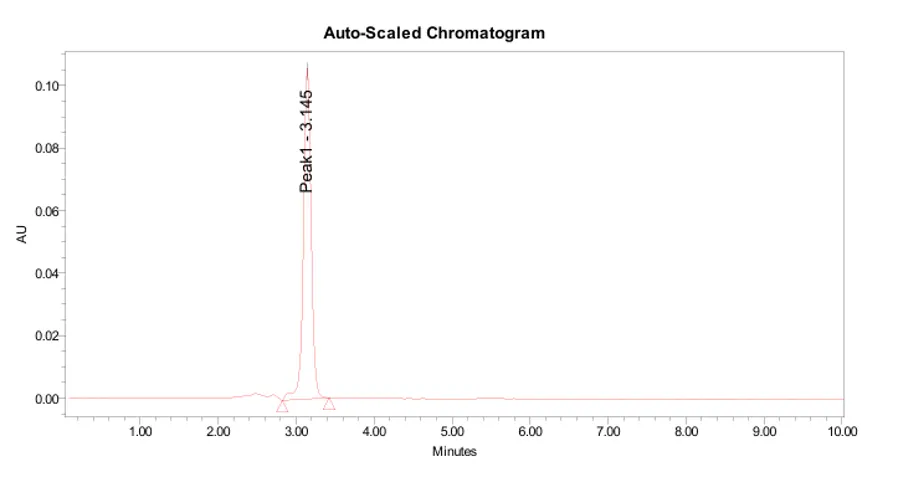
TRAIL 2
Instrument used : High performance liquid chromatography equipped with Auto Sampler and PDA detector
Temperature : Ambient
Column : Platisil C18, (250×4.6mm, 5mm)
Mobile phase : 65% Methanol: 35% KH2PO4 PH-3.5
Flow rate : 1.0 ml per min
Injection volume : 20 l
λmax : 247 nm.
Run time : 10 min.
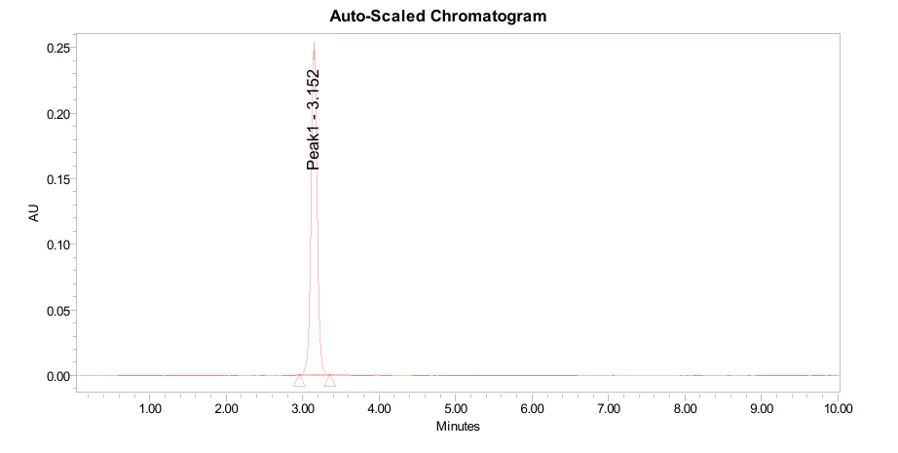
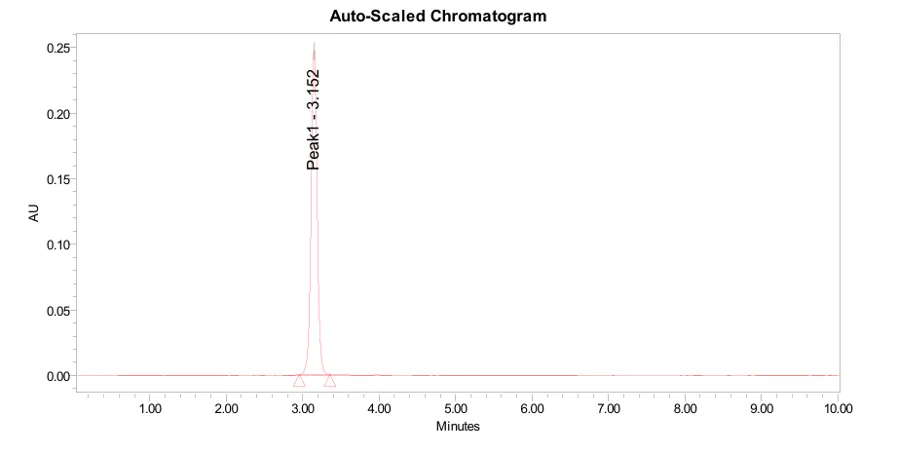
TRIAL - 3
Instrument used : High performance liquid chromatography equipped with Auto Sampler and PDA detector
Temperature : Ambient
Column : Platisil C18, (250×4.6mm, 5m)
Mobile phase : 65% Methanol: 35% KH2PO4 PH-3.5
Flow rate : 1.0 ml per min
Injection volume : 20 l
λmax : 247 nm.
Run time : 10 min.
POINT PREDICTION
|
Factor |
Name |
Level |
Low Level |
High Level |
Std. Dev. |
Coding |
|
A |
organic ratio |
65.00 |
60.00 |
70.00 |
0.000 |
Actual |
|
B |
buffer ph |
3.50 |
3.00 |
4.00 |
0.000 |
Actual |
|
C |
flow rate |
1.00 |
0.90 |
1.10 |
0.000 |
Actual |
Response-1 TAILING FACTOR OF BALOXAVIR: -
|
Response |
Prediction |
SE Mean |
95% CI low |
95% CI high |
SE Pred |
95% PI low |
95% PI high |
|
Tailing factor |
1.07941 |
7.400E-003 |
1.06 |
1.10 |
0.031 |
1.01 |
1.15 |
|
Platecount |
3257.41 |
4.04 |
3248.67 |
3266.15 |
17.16 |
3220.34 |
3294.49 |
Table 7: FIT SUMMARY
|
Souces |
Sum of square |
Df |
Mean square |
F value |
P value Prob>F |
|
|
Mean vs Total |
19.81 |
1 |
19.81 |
|
|
Suggested |
|
Linear vs Mean |
4.525E-003 |
3 |
1.508E-003 |
1.89 |
0.1810 |
|
|
2FI vs Linear |
2.550E-003 |
3 |
8.500E-004 |
1.09 |
0.3986 |
|
|
Quadratic vs 2FI |
3.064E-003 |
3 |
1.021E-003 |
1.50 |
0.2950 |
Suggested |
|
Cubic vs Quadratic |
4.275E-003 |
3 |
1.425E-003 |
11.87 |
0.0185 |
Aliased |
|
Residual |
4.800E-004 |
4 |
1.200E-004 |
|
|
|
|
Total |
19.82 |
17 |
1.17 |
|
|
|
Response 1: Tailing factor ANOVA for Response Surface Quadratic Model
|
Souces |
Sum of square |
Df |
Mean square |
F value |
P value Prob>F |
|
|
Model |
0.000 |
0 |
|
|
|
significant |
|
Residual |
0.015 |
16 |
9.309E-004 |
|
|
|
|
Lack of Fit |
0.014 |
12 |
1.201E-003 |
10.01 |
0.0196 |
significant |
|
Pure Error |
4.800E-004 |
4 |
1.200E-004 |
|
|
|
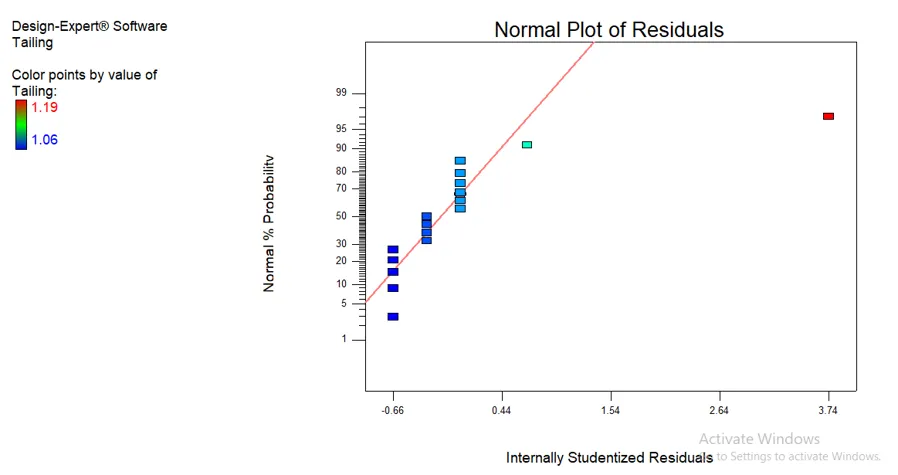
Figure 1: Normal plot of Residuals for BALOXAVIR
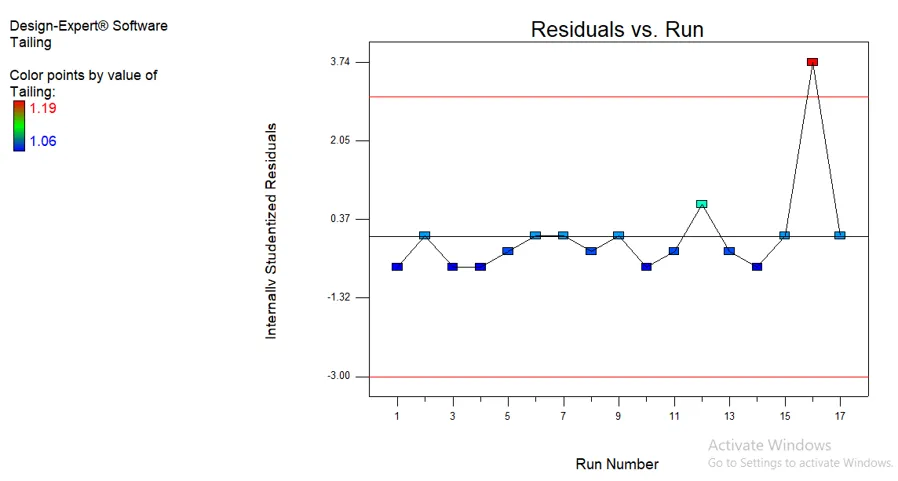
Figure 2: Residuals vs. Run for BALOXAVIR
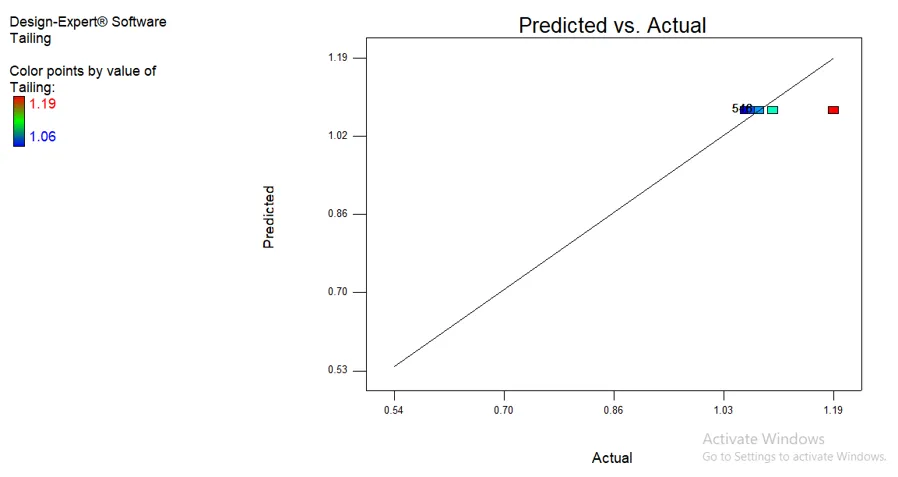
Figure 3: Predicted vs. Actual for BALOXAVIR
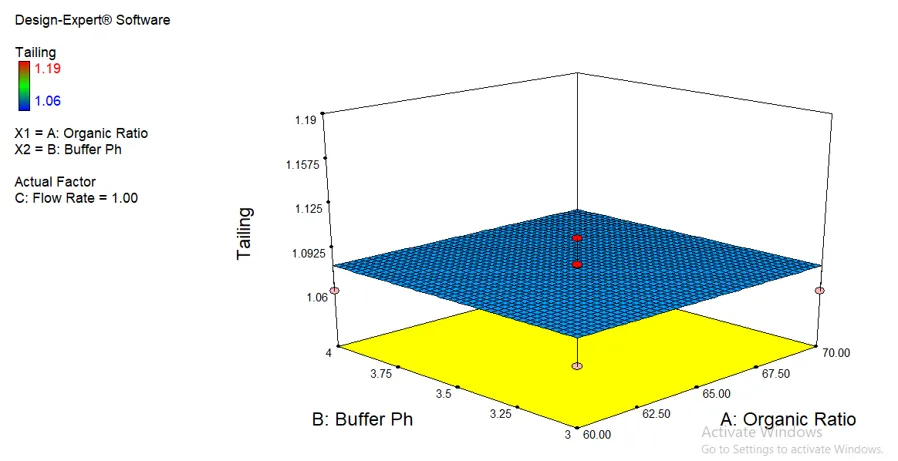
Figure 4 : 3D Surface for BALOXAVIR
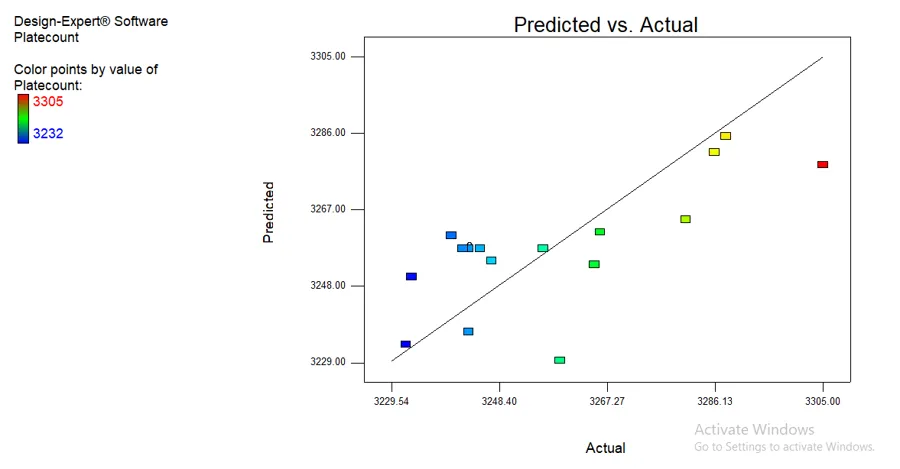
Figure 5: Predicted vs. Actual for BALOXAVIR
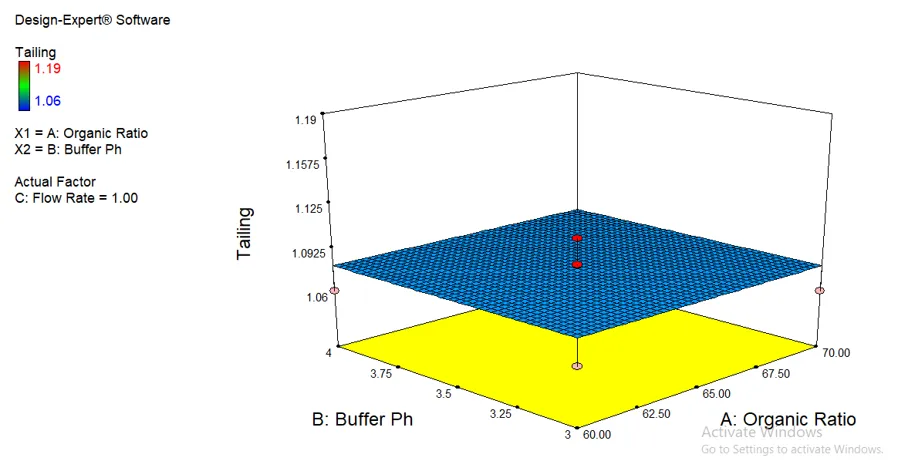
Figure 6 : 3D Surface for BALOXAVIR
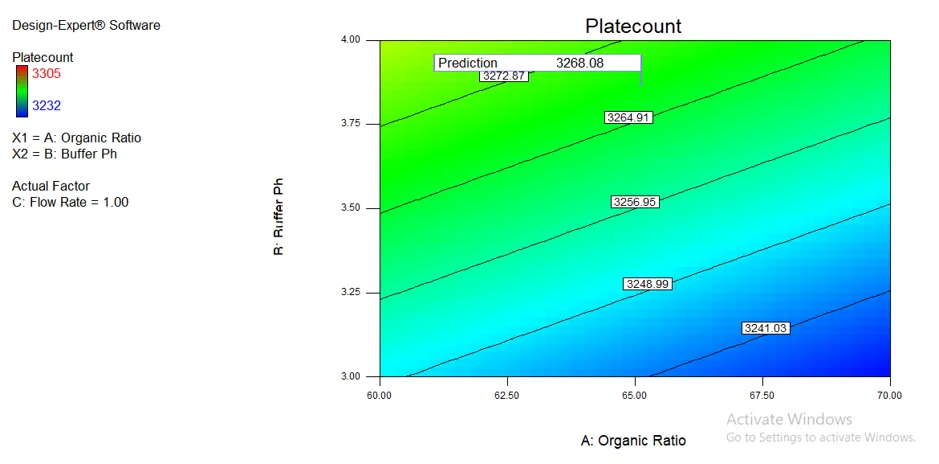
Figure 7 : PLATECOUNT for BALOXAVIR
LIMIT OF DETECTION FOR BALOXAVIR
The lowest concentration of the sample was prepared with respect to the base line noise and measured the signal to noise ratio.
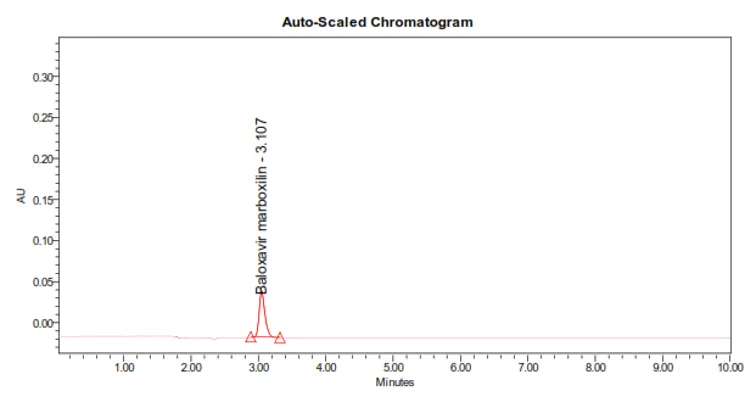
Figure 9: Chromatogram of Baloxavir showing LOD
Table 8: Results of LOD
|
Drug name |
Baseline noise(µV) |
Signal obtained (µV) |
S/N ratio |
Conc. In ppm |
|
Baloxavir |
96 |
286 |
2.97 |
0.67 |
LIMIT OF QUANTIFICATION FOR BALOXAVIR
The lowest concentration of the sample was prepared with respect to the base line noise and measured the signal to noise ratio.
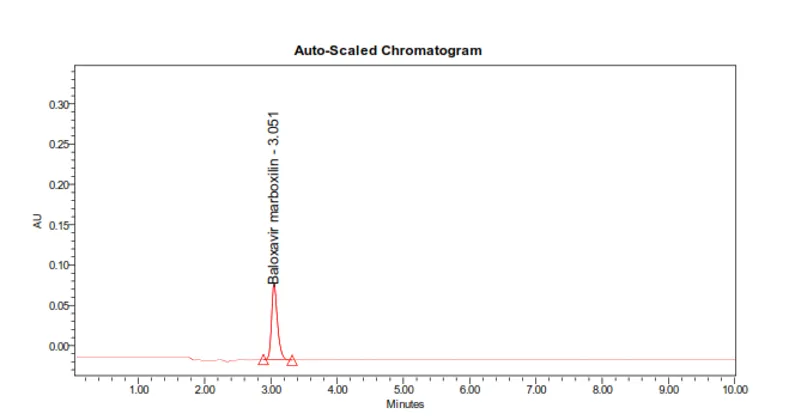
Figure 10: Chromatogram of Baloxavir showing LOQ
Table 9: Results of LOQ
|
Drug name |
Baseline noise(µV) |
Signal obtained (µV) |
S/N ratio |
Conc. In ppm |
|
Baloxavir |
96 |
958 |
9.97 |
2.25 |
Table 10: Results for variation in mobile phase composition for Baloxavir
|
Sr. No |
Change in Organic Composition in the Mobile Phase |
System Suitability Results |
|
|
USP Plate Count |
USP Tailing |
||
|
1 |
10% less |
3245 |
1.22 |
|
2 |
*Actual |
3212 |
1.15 |
|
3 |
10% more |
3239 |
1.09 |
* Results for actual Mobile phase composition have been considered from Accuracy standard.
Acceptance criteria:
The Retention time, USP plate count, USP tailing factor obtained for change of flow rate, variation in mobile phase was found to be within the acceptance criteria. Hence the method is robust.
SUMMARY:
A simple, accurate, and robust RP-HPLC method was successfully developed for the estimation of Baloxavir using a Platisil C18 column (250 × 4.6 mm, 5 µm) with a mobile phase consisting of Methanol and KH₂PO₄ buffer (pH 3.5) in the ratio of 65:35 v/v. Detection was carried out at 247 nm with a flow rate of 1.0 ml/min and injection volume of 20 µL. The method was optimized using Quality by Design (QbD) approach, where critical parameters such as organic ratio, buffer pH, and flow rate were systematically studied using Box-Behnken design. The optimized conditions showed acceptable system suitability parameters with tailing factor close to 1 and plate count above 3000, indicating good peak symmetry and efficiency. The method exhibited excellent linearity in the concentration range of 10–50 µg/ml with a correlation coefficient (R²) of 0.999.
CONCLUSION:
The developed RP-HPLC method was validated as per ICH guidelines and found to be precise, accurate, specific, and robust for the quantitative estimation of Baloxavir. The %RSD values for precision and intermediate precision were within acceptable limits (<2%), confirming the reproducibility of the method. Accuracy studies showed recovery within 98–102%, indicating reliability of the method. The LOD and LOQ values demonstrated adequate sensitivity, while robustness studies confirmed that small deliberate variations in chromatographic conditions did not significantly affect the results. Therefore, the proposed method can be successfully applied for routine quality control analysis of Baloxavir in pharmaceutical dosage forms.
REFERENCES


Lubna, Nakka Revathi, Podishetty Vyshnavi, Jilukara Haveela, Dindi Dakshayani, Development and Validation of RP-HPLC Methods for the Quantification of Baloxavir in Bulk and Pharmaceutical Dosage Forms by Qbd Approach, Int. J. of Pharm. Sci., 2026, Vol 4, Issue 6, 1751-1765. https://doi.org/10.5281/zenodo.20577511
 10.5281/zenodo.20577511