The clinical impact of biotechnology has been constrained by the limitations of traditional hypodermic injection of biopharmaceuticals. Microneedle patches have been proposed as a minimally invasive alternative. In this study, the translation of a dissolving microneedle patch designed for simple, painless self-administration of biopharmacetucials that generates no sharp biohazardous waste is assessed. To study the pharmacokinetics and safety of this approach, human growth hormone (hGH) was encapsulated in 600 ?m-long dissolving microneedles. Medical practitioners commonly use oral and parenteral dosage forms to administer drugs to patients. However, these forms have certain drawbacks, particularly concerning patients’ comfort and compliance. Transdermal drug delivery presents a promising solution to address these issues.
There has been a vast growth in the development of biopharmaceutical products over the past two decades and most of these are administered by intravenous or subcutaneous injection . novel drug-coated microneedle patch delivery system that targets high therapeutic doses of rhGH to the epidermal/dermal layer for rapid and efficient delivery1. approach is less invasive and pain-free compared to the parenteral route . Transdermal drug delivery involves using healthy skin as the application site, allowing drugs to enter the systemic circulation through diffusion or percutaneous absorption2
Microneedle patches have been developed to combine the convenience and safety of transdermal patches with the hypodermic needle’s ability to deliver macromolecules3 Dissolving microneedles (DMNs) are polymeric, microscopic needles that encapsulate pharmaceuticals within their matrix. Insertion of DMNs into the skin catalyzes the degradation of the polymeric compound, thereby releasing the drug for systemic or local deliver4. novel drug-coated microneedle patch delivery system that targets high therapeutic doses of rhGH to the epidermal/dermal layer for rapid and efficient delivery. The Zosano Pharma (ZP)-patch system consists of a titanium microneedle array attached to an adhesive patch seated in a retainer ring, and an applicator5. Microneedle (MN) is a novel drug delivery system with minimally invasive manner. Most previous experience with MN has demonstrated selfmanagement and painless administration MN is a versatile platform mostly using solid MN or dissolving MN involved in the delivery of drugs or vaccines. explored a water-soluble MN delivery rhGH6.
Human Growth Hormone (hGH) : Overview
Human growth Hormone (HGH) is one of the hormones regulating human growth. It is secreted from the somatotrope cells of the anterior pituitary. In turn, it stimulates release of insulinlike growth factor-1. These hormones cause a net increase in lipolysis and protein metabolism7. Growth hormone is essential for body growth but it also modulates metabolic pathways as well as neural, reproductive, immune, cardiovascular, and pulmonary functions. Numerous beneficial effects of growth hormone have led to its expanded therapeutic use in both children and adults8. In adulthood its main role is to regulate metabolism. In addition, age, gender, pubertal status, food, exercise, fasting, sleep, and body composition play important regulatory roles9. GH plays a multifaceted role in the human body, primarily influencing body composition by increasing muscle mass, reducing fat tissue, promoting bone formation, and regulating the metabolism of proteins, lipids, and glucose. Additional effects have been noted on endothelial function, cognitive performance, and circadian rhythms. This review examines the molecular mechanisms of GH in aging, its potential as an anti-aging therapy10. Having lower-than-normal levels of HGH is called growth hormone deficiency. It’s usually due to an issue with or damage to your pituitary gland that results in hypopituitarism. The main condition associated with higher-than-normal HGH levels is a condition called acromegaly, though it affects adults and children differently. It’s a rare condition11.
HGH Side Effects
Possible side effects of HGH use include:
Nerve, muscle, or joint pain
Swelling due to fluid in the body's tissues (edema)
Carpal tunnel syndrome
Numbness and tingling of the skin
High Colesterol level12
Limitations of Conventional hGH Delivery :
Conventional human growth hormone (HGH) therapy is mainly administered through repeated subcutaneous injections. Although this route provides effective systemic delivery, repeated administration may cause injection-related discomfort and increase the overall treatment burden13
The need for frequent injections over a prolonged treatment period can make therapy inconvenient and may negatively affect patient adherence14
Needle-related fear and anxiety may further reduce acceptance of injectable therapy, particularly in pediatric patients15.
Poor adherence is another important challenge associated with conventional HGH therapy. Missed or delayed injections can occur during long-term treatment and may influence the consistency of therapy16.
In addition, some HGH formulations require refrigerated storage, which can create practical difficulties during transportation, travel, and everyday handling 17
Since HGH is a protein-based therapeutic, it may also be susceptible to physical and chemical instability under unsuitable conditions such as inappropriate temperature, agitation, or other formulation-related stresses18
Transdermal Drug Delivery System (TDDS) :
The transdermal drug delivery system (TDDS) is a very successful and suitable approach for drug delivery because of its advantages over other drug delivery systems. The main advantages of this technique include sustained release, bypassing first-pass metabolism, and enhancing patient compliance19.
Functions
It protects from physical, chemical, and biological attacks and environmental conditions.
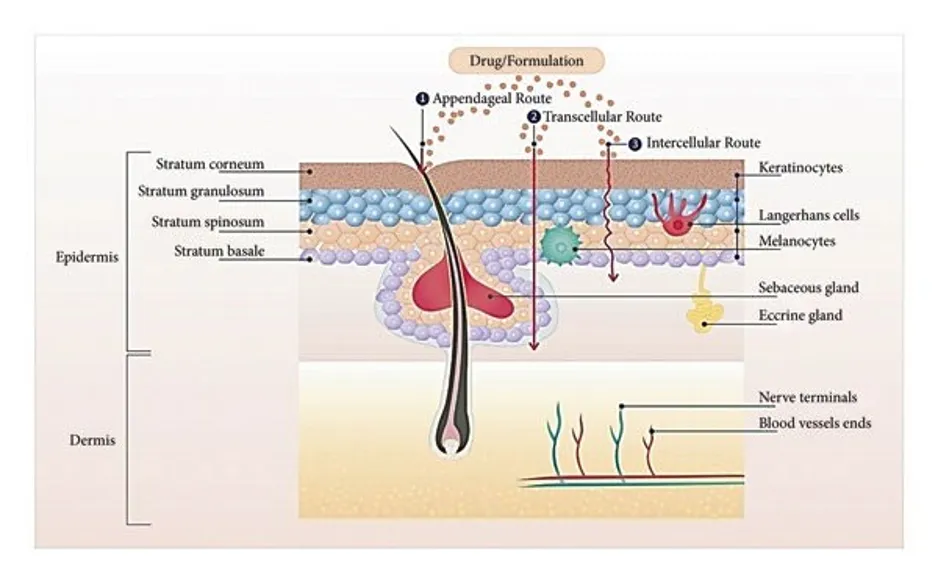
It works as a permeability barrier, enabling biological and chemical substances to be absorbed transdermally20.
Advantages :
Increase Patient compliance.
It does not interfere the liquid of the stomach and intestines.
Sustains stable and constant blood levels, providing control over an extended period.
Reduced plasma concentration levels of drugs.
Reduce fluctuations of drug in plasma levels, Utilize drug candidates with short halflife and Low therapeutic index.
In case of toxicity drug delivery is easy eliminated.
Reduce of dosing frequency an enhance Patients compliance.
Transdermal delivery enhances the effectiveness of numerous drugs by circumventing certain issues related to the medication, such as poor absorption and gastrointestinal irritation.
The streamlined medication schedule results in decreased differences in drug response both within and among patients21.
Disadvantages :
The drug must have some desirable physicochemical properties for penetration through stratum corneum and if the drug dose required for therapeutic value is more than 10 mg/day, the transdermal delivery will be very difficult.
Only relatively potent drugs are suitable candidates for TDDS because of the natural limits of drug entry imposed by the skin’s impermeability.
Some patients develop contact dermatitis at the site of application for one or more of the system components, necessitating discontinuation.
Clinical need is another area that has to be examined carefully before a decision is made to develop a transdermal product.
The barrier function of the skin changes from one site to another on the same person, from person to person and with age22.
Microneedles : Defination And Classification
A microneedle is a three-dimensional (3D) micromechanical structure and has been in the spotlight recently as a drug delivery system (DDS). Because microneedle delivers the target drug after penetrating the skin barrier, the therapeutic effects of microneedles proceed from its 3D structural geometr23.
Classification :
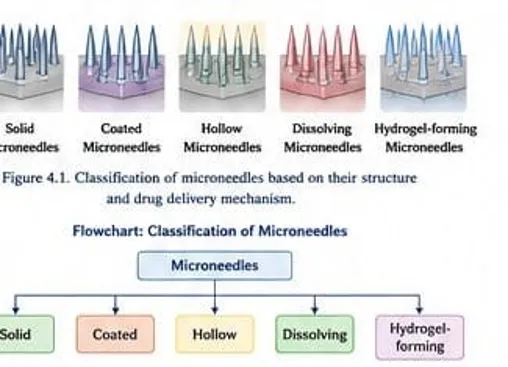
Solid Microneedles
Coated Microneedles
Dissolving Microneedles
Hollow Microneedles
Hydrogel-Forming Microneedles24
Dissolving Microneedles Patches :
The design of dissolving microneedles is governed by a number of interdependent materials and fabrication constraints, one of which is the need for microneedles to have sufficient strength to insert into skin without mechanical failure. We therefore measured and simulated microneedle mechanical properties as a function of microneedle material composition and geometry, and then imaged insertion of optimized microneedles into skin25. There are several designs of microneedles that have been the focus of much attention over the last few decades. Each type of microneedle is classified according to their method of drug delivery namely: (a) solid, (b) hollow, (c) coated, (d) hydrogel and (e) dissolving microneedles26. With a half-life of t½ = 1.1 h (ANOVA, p > 0.05), hGH delivered by any technique rapidly increased to a peak hGH plasma concentration at tmax ≈ 0.7 h (ANOVA, p > 0.05) before dramatically declining over the following 6 hours27. Microneedles can increase skin permeability, increase drug concentration in local skin lesions, and reduce systemic toxicity. Microneedles have been used to treat a variety of common skin conditions, such as acne, hair loss atopic dermatitis(AD),psoriasis,scarring28 the Progress in the Application of Dissolving Microneedles in Biomedicine. The Progress in the Application of Dissolving Microneedles in Biomedicine.
Material used in Dissolving Microneedles:
A variety of materials such as silicon, stainless steel, sugar, and polymers have been used to fabricate solid, coated, hollow, or dissolvable microneedles29. Various types of polymers with diverse characteristics have been employed in the production of polymeric microneedles. Microneedles dissolve, swell, or break down when inserted into the skin, releasing the drugs inside. Polymer selection is critical in microneedle design, impacting strength, penetration, and drug release.
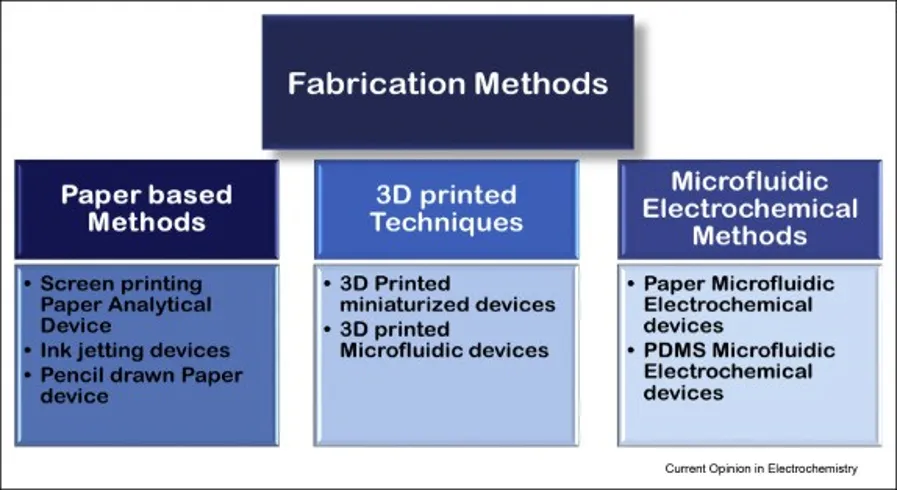
The fabrication process is a key aspect of developing PPMNs. The choice of fabrication method depends on various factors, including the manufacturing material, access to specific technologies, and the intended application.27 The fabrication approach allows for precise control of the MN geometry, dimensions, and porosity, enabling the tailored design of the drug delivery system to meet specific therapeutic requirements31.
Mechanism of hGH Delivery Through Skin :
To evaluate the bioavailability and bioactivity of human growth hormone (hGH) delivered transdermally through microchannels (MCs) in the skin created by radio-frequency (RF) ablation32. Topical delivery: Nanocarbon carriers can be incorporated into gels, creams, or dressings for localized treatment of skin infections or inflammation, enhancing permeation and sustained release at the site of application33.
Factors affecting Delivery :
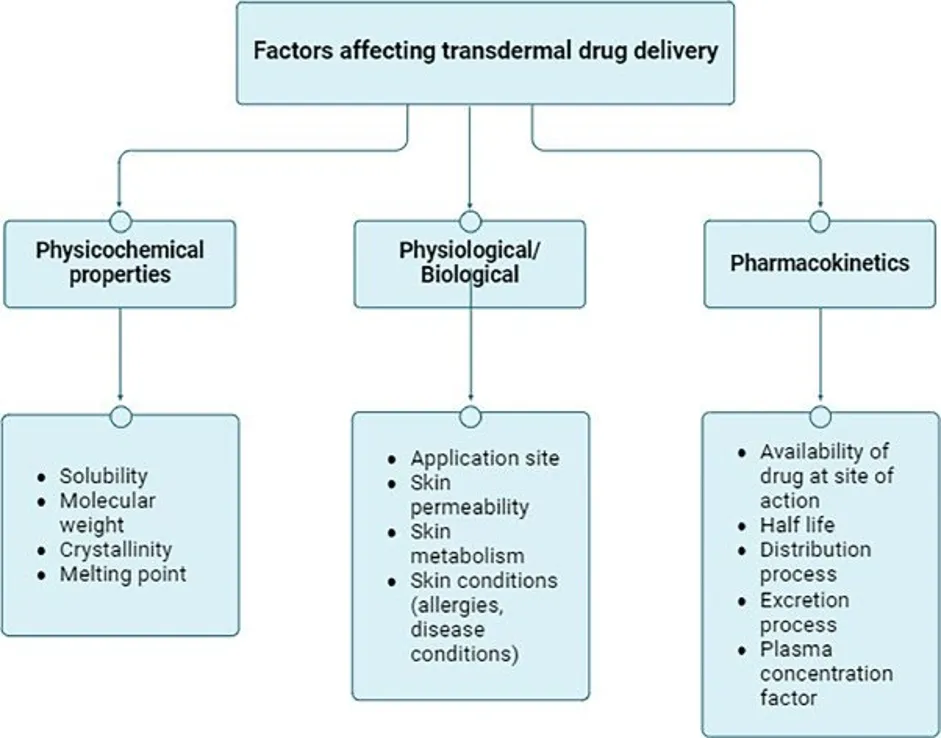
The effective transdermal drug delivery can be formulated by considering three factors as Drug, Skin, and the vehicles. So the factors affecting can be divided in to classes as biological factors and physicochemical factors34.
Solubility:
Adequate drug solubility is important for dissolution from the formulation and subsequent partitioning into the skin. Drugs with extremely low aqueous or lipid solubility may show poor transdermal absorption36
Molecular Weight:
Molecular weight significantly affects skin permeation. In general, smaller molecules cross the stratum corneum more readily, whereas larger molecules encounter greater resistance to passive diffusion37
Crystallinity:
The crystalline nature of a drug influences its dissolution, solubility, and thermodynamic activity. A highly stable crystal lattice may reduce drug dissolution and consequently decrease skin permeation38.
Melting Point:
Drugs with a high melting point generally possess stronger crystal lattice forces, which can reduce their solubility and thermodynamic activity. Therefore, a lower melting point is generally favourable for transdermal permeation39.
2. Physiological/Biological Factors
Application Site:
Skin properties vary among different anatomical sites. Differences in skin thickness, blood flow, hydration, and follicular density can influence the rate and extent of drug absorption40.
Skin Permeability:
The stratum corneum is the principal barrier to transdermal drug delivery. Its compact structure and lipid composition restrict the penetration of many drugs, particularly large and hydrophilic molecules41.
Skin Metabolism:
Enzymes present in the skin can metabolize certain drugs before they reach systemic circulation. This local metabolism can influence the amount of unchanged drug available for systemic absorption42.
Skin Conditions:
Skin hydration, temperature, age, disease, and damage to the skin barrier can alter drug permeation. Diseased or damaged skin may have different permeability compared with healthy intact skin43.
3. Pharmacokinetic Factors
Availability of Drug at the Site of Action:
The therapeutic effect depends on the amount of drug that reaches systemic circulation and becomes available at the target site. Absorption and subsequent distribution therefore influence drug availability44.
Half-Life:
The biological half-life of a drug is an important consideration in transdermal delivery. Drugs with a short half-life may benefit from controlled drug input, whereas drugs requiring very high doses may be difficult to deliver through the skin45.
Distribution:
After entering systemic circulation, the drug distributes between blood and tissues. The extent of distribution can influence plasma concentration, duration of action, and therapeutic response46.
Excretion:
The rate of drug elimination through renal or other routes affects the duration for which the drug remains in the body. Rapid elimination may require continuous drug input to maintain therapeutic concentrations47.
Plasma Concentration:
The rate of transdermal absorption, distribution, and elimination determines the resulting plasma concentration. An effective transdermal system should provide controlled drug input to maintain the drug concentration within the therapeutic range48
Advantages and Limitation :
Improves patient compliance.
Reduced inter- and intrapatient variability.4
Decreases dose to be administered.
Minimizes gastrointestinal (GI) side effects.
It is easy to discontinue the treatment in case of toxicity or side effects49
The avoidance of first pass metabolism of drugs
No interference with gastric and intestinal fluids
Due to the steady infusion of the drug over a long period the adverse effects associated with intermittent dosing are avoided
There is increased patient compliance due to the painless, non-invasive and simple application
Able to achieve more stable and controlled blood levels for a longer period
Characteristics are comparable to intravenous infusions
This route is suitable for the administration of drugs that have a short half life, narrow therapeutic window and poor oral bioavailability
Removing the patch terminates the drug administration50
Limitation :
The drug, the adhesive, or excipients in the patch formulation may cause rashes, local irritation, erythema, or contact dermatitis. Birth Control
Only drugs with a lipophilic character can effectively cross the stratum corneum and hence the drugs must have some desirable physicochemical properties for penetration. Drugs with a hydrophilic structure will not be able to reach the systemic circulation unless modified to some suitable form.
Only potent drugs are suitable candidates for transdermal patch because of the natural limits of drug entry imposed by the skin’s impermeability.
Doses of only 5mg or less can be administered in a day.
The barrier function of the skin changes from one site to another on the same person, from person to person, and with age.
The patch may be uncomfortable to wear as adhesives may not adhere well to all types of skin.
Transdermal drug delivery system cannot achieve high drug levels in blood/plasma.
Ionic drugs cannot be delivered using transdermal route.
Patch may fall-off unnoticed51
Preclinical and Clinical Study :
Clinical Consideration use of TDDS : The patient must be advised of the following general guidelines while using a TDDS
The extent of percutaneous absorption can differ depending on the location of the application. The intended primary application location is indicated in the package insert for each product. The patient should be informed about the significance of utilizing the prescribed location. Rotating sites reduces the chance of skin irritation and allows the skin beneath a patch to return to its usual permeability properties after being occluded.
After a period of one week, it is possible to reuse skin sites.
The use of a TDDS should be limited to skin that is clean, dry, and devoid of hair. Additionally, the skin should not be oily, irritable, inflamed, damaged, or callused. Increased skin moisture can enhance the rate of drug penetration beyond the targeted level. The presence of excess sebum on the skin can hinder the ability of the patch to stick to the intended area51
Recent Advances and Future Perspectives :
Future directions in TDDS research focus on integrating nanotechnology, AI-driven optimization, wearable sensors, and closed-loop smart systems. These integrations aim to achieve greater precision, personalization, and efficiency in transdermal drug delivery, providing valuable insights for future research and translational development.
The incidence and significance of skin irritation reactions will decrease with the increasing availability of physical permeation enhancement methods and new breakthroughs in topical drug formulations, such as liposomes, microemulsions, nanoparticles and evaporating gels. Breakthroughs in chemical permeation enhancer analogs showing significant improvements in limiting cutaneous irritation show promise for the development of safe chemical enhancers and should be further examined in the future.
Challenges and Regulatory Consideration :
Owing to the selective nature of the skin barrier, only a small pool of drugs can be delivered systemically at therapeutically relevant rates. Approximately 15 drugs constitute the whole segment of the transdermal drug market. Besides great potency, the physicochemical drug characteristics often evoked as favorable for percutaneous delivery include moderate lipophilicity and low-molecular-weight .However, a large number of pharmaceutical agents do not fulfill these criteria. This is especially true for macromolecules, such as insulin, human growth hormone or cyclosporine, which are very challenging from the drug delivery point of view. Overcoming low skin permeability to xenobiotics can be achieved by a variety of approaches, and is an active field of research. Their effectiveness and applicability will vary from drug to drug depending on the physicochemical nature of the compound. Here, a brief overview of the enhancement methods including chemical methods, physical methods and a prodrug approach will be provided with special emphasis on the recent developments.
CONCLUSION
Transdermal drug delivery systems over the last few years has accelerated the development of drug delivery carriers that significantly increase the amount of therapeutic substance needed to achieve the best transdermal drug delivery and serve as the most effective drug administration routes in the future. There are several permeation enhancers and physical methods along with nanocarrier systems that support improved drug delivery. Nanotechnology-based lipid carriers, such as liposomes, nanoemulsions, and solid lipid nanoparticles, have potentially been used in drug formulations to improve therapeutic activity through the transdermal system.
REFERENCES
Mahmoud Ameri, Miryam Kadkhodayan, Joe Nguyen, Joseph A. Bravo, Human Growth Hormone Delivery with a Microneedle Transdermal System: Preclinical Formulation, Stability, Delivery and PK of Therapeutically Relevant Doses; Pharmaceutics 2014, 6(2), 220–234; https://doi.org/10.3390/pharmaceutics6020220.
Avelia Devina Calista Nainggolan, Qonita Kurnia Anjani, Pietradewi Hartrianti, Ryan F. Donnelly, Arief Kurniawan and Delly Ramadon; Review Microneedle-Mediated Transdermal Delivery of Genetic Materials, Stem Cells, and Secretome: An Update and Progression; Pharmaceutics 2023, 15, 2767. https://doi.org/10.3390/pharmaceutics15122767.
Jeong Woo Lee, Seong-O Choi, Eric I. Felner, and Mark R. Prausnitz; Dissolving Microneedle Patch for Transdermal Delivery of Human Growth Hormone; (2011); a. 7(4), 531–539. doi:10.1002/smll.201001091.
Lahiji, S., Dangol, M. & Jung, H. A patchless dissolving microneedle delivery system enabling rapid and efficient transdermal drug delivery. Sci Rep 5, 7914 (2015). https://doi.org/10.1038/srep07914.
Ameri, Mahmoud; Kadkhodayan, Miryam; Nguyen, Joe; Bravo, Joseph; Su, Rebeca; Chan, Kenneth; Samiee, Ahmad; Daddona, Peter; Human Growth Hormone Delivery with a Microneedle Transdermal System; (2014) Pharmaceutics, 6(2), 220–234. doi:10.3390/pharmaceutics6020220.
Li Yang, Qingyun Liu, Xinhui Wang, Nansha Gao, Xiuzhen Li, Hongzhong Chen, Lin Mei, Xiaowei Zeng; ARTICLE Actively separated microneedle patch for sustained release of growth hormone to treat growth hormone deficiency; Volume 13, Issue 1, January 2023, Pages 344–358; https://doi.org/10.1016/j.apsb.2022.04.015.
Stacy JJ, Terrell TR, Armsey TD. Ergogenic aids: human growth hormone. Curr Sports Med Rep 2004;3(4):229–233; and Pipe A. Effects of growth hormone on athletic performance: a review. Clin J Sport Med 2009;19(1):75–6.
Nicoleta Cristina Olarescu, Kavinga Gunawardane, Troels Krarup Hanson, Niels Møller, and Jens Otto Lunde Jørgensen; Normal Physiology of Growth Hormone in Normal Adults; https://www.ncbi.nlm.nih.gov/books/NBK279056/
Luis E. Fernández-Garza, Marcos A Sotelo-Ibarra, Andres Ely Dominguez-Mendoza, Silvia A Barrera-Barrera, Hugo A. Barrera-Saldana; Growth hormone and aging: a clinical review; 07 April 2025; Volume 6 - 2025 | https://doi.org/10.3389/fragi.2025.1549453.
Mary Anne Dunkin, Alyson Powell Key; Human Growth Hormone (HGH); June 07, 2026; https://www.webmd.com/fitness-exercise/human-growth-hormone-hgh.
Rohrer TR, Horikawa R, Kappelgaard AM. Growth hormone delivery devices: current features and potential for enhanced treatment adherence. Expert Opinion on Drug Delivery. 2017;14(11):1253–1264. DOI: 10.1080/17425247.2017.1243526.
Gomez R, Ahmed SF, Maghnie M, et al. Treatment adherence to injectable treatments in pediatric growth hormone deficiency compared with injectable treatments in other chronic pediatric conditions: a systematic literature review. Frontiers in Endocrinology. 2022;13:795224.
Rohrer TR, Horikawa R, Kappelgaard AM. Growth hormone delivery devices: current features and potential for enhanced treatment adherence. Expert Opinion on Drug Delivery. 2017;14(11):1253–1264. DOI: 10.1080/17425247.2017.1243526.
Haverkamp F, Johansson L, Dumas H, et al. Observations of nonadherence to recombinant human growth hormone therapy in clinical practice. Clinical Therapeutics. 2008;30(2):307–316. DOI: 10.1016/j.clinthera.2008.02.017.
Saizen (somatropin) product information. Storage requirements for recombinant human growth hormone formulations.
Mahler HC, Friess W, Grauschopf U, Kiese S. Protein aggregation: pathways, induction factors and analysis. Journal of Pharmaceutical Sciences. 2009;98(9):2909–2934. DOI: 10.1002/jps.21566.
Andrea Crasta, Tanvi Painginkar, Amatha Sreedevi, Sachin Dattram Pawar, Muddukrishna Badamane Sathyanarayana, S.G. Vasantharaju, Riyaz Ali M. Osmani, Gundawar Ravi; Review article-Transdermal drug delivery system: A comprehensive review of innovative strategies, applications, and regulatory perspectives; Volume 24, July 2025, 100245; https://doi.org/10.1016/j.onano.2025.100245
Rifath Sheikh Vaseem, Alison D’cruz, Srishti Shetty, Hafsa -, Aditya Vardhan, Shreya Shenoy R, Shirleen Miriam Marques, Lalit Kumar, Ruchi Verma; Transdermal Drug Delivery Systems: A Focused Review of the Physical Methods of Permeation Enhancement; 2023 Oct 14;14(1):67–85. doi: 10.34172/apb.2024.018.
Naziya Shaikh, Richa SrivastAVA; A review on transdermal drug delivery through patches; 10(2):113–121, 2024. https://doi.org/10.18231/j.ijced.2024.022.
P Rajalakshmi1, S Mohamed Halith, S Mohammed Salam, P Monisha, S Muhilarasi, D Murugan, K Nandhakumar; Review on Transdermal Drug Delivery System; (2023); 4957; DOI: 10.47583/ijpsrr.2023.v83i02.008.
Cristiana Oliveira, José A. Teixeira, Nelson Oliveira, Sónia Ferreira, Cláudia M. Botelho; Microneedles’ Device: Design, Fabrication, and Applications; 2024, 4(2), 320–355; https://doi.org/10.3390/macromol4020019.
Lee JW, Park JH, Prausnitz MR. Dissolving microneedles for transdermal drug delivery. Biomaterials. 2008 May;29(13):2113–2124. doi: 10.1016/j.biomaterials.2007.12.048. Epub 2008 Feb 7. PMID: 18261792; PMCID: PMC2293299.
Pikal MJ, Rigsbee D, Roy ML, Galreath D, Kovach KJ, Wang B, Carpenter JF, Cicerone MT. Solid state chemistry of proteins: II. The correlation of storage stability of freeze-dried human growth hormone (hGH) with structure and dynamics in the glassy solid. J Pharm Sci. 2008 Dec;97(12):5106–5121. doi: 10.1002/jps.21374. PMID: 18351639.
Aldawood FK, Andar A, Desai S. A Comprehensive Review of Microneedles: Types, Materials, Processes, Characterizations and Applications. Polymers (Basel). 2021 Aug 22;13(16):2815. doi: 10.3390/polym13162815. PMID: 34451353; PMCID: PMC8400269.
Roshan Dave, Swapnali Shinde, Nisha Kalayil and Aarati, Engineering microscopic delivery systems: a review of dissolving microneedle design, fabrication, and function. Micro and Nano Syst Lett 12, 14 (2024). https://doi.org/10.1186/s40486-024-00204-2
Eyman M. Eltayib; Fabrication of porous polymeric microneedles: a concise overview. RSC Adv. 2025;15(23):18697–18714. https://doi.org/10.1039/d5ra03274a
Jaligam Murali Mohan, Khairunnisa Amreen, Arshad Javed, Satish Kumar Dubey, Sanket Goel, Emerging trends in miniaturized and microfluidic electrochemical sensing platforms, Current Opinion in Electrochemistry, Volume 33, 2022, 100930, ISSN 2451-9103, https://doi.org/10.1016/j.coelec.2021.100930.
Levin, G., Gershonowitz, A., Sacks, H. et al. Transdermal Delivery of Human Growth Hormone Through RF-Microchannels. Pharm Res 22, 550–555 (2005). https://doi.org/10.1007/s11095-005-2498-6
Barry BW. Novel mechanisms and devices to enable successful transdermal drug delivery. Eur J Pharm Sci. 2001 Sep;14(2):101–114. doi: 10.1016/s0928-0987(01)00167-1. PMID: 11500256.
Yu, X., Zhao, J., & Fan, D. (2023). The Progress in the Application of Dissolving Microneedles in Biomedicine. Polymers, 15(20), 4059. https://doi.org/10.3390/polym15204059
Magnusson BM, Anissimov YG, Cross SE, Roberts MS. Molecular size as the main determinant of solute maximum flux across the skin. Journal of Investigative Dermatology. 2004;122(4):993999. [PubMed](https://pubmed.ncbi.nlm.nih.gov/15102090/
Hadgraft J, Lane ME. Skin permeation: the years of enlightenment. International Journal of Pharmaceutics. 2015;486(1–2):1–8.
Potts RO, Guy RH. Predicting skin permeability. Pharmaceutical Research. 1992;9:663–669.
Kalia YN, Guy RH. Modeling transdermal drug release. Advanced Drug Delivery Reviews. 2001;48(2–3):159–172.
Prausnitz MR, Langer R. Transdermal drug delivery. Nature Biotechnology. 2008;26:1261–1268.
Oesch F, Fabian E, Guth K, Landsiedel R. Xenobiotic-metabolizing enzymes in the skin: functions in metabolism and toxicology. Toxicology Letters. 2014;224(1):4–14.
Bouwstra JA, Ponec M. The skin barrier in healthy and diseased state. Biochimica et Biophysica Acta. 2006;1758(12):2080–2095.
Chandrashekar NS, Shobha Rani RH. Physicochemical and pharmacokinetic parameters in drug selection and loading for transdermal drug delivery. Indian Journal of Pharmaceutical Sciences. 2008;70(1):94–96.
Prausnitz MR, Langer R. Transdermal drug delivery. Nature Biotechnology. 2008;26:1261–1268.
Brunton LL, Hilal-Dandan R, Knollmann BC, eds. Goodman & Gilman's The Pharmacological Basis of Therapeutics. McGraw-Hill.
Benson HAE. Transdermal drug delivery: penetration enhancement techniques. Current Drug Delivery. 2005;2(1):23–33.
Hezam Dhaifallah; Carbon Dots-Based Drug Delivery for Antimicrobial Applications in Low-Resource Settings; (2026).
Y. Krishna Reddy, D. Maheswara Reddy, M. Asok Kumar; Transdermal Drug Delivery System: A Review; Indian Journal of Research in Pharmacy and Biotechnology; 2014.
Andrea Crasta et al.; Review article Transdermal drug delivery system: A comprehensive review of innovative strategies, applications, and regulatory perspectives; 2025; https://doi.org/10.1016/j.onano.2025.100245.
Rifath Shaikh Vaseem et al.; Transdermal Drug Delivery Systems: A Focused Review of the Physical Methods of Permeation Enhancement; 2023 Oct 14;14(1):67–85. doi: 10.34172/apb.2024.018.
P Reddy; TRANSDERMAL DRUG DELIVERY SYSTEMS; 24 July 2015 No. 17.
Osama A. Madkali et al.; The Design Features, Quality by Design Approach, Characterization, Therapeutic Applications, and Clinical Considerations of Transdermal Drug Delivery Systems—A Comprehensive Review; 2024, 17(10), 1346; https://doi.org/10.3390/ph17101346.
Reference
Mahmoud Ameri, Miryam Kadkhodayan, Joe Nguyen, Joseph A. Bravo, Human Growth Hormone Delivery with a Microneedle Transdermal System: Preclinical Formulation, Stability, Delivery and PK of Therapeutically Relevant Doses; Pharmaceutics 2014, 6(2), 220–234; https://doi.org/10.3390/pharmaceutics6020220.
Avelia Devina Calista Nainggolan, Qonita Kurnia Anjani, Pietradewi Hartrianti, Ryan F. Donnelly, Arief Kurniawan and Delly Ramadon; Review Microneedle-Mediated Transdermal Delivery of Genetic Materials, Stem Cells, and Secretome: An Update and Progression; Pharmaceutics 2023, 15, 2767. https://doi.org/10.3390/pharmaceutics15122767.
Jeong Woo Lee, Seong-O Choi, Eric I. Felner, and Mark R. Prausnitz; Dissolving Microneedle Patch for Transdermal Delivery of Human Growth Hormone; (2011); a. 7(4), 531–539. doi:10.1002/smll.201001091.
Lahiji, S., Dangol, M. & Jung, H. A patchless dissolving microneedle delivery system enabling rapid and efficient transdermal drug delivery. Sci Rep 5, 7914 (2015). https://doi.org/10.1038/srep07914.
Ameri, Mahmoud; Kadkhodayan, Miryam; Nguyen, Joe; Bravo, Joseph; Su, Rebeca; Chan, Kenneth; Samiee, Ahmad; Daddona, Peter; Human Growth Hormone Delivery with a Microneedle Transdermal System; (2014) Pharmaceutics, 6(2), 220–234. doi:10.3390/pharmaceutics6020220.
Li Yang, Qingyun Liu, Xinhui Wang, Nansha Gao, Xiuzhen Li, Hongzhong Chen, Lin Mei, Xiaowei Zeng; ARTICLE Actively separated microneedle patch for sustained release of growth hormone to treat growth hormone deficiency; Volume 13, Issue 1, January 2023, Pages 344–358; https://doi.org/10.1016/j.apsb.2022.04.015.
Stacy JJ, Terrell TR, Armsey TD. Ergogenic aids: human growth hormone. Curr Sports Med Rep 2004;3(4):229–233; and Pipe A. Effects of growth hormone on athletic performance: a review. Clin J Sport Med 2009;19(1):75–6.
Nicoleta Cristina Olarescu, Kavinga Gunawardane, Troels Krarup Hanson, Niels Møller, and Jens Otto Lunde Jørgensen; Normal Physiology of Growth Hormone in Normal Adults; https://www.ncbi.nlm.nih.gov/books/NBK279056/
Luis E. Fernández-Garza, Marcos A Sotelo-Ibarra, Andres Ely Dominguez-Mendoza, Silvia A Barrera-Barrera, Hugo A. Barrera-Saldana; Growth hormone and aging: a clinical review; 07 April 2025; Volume 6 - 2025 | https://doi.org/10.3389/fragi.2025.1549453.
Mary Anne Dunkin, Alyson Powell Key; Human Growth Hormone (HGH); June 07, 2026; https://www.webmd.com/fitness-exercise/human-growth-hormone-hgh.
Rohrer TR, Horikawa R, Kappelgaard AM. Growth hormone delivery devices: current features and potential for enhanced treatment adherence. Expert Opinion on Drug Delivery. 2017;14(11):1253–1264. DOI: 10.1080/17425247.2017.1243526.
Gomez R, Ahmed SF, Maghnie M, et al. Treatment adherence to injectable treatments in pediatric growth hormone deficiency compared with injectable treatments in other chronic pediatric conditions: a systematic literature review. Frontiers in Endocrinology. 2022;13:795224.
Rohrer TR, Horikawa R, Kappelgaard AM. Growth hormone delivery devices: current features and potential for enhanced treatment adherence. Expert Opinion on Drug Delivery. 2017;14(11):1253–1264. DOI: 10.1080/17425247.2017.1243526.
Haverkamp F, Johansson L, Dumas H, et al. Observations of nonadherence to recombinant human growth hormone therapy in clinical practice. Clinical Therapeutics. 2008;30(2):307–316. DOI: 10.1016/j.clinthera.2008.02.017.
Saizen (somatropin) product information. Storage requirements for recombinant human growth hormone formulations.
Mahler HC, Friess W, Grauschopf U, Kiese S. Protein aggregation: pathways, induction factors and analysis. Journal of Pharmaceutical Sciences. 2009;98(9):2909–2934. DOI: 10.1002/jps.21566.
Andrea Crasta, Tanvi Painginkar, Amatha Sreedevi, Sachin Dattram Pawar, Muddukrishna Badamane Sathyanarayana, S.G. Vasantharaju, Riyaz Ali M. Osmani, Gundawar Ravi; Review article-Transdermal drug delivery system: A comprehensive review of innovative strategies, applications, and regulatory perspectives; Volume 24, July 2025, 100245; https://doi.org/10.1016/j.onano.2025.100245
Rifath Sheikh Vaseem, Alison D’cruz, Srishti Shetty, Hafsa -, Aditya Vardhan, Shreya Shenoy R, Shirleen Miriam Marques, Lalit Kumar, Ruchi Verma; Transdermal Drug Delivery Systems: A Focused Review of the Physical Methods of Permeation Enhancement; 2023 Oct 14;14(1):67–85. doi: 10.34172/apb.2024.018.
Naziya Shaikh, Richa SrivastAVA; A review on transdermal drug delivery through patches; 10(2):113–121, 2024. https://doi.org/10.18231/j.ijced.2024.022.
P Rajalakshmi1, S Mohamed Halith, S Mohammed Salam, P Monisha, S Muhilarasi, D Murugan, K Nandhakumar; Review on Transdermal Drug Delivery System; (2023); 4957; DOI: 10.47583/ijpsrr.2023.v83i02.008.
Cristiana Oliveira, José A. Teixeira, Nelson Oliveira, Sónia Ferreira, Cláudia M. Botelho; Microneedles’ Device: Design, Fabrication, and Applications; 2024, 4(2), 320–355; https://doi.org/10.3390/macromol4020019.
Lee JW, Park JH, Prausnitz MR. Dissolving microneedles for transdermal drug delivery. Biomaterials. 2008 May;29(13):2113–2124. doi: 10.1016/j.biomaterials.2007.12.048. Epub 2008 Feb 7. PMID: 18261792; PMCID: PMC2293299.
Pikal MJ, Rigsbee D, Roy ML, Galreath D, Kovach KJ, Wang B, Carpenter JF, Cicerone MT. Solid state chemistry of proteins: II. The correlation of storage stability of freeze-dried human growth hormone (hGH) with structure and dynamics in the glassy solid. J Pharm Sci. 2008 Dec;97(12):5106–5121. doi: 10.1002/jps.21374. PMID: 18351639.
Aldawood FK, Andar A, Desai S. A Comprehensive Review of Microneedles: Types, Materials, Processes, Characterizations and Applications. Polymers (Basel). 2021 Aug 22;13(16):2815. doi: 10.3390/polym13162815. PMID: 34451353; PMCID: PMC8400269.
Roshan Dave, Swapnali Shinde, Nisha Kalayil and Aarati, Engineering microscopic delivery systems: a review of dissolving microneedle design, fabrication, and function. Micro and Nano Syst Lett 12, 14 (2024). https://doi.org/10.1186/s40486-024-00204-2
Eyman M. Eltayib; Fabrication of porous polymeric microneedles: a concise overview. RSC Adv. 2025;15(23):18697–18714. https://doi.org/10.1039/d5ra03274a
Jaligam Murali Mohan, Khairunnisa Amreen, Arshad Javed, Satish Kumar Dubey, Sanket Goel, Emerging trends in miniaturized and microfluidic electrochemical sensing platforms, Current Opinion in Electrochemistry, Volume 33, 2022, 100930, ISSN 2451-9103, https://doi.org/10.1016/j.coelec.2021.100930.
Levin, G., Gershonowitz, A., Sacks, H. et al. Transdermal Delivery of Human Growth Hormone Through RF-Microchannels. Pharm Res 22, 550–555 (2005). https://doi.org/10.1007/s11095-005-2498-6
Barry BW. Novel mechanisms and devices to enable successful transdermal drug delivery. Eur J Pharm Sci. 2001 Sep;14(2):101–114. doi: 10.1016/s0928-0987(01)00167-1. PMID: 11500256.
Yu, X., Zhao, J., & Fan, D. (2023). The Progress in the Application of Dissolving Microneedles in Biomedicine. Polymers, 15(20), 4059. https://doi.org/10.3390/polym15204059
Magnusson BM, Anissimov YG, Cross SE, Roberts MS. Molecular size as the main determinant of solute maximum flux across the skin. Journal of Investigative Dermatology. 2004;122(4):993999. [PubMed](https://pubmed.ncbi.nlm.nih.gov/15102090/
Hadgraft J, Lane ME. Skin permeation: the years of enlightenment. International Journal of Pharmaceutics. 2015;486(1–2):1–8.
Potts RO, Guy RH. Predicting skin permeability. Pharmaceutical Research. 1992;9:663–669.
Kalia YN, Guy RH. Modeling transdermal drug release. Advanced Drug Delivery Reviews. 2001;48(2–3):159–172.
Prausnitz MR, Langer R. Transdermal drug delivery. Nature Biotechnology. 2008;26:1261–1268.
Oesch F, Fabian E, Guth K, Landsiedel R. Xenobiotic-metabolizing enzymes in the skin: functions in metabolism and toxicology. Toxicology Letters. 2014;224(1):4–14.
Bouwstra JA, Ponec M. The skin barrier in healthy and diseased state. Biochimica et Biophysica Acta. 2006;1758(12):2080–2095.
Chandrashekar NS, Shobha Rani RH. Physicochemical and pharmacokinetic parameters in drug selection and loading for transdermal drug delivery. Indian Journal of Pharmaceutical Sciences. 2008;70(1):94–96.
Prausnitz MR, Langer R. Transdermal drug delivery. Nature Biotechnology. 2008;26:1261–1268.
Brunton LL, Hilal-Dandan R, Knollmann BC, eds. Goodman & Gilman's The Pharmacological Basis of Therapeutics. McGraw-Hill.
Benson HAE. Transdermal drug delivery: penetration enhancement techniques. Current Drug Delivery. 2005;2(1):23–33.
Hezam Dhaifallah; Carbon Dots-Based Drug Delivery for Antimicrobial Applications in Low-Resource Settings; (2026).
Y. Krishna Reddy, D. Maheswara Reddy, M. Asok Kumar; Transdermal Drug Delivery System: A Review; Indian Journal of Research in Pharmacy and Biotechnology; 2014.
Andrea Crasta et al.; Review article Transdermal drug delivery system: A comprehensive review of innovative strategies, applications, and regulatory perspectives; 2025; https://doi.org/10.1016/j.onano.2025.100245.
Rifath Shaikh Vaseem et al.; Transdermal Drug Delivery Systems: A Focused Review of the Physical Methods of Permeation Enhancement; 2023 Oct 14;14(1):67–85. doi: 10.34172/apb.2024.018.
P Reddy; TRANSDERMAL DRUG DELIVERY SYSTEMS; 24 July 2015 No. 17.
Osama A. Madkali et al.; The Design Features, Quality by Design Approach, Characterization, Therapeutic Applications, and Clinical Considerations of Transdermal Drug Delivery Systems—A Comprehensive Review; 2024, 17(10), 1346; https://doi.org/10.3390/ph17101346.
Nisha Avhad
Corresponding author
PRES's College of Pharmacy (for Women), Chincholi, Nashik, Maharashtra, India 422103
Shital Gosavi
Co-author
PRES's College of Pharmacy (for Women), Chincholi, Nashik, Maharashtra, India 422103
Pranali Shinde
Co-author
PRES's College of Pharmacy (for Women), Chincholi, Nashik, Maharashtra, India 422103
Sakshi Khedkar
Co-author
PRES's College of Pharmacy (for Women), Chincholi, Nashik, Maharashtra, India 422103
Nisha Avhad, Shital Gosavi, Pranali Shinde, Sakshi Khedkar, Dissolving Microneedle Patches for Transdermal Delivery Human Growth Hormone, Int. J. of Pharm. Sci., 2026, Vol 4, Issue 10, 2689-2701. https://doi.org/10.5281/zenodo.23424632



 10.5281/zenodo.23424632