

We use cookies to ensure our website works properly and to personalise your experience. Cookies policy
Channabasweshwar Pharmacy College (Degree), Kava Road, Basweshwar Chowk, Latur-413512
Delivering Medicines through the skin has a lot going for it. You can treat specific areas, cut down on side goods, and cases tend to stick with it more. But then’s the catch the skin’s hedge substantially the stratum corneum does a great job at keeping effects out, which makes getting enough drug through enough tough. That’s where electrospun nanofibers come by. They’ve seized a lot of attention recently because they mimic the structure of natural towel, offer a huge face area, and you can tweak their porosity. This means you can load them up with medicines, get better contact with the skin, and control how the drug gets released over time. This review digs into why electrospun nanofibers are getting so important for both topical and transdermal medicine delivery. It looks at the main polymers people use, how these filaments get made, and what really affects how the medicines release. You’ll also find the rearmost on multifunctional nanofiber pulpits, their pledge in the clinic, and how they’re being used for effects like crack mending, inflammation, and delivering medicines through the skin. Of course, it’s not all smooth sailing. There are still some big challenges spanning up product, making sure results are harmonious, clearing nonsupervisory hurdles, and figuring out long- term safety. Spotting these gaps in the exploration is crucial if we want to push these technologies from the lab to real- world treatments.
The origin of nanofiber technology dates ago farther than four centuries and is strongly associated with the elaboratin of electrostatic grit conformation. The first contrbution was made by William Gilbert( circa 1600), who demonstrated the electrstatic attraction of liquids, forming the idal base of electrospinning ¹. subsequently, Louis Schwabe( 1845) acquainted early ways for spinning silk and synthetic fibers, allowing controlled grit conforation ². Significant process was achieved in 1889 when Hughes and Chambers patented styles for producing carbon copy dupe fibers ³. The usual prlusion of electrospinning passed in 1902, when John Francis Cooley patented an outfit for electrically dissolving fluids exercising high- voltage electric fields ?. This was followed by the work of Rozenblum and Petryanov- Sokolov (1938), who fabricated electrospun fibers and applied them in filtration systems known as Petryanov adulterants ?. further creations comprehended the elaboration of hollow graphitic carbon copy dupe fibers by Radushkevich and Lukyanovich( 1952) and the fabrication of patterned fibrous structures by Harold L. Simons (1966), which bettered grit morphology and structural control ? ? ?.
A major advance in nanofiber disquisition passed in 1995, when Doshi and Reneker hackneyed the term electrospinning and demonstrated the product of polymer nanofibers with compasses ranging from nanometers to micrometers ?. This work touched off wide intellectual and artificial interest, leading to rapid-fire- conflagration creations in nanofiber fabrication technologies. Since the early 2000s, creations in electrospinning styles, involving- spurt, and nedleless systems, have perfected producivity and scalability ?, ¹?. These progressions enabed the use of nanofibers in nonidentical biomedical fields analogous as drug quittance, kerchief engineering, crack mending, gene remedy, and regenerative medicine ¹?, ²?. moment, nanofibers are recognized as a versatile and advanced platform due to their high face-rea- to- measure rate, tunable porosity, and capability to give controlled and sustained release of remedial agents.
The face is the largest organ of the mortal body and serves as a primary protective barricade against environmental, chemical, and natural risks 17. While this barricade function is essential for physiological homeostasis, it presents a major handicap for operative drug quittance 14. usual topical and transdermal formulations analogous as creams, gels, ointments, and blots constantly suffer from defined drug penetration, uncontrolled release, and parsimonious bioavailability 13. As a result, significant disquisition efforts have been directed toward the elaboration of advanced drug quittance systems suitable of prostrating face walls while icing sustained and targeted remedial goods 15.
Nanotechnology has revolutionized drug quittance by allowing the design of carrier systems at the nanoscale, offering perfected commerce with natural apkins 20. Among various nanocarriers, nanofibers especially those fabricated through electrospinning have cropped as largely encouraging platforms for face drug quittance 1,9. Electrospun nanofibers retain several profitable groupings, involving nanoscale fringe, high porosity, substantial face area, and strictness in substance composition 1,10. These attributes have for operative drug loading, controlled release kinetics, and close connection with the face face 2,18.
Electrospun nanofibers can be engineered exercising natural polymers, synthetic polymers, or their mixes, allowing customization of mechanical dynamism, degeneration behavior and biocompatibility 4,5. also, these nanofibrous matrices closely portray the native extracellular matrix( ECM), making them suitable for face- related biomedical missions analogous as check healing, kerchief regeneration, and localized drug quittance 9,13. Recent inquiries have demonstrated the effectiveness of electrospun nanofiber systems in delivering antibiotics,- seditious agents, anticancer drugs, and cosmetic actives through the face.
Despite the growing body of literature, exceptions related to substantial- scale product, reproducibility, nonsupervisory blessing, and clinical paraphrase remain undetermined 14,15. therefore, a comprehensive understanding of nanofiber fabrication styles, substance election, drug incorporation strategies, and natural interpretation is essential 1,2.
OVERVIEW OF NANOFIBER
Definition
Nanofibers are stringy accoutrements with compasses generally ranging from a many nanometres to several hundred nanometres ¹?. Due to their nanoscale confines, nanofibers parade unique physicochemical parcels that differ significantly from those of conventional microfibers or bulk accoutrements ¹. These parcels include a high face area- to- volume rate, enhanced mechanical inflexibility, and increased face reactivity ? ? ²?. In medicine delivery operations, nanofibers serve as carriers that can synopsize remedial agents and release them in a controlled manner at the target point ¹? ? ¹?. Nanofibers can be fabricated from a wide variety of accoutrements , including synthetic polymers similar as polyvinyl alcohol, polycaprolactone, and poly( lactic-co-glycolic acid), as well as natural polymers like chitosan, gelatine, and collagen ? ? ?. Composite and cold-blooded nanofiber systems further enhance functional versatility by combining desirable mechanical strength, biodegradability, and biocompatibility, making them particularly suitable for skin- related biomedical operations ²?.
ADVANTAGES – DISADVANTAGES
Advantages
Disadvantages
Applications
Concept of Nanofiber Technology
The abecedarian conception of nanofiber technology lies in the manipulation of polymeric or molecular results to produce nonstop filaments with nanoscale compasses ? ? ¹². At this scale, material geste is explosively told by face forces rather than bulk parcels, which enables enhnced relations with natural systems ¹?. Nanofibers can form nonwoven mats with connected pervious networks, furnishing effective pathways for gas exchange, humidity regulation, and medicine prolixity features that are particularly salutary for skin medicine delivery operations ¹³ ? ¹?.
In dermatological and transdermal operations, nanofiber- grounded systems serve as medicine budgets that maintain prolonged contact with the skin face, thereby supporting sustained and localized remedial goods ³ ? ¹?. Their largely pervious armature facilitates the prolixity of active pharmaceutical constituents while contemporaneously guarding them from environmental declination ¹? ? ²?. likewise, nanofibers can be finagled to respond to external stimulants similar as pH, temperature, or enzymatic exertion, enabling the development of responsive or “ smart ” medicine delivery systems ¹?.
Electrospinning is the most extensively espoused fashion for nanofiber fabrication due to its simplicity, scalability, and capability to induce invariant filaments with controlled morphology ¹ ? ?. nonetheless, indispensable fabrication styles, including phase separation, tone- assembly, and template conflation, have also been delved to address specific limitations associated with electrospinning ? ? ¹?. Together, these fabrication strategies form the technological foundation of nanofiber- grounded systems and support the advancement of coming- generation skin medicine delivery platforms.
Classification of Nanofibers
Nanofibers can be classified grounded on their material composition, structural characteristics, and functional operations, which helps in opting applicable nanofiber systems for specific biomedical and pharmaceutical uses ¹? ? ¹?.
From a material perspective, nanofibers are astronomically distributed into polymeric, ceramic, carbon- grounded, and compound nanofibers ¹. Among these, polymeric nanofibers are the most considerably delved for skin medicine delivery operations due to their biocompatibility, biodegradability, inflexibility, and ease of fabrication ? ? ²?. Both natural polymers similar as chitosan, gelatine, and collagen, as well as synthetic polymers like polycaprolactone, polyvinyl alcohol, and poly( lactic-co-glycolic acid), are extensively used to fabricate polymeric nanofibers for biomedical purposes ? ? ?.
Composite nanofibers combine two or further accoutrements to enhance mechanical strength, stability, and functional performance, making them particularly suitable for advanced medicine delivery and towel engineering operations ¹?.
Grounded on structural design, nanofibers can be classified as solid nanofibers, core- shell nanofibers, concave nanofibers, and pervious nanofibers ¹ ? ¹². Solid nanofibers correspond of a invariant polymer matrix and are generally used for conventional medicine lading and sustained release operations.
Core- shell nanofibers have gained significant attention in medicine delivery systems because they allow spatial separation of medicine motes within the core, defended by an external polymer shell, performing in bettered medicine stability, reduced burst release, and controlled release kinetics ² ? ¹?. Concave nanofibers give internal depressions that can enhance medicine encapsulation effectiveness and prolixity- grounded release geste ¹?.
Pervious nanofibers parade a high face area and connected severance structure, which significantly enhances medicine lading capacity, dissolution rate, and release effectiveness, making them largely profitable for skin and transdermal medicine delivery systems ¹³ ? ¹?.
Functionally, nanofibers are classified according to their intended operation, including crack dressing accoutrements , transdermal medicine delivery systems, towel engineering pulpits, ornamental delivery platforms, and regenerative drug operations ³ ? ¹³. In skin medicine delivery, nanofibers may serve as unresistant carriers for topical remedy or as active transdermal systems designed to enhance medicine saturation across the skin hedge ¹? ? ¹?.
The capability to conform nanofiber composition, structure, and function makes them protean platforms for a wide range of remedial and dermatological operations ? ? ¹?.
Methods of Nanofiber Preparation
Several ways have been developed for the fabrication of nanofibers, each immolation distinct advantages and limitations depending on material selection, structural conditions, and intended biomedical operation ¹? ? ¹?. Among these styles, electrospinning remains the most extensively espoused fashion for producing nanofibers for skin medicine delivery systems ¹ ? ?.
ELECTROSPINNING
Electrospinning is the most considerably used and well- established fashion for nanofiber fabrication due to its simplicity, versatility, and capability to induce nonstop filaments with nanoscale compasses ? ? ¹?. The process involves the operation of a high- voltage electric field to a polymer result or polymer melt held in a hype.When the electrostatic force overcomes the face pressure of the polymer result, a charged polymer spurt is ejected from the needle tip and stretched into ultrafine filaments, which are latterly collected on a predicated collector ¹². Electrospinning allows precise control over fiber periphery, morphology, porosity, and medicine distribution by conforming processing parameters similar as applied voltage, inflow rate, polymer attention, and collector distance ¹ ? ¹².
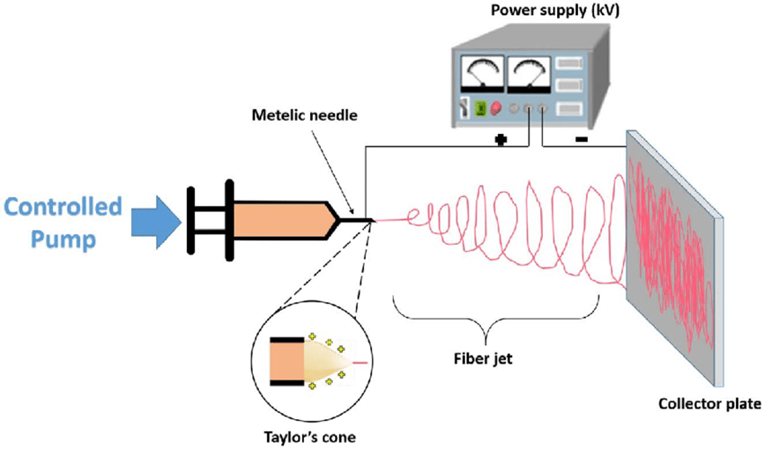
Fig 1: Electrospinning Method
Electrospun nanofibers nearly act the native extracellular matrix, which enhances cell adhesion and makes them particularly suitable for skin medicine delivery, crack mending, and towel engineering operations ¹³ ? ¹?. These nanofibrous mats support high medicine lading effectiveness, sustained medicine release biographies, and strong adhesion to the skin face ² ? ¹?.
Working Principle:
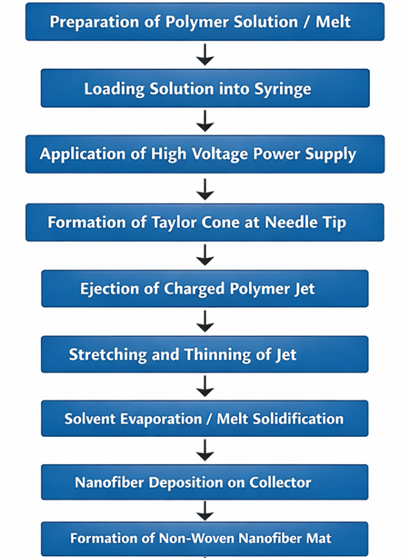
Fig 2: Working principle of electrospinning
Despite its advantages, electrospinning presents several limitations, including the frequent use of toxic organic solvents, relatively low production rates, and difficulties in scaling up for industrial manufacturing ¹??¹?. Additionally, variations in environmental conditions and processing parameters can lead to batch-to-batch inconsistency in fiber morphology and drug distribution ¹?.
PHASE SEPARATION
Phase separation is a thermodynamically driven system used to fabricate nanofibrous structures by converting separation within a homogeneous polymer result ?. Changes in temperature or detergent composition beget the result to divide into polymer-rich and polymer-poor phases, and posterior solvent junking results in the conformation of a pervious nanofibrous network ¹?. relations, hydrophobic forces, and van der Waals relations²?.
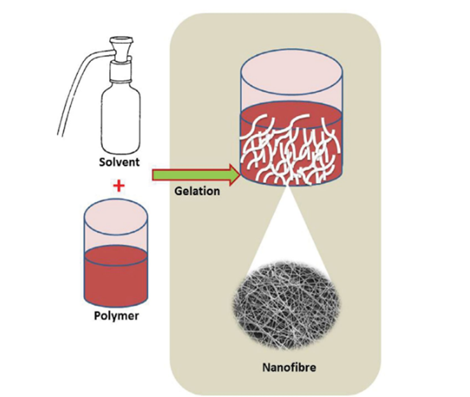
Fig 3: Phase Separation Method
This fashion enables the product of nanofibers with high porosity and large face area, which supports effective medicine lading and release ¹³. Phase separation does n't bear high voltage or complex outfit, making it fairly simple and cost-effective for laboratory- scale operations ?. still, limited control over fiber exposure, alignment, and uniformity restricts its felicity for advanced skin medicine delivery systems ¹?.
SELF-ASSEMBLY
Self- assembly is a bottom- up nanofiber fabrication fashion in which motes spontaneously organize into ordered nanofibrous structures throughnon-covalent relations similar as hydrogen cling, electrostatic relations, hydrophobic forces, and van der Waals relations ²?.
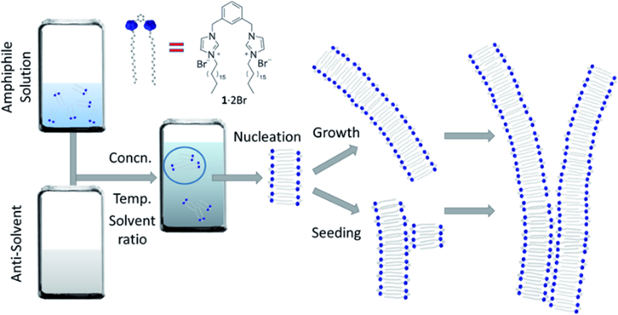
Fig 4: Self Assembly Method
Self- assembled nanofibers parade excellent molecular uniformity and biomimetic characteristics, making them precious for natural and regenerative drug operations ¹?. still, these nanofibers generally retain low mechanical strength, which limits their continuity in skin- related operations ¹?. likewise, large- scale fabrication and reproducibility remain significant challenges ¹?.
TEMPLATE SYNTHESIS
Template conflation is a nanofiber fabrication system that employs nanoporous templates or molds to control grittiness size, shape, and exposure ¹?. Polymer results or melts are acquainted into the template pores, where they congeal to form nanofibers. The template is latterly removed through chemical or physical styles to gain the final stringy structure. This system provides excellent control over nanofiber confines and morphology, allowing predictable and ruled medicine release geste ¹?. still, the fabrication process is daedal, expensive, and time- consuming, and template junking may introduce blights or contaminations into the nanofibers ¹?. Low product effectiveness and penurious scalability farther limit its ultrapractical operation ¹?.
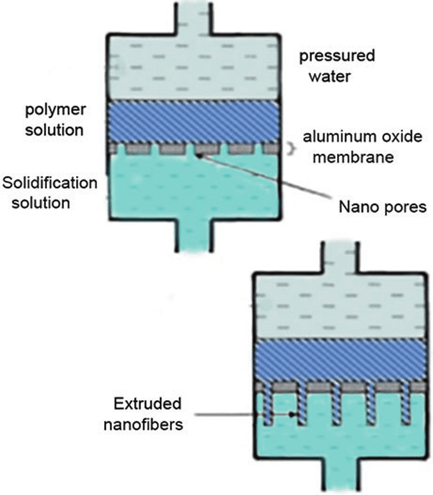
Fig 5: Template Synthesis Method
CENTRIFUGAL SPINNING
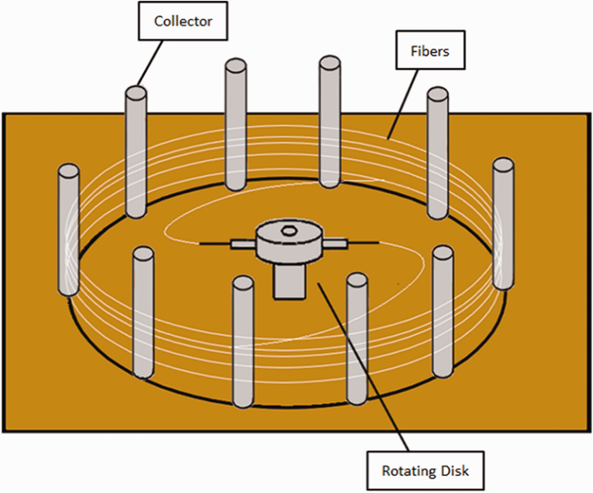
Fig 6: Centrifugal Spinning
Centrifugal spinning is a nanofiber fabrication fashion that relies on centrifugal force rather than an electric field to produce filaments ¹?. In this process, a polymer result or melt is placed in a fleetly rotating spinneret. As the rotational speed increases, centrifugal force ejects the polymer through small perforations, forming filaments that lengthen and solidify upon solvent evaporation ¹?. This fashion offers significantly advanced product rates compared to electrospinning and improves functional safety by barring the need for high voltage ¹?. Centrifugal spinning accommodates a wide range of polymer accoutrements and shows strong implicit for large- scale nanofiber manufacturing ¹?. still, control over fiber periphery, alignment, and uniformity remains limited, and achieving harmonious medicine distribution within filaments requires farther optimization ¹? ? ¹?.
DRAWING TECHNIQUE
The drawing technique involves mechanically stretching a viscoelastic polymer droplet into fine fibers, which subsequently solidify through solvent evaporation or cooling ¹?. This method uses simple equipment and minimal energy input, making it cost-effective for laboratory-scale studies and fundamental research on fiber formation mechanisms ¹².
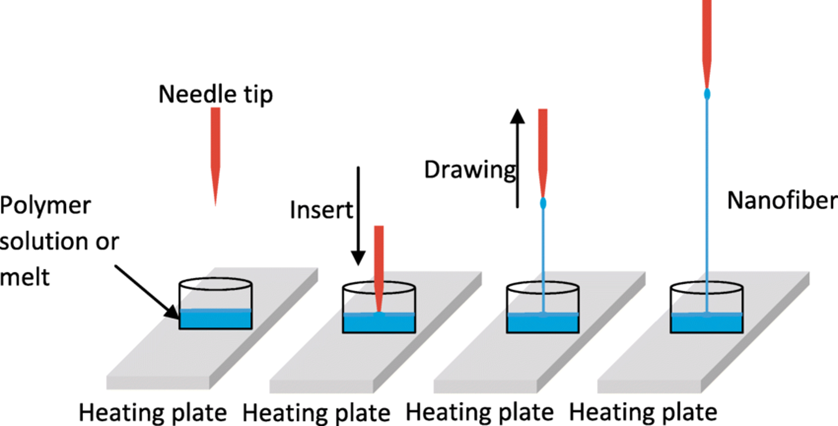
Fig 7 Drawing Technique
Despite its simplicity, the drawing technique supports low production throughput and offers limited control over fiber diameter and uniformity ¹?. These limitations significantly restrict its applicability in large-scale pharmaceutical and skin drug delivery applications ¹?.
FREEZE-DRYING METHOD
Freeze drying, also known as lyophilization, is a fabrication fashion used to develop pervious nanofibrous structures by indurating a polymer result followed by the junking of detergent through sublimation under reduced pressure ¹³. This process results in featherlight matrices with largely connected severance networks and large face area, which are profitable for biomedical and pharmaceutical operations ¹?. Freeze- dried nanofibrous matrices are particularly suitable for crack dressings, towel engineering pulpits, and skin medicine delivery systems that bear high porosity, humidity retention, and oxygen permeability ¹³ ? ¹?. An important advantage of this system is the absence of high temperatures, which allows safe objectification of heat-sensitive medicines, proteins, peptides, and natural motes without compromising their stability or exertion ²?.
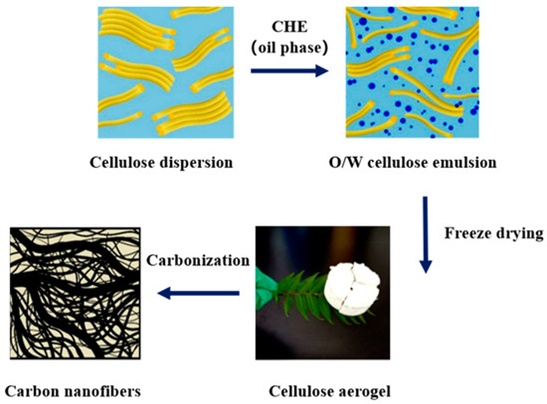
Fig 8: Freeze-Drying Method
GAS JET / BLOW SPINNING
Gas jet or blow spinning is a fiber fabrication technique in which high-velocity gas streams are used to stretch polymer solutions into fine fibers ¹?. The polymer solution is extruded through a nozzle, while compressed gas elongates the polymer jet into nanofibers that are deposited directly onto a target surface ¹?.
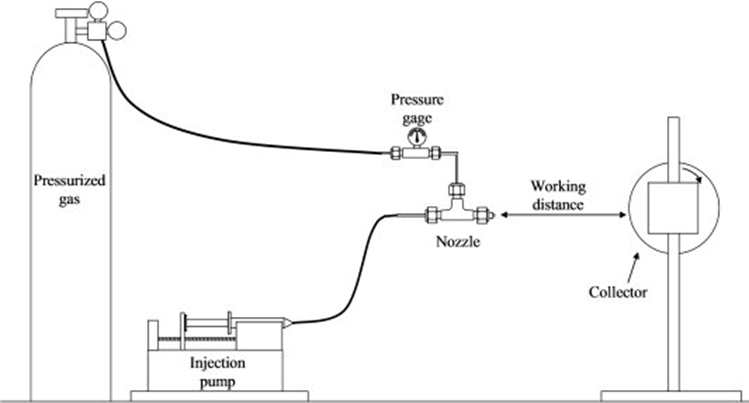
Fig 9: Gas Jet / Blow Spinning
This technique enables rapid fiber production without the use of high voltage and allows direct deposition onto wounds or substrates, making it attractive for in situ biomedical applications ¹?. It also demonstrates strong potential for industrial-scale manufacturing ¹?. Nevertheless, achieving uniform fiber diameter, consistent morphology, and reproducible drug loading remains challenging due to sensitivity to gas flow dynamics and polymer properties ¹??¹?.
LIMITATIONS AND RESEARCH GAPS
Limitations
Research Gaps
CONCLUSION
Electrospun nanofibers have demonstrated significant eventuality as advanced carriers for skin medicine delivery due to their nanoscale armature, high face area, and connected pervious networks. These characteristics enable effective medicine objectification, controlled and sustained release biographies, and enhanced commerce with the skin hedge, making nanofiber- grounded systems largely suitable for topical and transdermal remedial operations. The close structural resemblance of electrospun nanofibrous matrices to the native extracellular matrix further supports their effectiveness in crack mending, towel rejuvenescence, ornamental phrasings, and dermatological curatives.
Despite expansive laboratory- scale exploration demonstrating their advantages, several challenges continue to hamper their clinical and marketable restatement, including scalability limitations, solvent-affiliated safety enterprises, reproducibility issues, and nonsupervisory complications. unborn advancements in this field will depend on the development of scalable and environmentally sustainable fabrication ways, bettered control over medicine lading and release gest, and comprehensive in vivo and clinical examinations to validate long- term safety and remedial efficacity. Continued interdisciplinary exploration integrating accoutrements wisdom, pharmaceutical technology, and biomedical engineering is anticipated to play a critical part in establishing electrospun nanofiber systems as dependable and clinically feasible platforms for coming- generation skin medicine delivery.
REFERENCES

Vaishnavi Karbhari, Dr. Nasheer S. Shaikh, Shubham Chillarge, Vidya Sirsat, Electrospun Nanofibers as Advanced Platforms for Skin Drug Delivery: Formulation Strategies, and Translational Challenges, Int. J. of Pharm. Sci., 2026, Vol 4, Issue 2, 1389-1401. https://doi.org/10.5281/zenodo.18558740
 10.5281/zenodo.18558740