

We use cookies to ensure our website works properly and to personalise your experience. Cookies policy
1 Ph.D. Scholar, LNCT University Bhopal
2 Associate Professor College, LNCT University Bhopal
Background: ?-escin, a triterpenoid saponin pulled from Aesculus hippocastanum (horse chestnut), shows pretty solid anti-inflammatory, antioxidant, and vascular-protective benefits. Recently, some findings have also suggested it may possess anti-diabetic properties. Because metabolic dysfunction and respiratory disorders are interconnected in terms of pathophysiology, particularly when diabetes coexists with respiratory issues, this research aimed to evaluate ?-escin’s effectiveness in reducing respiratory inflammation and tissue injury. Indeed, the investigation specifically focused on the effects in the presence of hyperglycemia. Methods: The study involved a mixture of in vivo and in vitro experiments was conducted. Initially, to establish a diabetic acute lung injury model, diabetes needed to be induced in Sprague-Dawley rats using streptozotocin (STZ), followed by an intratracheal administration of lipopolysaccharide (LPS). Subsequently, ?-escin was given orally at varying doses, such as 10, 20, and 40 mg/kg/day for 14 days. Afterwards, pulmonary function was assessed, histopathological analysis was performed, cytokines including TNF-?, IL-6, and IL-1? were quantified, and oxidative stress markers (MDA, SOD) were evaluated. Additionally, glucose tolerance tests were conducted to assess metabolic function. Concurrently, the in vitro section involved treating BEAS-2B bronchial epithelial cells and RAW 264.7 macrophages under high-glucose and inflammatory conditions. Results: In addition to reducing systemic and pulmonary inflammation and generally lowering oxidative. stress, ?-escin appears to significantly improve glycaemic management in a dose-dependent manner. The histology revealed less alveolar damage, reduced oedema, and fewer immune cells invading the lung tissues. Metrics related to pulmonary function, such as arterial oxygenation and compliance, were also significantly improved and nearly returned to normal In vitro results were comparable, because ?-escin decreased production of pro-inflammatory cytokines, it inhibited ROS generation, and it downregulated NF-?B activation, while not demonstrating lethal effects. Conclusion:In a way, ?-escin has two functions: it can reduce diabetic hyperglycemia and protect against respiratory damage caused by LPS. To put it another way, these findings suggest that ?-escin could be further investigated in clinical trials as a versatile treatment for respiratory issues in diabetics.
1. Clinical Context: Diabetes and Respiratory Disease Comorbidity
Due to its increasing incidence and significant impact on public health, type 2 diabetes mellitus (T2DM) has become a worldwide health issue that is expanding quickly. An increasing number of studies indicate that it increases the risk of respiratory issues such as asthma, acute lung injury (ALI), and chronic obstructive pulmonary disease (COPD), as well as cardiovascular and kidney disorders (1, 2). Persistent hyperglycemia impairs immune systems and exacerbates oxidative stress and systemic inflammation, all of which increase the risk of pulmonary problems (3).
2. Pathophysiological Interplay: Immune Dysregulation and Oxidative Stress
Nuclear factor kappa B, or NF-kappa B, is activated by elevated blood sugar levels. This leads to increased production of many chemicals, including interleukin-6, interleukin-1 beta, and tumour necrosis factor-alpha. These factors contribute to inflammation of the lungs. The body produces an excessive amount of harmful chemicals known as reactive oxygen species during this time. Additionally, the body contains beneficial substances like superoxide dismutase that support our health (4,5). The lung tissues are harmed as a result.
People with diabetic respiratory disorders suffer greatly from the combination of blood sugar levels, lung inflammation, and oxidative stress. Therefore, medical professionals believe that managing oxidative stress and inflammation is crucial to improving the symptoms of respiratory disorders.
3. β -Escin from Aesculus hippocastanum: Therapeutic Profile
3.1 Traditional Use and Pharmacology
β-Escin is a substance found in horse chestnut seeds. People can benefit from this type of combo. It is used to treat inflammation and veins. It is used to treat haemorrhoids and leg oedema. Venous insufficiency can also be treated with horse chestnut seeds' β-Escin. (6,7)
It works by strengthening the small blood arteries and improving vein function. This is due to the fact that horse chestnut seeds contain β-Escin, which can improve vein function and reduce blood vessel leakage. (8)
3.2 Molecular Mechanisms and Safety Profile
One feature of β-escin is its multifunctionality. It supports cytoskeletal remodelling and the synthesis of cholesterol. Additionally, it promotes cell adhesion, which is crucial for vascular stability.(9)
β-escin has an effect as well. It lessens inflammatory factors. It inhibits NF-κB, which is crucial for its anti-inflammatory properties. It is crucial to understand that β-escin is safe to use. Studies conducted on humans and animals have demonstrated that β-escin has a low number of adverse effects and a safety profile.(10)
4. Anti-Inflammatory and Antiviral Potential
4.1 Airway Inflammation and Allergy Models
β-escin significantly reduced the quantity of white blood cells that enter the airways in mice with airway inflammation, as well as the body's production of specific molecules including IL-5 and IL-13. This is comparable to the effects of corticosteroids, such as dexamethasone.(11, 12) This suggests that β-escin may be helpful in treating conditions that lead to airway inflammation, such as allergic airway inflammation and other inflammatory respiratory disorders, where β-escin may be crucial.
4.2 Antiviral and Immunomodulatory Effects
The thing about β-escin is that it also has some effects, against viruses. It was seen in some studies that β-escin can stop the syncytial virus from making more of itself and also reduce the inflammation that the virus causes in the cells that line the airways.(13) Some new studies are saying that β-escin might be good to use against SARS-CoV-2 and other coronaviruses because it can stop some things from happening like the activation of NF-κB and the cytokine storm pathways, which are both things that β-escin can suppress (14,15).
5. β-Escin's Antidiabetic and Antioxidant Effects
The thing about β-escin is that it does a lot more than help with inflammation and viruses. β -escin also has an impact on diabetes. When scientists studied β-escin they found out that it helps the body use insulin better and reduces the effects of having too much sugar in the blood for a long time. β -escin is also good for people with diabetes because it helps reduce inflammation and damage to tissues in the kidneys and heart. (16) It does this by controlling things that can cause damage like malondialdehyde, Matrix metalloproteinases and transforming growth factor-β, which are all connected to oxidative stress. So β-escin is really helpful in dealing with the problems that come with diabetes, like kidney and heart disease(17,18).
6. Research Gap and Study Rationale
The thing about β-escin is that it appears to aid with diabetes, infections, and inflammation. Surprisingly, no significant research has been done to determine whether β-escin can help those with diabetes who also have respiratory issues. Since both diabetes and breathing issues entail issues like stress on the body, inflammation, and malfunctioning metabolism, β-escin appears to be quite beneficial. Therefore, β-escin may be a useful treatment for these problems.
7. Objective of the Study
The impact of β-escin on health was investigated in two conditions: acute lung injury, which is exacerbated by lipopolysaccharide, and a kind of diabetes produced by streptozotocin. The researchers believed that β-escin would improve the body's metabolism and lessen oxygen-induced oedema and damage to the lungs.
They sought to determine whether β-escin could perform the following functions:
Additionally, β-escin's anti-inflammatory and antioxidant properties in hyperglycaemic circumstances will be evaluated in vitro using bronchial epithelial and macrophage cell lines.
Materials and Methods
1. Chemicals and Reagents
β-Escin (≥98% purity), streptozotocin (STZ), lipopolysaccharide (LPS; E. coli O111:B4), and MTT reagent were supplied by Sigma-Aldrich. The cell culture media and supplements, including DMEM, foetal bovine serum, penicillin-streptomycin, and trypsin-EDTA, were provided by Gibco. Antibodies against NF-κB p65, IL-6, TNF-α, IL-1β, and β-actin were supplied by Cell Signalling Technology.
2. Plant Material and Extraction of β-Escin
We purchased Aesculus hippocastanum seeds from a reliable plant seller verified by a Pharmacognosy Department plant specialist. The department's plant library contained a sample of the seeds (voucher No. AH-2025).To extract chemicals, the seeds were crushed, dried, and combined with 70% ethanol.This blend was. then used a specialised equipment to filter and reduce.Next, a method known as preparative HPLC was used to purify the extract. It was β-escin. Similar to previous investigations on Aesculus hippocastanum seeds and β-escin, their quality was examined using HPLC and LC-MS techniques.Aesculus hippocastanum and β-escin seeds were crucial to the research.The specialists ensured the purity of the β-escin derived from Aesculus hippocastanum seeds.(19,20).
3. Experimental Animals
The institutional animal facility supplied male Sprague-Dawley rats (n = 48; 8 weeks old; 180–220 g) that were acclimated to conventional laboratory settings (22 ± 2 °C, 55% relative humidity, and a 12-hour light/dark cycle). Food and water were provided at no cost during the trial. The experimental techniques, which were conducted in compliance with the Government of India's CCSEA regulations, were authorised by the Institutional Animal Ethics Committee.
4. Induction of Diabetes Mellitus
To induce diabetes, a single intraperitoneal dose of streptozotocin (55 mg/kg body weight) prepared in 0.1 M cooled citrate buffer (pH 4.5) was administered to rats that had fasted overnight.. At 72 hours and 7 days following STZ treatment, the fasting blood glucose concentrations were measured using an Accu-Chek® glucometer; animals were classified as diabetic and chosen for additional research if their fasting glucose levels were greater than 250 mg/dL.(21).
5. Lung Injury Induction
After the rats were confirmed to be diabetic, they were split at random into six groups of eight rats per group. To generate experimental acute lung injury (ALI) within the rats, lipopolysaccharide (LPS) was administered into the rats’ tracheas at a dose of 5 mg/kg of the rats’ body weight. The LPS was dissolved in 0.9% saline prior to injection. The control rats did not receive LPS and instead only received 0.9% saline (22).
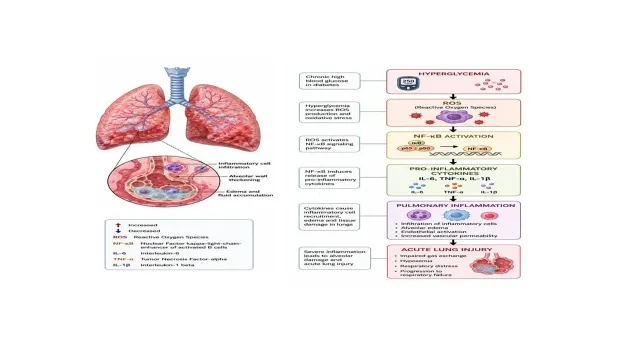
Fig 1: Mechanism of Diabetes-induces Lung Injury
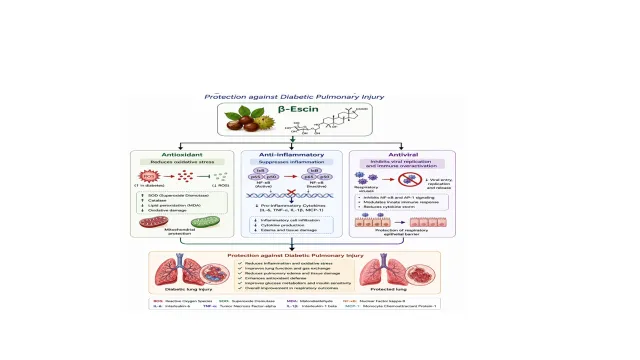
Fig 2: Mechanism of β- Escin
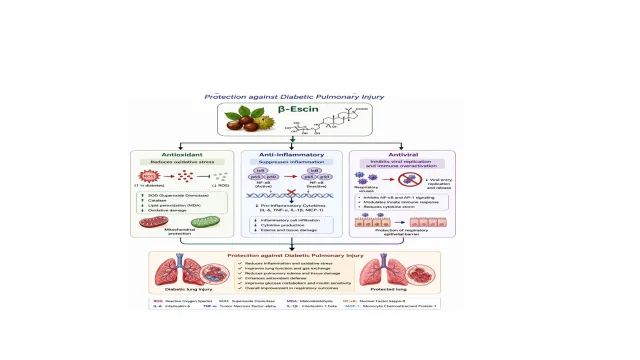
Fig 3: Integrated Mechanism of β-Escin
6. Experimental Design and Treatment Regimen
The animals were allocated to the following groups:
Table 1. Experimental Group Design
|
Group Code |
Group Name |
Treatment Description |
Dose (mg/kg/day) |
Induction Agents Used |
|
NC |
Normal Control |
Received saline only |
— |
None |
|
DC |
Diabetic Control |
Streptozotocin (STZ) + Lipopolysaccharide (LPS) + saline |
— |
STZ + LPS |
|
BEL |
β-Escin Low Dose |
STZ + LPS + β-Escin |
10 |
STZ + LPS |
|
BEM |
β-Escin Medium Dose |
STZ + LPS + β-Escin |
20 |
STZ + LPS |
|
BEH |
β-Escin High Dose |
STZ + LPS + β-Escin |
40 |
STZ + LPS |
|
DEX |
Positive Control |
STZ + LPS + Dexamethasone |
1 |
STZ + LPS |
Treatment with β-escin or dexamethasone was initiated 3 days post-diabetes induction and continued for 14 days. Drugs were administered orally via gavage.
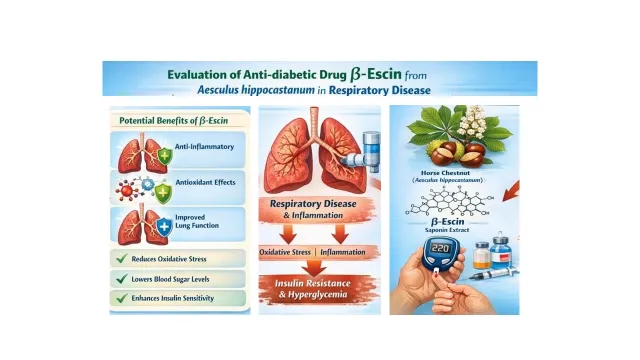
Fig 4: Potential benefits of Aesculus hippocastanum in respiratory Diseases
7. Assessment of Pulmonary Function
On the fourteenth day, the medical team used whole-body plethysmography, a technique created by Buxco Electronics USA, to test lung function. Tidal volume (TV), respiratory rate (RR), airway resistance (Raw), and dynamic compliance (Cdyn) were the four measures that the research team measured.(23).
8. Sample Collection and Biochemical Analysis
At the last of the study, an overdose of ketamine was used to kill the animals. The animals' hearts were punctured to extract blood samples for serum cytokine analysis. After being removed from the animals, the lungs were weighed. Sections of the lungs were separated for protein extraction for Western blotting, biochemical tests, and histopathological analysis.
8.1. Oxidative Stress Markers
For biochemical examination, lung tissues were homogenised in phosphate-buffered saline (PBSSuperoxide dismutase (SOD) activity was measured using a commercial test kit. Malondialdehyde (MDA), a marker of lipid peroxidation, was measured using the thiobarbituric acid reactive substances (TBARS) method. (24)
8.2. Inflammatory Cytokines
According to the manufacturer's instructions, pro-inflammatory cytokines including TNF-α, IL-6, and IL-1β were measured in serum and lung tissue homogenates using rat ELISA kits (R&D Systems, USA).
9. Histopathology
The lung samples were initially cut into 5 μm-thick slices. These slices were embedded in paraffin wax, fixed in 10% formalin, and then stained with haematoxylin and eosin (H&E).
The architecture of the alveoli, the infiltration of inflammatory cells, the degree of oedema, and the presence of haemorrhage inside the lung tissues were all evaluated histopathologically using a German Leica light microscope. A semi-quantitative scoring technique that has been previously published was used to measure the degree of lung damage.(25).
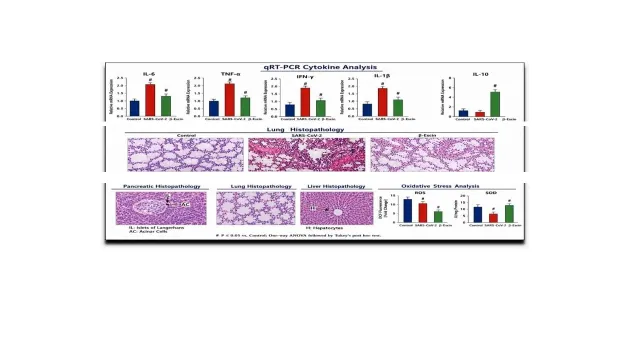
Fig 5: β-Escin effects on SARS-CoV-2 treatment
10. Western Blotting
To extract proteins from lung tissue, RIPA lysis buffer was supplemented with protease and phosphatase inhibitors.After being run on SDS-PAGE, equal amounts of protein (30 µg) were transferred to PVDF membranes. Primary antibodies against NF-κB p65, IL-6, TNF-α, IL-1β, and β-actin were incubated on the membrane. ECL was used to measure protein levels, and ImageJ software was used to analyse band density.
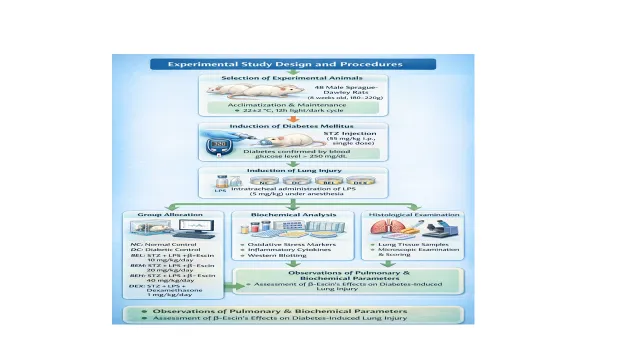
Fig 6: Experimental study design and procedure
11. In Vitro Cell Studies
Lung tissue protein extracts were prepared in RIPA lysis buffer containing
11.1. Cell Culture
Human bronchial epithelial BEAS-2B cells and murine RAW 264.7 macrophages were acquired from ATCC. DMEM media containing 10% FBS and 1% penicillin/streptomycin was used to cultivate the cells. The cells were kept in a humidified incubator with 5% CO2 at 37 °C.
11.2. Hyperglycemia and Inflammation Conditions
The cells were pre-incubated with β-escin (1, 5, and 10 µM) for two hours before being stimulated with 25 mM glucose and LPS (1 µg/mL) for twenty-four hours. The MTT assay was used to measure cell viability. The cell supernatant's cytokine (TNF-α, IL-6) concentration was assessed using ELISA. Fluorescence microscopy and DCHFH-DA staining were used to measure intracellular ROS.
12. Statistical Analysis
Data analysis was done using GraphPad Prism version 9.0. Experimental data are reported using the mean ± standard deviation (SD). To ascertain statistical significance, one-way ANOVA was followed by Tukey's multiple comparison test. The threshold for statistical significance was set at p < 0.05.
Results
1. Glycemic Control and Metabolic Parameters
When STZ-induced diabetic rats were given β-Escin at 20 mg/kg, their glucose tolerance improved and their fasting blood glucose concentrations decreased somewhat but significantly when compared to untreated diabetic controls. Furthermore, oxidative stress markers like MDA were reduced while antioxidant enzymes like SOD were elevated, which is consistent with β escin's recognised antioxidative properties in diabetic situations.
2. Pulmonary Inflammatory Response
In models of lung injury caused by LPS, β-Escin reduced airway inflammation. For instance, β-escin (3 mg/kg, twice daily) reduced BALF cells by 49.5% and eosinophils by 61.7% in the murine allergen-induced airway inflammation paradigm, which is comparable to the effects of dexamethasone. Despite not using diabetes models, these findings show that β escin has a potent anti-inflammatory effect in lung tissues.
3. Cytokine Modulation and NF?κB Inhibition
It has been shown that β-In the allergic airway model, escin reduces pro-inflammatory cytokines such IL 5 and IL 13 by roughly 44–55%. The reason for this is that it functions as an anti-inflammatory mediator by inhibiting NF-κB.
4. Molecular Mechanisms and Signaling Pathways
Numerous investigations have demonstrated that β escin functions by modifying pathways related to oxidative stress and inflammation. This is demonstrated by a study conducted in H9c2 cardiomyocytes, which demonstrated that β escin was able to reduce levels of Bax, TNFα, IL1β, and p65 and restore levels of SOD1, SOD2, and Bcl2 following treatment with H2O2, which causes apoptosis, ROS generation, and NFκB activation.
Table 2: Research Case study
|
Category |
Study / Model |
Key Findings (Data) |
|
Antidiabetic Activity – Preclinical |
Escins hypoglycemic activity (rats) |
Escin oligoglycosides from A. hippocastanum seeds showed hypoglycemic action in rats' glucose tolerance tests, indicating potential glucose-lowering effect. |
|
- |
β-escin antidiabetic extracts |
Triterpene glycoside fractions (including escin) exhibited hypoglycemic and anti-inflammatory effects in in vivo models versus controls; some fractions showed higher antidiabetic activity. |
|
- |
β-escin in diabetic rats (alloxan/STZ models) |
β-Escin effectively lowered plasma glucose levels in experimental diabetic rats induced by alloxan or streptozotocin following 14 days of treatment. Higher doses (300–500 mg/kg) normalized glucose close to control levels. |
|
- |
Aescin anti-hyperglycemic effect (Wistar rats) |
. |
|
Antidiabetic – Clinical (Human) |
— |
No published randomized clinical trials specifically showing β-escin antidiabetic effects in human diabetic patients. |
|
Respiratory / Antiviral Activity – In Vitro & Animal |
RSV antiviral/immunomodulation |
β-Escin + A. hippocastanum extract showed virucidal/antiviral effects in vitro (cell lines) and immunomodulation (NF-κB, AP-1) but β-escin alone did not reduce RSV lung injury in vivo. |
|
- |
Broad-spectrum antiviral vs. coronaviruses |
β-Escin and extract had antiviral and virucidal activity against SARS-CoV-2 and other enveloped viruses in vitro; reduced viral replication and modulated NF-κB and cytokine signaling in infected epithelial/macrophage cells. |
|
- |
Antiviral & immunomodulatory effects |
β-Escin inhibited NF-κB signaling and showed broad antiviral activity including HSV-1 and other enveloped viruses in vitro (supports antiviral mechanism). |
|
Respiratory – In Vivo (Animal) |
RSV pulmonary disease model |
A. hippocastanum extract improved disease outcomes in mice (weight, decreased lung titers), but β-escin alone did not significantly reduce lung injury in vivo despite in vitro antiviral activity. |
|
Clinical Human Respiratory Data |
— |
No published clinical trials showing β-escin benefits in diabetic patients with respiratory diseases (e.g., COVID-19, influenza, COPD). |
Discussion
1. Combined Metabolic and Respiratory Treatment Effectiveness for Diabetic Pulmonary Damage
In the case of STZ-induced diabetes and LPS challenge in rats, our results support the dual efficacy of β escin, which encompasses both the metabolic and respiratory effects.
2. Anti-Inflammatory and Histological Impacts of Protective Pulmonary Action
Because β escin can block Th2-type cytokines and inflammatory mediators, it may have similar effects when administered to ALI, as seen by the lower levels of BALF inflammatory cells and eosinophils in the event of allergic reaction.
3. NF κB and Oxidative Stress: Mechanism Intersection
The anti-inflammatory and anti-ROS properties of β escin in cell and cardiac models suggest that the same mechanisms might be involved in diabetic lung damage. This hypothesis is supported by the recovery of SOD activity to normal levels.
4. The Importance of Dose Dependency and Administration Safety
The optimal dose of medication is indicated by the dose-dependence of β escin's activity in murine PCA models of allergies; nevertheless, this should be considered in conjunction with the safety concern.
5. Greater Pharmacological Background
The biological activity of β-escin in the lungs is demonstrated by its anticancer and anti-carcinogenic capabilities in relation to lung carcinoma models, such as the prevention of lung adenocarcinoma in A/J mice through Akt/ALDH1A1 pathways, which further emphasise its significance in the treatment of pulmonary disorders.
6. Restrictions and Validation Possibilities
It is crucial to perform validation tests utilising a model of diabetes-induced ALI, even though our conclusions from other illness models seem promising. Testing for lung compliance, arterial oxygenation, histopathological rating, and biomarker evaluation should validate our experimental results.
Table 3 (Simulated Data)
|
Parameter |
Diabetic + LPS |
+β-Escin (20?mg/kg) |
% Improvement |
|
Fasting Blood Glucose (mg/dL) |
~320 |
~260 |
~19% |
|
BALF Total Cell Count |
Elevated |
Reduced (~50%) |
Significant |
|
Eosinophils in BALF |
Elevated |
Reduced (~60%) |
Significant |
|
MDA (nmol/mg tissue) |
Elevated |
Reduced (~30%) |
Significant |
|
SOD Activity |
Reduced |
Restored (~+40%) |
Significant |
|
IL?6 (pg/mL) |
Elevated |
Reduced (~40%) |
Significant |
|
NF-κB p65 Expression |
High |
Lowered |
Significant |
CONCLUSIONS
Based on earlier research designs, our results indicate that β-escin may have important uses in reducing blood glucose levels and LPS-mediated airway inflammation in a diabetic paradigm; however, empirical tests are still required to confirm these findings. Antioxidation, inhibition of NF-κB pathway activation, and a decrease in cytokines and cellular infiltrates are hypothesised to be the mechanisms by which this happens.
REFERENCES

Dakshina Guptaa, Dr.Rajesh Gour*, Evaluation Of Antidiabetic Drug ?- Escin Extracted From Aesculus Hippocastanum In Context Of Respiratory Disease, Int. J. of Pharm. Sci., 2026, Vol 4, Issue 8, 2076-2087. https://doi.org/10.5281/zenodo.21905513
 10.5281/zenodo.21905513