

We use cookies to ensure our website works properly and to personalise your experience. Cookies policy
1.Assistant Professor ,Department of pharmacy practice,Arunai college of pharmacy, velunagar, Thiruvanamalai,Tamilnadu-606603.
2.Principal cum professor, Head of the Department of Pharmaceutics, Arunai college of pharmacy, Velu Nagar, Tiruvannamalai-606 603.
3. B.Pharmacy, Arunai College of pharmacy, Velu Nagar, Tiruvannamalai-606 603
Generic medicines are essential for improving access to affordable healthcare, making an efficient regulatory approval system critical for ensuring their quality, safety, and efficacy. This study evaluates the generic drug approval process in India under the Drugs and Cosmetics Act, 1940, and the New Drugs and Clinical Trials (NDCT) Rules, 2019, administered by the Central Drugs Standard Control Organization (CDSCO). A systematic review of CDSCO guidelines, regulatory notifications, legal provisions, and public approval documents was conducted to examine key regulatory requirements, including bioequivalence studies, quality standards, Common Technical Document (CTD) dossier submission, regulatory documentation, and post-approval obligations. Sofosbuvir, an antiviral drug used in the treatment of Hepatitis C, was selected as a case study to demonstrate the practical application of the generic drug approval pathway. The study evaluates the regulatory framework governing online pharmacies in India and public perceptions of purchasing. generic medicines through digital platforms. Although online pharmacies improve medicine accessibility through convenient ordering, prescription management, home delivery, and cost savings, concerns regarding prescription verification, counterfeit medicines, patient safety, and data privacy remain. This study also evaluates India's generic drug marketing authorization process and explores the public's Knowledge , Attitude, and Practice (KAP) regarding the acceptance and perception of generic medicines purchased through online channels.
The pharmaceutical industry plays a pivotal role in improving global healthcare by ensuring the availability of safe, effective, and affordable medicines. Among pharmaceutical products, generic medicines are particularly important because they provide cost-effective alternatives to innovator drugs while maintaining comparable quality, safety, efficacy, dosage form, strength, route of administration, and therapeutic performance. Following patent expiry, generic medicines contribute significantly to expanding healthcare access and reducing treatment costs, especially in developing countries.
India has emerged as the "Pharmacy of the World" due to its strong generic pharmaceutical manufacturing sector and its ability to supply high-quality, affordable medicines to both domestic and international markets. The approval and regulation of generic medicines are governed by the Drugs and Cosmetics Act, 1940, the Drugs and Cosmetics Rules, 1945, and the New Drugs and Clinical Trials (NDCT) Rules, 2019, under the supervision of the Central Drugs Standard Control Organization (CDSCO). The regulatory approval process involves comprehensive evaluation of pharmaceutical quality, bioequivalence, stability, Good Manufacturing Practices (GMP) compliance, and submission of the Common Technical Document (CTD) dossier to ensure that generic medicines meet the same therapeutic standards as their reference products.
A notable example of India's successful generic drug approval system is Sofosbuvir, a direct-acting antiviral used in the treatment of chronic Hepatitis C virus (HCV) infection. The introduction of its generic versions has substantially reduced treatment costs, improved patient access, and demonstrated India's capability to develop and regulate high-quality generic medicines that comply with international regulatory standards.
Alongside the growth of the generic pharmaceutical industry, digital healthcare has transformed medicine distribution through the emergence of online pharmacies. These platforms provide convenient services such as online medicine ordering, electronic prescription submission, home delivery, order tracking, and discounted pricing, thereby improving access to medicines, particularly for elderly individuals, patients with chronic diseases, and people living in remote areas. However, the rapid expansion of online pharmacies has also raised concerns regarding prescription verification, counterfeit or substandard medicines, patient safety, data privacy, and regulatory compliance.
At present, online pharmacies in India operate under the provisions of the Drugs and Cosmetics Act, 1940, Drugs and Cosmetics Rules, 1945, Pharmacy Act, 1948, and Information Technology Act, 2000. However, a dedicated legal framework for e-pharmacies has yet to be implemented, creating regulatory challenges for ensuring safe and ethical online medicine distribution.
Therefore, this study provides a comprehensive evaluation of the generic drug approval pathway in India, including the regulatory requirements, documentation, and approval process administered by CDSCO. It also examines the existing regulatory framework governing online pharmacies and assesses public knowledge, attitudes, and perceptions regarding the purchase of generic medicines through online platforms. The findings are intended to identify regulatory strengths, existing challenges, and potential measures to improve both the generic drug approval process and the regulation of online pharmacy services in India.
GENERIC DRUGS:
Generic drugs are pharmaceutical products intended to be interchangeable with innovator or reference drugs after patent expiration. They contain the same active pharmaceutical ingredient (API), strength, dosage form, route of administration, and therapeutic use as the original product, although they may differ in appearance or excipients. Unlike innovator drugs, generic drugs do not require extensive clinical trials; instead, they must demonstrate bioequivalence to ensure similar safety and efficacy. Regulatory authorities enforce strict quality standards, Good Manufacturing Practices (GMP), and bioequivalence requirements before approval. In countries like India, generic drugs play a crucial role in improving access to affordable healthcare and supporting public health systems. Their approval is regulated by the Central Drugs Standard Control Organization (CDSCO) under the Drugs and Cosmetics Act, 1940 and the New Drugs and Clinical Trials Rules, 2019. Despite a simplified development process, the regulatory pathway remains structured and requires strict compliance for successful market entry.
REGULATORY FRAMEWORK
The regulatory framework of generic drugs in India consists of laws, authorities, and procedures established by the government to ensure medicines are safe, effective, and of good quality. It aims to balance public health protection with affordable access to medicines. India follows a dual regulatory system, where the central government sets laws and standards, and state governments handle implementation, licensing, inspection, and enforcement.
DRUGS AND COSMETICS ACT-1940 RULES 1945
The Drugs and Cosmetics Act (1940) and its 1945 Rules form the primary legal framework for the pharmaceutical industry in India. Its main purpose is to ensure that all drugs and cosmetics are safe, effective, and meet high-quality standards.
Schedule M: Good Manufacturing Practice.
Schedule Y: Requirements for Clinical Trails and New Drugs.
Schedule D: Exemptions for Certain Categories of Drugs.
Schedule C and C1: Biological and Special Products.
Schedule H, H1and X: Prescription Drug Control.
MINISTRY OF HEALTH AND FAMILY WELFARE (MOHFW)
Is the main organization in charge of creating health policies and managing the drug and Cosmetics act. It supervises all regulatory bodies related to drug regulations. The main functions of (MoHFW) are policy formulation, legislative amendments, international regulatory cooperation, and oversight of CDSCO.
CENTRAL DRUG STANDARD CONTROL ORGANIZATION (CDSCO)
CDSCO is the national regulatory authority of India for drugs, medical devices, cosmetics and clinical trials. It operates under (DGHS) directorate general of health service, ministry of health and family welfare, government of India headquartered in new Delhi, its work in co-ordination with state licensing authorities (SLAs) to regulate drug quality, safety and efficacy throughout the country.
ORGANIZATION OF CDSCO:
a) Central level: Headed by DCGI. v Located at CDSCO headquarters in New Delhi. v It works under the directorate general of health services (DGHS).
b) Zonal offices: CDSCO has zonal offices in major cities to control drugs quality and imports.
C) Sub zonal offices: Assist zonal offices in inspections and enforcement.
D) Port offices: Located at airports and seaports to regulate the generic drugs and cosmetics.
DRUGS CONTROLLER GENERAL OF INDIA (DCGI)
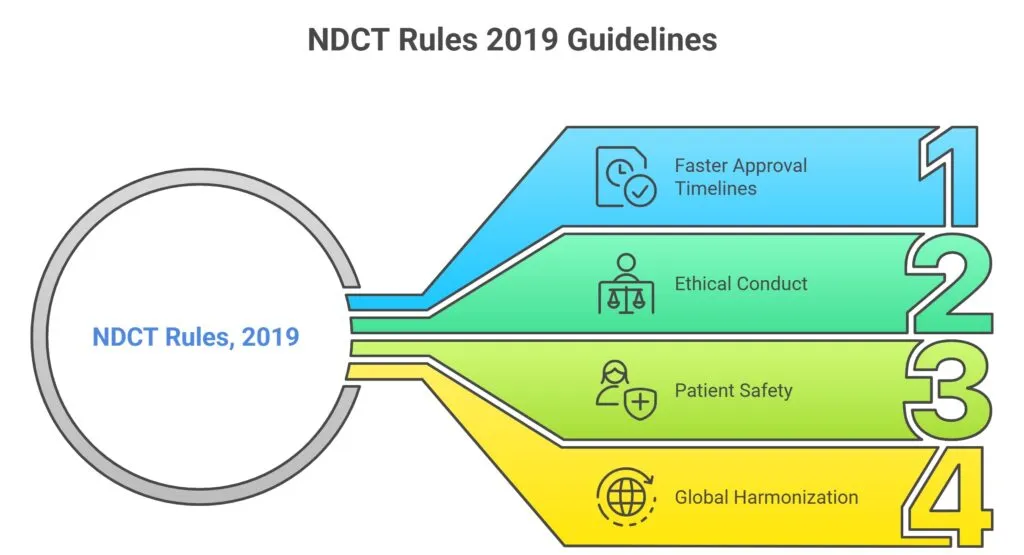
The Drugs Controller General of India (DCGI) is the national authority responsible for regulating drugs and medical devices in India. It functions under the Central Drugs Standard Control Organization (CDSCO) and operates under the Drugs and Cosmetics Act, 1940 and Rules, 1945.The DCGI is the final approving authority for generic drugs at the central level, and its decisions apply across all states and union territories. Its main responsibilities include approval of new and generic drugs, permission for bioequivalence studies and clinical trials, evaluation of safety, efficacy and quality, regulation of imported drugs, and ensuring compliance with regulatory standards. Subject Expert Committee (SEC) consist of domain experts who evaluate applications related to new drugs, bioequivalence, and clinical trial proposals. They assess scientific data from bioequivalence studies and make recommendations to the DCGI for approval or rejection. New Drugs and Clinical Trials Rules, 2019 The NDCT Rules, 2019 provide a framework for drug regulation in India, covering licensing, ethics, BA/BE studies, and clinical trials. They include 13 chapters, 107 rules, and 8 schedules, and introduce a transparent, time-bound approach for generic drug approval.
SUBJECT EXPERT COMMITTEE (SEC)
It consists of domain experts who evaluate applications related to new drugs, bioequivalence, and clinical trial proposals. They assess scientific data from bioequivalence studies and make recommendations to the DCGI for approval or rejection.

New Drugs and Clinical Trials Rules, 2019
The NDCT Rules, 2019 provide a framework for drug regulation in India, covering licensing, ethics, BA/BE studies, and clinical trials. They include 13 chapters, 107 rules, and 8 schedules, and introduce a transparent, time-bound approach for generic drug approval.
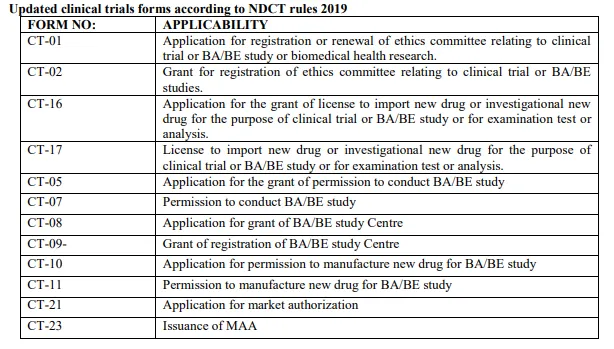
Updated clinical trials forms according to NDCT rules 2019
STATE LICENCING AUTHORITY:
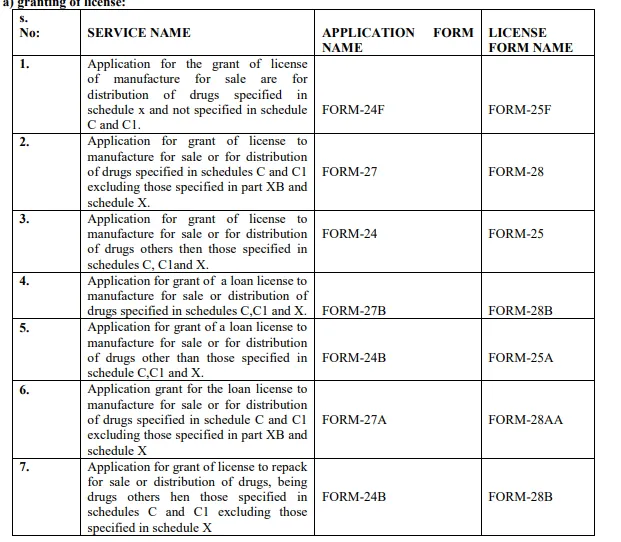
The state licensing authority (SLA), headed by state drug controller is responsibility for the issuing manufacturing and sales licenses for the new drugs, generic drugs.
Granting of license:
ETHICS COMMITTEES (ECS)
Ethics Committees play an independent role in the regulation of generic drugs involving bioequivalence or clinical studies. Their main function is to protect the rights, safety, and well-being of participants. As per NDCT Rules, 2019, ECs must be registered with CDSCO, and prior approval is required before starting any bioequivalence or clinical study.
DRUG PRICE CONTROL ORDER (DPCO)
The DPCO is a government order issued under the Essential Commodities Act ,1955. Its purpose is to make sure essential medicines are available at low prices. Generic drugs listed in the National List of Essential Medicine (NLEM) are regulated by the DPCO. Key provisions relevant to generic drugs are Setting ceiling prices for scheduled formulations, required compliance by manufacturers and marketers, Regulation of trade margins, Monitoring of overcharging and price increases.
NATIONAL PHARMACEUTICAL PRICING AUTHORITY(NPPA)
The National Pharmaceutical Pricing Authority (NPPA) is an independent regulatory body functioning under the Department of Pharmaceuticals, Ministry of Chemicals and Fertilizers, Government of India.
PHARMACOVIGILANCE AND POSTMARKETING AUTHORITY
Pharmacovigilance is an important part of the regulatory framework. It enforces Adverse Drug Reaction (ADR) reporting, Risk management systems, Periodic Safety Update Reports (PSURs), and Market recall procedures. The Pharmacovigilance Programmed of India (PvPI) manages safety monitoring across the country.
ELIGIBILITY CRITERIA FOR GENERIC DRUG APPROVAL
Generic drug approval is granted by the Central Drugs Standard Control Organization (CDSCO)based on pharmaceutical equivalence and bioequivalence without full clinical trials. The drug must match the reference product and meet key criteria such as prior approval, patent clearance, valid manufacturing license under the Drugs and Cosmetics Act, 1940, and compliance with Schedule M (GMP) standards.
REGULATORY REQUIREMENTS
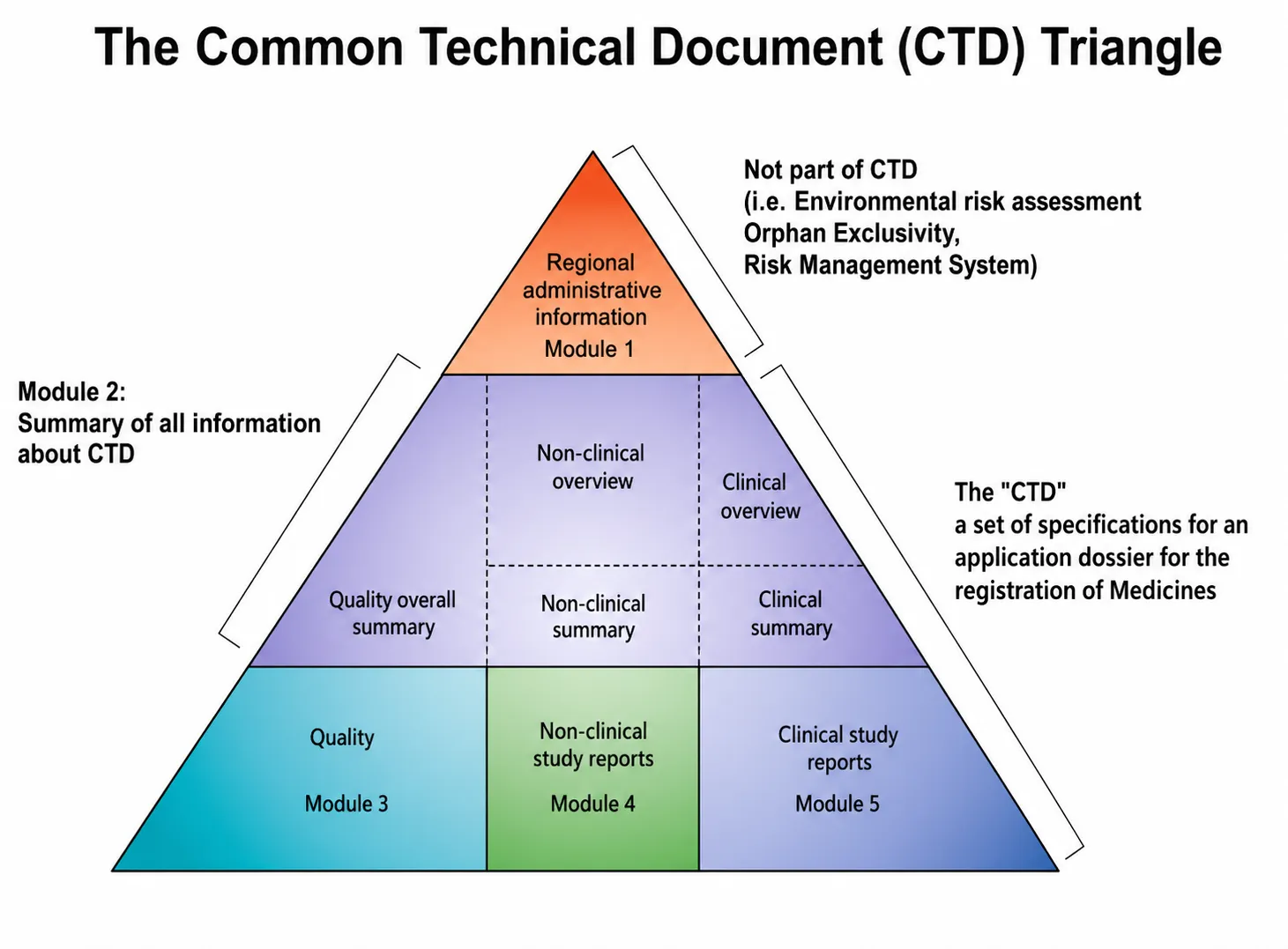
DOSSIER SUBMISSION REQUIREMENTS
CTD modules: document checklist for CDSCO submission:
BIO AVAILABILITY
Refers to the rate and extent at which amount of drug that get absorbed from the administered dosage form into the systemic circulation and becomes available at the site of action.
BIO EQUIVALENCE
BE of a drug product is achieved when there is no significant difference in rate and extent of absorption from that of reference product. Ø Both In vivo and In vitro methods are used depending on the product type. Ø The ministry of health estimates that about 5% of drugs in India are counterfeit and roughly 0.3% are labelled as spurious.
NECESSITY AND REQUIREMENTS OF BIOEQUIVALENCE STUDIES AND THEIR TYPES
It is especially important to document the bioequivalence of a specific dosage form in vivo, whether through a bioequivalence study, a comparative clinical pharmacodynamic study, or a comparative clinical trial. these include:
i)The following are the criteria for immediate release oral formulation that act systematically:
· Assured therapeutic response indicated for serious condition.
· therapeutic window which is narrow / safety margin; steep dose- response curve.
· Nonlinear PK, >70% first-pass metabolism, variable-affected pharmacokinetics, incomplete absorption, or absorption window.
· Low solubility, meta-stable modifications, and weak permeability are examples of unfavourable physicochemical properties.
· In case of high proportion of inactive substance to active substance.
ii) Systemic absorption is the mechanism by which sustained or modified release dosage forms work.
iii) Fixed dose combination products work through systemic absorption.
iv) pharmaceutical products that are not in the form of a solution and are intended for non-systemic use and absorption. In these situations, the concept of bioequivalence is inapplicable, and equivalence must be. demonstrated through comparative clinical or pharmacodynamics studies to access unintended partial absorption, drug concentration measurements are required. Documentation of bioequivalence is also required to establish a link between, Formulations for early and late clinical trials, pharmaceutical formulations used in clinical trials, Clinical trial formulations and drug products that will be marketed and Other appropriate comparisons.
These are the condition where in vitro testing of dissolution is used to evaluate equivalence:
GENERIC DRUG APPROVAL PROCEDURE IN INDIA BE-NOC:
BE-NOC is a No Objection Certificate issued to allow bioequivalence studies in human subjects. To conduct BE studies, companies must submit documents such as the study protocol, EC registration, BA/BE centre approval, required application forms, and other supporting details. Applications for test licences for import or studies must include the BE protocol. For new drugs, a BENOC is required, while for old drugs, regulatory approval details in India must be provided.
BE-NOC APPLICATION
GOOD MANUFACTURING PRACTICE COMPLIANCE
Generic drugs must demonstrate bioequivalence to their brand- name counterparts, which requires precise manufacturing processes.
GMP practice ensure that products meet the same quality standards as the original drugs.
C)Regulatory approval:
Compliance with GMP standards is mandatory for obtaining and maintaining regulatory approvals from agencies like the FDA, EMA, AND WHO.
D)MARKET COMPETITIVENESS:
High quality products enhance brand reputation and competitiveness in the generic drug market.
Key good manufacturing process requires for generic drug manufactures.
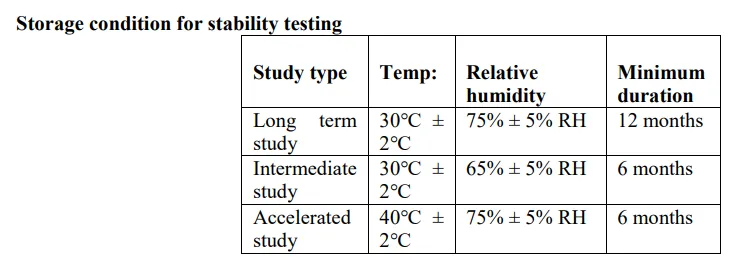
STABILITY STUDY REQUIREMENTS
BE-NOC is a certificate that allows companies to conduct bioequivalence studies in human subjects. To obtain it, firms must submit the study protocol, EC registration, BA/BE centre approval, and required documents. It is required for new drugs, while for old drugs, existing regulatory approval details must be provided.
LABELLING REQUIREMENTS
Labelling rules ensure medicines provide clear and accurate information for safe use. Primary labels include drug name, ingredients, strength, dosage form, and batch number, while secondary labels cover storage, expiry, warnings, and usage instructions. Proper labelling is mandatory, as errors can delay approval and require correction.
PACKINGING REGULATION
Packaging regulations ensure that pharmaceutical products are protected from contamination, damage, and environmental factors during storage and transport. They require suitable materials, child resistant features for certain products, and traceability elements like barcodes or serial numbers. All packaging must follow GMP to maintain product quality, safety, and effectiveness.
POST APPROVAL REGULATORY REQUIREMENTS
Marketing Authorization Holders must monitor and report adverse drug reactions (ADRs) to CDSCO as part of the Pharmacovigilance Programme of India (PvPI).
e) Renewal of Licence Manufacturing and import licenses must be renewed according to set timelines. Failure to comply with post-approval requirements may lead to suspension, cancellation of licenses, or legal penalties.
APPROVAL PATHWAY OF GENERIC DRUGS IN INDIA PRE-SUBMISSION REGULATORY ASSESMENT
Permission for bioequivalence
For most generic drugs, bioequivalence (BE) studies are required to prove similarity with the reference drug. The process includes submitting the BE study protocol to CDSCO through the SUGAM portal, applying in Form CT-04, followed by review and approval by DCGI, along with approval of the study site and investigator.BE studies can be conducted only after receiving permission from DCGI.
EC approval-Parallel to obtaining DCGI permission, the applicant must get approval from a CDSCO- registered EC. The EC is responsible for – reviewing this study protocol and assessing the risks benefits, Approving informed consent documents, overseeing subject safety and composition and reviewing serious adverse events (SAES). Approval from the EC is a mandatory requirement before starting the BE studies.
Conduct of BE study-The approved BE studies take place at CDSCO approved BE centres and following Good Clinical Practice (GCP). The main activities involve, subject recruitment and informed consent, administration of test and reference products, sample collection and bioanalysis and pharmacokinetic and statistical analysis. The study must show equivalence of Cmax and AUC parameters within the acceptance range of 80-125 percent.
Preparation of regulatory dossier- upon completing the BE study we prepare a regulatory dossier in CTD format. The accuracy and completeness of the dossier and essential for regulatory acceptance.
Submission of applicant to CDSCO-
The applicant submits the complete application through the CDSCO SUGAM portal. This submission includes appropriate application from CT -21, CT-23, or Form 44), CTD dossier, prescribed fees, supporting certificates and undertaking. Electronic submission ensures traceability and transparency in the review process.
Technical and scientific review by CDSCO
Following submission, CDSCO conducts a through technical review. The review activities involve the evaluation of quality (CMC) data, assessment of BE study results, verification of GMP compliance, identification of deficiencies or clarification. If deficiency letters are issued, the applicant must address them within the required timeline.
Evaluation by subject expert committee (SEC)-
Applications needing the expert input are send to the SEC. their responsibility includes, evaluation of BE data, assessment of risk- benefits profile- recommendation for approval, rejection are additional data. SEC recommendations form the basis for DCGI’s regulatory decision.
Grant of markert authorization by DCGI
Based on the CDSCO review and SEC recommendation, the DCGI either grants or rejects marketing authorization. Approval includes permission to Manufacture or import the generic drug, labelling and package insert, conditions for post approval compliance. This approval is valid across the country and is binding on all state licensing authorities. 9. Grant of manufacture license by SLA-After receiving the central approval, the manufacturer applies to the SLA state level requirements includes submission of DCGI approval letter, inspection of the manufacturing facility, verification of schedule M compliance, once everything is stationary, the SLA grants the manufacturing licence. This allows for commercial production. 10. Market launch and distribution-Once all licenses are obtained, the generic drugs can be introduced in the market. The requirements for this include compliance with labelling and packing regulations, adherence to price control regulation (DPCO) and distribution through authorized channel only should take place.
Post marketing surveillance and pharmacovigilance
Post approval, the manufacture must keep monitoring the safety of the generic drugs. Their action should involve, reporting ADR, submitting periodic safety update reports (PSURSs) managing risks, recalling the drug pharmacovigilance program of India (PVPI).
Post approval changes and variations-
Any changes to the approval product or process must go through regulatory variations. The changes may include, manufacturing site or process exchange, formulation or packaging modification, labelling update, etc. depending on the type of change, you may need prior approval from CDSCO.
Renewal, compliance and enforcement
Manufacturing licence and approval need to be renewal and maintained for compliance. Regulatory authorities may conduct routine or for cause inspection, suspend /cancel license for noncompliance and they can take legal action under Drugs and Cosmetics Act.
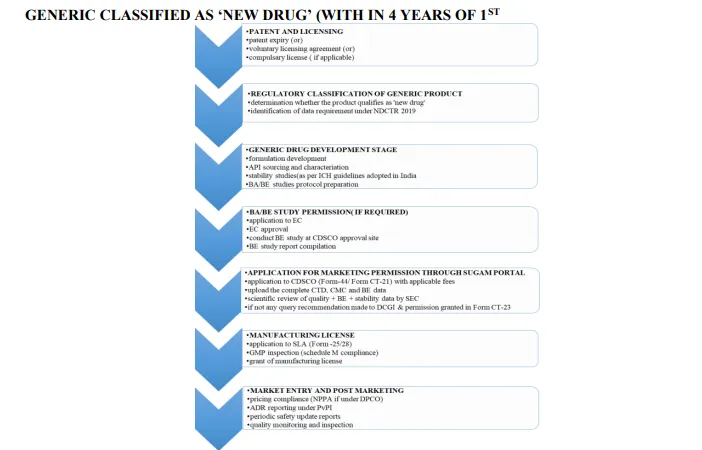
ILLUSTRATION OF GENERIC DRUG APPROVAL PROCESS (SOFOSBUVIR)
I)PATENT HISTORY OF SOFOSBUVIR
Discovery of sofosbuvir (2007)
Sofosbuvir was discovered in 2007 by scientist Michael J. Sofia at the biotechnology company Pharmasset. The drug was developed as a direct-acting antiviral for treating Hepatitis C virus (HCV) infection. It works by blocking the NS5B RNA polymerase enzyme of the hepatitis C virus, which prevents the virus from replicating.
Acquisition of Pharmasset by Gilead (2011) In 2011,
Gilead Sciences purchased Pharmasset for about $11 billion. This purchase gave Gilead the rights to develop and sell Sofosbuvir worldwide. After the buyout, Gilead sped up the clinical development and approval process for the drug.
Regulatory Approval in the United States (2013)
In December 2013, the U.S. Food and Drug Administration approved the drug under the brand name Sovaldi for treating chronic hepatitis C infection. This approval was a major milestone in hepatitis C treatment. Sofosbuvir enabled shorter treatment times and better cure rates than earlier therapies.
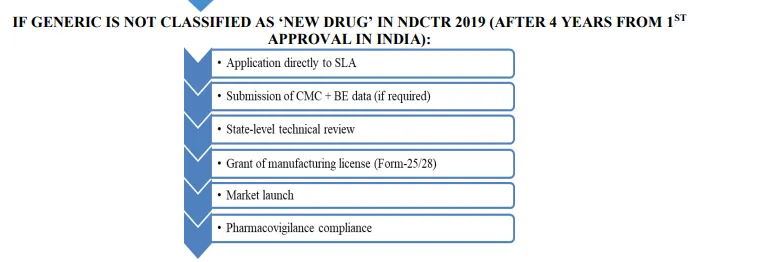
Patent Application in India (2014)
Gilead Sciences filed an application for patenting Sofosbuvir in India with the Indian Patent Office in July 2014. If Gilead Sciences had been granted the patent for Sofosbuvir, it would have had exclusive rights over the sale of Sofosbuvir in India, which would have barred other pharmaceutical companies from manufacturing its generics.
Pre-Grant Opposition by Public Health Groups (2013-2014)
Several organizations opposed the patenting of Sofosbuvir through pre-grant opposition, including Natco Pharma, I-MAK, and the Delhi Network of Positive People. They argued that Sofosbuvir did not meet patentability criteria under Section 3(d) of the Indian Patents Act, 1970.
Rejection of Patent by Indian Patent Office (January 2015)
The Indian Patent Office rejected the patent application of Gilead Sciences in January 2015. This rejection was based on Section 3(d) of the Indian Patent Act of 1970, which states that a new form of a known compound needs to show a significant enhancement in therapeutic efficacy to be considered for a patent. The patent office found that the changes in the Sofosbuvir compound did not show a significant enhancement in therapeutic efficacy over previous compounds.
Appeal by Gilead in the Delhi High Court (2015)
Gilead Sciences, after being rejected, decided to appeal in the Delhi High Court, questioning the decision of the Indian Patent Office. The High Court directed the patent office to review the application, allowing Gilead to put forward additional arguments in support of their patent application.
Voluntary Licensing to Indian Generic Companies (2014-2015)
Gilead had entered into voluntary licensing agreements with various generic companies in India even before the final decision regarding patents. The generic companies were allowed to distribute and produce generic forms of Sofosbuvir in various developing countries. It was mandatory for the generic companies to pay a royalty of around 7% to Gilead.
Entry of Generic Sofosbuvir in India
When India rejected the patent and set up voluntary licensing deals, local drug companies jumped in and started making cheap generic Sofosbuvir. Suddenly, the price of hepatitis C treatment dropped— not just in India, but in a lot of other countries too. Just to give you an idea: In the US, a 12-week course was about $84,000. Indian generics slashed that price all the way down to around $100 for the whole treatment.
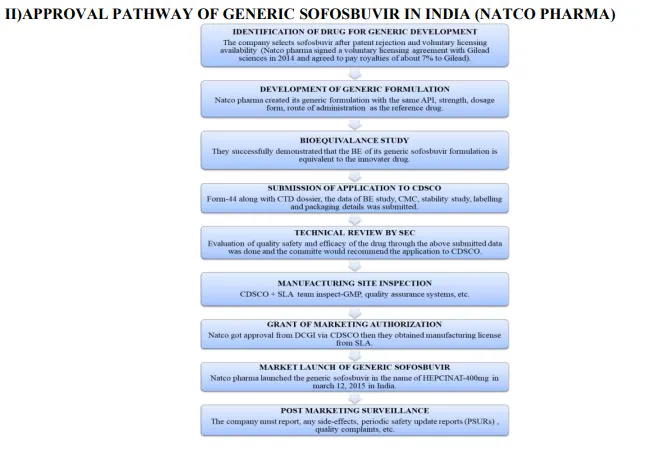
Price Reduction And Public Health Impact Of Generic Sofosbuvir In India
The introduction of generics of Sofosbuvir in India had a strong impact on public health in India. The original branded drug Sovaldi, developed by Gilead Sciences, was initially priced at about $84,000 for a 12-week treatment regimen when it was first introduced in the United States. The high price of this drug made it inaccessible to most patients, particularly in low- and middle-income countries.
The price of Sofosbuvir decreased dramatically after the entry of generic companies in India, including Natco Pharma. The generic companies launched their products at a price of $300-$900 for a complete regimen, a decrease of more than 95 percent from the original price of the drug.
The availability of cheap generic drugs like Sofosbuvir also helped in increasing access to hepatitis C treatment. People who could not afford the drugs earlier are now able to access the drugs with the help of government schemes, hospitals, and other public health programs. Also, India has become a key supplier of generic drugs like Sofosbuvir to many developing countries, thereby increasing access to life-saving drugs for hepatitis C infection.
ONLINE PHARMACY SYSTEM IN INDIA:
Major Indian online pharmacy companies such as Netmeds and Medlife have played an important role in expanding digital healthcare access in India. Netmeds, backed by Dadha & Company with over 100 years of pharmacy experience, operates in more than 850 cities and towns and delivers across over 19,000 PIN codes, offering more than 35,000 products with a near 100% fulfillment rate.
It also provides generic alternatives that help customers save significantly and has positioned itself as one of the most preferred online pharmacies in India. Medlife aimed to function as a one-stop healthcare platform and operated across multiple regions of the country with plans for pan-India expansion. Its services included mobile-based ordering, easy prescription upload, order tracking, free home delivery, delivery within 24–48 hours, assured savings, and a user-friendly experience.
In its ordering process, customers uploaded a prescription image, the company collected the prescription from the customer’s address as a mandatory step, and medicines were then delivered along with the prescription. During the period around 2019, several digital health initiatives were also emerging in India, including AIIMS preparing a web-based bed-booking system, King George’s Hospital introducing a pan-India medicine stock access system, promotion of traditional AYUSH systems such as Ayurveda, Yoga, Naturopathy, Unani, Siddha, and Homeopathy, and the launch of telemedicine services connecting remote patients with specialists through video-conferencing technology. Additionally, the use of Aadhaar-linked verification was discussed as a measure to prevent misuse and improve accountability in online pharmacy transactions.
REGULATORY FRAMEWORK FOR ONLINE PHARMACIES IN INDIA :
Legal Status in India
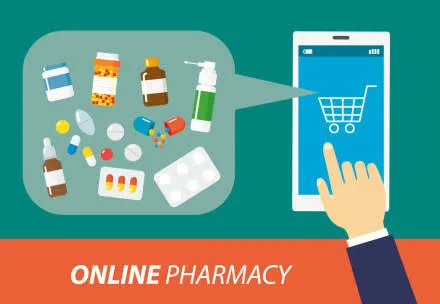
Internet-based prescriptions
Online Pharmacy Laws in India
Self-regulatory rules laid down in the IIPA's first meeting (under Secretary Kiran Divakaran):
Additionally, the IIPA is working with the Central Government to bring further regulatory reform, including:
Absence of a dedicated regulatory law allows:
METHODOLOGY:
A descriptive cross-sectional study was conducted consisting of two components: Evaluation of India's generic drug marketing authorization process through literature review. KAP (Knowledge, Attitude and Practice) survey to assess public acceptance and perception of generic medicines purchased through online channels.
Relevant information was collected from regulatory guidelines, government publications, scientific journals, textbooks, and official websites. The marketing authorization process for generic drugs in India was evaluated based on the available regulatory framework and approval requirements.
The study was conducted among members of the public aged 18 years and above.
A total of 300 participants were selected for the KAP survey.
A structured and pre-designed questionnaire was developed to assess the participants' knowledge, attitude, and practice regarding generic medicines purchased through online channels.
Data was collected directly from participants using a printed questionnaire after obtaining informed consent.
Individuals aged 18 years and above.
Participants are willing to provide informed consent.
Individuals capable of understanding the questionnaire.
Complete and valid questionnaire responses.
Individuals below 18 years of age.
Participants unwilling to provide informed consent.
Individuals are unable to understand the questionnaire.
Incomplete or duplicate questionnaire responses.
The collected data will be entered into Microsoft Excel and analyzed using descriptive statistics. The results will be presented in the form of tables, charts, and graphs.
LIMITATIONS OF STUDY:
PLAN OF WORK:
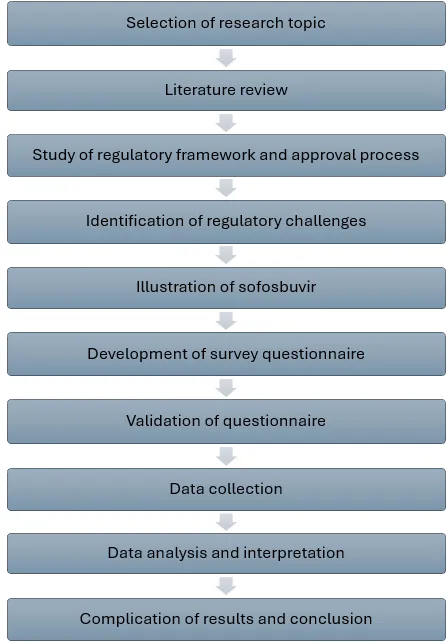
RESULT AND DISCUSSION
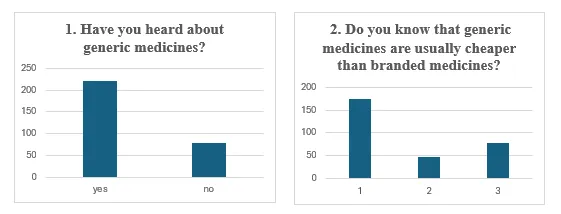
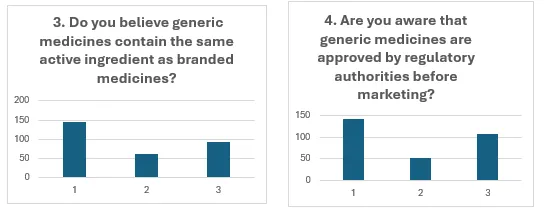
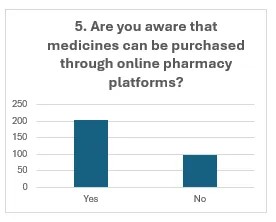
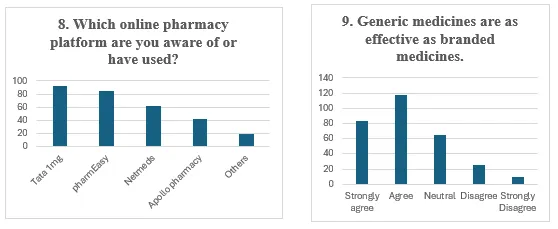
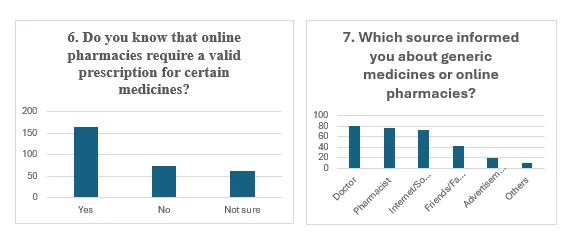
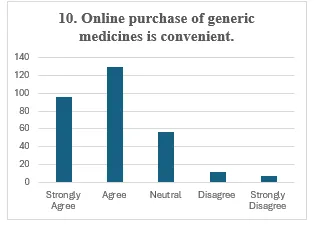
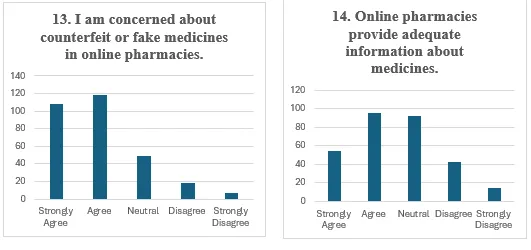
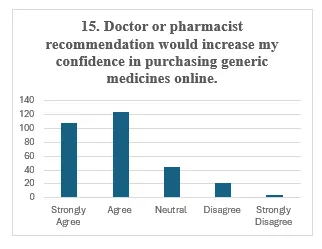
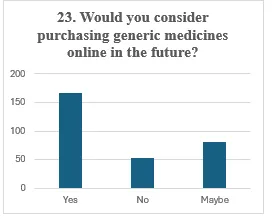
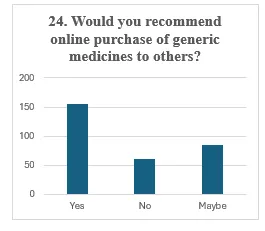
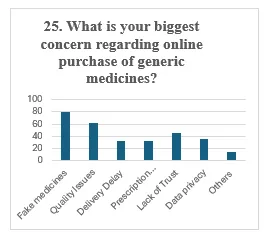
RESULT AND DISCUSSION:
KNOWLEDGE ASSESSMENT:
The overall knowledge of the general public regarding generic medicines and online pharmacies was evaluated based on key knowledge questions.
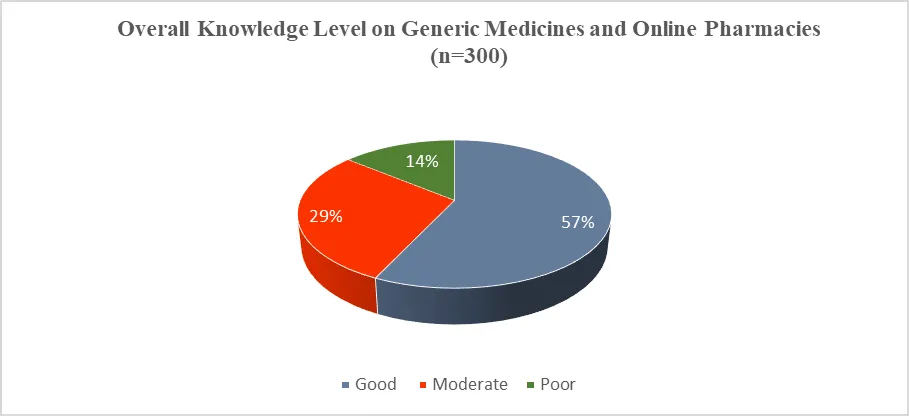
Good Knowledge 171 respondents (57%)
Moderate Knowledge 87 respondents (29%)
Poor Knowledge 42 respondents (14%)
Total = 300 respondents (100%)
ATTITUDE ASSESSMENT:
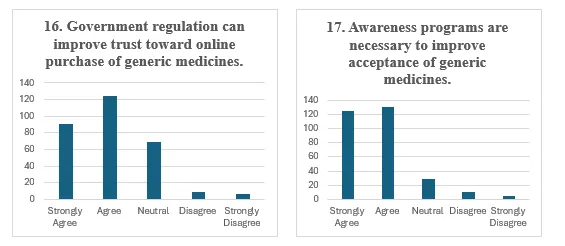
The attitude of the public towards generic medicines and online purchase was assessed using a 5-point Likert scale.
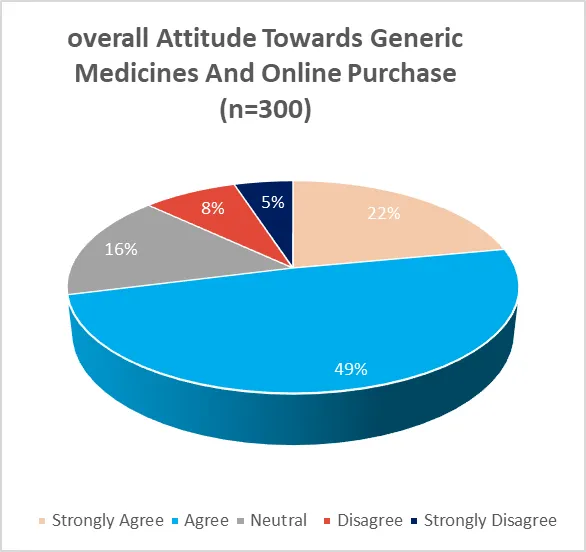
Total = 300 respondents (100%)
PRACTICE ASSESSMENT:
The practice of the public towards the use of generic medicines and online purchase was assessed using key practice-related questions.
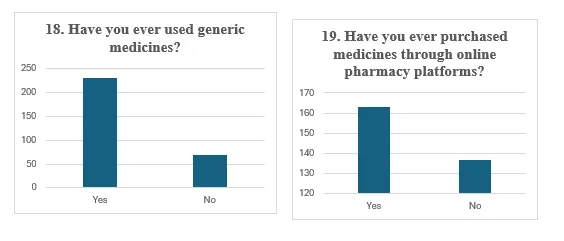
Use of Generic Medicines: Around 63% of respondents have ever used generic medicines, while 37% have never used them.
Online Purchase Experience: Only 48% of respondents have ever purchased medicines through online pharmacy platforms, showing that online purchase is not yet a common practice.
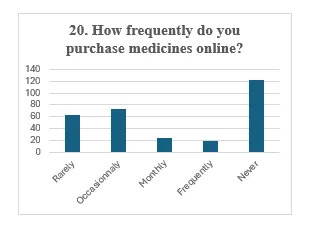
Frequency of Online Purchase: Among those who purchased online, 45% do so occasionally, 31% rarely, 12% monthly, and only 8% frequently, while 4% never purchase online.
Future Intention: A majority (57%) would consider purchasing generic medicines online in the future, whereas 23% would not and 20% are unsure.
Recommendation to Others: Less than half (46%) would recommend online purchase of generic medicines to others, 24% would not, and 30% are uncertain.
Overall, the practice level among the public is moderate, indicating a gap between positive attitude and actual practice.
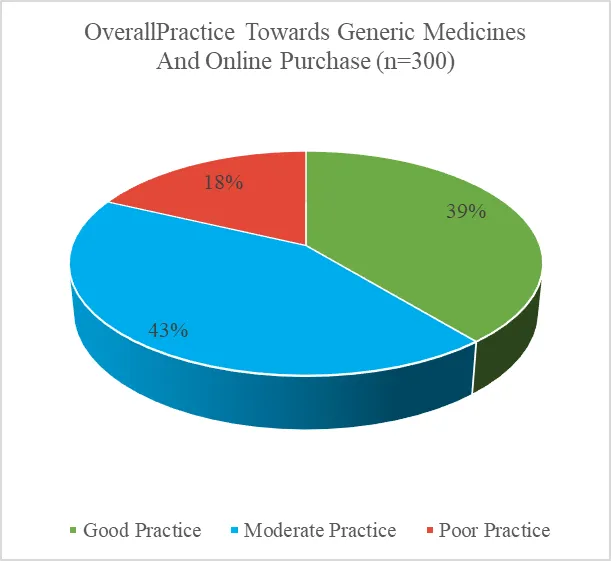
Total = 300 respondents (100%)
CONCLUSION:
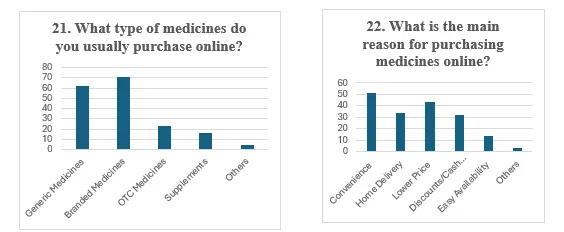
This study evaluated India's generic drug marketing authorization process and assessed public knowledge, attitude, and practices (KAP) regarding generic medicines purchased through online channels. The review showed that the Indian regulatory system, led by CDSCO under the Drugs and Cosmetics Act and Rules, provides a well-defined framework for ensuring the quality, safety, and efficacy of generic medicines before marketing authorization. The KAP survey indicated that although awareness of generic medicines is increasing, several misconceptions regarding their quality, effectiveness, and safety still exist among the public. Price and affordability were identified as major factors influencing the acceptance of generic medicines, while trust in healthcare professionals and regulatory authorities played a significant role in purchasing decisions. The findings also suggest that online pharmacies have the potential to improve access to affordable medicines when they operate in compliance with regulatory requirements.
Overall, the study concludes that India's generic drug marketing authorization process is scientifically robust and capable of ensuring the availability of safe, effective, and affordable generic medicines. However, improving public awareness, strengthening regulatory oversight of online medicine sales, and promoting confidence in generic medicines are essential to increase their acceptance and utilization.
FUTURE RECOMMENDATIONS
REFERENCES


Dr.P.Praveen Kumar, Dr.S.K. Senthil Kumar, H.Yukesh,G. Arthi, A. Arulpandiyan, N.Gopi*, A. Keerthana, Evaluation Of India’s Generic Drug Marketing Authorization Process With A Kap Survey On Public Acceptance And Perception Of Generic Medicines Purchased Through Online Channels, Int. J. of Pharm. Sci., 2026, Vol 4, Issue 7, 6037-6067. https://doi.org/ 10.5281/zenodo.21719450
 10.5281/zenodo.21719450