

We use cookies to ensure our website works properly and to personalise your experience. Cookies policy
Bharat School of Pharmacy.
Diabetic nephropathy is a major complication of type 2 diabetes mellitus and a leading cause of chronic kidney disease. This study evaluated the renal and cardiovascular outcomes of dapagliflozin plus telmisartan in patients with diabetic nephropathy. Renal parameters (serum creatinine, eGFR, UACR, and BUN) and cardiovascular parameters (blood pressure and HbA1c) were assessed at baseline and follow-up. Combination therapy significantly improved renal function, reduced albuminuria, improved glycaemic control, and lowered blood pressure (p < 0.05). These findings suggest that dapagliflozin plus telmisartan is an effective therapeutic strategy for improving renal and cardiovascular outcomes in patients with diabetic nephropathy
DIABETIC NEPHROPATHY:
Diabetic nephropathy (DN) is a characteristic set of structural and functional kidney abnormalities in patients with diabetes.
Structural abnormalities – Hypertrophy of the kidney.
Increase in glomerular basement membrane thickness.
Nodular and diffuse glomerulosclerosis.
Tubular atrophy.
Interstitial fibrosis.
Functional abnormalities – Early increase in glomerular filtration rate with
intraglomerular hypertension.
Subsequent proteinuria.
Systemic hypertension.
Eventual loss of renal function.[1]
STAGES:
Mogensen et al. has suggested that Diabetic nephropathy can be divided into 5 stages:
|
STAGES |
DESCRIPTION |
GFR |
|
Early hypertrophy stage |
Kidney damage present (microscopic changes or increased filtration), but overall function is normal. |
90 or above(normal) |
|
Silent stage |
Early damage, possibly with slightly increased protein (microalbuminuria) in urine, but function is still good. |
60 – 89(mildly decreased) |
|
Incipient DN |
Moderate to severe loss of function; protein levels in urine increase, indicating ongoing damage. |
30 – 59(moderate) |
|
Overt DN |
Severe decline in kidney function; symptoms like swelling, fatigue, and changes in urination may appear. |
15 – 29(severe) |
|
End-stage renal disease |
The kidneys have failed or are very close to failing, requiring dialysis or a kidney transplant. |
Below 15(kidney failure) |
It is often difficult to document these various stages in a diabetic patient in clinical practice because of confounding factors such as blood pressure medications, as they modify natural course of DN.[1,2]
EPIDEMOLOGY:
About 30-50% of persons with type 2 diabetes have albuminuria, and 20% have reduced kidney function (eGFR < 60 mL/min/1.73 m2). Each year, 2-3% of patients with T1DM and 8% of patients with T2DM have albuminuria, and 2-4% of patients with any kind of diabetes have a lower eGFR.[3]
Epidemiological data show that about 14% of adults in the United States have CKD, and nearly one-third of these individuals also have diabetes. Overall, 30–40% of people with diabetes develop diabetic nephropathy. With the global prevalence of diabetes expected to exceed 783 million by 2045, diabetic kidney disease will remain a major public health challenge and an important cause of morbidity and mortality.[4]
Diabetic kidney disease(DKD) is one of the most common and serious long-term consequences of diabetes mellitus. About 50% of people with type 2 diabetes (T2DM) and one-third of people with type 1 diabetes (T1DM) have it. DKD is a major contributor to chronic kidney disease (CKD) and has a significant effect on illness, medical costs, and mortality. About 30-50% of persons with type 2 diabetes have albuminuria and 20% have reduced kidney function (eEach
ETIOLOGY:
PATHOGENESIS:
The pathogenesis of DN entails a multifaceted interplay of factors, encompassing alterations in glomerular function, hormonal influences, and protein glycosylation. Elevated blood glucose levels induce the glycosylation of glomerular proteins, fostering mesangial cell proliferation, matrix expansion, and vascular endothelial impairment. Disease progression is marked by mesangial expansion, thickening of the glomerular basement membrane, and the emergence of characteristic lesions such as Kimmelstiel-Wilson nodules. Furthermore, renal vasodilation, heightened GFR, and elevated blood pressure are hallmark features of DN. While precise etiology remains incompletely understood, the pathogenesis is implicated in hyperglycaemia-induced renal injury, advanced glycation products, and cytokine activation. DN represents a primary cause of chronic kidney disease (CKD) in Western societies and a significant complication of diabetes, impacting up to 50% of individuals with longstanding diabetes.[5]
SYMPTOMS:
For the early diabetic nephropathy condition, there are no symptoms. When the kidney functioning gets worsen then the symptoms are:
RISK FACTORS:
COMPLICATIONS:
PREVENTION:
DIAGNOSIS:
TREATMENT:
NON-PHARMACOLOGICAL TREATMENT:
Dietary modification – Low sodium intake, controlled protein diet, and low glycaemic index foods help reduce albuminuria and slow disease progression.
Regular physical activity – Aerobic and resistance exercises improve insulin sensitivity and may delay progression of diabetic nephropathy.
Weight management – Lifestyle-based weight reduction improves metabolic control and reduces renal hyperfiltration.
Lifestyle blood pressure control – Salt restriction, exercise, and stress reduction help prevent worsening of renal damage.
Smoking cessation – Avoidance of tobacco slows progression of kidney disease and reduces cardiovascular risk.
Patient education and self-management – Diabetes education and lifestyle counselling improve adherence and long-term renal outcomes.
PHARMACOLOGICAL TREATMENT:
|
Drug/Class |
Examples |
Mechanism of Action |
Clinical Effect/Benefit |
|
Antidiabetic agents |
Insulin, Metformin, Sulfonylureas |
Control blood glucose |
Reduces hyperfiltration, delays nephropathy |
|
ACE inhibitors |
Enalapril, Ramipril |
Inhibit RAAS → reduce intraglomerular pressure |
Reduce proteinuria, slow CKD progression |
|
ARBs |
Telmisartan, Losartan |
Block angiotensin II receptor → vasodilation |
Alternative to ACEi; renoprotective |
|
SGLT2 inhibitors |
Dapagliflozin, Empagliflozin |
Inhibit renal glucose reabsorption |
Reduce albuminuria, protect kidneys & heart |
|
Mineralocorticoid receptor antagonist |
Finerenone |
Anti-inflammatory, anti-fibrotic |
Reduce albuminuria, slow CKD progression |
|
Other antihypertensives |
CCBs, Beta-blockers |
Lower BP |
Support renal and cardiovascular protection |
|
Lipid-lowering agents |
Statins |
HMG-CoA reductase inhibition |
Reduce cardiovascular morbidity |
|
Complication management [10] |
Erythropoietin, Sodium bicarbonate |
Treat anemia, acidosis |
Support renal function and quality of life |
ABOUT DRUG:
DAPAGLIFLOZIN + TELMISARTAN
INTRODUCTION:
Dapagliflozin is an SGLT2 inhibitor that lowers blood sugar by encouraging the excretion of glucose in the urine. It also has other advantages like helping people lose weight and protecting their hearts. Angiotensin II receptor blockers (ARBs) like telmisartan help protect the kidneys and heart while also successfully regulating blood pressure.
For the treatment of patients with type 2 diabetes mellitus (T2DM) and concurrent hypertension, the fixed-dose combination of dapagliflozin and telmisartan is a sensible therapeutic approach. The high cardiovascular and renal risk burden linked to type 2 diabetes is addressed by this combination which permits efficient control of hyperglycaemia and hypertension while providing organ protection.
MOLECULAR STRUCTURE:
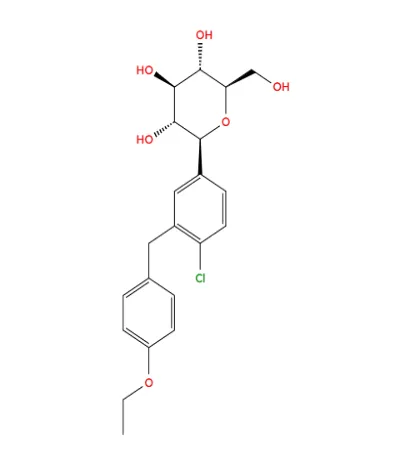
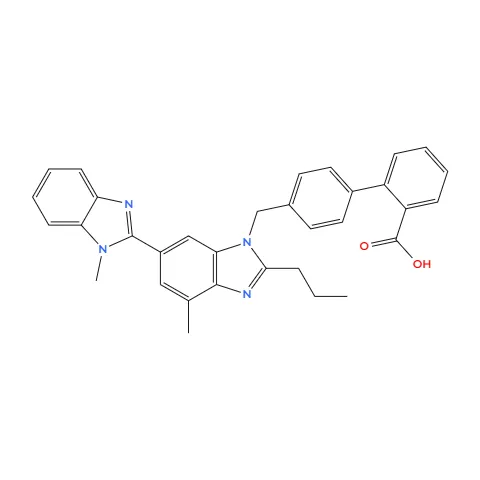
MOLECULAR FORMULAE:
Dapagliflozin: C21H25ClO6
Telmisartan: C33H30N4O2
BRAND NAME:
CATEGORY:
DOSAGE:
MECHANISM OF ACTION:
Dapagliflozin inhibits the SGLT2 transporter in a selective and reversible manner. SGLT2 proteins are expressed in the kidney’s proximal convoluted tubule (PCT), where they are in charge of reabsorbing sodium and glucose from the glomerular filtrate. Everyday, the body filters and reabsorbs about 180 gm of glucose primarily through SGLT2 and partially through SGLT1. Therefore, in healthy people, no glucose is eliminated through urine. SGLT2 is upregulated during hyperglycaemia such as in type 2 diabetes which promotes additional glucose reabsorption and contributes to hyperglycaemia. Eventually the capacity is exceeded resulting in the development of glycosuria. SGLT2 inhibitors prevent the reabsorption of glucose of about 80 gm daily causing glycosuria which directly lowers glucose levels without the need for insulin.[11]
Telmisartan is related to the renin angiotensin-aldosterone system (RAAS) which is crucial for controlling blood pressure and fluid balance in the body. The RAAS pathway starts when the kidneys release renin which is an enzyme released in reaction to low blood pressure, low blood sodium or activation of the sympathetic nervous system. Angiotensinogen is a protein which is produced by the liver gets changed into angiotensin-I by renin. Angiotensin-converting enzyme (ACE) then transforms angiotensin-I into angiotensin-II mostly in the lungs. Angiotensin II is a strong vasoconstrictor which causes blood vessels to narrow and raises blood pressure. Additionally, it causes the adrenal glands to release aldosterone which causes the kidneys to retain water and salt raising blood pressure even more. Telmisartan selectively blocks the angiotensin II type 1 (AT1) receptors to produce its antihypertensive effects. Telmisartan blocks the vasoconstrictive effects of angiotensin II by attaching itself to these receptors. This causes blood vessels to dilate and relax which lowers blood pressure.
PHARMACOKINETICS:
Dapagliflozin is a highly selective, competitive, reversible and oral SGLT2 inhibitor. Dapagliflozin was found to provide close-to-maximal SGLT2 inhibition in healthy subjects at doses of about 20-50mg for at least 24 hours indicating that once daily dosages are appropriate. In oral administration, dapagliflozin is quickly absorbed and typically reaches peak plasma concentration in 2 hours. [12]
Telmisartan’s maximum plasma concentrations increased proportionally with dose and the median time to maximum plasma concentrations after oral dosing was between 0.5 and 2 hours. [13]
INDICATIONS:
Type 2 diabetes mellitus
Heart failure
Chronic kidney disease.
ADVERSE EFFECTS:
The adverse effects of dapagliflozin includes-
The adverse effects of telmisartan includes-
CONTRAINDICATIONS:
Telmisartan is contraindicated in pregnant and breastfeeding women, history of hypersensitivity to specific drug, severe liver or biliary issues.
CASE DISCUSSION:
The laboratory parameters of all the patients are mentioned in Table – 1, 2, 3, 4 and 5.
CASE STUDY – 1:
Age : 55 years
Sex : Male
Diagnosis : Type 2 Diabetes mellitus with Diabetic Nephropathy
Treatment:
Dapagliflozin – 10mg OD
Telmisartan – 40mg OD
Follow up: 6 months
Table 1: Laboratory parameters of Case study-1
|
PARAMETERS |
BEFORE TREATMENT |
AFTER TREATMENT |
|
Serum Creatinine |
2.19 mg/dl |
1.0 mg/dl |
|
UACR |
429 mg/g |
56 mg/g |
|
eGFR |
30 mL/min/1.73 m² |
83 mL/min/1.73 m² |
|
BUN |
60 mg/dl |
22 mg/dl |
|
HbA1C |
9.5 % |
6.5 % |
|
Blood Pressure |
165/93 mmHg |
125/81 mmHg |
CASE STUDY – 2:
Age : 75 years
Sex : Male
Diagnosis : Type 2 Diabetes mellitus with Diabetic Nephropathy
Treatment:
Dapagliflozin – 10mg OD
Telmisartan – 40mg OD
Follow up: 6 months
Table 2: Laboratory parameters of Case study-2
|
PARAMETERS |
BEFORE TREATMENT |
AFTER TREATMENT |
|
Serum Creatinine |
1.87 mg/dl |
1.19 mg/dl |
|
UACR |
286 mg/g |
81 mg/g |
|
eGFR |
47 mL/min/1.73 m² |
92 mL/min/1.73 m² |
|
BUN |
39 mg/dl |
24 mg/dl |
|
HbA1C |
8.1 % |
6.9 % |
|
Blood Pressure |
164/96 mmHg |
128/72 mmHg |
CASE STUDY – 3:
Age : 46 years
Sex : Female
Diagnosis : Type 2 Diabetes mellitus with Diabetic Nephropathy
Treatment:
Dapagliflozin – 10mg OD
Telmisartan – 40mg OD
Follow up: 6 months
Table 3: Laboratory parameters of Case study-3
|
PARAMETERS |
BEFORE TREATMENT |
AFTER TREATMENT |
|
Serum Creatinine |
2.06 mg/dl |
1.01 mg/dl |
|
UACR |
303 mg/g |
58 mg/g |
|
eGFR |
54 mL/min/1.73 m² |
79 mL/min/1.73 m² |
|
BUN |
67 mg/dl |
24 mg/dl |
|
HbA1C |
8.2 % |
7.0 % |
|
Blood Pressure |
168/104 mmHg |
125/81 mmHg |
CASE STUDY – 4:
Age : 55 years
Sex : Female
Diagnosis : Type 2 Diabetes mellitus with Diabetic Nephropathy
Treatment:
Dapagliflozin – 10mg OD
Telmisartan – 40mg OD
Follow up: 6 months
Table 4: Laboratory parameters of Case study-4
|
PARAMETERS |
BEFORE TREATMENT |
AFTER TREATMENT |
|
Serum Creatinine |
1.65 mg/dl |
1.0 mg/dl |
|
UACR |
378 mg/g |
39 mg/g |
|
eGFR |
29 mL/min/1.73 m² |
74 mL/min/1.73 m² |
|
BUN |
44 mg/dl |
16 mg/dl |
|
HbA1C |
9.2 % |
7.0 % |
|
Blood Pressure |
147/95 mmHg |
120/72 mmHg |
CASE STUDY – 5:
Age : 55 years
Sex : Male
Diagnosis : Type 2 Diabetes mellitus with Diabetic Nephropathy
Treatment:
Dapagliflozin – 10mg OD
Telmisartan – 40mg OD
Follow up: 6 months
Table 5: Laboratory parameters of Case study-5
|
PARAMETERS |
BEFORE TREATMENT |
AFTER TREATMENT |
|
Serum Creatinine |
2.13 mg/dl |
1.09 mg/dl |
|
UACR |
340 mg/g |
41 mg/g |
|
eGFR |
36 mL/min/1.73 m² |
72 mL/min/1.73 m² |
|
BUN |
47 mg/dl |
20 mg/dl |
|
HbA1C |
8.2 % |
6.4 % |
|
Blood Pressure |
148/103 mmHg |
125/72 mmHg |
CONCLUSION
The five representative cases shows consistent improvement in renal function, albuminuria, glycaemic control, and blood pressure following 6 months of treatment with dapagliflozin plus telmisartan. Across the cases, the reduction in serum creatinine, UACR, BUN, and HbA1c, and increase in the eGFR, were observed. Although the individual responses vary, the overall conclusion shows that the combination therapy has more Renal and Cardiovascular outcomes in patients with Diabetic Nephropathy.
Case 1
After 6 months of treatment with dapagliflozin 10 mg once daily and telmisartan 40 mg once daily, the patient demonstrated marked improvement in renal function, as evidenced by a reduction in serum creatinine (2.19 to 1.00 mg/dL), increase in eGFR (30 to 83 mL/min/1.73 m²), and decrease in UACR (429 to 56 mg/g). Glycaemic control improved with HbA1c decreasing from 9.5% to 6.5%, while blood pressure decreased from 165/93 mmHg to 125/81 mmHg. Overall, combination therapy was associated with significant improvement in renal and metabolic parameters and effective blood pressure control during the 6-month follow-up.
Case 2
Following 6 months of dapagliflozin plus telmisartan therapy, the patient exhibited clinically meaningful improvements in renal function and albuminuria. Serum creatinine decreased from 1.87 to 1.19 mg/dL, eGFR increased from 47 to 92 mL/min/1.73 m², and UACR declined from 286 to 81 mg/g. HbA1c improved from 8.1% to 6.9%, and blood pressure was reduced from 164/96 mmHg to 128/72 mmHg. These findings suggest that combination therapy was associated with improved kidney function, better glycaemic control, and effective blood pressure management.
Case 3
The patient with earlier-stage diabetic nephropathy showed favourable clinical outcomes after 6 months of treatment. Improvements were observed in serum creatinine (2.06 to 1.01 mg/dL), eGFR (54 to 79 mL/min/1.73 m²), UACR (303 to 58 mg/g), and BUN (67 to 24 mg/dL). HbA1c decreased from 8.2% to 7.0%, and blood pressure improved from 168/104 mmHg to 126/74 mmHg. These findings suggest that early initiation of dapagliflozin plus telmisartan may be associated with improved renal function and metabolic control in patients with diabetic nephropathy.
Case 4
The patient had reduced renal function at baseline (eGFR 29 mL/min/1.73 m²). After 6 months of therapy, serum creatinine decreased from 1.65 to 1.00 mg/dL, eGFR increased to 74 mL/min/1.73 m², and UACR declined from 378 to 39 mg/g. Improvements were also observed in BUN, HbA1c, and blood pressure. Within the limits of this individual case, treatment with dapagliflozin plus telmisartan was associated with marked improvement in renal and metabolic parameters over the follow-up period.
Case 5
The 73-year-old patient experienced clinically relevant improvements following 6 months of combination therapy. Serum creatinine decreased from 2.13 to 1.09 mg/dL, eGFR improved from 36 to 72 mL/min/1.73 m², and UACR was reduced from 340 to 41 mg/g. HbA1c improved from 8.2% to 6.4%, and blood pressure decreased from 148/103 mmHg to 125/72 mmHg. These observations suggest that dapagliflozin plus telmisartan was associated with improved renal function, glycaemic control, and blood pressure management in this older patient during the 6-month follow-up.
ACKNOWLEDGMENTS
The authors would like to acknowledge the facilities provided by the Bharat Institutions-pharmacy in executing this article.
REFERENCES





Ambala Syama, Asma Bano, Banda Vaishnavi, Nallavelli Lalith Adithya, Shanigaram Deekshith Reddy, Evaluation Of Renal and Cardiovascular Outcomes with Dapagliflozin Plus Telmisartan in Patients with Diabetic Nephropathy, Int. J. of Pharm. Sci., 2026, Vol 4, Issue 8, 2040-2050, https://doi.org/10.5281/zenodo.21901590
 10.5281/zenodo.21901590