

We use cookies to ensure our website works properly and to personalise your experience. Cookies policy
Bhausaheb Mulak College of Pharmacy, Umrer, Nagpur, Maharashtra, India 440008
Exosomes are nanoscale, cell-derived membrane vesicles that mediate intercellular communication by transferring proteins, lipids, and nucleic acids between donor and recipient cells. Because they are biocompatible, exhibit low intrinsic immunogenicity, can be engineered for tissue-specific targeting, and are capable of crossing biological barriers such as the blood-brain barrier (BBB), exosomes have attracted intense interest as "natural nanoparticles" for drug delivery. This review synthesizes current understanding of exosome biogenesis, isolation, and engineering strategies, and critically examines their emerging applications across three domains: oncology, where exosomes are used to deliver cytotoxic drugs, small interfering RNA (siRNA), and immunomodulatory cargo while also serving as biomarkers of drug resistance; neurodegenerative disease, where their capacity to cross the BBB positions them as vehicles for neuroprotective peptides, nucleic acids, and small molecules in Alzheimer's disease, Parkinson's disease, amyotrophic lateral sclerosis, and related disorders; and personalized medicine, where exosome-based liquid biopsy enables minimally invasive, real-time molecular profiling to guide individualized treatment selection and monitor therapeutic response. We also discuss the major translational obstacles that currently limit clinical adoption, including scalable and reproducible manufacturing, cargo-loading efficiency, standardization of isolation and characterization protocols, and regulatory classification, and we outline research priorities that could accelerate the transition of exosome-based therapeutics from bench to bedside.
Extracellular vesicles (EVs) are a heterogeneous family of lipid bilayer-enclosed particles released by virtually all cell types into the extracellular space and biological fluids. Among the EV subclasses, exosomes—typically 30 to 150 nanometers in diameter—originate from the endosomal system through inward budding of multivesicular bodies (MVBs) and are released upon fusion of MVBs with the plasma membrane. Once considered mere byproducts of cellular waste disposal, exosomes are now recognized as sophisticated vehicles of intercellular communication capable of transferring functional proteins, lipids, messenger RNA, microRNA, and DNA fragments between cells, thereby influencing recipient-cell phenotype and behavior.
The therapeutic appeal of exosomes as drug carriers rests on several intrinsic properties: a lipid bilayer structure that protects encapsulated cargo from enzymatic degradation and immune clearance; surface proteins that confer natural cell- and tissue-tropism; small size and deformability that facilitate extravasation and penetration of dense tissue and biological barriers, including the BBB; and comparatively low immunogenicity and toxicity relative to synthetic nanocarriers such as liposomes and polymeric nanoparticles, particularly when exosomes are derived from autologous or immunologically compatible cell sources. These characteristics have driven a rapid expansion of research applying exosomes to the delivery of chemotherapeutics, nucleic acid therapeutics, and other biologics.
Interest in exosome-based delivery has also been fueled by a broader shift in nanomedicine away from purely synthetic carriers toward biologically derived or biomimetic platforms. Liposomes and lipid nanoparticles, while clinically validated (as demonstrated by their use in mRNA vaccine platforms), are recognized as foreign by the immune system and often accumulate preferentially in the liver and spleen rather than at diseased tissue. Exosomes, by contrast, are endogenous products of the body's own cells and, when derived from autologous or otherwise compatible sources, may circumvent some of these limitations. At the same time, exosomes are not without their own translational complexities, including cargo heterogeneity, batch variability, and the still-evolving state of engineering tools needed to convert a naturally heterogeneous biological product into a reproducible pharmaceutical.
This review focuses on three areas in which exosome-mediated delivery has shown the most substantial recent progress: cancer therapy, where exosomes are being engineered to overcome tumor heterogeneity, drug resistance, and off-target toxicity; neurodegenerative disorders, where the limitations of the BBB have historically constrained pharmacological treatment; and personalized medicine, where exosomal cargo serves simultaneously as a diagnostic biomarker and a therapeutic vector, enabling integrated "theranostic" approaches. We synthesize recent literature (through mid-2026) on exosome biology, isolation and engineering methodologies, and disease-specific applications, and we conclude with a discussion of translational barriers and future research directions. Original schematic figures are provided throughout to illustrate key mechanistic and workflow concepts.
2. Biogenesis, Composition, and Isolation of Exosomes
2.1 Biogenesis and molecular composition
Exosome biogenesis begins with inward budding of the endosomal membrane to form intraluminal vesicles within MVBs, a process regulated by the endosomal sorting complex required for transport (ESCRT) machinery as well as ESCRT-independent pathways involving tetraspanins (CD9, CD63, CD81) and lipid microdomains enriched in ceramide. Mature MVBs either fuse with lysosomes for degradation or traffic to the plasma membrane, where they release their intraluminal vesicles as exosomes into the extracellular space (Figure 1). The resulting vesicles carry a defined molecular signature that reflects both their endosomal origin and the physiological or pathological state of the parent cell, including tetraspanins, heat-shock proteins (HSP70, HSP90), ESCRT-associated proteins (Alix, TSG101), and a cargo of messenger RNAs, microRNAs, long non-coding RNAs, and, in some cases, DNA fragments, in addition to a lipid bilayer enriched in cholesterol, sphingomyelin, and phosphatidylserine.
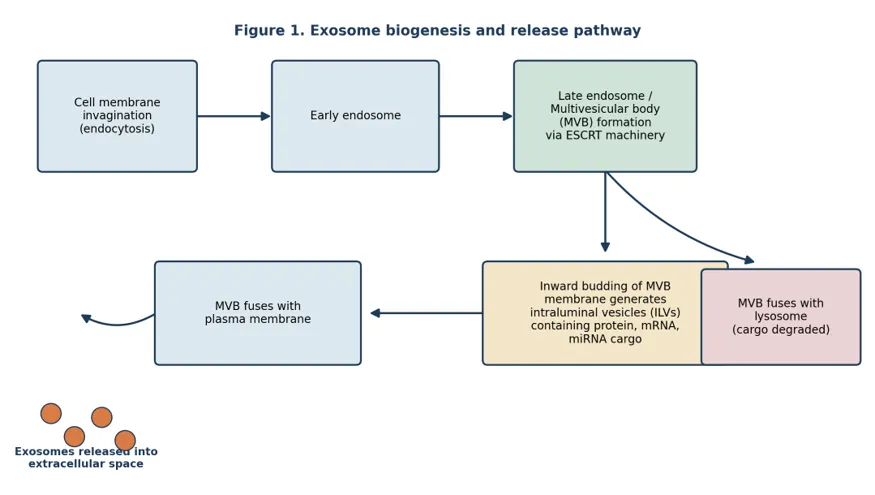
Figure 1. Exosome biogenesis and release pathway, from endosomal invagination through multivesicular body (MVB) formation to release of exosomes at the plasma membrane. An alternative fate—MVB fusion with the lysosome—results in cargo degradation rather than secretion.
2.2 Cellular sources and organotropism
Exosomes can be harvested from a wide range of source cells, each conferring distinct compositional and functional properties on the resulting vesicles. Mesenchymal stem cell (MSC)-derived exosomes are widely used owing to their immunomodulatory and regenerative cargo and comparatively favorable safety profile. Dendritic cell-derived exosomes carry antigen-presenting machinery relevant to immunotherapy and vaccine applications. Tumor-derived exosomes retain some homing capacity to the tissue of origin (homotypic targeting), a property that can be exploited for targeted delivery but that also raises safety questions given the potential for tumor-derived cargo to promote metastasis or immune evasion in an unmodified state. Milk-, blood-, and urine-derived exosomes, as well as plant-derived exosome-like nanovesicles from sources such as ginger and grapefruit, provide additional, often lower-cost, production platforms with favorable biocompatibility and low toxicity.
2.3 Isolation and purification methods
Reliable isolation is a prerequisite for both mechanistic study and clinical translation. No single method is optimal for all applications; selection generally reflects a trade-off between purity, yield, vesicle integrity, throughput, and cost, summarized in Table 1.
|
Isolation Method |
Principle |
Advantages |
Limitations |
|
Differential ultracentrifugation |
Sequential centrifugation at increasing speeds to pellet vesicles by size/density |
Widely used reference standard; no specialized reagents |
Time-consuming; low throughput; may damage vesicles; co-pellets protein aggregates |
|
Size-exclusion chromatography |
Separation by hydrodynamic size as sample passes through porous resin |
Preserves vesicle integrity and biological activity; good reproducibility |
Requires specialized columns; dilutes sample; moderate throughput |
|
Polymer-based precipitation |
Polyethylene glycol or similar polymers reduce vesicle solubility, inducing precipitation |
Fast; simple; minimal equipment; commercially kitted |
Co-isolates lipoproteins and soluble protein contaminants; lower purity |
|
Immunoaffinity capture |
Antibodies against tetraspanins (CD9/CD63/CD81) selectively bind target vesicle subpopulations |
High specificity for defined exosome subtypes; useful for biomarker studies |
Lower yield; higher cost; may not release intact vesicles for functional use |
|
Microfluidic / tangential-flow filtration |
Size- and/or affinity-based separation on chip-based or membrane-based flow systems |
Scalable; automatable; GMP-compatible; reduced processing time |
Requires specialized equipment; still maturing for large-volume clinical manufacturing |
Recent engineering efforts have focused particularly on microfluidic and tangential-flow filtration platforms, which offer the combination of scalability, automation, and reproducibility needed for good manufacturing practice (GMP)-compliant production—an area identified across multiple recent reviews as central to closing the gap between laboratory-scale research and clinically meaningful, regulator-ready exosome products.
2.4 Cargo loading and surface engineering
Two broad loading strategies are used to incorporate therapeutic payloads into exosomes, illustrated in Figure 2. Endogenous (pre-loading) approaches genetically or metabolically manipulate the parental cell so that the drug or nucleic acid is packaged into exosomes during biogenesis, preserving vesicle integrity but offering limited control over loading efficiency. Exogenous (post-isolation) approaches introduce cargo into purified exosomes using electroporation, sonication, extrusion, freeze-thaw cycling, or chemical permeabilization; these methods allow higher and more tunable loading but can compromise membrane integrity and vesicle stability.
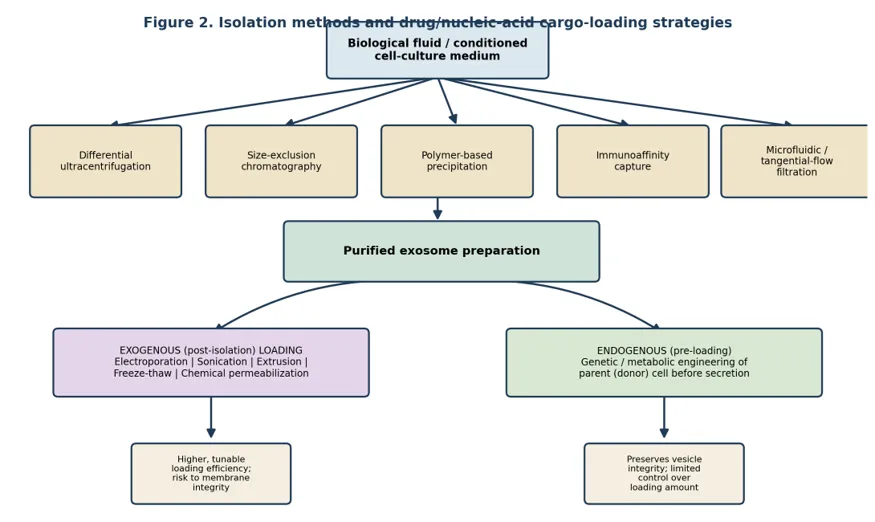
Figure 2. Common exosome isolation methods and the two principal cargo-loading strategies—exogenous (post-isolation) and endogenous (pre-loading)—used to incorporate therapeutic payloads.
Surface engineering—via genetic fusion of targeting peptides or antibody fragments to exosomal membrane proteins (e.g., Lamp2b), click chemistry, or membrane hybridization with synthetic liposomes—is increasingly used to confer organ- or cell-specific tropism, reduce off-target accumulation in the liver and spleen, and improve circulation time. Hybrid exosome-liposome and exosome-polymer nanovesicles represent a growing subfield that seeks to combine the natural targeting and low-immunogenicity advantages of biological vesicles with the tunable, reproducible physicochemical properties achievable with synthetic nanocarrier chemistry.
2.5 Characterization standards
Rigorous characterization is essential to confirm exosome identity, purity, and batch consistency. Commonly applied methods include nanoparticle tracking analysis and dynamic light scattering for size distribution and concentration; transmission electron microscopy for morphological confirmation of the characteristic cup-shaped or spherical bilayer structure; and western blotting or flow cytometry for tetraspanin and other marker protein expression, alongside exclusion of common contaminants (e.g., apolipoproteins from co-isolated lipoproteins). Community consensus guidelines—most notably the Minimal Information for Studies of Extracellular Vesicles (MISEV) framework—provide a basis for standardized reporting, though adoption across individual laboratories and companies remains inconsistent, complicating cross-study comparison.
3. Exosome-Mediated Drug Delivery in Cancer Therapy
Conventional chemotherapy is frequently limited by poor tumor selectivity, rapid systemic clearance, and dose-limiting toxicity, while acquired or intrinsic drug resistance remains a principal cause of treatment failure. Exosomes address several of these limitations simultaneously: their organotropic homing properties, derived in part from integrin and tetraspanin expression patterns of the parent cell, can be exploited to concentrate cytotoxic payloads within tumor tissue, and their endogenous origin reduces recognition by the mononuclear phagocyte system relative to synthetic carriers (Figure 3).
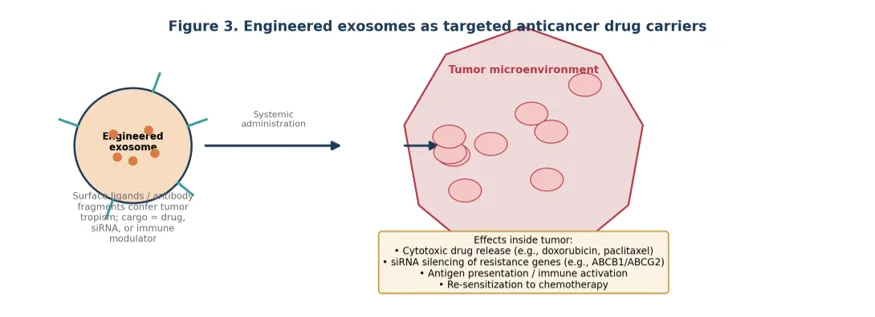
Figure 3. Engineered exosomes functionalized with tumor-targeting ligands deliver cytotoxic drugs, siRNA, or immunomodulatory cargo selectively to the tumor microenvironment, supporting cytotoxicity, resistance-gene silencing, and immune activation.
3.1 Delivery of chemotherapeutic and small-molecule agents
Exosomes derived from mesenchymal stem cells, dendritic cells, and tumor cells themselves have been loaded with agents including doxorubicin, paclitaxel, and curcumin, generally via electroporation or sonication, and have shown improved tumor accumulation and reduced off-target cardiotoxicity or hepatotoxicity relative to free drug in preclinical models. Plant-derived exosome-like nanovesicles, obtained from sources such as ginger, grapefruit, and other produce, have also emerged as a low-cost, highly biocompatible alternative platform for anticancer cargo delivery, with recent reviews highlighting their potential to address treatment resistance, off-target toxicity, and inter-patient variability in drug response.
3.2 Nucleic acid and gene therapy cargo
A major area of investigation is exosome-mediated delivery of siRNA and other RNA therapeutics targeting oncogenic drivers or resistance mechanisms. For example, exosomal delivery of siRNA against ABCB1/ABCG2, transporters implicated in multidrug efflux, has been shown in preclinical studies to re-sensitize resistant tumor cells to standard chemotherapy, illustrating how exosome-based nucleic acid delivery can be used specifically to counteract drug resistance rather than simply to deliver a cytotoxic payload. Beyond siRNA, exosomes have also been explored as vectors for microRNA mimics or inhibitors, CRISPR-Cas9 ribonucleoprotein complexes, and messenger RNA, expanding their utility toward gene-editing and immunomodulatory applications, including cell-free exosome-based cancer vaccine strategies.
3.3 Immunomodulation and combination approaches
Exosomes derived from dendritic cells and other immune cells can present tumor antigens and costimulatory molecules, positioning them as candidates for cell-free cancer vaccines and adjuvants to checkpoint inhibitor therapy. Engineered exosomes displaying immune checkpoint ligands or decoy receptors are being explored to modulate the tumor microenvironment, and combination strategies pairing exosome-delivered chemotherapeutics with immunotherapy are an active area of preclinical investigation, reflecting a broader shift toward multifunctional, engineered exosome platforms rather than simple passive carriers.
3.4 Overcoming drug resistance mechanisms
Therapeutic resistance—whether intrinsic or acquired during treatment—remains one of the most formidable barriers in oncology, driven by mechanisms including drug efflux transporter upregulation, tumor heterogeneity, adaptive signaling reprogramming, and a protective tumor microenvironment. Because exosomes can be engineered to deliver combinations of cytotoxic, gene-silencing, and immunomodulatory cargo simultaneously, they are increasingly positioned not merely as an alternative delivery vehicle but as a platform specifically designed to bypass resistance mechanisms that limit conventional combination drug regimens and dose escalation strategies.
3.5 Translational status
Despite substantial preclinical promise, most cancer-focused exosome therapeutics remain in early-phase development. Recurring translational challenges include batch-to-batch variability in exosome yield and composition, incomplete understanding of in vivo biodistribution and pharmacokinetics, and the absence of harmonized regulatory pathways for classifying exosome-based products (which may be regulated as biologics, drugs, or combination products depending on jurisdiction and formulation).
4. Exosome-Mediated Drug Delivery in Neurodegenerative Disorders
The blood-brain barrier is the principal obstacle to pharmacological treatment of central nervous system (CNS) disorders, excluding the majority of systemically administered small-molecule and biologic drugs from the brain parenchyma. Neurodegenerative diseases—including Alzheimer's disease (AD), Parkinson's disease (PD), amyotrophic lateral sclerosis (ALS), Huntington's disease, and multiple sclerosis—are characterized by progressive neuronal dysfunction and loss, and current pharmacotherapy is limited both by inadequate brain penetration of candidate drugs and by the multifactorial, still incompletely understood pathophysiology of these conditions.
4.1 BBB-crossing capacity of exosomes
Exosomes, particularly those derived from neural or glial cells, mesenchymal stem cells, and certain immune cell populations, have demonstrated an intrinsic capacity to cross the BBB via mechanisms including receptor-mediated transcytosis and adsorptive transcytosis, in some cases exploiting the same transport pathways used by their parent cells for physiological CNS signaling (Figure 4). This property distinguishes exosomes from many synthetic nanocarriers, which typically require extensive surface modification to achieve comparable brain penetration, and has made exosomes a focal point of recent reviews on next-generation strategies for CNS-targeted drug delivery, alongside approaches such as focused ultrasound-mediated BBB modulation and lipid nanoparticle-based mRNA delivery.
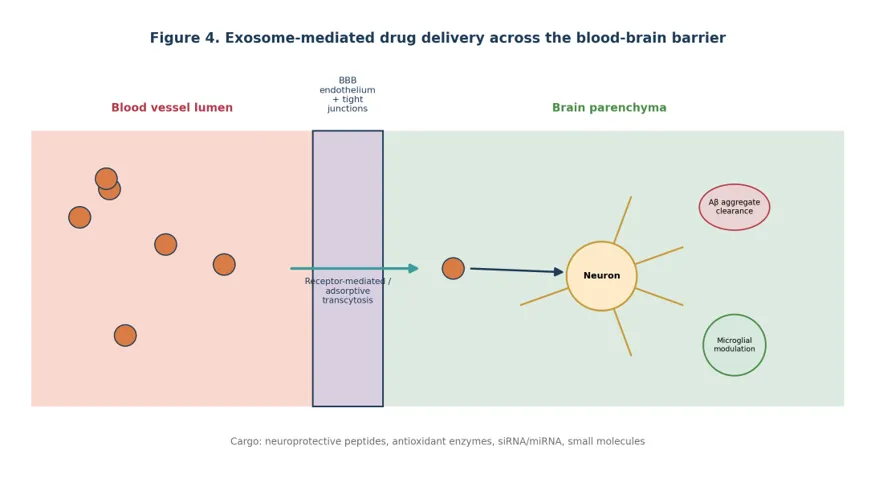
Figure 4. Exosomes cross the blood-brain barrier via receptor-mediated and adsorptive transcytosis, delivering neuroprotective cargo to neurons and supporting processes such as amyloid-beta clearance and microglial modulation.
4.2 Applications in Alzheimer's and Parkinson's disease
In AD models, engineered exosomes have been used to deliver agents that promote clearance of amyloid-beta (Aβ) aggregates and modulate microglial activation; for instance, multi-targeted nanovesicle platforms combining exosome or cell-membrane components with Aβ-binding aptamers and stimulus-responsive elements have been designed to degrade Aβ aggregates locally and reduce associated neuroinflammation and microglial dysfunction. In PD models, exosomes have been used to deliver neuroprotective peptides, antioxidant enzymes such as catalase, and nucleic acids aimed at reducing alpha-synuclein aggregation, with stem cell-derived exosomes of particular interest owing to their combined neuroprotective and BBB-crossing properties.
4.3 Applications in ALS, Huntington's disease, and multiple sclerosis
Beyond AD and PD, exosome-based delivery is being explored across the broader spectrum of neurodegenerative and demyelinating disease. In ALS and Huntington's disease, exosomes loaded with antisense oligonucleotides or siRNA targeting disease-causing transcripts (such as mutant huntingtin mRNA) offer a potential route to gene-silencing therapy with improved CNS bioavailability relative to unencapsulated oligonucleotides. In multiple sclerosis, exosomes derived from immunomodulatory or stem cell sources are being investigated for their capacity to dampen neuroinflammation and support remyelination. Related work in acute CNS injury, including ischemic stroke, further supports the versatility of exosome platforms across CNS indications, including delivery routes such as intranasal administration that bypass first-pass systemic clearance and may offer a more practical, repeatable route for chronic dosing regimens.
4.4 Engineering strategies specific to CNS delivery
CNS-targeted exosome engineering commonly incorporates ligands recognizing receptors enriched at the BBB (e.g., transferrin receptor, RVG peptide targeting nicotinic acetylcholine receptors) to enhance transcytosis, alongside cargo-loading strategies tailored to the therapeutic modality—protein fusion constructs for enzyme or peptide cargo, electroporation or lipid-mediated transfection for nucleic acids, and hybrid exosome-liposome or exosome-polymer nanovesicles designed to combine the targeting advantages of biological vesicles with the tunable physicochemical properties of synthetic carriers. Reactive oxygen species (ROS)-responsive hybrid nanovesicles, for example, have been developed to release cargo selectively within the oxidative microenvironment characteristic of neuroinflammatory lesions.
4.5 Translational status
As in oncology, clinical translation for CNS indications is nascent. Key unresolved issues include the durability and specificity of BBB-crossing engineering strategies in humans (as opposed to rodent models), the influence of neuroinflammation and disease stage on exosome uptake, and the need for non-invasive, repeatable dosing regimens compatible with chronic neurodegenerative disease management.
5. Exosomes in Personalized and Precision Medicine
Beyond their role as therapeutic carriers, exosomes carry molecular cargo that reflects the transcriptomic, proteomic, and genomic state of their cell of origin, making them attractive analytes for minimally invasive "liquid biopsy" diagnostics (Figure 5). This dual diagnostic-therapeutic potential positions exosomes as a natural platform for personalized medicine, in which treatment selection and monitoring are guided by an individual patient's molecular profile.
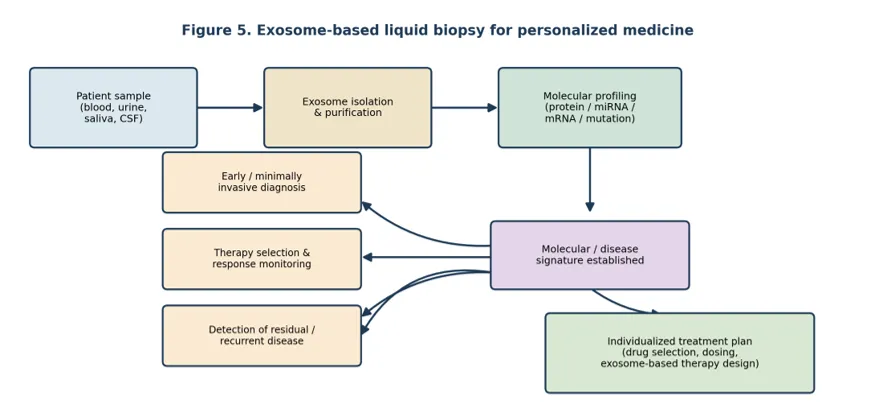
Figure 5. Workflow for exosome-based liquid biopsy: isolation of exosomes from a patient sample, molecular profiling, and integration of the resulting signature into diagnosis, therapy selection, response monitoring, and detection of residual disease.
5.1 Exosomal liquid biopsy for diagnosis and monitoring
Exosomes are detectable in blood, urine, saliva, and cerebrospinal fluid, and their protein and nucleic acid cargo has been investigated as a biomarker source across lung, breast, prostate, colorectal, pancreatic, gastric, and other cancers. Compared with circulating tumor DNA and circulating tumor cells, exosomes offer advantages of relative cargo stability (protection from the lipid bilayer against nuclease and protease degradation) and continuous, high-volume release even from early-stage or small tumors, which may improve sensitivity for early detection. Multiple observational clinical studies are currently recruiting patients to validate exosomal protein and microRNA panels for early cancer diagnosis, prognosis, and detection of minimal/molecular residual disease after surgery, several examples of which are summarized in Table 2.
|
Registry ID |
Focus / Condition |
Application Type |
Status |
|
NCT06108531 |
Pancreatic cancer – tumor exosome protein characterization |
Diagnostic liquid biopsy |
Recruiting (est. completion 2025) |
|
NCT06278064 |
Gastric and esophageal cancer – plasma EV proteomic profiling |
Diagnostic liquid biopsy |
Recruiting |
|
NCT06654622 |
Stage II–III colorectal cancer – molecular residual disease detection |
Prognostic / monitoring |
Recruiting |
|
NCT07224724 (EXELION) |
Colorectal cancer liver metastases – exosomal microRNA panel |
Prognostic / monitoring |
Recruiting |
5.2 Guiding individualized therapy selection
Exosomal biomarker profiling can, in principle, be used to stratify patients by molecular subtype, predict likely response or resistance to a given therapy, and monitor real-time treatment response and emergence of resistance mutations, enabling adaptive treatment adjustment. Analysis of exosomal cargo alongside circulating tumor DNA has been proposed as a complementary, multi-analyte approach to precision oncology, since exosomes and ctDNA capture partially overlapping but distinct aspects of tumor biology (surface protein expression and RNA cargo versus genomic mutation status, respectively).
5.3 Autologous and patient-derived exosome therapeutics
Personalized medicine applications extend beyond diagnostics to therapeutics: exosomes derived from a patient's own cells (e.g., autologous dendritic cell-derived exosomes for cancer vaccination, or patient-derived mesenchymal stem cell exosomes for regenerative applications) may reduce immunogenicity risk and can, in principle, be tailored to an individual's specific tumor antigen or disease profile, representing a convergence of cell therapy and nanomedicine paradigms.
5.4 Translational status
A recent comprehensive analysis of human clinical trials involving exosomes found that the majority of registered studies to date have focused on diagnostic and prognostic biomarker applications—commonly using plasma-, serum-, or urine-derived exosomes in cancers such as breast, prostate, and liver cancer—with clinical research activity in this space rising substantially since the mid-2010s, alongside a smaller but growing number of therapeutic and regenerative-medicine trials. This pattern suggests that exosome-based diagnostics may reach routine clinical use somewhat ahead of exosome-based therapeutics, given the comparatively lower regulatory and manufacturing complexity of diagnostic applications relative to engineered therapeutic products.
6. Translational Challenges
7. Future Directions
Several converging trends are likely to shape the next phase of exosome-mediated drug delivery research. First, integration of exosome engineering with synthetic biology and cell-engineering platforms may allow more precise, tunable control over cargo loading and surface targeting than is currently achievable with post-isolation modification alone. Second, combination of exosome-based diagnostics and therapeutics into unified theranostic platforms—using the same vesicle population to both report on and respond to disease state—could accelerate adoption of truly personalized treatment regimens. Third, continued development of scalable, GMP-compatible manufacturing platforms, including bioreactor and microfluidic systems, will be essential to move beyond small preclinical batches toward clinically and commercially viable production. Fourth, artificial intelligence and machine learning approaches applied to multi-omic exosomal cargo data may improve biomarker discovery and patient stratification beyond what single-analyte panels currently achieve. Finally, expansion and harmonization of clinical trial activity—particularly controlled, adequately powered therapeutic trials rather than observational biomarker studies—will be necessary to generate the efficacy and safety evidence required for regulatory approval across cancer, neurodegenerative disease, and other indications.
CONCLUSION
Exosomes occupy a distinctive niche in drug delivery research, combining the biocompatibility and targeting potential of a biologically derived nanocarrier with a growing engineering toolkit for cargo loading and surface functionalization. Across oncology, neurodegenerative disease, and personalized medicine, exosome-based platforms have demonstrated compelling preclinical and early clinical evidence of improved targeting, barrier penetration, and diagnostic sensitivity relative to conventional approaches. Realizing this potential at scale will depend on resolving persistent challenges in manufacturing standardization, cargo-loading reproducibility, in vivo characterization, and regulatory pathway definition. With continued interdisciplinary investment spanning cell biology, bioengineering, and clinical research, exosome-mediated drug delivery is well positioned to become an increasingly important component of next-generation, personalized therapeutic strategies.
REFERENCES

Swati Kapgate, Exosome-Mediated Drug Delivery: Emerging Opportunities in Cancer, Neurodegenerative Disorders, and Personalized Medicine, Int. J. of Pharm. Sci., 2026, Vol 4, Issue 7, 4733-4744. https://doi.org/10.5281/zenodo.21509084
 10.5281/zenodo.21509084