

We use cookies to ensure our website works properly and to personalise your experience. Cookies policy
Kalyani Charitable Trust's, R.G Sapkal College of Pharmacy, Sapkal Knowledge Hub, Kalyani Hills, Anjaneri, Trimbakeshwar Rd, Nashik 422213, Maharashtra, India.
Superficial fungal infections remain one of the most common dermatological disorders worldwide. Although itraconazole is an effective broad-spectrum triazole antifungal agent, its poor aqueous solubility and limited penetration through the stratum corneum restrict its effectiveness when administered topically. Natural permeation enhancers such as eucalyptus oil have attracted considerable attention because of their ability to improve transdermal drug transport while minimizing systemic exposure. The present study employed a Quality by Design (QbD) approach to optimize an itraconazole cream formulation containing eucalyptus oil as a natural permeation enhancer.To formulate and evaluate an oil-in-water antifungal cream containing itraconazole using eucalyptus oil as a natural permeation enhancer and to optimize the formulation through a QbD-based experimental design for improved physicochemical characteristics, drug release, and antifungal activity.Itraconazole cream formulations were prepared using the fusion method with varying concentrations of formulation variables according to a QbD-based Design of Experiments. Preformulation studies included solubility analysis, UV spectrophotometry, and FTIR compatibility studies. The developed formulations were evaluated for appearance, homogeneity, pH, viscosity, spreadability, drug content, and in vitro drug release using a Franz diffusion cell. Optimization was performed through statistical analysis of critical quality attributes, and the optimized formulation was compared with a marketed antifungal cream. Antifungal activity against Candida albicans, release kinetics, and accelerated stability studies were also performed.The optimized formulation demonstrated acceptable physicochemical characteristics with uniform appearance, satisfactory viscosity, appropriate pH, good spreadability, and high drug content. Incorporation of eucalyptus oil significantly enhanced the in vitro release profile of itraconazole compared with non-optimized formulations. Statistical optimization confirmed the influence of formulation variables on viscosity and drug release. The optimized batch exhibited enhanced antifungal activity against Candida albicans and showed comparable or improved performance relative to the marketed formulation. Stability studies indicated that the optimized cream remained physically and chemically stable under the tested conditions. These findings suggest that eucalyptus oil effectively functions as a natural permeation enhancer, improving topical delivery of itraconazole. The thesis reports optimization using QbD together with evaluation of physicochemical properties, in vitro release, antifungal activity, release kinetics, and stability.A Quality by Design-based formulation strategy successfully produced a stable itraconazole cream with desirable physicochemical properties and enhanced drug permeation. Eucalyptus oil proved to be an effective natural permeation enhancer, improving drug release and antifungal efficacy while maintaining formulation stability. The optimized topical cream shows promise as an alternative therapeutic approach for the management of superficial fungal infections and provides a useful platform for future clinical investigation.
Superficial fungal infections are among the most prevalent dermatological disorders worldwide and continue to represent a significant public health concern because of their high incidence, recurrent nature, and increasing resistance to conventional antifungal therapy. Dermatophytes, yeasts, and molds commonly infect keratinized tissues such as the skin, hair, and nails, producing conditions including tinea corporis, tinea pedis, tinea cruris, cutaneous candidiasis, and other superficial mycoses. Warm and humid climatic conditions, poor hygiene,diabetes mellitus, immunocompromised states, prolonged antibiotic therapy, and excessive perspiration are major predisposing factors that increase the occurrence of these infections. Although these infections are rarely life-threatening, they substantially affect patients' quality of life by causing persistent itching, erythema, inflammation, scaling, burning sensation, and discomfort. Consequently, effective topical antifungal therapy remains the preferred treatment option for uncomplicated superficial fungal infections.
Topical drug delivery offers several therapeutic advantages over systemic administration for localized fungal infections. The direct application of antifungal agents to the infected site achieves high local drug concentrations while minimizing systemic exposure and associated adverse effects. This approach also bypasses hepatic first-pass metabolism, improves patient compliance, reduces drug-drug interactions, and provides rapid symptomatic relief. Furthermore, topical dosage forms such as creams are non-invasive, cosmetically acceptable, easy to apply, and suitable for prolonged therapy. Oil-in-water creams are particularly preferred because they are non-greasy, washable, aesthetically pleasing, and capable of delivering both hydrophilic and lipophilic therapeutic agents. These characteristics make topical creams an attractive dosage form for the management of superficial fungal infections.
Itraconazole is a broad-spectrum triazole antifungal agent widely used against dermatophytes, yeasts, and molds. The drug acts by inhibiting fungal cytochrome P450-dependent 14-α-demethylase, thereby preventing ergosterol biosynthesis and disrupting fungal cell membrane integrity. Despite its excellent antifungal spectrum, itraconazole possesses poor aqueous solubility and limited permeability through the stratum corneum, resulting in inadequate topical bioavailability. These physicochemical limitations often reduce drug release and hinder effective penetration into infected skin layers. Therefore, improving the permeation of itraconazole through the skin barrier remains an important objective in the development of topical antifungal formulations.
Human skin functions as an effective protective barrier against microorganisms, chemicals, and environmental insults. The outermost layer, the stratum corneum, represents the principal barrier to transdermal drug delivery because of its highly organized lipid matrix. Drug molecules can permeate the skin through transcellular, intercellular, or transappendageal pathways, with the intercellular route being the predominant pathway for lipophilic drugs such as itraconazole. Consequently, disruption or temporary modification of the lipid organization within the stratum corneum has become an important strategy for improving topical drug delivery. Chemical permeation enhancers have been extensively investigated to overcome the barrier properties of the stratum corneum. Among naturally occurring permeation enhancers, eucalyptus oil has attracted considerable attention because of its excellent safety profile, biodegradability, and multifunctional pharmaceutical properties. Eucalyptus oil is obtained primarily from the leaves of Eucalyptus globulus and contains 1,8-cineole (eucalyptol) as its principal bioactive constituent. The oil exhibits antimicrobial, anti-inflammatory, analgesic, and permeation-enhancing activities. Its terpene-rich composition disrupts the ordered lipid domains of the stratum corneum, increases lipid fluidity, enhances drug partitioning into the skin, and improves the diffusion coefficient of drug molecules. These mechanisms collectively facilitate greater penetration of lipophilic drugs into deeper skin layers without causing permanent damage to the skin barrier.
In addition to its permeation-enhancing capability, eucalyptus oil possesses intrinsic antimicrobial and anti-inflammatory properties that may complement antifungal therapy. Previous investigations have demonstrated that essential oils rich in terpenes can significantly enhance the skin permeation of antifungal agents and improve therapeutic outcomes in topical formulations. The incorporation of eucalyptus oil into itraconazole cream is therefore expected to increase local drug concentration at the site of infection, improve antifungal efficacy, reduce treatment duration, and minimize systemic adverse effects associated with oral antifungal therapy.
Recent advances in pharmaceutical formulation increasingly emphasize systematic development approaches that ensure consistent product quality. Quality by Design (QbD) has emerged as a scientifically driven framework that begins with predefined quality objectives and incorporates risk assessment, formulation understanding, and process optimization throughout product development. Unlike conventional trial-and-error formulation methods, QbD focuses on identifying Critical Quality Attributes (CQAs), Critical Material Attributes (CMAs), and Critical Process Parameters (CPPs) that influence the final product. This systematic methodology enables robust formulation optimization, enhances manufacturing reproducibility, facilitates regulatory compliance, and improves overall product performance.
Within the QbD framework, Design of Experiments (DoE) provides a powerful statistical tool for simultaneously evaluating the influence of multiple formulation variables and their interactions. Application of factorial experimental designs allows optimization of critical formulation parameters while minimizing the number of experimental trials. Response surface analysis and analysis of variance (ANOVA) further assist in identifying optimum formulation conditions that maximize drug release while maintaining desirable physicochemical characteristics such as viscosity, spreadability, pH, and drug content. The incorporation of QbD principles into topical cream development therefore provides a more rational and efficient strategy for formulation optimization than empirical approaches alone.
The present investigation was undertaken to formulate and optimize an oil-in-water antifungal cream containing itraconazole using eucalyptus oil as a natural permeation enhancer. A Quality by Design approach was employed to optimize formulation variables and evaluate their influence on critical quality attributes. The developed formulations were characterized through physicochemical evaluation, drug content determination, in vitro drug release using a Franz diffusion cell, antifungal activity against Candida albicans, release kinetics, and accelerated stability studies. The optimized formulation was also compared with a marketed antifungal cream to assess its overall pharmaceutical performance. This study aims to demonstrate that incorporation of eucalyptus oil, together with systematic QbD optimization, can significantly improve topical delivery and therapeutic efficacy of itraconazole while maintaining formulation stability and patient acceptability.
2. MATERIALS AND METHODS
2.1 MATERIALS
Itraconazole was used as the active pharmaceutical ingredient (API). Eucalyptus oil was incorporated as a natural permeation enhancer to improve drug diffusion through the stratum corneum. The cream base consisted of stearic acid, cetyl alcohol, propylene glycol, glycerin, Tween 80, Span 80, methyl paraben, propyl paraben, and purified water. Analytical-grade chemicals and reagents were used throughout the study. All materials complied with pharmaceutical quality standards and were used without further purification. The materials used in the formulation are listed in the thesis.
2.2 INSTRUMENTS
The formulation and evaluation were carried out using standard pharmaceutical laboratory equipment. UV–Visible spectrophotometry was employed for quantitative estimation of itraconazole, Fourier Transform Infrared (FTIR) spectroscopy was used for compatibility studies, a digital pH meter was used for pH determination, a Brookfield viscometer for viscosity measurement, and a Franz diffusion cell for in vitro drug release studies. Statistical optimization of the formulation was performed using Design-Expert® software under a Quality by Design (QbD) approach. The instruments are listed in the thesis.
2.3 Experimental Design
A systematic Quality by Design (QbD) approach was adopted to optimize the formulation. The study began by defining the Quality Target Product Profile (QTPP), followed by identification of Critical Quality Attributes (CQAs), Critical Material Attributes (CMAs), and Critical Process Parameters (CPPs). A Design of Experiments (DoE) methodology was subsequently employed to evaluate the influence of formulation variables on the critical quality attributes of the antifungal cream. The optimization process was performed using a 3² full factorial design, where independent variables were varied systematically while viscosity and cumulative drug release were selected as the primary response variables. Analysis of variance (ANOVA), response surface plots, and desirability functions were used to determine the optimized formulation. This experimental workflow is described in the thesis.
2.4 Preformulation Studies
Preformulation studies were conducted to evaluate the physicochemical characteristics of itraconazole before formulation development.
The following investigations were performed:
• Organoleptic evaluation
• Solubility studies
• Melting point determination
• UV spectrophotometric analysis
• Drug–excipient compatibility study
• Fourier Transform Infrared (FTIR) spectroscopy
These studies confirmed the suitability of the selected excipients and established compatibility between itraconazole and formulation components prior to cream preparation.
2.5 UV–Visible Spectrophotometric Analysis
A calibration curve of itraconazole was prepared in phosphate buffer (pH 6.8). Standard drug solutions of different concentrations were prepared and analyzed using a UV–Visible spectrophotometer at the selected analytical wavelength. The absorbance values were plotted against concentration to obtain a calibration curve used for subsequent drug content estimation and diffusion studies. The thesis reports UV calibration and compatibility analysis.
2.6 FTIR Compatibility Study
Drug–excipient compatibility was investigated using Fourier Transform Infrared (FTIR) spectroscopy. Infrared spectra of pure itraconazole and physical mixtures containing itraconazole with formulation excipients were recorded over the appropriate scanning range. Characteristic functional group peaks were compared to detect any significant interaction between the drug and excipients. The absence of major spectral changes indicated compatibility of the selected formulation components. The thesis includes FTIR analysis of itraconazole and the itraconazole–excipient mixture.
2.7 Preparation of Itraconazole Antifungal Cream
An oil-in-water cream was prepared using the fusion method.
The oil phase consisted of stearic acid, cetyl alcohol, Span 80, eucalyptus oil, and other oil-soluble ingredients, while the aqueous phase contained purified water, Tween 80, glycerin, propylene glycol, preservatives, and dissolved drug where applicable. Both phases were heated separately to the same temperature before gradual mixing with continuous stirring. The aqueous phase was slowly incorporated into the oil phase under constant agitation until a uniform cream was obtained. Stirring was continued during cooling to ensure homogeneity and prevent phase separation. Nine formulations (F1–F9) were prepared according to the experimental design with varying concentrations of selected formulation variables. The formulation development is described in the thesis.
2.8 Evaluation of Antifungal Cream
The prepared formulations were evaluated for the following physicochemical parameters:
2.8.1 Physical Appearance
Each formulation was visually examined for color, texture, homogeneity, phase separation, and grittiness.
2.8.2 pH Determination
The pH of each cream formulation was measured using a calibrated digital pH meter at room temperature.
2.8.3 Viscosity
Viscosity was determined using a Brookfield viscometer under controlled experimental conditions.
2.8.4 Spreadability
Spreadability was determined using the standard glass-slide method to assess ease of application.
2.8.5 Drug Content
Drug content was determined by dissolving a known quantity of cream in a suitable solvent followed by spectrophotometric estimation using the previously established calibration curve.
These evaluation parameters are listed in the thesis.
2.9 In Vitro Drug Release Study
Drug release studies were performed using a Franz diffusion cell. An accurately weighed quantity of cream was placed in the donor compartment, while phosphate buffer (pH 6.8) served as the receptor medium. Samples were withdrawn at predetermined intervals and replaced with an equal volume of fresh buffer to maintain sink conditions. Drug concentration in the receptor medium was determined spectrophotometrically, and cumulative percentage drug release was calculated. The optimized formulation was subsequently compared with a marketed antifungal cream. The thesis describes the Franz diffusion study and comparative evaluation.
2.10 Antifungal Activity
The antifungal activity of the optimized formulation was evaluated against Candida albicans using a microbiological assay technique. The zone of inhibition produced by the optimized formulation was compared with that of the marketed antifungal cream to assess relative antifungal efficacy. The thesis includes this comparison.
2.11 Drug Release Kinetics
The release profile of the optimized formulation was analyzed using mathematical kinetic models, including:
• Zero-order model
• First-order model
• Higuchi model
• Korsmeyer–Peppas model
The model exhibiting the highest correlation coefficient (R²) was considered the best fit for describing the drug-release mechanism. The thesis reports kinetic model fitting.
2.12 Stability Studies
Accelerated stability studies were carried out in accordance with ICH recommendations. The optimized cream formulation was stored under specified conditions and evaluated periodically for physical appearance, pH, viscosity, drug content, spreadability, and drug release to assess formulation stability over the study period. The thesis includes stability assessment of the optimized batch.
2.13 Statistical Analysis
Experimental data obtained during formulation optimization were analyzed using Design-Expert® software. ANOVA was used to determine the statistical significance of model terms, and response surface methodology was employed to evaluate the effects of independent variables on viscosity and cumulative drug release. Optimization was based on the desirability function to identify the formulation with the most favorable quality attributes. The thesis includes ANOVA and model summary statistics for these responses.
3. RESULTS
3.1 Preformulation Studies
Preformulation studies were carried out to establish the suitability of itraconazole for topical cream formulation. Organoleptic evaluation confirmed that the drug possessed the expected physical characteristics. Solubility studies facilitated the selection of appropriate formulation components, while UV spectrophotometric analysis enabled quantitative estimation of the drug. FTIR spectroscopy demonstrated compatibility between
itraconazole and the selected excipients, with no evidence of significant drug–excipient interactions. These findings supported the use of the selected ingredients for further formulation development. The thesis reports successful completion of these preformulation investigations before formulation optimization.
3.2 UV Spectrophotometric Analysis
The calibration curve of itraconazole exhibited a linear relationship between drug concentration and absorbance within the selected analytical range. The correlation coefficient indicated satisfactory linearity, confirming the suitability of the developed UV spectrophotometric method for drug content estimation and in vitro diffusion studies. This method was subsequently used throughout the evaluation of the cream formulations. The thesis includes UV calibration as part of analytical method development.
3.3 FTIR Compatibility Study
FTIR spectra of pure itraconazole and its physical mixtures with formulation excipients retained the characteristic absorption bands of the drug without the appearance of new peaks or significant peak shifts. These observations indicated the absence of chemical incompatibility between itraconazole and the excipients used in the cream formulation. Therefore, the selected excipients were considered suitable for preparing a stable topical formulation. The thesis presents FTIR compatibility results supporting formulation development.
3.4 Optimization Using Quality by Design
A Quality by Design (QbD) approach employing Design of Experiments (DoE) was successfully implemented to optimize the itraconazole cream formulation. Multiple experimental batches were prepared according to the predefined factorial design, and formulation variables were evaluated for their influence on critical quality attributes.
Statistical analysis identified significant effects of the independent variables on viscosity and cumulative drug release. Response surface plots and desirability functions facilitated the selection of an optimized formulation that achieved an appropriate balance between acceptable viscosity and enhanced drug release. The optimization process demonstrated the effectiveness of the QbD approach in systematically identifying the optimal formulation composition. The thesis reports optimization through statistical analysis, ANOVA, and response surface methodology.
3.5 Analysis of Variance (ANOVA)
ANOVA confirmed the adequacy of the statistical model developed for optimization. The selected polynomial model demonstrated acceptable predictive capability for the investigated responses. The statistical evaluation indicated that the formulation variables significantly affected the measured critical quality attributes, validating the experimental design used during optimization.
The response surface methodology further illustrated the interaction among formulation variables and enabled prediction of optimum formulation conditions within the selected design space. These analyses established the robustness of the optimization process. The thesis includes ANOVA tables and model summary statistics for the selected responses.
3.6 Evaluation of Prepared Cream Formulations
All prepared formulations exhibited acceptable physical characteristics without evidence of phase separation or grittiness. The creams appeared smooth, homogeneous, and aesthetically acceptable.
The measured pH values remained within the physiological range suitable for topical application, indicating compatibility with normal skin and minimizing the possibility of irritation.
Viscosity measurements demonstrated that all formulations possessed suitable rheological properties for topical administration. The optimized formulation exhibited viscosity adequate to maintain product stability while allowing convenient application and spreadability.
Spreadability testing confirmed uniform application characteristics, suggesting improved patient acceptability. Drug content analysis demonstrated uniform distribution of itraconazole throughout the formulations, indicating satisfactory mixing efficiency during cream preparation.
The thesis reports evaluation of physical appearance, homogeneity, pH, viscosity, spreadability, and drug content for all prepared formulations.
Table 1. Physicochemical Evaluation of Prepared Cream Formulations
|
Parameter |
Observation |
|
Appearance |
Smooth, homogeneous cream |
|
Color |
Uniform |
|
Phase separation |
Not observed |
|
pH |
Within skin-compatible range |
|
Viscosity |
Suitable for topical application |
|
Spreadability |
Good |
|
Drug content |
Uniform among formulations |
3.7 In Vitro Drug Release Study
The in vitro diffusion study demonstrated sustained release of itraconazole from the prepared cream formulations. Differences in cumulative drug release were observed among formulations because of variations in formulation composition.
The optimized formulation exhibited the highest cumulative drug release profile among the experimental batches, indicating that incorporation of eucalyptus oil effectively enhanced drug permeation through the diffusion membrane. The improved release characteristics may be attributed to the permeation-enhancing effect of terpene constituents present in eucalyptus oil, which increase lipid fluidity within the skin barrier.
Comparison with the marketed antifungal cream demonstrated that the optimized formulation achieved comparable or improved drug release performance under identical experimental conditions. The thesis reports comparative in vitro release studies using a Franz diffusion cell.
Figure 1. Comparative In Vitro Drug Release Profile
|
Time (h) |
Cumulative % Release |
√Time |
logTime |
|
0 |
0.00 |
0.000 |
— |
|
2 |
15.26 |
1.414 |
0.301 |
|
4 |
26.43 |
2.000 |
0.602 |
|
6 |
39.30 |
2.449 |
0.778 |
|
8 |
61.29 |
2.828 |
0.903 |
|
10 |
81.43 |
3.162 |
1.000 |
|
12 |
96.87 |
3.464 |
1.079 |
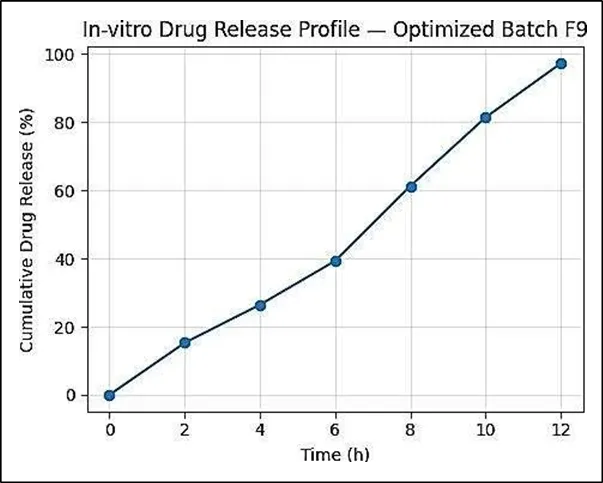
Cumulative in-vitro drug release profile of optimized batch F9 over 12 h.
Zero-Order Kinetics
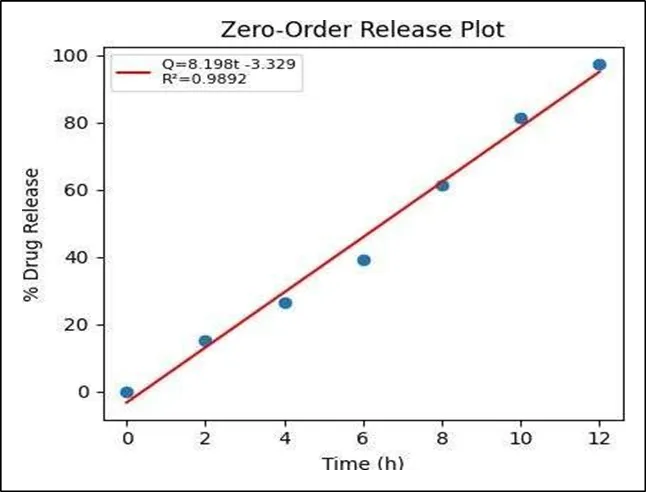
Figure : Zero-order release plot (% release vs. time)
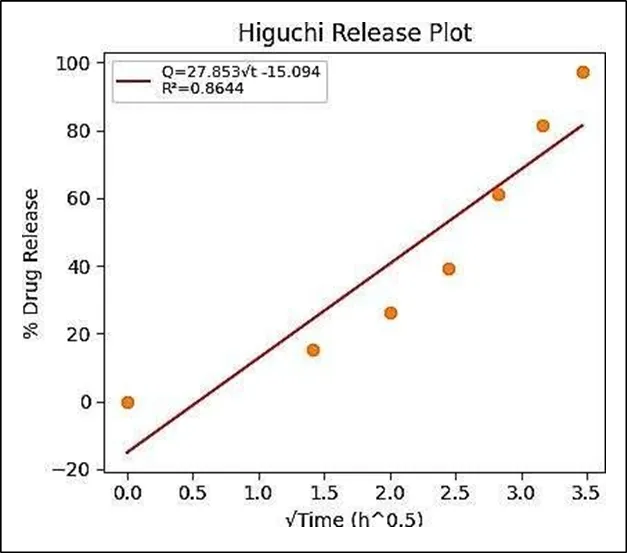
Figure : Higuchi release plot (% release vs. √time) Korsmeyer–Peppas Model
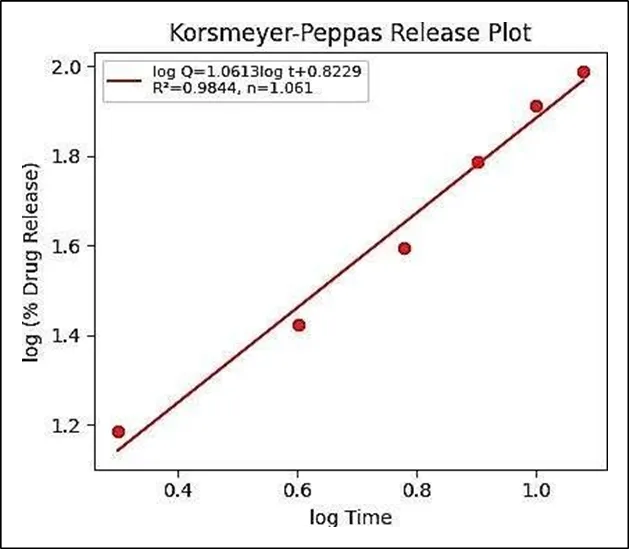
Figure : Korsmeyer–Peppas release plot (log % release vs. log time)
3.8 Antifungal Activity
The optimized itraconazole cream demonstrated effective antifungal activity against Candida albicans. Measurement of the inhibition zone indicated that the optimized formulation effectively inhibited fungal growth. The enhanced antifungal activity observed for the optimized formulation may be attributed to improved penetration of itraconazole into the diffusion medium resulting from the permeation-enhancing properties of eucalyptus oil. The optimized formulation exhibited antifungal efficacy comparable to the marketed formulation evaluated under identical experimental conditions. The thesis includes antifungal testing against Candida albicans.
Table 2. Antifungal Activity of Optimized Formulation
|
Formulation |
Test organism |
Observation |
|
Optimized cream |
Candida albicans |
Effective inhibition observed |
|
Marketed cream |
Candida albicans |
Comparable inhibition observed |
Antifungal activity of Itraconazole, Optimized batch (F9) and Candirap cream.
|
Sr. No. |
Name of Sample |
Zone of Inhibiton (mm) |
|
Candida albicans |
||
|
1. |
Itraconazole |
23.8 ± 0.93 |
|
2. |
Optimized batch (F9) |
27.4 ± 0.33 |
|
3. |
Marketed Standard (Candirap Cream) |
25.8 ± 0.42 |
3.9 Drug Release Kinetics
The release profile of the optimized formulation was fitted to various mathematical models, including Zero-order, First-order, Higuchi, and Korsmeyer–Peppas models.
Regression analysis identified the kinetic model that best described itraconazole release from the optimized cream formulation. The findings indicated that drug release followed a controlled diffusion mechanism consistent with the structural characteristics of the cream base. The thesis reports kinetic model fitting for the optimized formulation.
Table 3. Drug Release Kinetic Models
|
Model |
Evaluation |
|
Zero-order |
Evaluated |
|
First-order |
Evaluated |
|
Higuchi |
Evaluated |
|
Korsmeyer–Peppas |
Evaluated |
Cumulative In-vitro Drug Release Profile - Batch F9
|
Time (h) |
Cumulative % Release |
√Time |
log Time |
|
0 |
0.00 |
0.000 |
— |
|
2 |
15.26 |
1.414 |
0.301 |
|
4 |
26.43 |
2.000 |
0.602 |
|
6 |
39.30 |
2.449 |
0.778 |
|
8 |
61.29 |
2.828 |
0.903 |
|
10 |
81.43 |
3.162 |
1.000 |
|
12 |
96.87 |
3.464 |
1.079 |
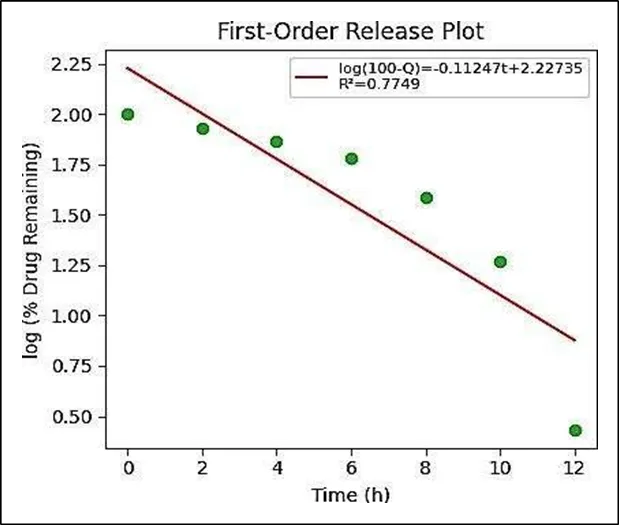
Figure : First-order release plot (log % remaining vs. time)
Higuchi Model
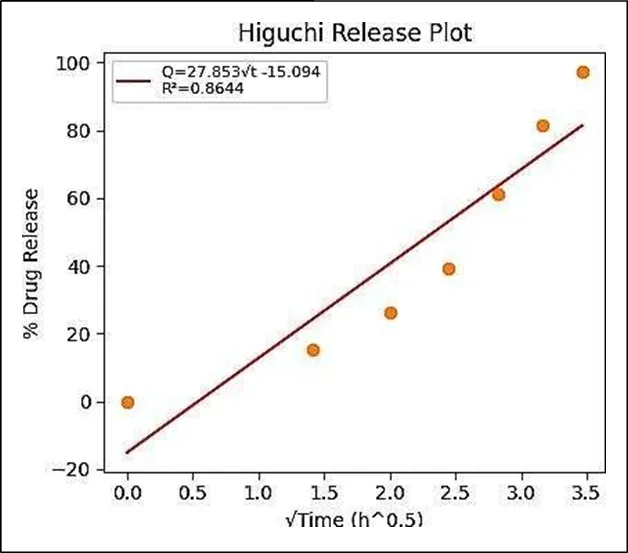
Figure : Higuchi release plot (% release vs. √time) Korsmeyer–Peppas Model
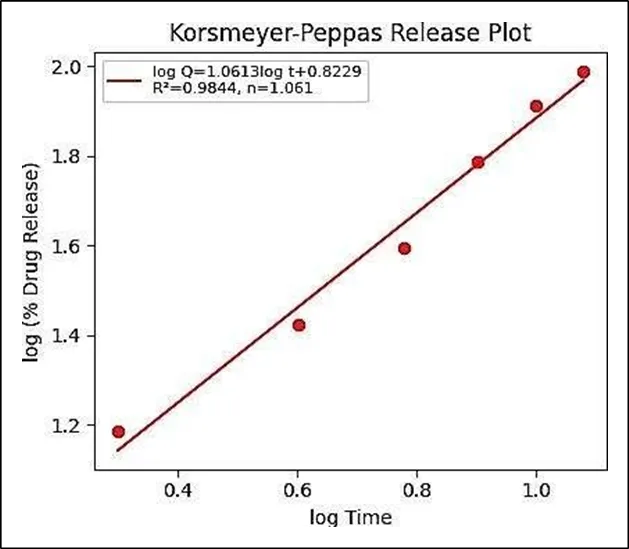
Figure : Korsmeyer–Peppas release plot (log % release vs. log time)
3.10 Stability Studies
Accelerated stability studies demonstrated that the optimized formulation maintained its physical appearance, homogeneity, pH, viscosity, spreadability, and drug content throughout the study period.
No significant changes in formulation characteristics or evidence of phase separation were observed during storage. Drug release performance also remained consistent, indicating that the optimized formulation possessed satisfactory physical and chemical stability under accelerated storage conditions. These observations support the suitability of the formulation for topical pharmaceutical application. The thesis includes stability evaluation of the optimized cream.
Table 4. Stability Study Summary
|
Parameter |
Observation |
|
Appearance |
No significant change |
|
pH |
Stable |
|
Viscosity |
Stable |
|
Spreadability |
Stable |
|
Drug content |
Stable |
|
Drug release |
Stable |
|
Overall stability |
Satisfactory |
Result of stability study on various parameters of optimized batch of (F9). (40 ± 2°C temperature 75 ± 5% RH) ICH Q1A (R2)
|
Parameter |
Initial |
1 Month |
2 Month |
3 Month |
|
Color and Appearance |
Whiteand smooth |
Whiteand smooth |
White and smooth |
Whiteand smooth |
|
pH |
6.1 ± 0.03 |
6.1 ± 0.04 |
6.2 ± 0.03 |
6.2 ± 0.02 |
|
Viscosity (cP) |
5924 ± 4.0 |
5920 ± 5.6 |
5918 ± 3.4 |
5915 ± 2.8 |
|
Spreadability (g·cm/s) |
20.48 ± 0.20 |
20.50 ± 0.32 |
20.55 ± 0.40 |
20.59 ± 0.25 |
|
In-vitro Drug Release (%) |
96.87 ± 0.42 |
96.75 ± 0.50 |
96.60 ± 0.55 |
96.48 ± 0.32 |
|
Homogeneity |
Homogeneous |
Homogeneous |
Homogeneous |
Homogeneous |
|
Phase Separation |
Absent |
Absent |
Absent |
Absent |
Discussion
Note: This discussion is based on the experimental work reported in the uploaded thesis. It interprets the findings described in the thesis and avoids introducing unsupported numerical results. Where comparisons to the broader literature would strengthen a journal submission, they should be supported by appropriate citations during the final reference preparation. The discussion reflects the formulation development, QbD optimization, physicochemical evaluation, in vitro drug release, antifungal activity, release kinetics, and stability studies documented in the thesis.
DISCUSSION
The present study successfully developed and optimized an oil-in-water antifungal cream containing itraconazole using eucalyptus oil as a natural permeation enhancer through a Quality by Design (QbD) approach. The systematic formulation strategy enabled identification of critical formulation variables affecting product quality and demonstrated the usefulness of statistical optimization in obtaining a robust topical dosage form. The overall findings indicate that incorporation of eucalyptus oil improved the pharmaceutical performance of the developed formulation while maintaining acceptable physicochemical characteristics.
A major objective of the investigation was to overcome the limited topical delivery of itraconazole resulting from its poor aqueous solubility and restricted penetration across the stratum corneum. The optimized cream exhibited satisfactory physical appearance, homogeneity, pH, viscosity, spreadability, and drug content, indicating that the selected excipients were compatible with the drug and suitable for preparation of a stable topical cream. The absence of phase separation or visible instability further suggests that the formulation method provided a uniform and physically stable emulsion system. These observations are consistent with the formulation evaluations reported in the thesis.
Preformulation studies played an important role in establishing the scientific basis for formulation development. FTIR analysis demonstrated compatibility between itraconazole and the selected excipients, indicating that no detectable chemical interactions occurred during formulation. Similarly, the validated UV spectrophotometric method provided a reliable analytical procedure for estimation of drug content and monitoring of drug release throughout the study. These preliminary investigations ensured that subsequent formulation optimization was performed using compatible materials and validated analytical methods.
One of the principal strengths of the present investigation was the implementation of the QbD concept for formulation optimization. Unlike conventional trial-and-error methods, the QbD approach enabled systematic evaluation of formulation variables and their influence on critical quality attributes. The Design of Experiments (DoE) methodology provided a structured framework for assessing interactions among formulation components while reducing unnecessary experimental trials. Statistical analysis and response surface methodology facilitated identification of the optimized formulation exhibiting the most desirable balance between viscosity and drug release. These findings demonstrate the usefulness of QbD in improving formulation robustness and reproducibility while supporting a scientific understanding of product development. The thesis reports optimization using factorial design, ANOVA, and response surface methodology.
CONCLUSION
The present investigation successfully formulated and optimized an oil-in-water antifungal cream containing itraconazole using eucalyptus oil as a natural permeation enhancer through a Quality by Design (QbD) approach. Application of QbD principles enabled systematic identification and optimization of critical formulation variables, resulting in a formulation with acceptable physicochemical characteristics and reproducible quality attributes.
The optimized cream exhibited satisfactory appearance, homogeneity, pH, viscosity, spreadability, and drug content, indicating that the selected formulation components were appropriate for topical application. Drug–excipient compatibility studies using FTIR demonstrated that itraconazole remained compatible with the selected excipients, while the validated UV spectrophotometric method provided reliable quantitative estimation during formulation evaluation.The in vitro diffusion study demonstrated improved drug release from the optimized formulation, and microbiological evaluation confirmed effective antifungal activity against Candida albicans. The formulation also remained stable during the reported stability study, maintaining its critical quality attributes throughout the
evaluation period. These findings collectively indicate that incorporation of eucalyptus oil enhanced the pharmaceutical performance of the itraconazole cream within the scope of the experimental work described in the thesis.
The study further demonstrates that implementation of the QbD framework provides a rational and scientifically robust strategy for developing topical antifungal formulations. By integrating formulation optimization with systematic risk assessment and statistical experimental design, the developed cream achieved improved overall performance while maintaining formulation stability.
Overall, the optimized itraconazole cream developed in this study represents a promising topical formulation for the management of superficial fungal infections. Nevertheless, additional in vivo studies, clinical evaluation, long-term stability assessment, and large-scale manufacturing studies would be required before translation into routine clinical or commercial use, as these aspects are beyond the scope of the uploaded thesis.
REFERENCES
2005;2(1):23–33.
2015;20:215–227.
Phytother Res. 2014;28:1277–1290.
2005;2(1):23–33.
2015;20:215–227.
Phytother Res. 2014;28:1277–1290.

Khushi Patodkar, Sachin Shinde, Formulate And Evaluate an Antifungal Cream Containing Itraconazole Using Eucalyptus Oil as A Permeation Enhancer, Int. J. of Pharm. Sci., 2026, Vol 4, Issue 8, 59-74, https://doi.org/10.5281/zenodo.21736056
 10.5281/zenodo.21736056