

We use cookies to ensure our website works properly and to personalise your experience. Cookies policy
Dr. J.J Magdum College of Pharmacy, Jaysingpur, Maharashtra, India 416401
The growing preference for natural and biocompatible oral care products has encouraged the development of plant-based alternatives to conventional toothpastes. The present study was undertaken to formulate and evaluate a polyherbal antimicrobial toothpaste containing extracts of Moringa oleifera leaves, Punica granatum peel, Mangifera indica, Psidium guajava leaves, Arthrospira platensis, Emblica officinalis, Terminalia chebula and Terminalia bellirica with calcium carbonate used as an abrasive agent. These herbal ingredients were selected due to their well-documented antimicrobial, antioxidant, and anti-inflammatory properties. The formulated toothpaste was evaluated for various physicochemical parameters including pH, homogeneity, spreadability, foaming ability, and stability according to standard evaluation procedures. Antimicrobial activity was assessed against Streptococcus mutans using the agar well diffusion method. The formulation exhibited satisfactory physicochemical characteristics suitable for oral application. Significant zones of inhibition against Streptococcus mutans confirmed the antibacterial potential of the polyherbal toothpaste. The results were compared with commercially available herbal toothpastes such as Dant Kanti and Colgate Herbal. The laboratory-formulated toothpaste demonstrated comparable effectiveness and acceptable evaluation properties when compared with marketed formulations. The findings of this preliminary in vitro study indicate that the prepared polyherbal toothpaste possesses good quality and antimicrobial efficacy, suggesting its potential use as a natural oral healthcare product.
Oral hygiene products such as toothpaste, toothbrushes, and mouthwashes containing antimicrobial agents are widely used to maintain oral health and prevent dental diseases. Their use has existed since ancient times and continues to play a crucial role in modern healthcare. In developing countries like India, a large proportion of dental disorders are associated with microbial infections. Common oral diseases include dental plaque formation, dental caries, and periodontal disorders, all of which are primarily caused by microbial activity within the oral cavity.[1]
The oral cavity provides a favorable environment for the growth and multiplication of microorganisms because of its warm, moist conditions, availability of nutrients, and complex anatomical structure. The accumulation of microbial biofilms on tooth surfaces promotes the growth of pathogenic bacteria, leading to conditions such as tooth decay, gingivitis, and periodontitis. Periodontal diseases are bacterial infections affecting the supporting structures of the teeth, including the gingiva, cementum, periodontal ligament, and alveolar bone. Bacterial endotoxins, hydrolytic enzymes, and toxic metabolites contribute significantly to tissue destruction. Gingivitis is the most common and mildest form of periodontal disease, while severe periodontal infections may result in loss of teeth.[2]
Medicinal plants have traditionally been used for maintaining oral hygiene because they contain a wide range of bioactive compounds such as flavonoids, tannins, alkaloids, and phenolic compounds. Moringa oleifera is well known for its antimicrobial and antioxidant activities, mainly due to the presence of isothiocyanates and flavonoids. Punica granatum (pomegranate) peel contains abundant polyphenols and tannins that exhibit strong antibacterial and anti-inflammatory effects. Similarly, Psidium guajava leaves are rich in quercetin and guaijaverin, compounds reported to possess significant antimicrobial activity against oral pathogens.[4,5]
The combination of these herbal extracts in a polyherbal toothpaste formulation may produce enhanced therapeutic effects through synergistic interactions among their phytoconstituents. Among oral microorganisms, Streptococcus mutans is considered one of the major causative agents of dental caries and is commonly used as a model organism in antimicrobial studies.[1,3]
Although these medicinal plants have been traditionally used in oral care, scientific validation of their effectiveness in formulated dentifrices remains essential. Therefore, the present study aims to formulate a polyherbal toothpaste containing extracts of Moringa oleifera stem, Punica granatum peel, and Psidium guajava leaves, and to evaluate its physicochemical characteristics and antimicrobial activity against Streptococcus mutans. The study contributes to the development of herbal dentifrices with potential applications in preventive oral healthcare.[4,5]
MATERIALS AND METHODS
1. Materials
The weight of each ingredient was determined based on the results of a previous study on the composition of herbal toothpaste. All of the ingredients in this toothpaste have a combined percentage by weight of 100%, which implies that the whole quantity of toothpaste will yield 100gm of tooth paste formulation.
Herbal Ingredients
Moringa leaf (Moringa oleifera) powder
Guava leaves (Psidium guajava) powder
Mango leaf (Mangifera indica) powder
Spirulina (Arthrospira platensis) powder
Pomogranate Peel (Punica granatum) powder
Triphala (Emblica officinalis ,Terminalia chebula, Terminalia bellirica) powder
Other Excipients
Calcium carbonate (Abrasive agent)
Glycerin (Texture enhancer)
Sorbitol (Humectant)
Silica (Abrasive, Thickening agent)
Sodium lauryl sulfate (Foaming agent)
Sodium benzoate (Preservative)
Xanthan gum (Thickener agent)
Peppermint oil (Flavoring agent)
Distilled water (Vehicle)
Extraction of Herbal Ingredients
Extraction of bioactive compounds from medicinal plants is a crucial step in the formulation of herbal products such as toothpaste. The efficiency of extraction depends on factors like solvent type, temperature, time, and extraction technique. Proper extraction ensures maximum recovery of phytoconstituents such as flavonoids, tannins, alkaloids, and phenolic compounds, which are responsible for antimicrobial, antioxidant, and anti-inflammatory activities.
The following extraction methods were employed for different herbal ingredients based on their chemical nature and solubility profile.
1. Extraction of Moringa Leaves (Moringa oleifera) – Soxhlet Extraction
Soxhlet extraction is a continuous hot extraction method widely used for efficient recovery of phytochemicals. In this method, dried and powdered Moringa leaves were subjected to extraction using ethyl acetate as a solvent.
Approximately 50 g of Moringa leaf powder was placed in a cellulose thimble and loaded into the Soxhlet apparatus. Ethyl acetate (250–300 mL) was used as the extraction solvent due to its ability to dissolve moderately polar compounds such as flavonoids and phenolic acids. The system was heated at a controlled temperature (60–70°C), allowing the solvent to vaporize, condense, and repeatedly pass through the plant material.
The extraction process was continued for 6–8 hours, ensuring multiple siphon cycles until the solvent in the siphon tube became nearly colorless, indicating complete extraction. The collected extract was then filtered and concentrated using a rotary evaporator to remove excess solvent. The final extract was dried and stored in an airtight container at low temperature to prevent degradation.
This method ensures efficient extraction due to continuous solvent recycling and is suitable for compounds that are stable at moderate temperatures.[6,7]
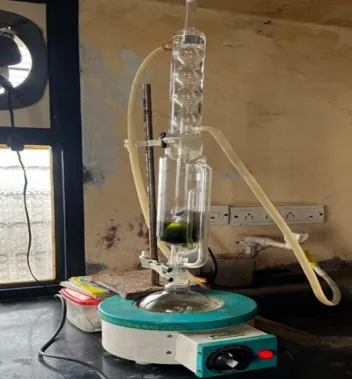
Figure No.01. Extraction of Moringa Leaves
2. Extraction of Guava Leaves (Psidium guajava) – Soxhlet Extraction
Guava leaves were extracted using a simple solvent extraction method. About 50 g of dried leaf powder was soaked in 300 mL of 70% ethanol in a conical flask. Ethanol was selected because it effectively extracts both polar and moderately non-polar phytochemicals, including tannins and flavonoids.
The mixture was kept on an orbital shaker for 24-48 hours at room temperature to enhance solvent penetration and compound diffusion. After extraction, the mixture was filtered using Whatman filter paper to separate the plant residue from the liquid extract.
The filtrate was then concentrated using a rotary evaporator to remove ethanol, leaving behind a semi-solid extract. The extract was further dried and stored in a refrigerator. This method is simple and cost-effective, suitable for heat-sensitive compounds.[8,9]
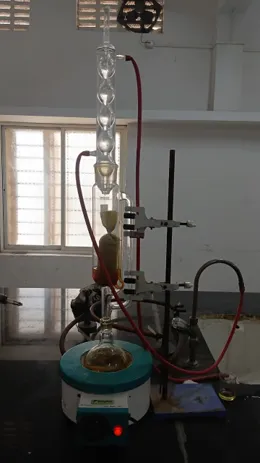
Figure No.02. Extraction of Guava Leaves
3. Extraction of Mango Leaves (Mangifera indica) – Maceration
Maceration is a traditional extraction technique involving soaking plant material in a solvent for an extended period. For mango leaves, 50 g of dried powder was immersed in 250–300 mL of ethanol in a closed container.
The mixture was allowed to stand for 72 hours at room temperature with occasional shaking to ensure uniform extraction. During this time, the solvent penetrates the plant tissues and dissolves bioactive compounds.
After maceration, the mixture was filtered, and the filtrate was concentrated by evaporating the solvent under reduced pressure. The dried extract was stored in an airtight container.
Maceration is particularly useful for extracting thermolabile compounds, as it avoids heat exposure.[10,11]
4. Extraction of Spirulina (Arthrospira platensis) – Aqueous Extraction
Spirulina powder was extracted using an aqueous method due to the water-soluble nature of its bioactive components such as proteins, vitamins, and pigments.
Approximately 20 g of Spirulina powder was mixed with 200 mL of distilled water. The mixture was stirred continuously for 4-6 hours at room temperature to facilitate extraction.
Following extraction, the mixture was centrifuged at 5000 rpm for 10 minutes to separate solid residues. The supernatant was collected and filtered to obtain a clear extract. The filtrate was then concentrated either by evaporation or freeze-drying.
This method preserves heat-sensitive nutrients and is widely used for extracting hydrophilic compounds.[12,27]
5. Extraction of Pomegranate Peel (Punica granatum) – Soxhlet Extraction (Aqueous)
Pomegranate peel contains a high concentration of tannins and polyphenols, which are efficiently extracted using water as a solvent.
About 50 g of dried peel powder was placed in a Soxhlet apparatus, and 300 mL of distilled water was used as the extraction solvent. The extraction was carried out at 90-100°C for 6–8 hours.
The continuous heating and refluxing ensured complete extraction of water-soluble compounds. After completion, the extract was filtered and concentrated by evaporating excess water.
The dried extract was stored under controlled conditions. Soxhlet extraction enhances extraction efficiency due to repeated solvent cycling.[13,28]
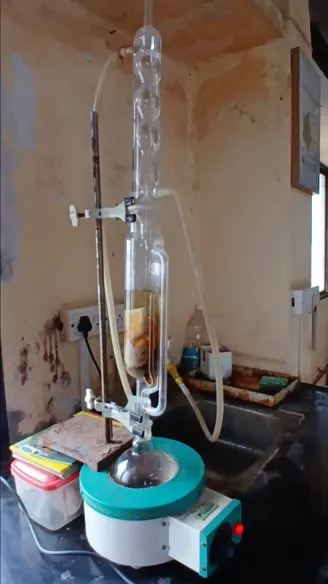
Figure No.03. Extraction of Pomegranate Peel
6. Extraction of Triphala – Decoction Method (Boiling)
Triphala is a polyherbal formulation consisting of Emblica officinalis, Terminalia chebula, and Terminalia bellirica. The decoction method was used for extraction.
Approximately 50 g of Triphala powder was added to 500 mL of distilled water and heated at 80-90°C for 30-45 minutes. Boiling facilitates the release of water-soluble compounds such as tannins, gallic acid, and antioxidants.
After boiling, the mixture was allowed to cool and then filtered to remove solid residues. The filtrate was concentrated by evaporation to obtain a semi-solid extract.
This method is simple and effective for extracting compounds that are stable at high temperatures.[14,29]
Method of Formulation of Toothpaste
Toothpaste can be prepared using two commonly followed formulation methods:
A. Dry Gum Method
B. Wet Gum Method
Both methods aim to produce a smooth, stable, and homogeneous paste, but they differ in how the ingredients are combined.
A. Dry Gum Method
In the dry gum method, the process begins by mixing all the solid ingredients such as abrasives (e.g., calcium carbonate), binding agents (like gums), and other powdered components excluding surfactants. This mixing is typically carried out using an agitation mixer equipped with slow-moving blades to ensure uniform blending without generating excess heat.
Once the dry ingredients are thoroughly mixed, the liquid components mainly humectants like glycerin or sorbitol, along with purified water are slowly added. This gradual addition helps prevent lump formation and ensures proper hydration of the binding agents. The mixture is continuously stirred until a smooth and consistent paste is formed.
After achieving a uniform base, sensitive ingredients such as surfactants (foaming agents) and flavorings agents are incorporated. These are usually added under vacuum conditions to minimize air entrapment, which improves the texture, stability, and shelf-life of the final product. The result is a well-blended, smooth toothpaste with good spreadability.[15]
B. Wet Gum Method
In the wet gum method, the formulation begins with the preparation of a liquid phase. All liquid ingredients such as water, humectants, preservatives, and sweeteners are first mixed together to form a uniform solution.
Next, the binding agent (such as tragacanth or sodium carboxymethyl cellulose) is slowly added to the liquid phase with continuous stirring. This step leads to the formation of a mucilage (gel-like structure), which acts as the base of the toothpaste and provides proper consistency and stability.
Once the mucilage is formed, the solid ingredients (like abrasives and other powdered materials), except surfactants, are gradually incorporated into the mixture using an agitation mixer. Care is taken to ensure even dispersion and to avoid the formation of lumps, resulting in a homogeneous paste.
Finally, surfactants, flavoring agents, and coloring agents are added under vacuum conditions. This step enhances the aesthetic appeal, foaming ability, and overall performance of the toothpaste while preventing air bubbles.[16]
Formulation of herbal toothpaste (100gm)
Table No.01. Formulation of herbal toothpaste
|
Sr. No. |
Ingredients |
Quantity |
Properties |
|
1 |
Moringa leaves |
2.0 gm |
Anti-inflammatory, Antioxidant |
|
2 |
Guava leaves |
1.5 gm |
Anti-cavity, Antimicrobial |
|
3 |
Mango leaves |
1.5 gm |
Antibacterial, anti-plaque |
|
4 |
Spirulina |
1.0 gm |
Anti-inflammatory |
|
5 |
Pomegranate Peel |
2.0 gm |
Antibacterial, Astringent |
|
6 |
Triphala |
2.0 gm |
Gum health, Antioxidant |
|
7 |
Calcium carbonate |
30 gm |
Abrasive agent |
|
8 |
Glycerin |
10 ml |
Texture enhancer |
|
9 |
Sorbitol |
25 ml |
Humectant |
|
10 |
Silica |
5.0 gm |
Abrasive, thickening agent |
|
11 |
Sodium lauryl sulfate |
0.5 gm |
Foaming agent |
|
12 |
Sodium benzoate |
0.2 gm |
Preservative |
|
13 |
Xanthan gum |
1.0 gm |
Thickener agent |
|
14 |
Peppermint oil |
0.5 ml |
Flavoring agent |
|
15 |
Distilled water |
q. s |
Vehicle |
Evalution test
1) Organoleptic Properties
Table No.02. Organoleptic Properties
|
Parameter |
Observation |
|
Colour |
Greenish brown |
|
Odor |
Pleasant |
|
Taste |
Slightly bitter |
|
Texture |
Smooth, thick, and semisolid paste |
2) Stability Observation (45 Days)
The toothpaste was stored in a sealed container at room temperature and monitored over a period of 15 days. During this time, the formulation was examined for any changes. It showed no discoloration, no separation of phases, no unpleasant smell, and no visible signs of microbial growth. Based on these observation, the product was considered physically and microbiologically stable under the started storage conditions.[17,30]
3) pH Determination
Weigh 1 g of the product and transfer it into a suitable container. Add 9 mL of distilled water. Then shake the mixture vigorously to obtain a uniform aqueous suspension or solution. Using a calibrated pH meter, measure the pH of the resulting liquid.[18,31]
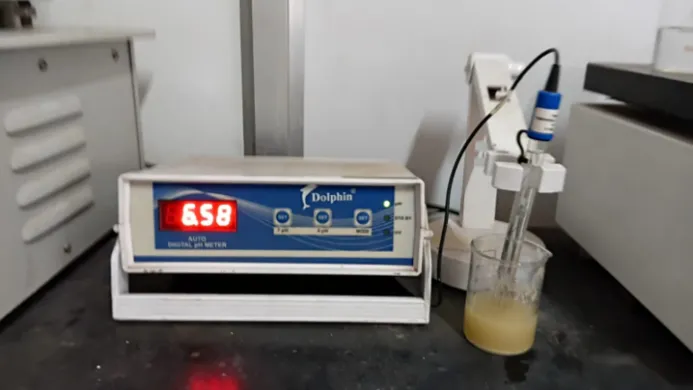
Figure No.04. pH Determination
4) Net content
Net content was calculated by using following formula:
Net content = weight of filled tube – weight of empty tube.[18]
4) Threading property
Threading property of each toothpaste was conducted by squeezing it onto the entire toothbrush and the brush was then lifted slowly away from the paste. The behavior of the paste during lifting was rated as follows:
Score 1 – The paste sits smoothly on the brush without forming any strings or threads.
Score 2 – Slight threading occurs, with short fine strings visible as the brush is lifted.
Score 3 – Heavy or severe threading makes application messy and difficult.[19]
5) Spreadability Test
Place 1 g amount of toothpaste between two clean glass slides. Set a weight on the top slide and let it rest for few minutes. After removing the weight, measure the diameter of the squeezed paste using a ruler or caliper. A wider spread indicates better spreadability and easier application during brushing.[20]
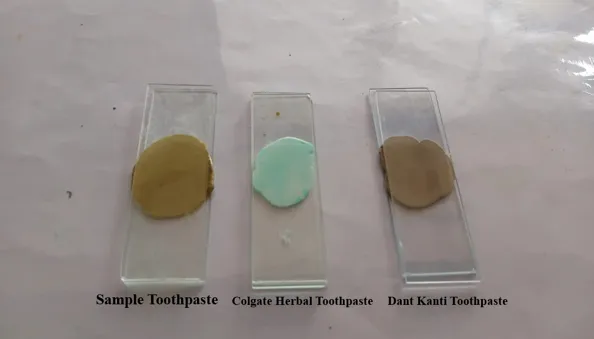
Figure No.05. Spreadability Test
6) Foaming Capacity
Mix 10 g of herbal toothpaste with 10 mL of distilled water and transfer the mixture into a 100 mL graduated cylinder or conical flask. Shake it vigorously for 10 seconds, then allow it to stand undisturbed for five minutes. Measure the resulting foam volume. Foaming power is then expressed as:
Foaming Power = V1 – V2 [21]
7) Determination of Moisture and Volatile Matter
Weigh approximately 5 g of the formulation into a porcelain dish. Place the dish in an oven and dry the sample at 1050 C until a constant weight is achieved
Calculation
Moisture content (%) = Loss in mass on drying / Initial mass of the sample x 100[22,32]
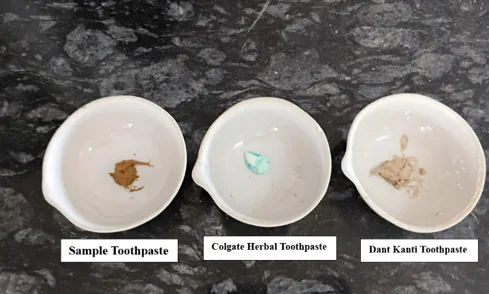
Figure No.06. Determination of Moisture
8) Determination of sharp and edge and abrasive particles
To detect any sharp or hard-edged abrasive particles, squeeze a continuous ribbon of toothpaste about 15 to 20 cm long onto a sheet of butter paper. Carry this out for at least ten separate tubes. Then, gently run your fingertip along the entire length of the paste strip, feeling for any presence of sharp, gritty, or hard-edged particles. The toothpaste must be completely free from such particles.[23,33]
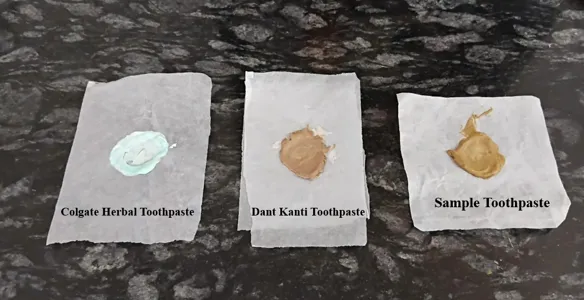
Figure No.07. Determination of sharp and edge and abrasive particles
9) Homogeneity
At a temperature of 270 C to 200C, apply normal manual pressure to a collapsible tube or any suitable container. The toothpaste should extrude as a uniform, homogeneous mass without lumps or separation. As the container is gradually rolled up from the remaining bulk of the product should also extrude smoothly and continuously from that end. [24,34]
10) Anti-Microbial Activity
a) Test sample compared with a commercial toothpaste
The antibacterial effectiveness of the formulated toothpaste was evaluated in vitro using a disc diffusion method. Soybean casein digest agar was used as the growth medium, and the test organism was a pathogenic strain of Streptococcus mutans. The bacterium was first cultured to promote active cell multiplication on the agar surface. Agar plates ware inoculated by streaking, and wells of 5 mm diameter were carefully cut into the medium using a sterile cork borer. After borer removal, each plate was gently rotated to evenly distribute the bacterial suspension around the wells. Test samples, including the prepared herbal paste and a commercial toothpaste, were then introduced into the respective wells. The plates were sealed with paraffin film, properly labelled, and incubated, at 370 C for 24 hours. Once the incubation period ended, each plate was inspected, and the resulting diameter of the zone of inhibition (ZOI) was measured in millimeters using a ruler.[25,26]
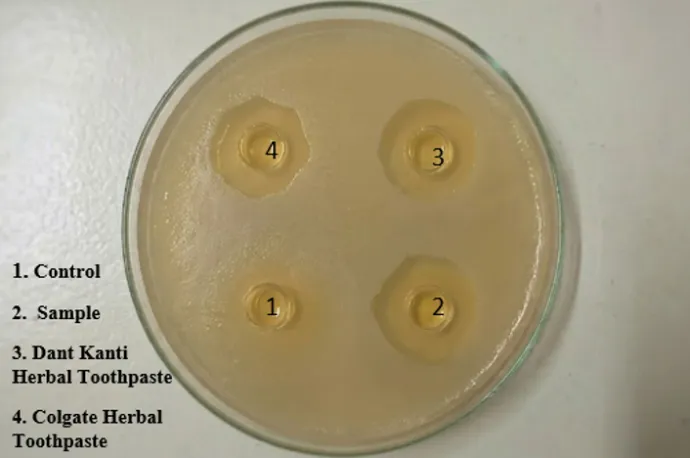
Figure No.08. Test sample compared with a commercial toothpaste
Table No.03. Test sample compared with a commercial toothpaste
|
Sr. No |
Parameter |
Observations |
|||
|
1 |
Antimicrobial Activity |
1 |
2 |
3 |
4 |
|
No zone of inhibition |
18 mm |
16 mm |
15 mm |
||
b) Test sample compared with a standard drug (Amoxicillin)
The antibacterial activity of the formulated herbal toothpaste (test sample) was evaluated against Streptococcus mutans using the disc diffusion method. Amoxicillin was used as the reference standard drug for comparison. After incubation at 37°C for 24 hours, the zone of inhibition was measured in millimetres, and the antibacterial effectiveness of the test sample was compared with the standard drug.
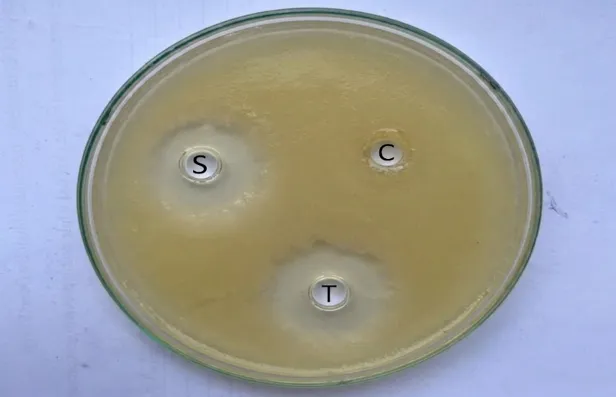
Figure No.09. Test sample compared with a standard drug (Amoxicillin)
Table No.04. Test sample compared with a standard drug (Amoxicillin)
|
Sr. No |
Parameter |
Observations |
||
|
1 |
Antimicrobial Activity |
Control |
Standard |
Test |
|
No zone of inhibition |
19.5 mm |
17 mm |
||
RESULTS AND DISCUSSION
The formulated polyherbal toothpaste containing extracts of Moringa oleifera, Mangifera indica, Psidium guajava, Punica granatum, Spirulina, and Triphala was successfully prepared by the dry gum method. The prepared formulation exhibited satisfactory organoleptic and physicochemical characteristics suitable for oral application. The results of evaluation tests are summarized below.
1. Organoleptic Evaluation
Table No.05. Organoleptic Properties
|
Parameter |
Observation |
|
Colour |
Greenish brown |
|
Odor |
Pleasant |
|
Taste |
Slightly bitter |
|
Texture |
Smooth, thick, and semisolid paste |
The herbal toothpaste showed acceptable organoleptic properties without any unpleasant odour or gritty texture. The presence of peppermint oil improved the flavor and overall acceptability of the formulation.
2. Physicochemical Evaluation
Table No.06. Physicochemical Evalution
|
Test Parameter |
Observation/Result |
|
pH |
6.58 |
|
Homogeneity |
Homogeneous, no lumps |
|
Spreadability |
6.5 cm |
|
Foaming Capacity |
Moderate foaming |
|
Threading Property |
Score 1 |
|
Moisture Content |
21 % |
|
Sharp/Abrasive Particles |
Absent |
|
Net Content |
100 g |
|
Stability Study |
Stable for 45 days |
The pH of the formulation was found to be near neutral, which is suitable for oral cavity application and unlikely to cause irritation to oral tissues. Good spreadability indicated ease of application during brushing. Moderate foaming was observed due to the presence of sodium lauryl sulfate, which contributes to cleansing action. No sharp abrasive particles were detected, indicating the safety of the abrasive system used in the formulation.
During the stability study, the toothpaste remained physically stable with no phase separation, discoloration, odour, or microbial contamination observed throughout the storage period.
3. Antimicrobial Activity
The antimicrobial activity of the prepared herbal toothpaste was evaluated against Streptococcus mutans using the agar well diffusion method. The zone of inhibition was compared with commercially available herbal toothpastes.
Table No.07. Antimicrobial Activity
|
Sample |
Zone of Inhibition (mm) |
|
Formulated Herbal Toothpaste |
18 mm |
|
Dant Kanti Herbal Toothpaste |
16 mm |
|
Colgate Herbal Toothpaste |
15 mm |
|
Control |
No zone of inhibition |
|
Standard (Amoxicillin) |
19.5 mm |
The formulated herbal toothpaste demonstrated significant antibacterial activity against Streptococcus mutans. Although the zone of inhibition was slightly higher than marketed formulations such as Dant Kanti and Colgate Herbal. When formulated herbal toothpaste is compared with standard drug amoxicillin the zone of inhibition is slightly higher than test sample.
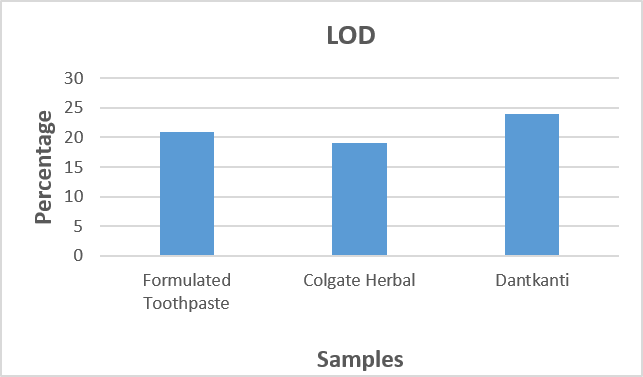
Figure No.10. Loss on drying (LOD) of formulated herbal toothpaste and marketed herbal toothpaste.
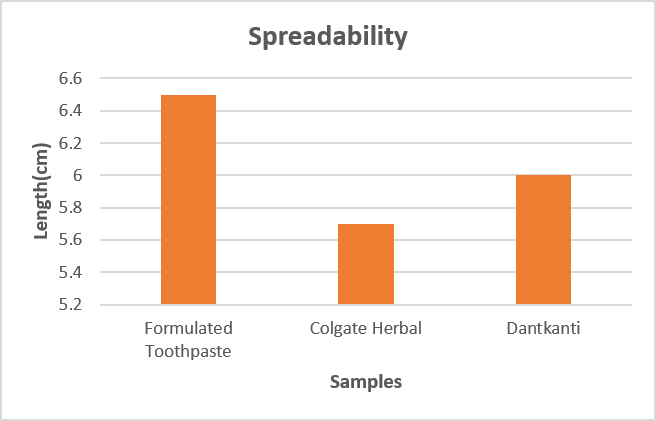
Figure No.11. Spreadability of formulated herbal toothpaste and marketed herbal toothpaste.
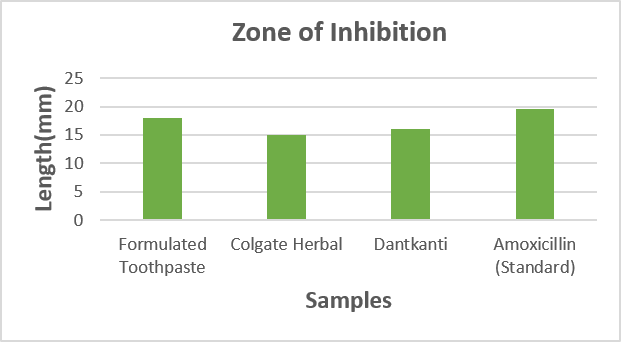
Figure No.12. Zone of inhibition of formulated herbal toothpaste, marketed herbal toothpaste and standard drug
DISCUSSION
The present investigation demonstrated that the formulated polyherbal toothpaste possessed satisfactory physicochemical characteristics along with significant antimicrobial activity, indicating its potential usefulness as a natural oral healthcare formulation. The incorporation of medicinal plant extracts such as Moringa oleifera, Mangifera indica, Psidium guajava, Punica granatum, Spirulina, and Triphala contributed to the therapeutic efficacy of the toothpaste due to the presence of various bioactive phytoconstituents including flavonoids, tannins, alkaloids, saponins, polyphenols, and phenolic acids. These compounds are widely reported to possess antibacterial, antioxidant, anti-inflammatory, and anti-plaque activities that are beneficial in maintaining oral hygiene and preventing dental diseases.
The formulated toothpaste exhibited desirable organoleptic properties such as acceptable colour, pleasant odour, smooth texture, and good consistency, which are important parameters influencing patient acceptability and compliance. The preparation also demonstrated good homogeneity without the presence of lumps or phase separation, indicating proper mixing and stability of ingredients. The spreadability of the formulation was found to be satisfactory, suggesting ease of application during brushing and uniform distribution over tooth surfaces. In addition, moderate foaming ability was observed due to the incorporation of sodium lauryl sulfate, which aids in effective cleansing and removal of food debris from the oral cavity.
The pH of the prepared toothpaste was found to be near neutral, which is considered ideal for oral formulations. Maintenance of neutral pH is important because highly acidic formulations may lead to enamel demineralization and tooth sensitivity, whereas highly alkaline preparations may irritate oral mucosal tissues. Therefore, the observed pH indicates that the formulation is compatible with the oral environment and safe for routine use.
The antimicrobial evaluation demonstrated that the formulated herbal toothpaste produced a considerable zone of inhibition against Streptococcus mutans, one of the major microorganisms associated with dental caries and plaque formation. The antibacterial activity observed in the study may be attributed to the synergistic interaction of phytochemicals present in the combined herbal extracts. Tannins and polyphenols present in pomegranate peel and Triphala are known to inhibit bacterial adhesion and enzyme activity, thereby reducing plaque formation. Flavonoids and phenolic compounds from guava and moringa leaves possess strong antimicrobial and antioxidant properties that help suppress microbial growth and reduce oxidative stress within the oral cavity. Similarly, Spirulina contributes anti-inflammatory and antioxidant effects that may support gum health and tissue protection.
When compared with commercially available herbal toothpastes such as Dant Kanti and Colgate Herbal, the formulated toothpaste exhibited comparable antimicrobial activity and acceptable physicochemical properties. Although the marketed formulations showed slightly smaller zones of inhibition, the prepared polyherbal toothpaste demonstrated effective antibacterial action using predominantly natural plant-derived ingredients. This suggests that the developed formulation may serve as a safer and cost-effective alternative to synthetic dentifrices that often contain artificial colours, and chemical antimicrobial agents.
The stability study further confirmed that the toothpaste remained physically stable during the storage period, with no evidence of discoloration, microbial growth, unpleasant odour, or phase separation. This indicates that the selected excipients and preservatives were effective in maintaining formulation stability and product quality.
Overall, the findings of the present study support the growing interest in herbal oral care products and highlight the potential of polyherbal formulations in preventive dentistry. The synergistic combination of medicinal plant extracts may provide enhanced therapeutic benefits while minimizing the adverse effects commonly associated with synthetic oral care products. However, further studies including long-term stability studies, toxicity evaluation, and clinical trials on human subjects are necessary to establish the safety, efficacy, and commercial applicability of the developed herbal toothpaste formulation.
CONCLUSION
The present research work focused on the formulation and evaluation of a polyherbal toothpaste prepared using extracts of Moringa oleifera, Mangifera indica, Psidium guajava, Punica granatum, Spirulina, and Triphala. The formulated toothpaste was successfully developed with the help of suitable excipients and evaluated for various physicochemical, organoleptic, and antimicrobial parameters.
The evaluation studies revealed that the prepared formulation possessed desirable characteristics such as good homogeneity, smooth texture, satisfactory spreadability, acceptable foaming ability, and a near-neutral pH suitable for oral use. The formulation also remained physically stable during the study period without showing any signs of phase separation, discoloration, unpleasant odour, or microbial contamination, indicating good stability and compatibility of the ingredients.
The antimicrobial investigation demonstrated effective inhibitory activity against Streptococcus mutans, which is one of the major microorganisms responsible for dental plaque and dental caries. The antibacterial activity of the toothpaste may be attributed to the presence of phytochemicals such as flavonoids, tannins, polyphenols, alkaloids, and antioxidants present in the selected herbal ingredients. The synergistic action of these medicinal plants may help in reducing microbial growth, maintaining oral hygiene, and protecting against oral infections and inflammatory conditions.
In comparison with commercially available herbal toothpastes, the formulated polyherbal toothpaste exhibited very good antimicrobial efficacy and acceptable quality parameters. The use of natural herbal ingredients in the formulation may provide additional advantages such as reduced side effects, better biocompatibility, and improved patient acceptance compared to synthetic oral care products containing harsh chemicals.
Therefore, the developed polyherbal toothpaste can be considered a promising natural oral healthcare formulation with potential applications in the prevention of dental caries, plaque formation, and other oral disorders. However, further investigations including advanced phytochemical studies, long-term stability testing, toxicity assessment, and clinical trials are necessary to confirm its safety, therapeutic effectiveness, and suitability for commercial production and large-scale use.
REFERENCES






Dr. Satish Kilaje, Shreya Varekar, Adesh Patil, Adinath Patil, Aishwarya Patil, Ajinkya More, Formulation and Comparative Evaluation of a herbal Antimicrobial Toothpaste against Streptococcus mutans, Int. J. of Pharm. Sci., 2026, Vol 4, Issue 7, 3328-3342. https://doi.org/10.5281/zenodo.21404340
 10.5281/zenodo.21404340