

We use cookies to ensure our website works properly and to personalise your experience. Cookies policy
Department of Pharmacognosy, College of Pharmaceutical Sciences, Govt Medical College, TVM, Kerala, India.
Syzygium mundagam belongs to Myrtaceae family. DNA barcoding is an effective molecular method used for the identification and authentication of medicinal plants. Syzygium mundagam, a medicinal plant species belonging to the family Myrtaceae and native to the Western Ghats, is widely known for its therapeutic importance. Due to similarities with other species, correct identification based only on morphology can be difficult. This study aimed to authenticate Syzygium mundagam leaves using DNA barcoding techniques. Fresh leaf samples were collected, and genomic DNA was isolated and amplified using standard barcode markers such as rbcL and ITS through PCR analysis. The amplified sequences were compared with reference sequences available in genetic databases for species confirmation. The results showed accurate identification of Syzygium mundagam, proving that DNA barcoding is a reliable tool for medicinal plant authentication. The study highlights the importance of molecular identification in ensuring quality control and preventing adulteration in herbal medicines.
Reliable identification of plant species is fundamental to taxonomic research, biodiversity conservation, and the effective management of biological resources. Although morphological characters remain the primary basis for species identification, they may vary with developmental stage, environmental conditions, and natural phenotypic variation, making the discrimination of closely related taxa difficult. Molecular approaches have therefore become valuable tools for confirming species identity and supporting traditional taxonomic methods.
DNA barcoding has become an established method for plant identification by analyzing short, standardized DNA regions that can distinguish species based on genetic variation. Among the recommended barcode loci for land plants, the chloroplast ribulose-1,5-bisphosphate carboxylase/oxygenase large subunit (rbcL) gene is one of the most widely used because it is easily amplified across a broad range of taxa and produces high-quality sequence data. Its extensive representation in global sequence repositories also makes rbcL suitable for comparative analyses and species authentication.
The genus Syzygium (Myrtaceae) is a diverse group of woody plants distributed throughout tropical and subtropical regions, with many species possessing ecological, medicinal, and economic importance. However, accurate identification within the genus is often complicated by similarities in vegetative and reproductive characters. Syzygium mundagam, an endemic species of the Western Ghats, has received limited molecular attention despite its restricted distribution and conservation significance. Generating DNA barcode data for this species will strengthen its molecular documentation and facilitate future taxonomic and conservation studies.
Therefore, the present study employs the chloroplast rbcL gene as a DNA barcode to genetically identify Syzygium mundagam using leaf samples. The obtained sequence was compared with authenticated reference sequences available in public databases to verify species identity and contribute to the expanding molecular database of the genus Syzygium.
MATERIALS AND METHODS
Plant Material
Fresh leaves of Syzygium mundagam were collected from healthy plants and used for molecular analysis. Approximately 100 mg of leaf tissue was used for genomic DNA extraction.
Genomic DNA Isolation
Genomic DNA was extracted using the NucleoSpin® Plant II Kit (Macherey-Nagel, Germany) following the manufacturer's protocol. Leaf tissue was ground to a fine powder in liquid nitrogen before lysis. After RNase treatment, the lysate was purified through a silica membrane column to remove proteins, polysaccharides, and other contaminants. Purified DNA was eluted in 50 μL of the supplied elution buffer and stored at 4°C until further use.
DNA Quality Assessment
The quality of the extracted DNA was assessed by electrophoresis on a 0.8% agarose gel prepared with 0.5× Tris–Borate–EDTA (TBE) buffer containing ethidium bromide (0.5 μg mL⁻¹). DNA samples were mixed with 6× loading dye before loading onto the gel. Electrophoresis was carried out at 75 V, and DNA bands were visualized under ultraviolet illumination using a Bio-Rad Gel Documentation System.
PCR Amplification of the rbcL Barcode Region
The chloroplast rbcL gene was amplified using the universal primer pair rbcL-AF (5′-ATGTCACCACAAACAGAGACTAAAGC-3′) and rbcL-724R (5′-TCGCATGTACCTGCAGTAGC-3′). PCR amplification was performed in a total reaction volume of 10 μL containing 5 μL of 2× Phire Master Mix, 1 μL of genomic DNA, 0.25 μL each of forward and reverse primers, and nuclease-free water to the final volume. Amplification was carried out in a GeneAmp PCR System 9700 (Applied Biosystems, USA) under the following conditions: an initial denaturation at 98°C for 1 min; 40 cycles of denaturation at 98°C for 5 s, annealing at 58°C for 10 s, and extension at 72°C for 15 s; followed by a final extension at 72°C for 2 min.
PCR Analysis
|
2X Phire Master Mix |
5μL |
|
D/W |
4μL |
|
Forward Primer |
0.25μL |
|
Reverse Primer |
0.25μL |
|
DNA |
1μL |
Primers used
|
Target |
Primer Name |
Direction |
Sequence (5’ à 3’) |
|
RBCL |
RBCL-AF |
Forward |
ATGTCACCACAAACAGAGACTAAAGC |
|
RBCL-724R |
Reverse |
TCGCATGTACCTGCAGTAGC |
PCR amplification profile
RBCL
98 oC - 1 min
98 oC - 5 sec
58 oC - 10 sec 40 cycles
72 oC - 15 sec
72 oC - 2 min
4 oC - ∞
Analysis of PCR Products
Amplification products were separated on a 1.2% agarose gel prepared in 0.5× TBE buffer containing ethidium bromide. Electrophoresis was performed at 75 V using a 2-Log DNA Ladder (New England Biolabs, USA) as the molecular size marker. The amplified fragments were visualized under UV light and photographed using a gel documentation system.
Purification and DNA Sequencing
PCR products that produced clear single bands were purified using ExoSAP-IT™ (GE Healthcare, USA) to eliminate excess primers and unincorporated nucleotides. Purified amplicons were sequenced by the Sanger dideoxy chain termination method using the BigDye® Terminator v3.1 Cycle Sequencing Kit (Applied Biosystems, USA). Sequencing reactions were purified by ethanol precipitation before capillary electrophoresis on an ABI 3500 Genetic Analyzer (Applied Biosystems, USA).
The Sequencing PCR mix consisted of the following components:
|
D/W |
6.6μL |
|
5X Sequencing Buffer |
1.9μL |
|
Forward Primer |
0.3μL |
|
Reverse Primer |
0.3μL |
|
Sequencing Mix |
0.2μL |
|
Exosap treated PCR product |
1μL |
Sequencing PCR amplification profile
96oC - 2min
96oC - 30sec
50oC - 40sec 30 cycles
60 oC - 4min
4 oC - ∞
Sequence Editing and Identification
Raw sequence chromatograms were inspected for quality using Sequence Scanner Software v1.0 (Applied Biosystems, USA). Forward and reverse sequences were assembled, edited, and aligned in Geneious Pro v5.1 to generate a consensus sequence. The resulting rbcL sequence was compared with reference sequences available in the NCBI GenBank database using the Basic Local Alignment Search Tool (BLAST) to confirm the genetic identity of Syzygium mundagam. The validated sequence was subsequently used for downstream analyses.
RESULTS AND DISCUSSION
DNA Isolation and Quality Assessment
High-quality genomic DNA was successfully isolated from fresh leaves of Syzygium mundagam using the NucleoSpin® Plant II Kit. Agarose gel electrophoresis revealed intact, high-molecular-weight DNA with minimal smearing, indicating good DNA integrity and the absence of significant degradation .The extracted DNA was of sufficient quality for subsequent PCR amplification and sequencing.
PCR Amplification of the rbcL Gene
The chloroplast rbcL region was successfully amplified using the universal primer pair rbcL-AF and rbcL-724R. Agarose gel electrophoresis of the PCR products showed a distinct single band of approximately 550 bp ,indicating specific amplification without detectable non-specific products .The successful amplification demonstrates the suitability of the extracted DNA for DNA barcoding studies.
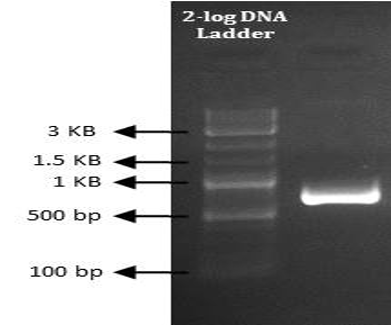
Fig 1: Agarose gel electrophoresis of the PCR-amplified rbcL gene from Syzygium mundagam leaves
DNA Sequencing and Species Identification
The purified PCR product yielded high-quality bidirectional sequences. After sequence editing and assembly, a consensus rbcL sequence of approximately 550 bp was obtained. BLAST analysis against the NCBI GenBank database showed the highest similarity 98.73 % with Syzygium mundagam confirming the taxonomic identity of the collected specimen. The sequence quality was sufficient for reliable molecular identification and may serve as a reference barcode for this species.
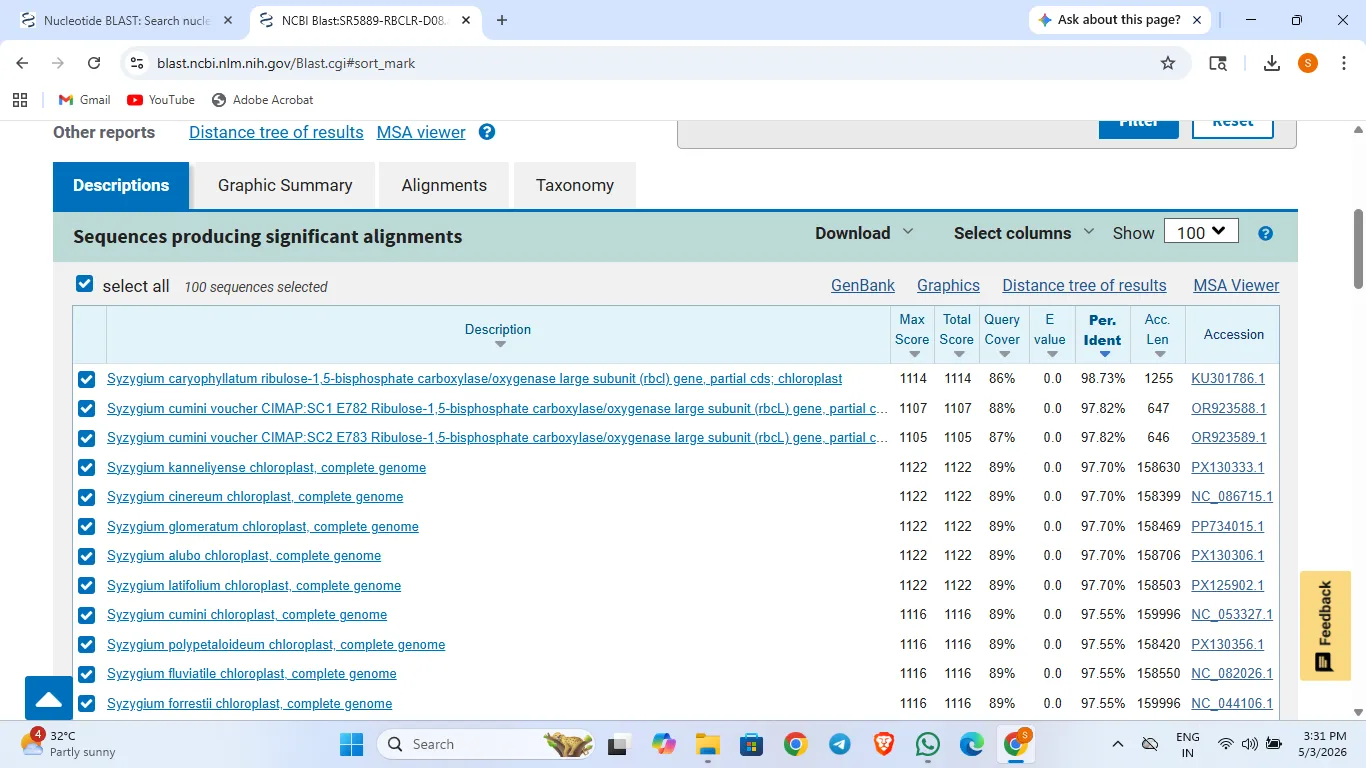
Fig 2 : NCBI BLAST results of the rbcL gene sequence of Syzygium mundagam
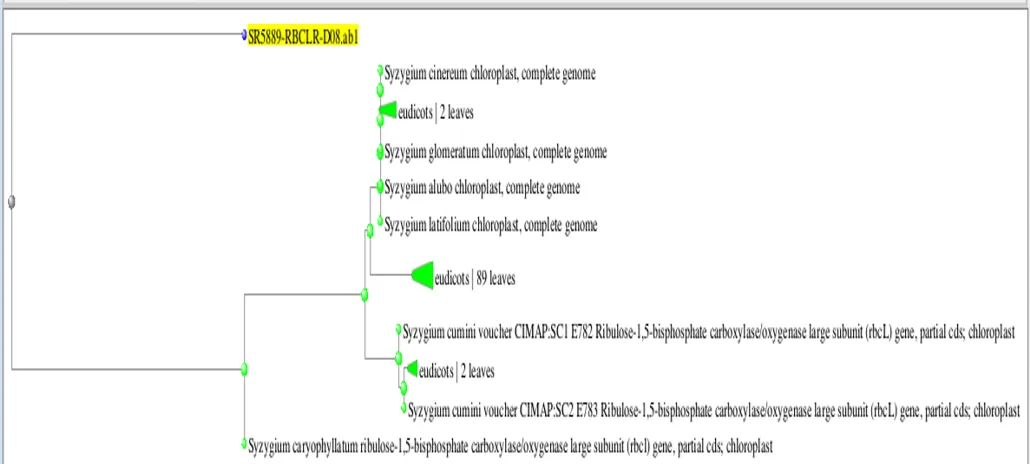
Fig 3 : Phylogenetic tree based on rbcL gene sequences illustrating the evolutionary relationship of Syzygium mundagam with closely related Syzygium retrieved from NCBI BLAST
DISCUSSION
DNA barcoding has become an effective molecular approach for the identification and authentication of plant species, particularly those exhibiting high morphological similarity. In the present study, the chloroplast rbcL marker was successfully amplified and sequenced from Syzygium mundagam. The production of a single, distinct PCR amplicon and the acquisition of high-quality sequence data demonstrate the effectiveness of the rbcL primers for this species.
The high sequence similarity observed during BLAST analysis confirms the identity of S. mundagam and supports the reliability of the rbcL gene as a barcode marker for species authentication. The conserved nature of the rbcL locus enables consistent amplification across a broad range of angiosperms while providing sufficient sequence variation for species-level identification in many plant groups. These characteristics have led to its widespread use in plant taxonomy, biodiversity assessment, and molecular authentication.
The barcode sequence generated in this study contributes valuable molecular information for S. mundagam, an endemic species of the Western Ghats. Such reference sequences are important for supporting future taxonomic studies, conservation planning, phylogenetic analyses, and the development of authenticated DNA barcode databases. The integration of molecular barcoding with conventional morphological identification enhances confidence in species identification and provides a robust framework for documenting endemic plant diversity.
CONCLUSION
The present study demonstrated the effectiveness of chloroplast rbcL-based DNA barcoding for the genetic identification of Syzygium mundagam. The study successfully isolated good-quality genomic DNA, amplified the target barcode region, and generated sequence information suitable for molecular analysis. The obtained rbcL sequence provided reliable evidence for species authentication and highlights the usefulness of this marker in supporting taxonomic identification of Syzygium species. The generated molecular data serve as a valuable reference resource for future studies involving species diversity, phylogenetic relationships, and conservation management of this endemic plant.
REFERENCES

Haritha Chandran, Akila Bindu K, Genetic Authentication of Syzygium mundagam Leaves using rbcL DNA Barcoding, Int. J. of Pharm. Sci., 2026, Vol 4, Issue 8, 847-852. https://doi.org/10.5281/zenodo.21809315
 10.5281/zenodo.21809315