

We use cookies to ensure our website works properly and to personalise your experience. Cookies policy
1 M.Pharm, MBA., Associated professorDepartment of Pharmaceutical chemistry, Arunai College of Pharmacy, Tiruvannamalai – 606603 Tamil Nadu.
2M.Pharm, Ph.D., Principal and Professor, Arunai College of Pharmacy,Tiruvannamalai – 606603 Tamil Nadu
The present study investigates the phytochemical composition and antifungal potential of the various extract of Annona squamosa L. flowers. Fresh plant materials were shade-dried, powdered, and subjected to Soxhlet extraction using various solvents. Qualitative phytochemical analysis revealed the presence of alkaloids, glycosides, carbohydrates, phenols, tannins, flavonoids, saponins, terpenoids, and proteins. Antifungal activity was evaluated on various concentration using the agar well diffusion method against human pathogenic fungi Candida albicans. The Ethanolic extract showed the maximum zone of inhibition 10.00 ± 0.37 mm, 11.00 ± 0.42 mm, and 12.00 ± 0.58 mm at 50 µL, 100 µL, and 150 µL respectively, followed by the aqueous extract, while the n-hexane extract showed comparatively lower activity. which was compared to the standard antifungal drug Clotrimazole showed the highest activity (16.00 ± 0.00 mm). These findings suggest that Annona squamosa L. flowers possess bioactive secondary metabolites with antifungal potential, supporting their possible use in herbal therapeutic formulations.
Fungal infections are most caused by Candida spp., particularly C. albicans, C. tropicalis, and C. parapsilosis. Among Candida species, C. albicans is the most common cause of invasive infections. These infections can affect humans, animals, and plants alike. Fungal infections primarily manifest as skin diseases, known as Mycoses. The fungi responsible for these infections can spread to various parts of the body, including tissues, bones, and organs, and in severe cases, can affect the entire body. There are two main categories of fungal infections Superficial mycoses and Invasive fungal infections. Superficial mycoses typically affect naturally occurring regions such as the skin and mucous membranes. In contrast, Invasive fungal infections penetrate deeper into the body, affecting internal organs such as the kidneys, liver, and lungs. Fungi responsible for infections can be found in diverse habitats, including plants, soil, domestic surfaces, and evenon the human skin
Candidiasis is a fungal infection caused by Candida (yeast like). Everyone has Candida on their skin and in parts of their body (like the mouth, throat, gut, and vagina). Candida only causes symptoms and infections if it grows out of control.
PLANT PROFILE:
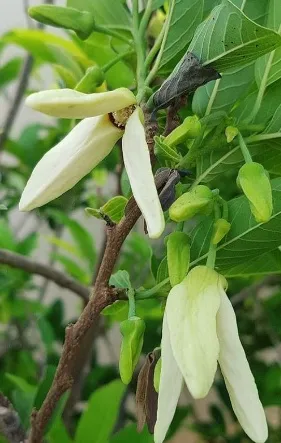
Fig.1: Annona Squamosa L. Flowers
Annona squamosa L.
4. Morphological characters:
5. Medicinal uses:
6. Vernacular names:
MATERIALS AND METHODS:
Plant Materials
The flowers of Annona squamosa L. were collected from Thanneerpandhal village, Thandrampet taluk, Tiruvannamalai district in Tamil Nadu, which was authenticated by Dr. J. Sureshkumar, M.Sc, M.Phil, Ph.D, PGDCA.,
Chemicals
Ethanol, n-Hexane, DMSO (Dimethyl Sulfoxide) were obtained from GREAT SCIENTIFIC INDUSTRIES Seriyenthal, Tiruvannamalai, Tamil Nadu.
Microbial strain
Candida albicans as the fungal strain, which was obtained from BN MICRO LAB Tiruvannamalai, Tamil Nadu.
Methods of Extraction
Annona squamosa L. (Flower) were collected and shade dry at room temperature for 2 weeks. The dried flower was powdered and passes through sieve no: 22#, 42#.
Requirements
Plant: Dried flower powdered (Annona squamosa L.).
Solvents: Ethanol, n-Hexane, Aqueous.
Apparatus: Soxhlet apparatus, Beaker, Measuring cylinder, Weighing balance and Stirrer.
35g of dried coarse powder was packed into cellulose thimble, which was placed in chamber of the Soxhlet apparatus. The extracting solvent in the flask was heated and its vapours condensed in the condenser. The condensed extract, drips into the thimble containing the crude drugs by its contact. When the level of liquid in chamber raises to the top of Siphon tube, the liquid content of chamber Siphon into the flask. This process was continuously carried out until a drop of solvent from the Siphon tube does not leave residue.
2. Decoction process
The 35g coarsely powdered material was boiled with approximately 350 mL of distilled water over a low flame and allowed to simmer for 15-30 min with occasional stirring. The volume of the solution was reduced to one-fourth (approximately 85-90 mL). The mixture was then cooled and filtered through muslin cloth. The collected filtrate represents the aqueous decoction of flower from Annona squamosa L.
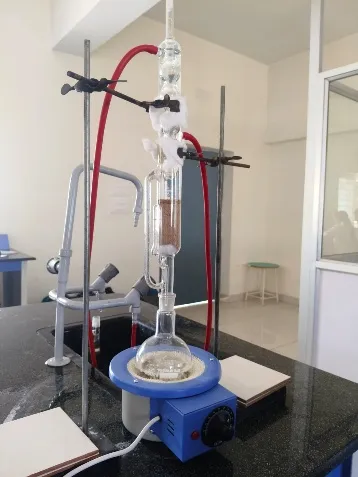
Fig.2: Soxhlet process
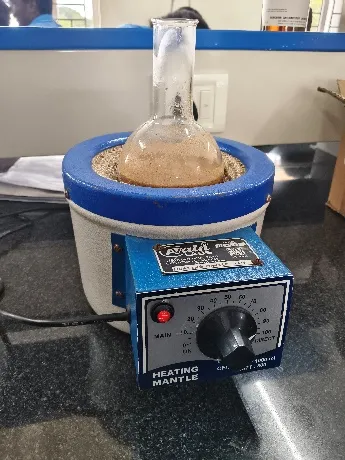
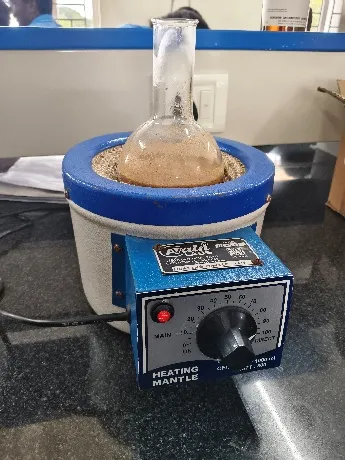
Fig.3: Decoction process
The dried crude extract was weighed, and the percentage yield was calculated using the following formula:
Extraction yield (%) = (Weight of crude extract / Weight of powdered sample) × 100
Preliminary Phytochemical Analysis
Test For Alkaloids
Hager’s Test
To 1mL of the extract, add 3mL of Hager’s reagent (saturated aqueous solution of picric acid), yellow coloured precipitate indicates the presence of alkaloids.
TEST FOR SAPONINS
Take small quantity of alcohol extract and add 20mL of distilled water ad shake in a graduated cylinder for 15min lengthwise. A 1cm layer of foam indicates the presence of saponin.
TEST FOR GLYCOSIDES
Legal’s Test
Dissolve the extract in pyridine and add sodium nitroprusside solution to make it alkaline, the formation of pink, red colour shows the presence of glycosides.
Test For Tannins
Gelatin Test
To a few mL of extract, add 1% gelatin solution containing 10% sodium chloride. Formation of white precipitate indicates the presence of tannins.
Test For Carbohyrates And Sugars
Fehling’s Test
1mL of the extract, add equal quantities of Fehling's solution A and B. Upon heating formation of a brick red precipitate indicates the presence of sugar.
Test For Terpenoids
Salkowski Test
Dissolve the extract in chloroform and add equal volume of concentrated sulphuric acid Formation of bluish red to cherry red colour in chloroform layer indicates presence of terpenoids.
Test For Phenolic Compound
Ferric Chloride Test
1mL of plant extract add few drops of 5% ferric chloride solution. Formation of dark green / bluish black indicates presence of phenolic compounds.
Invitro Antifungal Activity
Agar well diffusion method
Antifungal activity was carried out against human pathogenic fungi (Candida albicans) by Agar well diffusion method, which was obtained from BN MICRO LAB, Tiruvannamalai, Tamil Nadu. A loopful of the culture was inoculated at the centre of a Petri dish containing 20mL of sterilized Sabouraud Dextrose Agar (SDA) was left to solidify. The Petri dish was incubated at room temperature; 24-48 hours old culture was used for antifungal analysis. In each of these plates, 10mm in diameter, were cut using a sterile cork borer and the agar well were removed. Wells were filled with 50µL, 100µL, 150µL of the extracts from stock concentration of 0.1g/mL, by using microlitre-pipette and allowed to diffuse at room temperature for two hours. The plate was then incubated in the upright position at 37℃ for 18 hours. Clotrimazole used as standard. The diameters of the growth inhibition zones were measured by transparent ruler in millimetres at 24, 48 and 72 hours of incubation averaged, and the mean values were tabulated.
RESULTS AND DISCUSSION:
Table 1: Determination of Extractive values
|
S.NO |
EXTRACTS |
SAMPLE TAKEN (g) |
OBTAINED YIELD (g) |
PERCENTAGE YIELD (%) |
|
1. |
Ethanol |
35 |
3.2 |
9.1 |
|
2. |
Aqueous |
35 |
3.06 |
8.74 |
|
3. |
n-Hexane |
35 |
2.08 |
5.94 |
Table 2: Phytochemical screening of various extracts
|
S.NO |
PHYTO CONSTITUENTS |
ETHANOL |
AQUEOUS |
n-HEXANE |
|
1. |
Alkaloids |
+ |
+ |
+ |
|
2. |
Carbohydrates |
+ |
+ |
- |
|
3. |
Flavonoids |
+ |
+ |
- |
|
4. |
Tannins |
+ |
+ |
- |
|
5. |
Saponins |
+ |
+ |
+ |
|
6. |
Glycosides |
+ |
+ |
- |
|
7. |
Proteins |
+ |
+ |
- |
|
8. |
Phenols |
+ |
+ |
+ |
|
9. |
Terpenoids |
+ |
+ |
+ |
|
10. |
Steroids |
+ |
+ |
+ |
(+) = PRESENT, (-) = ABSENT
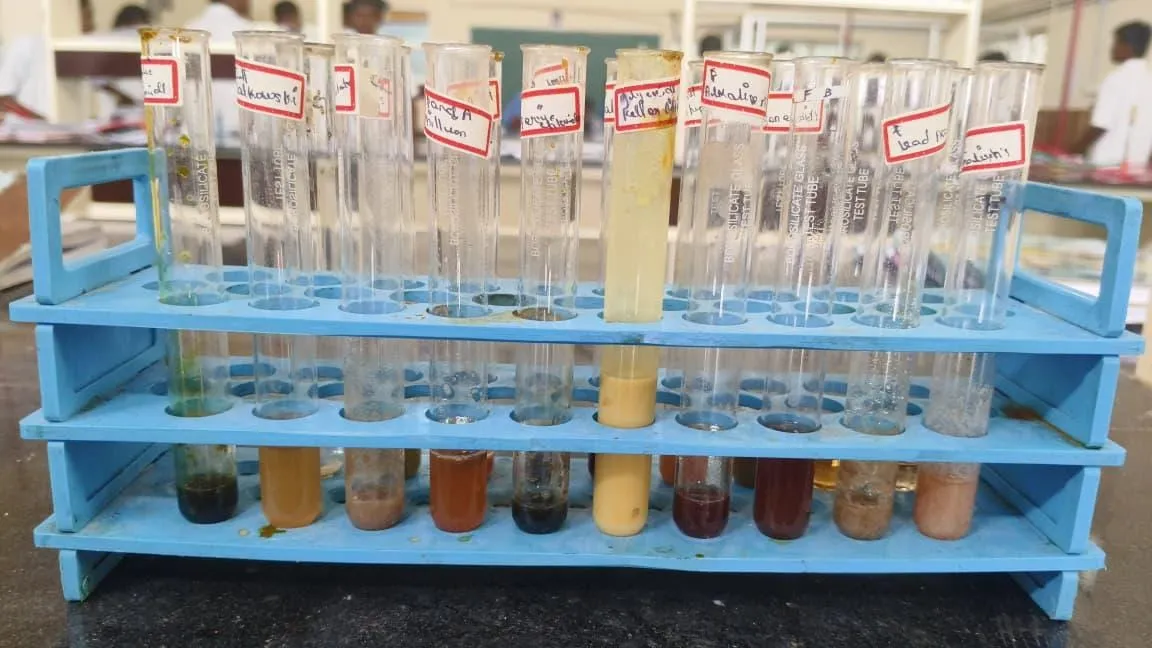
Fig.4: Test for Ethanol Extract
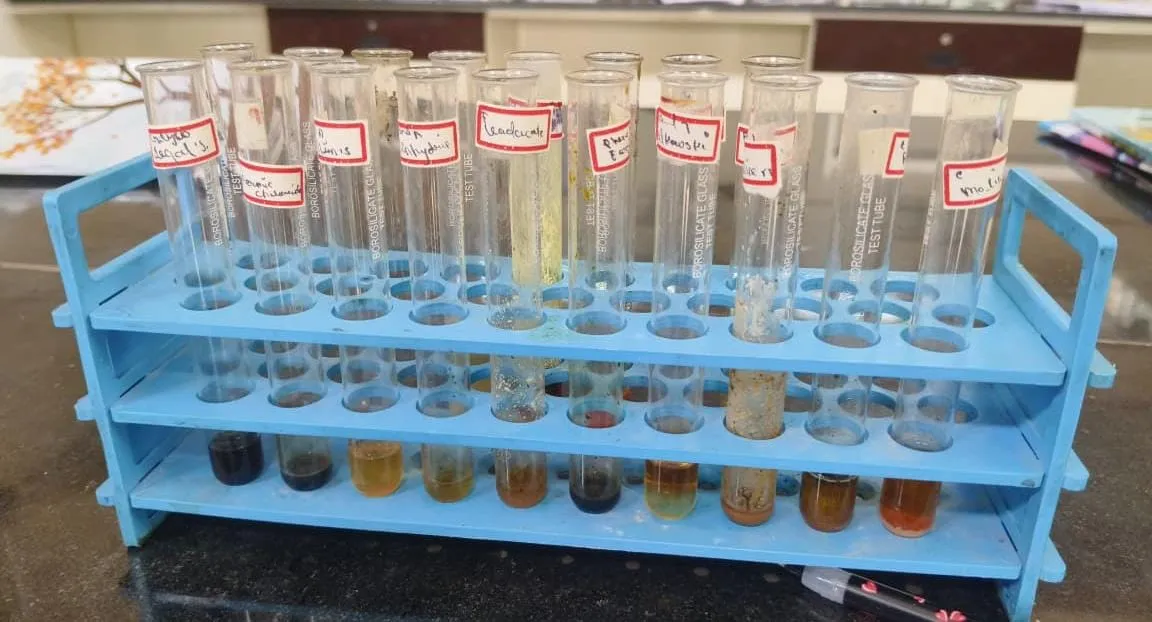
Fig.5: Test for Aqueous Extract
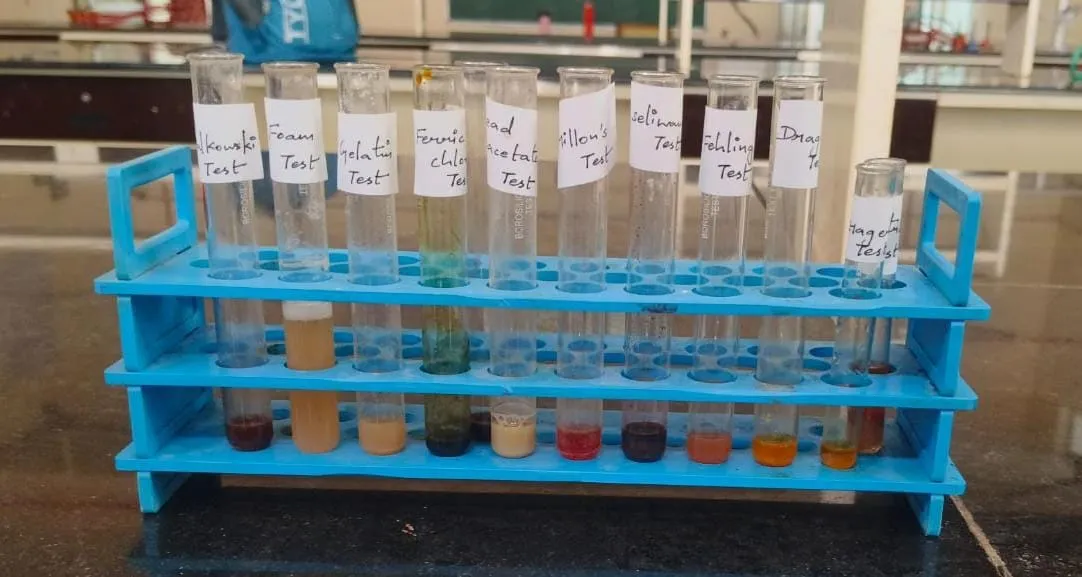
Fig.6: Test for n-Hexane Extract
Table 3: In vitro antifungal activity of various extracts against Candida albicans
|
Solvents |
Conc. of flowers extracts |
PC (50µL) Clotrimazole |
NC (50µL) (10%) DMSO |
||
|
Zone of inhibition in (mm) |
|||||
|
50µL |
100µL |
150µL |
|||
|
Ethanol |
10.00 ± 0.37ᵇ |
11.00 ± 0.42ᵇ |
12.00 ±0.58ᵇ |
16.00 ± 0.00ᵈ
|
0.00 ± 0.00ᵉ |
|
Aqueous |
9.00 ± 0.22ᵃ |
10.00 ±0.37ᵃ
|
11.00±0.45ᵃ |
||
|
n-Hexane |
6.00 ± 0.15ᶜ |
7.00 ± 0.24ᶜ |
8.00 ± 0.33ᶜ |
||
Values are expressed as Mean ± SEM (n = 3). Means followed by different superscript letters (a–e) within a column are significantly different according to Duncan's Multiple Range Test (DMRT) at p ≤ 0.05.
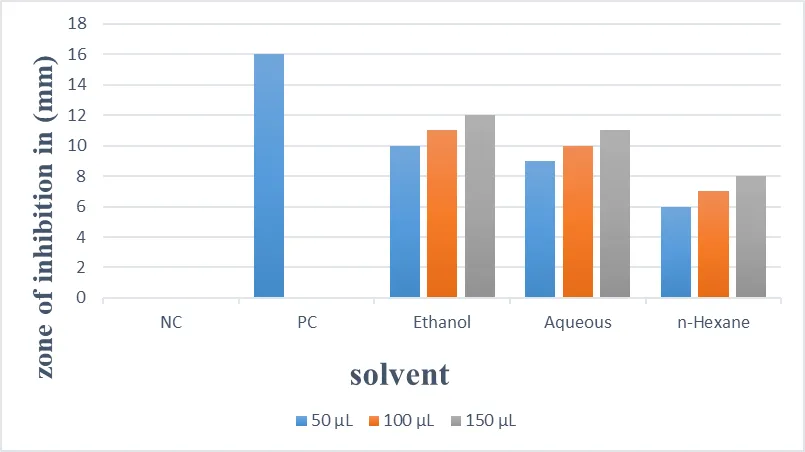
Fig.7: In-vitro Antifungal activity of various extracts against Candida albicans
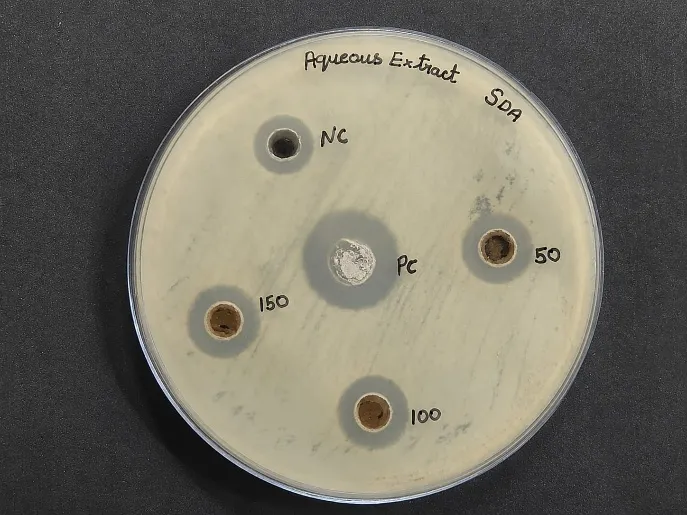
Fig.8: Activity of Aqueous Extract
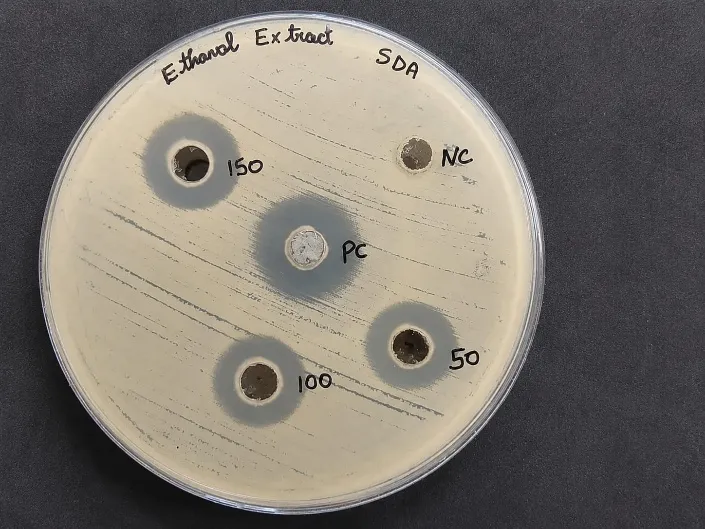
Fig.9: Activity of Ethanol Extract
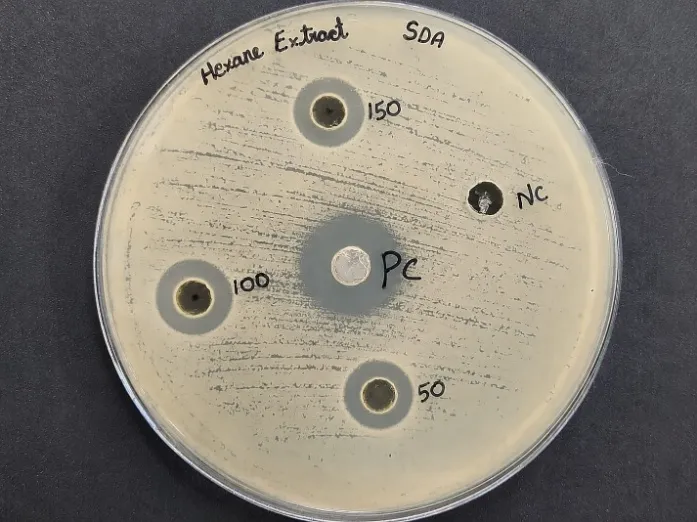
Fig.10: Activity of n-Hexane Extract
CONCLUSION:
The present study was carried out to evaluate the phytochemical constituents and antifungal activity of Annona squamosa L. flower extracts using ethanol, n-hexane, and aqueous solvents. The study of extractive value revealed that the Ethanolic extract produced the highest percentage yield (9.1%), followed by the aqueous extract (8.74%) and n-hexane extract (5.94%), indicating efficient extraction of phytoconstituents in ethanol.
Preliminary phytochemical screening confirmed the presence of important bioactive compounds, alkaloids, flavonoids, tannins, saponins, glycosides, phenols, terpenoids, and steroids, particularly in the ethanolic and aqueous extracts. glycosides, Tannins, Flavonoids, are absent in n-hexane extract, which showed least activity. These phytoconstituents are known to possess antifungal properties.
The antifungal activity against Candida albicans demonstrated that all extracts exhibited inhibitory effects, with activity increasing in a concentration-dependent manner. Among the tested extracts, the Ethanolic extract showed the maximum zone of inhibition 10.00 ± 0.37 mm, 11.00 ± 0.42 mm, and 12.00 ± 0.58 mm at 50 µL, 100 µL, and 150 µL, respectively, followed by the aqueous extract, while the n-hexane extract showed comparatively lower activity. However, the standard drug (Clotrimazole) showed the highest activity (16.00 ± 0.00 mm), confirming the validity of the assay.
REFERENCES


A.Sarala*, Dr.S.K.Senthil Kumar, S.Kootteeshwaran, R.Krishna Priya, R.Krishna Raj, M.Kumaravel, Phytochemical Screening And Assessment Of In-Vitro Antifungal Activity Of Annona Squamosa L. Flower Extracts, Int. J. of Pharm. Sci., 2026, Vol 4, Issue 8, 853-861. https://doi.org/10.5281/zenodo.21812356
 10.5281/zenodo.21812356