

We use cookies to ensure our website works properly and to personalise your experience. Cookies policy
1 Student of AKRG college of pharmacy, Nallajela, Andhra Pradesh, India
3 HOD, Department of Pharmacology, Sri Vasavi Institute of Pharmaceutical Sciences, Pedatadepalli, Andhra Pradesh, India.
2 Principal and HOD, Department of Pharmacology, AKRG College of Pharmacy, Nallajela, Andhra Pradesh, India
Peptic ulcer disease (PUD) is a major gastrointestinal disorder characterized by mucosal erosion resulting from an imbalance between aggressive factors, including gastric acid, pepsin, and reactive oxygen species, and protective mechanisms such as mucus secretion, bicarbonate production, and mucosal blood flow. Despite the availability of effective anti-ulcer drugs, their long-term use is associated with adverse effects and recurrence, highlighting the need for safer alternatives from natural sources. The present study evaluated the anti-ulcer potential of the ethanolic bark extract of Sapindus mukorossi (EBESM) using the pylorus ligation-induced gastric ulcer model in rats. Animals were pretreated with EBESM (200 and 500 mg/kg), while ranitidine (100 mg/kg) served as the standard drug. EBESM significantly reduced ulcer formation compared with the control group. The ulcer index decreased from 5.00 ± 0.27 in the control group to 2.25 ± 0.22, 2.50 ± 0.14, and 1.67 ± 0.28 following treatment with ranitidine, EBESM (200 mg/kg), and EBESM (500 mg/kg), respectively, corresponding to ulcer inhibition of 55.05%, 50.17%, and 65.99%. The higher dose of EBESM exhibited gastroprotective activity comparable to, or greater than, ranitidine. Statistical analysis (one-way ANOVA followed by Dunnett's test) confirmed significant protection against gastric ulceration (p < 0.05). The gastroprotective activity of EBESM may be attributed to its antioxidant, cytoprotective, anti-secretory, and mucosal-protective phytoconstituents, indicating its potential as a promising natural therapeutic agent for the management of peptic ulcer disease.
Peptic ulcer disease (PUD) is one of the most prevalent gastrointestinal disorders worldwide and remains a significant public health concern due to its high incidence, recurrence, and associated complications. It is characterized by the development of mucosal lesions in the stomach or proximal duodenum resulting from an imbalance between aggressive factors, including gastric acid, pepsin, reactive oxygen species (ROS), Helicobacter pylori infection, and nonsteroidal anti-inflammatory drugs (NSAIDs), and protective mechanisms such as mucus secretion, bicarbonate production, prostaglandin synthesis, adequate mucosal blood flow, and endogenous antioxidant defense systems [1]. If left untreated, peptic ulcers may progress to serious complications including gastrointestinal bleeding, perforation, penetration, and gastric outlet obstruction, thereby contributing substantially to morbidity, mortality, and healthcare expenditure worldwide [2].
Among the various etiological factors implicated in the pathogenesis of PUD, Helicobacter pylori infection is considered one of the principal causes of chronic gastritis, peptic ulcer disease, and gastric carcinoma. The bacterium survives within the highly acidic gastric environment primarily through the activity of the urease enzyme, which catalyzes the hydrolysis of urea into ammonia and carbon dioxide, thereby neutralizing gastric acid in its immediate surroundings and facilitating bacterial colonization of the gastric mucosa[3]. Persistent infection initiates chronic inflammation, oxidative stress, and disruption of the gastric mucosal barrier, ultimately leading to ulcer formation. Although current therapeutic strategies involving proton pump inhibitors (PPIs) in combination with antibiotics have considerably improved ulcer healing and H. pylori eradication rates, their prolonged use is associated with several drawbacks, including increasing antibiotic resistance, adverse drug reactions, recurrence following treatment, high treatment costs, and complications associated with long-term acid suppression[4]. These limitations have stimulated the search for safer, cost-effective, and naturally derived gastroprotective agents with multiple mechanisms of action.
Medicinal plants have long been recognized as an important source of therapeutic agents for the prevention and treatment of gastrointestinal disorders. Numerous plant-derived phytochemicals exhibit antioxidant, anti-inflammatory, cytoprotective, antimicrobial, antisecretory, and urease inhibitory activities, thereby providing comprehensive protection against gastric mucosal injury[5,6]. Antioxidants play a particularly important role in preventing gastric ulceration by scavenging free radicals, reducing lipid peroxidation, preserving endogenous antioxidant enzymes, and enhancing mucosal defense mechanisms. Phytoconstituents such as flavonoids, phenolic compounds, tannins, triterpenoids, phytosterols, and saponins have been extensively reported to exert significant antiulcer activity through modulation of oxidative stress, inflammation, gastric acid secretion, and mucus production.
Sapindus mukorossi Gaertn. (family: Sapindaceae), commonly known as the soapnut tree, is an important medicinal plant extensively used in Ayurvedic and traditional medicine for the treatment of various ailments. The stem bark has traditionally been employed as an expectorant, demulcent, and mild purgative, while phytochemical investigations have demonstrated that it is a rich source of triterpenoid saponins, phenolic compounds, flavonoids, and oleanolic acid glycosides. These bioactive constituents have been reported to possess diverse pharmacological properties, including antioxidant, anti-inflammatory, antimicrobial, and cytoprotective activities, making the plant a promising candidate for the management of gastric disorders.
Among the major bioactive constituents, Sapindoside A, a triterpenoid saponin isolated from S. mukorossi, has attracted considerable attention because of its potent gastroprotective potential. Previous studies have demonstrated that Sapindoside A possesses antibacterial activity against Helicobacter pylori, thereby targeting one of the major etiological factors responsible for peptic ulcer disease [7] In addition to its antibacterial activity, Sapindoside A exhibits significant cytoprotective properties by enhancing gastric mucus secretion and strengthening the mucosal barrier, thereby protecting the gastric epithelium from acid, pepsin, ethanol, NSAIDs, and other ulcerogenic agents[8]. Furthermore, triterpenoid saponins have been reported to suppress excessive gastric acid secretion, reduce gastric acidity, and promote ulcer healing through their antisecretory effects[9,10]. These compounds also exhibit potent antioxidant activity by scavenging reactive oxygen species and minimizing oxidative damage to gastric tissues[11].
In addition to Sapindoside A, the bark of S. mukorossi contains oleanolic acid glycosides, which have been widely reported to possess remarkable gastroprotective properties. Oleanolic acid derivatives protect the gastric mucosa through multiple mechanisms, including inhibition of gastric acid secretion, scavenging of reactive oxygen species, enhancement of prostaglandin E₂ synthesis, suppression of gastric lesion formation, and modulation of inflammatory signaling pathways such as nuclear factor-kappa B (NF-κB)[11,12,13]. These pharmacological effects collectively contribute to the preservation of gastric mucosal integrity, reduction of oxidative stress, and acceleration of ulcer healing.
flavonoids, and phenolic compounds suggests that Sapindus mukorossi bark possesses significant therapeutic potential against peptic ulcer disease through multiple complementary mechanisms, including antibacterial activity against H. pylori, antioxidant and anti-inflammatory effects, enhancement of mucosal defense, and suppression of gastric acid secretion. Despite these promising pharmacological attributes, comprehensive experimental evidence supporting the antiulcer efficacy of the ethanolic bark extract of S. mukorossi remains limited. Therefore, the present study was undertaken to evaluate the antiulcer activity of the ethanolic bark extract of Sapindus mukorossi using the pylorus ligation-induced gastric ulcer model in Wistar albino rats, to scientifically validate its traditional use and explore its potential as a safe and effective natural gastroprotective agent.
The EBESM was used as the test sample. Ranitidine was employed as the reference antiulcer drug, while normal saline served as the vehicle for treatment administration. Anaesthetic ether was used during the surgical procedure. The reagents used for the estimation of gastric acidity included phenolphthalein indicator, Topfer's reagent, and 0.1 N sodium hydroxide. The experimental study was carried out using standard surgical instruments for pylorus ligation, a digital pH meter to determine gastric pH, and a light microscope to assess gastric mucosal lesions.
Adult healthy Wistar albino rats were procured from Acharya VYAS Labs, Hyderabad, and the experimental protocol was approved by the Institutional Animal Ethics Committee (IAEC No. AKRGCP/IAEC/2025-7). Animals of either sex with uniform body weight (variation <20% of the mean) were acclimatized to laboratory conditions before experimentation and randomly assigned to treatment groups. They were housed in stainless-steel cages under standard conditions (22 ± 2°C, 50 ± 20% relative humidity, 12 h light/dark cycle) with free access to standard pellet diet and filtered water ad libitum[12].
Sapindus mukorossi Bark was collected from a local area in Nalljerla, West Godavari District, Andhra Pradesh, India, during October 2025. The bark was cleaned, shade-dried in a clean and dust-free environment, powdered, and stored in an airtight container until further use. The bark was authenticated by Dr M. Madhavi, Botanist, Dr Y.S.R. Horticultural University, Venkata Ramannagudem, West Godavari District, Andhra Pradesh, India.
1.4 Preparation of the bark extract of Sapindus mukorossi
The bark was dried in the shade for 10 days, then cut to produce a fine powder. The powder was then used to prepare the extract. 250 gms of the bark powder was taken into the Soxhlet apparatus and Soxhlet-extracted with ethanol for about 6 cycles, and then evaporated to get the ethanolic extract of bark[13][14]. The percentage yield of the extract is presented in Table 2. As the bark extract of Sapindus mukorossi is water-soluble, the drug solutions are prepared by dissolving the extract in distilled water.
An acute oral toxicity study of the ethanolic bark extract of Sapindus mukorossi (EBESM) was carried out in accordance with the Organisation for Economic Co-operation and Development (OECD) Guideline 420 (Fixed Dose Procedure) to determine its safety profile and select suitable doses for pharmacological evaluation. Healthy Swiss albino mice (8–12 weeks old, 17–19 g) of either sex were acclimatised to laboratory conditions for five days and maintained under standard environmental conditions (22 ± 3°C, 12 h light/dark cycle) with free access to food and water. The extract was administered orally at fixed doses of 50, 300, and 2000 mg/kg body weight, following the OECD 420 protocol[15]. Animals were continuously observed for the first 4 h after dosing and periodically for 24 h for signs of toxicity, behavioural changes, autonomic disturbances, and mortality. Further observations were made daily for 14 days to detect any delayed toxic effects.
Pylorus ligation is a well-established experimental model used to evaluate the antiulcer and antisecretory potential of test compounds. Ligation of the pyloric end of the stomach results in the accumulation of gastric secretions, leading to increased gastric acidity, autodigestion of the gastric mucosa, and subsequent ulcer formation. Peptic ulcer disease is characterized by lesions in the gastrointestinal mucosa exposed to gastric acid and pepsin, and its development is associated with factors such as excessive acid secretion, stress, nonsteroidal anti-inflammatory drugs (NSAIDs), and Helicobacter pylori infection [19].
Healthy Wistar albino rats (150–180 g) were randomly divided into four groups (n = 5). Group I served as the control and received normal saline (1 mL/kg, p.o.); Group II received ranitidine (20 mg/kg, p.o.) as the standard drug; and Groups III and IV received EBESM at doses of 200 and 400 mg/kg, respectively. Animals were fasted for 24 h prior to the experiment with free access to water [16]. Thirty minutes after oral administration of the respective treatments, pylorus ligation was performed under light ether anaesthesia through a small midline abdominal incision. The pyloric end of the stomach was carefully ligated without disturbing the blood supply, and the incision was closed using sutures [17].
Following surgery, animals were housed individually without access to food and water. Four hours after pylorus ligation, the animals were euthanized, and the stomachs were excised and opened along the greater curvature. Gastric contents were collected for the determination of gastric volume, pH, free acidity, and total acidity. The gastric mucosa was then rinsed with normal saline and examined for ulcerative lesions under 10× magnification. The severity of gastric damage was assessed using a standard ulcer scoring system, and the ulcer index was calculated according to the method described by Pandey and Ghildiyal (2026).
Ulcer severity was graded as follows: normal stomach (0), red colouration (0.5), spot ulcer (1), hemorrhagic streaks (1.5), deep ulcer (2), and perforation (3). The ulcer index (UI) was calculated using the formula:
UI = (U₁ + U₂ + U₃) × 10⁻¹
where U₁ represents the average number of ulcers per animal, U₂ the average severity score, and U₃ the percentage of animals exhibiting ulcers.
Following the sacrifice of the animals, the stomachs were excised, and the gastric contents were collected into graduated centrifuge tubes. The gastric juice was centrifuged at 3,000 rpm for 10 minutes to remove debris. The supernatant was separated and used to determine pH, free acidity, and total acidity [18].
The pH of the gastric juice was measured directly using a calibrated digital pH meter and recorded for each animal [19,20].
An aliquot (1 mL) of gastric juice was diluted with 9 mL of distilled water. Two to three drops of Topfer's reagent were added as an indicator. The solution was titrated against 0.01 N sodium hydroxide (NaOH) until the red colour changed to yellowish-orange. The volume of NaOH consumed was recorded and used to calculate free acidity[21].
To the same solution used for free acidity determination, two to three drops of phenolphthalein indicator were added, and titration was continued with 0.01 N NaOH until a permanent pale pink colour appeared. The total volume of NaOH consumed was recorded and used to calculate total acidity as follows.
Free Acidity (mEq/L) = (Volume of NaOH for free acidity × Normality of NaOH × 1000) / Volume of gastric juice used
Total Acidity (mEq/L) = (Total volume of NaOH consumed × Normality of NaOH × 1000) / Volume of gastric juice used[22].
The results were expressed as mEq/L of gastric juice.
The anti-ulcer activity of the EBEMS is determined by comparing the ulcer index of the treated groups with that of the control group. A reduction in ulcer index, gastric volume, free acidity, and total acidity indicates anti-ulcer and antisecretory activity. An increase in gastric pH suggests acid-neutralising potential[23].
The results were expressed as mean ± standard error of the mean (SEM). Statistical analysis was performed using GraphPad Prism version 8.0. Data were analysed using one-way analysis of variance (ANOVA) followed by Dunnett's multiple-comparison post hoc test to determine differences between the treatment groups and the control group. The data are presented in tabular form, and differences were considered statistically significant at p < 0. 05..
Following extraction, the filtrate was decanted and concentrated to obtain the EBESM. The prepared extract was subjected to a preliminary physicochemical evaluation, including determination of the percentage yield and assessment of its physical characteristics, such as consistency and colour. The results obtained are presented below:
Table 1: Percentage yield of AESCM
|
S.NO |
Extracts |
Color |
Consistency |
Yield |
|
|
EBESM |
Dark brown |
Solid sticky |
18.25% |
The preliminary phytochemical screening of the ethanolic bark extract of Sapindus mukorossi (EBESM) revealed the presence of various bioactive phytoconstituents, and the results are summarized in Table 2.
Table 2: Results of phytochemical screening
|
Test conducted |
EBESM |
|
|
Alkaloids |
Mayer’s test |
+ |
|
Wagner’s test |
+ |
|
|
Tannin by 1% lead acetate |
+ |
|
|
Tannin by the FeCl3 and KOH method |
+ |
|
|
Protein |
- |
|
|
Flavonoid |
+ |
|
|
Phenol |
+ |
|
|
Steroid |
+ |
|
|
Saponin |
+ |
|
|
Glycoside |
+ |
|
|
Carbohydrate |
Benedict’s test |
- |
|
Fehling’s test |
- |
|
|
Amino acid |
+ |
|
Note: + means Presence, - Denote absence
No mortality or treatment-related signs of toxicity were observed up to the limit dose of 2000 mg/kg body weight, indicating that the EBESM possesses a wide margin of safety. Based on the acute toxicity findings and considering the pharmacological dose-selection criteria, 200 mg/kg and 400 mg/kg body weight were selected as the test doses for subsequent experimental studies.
The effects of ranitidine and EBESM on gastric secretory parameters, ulcer index, percentage protection, and gastric pH following single-dose pretreatment in pylorus ligation-induced gastric ulcers are presented in Table 3.
Table 3: Effect of Ranitidine and EBESM on Mean values of various parameters by single-dose pretreatment in Pylorus ligation-induced ulcer
|
Groups |
Vol. of gastric secretion |
pH |
Total acidity |
Ulcer score |
% â in US |
Ulcer index |
% Inhibition of UI |
|
Control |
4.89±0.13 |
2.96±0.23 |
86.33±2.85 |
5.67±0.15 |
5.00±0.27 |
- |
|
|
Ranitidine 100 mg/Kg |
3.15±0.17# |
5.61±0.16# |
43.67±2.93# |
2.17±0.29# |
60.79 |
2.25±0.22# |
55.05 |
|
EBESM 200 mg/Kg |
2.84±0.25* |
4.92±0.16* |
41.33±1.26* |
2.50±0.42* |
55.63 |
2.50±0.14* |
50.17 |
|
EBESM 400 mg/Kg |
1.45±0.21* |
5.72±0.15* |
31.83±2.16* |
2.00±0.44* |
64.96 |
.67±0.28* |
65.99 |
All values are expressed as Mean ± SEM (n = 6). Statistical analysis was performed using one-way ANOVA followed by Dunnett's multiple comparison test. Differences were considered statistically significant at p < 0.05. # p < 0.05 compared with the control group. * p < 0.05 compared with the standard drug (Ranitidine) group.
EBESM demonstrated significant dose-dependent gastroprotective activity against pylorus ligation-induced gastric ulcers, as evidenced by reduced gastric secretion, increased gastric pH, and decreased ulcer severity. Treatment with EBESM significantly lowered gastric volume from 4.89 ± 0.13 mL in the control group to 2.84 ± 0.25 mL and 1.45 ± 0.21 mL at doses of 200 and 400 mg/kg, respectively, indicating a marked antisecretory effect. Similarly, EBESM significantly elevated gastric pH from 2.96 ± 0.23 in the control group to 4.92 ± 0.16 and 5.72 ± 0.15 at 200 and 400 mg/kg, respectively, comparable to the effect of ranitidine (5.61 ± 0.16).
Furthermore, EBESM significantly reduced ulcer score and ulcer index in a dose-dependent manner. Ulcer scores decreased from 5.67 ± 0.15 in the control group to 2.50 ± 0.42 and 2.00 ± 0.44 following treatment with 200 and 500 mg/kg of EBESM, corresponding to 55.63% and 64.96% protection, respectively. The higher dose exhibited gastroprotective efficacy comparable to that of ranitidine. These findings suggest that EBESM possesses potent antiulcer activity, likely mediated by antisecretory and cytoprotective mechanisms, which may be attributed to its phytoconstituents, including flavonoids and phenolic compounds with known antioxidant and mucosal-protective properties.
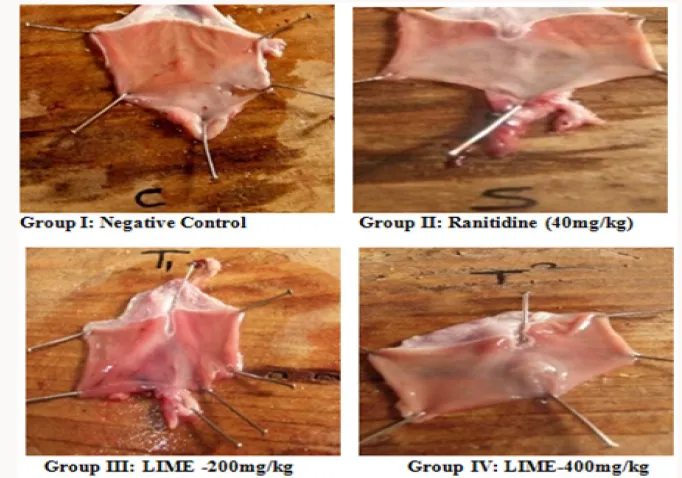
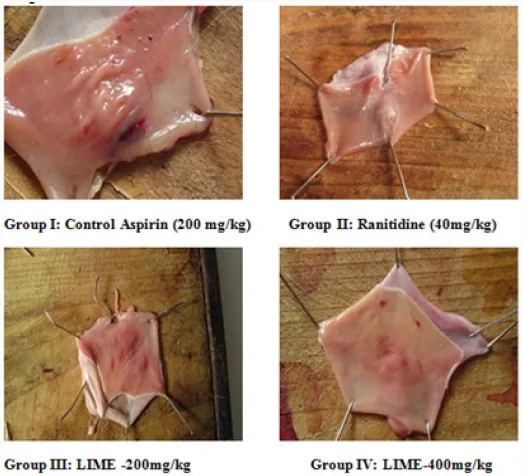
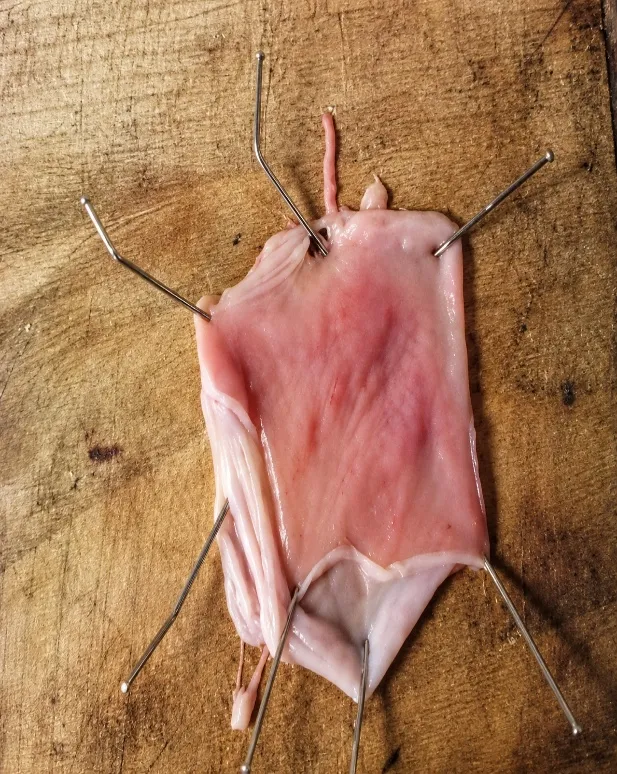
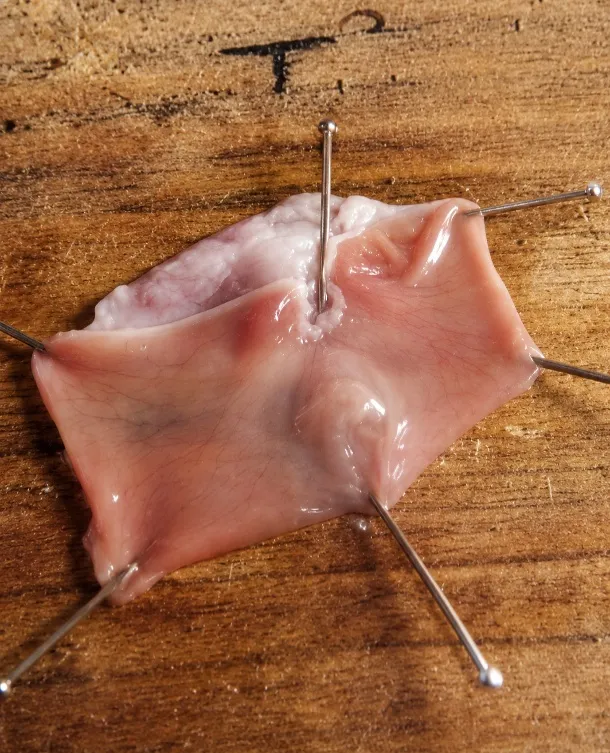
Representative photographs illustrating the extent of gastric ulceration in pylorus-ligated rats treated with ranitidine and ethanolic bark extract of Sapindus mukorossi (EBESM) are shown in Figure 1.
|
|
|
|
Control |
Ranitidine 100 mg/Kg |
|
|
|
|
EBESM 200 mg/Kg |
EBESM 400 mg/Kg |
Figure 1: Effect of EBESM on the pylorus ligation-induced ulcer model in rats.
In Group I (negative control), extensive ulcerative lesions characterized by prominent hemorrhagic streaks, dark reddish patches, and severe gastric mucosal damage were observed. Group II (ranitidine-treated) exhibited a marked reduction in gastric lesions, with only mild hemorrhagic streaks and limited mucosal injury, indicating significant gastroprotection. Treatment with EBESM at 200 mg/kg in Group III resulted in a noticeable decrease in the severity and extent of ulcerative lesions compared with the control group. Furthermore, Group IV, treated with EBESM at 400 mg/kg, showed a greater protective effect, with minimal hemorrhagic lesions and near-normal gastric mucosal architecture, demonstrating dose-dependent antiulcer activity.
Summary
Peptic ulcer disease develops due to an imbalance between aggressive factors, including gastric acid, pepsin, oxidative stress, and inflammatory mediators, and the gastric mucosa's defensive mechanisms. Pylorus ligation is a well-established experimental model that induces gastric ulceration by accumulating gastric secretions, increasing acidity, and promoting autodigestion of the gastric mucosa[24]. Therefore, agents capable of reducing gastric secretion, neutralising acidity, and strengthening mucosal defences are considered effective antiulcer therapies.
In the present study, the ethanolic bark extract of Sapindus mukorossi (EBESM) demonstrated significant gastroprotective activity against pylorus ligation-induced gastric ulcers in rats. Pretreatment with EBESM produced a dose-dependent reduction in gastric volume, ulcer score, and ulcer index, while significantly increasing gastric pH. Gross examination of the gastric mucosa further revealed a marked attenuation of hemorrhagic lesions and mucosal damage in extract-treated animals, particularly at the higher dose, indicating substantial protection against ulcer formation.
The observed reduction in gastric volume and acidity suggests that EBESM possesses antisecretory properties. These findings are consistent with previous reports indicating that saponins from Sapindus mukorossi, particularly Sapindoside A, can suppress excessive gastric acid secretion and reduce total gastric acidity. By limiting the exposure of the gastric mucosa to corrosive acidic secretions, the extract may create a favourable environment for mucosal protection and ulcer healing[25].
Another important observation was the significant reduction in ulcer severity and mucosal lesions following EBESM treatment. This protective effect may be attributed to the cytoprotective actions of the phytoconstituents present in the bark extract. Saponins are known to stimulate mucus production and enhance the integrity of the gastric mucosal barrier, thereby protecting the underlying tissues from acid- and pepsin-mediated injury. The near-normal appearance of the gastric mucosa observed at the higher dose supports the involvement of such mucosal defensive mechanisms.
The gastroprotective activity observed with EBESM may be attributed to its bioactive phytoconstituents, particularly saponins, flavonoids, and phenolic compounds. Previous studies have demonstrated that saponins from Sapindus mukorossi possess cytoprotective properties by enhancing mucus secretion and strengthening the gastric mucosal barrier, thereby protecting the stomach lining against gastric acid, digestive enzymes, and ulcerogenic agents. In addition, saponins exhibit antisecretory activity by reducing gastric acid secretion and lowering gastric acidity, which helps maintain a favorable environment for mucosal protection and ulcer healing. Oxidative stress is a major contributor to gastric mucosal injury, and Sapindus mukorossi has been reported to possess significant free radical-scavenging activity due to its rich antioxidant phytochemical content. These antioxidant constituents may protect gastric epithelial cells from oxidative damage and lipid peroxidation, thereby contributing to the extract's overall antiulcer effect. The present findings are consistent with these reported mechanisms and support the potential gastroprotective role of EBESM.
Overall, the antiulcer activity of EBESM appears to be mediated through multiple complementary mechanisms, including suppression of gastric secretion, reduction of gastric acidity, enhancement of mucosal defence, and antioxidant protection. The findings of the present study provide experimental evidence supporting the traditional use of Sapindus mukorossi and suggest that its bark extract possesses significant gastroprotective potential against gastric ulceration.
CONCLUSION
The present study demonstrated that the ethanolic bark extract of Sapindus mukorossi (EBESM) possesses significant antiulcer activity against pylorus ligation-induced gastric ulcers in Wistar albino rats. Pretreatment with EBESM produced a dose-dependent reduction in gastric volume, ulcer score, and ulcer index, along with an increase in gastric pH and marked improvement in gastric mucosal architecture. The gastroprotective effect observed at the higher dose was comparable to that of the standard drug ranitidine. The antiulcer activity of EBESM may be attributed to its antisecretory, cytoprotective, and antioxidant properties, which are likely mediated by bioactive phytoconstituents, including saponins, flavonoids, and phenolic compounds. These findings provide scientific evidence supporting the traditional use of Sapindus mukorossi in the management of gastric ulcer disorders and suggest its potential as a natural gastroprotective agent.
Conflict of Interest declaration: The authors declare that they have no affiliations with or involvement in any organization or entity with any financial interest in the subject matter or materials discussed in this manuscript.
Author Contributions: MS and NS contributed to the design and implementation of the research, and NK contributed to the analysis of the results and to the writing of the manuscript. NS conceived the original idea and supervised the project.
REFERENCES



Nakka Satish, Srinivasu Matta*, Saikrishna Nallajerla, Assessment Of The Antiulcer Potential Of Ethanolic Bark Extract Of Sapindus Mukorossi In A Pylorus Ligation-Induced Gastric Ulcer Model In Wistar Albino Rats, Int. J. of Pharm. Sci., 2026, Vol 4, Issue 8, 908-919. https://doi.org/10.5281/zenodo.21813011
 10.5281/zenodo.21813011