

We use cookies to ensure our website works properly and to personalise your experience. Cookies policy
1B. Pharm, Dr. R. G. Bhoyar Institute of Pharmaceutical Education & Research, Wardha, Maharashtra
2Assistant Professor, Dr. R. G. Bhoyar Institute of Pharmaceutical Education & Research, Wardha, Maharashtra
3Principal, Dr. R. G. Bhoyar Institute of Pharmaceutical Education & Research, Wardha, Maharashtra
The document discusses advancements in the cosmetic and dermatological industry, particularly focusing on the development of a dual-phase face serum that effectively combines unstable active ingredients while maintaining stability. The formulation addresses skin concerns through lightweight serums, enabling the use of mutually incompatible actives. Key plant-derived ingredients like Centella Asiatica, Liquorice, and Aloe Vera are highlighted for their beneficial properties. The study outlines objectives for evaluating the physicochemical properties and safety of the serum, detailing the methodology for ingredient extraction and formulation. Preliminary tests confirm the presence of beneficial phytochemicals, while evaluations demonstrate the serum's stability, safety, and consumer acceptability. Overall, the serum offers enhanced skin benefits with minimal preservatives, emphasizing its potential as a natural skincare alternative.
The global cosmetic and dermatological industry has undergone a paradigm shift toward scientifically advanced, result-oriented skincare formulations. Consumers today are more informed and demand products that not only enhance appearance but also provide therapeutic benefits for various skin concerns such as aging, hyperpigmentation, dehydration, and environmental damage. Among topical cosmetic products, face serums have emerged as a preferred choice due to their lightweight consistency, rapid absorption, and high concentration of bioactive ingredients.12 Face serums are typically aqueous or hydro alcoholic formulations enriched with active compounds such as vitamins, antioxidants, botanical extracts, peptides, and humectants. Their low molecular weight and optimized formulation allow deeper penetration into the epidermal layers, making them more effective than traditional creams or lotions. However, one of the major challenges in serum formulation is the instability and incompatibility of certain active ingredients when combined in a single formulation. For example, compounds like Vitamin C (ascorbic acid) are highly unstable and prone to oxidation, while others may degrade or lose efficacy due to pH incompatibility or interaction with other ingredients.11 To overcome these limitations, the concept of a double-shot face serum has been introduced as an innovative and technologically advanced solution. A double-shot serum system consists of two distinct phases, typically housed in separate compartments, which are combined at the time of application. This dual-delivery approach enables the incorporation of incompatible or unstable actives in a single product without compromising their stability or efficacy. It also allows for customization and targeted treatment by delivering synergistic combinations of ingredients that work together to enhance skin health.14 The design and formulation of a double-shot face serum involve a multidisciplinary approach that integrates principles of pharmaceutics, cosmetic science, and dermatology. Each phase must be individually optimized for parameters such as solubility, pH, viscosity, and stability. The formulation may include water-based (hydrophilic) and oil-based (lipophilic) components, necessitating the use of suitable emulsifying agents, stabilizers, preservatives, and penetration enhancers. Additionally, advanced delivery systems such as nano-emulsions, liposomes, or microencapsulation techniques may be employed to improve the bioavailability and controlled release of active ingredients.13 Another critical aspect of formulation is ensuring the aesthetic and sensory properties of the serum, including texture, Spreadability, absorption rate, and non-greasy feel, which significantly influence consumer acceptance. The compatibility of packaging materials, particularly dual-chamber containers or airless pump systems, is also essential to maintain product integrity and prevent contamination or degradation. Following formulation, comprehensive evaluation of the double-shot face serum is necessary to ensure its quality, safety, and effectiveness. Physicochemical parameters such as color, odor, homogeneity, pH, viscosity, and phase separation are assessed to determine product consistency and stability. Stability studies under various environmental conditions (temperature, humidity, and light exposure) are conducted to predict shelf life and storage requirements. Microbiological evaluation is performed to ensure the absence of harmful microbial contamination and to verify the effectiveness of preservatives. In addition, skin compatibility tests such as patch testing are carried out to assess irritation or sensitization potential. Advanced evaluation techniques may include in vitro diffusion studies to analyze permeation of active ingredients through the skin, as well as in vivo studies to evaluate parameters like hydration, elasticity, wrinkle reduction, and overall skin improvement.15 The development of a double-shot face serum thus represents a significant advancement in cosmetic formulation technology, offering enhanced stability, efficacy, and user experience. This study aims to formulate a novel dual-phase serum and systematically evaluate its physicochemical properties, stability, and performance characteristics. The findings are expected to contribute to the growing field of innovative skincare products and provide a scientific basis for the development of next-generation cosmetic formulations.
The Rationale for Dual-Phase Formulation
The primary objective of a double shot serum is to overcome the "Formulator’s Dilemma": the fact that many of the most effective skincare actives are mutually incompatible.14
Chemical Stability: Certain antioxidants, like Vitamin C (L-Ascorbic Acid), are highly prone to oxidation in the presence of water, while other actives like Retinol or Ceramides require an anhydrous (water-free) environment to remain potent.
Biomimicry: The human skin barrier is a complex hydrolipidic film. By providing both oil and water simultaneously, the serum mimics the skin's natural composition, facilitating superior absorption and biocompatibility compared to purely oil-based or water-based products.
Preservative Minimization: Separating the phases can sometimes allow for a more targeted preservation strategy, reducing the overall "chemical load" on the skin and lowering the risk of irritation for sensitive users.
Advantages:
Intense Brightening & Anti-Pigmentation: The formula targets dullness and dark spots, with studies indicating a 40% reduction in melanin production to improve overall skin tone.10
Dual-Phase Hydration and Nourishment: The collagen oil complex (containing rosehip oil and bakuchiol) pairs with the brightening water complex to deliver deep hydration and a "plumped" look without feeling overly greasy.
Improved Skin Firmness: It works to boost collagen, reducing the appearance of fine lines and wrinkles for a smoother texture.10
Lightweight & Fast-Absorbing: Despite being a dual-phase (oil/water) formula, it absorbs quickly and is suitable for all skin types, including sensitive skin.12
Easy Application: Designed to be shaken and applied twice daily (day and night) to work effectively alongside a regular, simple skincare routine.14
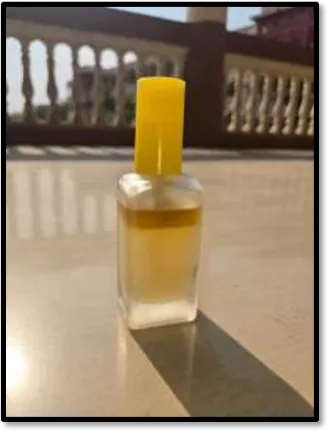
Fig No.1: Double Shot Face Serum
1. Centella Asiatica:
Botanical features:
Kingdom: Plantae
Family: Apiaceae
Botanical name: Centella asiatica (L.) Urban
Common names: Indian Pennywort, Asiatic Pennywort, Brahmi
Chemical constituent:
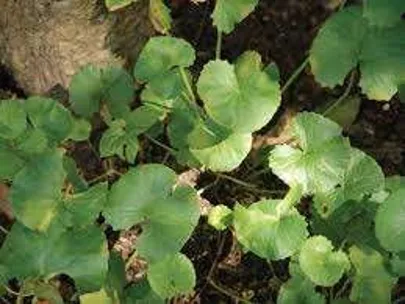
Figure No.2: Centella asiatica
2) LIQUORICE:
Botanical features:
Kingdom: Plantae
Family: Fabaceae
Botanical name: Glycyrrhiza glabra
Common names: Liquorice, Sweetwood
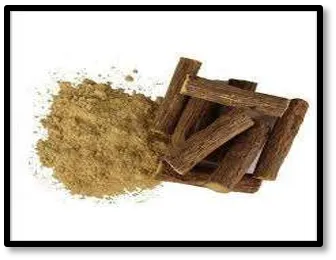
Figure No.3: Glycyrrhiza glabra
Uses:
3) ALOE VERA:
Kingdom: Plantae
Family: Asphodelaceae
Botanical name: Aloe vera (L.) Burn.
Common Name: True Aloe, Burn Plant, and First Aid Plant
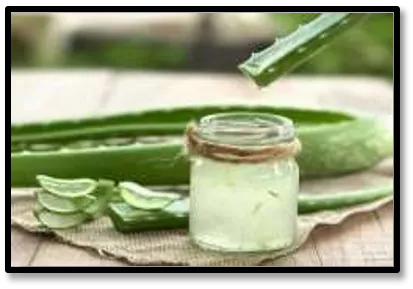
Figure No.4: Aloe Vera
Uses:
4) ALMOND OIL:
Kingdom: Plantae
Family: Rosaceae
Botanical name: Prunus amygdalus dulcis
Common Name: Sweet Almond Oil.
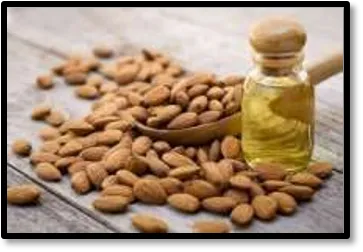
Figure No.5: Almond oil
Uses:
5) PSORALEA CORYLIFOLIA:
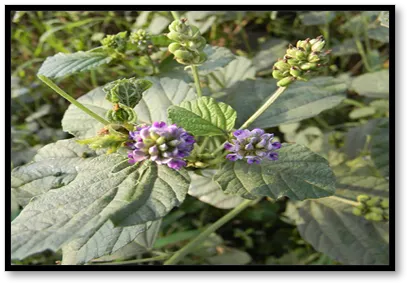
Figure No.5: Almond oil
Kingdom: Plantae
Family: Fabaceae
Botanical name: Psoralea corylifolia L.
Common Name: Babchi, Bakuchi, Bavanchi, Bavanchalu, and Karkokil.
Uses:
6) COCONUT OIL:
Coconut oil is a natural, rich moisturizing oil that helps keep the skin soft, smooth, and hydrated by locking in moisture. It works best for dry or normal skin, but can feel heavy and may clog pores if you have oily or acne-prone skin.
Uses:
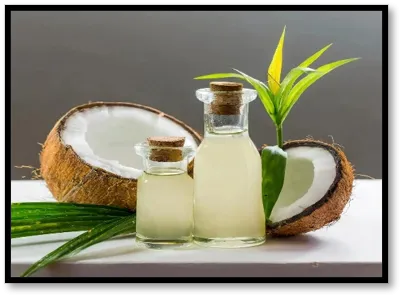
Figure No.7: Coconut oil
7) ROSE WATER:
Rose water is a lightweight, water-based ingredient that helps hydrate, calm, and balance the skin without feeling heavy or greasy. It contains small amounts of natural plant compounds (like flavonoids and antioxidants) that support overall skin health.
Uses:
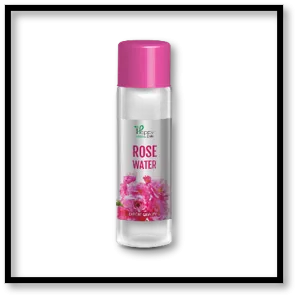
Figure No.8: Rose water
8) VITAMIN E CAPSULE:
Vitamin E from capsules is a thick, golden oil known for its antioxidant and skin-repairing properties. When applied to the skin, it helps protect against damage, supports healing, and improves moisture retention.
Uses:
1) Reduce hyperpigmentation
2) Act as an antioxidant
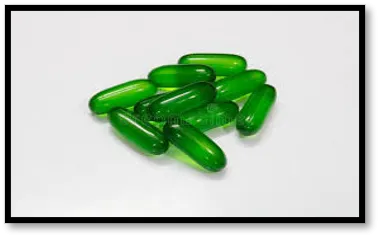
Figure No.9: Vitamoin E capsule
9) GLYCERIN:
Glycerin (Glycerol) is a hydrating ingredient in face serums that pulls moisture into the skin, leaving it soft, smooth, and plump.
Uses:
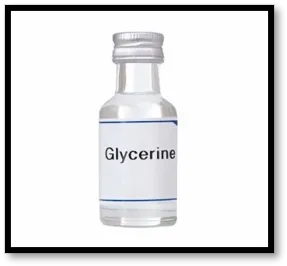
Figure No.10: Glycerine
Sodium benzoate is a white, odourless crystalline powder that dissolves easily in water. In skincare products, it is mainly used to extend shelf life by protecting formulations from bacteria, yeast, and mold—especially in water-based products like toners, serums, and lotions.
Uses:
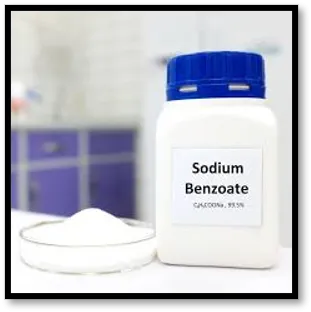
Figure No.11: Sodium Benzoate
Apparatus: Beaker, Mortar pestle, Spatula, Stirrer, Measuring cylinder, Conical flask, Iodine flask, Water bath, Funnel, Petri plate.
Chemicals: Sodium benzoate, Vit. E, Rose water.
Instrument: Weighing balance, pH meter, Mixer, Magnetic Stirrer, Incubator, Autoclave, Hot air oven, Soxhlet apparatus.
Formula:
Table No.1: Quantity of ingredients used in double shot face serum
|
Sr. No. |
Ingredients |
Quantity |
Properties |
|
1 |
Cantella Extract |
8ml |
Boosting collagen production |
|
2 |
Liquorice Extract |
5ml |
Antihyperpigmentating agent |
|
3 |
Alovera Extract |
5ml |
Moisturizer |
|
4 |
Bakuchiol |
2.4ml |
Boosting collagen |
|
5 |
Almond oil |
5ml |
Nourishing agent |
|
6 |
Coconut oil |
5ml |
Anti-inflammatory agent |
|
7 |
Vitamin E Capsule |
1.8ml |
Antioxidant |
|
8 |
Glycerin |
10ml |
Humectant |
|
9 |
Sodium Benzoate |
0.5g |
Preservative |
|
10 |
Rose Water |
q.s. |
Vehicle |
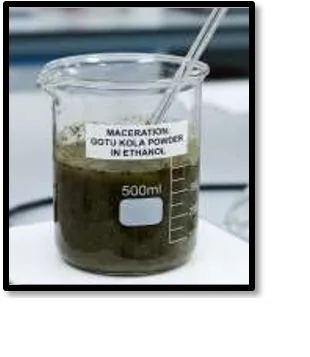
The dried powder of Cantella asiatica are weighed accurately

The powder are soaked in the 95% ethanol

The solution is macerated up to 72 hrs

The extract is filtered and evaporated to a thick extract
The dried root powder of liquorice are soaked

In the 96% ethanol in the ratio of 1:5 ratio

Macerated the solution for 24 hrs

Remacerate it until filtrate is clear
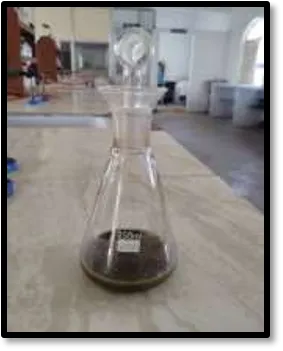
Figure No.13: liquorice Extract
The aloe gel is removed from the leaves and placed in the beaker

The Hydro- alcoholic mixture is added in the beaker (1:1 ratio of ethanol and water)

Macerated it 48 hrs and then filter it using muslin cloth

The Extract is ready to use for Preparation
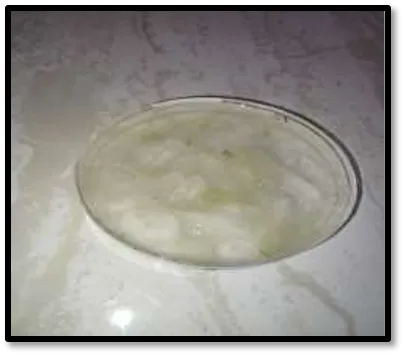
Figure No.14: Aloe vera Extract
The coarse powder of p. corylifolia seed was prepared

The extract is done using Ethanol and benzene in the ratio of (1:12)

For 6 hrs at the temperature of 40 celcius

The different extract of solvent was mixed and concentrated it
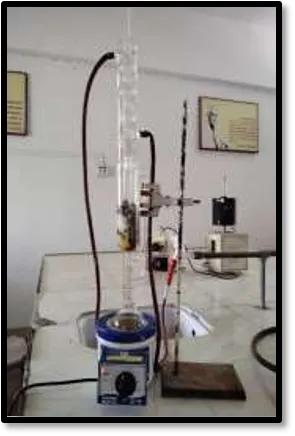
Figure No.15: Bakuchiol Extract
Tests for preliminary phytochemical screening:
Cantella Asiatica (Gotukola)
Table No.2: Phytochemical test for Gotukola extract
|
Sr.No. |
Phytochemical Test |
Observation |
Conclusion |
|
1 |
Triterpenoids Salkowski’s Test: Dissolve extract with chloroform and add conc.H2SO4. |
Reddish Brown Colour was observed |
Triterpenoids was present |
|
2 |
Saponin Foam Test: Vigorously shake the extract with distilled water. |
Foam was produced |
Saponin was present |
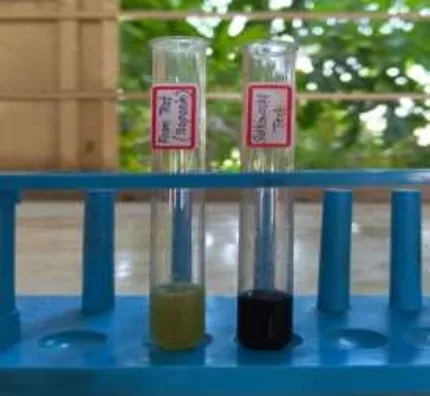
Figure No.16: Phytochemical Test of Gotukola
Glycyrrhiza Glabra (Liquorice)
Table No.3: Phytochemical test for Liquorice extract
|
Sr.No. |
Phytochemical Test |
Observation |
Conclusion |
|
1 |
Triterpenoids Salkowski’s Test: Dissolve extract with chloroform and add conc.H2SO4. |
Reddish Brown Colour was observed |
Triterpenoids was present |
|
2 |
Saponin Foam Test: Vigorously shake the extract with distilled water. |
Foam was produced |
Saponin was present |
|
3 |
Flavonoids Ferric Chloride FeCl3 with extract |
Green layer was formed |
Flavonoids was present |
|
4 |
Lead Acetate Extract with lead acetate |
Yellow precipitate was formed |
It passes the test. |
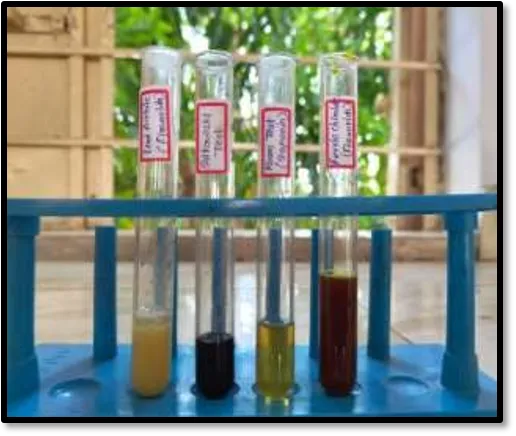
Figure No.17: Phytochemical Test of Liquorice
Aloevera
Table No.4: Phytochemical test for Aloevera extract
|
Sr.No. |
Phytochemical Test |
Observation |
Conclusion |
|
1 |
Anthraquinones Boil extract with H2SO4 and filter extract with chloroform add NH3 to solution. |
Rose Pink Colour was observed |
Anthraquinones was present |
|
2 |
Carbohydrates Molish Test Extract with reagent |
Purple Colour was observed |
Carbohydrates was present |
|
3 |
Saponin Vigorously shake the extract with distilled water. |
Foam was produced |
Saponin was present |
|
4 |
Flavonoids Lead Acetate Extract with lead acetate |
Yellow precipitate was formed |
Flavonoids was present |
|
5 |
Glycosides Kelier Killiani Test Extract was mix with glacial acetic acid FeCl3 and H2SO4 |
Brown Colour was observed |
Glycosides was present |
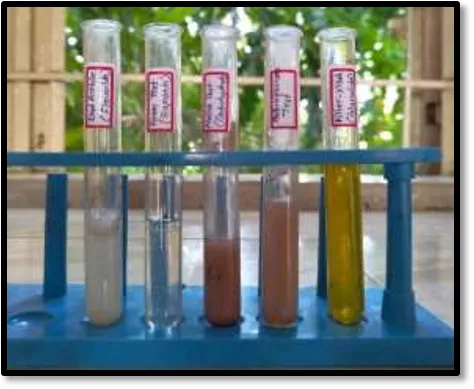
Figure No.18: Phytochemical Test of Aloevera
Bakuchiol
Table No.5: Phytochemical test for Bakuchiol extract
|
Sr.No. |
Phytochemical Test |
Observation |
Conclusion |
|
1 |
Phenolic Ferric Chloride Test Dissolve with ethanol and add 5% ferric chloride solution. |
Greenish Colour was observed |
Phenolic was present |
|
2 |
Triterpenoids Libermann’s Test Dissolve sample in ethanol and add conc. H2SO4 |
Reddish Brown Colour was observed |
Triterpenoids was present |
|
3 |
Flavonoids Lead Acetate Extract with lead acetate |
Yellow precipitate was formed |
Flavonoids was present |
|
4 |
Alkaline Reagent Extract with NaOH solution |
Brown Colour was observed |
Flavonoids was present |
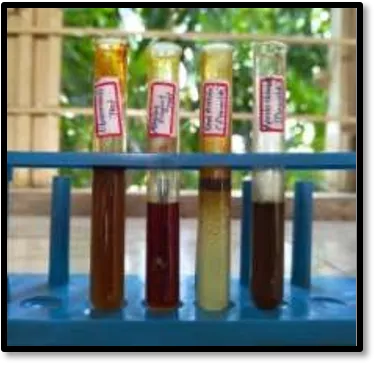
Figure No.19: Phytochemical Test of Bakuchiol
Procedure for Formulation
1) Step 1: Preparation of the Organic Layer (Oil Phase)
2) Step 2: Preparation of the Aqueous Phase
3) Step 3: Combining the Phases
Evaluation Parameter:
1) Physical Evaluation:
Visual observations were made on the formulation's colour and look. The formulation shows uniform distribution of extracts. This test was confirmed by visual appearance and by touch.
The calibration of a pH meter was done with a typical buffer solution. After correctly measuring and dissolving about 1 millilitre of the face serum in 50 millilitres of water, the pH of the solution was determined. Since the skin has an acidic spectrum, the skin serum's pH should be amid 4.1 and 6.730.
Some size of filter paper are choose and each filter paper is measure the total area of filter paper (A1) and weighing of each filter paper (W1). Choose the formulation to be tested and drawn several ml into the 5ml of pipette then 20 drop of serum was put drop by drop in center of filter paper. When latest drop hits the filter paper, start a time or stopwatch to count down for exactly 10 minutes. During the 10 minute test, the liquid will spread in a relatively uniform circular pattern over the filter paper. After 10 minutes, exactly underline saturated spread and write the paper by using cutter. Weight the remaining dry (unsaturated) filter paper. Record this weight as W2. Measure diameter of the saturated portion of filter paper. If the spread was not a perfect circle then take several diameter reduce around a spread area and determine and average diameter.
Record this measurement as A2. %Spread by Area = (A1/A2) 100.agent
It is to determine physical and chemical stability of the product with accelerated stability analysis which subjects the material to elevated temperatures. Short term accelerated stability study was carried out for the period of 1 month for the formulation. The sample were stored at different storage conditions of temperatures.
The microbial activity of the prepared herbal face serum was evaluated to assess its effectiveness against bacterial and fungal contaminants. The test was performed using the agar well diffusion method. Wells were bored into the agar, and a measured amount of the serum was introduced into each well. The plates were incubated at 37°C for 24-48 hours, and the zones of inhibition around each well were measured in millimetres. The presence of clear zones indicated positive antimicrobial activity, demonstrating that the formulation possesses both antibacterial and antifungal properties. The results confirmed that the herbal serum not only nourishes the skin but also helps protect it from microbial contamination and infections. The serum was tested for microbial contamination. The antibacterial test revealed no harmful bacterial growth, and antifungal test.
Dermatological Evaluation Parameter:
To check irritation or allergic reaction cause by the serum patch test was conducted to determine irritation. To determine it 5 healthy volunteers without any skin disorder was selected and apply the serum on forearm and kept it for 24 hrs. The irritation or allergic score was recorded as the following scale.
Table No.6: Dermal Skin Irritation Scoring System
|
Sr.No. |
Score |
Observation |
|
1. |
0 |
No irritation |
|
2. |
1 |
Slight erythema |
|
3. |
2 |
Moderate erythema |
|
4. |
3 |
Severe irritation |
|
5. |
4 |
Strong irritation |
Sensory evaluation is the assessment of a face serum based on human senses such as touch, sight, and smell. It determines the consumer acceptability and cosmetic elegance of the formulation. It evaluates how the product feels and performs during and after application on the skin. For this volunteers are taken and serum was applied to their skin and ask them to rate the serum based on following scale. In Sensory evaluation appearance, spreadability, fragrance, stickiness are rated by the scale.
Table No.7: Sensory Evaluation Scoring scale
|
Sr.No. |
Score |
Interpretation |
|
1 |
1 |
Poor |
|
2 |
2 |
Fair |
|
3 |
3 |
Good |
|
4 |
4 |
Very good |
|
5 |
5 |
Excellent |
All the Evaluation Parameters with results are discussed below:
Physical Appearance
Like other cosmetic double shot face serum are supposed to have aesthetically pleasing physical characteristics. The physical attributes of the created Double Shot Face Serum, such as colour, smell, and general appearance, were assessed.
Table No.8: Physical Parameter
|
Sr. No. |
Parameter |
Result |
|
1) |
Colour |
Reddish Yellow |
|
2) |
Oder |
Pleasant aroma |
|
3) |
Texture |
Smooth Homogeneous |
Determination of pH:
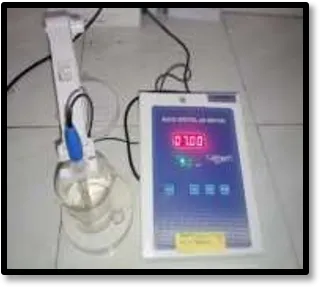
Figure No.20: pH of Water
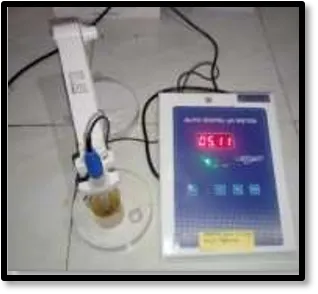
Figure No.21: pH of Face serum
The pH of face serum was evaluated using digital pH meter having water as a standard and the reading of face serum was found to be 5.11.
Stability Test:
The stability study results indicate that the formulation remained physically stable over a period of 30 days. The physical appearance was consistently observed as reddish yellow at zero day, 15 days, and 30 days, showing no noticeable change in color or appearance during storage. The pH values showed only a slight variation from 5.11 at the initial stage to 5.15 after 15 and 30 days, suggesting good pH stability. Furthermore, no phase separation was observed throughout the study period, confirming the homogeneity and stability of the formulation. Overall, the formulation demonstrated satisfactory stability under the tested conditions.
Table No.9: Stability Test
|
Parameter |
Zero day |
15 days |
30 days |
|
Physical Appearance |
Reddish Yellow |
Reddish Yellow |
Reddish Yellow |
|
pH |
5.11 |
5.15 |
5.15 |
|
Phase separation |
No phase was separated |
No phase was separated |
No phase was separated |
Microbial Growth Test:
The microbial evaluation of the Double Shot Face Serum was carried out to determine its microbiological safety and stability during storage. The test results indicated that the formulation was free from harmful microbial contamination throughout the study period. No visible microbial growth, turbidity, or foul Odour was observed in the serum samples. These findings demonstrate that the Double Shot Face Serum is microbiologically stable, safe for topical application, and suitable for prolonged storage under recommended conditions.
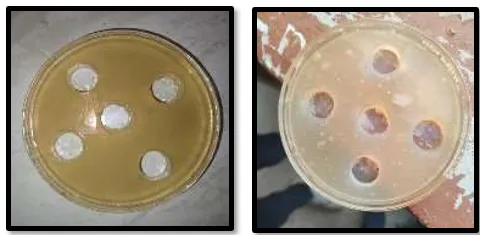
Figure No.22: Antimicrobial test for face serum
Skin Irritancy Test:
After the application of serum to the volunteers and check the irritation and allergy occurs to the volunteers. After the interval of 24 hrs itching and irritation was evaluate and score has been rated. In this test no irritation was occur to most of the volunteers.
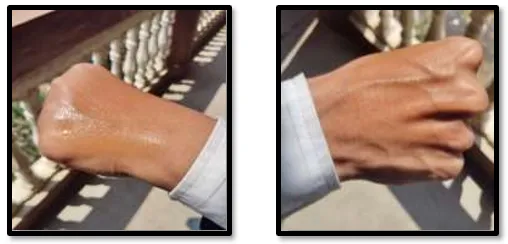
Figure No.23: Skin Irritancy Test
Table No.10: Observation table of skin irritation test
|
Volunteers No: |
Itching |
Redness |
Irritation score |
Observation |
|
1 |
Absent |
Absent |
0 |
No irritation |
|
2 |
Absent |
Slight |
1 |
Mild irritation |
|
3 |
Absent |
Absent |
0 |
No irritation |
|
4 |
Absent |
Absent |
0 |
No irritation |
|
5 |
Absent |
Absent |
0 |
No irritation |
Spreadability Test:
The spreadability test was conducted to determine this spreadability of face serum on filter paper to check the area covered by it. It shows the percent spreadability of face serum is 71.19%. This result show better spreadability.
% Spreadability of area = (A1\A2)100
= (51.496\72.346)100
= 71.19%
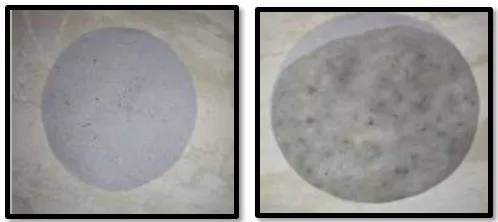
Figure No.24: Spreadability Test
Specific Evaluation Test:
The specific evaluation are done by application of serum to skin and appearance, spreadability, fragrance, stickiness are rated by the volunteers they rated the serum based on this is as follow.
Table No.11: Observation table for specific evaluation test
|
Parameter |
Volunteer 1 |
Volunteer 2 |
Volunteer 3 |
Volunteer 4 |
Volunteer 5 |
Average Score |
|
Appearance |
5 |
4 |
5 |
5 |
4 |
4.6 |
|
Fragrance |
4 |
5 |
4 |
5 |
4 |
4.4 |
|
Spreadability |
4 |
4 |
5 |
4 |
5 |
4.4 |
|
Stickiness |
4 |
5 |
4 |
4 |
5 |
4.4 |
|
Smoothness |
5 |
5 |
5 |
4 |
5 |
4.8 |
|
After-feel |
5 |
4 |
5 |
5 |
5 |
4.8 |
|
Overall Acceptability |
5 |
5 |
4 |
5 |
5 |
4.8 |
The study concentrated on the creation and testing of a double-shot face serum using various herbal extracts. The active ingredients were used for their collagen-boosting, anti- pigmentation, and moisturising effects on the skin. The goal was to prepare a double-shot face serum having distinct oil and aqueous layers for better stability and overcoming the flaws present in normal face serums. Bakuchiol was used as an alternative plant-based retinol derivative having collagen-boosting ability and almond oil for nourishing activity. In order to check the stability of the product, numerous physicochemical tests were conducted, such as pH, spreadability, stability, and microbial growth tests. After the evaluation, it was found that the pH is within the acceptable range of 4.5-5.5, which minimises the chance of any irritation on the skin, while the stability test verified that the product retains its consistency and appearance over time. It also passed the spreadability and microbial tests. The outcome indicates that the double-shot face serum has passed all the necessary evaluation characteristics. It offers many advantages, such as skin-friendliness and more.
SUMMARY & CONCLUSION:
In this study, a unique formulation of a double-shot face serum was created using herbal extracts. This serum was evaluated based on different physicochemical properties. After comparing the evaluation metrics, it was concluded that it met the necessary characteristic requirements. It demonstrated the best quality one would anticipate from a skincare product. It was formulated without the use of any harmful chemicals, which gives it a safer activity than the synthetic ones. It was concluded that the double-shot face serum was formulated and evaluated using suitable techniques, and it shows that it can be used as a natural skincare product having better characteristics than a synthetic face serum.
ACKNOWLEDGEMENT
This project was conducted in Dr. R. G. Bhoyar Institute of Pharmaceutical Education & Research, Wardha, Maharashtra
REFERENCES
References to a Journal Publication
References to a Book
References to a Journal Publication
References to a Book





Tanuja Gurnule*, Aman Raut, Akanksha Patil, Prachi Shivankar, Nitin Indurwade, Formulation And Dermatological Evaluation of Herbal Biphasic Double Shot Face Serum, Int. J. of Pharm. Sci., 2026, Vol 4, Issue 6, 4418-4435. https://doi.org/10.5281/zenodo.20741380
 10.5281/zenodo.20741380