

We use cookies to ensure our website works properly and to personalise your experience. Cookies policy
1 Department of Pharmacy Practice, J. K. K. Nattraja College of Pharmacy, Kumarapalayam, Tamil Nadu, India 638183
2 The Tamil Nadu Dr. M.G.R Medical University
3 Department of Pharmacy Practice, Faculty of Pharmacy, Karpagam Academy of Higher Education, Coimbatore, Tamil Nadu, India 641021
Obesity can be defined as a complex, chronic, and relapsing condition all over the world because of the interaction between several factors, such as genetics, the environment, and neurobiology. Even though behavioral change remains the primary approach to treating obesity, sustained weight reduction is extremely difficult due to adaptive changes in the central nervous system. The consumption of extra calories triggers hypothalamic inflammation and leptin resistance in patients, leading the brain to perceive calorie restriction as starvation, thereby activating orexigenic neurotransmitters and preserving body weight. To overcome this biological obstacle, GLP-1 RAs and dual GIP/GLP-1 RAs were developed as breakthrough therapies. The evolution of anti-obesity drugs is shown in this review while mentioning their mechanisms of action in terms of central satiety systems, gastric motility effects, and dynamics of fat tissue. Moreover, this paper highlights recent advances in oral treatments of obesity, comparing peptide-based formulations with non-peptide novel small-molecule GLP-1 allosteric agonists like orforglipron, which allows for avoiding strict dietary rules and conditions of absorption. The article also discusses gastrointestinal side effects, socioeconomic problems related to treatment costs and adherence, as well as the outlook for unimolecular triple-receptor agonists.
Obesity is a chronic disorder that has gained immense significance over the past few years since its harmful effects may pose threats to an individual’s health, thereby increasing morbidity and mortality risks.1 According to WHO, obesity is considered a chronic, relapsing condition, which results from complex relations among genetics, neurobiology, eating behavior, diet availability, market dynamics, and the overall environment. Over the past decades, obesity has gained global significance owing to increased food security and socio-economic development in several countries, as well as changes in diet, exercise, and behaviors driven by globalization and food production practices. All such factors have led to an increasingly obesogenic environment, resulting in obesity, which is a worldwide health issue since over one billion people suffer from obesity.2
Overweight and obesity diagnoses can be made based on weight and height measurements, the body mass index (BMI) formula: weight (kg)/ height2(m2)2.
WORLD HEALTH ORGANIZATION
PREVALENCE OF OBESITY
Obesity has become a critical global health problem, with its incidence having risen considerably over the last few decades among all age groups. According to statistics, in 2022, about 2.5 billion adults aged 18 and older were obese, out of which 890 million had obesity, representing about 43% of adults around the globe. There has been a considerable increase in the incidence of obesity since 1990, with rates varying by region, from 31% in South-East Asia and Africa to 67% in the Americas. Moreover, the incidence of childhood and teenage obesity is on the rise worldwide, with about 390 million people aged between 5 and 19 years being overweight in 2022.2
Table 1: Global Prevalence of Overweight and Obesity (2022-2024)
|
Sr. No |
Category |
Key Findings |
Statistics |
|
1. |
Global Adult Prevalence |
Overweight Adults Aged ≥ 18 (2022) |
2.5 billion |
|
2. |
Global Adult Prevalence |
Obese Adults ≥ 18 (2022) |
890 million |
|
3. |
Global Proportions |
Percentage of Population (2022) |
43% overweight; 16% living with obesity |
|
4. |
Historical Trend |
Adult Obesity (Since 1990) |
More than doubled |
|
5. |
Pediatric Population |
Children under 5 years (2024) |
35 million Overweight |
|
6. |
Young Population |
Children and Adolescents Age 5–19 years (2022) |
390 million overweight, 160 million obese |
|
7. |
Trend (Youth) |
Adolescent Obesity (Since 1990) |
Quadrupled |
CAUSES AND RISK FACTORS
Overweight and obesity are primarily caused by an imbalance between the amount of energy taken into the body and the amount of energy expended. This happens when too many calories are taken in, and those extra calories are stored as fat. Foods provide the body with the energy needed for biological processes and activities. Extra energy is stored as glycogen and triglycerides. Other factors that may lead to obesity include poor eating habits, lack of exercise, inactive lifestyles, and insufficient sleep. 4 Lifestyle changes that could lead to weight loss include adopting a heart-healthy diet with fewer calories and less saturated fat and increasing exercise. Additionally, the FDA has approved certain medications and therapies for weight loss.5
THE NEURO-METABOLIC AXIS HOMEOSTATIC DYSREGULATION
At the neurometabolic level, chronic obesity is characterized by homeostatic dysregulation that begins with an energy surplus from prolonged overeating, leading to excessive fat accumulation and dysfunctional adipose tissue. Although behavior modification treatments, such as caloric restriction and exercise, form the bedrock of metabolic treatments, sustaining weight loss with these measures in the long run is extremely difficult for most individuals, owing to biological compensatory mechanisms.6
The central nervous system plays a crucial role in regulating energy homeostasis and hedonic eating behaviors through the perception of hormonal signals from peripheral tissues.7 In the context of long-term obesity, a complex and delicate relationship within this system is significantly altered. Chronic overnutrition leads to inflammation in the hypothalamus, leptin resistance, and decreased satiety after eating.6 Therefore, in response to weight loss efforts based solely on calorie restriction, the brain recognizes the deficit in nutrients as potentially harmful starvation. As a consequence, a cascade of mechanisms aimed at preventing further weight loss develops, consisting of increased orexigenic signaling and hunger sensations, and reduced metabolic rate.7 Thus, the biological opposition that is established is one reason why obesity cannot be controlled solely with voluntary behavioral changes.
GLP-1 Drugs
GLP-1 receptor agonists have recently attracted significant attention for their therapeutic potential in obesity and type 2 diabetes mellitus. GLP-1 is an incretin hormone secreted primarily by L-cells of the distal intestine. It has an important physiological role in regulating glucose homeostasis and energy balance. GLP-1 receptor agonists are designed to mimic the biological actions of GLP-1 by stimulating glucose-dependent insulin secretion, reducing glucagon levels, slowing gastric emptying, and inducing satiety.8 GLP-1 Receptor Agonists were first licensed by the U.S. Food and Drug Administration in 2005 for the management of Type 2 Diabetes because of their efficacy in controlling blood glucose levels. Later research showed their positive impact in suppressing hunger and weight loss, resulting in the licensing of
Liraglutide in 2015 for chronic weight control. Since then, GLP-1 Receptor Agonists like Exenatide, Liraglutide, and Semaglutide have been successful in managing obesity and other metabolic conditions.9
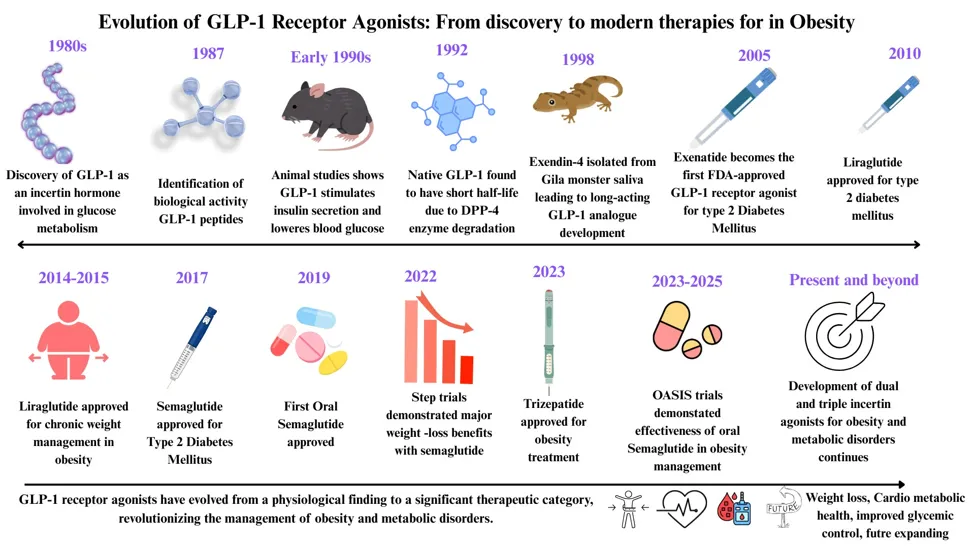
Injectable GLP-1 drugs
Liraglutide
Liraglutide is an analog of the GLP-1 hormone, which mimics incretin hormones' role in regulating energy balance and glucose metabolism. Its insulinotropic actions include stimulation of glucose-dependent insulin secretion, inhibition of glucagon secretion, slowing of gastric emptying, and promotion of central appetite suppression. Liraglutide has been shown to reduce prediabetes prevalence and improve post-meal glucose metabolism when administered at 1.8–3.0 mg per day in patients with obesity. Moreover, Liraglutide significantly decreases VAT, trunk, and total body fat content, leading to improved cardiometabolic profile and decreased cardiovascular risk. Recent data suggest that the use of Liraglutide without additional measures leads to a substantial decrease in lean body mass compared to caloric restriction.11
Semaglutide
Semaglutide is a GLP-1 receptor agonist that causes weight loss by reducing appetite, thereby allowing better regulation of eating and lower energy intake. In obese and overweight individuals, the use of subcutaneous semaglutide at a dose of 2.4 mg every week, combined with lifestyle modification, resulted in significant weight loss and improvements in cardiometabolic risk factors and physical health function. Subcutaneous semaglutide at a dose of 2.4 mg per week is indicated for long-term weight management as a supplemental therapy to calorie restriction and physical activity in adults with obesity or overweight associated with comorbidities. The STEP TEENS trial evaluated the efficacy and safety of once-weekly subcutaneous semaglutide in combination with lifestyle changes in adolescents with obesity.12
Tirzepatide
Tirzepatide is a single compound that acts as a GIP and GLP-1 receptor agonist, producing synergistic effects on appetite, food intake, and metabolism. Tirzepatide is used in several countries, including the USA, the European Union, and Japan, for once-weekly subcutaneous injections in patients with type 2 diabetes and for obesity management in the USA and the United Kingdom. A randomized controlled study among obese or overweight subjects without diabetes showed a mean body weight reduction of up to 20.9% in 72 weeks of treatment with tirzepatide.13
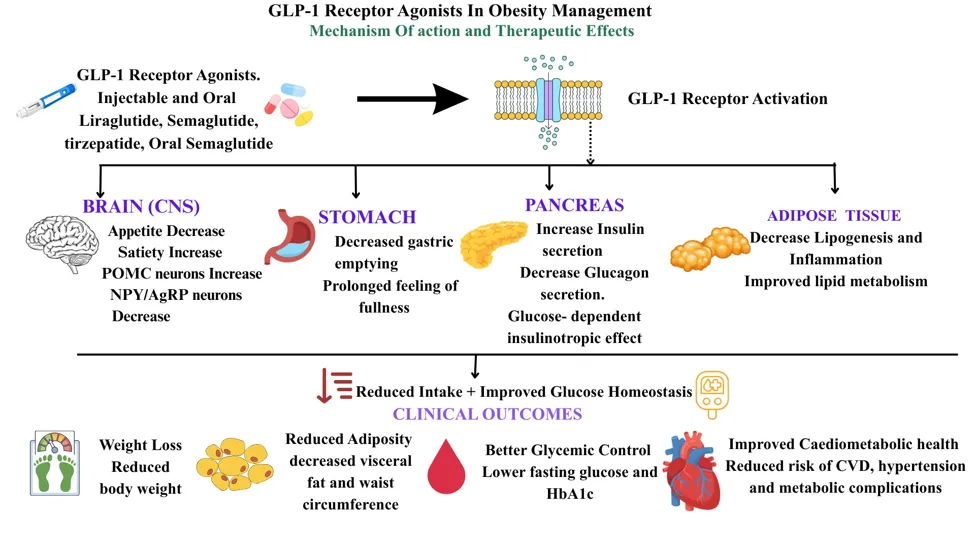
Oral GLP-1 Drugs
Semaglutide
Obesity medications are seen as important adjuvants for dietary and behavioral changes in patients since many patients find it hard to lose weight through diet and physical exercise alone. Orally administered semaglutide has emerged as a potential alternative to subcutaneous GLP-1 receptor agonists for managing obesity. As a drug, semaglutide was initially introduced to be used for treating type 2 diabetes mellitus at a dosage of up to 14 mg per day. It has been shown to have positive effects not only on body weight but also on glycemic control. The phase 3 study, OASIS 1, has reported the effects of semaglutide 50 mg per day in adults with obesity but no history of type 2 diabetes, showing significant body weight reduction and reduced cardiovascular risk factors.14
Semaglutide is the first oral GLP-1 receptor agonist formulated with sodium N-(8-[2-hydroxybenzoyl]amino)caprylate as an absorption enhancer to improve gastric absorption of the peptide. Based on a phase 2 study investigating the dose-response relationship for oral semaglutide, the 40 mg dose per day demonstrated a statistically significant effect on weight loss over 26 weeks in people with type 2 diabetes mellitus and obesity, with safety profiles similar to those of other GLP-1 receptor agonists. Pharmacokinetic analysis also indicated that a higher dose of 50 mg would be effective for weight loss without compromising tolerability. This led to the use of 50 mg of oral semaglutide in weight-loss trials. Hence, a clinical trial named Oral Semaglutide Treatment Effect in People with Obesity (OASIS) 1 was conducted to assess the efficacy and safety of 50 mg oral semaglutide in combination with lifestyle changes among patients with overweight and obesity.15
Orforglipron
Orforglipron (LY3502970) is an oral, non-peptide GLP-1 receptor agonist. It is designed to avoid the common problems seen with peptide-based obesity drugs, such as poor absorption and quick breakdown by enzymes. Its structure features a rigid polycyclic heteroaromatic core without any peptide bonds, making it stable in acidic conditions like the stomach. It also resists breakdown by DPP-4 and neutral endopeptidases. This unique design allows for good absorption in the gut and makes it possible to take the drug once a day without needing any fatty-acid linkages, absorption aids like SNAC, or dietary restrictions. The placement of polar functional groups throughout the molecule aids in water solubility and membrane permeability. Meanwhile, hydrophobic areas help achieve suitable pharmacokinetics and binding to GLP-1 receptors, which is important for long-term weight management.16
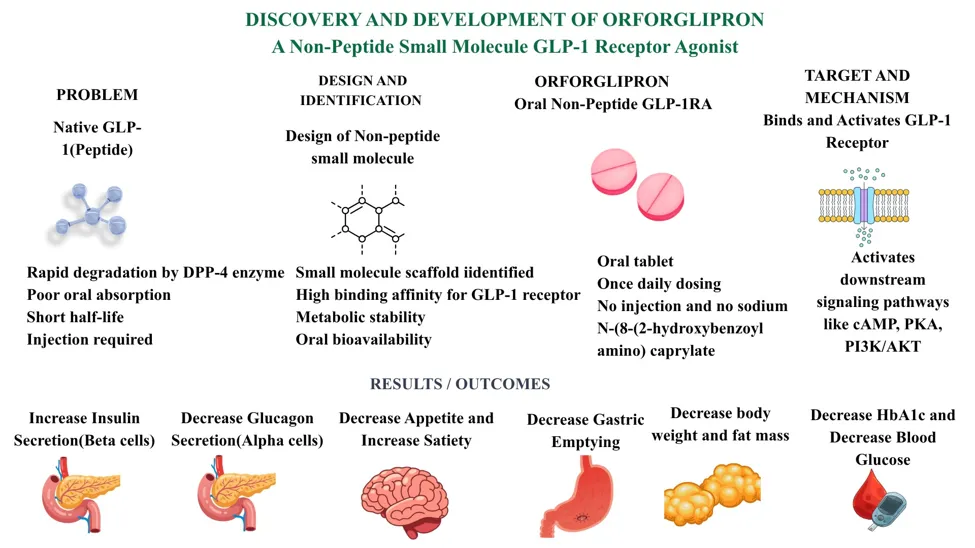
Based on the mode of action, orforglipron is the first non-peptide allosteric GLP-1 receptor agonist that specifically interacts with a certain transmembrane-binding site (TM1, TM2, TM3, TM7, and ECL2) instead of the large extracellular site that binds the natural GLP-1 ligand. By allosteric interaction with the GLP-1 receptor, orforglipron leads to the stabilization of the active receptor conformation that triggers the biased signaling cascade with the bias towards Gs-mediated stimulation of adenylate cyclase activity and cAMP production. As far as the physiology of this novel mechanism of action, there are two primary ways that orforglipron leads to weight loss. Firstly, it delays gastric emptying after eating to increase satiety; secondly, it activates specific brain regions like the hypothalamus and brainstem for hunger suppression. Therefore, orforglipron is a revolution in the treatment of obesity with significant weight loss in an oral pill.16
Table 2: Mechanism of Action and Clinical Efficacy of “GLP-1” and Dual Agonists
|
Sr. No |
Drug |
Route |
Classification |
Primary Mechanism |
Key benefits |
|
1. |
Liraglutide |
Injectable (Daily) |
GLP-1 receptor agonist |
Enhances insulin secretion, suppresses glucagon, delays gastric emptying, and increases satiety |
Reduces visceral adiposity and promotes moderate, sustained weight loss |
|
2. |
Semaglutide |
Injectable (Weekly) |
GLP-1 receptor agonist |
Suppresses central appetite centers, significantly reducing total energy intake |
Produces significant long-term weight reduction |
|
3. |
Tirzepatide |
Injectable (Weekly) |
Dual GIP/GLP-1 receptor agonist |
Regulates appetite, food intake, and metabolic function through dual receptor activity |
Achieves substantial body weight reduction |
|
4. |
Semaglutide |
Oral (Daily) |
Oral GLP-1 receptor agonist |
Enhances satiety, reduces calorie intake, and improves gastric absorption |
Significant weight reduction and improved glycemic control |
|
5. |
Orforglipron |
Oral (Daily) |
Non-peptide oral GLP-1 receptor agonist |
Allosterically activates GLP-1 receptor, delays gastric emptying and enhances central satiety. |
Significant body weight reduction without strict fasting or food/water restriction |
ADVERSE EFFECTS
GLP-1 receptor agonists are relatively safe and effective for the treatment of obesity and type 2 diabetes mellitus, but patients receiving GLP-1 receptor agonist therapy commonly experience gastrointestinal adverse effects. Some of the most common adverse events include nausea, vomiting, diarrhea, constipation, stomach pain, bloating, and loss of appetite. Usually, they are mild to moderate in severity and tend to occur mainly at the start of treatment and during its escalation. Side effects are typically transient and tend to resolve or become milder as therapy continues.17
PREVENTION AND MANAGEMENT OF ADVERSE EFFECTS
Proper titration of GLP-1 receptor agonist doses can help reduce gastrointestinal side effects.
Smaller portions of food, avoiding fatty meals, staying hydrated, and eating slowly are recommended to patients to help prevent nausea and stomach pain. In addition, a temporary dose reduction and a more cautious increase in dosage can be considered when patients are experiencing ongoing gastrointestinal symptoms. It is essential that continuous monitoring of the patient's condition and proper education are observed during treatment.17
SOCIOECONOMIC BARRIERS: COST AND ACCESSIBILITY
Despite the significant efficacy achievable with GLP-1 receptor agonists and dual incretin treatments, access to these therapies remains limited due to overwhelming financial and logistical challenges. The cost of leading anti-obesity drugs such as semaglutide and tirzepatide can exceed $1,000 to $1,300 per month worldwide.18
In addition, health care systems and third-party payers offer inconsistent levels of coverage. Most private health insurance companies do not include weight loss drugs in their formularies, or have very stringent prior authorization processes that necessitate proof of failed efforts at healthy living or certain diseases.19
This is further exacerbated by the practical considerations in the clinical management of obesity. Real-world observational cohort data reveal high discontinuation rates for these medications within two years because of issues surrounding cost and tolerability. This represents a significant clinical challenge, as large clinical trials such as STEP and SURMOUNT demonstrate that patients can rapidly regain weight after cessation of treatment. Patients usually gain back one-half to two-thirds of their total weight loss after just a year of discontinuing use. Hence, the treatment of obesity becomes a lifelong challenge that demands uninterrupted adherence. Without drastic measures such as policies, insurance mandates, or lower-cost oral drugs, these therapies will only widen existing health inequalities.20
FUTURE DIRECTIONS AND CLINICAL TRIALS
The following pharmacological breakthrough in the treatment of obesity is based on the development of single-molecule triple receptor agonists, such as retatrutide.21 These medications work through three important metabolic mechanisms to produce a more effective synergistic weight loss result than any monotherapy and dual agonist treatments. 22
GLP-1 Receptor Agonism: This therapy involves stimulation of the central nervous system to reduce appetite, promote post-meal satiety, and delay gastric emptying.22
GIP Receptor Agonism: This therapy acts in concert with GLP-1 to increase insulin release, modulate glucagon secretion, and regulate tissue metabolism.21,22
Glucagon Receptor Agonism: This stimulates energy use by increasing thermogenesis,
hastening lipid breakdown in the liver, and reducing liver fat.21,22
By integrating all three pathways of action into a single molecule, triple agonists can maximize calories burned while minimizing calories consumed, thereby serving as the future front-line treatment for metabolism.23
CONCLUSION
Obesity is a global health concern that leads to numerous metabolic and cardiovascular complications. In recent years, incretin-related drug treatments for obesity have achieved remarkable success due to their ability to manage hunger, slow gastric emptying, regulate glucose metabolism, and induce significant weight loss. Injectable incretin analogs such as liraglutide, semaglutide, and tirzepatide, as well as orally active semaglutide and orforglipron, have demonstrated high efficacy in various clinical studies. The most important problem that should be addressed when using this type of drug relates to its adverse effects on the digestive system; however, dose optimization helps alleviate these problems. Moving forward, the progression from single- and dual-agonist to next-generation unimolecular triple-receptor agonists represents a significant pharmacologic development in metabolic pharmacology. Ensuring optimal efficiency, proper tissue maintenance, and worldwide availability of these multi-agonists remains a significant priority.
FINANCIAL SUPPORT AND SPONSORSHIP: Nil
CONFLICT OF INTEREST: The author declares no conflict of interest
REFERENCES



Sonale S, Revanth R, Gowtham Arumugam, Next Generation Incretin Therapies in Obesity: Evolution for Multi-Receptor Agonism to Non-Peptide Oral Molecules, Int. J. of Pharm. Sci., 2026, Vol 4, Issue 8, 2744-2753. https://doi.org/10.5281/zenodo.21980896
 10.5281/zenodo.21980896