

We use cookies to ensure our website works properly and to personalise your experience. Cookies policy
1Department of Pharmaceutical Quality Assurance, D.S.T.S. Mandal’s College of Pharmacy, Solapur, 413004 Maharashtra, India.
2Department of Pharmaceutical Quality Assurance, D.S.T.S. Mandal’s College of Pharmacy, Solapur, 413004 Maharashtra, India.
3Department of Pharmaceutical Quality Assurance, D.S.T.S. Mandal’s College of Pharmacy, Solapur, 413004 Maharashtra, India.
4Department of Pharmaceutical Quality Assurance, D.S.T.S. Mandal’s College of Pharmacy, Solapur, 413004 Maharashtra, India.
5Department of Pharmaceutical Chemistry, D.S.T.S. Mandal’s College of Pharmacy, Solapur, 413004 Maharashtra, India
The increasing demand for sustainable and travel-friendly personal care products has encouraged the development of innovative solid dosage forms for cosmetic applications. The present study aimed to formulate and evaluate a novel de-tan face wash tablet containing caffeine and orange peel powder as natural bioactive ingredients. Caffeine was incorporated for its antioxidant and skin-revitalizing properties, while orange peel powder was selected for its vitamin C-rich antioxidant activity and skin-brightening potential. The tablets were prepared by the direct compression technique using microcrystalline cellulose, starch, soap base, and magnesium stearate as excipients. Formulation optimization was carried out through five trial batches to obtain a tablet with desirable mechanical strength, cleansing efficiency, and user acceptability. The optimized formulation was evaluated for pre-compression characteristics, organoleptic properties, hardness, pH, foamability, washability, friability, weight variation, and skin irritation. The powder blend exhibited excellent flow properties with a bulk density of 0.690 g/mL, tapped density of 0.711 g/mL, Hausner's ratio of 1.02, Carr's index of 2.88%, and an angle of repose of 24.22°. The optimized tablets demonstrated satisfactory hardness (2.3 kg/cm²), pH 6.0, friability below 1%, excellent foamability and washability, and no signs of skin irritation, indicating good physicochemical quality and skin compatibility. The developed formulation provides an eco-friendly, portable, and water-efficient alternative to conventional liquid facewash products by minimizing packaging waste and improving consumer convenience. These findings suggest that the formulated de-tan face wash tablet has significant potential as a sustainable cosmetic product for daily skin cleansing and de-tanning applications.
Facial cleansing is an essential step in maintaining healthy skin by removing dirt, excess sebum, pollutants, microorganisms, and cosmetic residues. Conventional face wash products are commonly available as liquids, gels, and creams; however, these formulations require plastic packaging, preservatives, and high water content, contributing to environmental waste. The increasing demand for sustainable and travel-friendly cosmetic products has led to the development of solid formulations such as face wash tablets, which are compact, portable, and environmentally friendly [1-3].
Natural ingredients are increasingly incorporated into cosmetic formulations because of their safety, biocompatibility, and multifunctional skin benefits. Caffeine is a natural bioactive compound with antioxidant and an anti-inflammatory property that helps protect the skin from oxidative stress, improves microcirculation, and enhances skin appearance. These properties make it a promising ingredient for de-tan and skin-rejuvenating formulations [4, 5].
Orange peel powder (Citrus sinensis) is a rich source of vitamin C, flavonoids, and phenolic compounds with antioxidant, antimicrobial, and skin-brightening activities. It promotes mild exfoliation, supports collagen synthesis, and helps reduce pigmentation caused by prolonged sun exposure. Consequently, orange peel powder has gained considerable attention as a natural ingredient in cosmetic and skincare products [6, 8].
The development of solid cosmetic dosage forms aligns with the global emphasis on sustainability by reducing water consumption and plastic packaging while improving product stability and consumer convenience. Despite the growing popularity of solid skincare products, limited studies have focused on de-tan face wash tablets containing caffeine and orange peel powder. Therefore, the present study aimed to formulate and evaluate a novel de-tan face wash tablet using the direct compression technique. The prepared formulation was evaluated for its physicochemical properties, foamability, hardness, pH, friability, washability, skin compatibility, and overall performance to establish its potential as an effective and eco-friendly alternative to conventional liquid face wash formulations [9-15].
MATERIALS AND METHODS
MATERIALS
Caffeine powder and orange peel powder (Citrus sinensis) were used as the active ingredients. Microcrystalline cellulose (MCC), starch, soap base, and magnesium stearate were employed as excipients. All materials were of pharmaceutical grade and procured from the local market and the Department of Pharmaceutics, D.S.T.S. Mandal's College of Pharmacy, Solapur.
Formulation of De-Tan face wash tablets
Face wash tablets were prepared by the direct compression method. The accurately weighed ingredients were blended uniformly in a mortar and passed through sieve No. 44 to obtain a homogeneous powder mixture. Magnesium stearate was added as a lubricant and mixed gently before compression. The final blend was compressed using a single-punch tablet compression machine to obtain tablets of 250 mg weight.
Table 1: Formulation table De-Tan face wash tablet
|
Sr. No |
Ingredients |
Quantity (500 mg) |
||||
|
Batches |
||||||
|
F1 |
F2 |
F3 |
F4 |
F5 (250 mg) |
||
|
1 |
Caffeine |
25 |
25 |
25 |
30 |
40 |
|
2 |
Orange Peel powder |
25 |
25 |
25 |
40 |
20 |
|
3 |
Aloe Vera Powder |
25 |
25 |
25 |
50 |
- |
|
4 |
Sodium lauryl sulphate |
175 |
- |
- |
- |
- |
|
5 |
Reetha |
- |
175 |
- |
- |
- |
|
6 |
Soap base |
- |
- |
175 |
130 |
65 |
|
7 |
Microcrystalline Cellulose |
25 |
25 |
25 |
50 |
25 |
|
8 |
Starch |
200 |
200 |
200 |
175 |
87.5 |
|
9 |
Magnesium Stearate |
25 |
25 |
25 |
25 |
12.5 |
Experimental procedure
The de-tan face wash tablets were prepared by the direct compression method. The required quantities of caffeine, orange peel powder, microcrystalline cellulose, starch, and soap base were accurately weighed and blended uniformly in a clean mortar using a pestle. The powder blend was passed through sieve No. 44 to obtain a homogeneous mixture. Magnesium stearate was added as a lubricant and mixed gently for 2–3 min. The final blend was compressed using a single-punch tablet compression machine to obtain tablets weighing 250 mg each. Five trial batches (F1–F5) were prepared by varying the composition to optimize the formulation. Based on the evaluation results, batch F5 was selected as the optimized formulation.
Evaluation of powder blend
Bulk density
Bulk density was determined by gently pouring the powder blend into a graduated cylinder and recording its initial volume. It was calculated using the following equation.
Bulk Density = Weight of Powder / Bulk Volume
Tapped density
The graduated cylinder containing the powder blend was tapped until a constant volume was obtained. Tapped density was calculated using.
Tapped Density = Weight of Powder / Tapped Volume
Hausner's ratio
Hausner's ratio was calculated to evaluate the flow characteristics of the powder blend using the equation.
Hausner's Ratio = Tapped Density / Bulk Density
Carr's index
Carr's compressibility index was determined using the following equation.
Carr's Index (%) = [(Tapped Density − Bulk Density) / Tapped Density] × 100
Angle of repose
The angle of repose was determined by the fixed funnel method. The height and radius of the powder cone were measured, and the angle was calculated using:
θ = tan⁻¹ (h/r)
Evaluation of face wash tablets
Organoleptic evaluation
The tablets were visually examined for colour, appearance, surface texture, and thickness.
Hardness test
Tablet hardness was determined using a Monsanto hardness tester. The crushing strength was expressed in kg/cm².
pH determination
One tablet was dispersed in 10 mL of distilled water, and the pH of the dispersion was measured using a calibrated digital pH meter.
Foamability test
One tablet was dispersed in 5 mL of distilled water in a graduated cylinder and shaken vigorously for 1 min. The volume and stability of the foam produced were recorded.
Washability test
The prepared formulation was applied to the skin and washed with running water. Ease of removal and the absence of residue were visually assessed.
Skin irritation Test
The optimized formulation was applied to the dorsal surface of healthy human skin and observed for 1–2 h for redness, itching, irritation, or edema.
Weight variation test
Twenty tablets were individually weighed using a digital balance. The average weight and percentage deviation were calculated according to the Indian Pharmacopoeia.
Friability test
Friability was evaluated using a Roche friabilator operated at 25 rpm for 4 min (100 revolutions). The percentage weight loss was calculated, and values below 1% were considered acceptable.
Powderability test
The tablets were gently crushed between the fingers to assess their ability to convert into a fine powder suitable for facial application.
RESULTS
Evaluation of powder blend
Table 2: Preformulation study of powder blend (n=3)
|
Sr. No |
Test |
Results |
||||
|
Batches |
||||||
|
F1 |
F2 |
F3 |
F4 |
F5 |
||
|
1 |
Bulk density (gm/ml) |
0.612 ± 0.01 |
0.638 ± 0.02 |
0.661 ± 0.01 |
0.678 ± 0.01 |
0.690 ± 0.01 |
|
2 |
Tapped density (gm/ml) |
0.726 ± 0.02 |
0.742 ± 0.02 |
0.728 ± 0.01 |
0.720 ± 0.01 |
0.711 ± 0.01 |
|
3 |
Hausner’s ratio |
1.19 |
1.16 |
1.10 |
1.06 |
1.03 |
|
4 |
Carr’s index (%) |
15.70 |
14.01 |
9.20 |
5.83 |
2.95 |
|
5 |
Angle of repose (⸰) |
33.84 ± 0.32 |
31.12 ± 0.28 |
28.45 ± 0.25 |
26.38 ± 0.21 |
24.22 ± 0.18 |
Organoleptic parameter
Figure 1: De-Tan Face wash Tablet
Table 3: Organoleptic parameter
|
Sr. No |
Evaluation parameter |
Rresults |
|
1 |
Color |
Brownish White |
|
2 |
Thickness (mm) |
2.01 |
|
3 |
Diameter (mm) |
4.0 |
Evaluation of face wash tablet
Table 4: Evaluation of face wash tablet (n=3)
|
Sr. No |
Test |
Results |
||||
|
Batches |
||||||
|
F1 |
F2 |
F3 |
F4 |
F5 |
||
|
1 |
Appearance |
Fair |
Fair |
Good |
Very good |
Excellent |
|
1 |
Hardness (kg/cm2) |
1.7 ± 0.1 |
1.9 ± 0.1 |
2.5 ± 0.1 |
2.8 ± 0.1 |
2.3 ± 0.1 |
|
2 |
pH |
5.4 ± 0.1 |
5.7 ± 0.1 |
6.2 ± 0.1 |
6.1 ± 0.1 |
6.0 ± 0.1 |
|
3 |
Foamability |
Poor |
Moderate |
Excellent |
Excessive |
Excellent |
|
4 |
Washability |
Fair |
Good |
Very good |
Good |
Excellent |
|
5 |
Skin irritation |
Mild irritation |
No irritation |
No irritation |
Slight dryness |
No irritation |
|
6 |
Friability (%) |
1.45 ± 0.05 |
1.12 ± 0.03 |
0.95 ± 0.02 |
0.88 ± 0.02 |
0.80 ± 0.02 |
|
|
Weight variation |
Failed |
Passed |
Passed |
Passed |
Passed |
|
|
Powderability |
Poor |
Good |
Good |
Fair |
Excellent |
|
|
Overall performance |
Unsatisfactory |
satisfactory |
Good |
Very good |
Excellent |
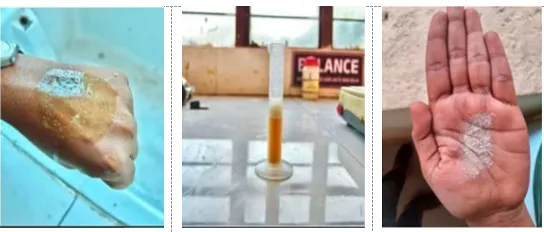
Figure 2: Spreadability Figure 3: Foamability Figure 4: Powderability
DISCUSSION
Five trial batches (F1–F5) of the de-tan facewash tablet were prepared and evaluated to optimize the formulation. The pre-compression results showed progressive improvement in powder flow properties from F1 to F5. The optimized batch (F5) exhibited a bulk density of 0.690 g/mL, tapped density of 0.711 g/mL, Hausner's ratio of 1.03, Carr's index of 2.95%, and an angle of repose of 24.22°, indicating excellent flowability suitable for direct compression.
Post-compression evaluation revealed that F5 possessed the most desirable characteristics, including hardness of 2.3 kg/cm², pH 6.0, friability of 0.8%, excellent foamability, excellent washability, and no skin irritation. The optimized formulation demonstrated good mechanical strength, satisfactory cleansing performance, and compatibility with skin.
Overall, systematic optimization of the formulation significantly improved the quality of the facewash tablets. Based on the evaluation results, F5 was selected as the optimized formulation because it exhibited superior physicochemical properties, excellent cleansing performance, and better consumer acceptability than the other trial batches.
CONCLUSION
The present study successfully formulated and evaluated a novel de-tan facewash tablet containing caffeine and orange peel powder using the direct compression method. Among the five trial formulations, Batch F5 exhibited the best pre-compression and post-compression characteristics, including excellent flow properties, satisfactory hardness, acceptable pH, low friability, excellent foamability, good washability, and no skin irritation. The optimized formulation demonstrated good physicochemical stability, effective cleansing performance, and enhanced consumer convenience. The developed facewash tablet offers a portable, eco-friendly, and sustainable alternative to conventional liquid facewash products and has promising potential for cosmetic and personal care applications.
ACKNOWLEDGEMENT
The authors sincerely express their gratitude to the principal, faculty, and technical staff of D.S.T.S. Mandal's College of Pharmacy, Solapur, for providing the infrastructure, resources, and academic support required to carry out this research successfully. The authors are especially thankful to the project guide for invaluable guidance, insightful suggestions, and continuous encouragement throughout the study. They also extend their heartfelt appreciation to their family members and friends for their constant motivation, cooperation, and unwavering support during the completion of this research work
REFERENCES




Kumbhar Bhaganna Gundappa*, Alamad Abhishek Lokanna, Narayane Ganesh Rajaram, Giram Aarti Kashinath, G.B. Gajeli, Formulation And Evaluation Of A De-Tan Face Wash Tablet , Int. J. of Pharm. Sci., 2026, Vol 4, Issue 7, 5260-5266. https://doi.org/ 10.5281/zenodo.21629129
 10.5281/zenodo.21629129