

We use cookies to ensure our website works properly and to personalise your experience. Cookies policy
Department of Pharmacognosy, Konkan Gyanpeeth Rahul Dharkar College of Pharmacy and Research Institute, Karjat, Raigad 410201, Maharashtra.
Oral ulcers are common lesions of the oral mucosa that may cause pain and discomfort and can interfere with eating and speaking. Conventional dosage forms may have limitations in maintaining prolonged contact with the affected site. The present study was undertaken to formulate and evaluate a mucoadhesive buccal film containing hydroalcoholic extracts of Glycyrrhiza glabra and Punica granatum for potential application in the management of oral ulcers. The hydroalcoholic extracts were prepared and subjected to preliminary phytochemical evaluation. Mucoadhesive buccal films were formulated using hydroxypropyl methylcellulose (HPMC) and Carbopol as film-forming and mucoadhesive polymers. The prepared films were subjected to various evaluation parameters, including physical appearance, thickness, folding endurance, surface pH, swelling index, mucoadhesive strength and disintegration time. The optimized formulation exhibited satisfactory physical characteristics and mucoadhesive properties with progressive swelling upon hydration. The prepared herbal mucoadhesive film exhibited invitro antifungal activity against Candida albicans, demonstrating a zone of inhibition of 18mm, indicating its potential to suppress the growth of the fungal pathogen responsible for oral candidiasis (oral thrush) and supporting its potential as a localized herbal formulation for oral mucosal management. The developed herbal mucoadhesive buccal film may provide prolonged contact with the buccal mucosa and represents a potential approach for the localized delivery of herbal extracts in the management of oral ulcers.
Recurrent aphthous ulcers are common inflammatory lesions of the oral mucosa that may cause pain and discomfort and can affect the quality of life of affected individuals [1]. The oral cavity presents a challenging environment for local drug delivery because continuous salivary secretion, swallowing and tongue movement can rapidly remove conventional topical dosage formulations from the site of application [2]. Consequently, maintaining an adequate residence time of a therapeutic agent at the affected mucosal surface remains a critical consideration in the development of effective local treatment strategies [2].
Mucoadhesive buccal drug delivery systems have emerged as a promising approach for localized drug administration within the oral cavity [3]. These systems are designed to establish intimate contact with the mucosal surface and prolong the residence time of the dosage form at the site of application, thereby potentially improving local drug availability and therapeutic performance [2,3]. Buccal films are particularly attractive because they are thin, flexible and capable of incorporating therapeutic agents into compact dosage forms [4]. Appropriate mucoadhesive polymers can contribute to prolonged mucosal contact and controlled release from the polymeric matrix [2, 4].
In recent years, increasing attention has been directed towards the exploration of medicinal plants as sources of bioactive compounds for the management of inflammatory and ulcerative conditions. Glycyrrhiza glabra L. (liquorice) possesses a diverse phytochemical profile and has been investigated for its anti-inflammatory, antioxidant and other pharmacological properties [5]. Evidence from clinical studies and systematic reviews has indicated potential benefits of topical liquorice preparations in current aphthous stomatitis, including effects on pain, ulcer size and healing time [6]. Punica granatum L. (pomegranate) is another medicinal plant extensively investigated for its phytochemical constituents and pharmacological properties, including antioxidant, antimicrobial and anti-inflammatory activities [7]. Its diverse phenolic constituents have generated interest in the development of natural therapeutic approaches [7].
Although herbal extracts possess considerable therapeutic potential, their incorporation into an appropriate pharmaceutical delivery system is essential to improve localization, residence time and patient acceptability. Conventional liquid and semisolid preparations may undergo rapid removal from the oral cavity, thereby limiting the duration of contact between the active constituents and the mucosal surface [2]. Mucoadhesive films may overcome some of these limitations by providing a localized dosage form capable of maintaining prolonged mucosal contact while allowing the incorporated constituents to be released from the polymeric matrix [4].
Based on the reported pharmacological potential of Glycyrrhiza glabra and Punica granatum and the advantages associated with mucoadhesive buccal delivery, the present study was designed to develop a herbal mucoadhesive buccal film containing hydroalcoholic extracts of Glycyrrhiza glabra and Punica granatum. Although individual herbal extracts and buccal formulations have been investigated, a mucoadhesive film combining hydroalcoholic extracts of G.glabra and P.granatum for localized oral ulcer management remains insufficiently explored. Therefore, the present study was undertaken to formulate and evaluate such a film. Hydroxypropyl methylcellulose (HPMC) and Carbopol were employed as formulation polymers and the prepared films were subsequently evaluated for their physiochemical characteristics, swelling behaviour mucoadhesive property and disintegration characteristics [4,8,11]. The study aimed to investigate the feasibility of developing a mucoadhesive buccal film as a potential localized delivery system for the management of oral ulcerative conditions.
AIM: To formulate and evaluate a herbal mucoadhesive film containing hydroalcoholic extracts of Glycyrrhiza glabra (liquorice root) and Punica granatum (pomegranate peel) for the management of oral ulcers and oral candidiasis, with the aim of providing localized delivery of herbal extracts for the potential management of oral ulcerative conditions and associated fungal infection.
OBJECTIVES:
2. MATERIALS AND METHODS:
2.1 Materials: Hydroalcoholic extracts of Glycyrrhiza glabra and Punica granatum were prepared in the laboratory as described below. Hydroxypropyl methylcellulose (HPMC K15), Carbopol and other pharmaceutical excipients used in the formulations, such as polyethylene glycol 400, tween 80, triethanolamine, TLC material and microbiological materials such as Mueller-Hinton and Candida albicans were, procured from the Department of Pharmacognosy, Pharmaceutics and Microbiology from Konkan Gyanpeeth College of Pharmacy and Research Institute, Karjat. All other chemicals and reagents used in the study were of analytical grade.
2.2 Collection of Plant Material: The selected plant materials, Glycyrrhiza glabra and Punica granatum, were procured and used for further process of extraction. The collected roots and peels were cleaned, dried and powdered prior to extraction.
2.3 Preparation of Hydroalcoholic Extract of Glycyrrhiza glabra: The 50gm of powdered root of Glycyrrhiza glabra was subjected to extraction using a hydroalcoholic solvent (Ethanol and Water) in the ratio of 70:30. The required quantity of powdered plant material was accurately weighed and transferred into a round-bottom flask. The hydroalcoholic solvent was added and the mixture was subjected to extraction using the Soxhlet extraction technique. After 24hrs the mixture was filtered to separate the marc from the extractive solution. The filtrate was concentrated to remove the solvent and obtain the hydroalcoholic extract. The resulting extract was collected and weighed and stored in a well-closed container until further use.
2.4 Preparation of Hydroalcoholic Extract of Punica granatum: The 50gm of powdered peel of Punica granatum was weighed and subjected to extraction using hydroalcoholic solvents (Ethanol and Water) in the ratio 70:30 using Soxhlet extraction technique. After completion of extraction, the mixture was filtered and the filtrate was concentrated to obtain the hydroalcoholic extract. The resulting extract was collected and weighed and stored in a well-closed container until further use.
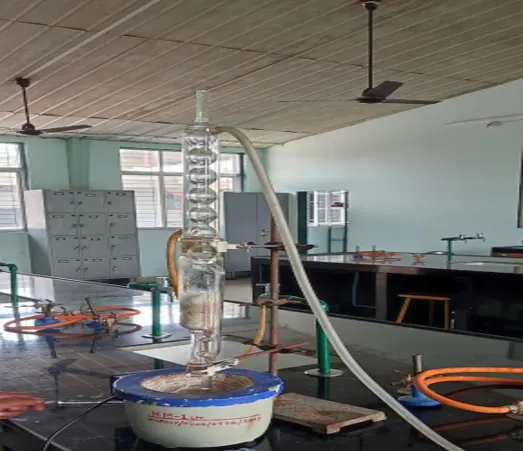
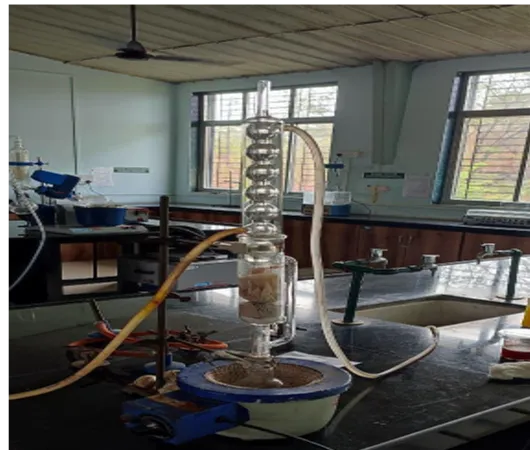
(A) Extraction of Glycyrrhiza glabra (B) Extraction of Punica granatum
Fig no.1: Preparation of hydroalcoholic extracts of Glycyrrhiza glabra and Punica granatum
2.5. Preliminary phytochemical screening:
2.5.1 Ferric chloride test: 1gm of extract was treated with 5% ferric chloride solution and the development of a dark bluish-green colour was recorded as a positive reaction for phenolic/tannin constituents [10].
5.2 TLC analysis:
TLC analysis was performed to detect the presence of characteristic phytoconstituents in the hydroalcoholic extracts of Glycyrrhiza glabra and Punica granatum [9,10]. Silica gel plates were used as the stationary phase and ethyl acetate: methanol: water (8:1:1) was used as the mobile phase. The hydroalcoholic extracts were applied on to the TLC plates and developed in a chamber containing mobile phase. After development the plates were dried and the separated spots were visualized under the appropriate detection conditions and the Rf values were obtained.
2.6 Formulation of Mucoadhesive Buccal Film: Mucoadhesive buccal films containing the hydroalcoholic extracts of Glycyrrhiza glabra and Punica granatum were prepared using the solvent casting technique [4]. HPMC K15 and Carbopol were used as film-forming and mucoadhesive polymers, respectively [11]. The polymers were weighed and dissolved in the water with continuous stirring to obtain a uniform polymeric solution. The hydroalcoholic extracts were then incorporated into the polymeric solution and mixed thoroughly to obtain a homogenous formulation. The PEG400, Tween 80 and Triethanolamine were added and to the formulation and mixed until a uniform, bubble-free casting solution was obtained. The prepared solution was cast onto the sheets and allowed to dry. The dried film was carefully peeled from the casting surface and cut into uniform patches of 2x2 cm2. The prepared films were stored in well-closed container until further evaluation.
Fig no.2: Composition of formulation of mucoadhesive buccal film
|
Ingredient |
Quantity taken (Per Batch) |
Quantity per film (2X 2 cm2 film) |
Function |
|
Glycyrrhiza glabra |
5.6 g |
17 mg |
Antiulcer |
|
Punica granatum |
5.6 g |
17 mg |
Antiulcer and antifungal |
|
HPMC K15 |
4 gm |
12.3 mg |
Film forming |
|
Carbopol 934 |
2 gm |
3.1 mg |
Mucoadhesive |
|
PEG 400 |
0.8 ml |
2.5 μl |
Plasticizer |
|
Tween 80 |
0.02 ml |
0.06 μl |
Penetration enhancer |
|
Triethanolamine |
q. s. |
q. s |
pH adjustment (~6–6.5) |
|
Water |
q. s. to 100 mL |
q. s |
Vehicle |
2.7 Evaluation of the prepared film:
2.7.1 Physical appearance: The prepared mucoadhesive buccal films were visually examined for colour, appearance, odour and presence of air bubbles or cracks.
2.7.2 Thickness: The thickness of the prepared films was measured using a vernier calliper [11,12]. The thickness of individual film patches was determined, and the results were obtained.
2.7.3 Folding endurance: Folding endurance was determined by repeatedly folding a film strip at the same position until it showed visible cracking or broke [11,12]. The number of folds that the film could withstand without breaking was recorded as the folding endurance.
2.7.4 Surface pH: The surface pH of the buccal film was determined to assess its compatibility with the buccal mucosa [12,13]. A film sample was moistened with a small volume of phosphate buffer and allowed to equilibrate for a predetermined period. Surface pH was evaluated by hydrating the film and measuring its pH with the calibrated pH meter using direct electrode contact.
2.7.5 Swelling index: The swelling behaviour of the prepared buccal film was determined using phosphate buffer [11,12]. A pre-weighed film was placed in the swelling medium and allowed to swell for predetermined time intervals. At each time interval, the film was carefully removed, excess surface liquid was removed using filter paper and the swollen film was weighed. The swelling index was calculated using the following equation:
Swelling index (%) = Wt – W0 x 100
W0
Where,
2.7.6 Zone of inhibition: The antifungal activity of hydroalcoholic extracts introduced in the mucoadhesive buccal film and standard marketed antiulcer gel preparation was evaluated and compared using the agar diffusion method against Candida albicans [14]. The plates were prepared using Mueller-Hinton agar on which the prepared test film samples and marketed preparation were allowed to incubate. The plates were incubated for 24hrs and the diameter of the clear zone surrounding the test sample and standard marketed preparation was measured in mm and compared.
2.7.7 Mucoadhesive strength: The mucoadhesive strength of the prepared buccal film was determined using analytical balance setup. A film sample was brought into contact with the goat buccal mucosa and the other side of the film was attached to an analytical balance pan. The force required to detach the film from the goat buccal mucosa was measured.
2.7.8 Disintegration time: The disintegration behaviour of the optimized mucoadhesive buccal film was evaluated using freshly obtained goat buccal mucosa as the biological substrate. The mucosa was thoroughly cleaned with the distilled water and the film was placed on its surface with slight pressure to ensure adequate contact. The mucosa-film assembly was then immersed in phosphate buffer (pH 6.8) maintained at 37 ± 0.5°C, simulating the physiological conditions of the oral cavity. The time required for complete disintegration of the film was determined and recorded.
3. RESULTS AND DISCUSSION:
3.1 Preliminary phytochemical screening by Ferric chloride test: The hydroalcoholic extracts of Glycyrrhiza glabra and Punica granatum were subjected to preliminary phytochemical screening using ferric chloride test to assess the presence of phenolic constituents. On the treatment of the extracts with ferric chloride reagent, a dark bluish-green colour was observed. The observed colour development was considered indicative of the presence of phenolic compounds in the extracts [10].
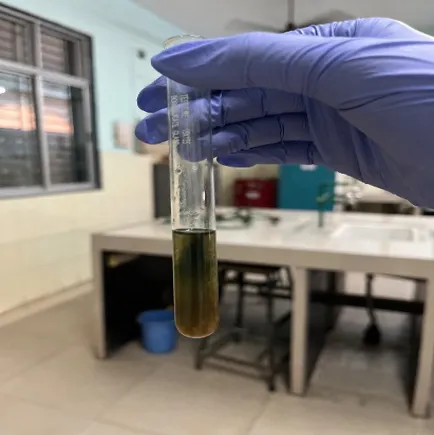
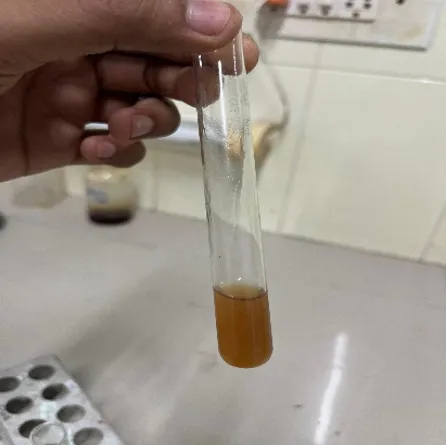
Before After
Fig no.3: Preliminary phytochemical screening by ferric chloride test
3.2 Preliminary phytochemical screening by Thin layer chromatography: TLC was performed as a qualitative chromatographic screening method to evaluate the phytochemical profile of the hydroalcoholic extracts and to assess selected marker constituents. The samples were developed using ethyl acetate: methanol: water (8:1:1) as the mobile phase. The developed chromatogram showed distinct spots. The observed Rf values were 0.13 for the Glycyrrhiza glabra extract spot tentatively assigned to glycyrrhizic acid and 0.17 for the Punica granatum extract spot tentatively assigned to ellagic acid. Glycyrrhizic acid/glycyrrhizin is a characteristic constituent reported in Glycyrrhiza glabra [17], whereas ellagic acid is among the phenolic constituents reported in Punica granatum peel [18]. The TLC findings therefore complemented the preliminary ferric chloride test by providing a chromatographic basis for the presence of selected marker compounds.
|
Plant extract |
Marker compound |
Mobile phase |
Rf value |
|
Glycyrrhiza glabra |
Glycyrrhizic acid |
Ethyl acetate: Methanol: water (8:1:1) |
0.13 |
|
Punica granatum |
Ellagic acid |
Ethyl acetate: Methanol: water (8:1:1) |
0.17 |
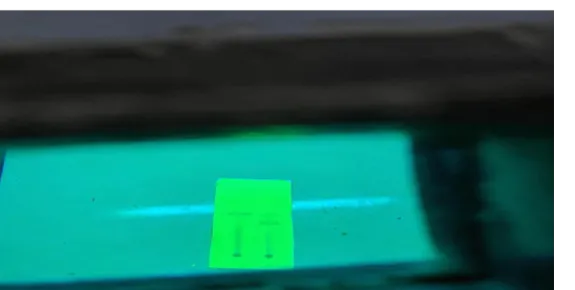
Fig no.4: TLC of hydroalcoholic extracts
3.3 Physical appearance: The prepared mucoadhesive buccal films were visually examined for appearance, colour, odour, surface characteristics and flexibility. The films were found to be smooth and uniform, with no visible cracks or air bubbles on the surface. The colour and odour of the films were pale yellow and mild herbal odour, which may be attributed to the incorporated hydroalcoholic extracts of glycyrrhiza glabra and Punica granatum. The absence of visible physical defects indicated satisfactory film formation and drying of the polymeric matrix.
Fig no.5: Physical characteristics of mucoadhesive buccal film
|
Parameter |
Observation |
|
Colour |
Pale yellow |
|
Appearance |
Smooth, uniform |
|
Surface |
Smooth |
|
Texture |
Flexible |
|
Homogeneity |
Uniform |
|
odour |
Mild herbal odour |
3.4 Thickness determination: The thickness of the prepared buccal film was determined to assess the uniformity of the cast film. The thickness of the film was found to be 1mm. The low variation in thickness indicated uniform spreading of the polymeric solution and consistent drying during the film preparation. A uniform film thickness is important because it contributes to reproducible weight and dose distribution within individual film units [11,12].
3.5 Folding endurance: Folding endurance was evaluated by repeatedly folding the film at the same location until visible cracking or breaking occurred. The prepared film exhibited a folding endurance of 197 folds. The observed folding endurance indicated adequate flexibility and mechanical strength of the film. Flexibility is an important practical property for buccal films because the dosage form should tolerate handling during application [4,11,12]. The flexibility of the optimized film may be attributed to the combined contribution of HPMC and Carbopol, which provided an appropriate polymeric matrix.
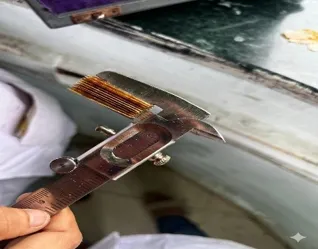
Fig no. 6 Thickness
3.6 Surface pH: The surface pH of the prepared buccal film was determined after allowing the film to equilibrate with a small quantity of phosphate buffer. The surface pH was found to be 6.6. The surface pH was found to be 6.6. The obtained value was within the near-neutral range reported for buccal films and was close to the physiological pH range of the buccal mucosa [12,13]. An appropriate surface pH is desirable because marked deviation from physiological conditions may contribute to discomfort or local irritation [12,13].
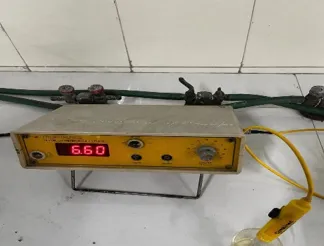
Fig no.7: Surface pH
3.7 Swelling index: The swelling behaviour of the optimized buccal film was evaluated by determining the increase in film weight after exposure to the phosphate buffer at predetermined time intervals. The film demonstrated progressive swelling with increasing exposure time. The initial weight of the film was 100mg, which increased to 120mg after 30min. After 1hr, 1.5hr and 2hr the weight was increased to 180mg, 240mg, 260mg, respectively. The progressive increase in film weight indicated hydration and expansion of the polymeric matrix. Swelling of the film is important for buccal drug delivery because hydration facilitates intimate contact between the formulation and the mucosal surface and can contribute to mucoadhesion [11,12].
|
Time |
Initial weight (mg) |
Final weight (mg) |
Swelling index |
|
30min |
100 |
120 |
20% |
|
1hr |
100 |
180 |
80% |
|
1.5hr |
100 |
240 |
140% |
|
2hr |
100 |
260 |
160% |
3.8 Zone of inhibition: The antimicrobial activity of the formulation film was evaluated by the agar diffusion method against Candida albicans to obtain preliminary evidence of its potential applicability in the management of oral candidiasis (oral thrush) [14]. The microorganism was selected because C.albicans is a major fungal pathogen associated with oral candidiasis and may contribute to oral mucosal ulcerative lesions. The formation of a clear zone surrounding the sample indicated fungal growth inhibition. The zone of inhibition by prepared mucoadhesive buccal film was measured as 18mm whereas, the standard marketed preparation of oral antiulcer drug showed zone of inhibition of 20mm. The difference in inhibition zones provides a preliminary comparison between prepared herbal mucoadhesive buccal film and marketed anti-ulcer gel preparation, under the experimental conditions. The formulation produced an 18-mm zone of inhibition against Candida albicans under the experimental conditions, providing preliminary evidence of in-vitro antifungal activity.
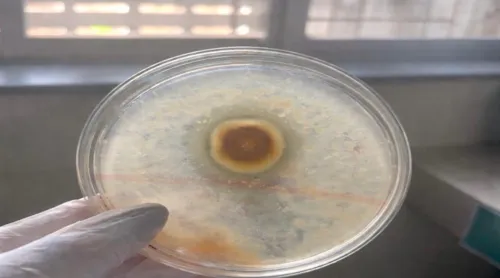
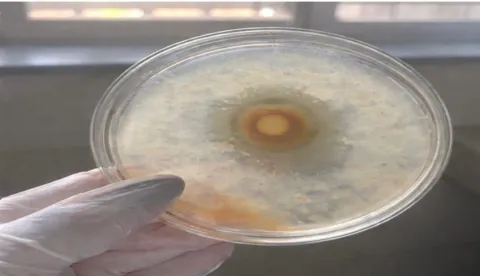
Zone of inhibition by mucoadhesive buccal film zone of inhibition by marketed oral antiulcer gel
Fig no.8: Zone of inhibition comparison between antiulcer mucoadhesive buccal film and marketed oral antiulcer gel
|
ZONE OF INHIBITION OF HERBAL EXTRACT (Glycyrrhizic acid & Ellagic acid) |
ZONE OF INHIBITION OF SMILE GEL (Benzalkonium Chloride, Choline salicylate & Menthol) |
|
18mm |
20mm |
3.9 Mucoadhesive strength: The mucoadhesive strength of the prepared buccal film was evaluated using freshly obtained goat buccal mucosa as the biological substrate. An analytical balance setup was used to determine the force required to detach the film from the mucosal surface. The prepared film was carefully placed in contact with the goat buccal mucosa and the other side of the film was attached to the analytical balance pan. The force required to detach the film from the goat buccal mucosa was measured. The force of detachment was found to be 0.147 N, corresponding to approximately 15 g under the reported experimental setup. The prepared mucoadhesive buccal film therefore demonstrated measurable mucoadhesive strength under the test conditions. The force required for detachment reflects the interaction between the mucoadhesive polymeric matrix and the mucosal surface [16]. The observed mucoadhesion may be related to hydration of hydrophilic polymers such as HPMC and Carbopol and their interaction with the mucus layer [2,16].
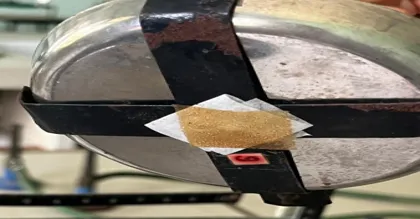
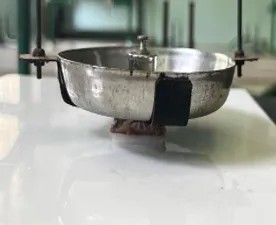
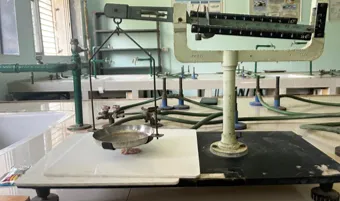
Fig no.9: Mucoadhesive strength of film
3.10 In-vitro disintegration: The disintegration behaviour of the optimized mucoadhesive buccal film was evaluated using freshly obtained goat buccal mucosa as the biological substrate. The mucosa-film assembly was immersed in phosphate buffer (pH 6.8) maintained at 37 ± 0.5°C, simulating the physiological conditions of the oral cavity.
The optimized mucoadhesive buccal film exhibited a disintegration time of 55 sec under the experimental conditions. This result describes the disintegration behaviour of the formulation; suitability for buccal delivery should be established in conjunction with other formulation characteristics and predefined acceptance criteria.
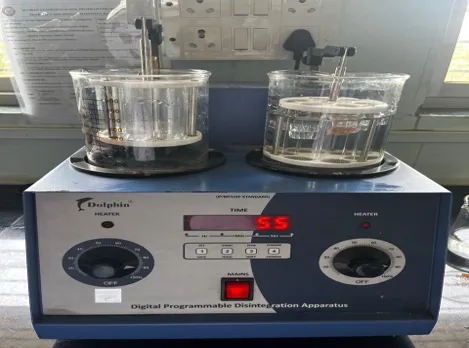
Fig no.10: Disintegration time
4. CONCLUSION:
The present study successfully demonstrated the development of a mucoadhesive buccal film incorporating hydroalcoholic extracts of Glycyrrhiza glabra and Punica granatum for potential application in the management of oral ulcers. Preliminary phytochemical screening confirmed the presence of relevant phytoconstituents in the plant extracts, while TLC analysis provided preliminary chromatographic evidence for the selected marker constituents. The optimized buccal film exhibited satisfactory physiochemical characteristics, including uniform thickness, adequate folding endurance and suitable surface pH. The formulation also demonstrated swelling, mucoadhesive strength and appropriate disintegration behaviour indicating its ability to maintain intimate contact with the buccal mucosa. Furthermore, the film demonstrated antifungal activity against candida albicans, supporting its potential for treating oral ulcerative lesions.
Overall, the findings suggest that the developed herbal mucoadhesive buccal film may serve as a promising localized delivery system for the management of oral ulcers. However, further studies involving formulation stability, comprehensive pharmacological evaluation, in-vivo efficacy and clinical investigation are necessary to establish its therapeutic effectiveness and safety before clinical application.
5. FUTURE SCOPE:
The present study provides a preliminary basis for the development of herbal mucoadhesive buccal films containing Glycyrrhiza glabra and Punica granatum extracts for localized management of oral ulcers. Further studies are warranted to establish the long-term stability of the optimized formulation under different storage condition and to investigate its detailed drug release and permeation characteristics. In-vivo studies should be conducted to confirm the therapeutic efficacy, safety, residence time and mucosal compatibility of the formulation. Further pharmacological investigations, including evaluation of anti-inflammatory, wound healing and antifungal effects may provide a better understanding of its therapeutic potential. Finally, well-designed clinical studies are required to establish the safety, efficacy, patient acceptability and potential clinical applicability of the developed mucoadhesive buccal film.
REFERENCES


Gayatri Parmar, Viraj Lokhande, Kajal Patil, Sayali Patil, Shivam Rajak, Dr. Mohan Kale, Dr. Nilofar Khan, Formulation and Evaluation of a Mucoadhesive Buccal Film Containing Hydroalcoholic Extracts of Glycyrrhiza glabra and Punica granatum, Int. J. of Pharm. Sci., 2026, Vol 4, Issue 9, 2554-2565. https://doi.org/10.5281/zenodo.22878302
 10.5281/zenodo.22878302