

We use cookies to ensure our website works properly and to personalise your experience. Cookies policy
D.S.T.S. Mandal’s College of Pharmacy, Solapur, 413004 Maharashtra, India
The increasing prevalence of antimicrobial resistance has encouraged the development of herbal topical formulations with improved safety and therapeutic efficacy. The present study aimed to formulate and evaluate a polyherbal antimicrobial dusting powder containing Azadirachta indica (Neem) and Ocimum sanctum (Tulsi) leaf powders for the management of superficial skin infections and wound care. Ten formulations (F0–F9) were prepared by varying the concentrations of neem and tulsi leaf powders using talc, starch, kaolin, zinc stearate, and rose oil as pharmaceutical excipients. The prepared formulations were evaluated for physicochemical properties, including appearance, angle of repose, bulk density, tapped density, Carr's index, Hausner's ratio, pH, moisture content, ash values, extractive values, and skin irritancy. Antimicrobial activity was assessed against Staphylococcus aureus and Escherichia coli using the agar well diffusion method. All formulations exhibited satisfactory physicochemical characteristics, acceptable flow properties, and skin-compatible pH without producing any signs of irritation. Among the developed formulations, F6 demonstrated the highest antimicrobial activity, producing zones of inhibition of 19.86 ± 0.25 mm against Staphylococcus aureus and 17.33 ± 0.12 mm against Escherichia coli,with efficacy comparable to the marketed reference product. The findings indicate that the synergistic combination of neem and tulsi enhances the antimicrobial potential of the dusting powder while maintaining desirable pharmaceutical characteristics. The optimized formulation may serve as a promising natural topical antimicrobial preparation for the management of minor skin infections and wound healing. Further stability studies and clinical investigations are recommended to establish its long-term safety and therapeutic effectiveness.
Skin infections and wound-associated microbial contamination remain significant healthcare concerns worldwide. The increasing prevalence of antimicrobial resistance has created a demand for safe, effective, and natural alternatives to conventional antimicrobial agents [1, 3]. Herbal medicines have gained considerable attention because of their antimicrobial, anti-inflammatory, antioxidant, and wound-healing properties, along with their low toxicity and cost-effectiveness [1, 4].
Azadirachta indica (Neem) is a well-known medicinal plant possessing broad-spectrum antibacterial, antifungal, antiviral, and anti-inflammatory activities due to the presence of bioactive compounds such as nimbin, quercetin, and azadirachtin.[1,4]. Similarly, Ocimum sanctum (Tulsi) is rich in phytoconstituents including eugenol and ursolic acid, which exhibit potent antimicrobial, antioxidant, and immunomodulatory properties [2, 5, 6].
Dusting powders are widely used as topical formulations because they absorb moisture, reduce friction, protect the skin, and deliver antimicrobial agents directly to the affected area [7,-9]. Therefore, the present study aimed to formulate and evaluate a polyherbal antimicrobial dusting powder containing neem and tulsi leaf powders and to assess its physicochemical characteristics and in vitro antimicrobial activity against Staphylococcus aureus and Escherichia coli.
MATERIALS AND METHODS
Materials
Fresh leaves of Azadirachta indica (Neem) and Ocimum sanctum (Tulsi) were collected from healthy plants and authenticated before use. Pharmaceutical-grade talc, starch, kaolin, zinc stearate, and rose oil were used as formulation excipients. All analytical-grade chemicals and reagents required for phytochemical screening and antimicrobial studies, including hydrochloric acid, Dragendorff's reagent, Mayer's reagent, ferric chloride, lead acetate, Benedict's reagent, Fehling's solutions A and B, nutrient agar, peptone, beef extract, sodium chloride, and dimethyl sulfoxide (DMSO), were procured from standard laboratory suppliers.
Preparation of Plant Powder
Fresh Neem and Tulsi leaves were thoroughly washed with distilled water, shade-dried at room temperature, and pulverized using a mechanical grinder. The powdered materials were passed through sieve No. 100 to obtain a uniform particle size and stored in airtight containers until further use.
Formulation of Antimicrobial Dusting Powder
A series of dusting powder formulations (F0–F9) were prepared by varying the proportions of Neem and Tulsi leaf powders while maintaining a total weight of 100 g. The required quantities of herbal powders, talc, starch, kaolin, and zinc stearate were accurately weighed and blended by geometric dilution using a mortar and pestle. Rose oil was first adsorbed onto a small quantity of talc and then incorporated into the powder blend. The final mixture was sterilized in a hot air oven at 160°C, cooled to room temperature, sieved again, and packed in airtight containers for further evaluation.
Table 1: Formulation Table for Dusting powder
|
Sr. no |
Ingredient |
Quantity |
|||||||||
|
|
|
F0 |
F1 |
F2 |
F3 |
F4 |
F5 |
F6 |
F7 |
F8 |
F9 |
|
1 |
Azadirachta indica (Neem leaves powder) |
- |
10 |
10 |
10 |
15 |
15 |
15 |
20 |
20 |
20 |
|
2 |
Ocimum sanctum (Tulsi leaves powder) |
- |
10 |
15 |
20 |
10 |
15 |
20 |
10 |
15 |
20 |
|
3 |
Starch |
15 |
15 |
10 |
5 |
15 |
10 |
5 |
15 |
10 |
5 |
|
4 |
Talc |
60 |
50 |
50 |
50 |
40 |
40 |
40 |
30 |
30 |
30 |
|
5 |
Kaolin |
10 |
10 |
10 |
10 |
10 |
10 |
10 |
10 |
10 |
10 |
|
6 |
Zinc stearate |
15 |
5 |
5 |
5 |
10 |
10 |
10 |
15 |
15 |
15 |
|
7 |
Rose Oil |
1% |
1% |
1% |
1% |
1% |
1% |
1% |
1% |
1% |
1% |
Phytochemical Screening
Hydroalcoholic extracts of Neem and Tulsi leaves were prepared by maceration using ethanol and water. The extracts were subjected to preliminary phytochemical screening for the qualitative detection of alkaloids, saponins, tannins, phenolic compounds, carbohydrates, glycosides, proteins, amino acids, and steroids using standard pharmacognostic procedures.
Evaluation of Dusting Powder
The prepared formulations were evaluated for physical appearance, pH, particle size, abrasiveness, angle of repose, bulk density, tapped density, Carr's index, Hausner's ratio, moisture content, total ash value, acid-insoluble ash, water-soluble extractive value, alcohol-soluble extractive value, and skin irritancy according to standard pharmacopeial methods.
Antimicrobial Activity
The antimicrobial activity of the prepared formulations was assessed by the agar well diffusion method against Staphylococcus aureus and Escherichia coli. Sterile nutrient agar plates were inoculated with the test microorganisms, and wells were prepared aseptically. The dusting powder samples were dissolved in DMSO and introduced into the wells. Plates were incubated at 32–37°C for 48 h, after which the diameter of the inhibition zones was measured in millimeters. A marketed antimicrobial dusting powder (Neosporin) was used as the reference standard for comparison.
RESULTS
Preliminary Phytochemical Screening
Table 2: Phytochemical testing of Neem and Tulsi leaves powder
|
Plant constituents |
Azadirachta indica |
Ocimum sanctum |
|
Alkaloids |
++ |
++ |
|
Saponins |
-- |
-- |
|
Tannins |
-- |
++ |
|
Carbohydrates |
++ |
-- |
|
Glycosides |
++ |
++ |
|
Proteins & amino acids |
-- |
-- |
|
Steroids |
++ |
-- |
Note: ++ indicates presence, -- indicates absence
Physical Evaluation
Table 3: Physical nature of Antimicrobial Dusting Powder
|
Appearance |
Odour |
Color |
Texture |
|
Powder |
Light brown |
Characteristic |
Fine |
Physicochemical Evaluation
Table 4: Evaluation Parameters of dusting powder
|
Sr. no |
Parameters |
F0 |
F1 |
F2 |
F3 |
F4 |
F5 |
F6 |
F7 |
F8 |
F9 |
STD |
|
1 |
Angle of Repose (°) |
29.47 |
28.77 |
29.13 |
29.4 |
29.98 |
28.81 |
27.02 |
27.33 |
28.41 |
28.45 |
29.98 |
|
2 |
Bulk Density (gm/ml) |
0.4 1 |
0.44 |
0.47 |
0.51 |
0.46 |
0.53 |
0.56 |
0.55 |
0.48 |
0.51 |
0.49 |
|
3 |
Tapped Density (gm/ml) |
0.52 |
0.55 |
0.59 |
0.53 |
0.56 |
0.64 |
0.56 |
0.58 |
0.49 |
0.5 7 |
0.54 |
|
4 |
Carr’s Index (%) |
18.21 |
18.74 |
19.47 |
19.52 |
19.31 |
17.18 |
19.50 |
19.11 |
18.32 |
18.68 |
19.52 |
|
5 |
Hausner’s Ratio |
1.25 |
1.22 |
1.24 |
1.30 |
1.23 |
1.19 |
1.20 |
1.22 |
1.23 |
1.25 |
1.20 |
|
6 |
pH |
5.2 |
5.1 |
5.4 |
5.7 |
5.3 |
5.5 |
5.7 |
6.0 |
5.3 |
5.2 |
6.1 |
|
7 |
Moisture Content (%) |
11 |
13 |
14 |
12 |
14 |
16 |
15 |
15 |
10 |
11 |
11 |
|
8 |
Total Ash value (%) |
17 |
12 |
14 |
16 |
15 |
19 |
18 |
14 |
13 |
16 |
14 |
|
9 |
Acid Insoluble Ash (%) |
7 |
5 |
6 |
8 |
7 |
9 |
8 |
5 |
8 |
9 |
6 |
|
10 |
Water soluble extractive value (%) |
2.3 |
2.1 |
2.5 |
2.8 |
3 |
2.7 |
2.5 |
2.8 |
2.4 |
2.6 |
2.1 |
|
11 |
Alcohol soluble extractive value (%) |
3 |
2.8 |
3.4 |
2.9 |
4.1 |
4.5 |
4.3 |
3.3 |
3.2 |
3.8 |
2.5 |
|
12 |
Irritancy Test |
Nil |
Nil |
Nil |
Nil |
Nil |
Nil |
Nil |
Nil |
Nil |
Nil |
Nil |
Antimicrobial Activity
The antimicrobial activity of the prepared dusting powders was evaluated against Staphylococcus aureus and Escherichia coli using the agar well diffusion method. Formulation F6 (15 g Neem and 20 g Tulsi leaf powder) showed the highest antimicrobial activity, with inhibition zones of 19.86 ± 0.25 mm and 17.33 ± 0.12 mm, respectively. The enhanced activity is attributed to the synergistic action of bioactive phytoconstituents in Neem and Tulsi, indicating that F6 is a promising herbal dusting powder for topical antimicrobial and wound care applications.
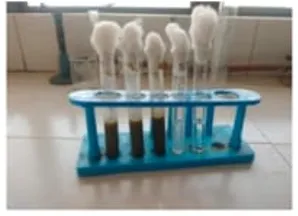
Figure 1: Different concentration of dusting powder
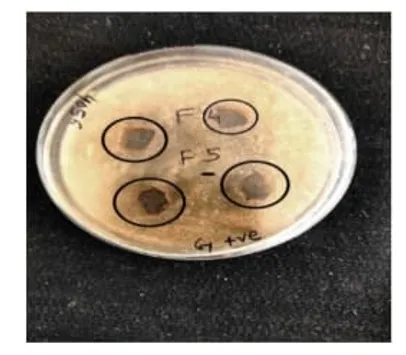
Figure 2: Zone of inhibition of F4 and F5 against Stapylococcus aureus 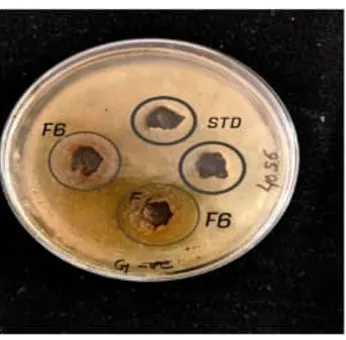
Figure 4: Zone of inhibition of F6 against Stapylococcus aureus |
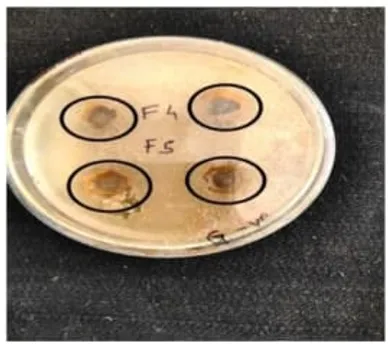
Figure 3: Zone of inhibition of F4 and F5 against E.coli 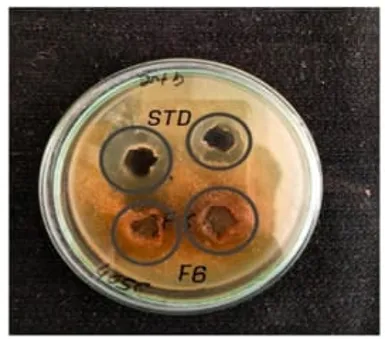
Figure 5: Zone of inhibition of F6 against E.coli |
DISCUSSION
Phytochemical screening confirmed the presence of alkaloids, carbohydrates, glycosides, and steroids in Azadirachta indica (Neem), while Ocimum sanctum (Tulsi) showed alkaloids, tannins, and glycosides. These bioactive constituents may contribute to the antimicrobial potential of the developed polyherbal dusting powder. All formulations exhibited satisfactory physical characteristics, including a fine, smooth, uniform texture and characteristic odour, indicating their suitability for topical application.
The prepared formulations showed good flow properties, with an angle of repose ranging from 27.02° to 29.98°, Carr's index of 17.18–19.50%, and Hausner's ratio of 1.19–1.30. The pH values ranged from 5.1 to 6.1, indicating skin compatibility, while moisture content remained within the range of 10–16%. The observed ash and extractive values suggested acceptable quality and the presence of extractable phytoconstituents. No signs of erythema, oedema, or skin irritation were observed, demonstrating satisfactory preliminary skin compatibility.
Among all formulations, F6 containing 15 g Neem and 20 g Tulsi leaf powder exhibited the highest antimicrobial activity, with inhibition zones of 19.86 ± 0.25 mm against Staphylococcus aureus and 17.33 ± 0.12 mm against Escherichia coli. Its activity was higher than F4 and F5 and comparable to the marketed reference formulation. The enhanced antimicrobial activity may be attributed to the combined effects of bioactive constituents present in Neem and Tulsi. Overall, the findings indicate that F6 possesses promising antimicrobial potential along with satisfactory physicochemical and skin-compatible properties, supporting its potential application as a topical herbal dusting powder for minor skin infections and wound care.
CONCLUSION
The present study successfully developed and evaluated a polyherbal antimicrobial dusting powder containing Azadirachta indica (Neem) and Ocimum sanctum (Tulsi) leaf powders. All formulations exhibited acceptable physicochemical characteristics, including good flow properties, suitable pH, low moisture content, and absence of skin irritation, indicating their suitability for topical application. Among the prepared formulations, F6 demonstrated the highest antimicrobial activity, producing inhibition zones of 19.86 ± 0.25 mm against Staphylococcus aureus and 17.33 ± 0.12 mm against Escherichia coli, which were comparable to the marketed formulation. The enhanced antimicrobial efficacy is attributed to the synergistic action of the bioactive phytoconstituents present in Neem and Tulsi. These findings suggest that the optimized herbal dusting powder is a promising, safe, and effective alternative for the prevention and management of minor skin infections and wound care. Further studies on stability, formulation optimization, and clinical evaluation are recommended to establish its therapeutic potential and commercial applicability.
ACKNOWLEDGEMENT
The authors gratefully acknowledge the support and facilities provided by the Principal, faculty members, and technical staff of D.S.T.S. Mandal's College of Pharmacy, Solapur, which enabled the successful completion of this research. The authors also sincerely thank their project supervisor for valuable guidance, constructive feedback, and continuous encouragement throughout the study. Appreciation is further extended to family members and friends for their unwavering motivation, cooperation, and support during the course of this work.
REFERENCES




Abhishek Alamad, Bhaganna Kumbhar, Ganesh Narayane, Dr. V. S. Tegeli, Formulation and Evaluation of a Polyhedral Antimicrobial Dusting Powder Containing Azadirachta indica and Ocimum sanctum Leaf Powders, Int. J. of Pharm. Sci., 2026, Vol 4, Issue 7, 6197-6203. https://doi.org/10.5281/zenodo.21727190
 10.5281/zenodo.21727190