View Article

Abstract

The skin is the largest and most adaptable organ of the human body, forming the outer covering of the integumentary system. It serves as the body’s primary defense barrier against physical, chemical, and biological threats, playing a vital role in protecting internal organs and tissues. Made up of several layers of ectodermal cells, the skin functions as an active barrier that controls the movement of water, electrolytes, and other materials, thereby maintaining internal balance and stability. Beyond protection, it performs important physiological roles such as regulating body temperature, sensing environmental stimuli, supporting immune functions, and participating in metabolic activities like the production of vitamin D and shielding vitamin B folate from ultraviolet rays. Although it seems mostly hairless, human skin actually contains hair follicles across most of its surface except in certain smooth, hair-free areas. The skin also has a remarkable ability to heal itself, mainly through the formation of scar tissue after injury. Because of its complex structure and diverse functions, the skin remains a central subject in dermatological and pharmaceutical studies, especially in the creation of therapies and formulations that promote skin repair, health, and protection. The results showed that all formulations were brown in color, had a characteristic odor, exhibited uniform consistency, and remained stable. The average pH was found to be 6.73 ± 0.078. Viscosity measurements revealed that the formulations displayed both plastic and pseudo plastic flow behavior. The irritation test confirmed that the creams were non-irritant to the skin. Based on the overall findings, formulation F6 demonstrated superior stability and strong antioxidant potential, making it the most effective among the tested formulations. According to previous research, anthocyanin is the key constituent in pomegranate responsible for its anti-aging effects.

Keywords

Pomegranate Fruit Peel; Antiaging; Anti-oxidant Potential; Ageing of skin.

Introduction

× Popup Image

In today’s world, there is a growing desire among individuals—regardless of age, gender, education, or profession—to maintain a youthful and attractive appearance. This aspiration has significantly increased the demand for cosmetic products. Within the cosmetic industry, the anti-aging segment represents one of the fastest-growing markets, driven by consumer interest in products and treatments that address the visible signs of aging. Modern consumers are becoming increasingly aware of the ingredients used in cosmetic formulations. Natural ingredients derived from plants, minerals, and other biological sources are perceived to be safer, healthier, and gentler on the skin compared to synthetic compounds. Consequently, the demand for natural and organic cosmetics has risen considerably. Against this backdrop, the present study focuses on the formulation of an anti-aging cream derived from herbal sources.  
Aging of the Skin and the Role of Herbal Cosmetics in Skin Aging

Oxidative stress plays a central role in the process of skin aging. It arises from an       imbalance between the generation of reactive oxygen species (ROS) and the body’s ability to neutralize them. These ROS are produced both endogenously, such as within mitochondria of   skin cells, and exogenously, due to factors like ultraviolet (UV) radiation, pollution, and smoking. Excessive ROS can damage cellular components—including proteins, lipids, and DNA—leading to inflammation, reduced collagen synthesis, and the degradation of collagen and elastin fibers. These structural proteins are essential for maintaining skin firmness and elasticity. Over time, the cumulative damage from oxidative stress manifests as fine lines, wrinkles, and other visible signs of aging. The use of anti-aging skincare products containing antioxidants, combined with lifestyle modifications, can help minimize oxidative stress and support healthier, more youthful-looking skin. Herbal cosmetics are products formulated using various naturally derived ingredients that enhance skin health and appearance. These formulations harness the therapeutic properties of herbs to protect, nourish, and rejuvenate the skin, providing a safer and more sustainable alternative to synthetic cosmetic preparations.

Anti-Aging Herbal Cream

Creams are semisolid biphasic preparations that consist of two immiscible liquids, where one phase is dispersed as fine globules within the other. They are broadly classified into two categories: aqueous creams (oil-in-water emulsions) and oily creams (water-in-oil emulsions). To ensure stability and prevent microbial contamination, creams often include appropriate antimicrobial preservatives, unless the active components or the base materials possess inherent antibacterial and antifungal properties. Aqueous creams are particularly prone to bacterial and mold growth; therefore, the addition of preservatives is essential in their formulation. In the present study, an herbal anti-aging cream is proposed to be formulated using the peel extract of Punica granatum (commonly known as pomegranate) belonging to the Punicaceae family. Beeswax and almond oil will serve as the cream base, while sandalwood powder will be incorporated as a natural skin-brightening agent.
Literature survey

  1. Masaki (2010): ROS cause skin aging; antioxidants prevent damage and maintain elasticity.
  2. Kaur & Kapoor (2001): Pomegranate rich in polyphenols and vitamin C—strong antioxidants.
  3. Jurenka (2008): Pomegranate leaves contain bioactive  compounds with antioxidant and anti-inflammatory effects.
  4. Sharma et al. (2015): Pomegranate peel cream reduces UV induced collagen damage.
  5. Kauretal.(2012): Polyherbal cream showed strong antioxidant and stability results.
  6. Saxenaetal.(2019): Pomegranate peel cream effective; leaf extract remains unexplored.
  7. Teenage acne vulgaris mainly impacts the facial areas. Arora et al. (2011) depicted a correlation between adolescent acne severity and increased sebum production and hormonal fluctuations.
  8. Smoking habits are also correlated with the intensity of acne, as per Schäfer et al. (2011).
  9. Additional factors include anxiety, types of food, study pressure, drug intake, and environmental conditions (McDowell et al., 2005, Naghdi and Ghane, 2017, Wei et al., 2010).
  10. Herbal and fruit extracts were chosen to treat acne for their potential safety compared to allopathic drugs known for side effects (Ali et al., 2019).
  11. For instance, Rahimian et al. (2013) tested ethanolic extracts of Azadirachta indica (neem), Ocimum sanctum (tulsi), and other herbs in disc diffusion assays to examine their inhibitory effects on Propionibacterium acnes and Staphylococcus epidermidis, similar to the methodology of this study.
  12. The essential oil of Rosmarinus officinalis was also assessed for its impact on P. acnes by (Rafieian-Kopaei et al., 2014), who noted significant antibacterial properties and morphological changes in the bacteria.
  13. A comparable disc diffusion assay was conducted using ethanolic leaf extracts of Eucalyptus species by Alajeel et al. (2020), which reported strong inhibition zones against gram-positive acne-related bacteria by the current study.
  14. Melaleuca alternifolia (tea tree) essential oil has been shown to possess both antimicrobial and anti-inflammatory activities, typically evaluated in vitro (Carson et al., 2006)
  15. In contrast, liquorice root extract exhibited the least activity, resulting in smaller zones of inhibition. Additionally, turmeric extract ranked as the second most significant finding in the study (Abdulhadi et al., 2023).
  16. The lemon extract had a notably weak inhibitory effect on acne strains. The finding is consistent with Khan and Hanee (2011), who highlighted the potential of pomegranate peel against acne strains.
  17. Lemon juice has been shown to suppress bacteria such as Staphylococcus aureus and Staphylococcus epidermidis, which are isolated from acne sores (Chaudhari et al., 2016).
  18. The bacterial species that cause acne vulgaris, Propionibacterium acnes, is highly susceptible to Citrus limon (Shinkafi and Ndanusa, 2013).
  19. both gram-positive and gram-negative bacteria have demonstrated resistance to the antibacterial effects of sweet lime juice (Hindi and Chabuck, 2013).
  20. Butyric acid, which is detected in the ethanolic extract of Cassia fistula, helps in soothing skin ulcerations and in the mitigation of UV-induced skin damage (Keshari et al., 2019).
  21. It has anti-microbial properties against the bacteria, i.e., Cutibacterium acnes (linked to acne vulgaris) (Keshari et al., 2020).
  22. These biofilms are inhibited by butyric acid. The inhibition of biofilm formation prevents persistent skin infections and antibiotic resistance (Blaskovich et al., 2019).
  23. In studies involving human skin fibroblasts, Amaltas (C. fistula) was found to have significant anti-aging effects, making it suitable for cosmetic products aimed at whitening and anti-aging (Limtrakul et al., 2016).
  24. The extract of Daru Haldi demonstrated greater inhibition compared to the neem extract (Daud et al., 2013), ensuring that these two have the potential to be used against acne.
  25. Emerald et al. (2016) found that naturally produced preservatives are preferred over chemical ones, and herbal facial creams often have shorter shelf lives than their chemically derived counterparts.
  26. Hydroxymethyl furfural, detected in both pomegranate and tulsi, exhibits similar beneficial effects, helping to combat inflammation and oxidative stress (Niu et al., 2018, Türky?lmaz et al., 2023, National Center for Biotechnology Information, 2025).
  27. It can be used either by itself or with topical retinoids and antibiotics to treat mild to moderate acne and can help prevent the development of resistant strains of Propionibacterium acnes in cases of severe acne (Takma and Korel, 2024).
  28. Another phytocomponent detected in neem is mahmoodin, which is a tetranortriterpenoid, more specifically known as a 3,4-seco-ursane derivative, and was previously seen to have significant results against gram-negative and gram-positive organisms.
  29. Acne vulgaris is a prevalent skin disease, affecting around 85% of the population and leading to various psychological consequences, including anxiety, depression, and in extreme cases, suicidal tendencies (Keshari et al., 2019).
  30. The colonization and growth of P. acnes, but the exact ways in which P. acnes contributes to acne are not fully understood (Zhu et al., 2019). Antibiotics, like clindamycin and tetracycline, are frequently utilized to manage acne vulgaris,
  31. Treatments with herb combination Dang Gui-Yi Mu can improve reproductive performance sows by prevent abortion through regulating T helper (Th)1/Th2 cells (Bi et al., 2021).
  32. The high chlorogenic acid content in Eucommia ulmoides Oliv. (Clifford et al., 2017) was found to mitigate clinical-type endometritis caused by the co-stimulation of lipopolysaccharide and exotoxin from Streptococcus pyogenes by lowering the inflammatory response, uterine damage, and purulent exudate (Gao et al., 2021).
  33. Olivil possesses antioxidant and anti-inflammatory properties, mediating anti-inflammatory actions by inhibiting tumor necrosis factor (TNF)α, interleukin (IL)-1β, and other inflammatory mediators (Yamauchi et al., 2005).
  34. Medicarpin is similar to 17β-estradiol and inhibits TNFα-induced upregulation of IL-6 (Tyagi et al., 2010), while glabridin induces proliferation of endometrial epithelial cells and reduces the occurrences of endometrial cancer (Su Wei Poh et al., 2015) and recurrent miscarriage (Pan et al., 2014).
  35. Glabridin also reduces the release of inflammatory factors, such as IL-6 and IL-1β (Kang et al., 2005) by inhibiting nuclear factor-κB (NFκB) and the mitogen-activated protein kinase (MAPK) signaling pathway (C. Zhang et al., 2020).
  36. The Process induces endothelial cell proliferation, chemotactic migration, and formation of vascular lumina, eventually leading to the functional maturation of neocapillaries, which represent the completion of angiogenesis (Gourvas et al., 2012).

Need of Work

1. Background Context:

Skin care products today increasingly use natural and herbal ingredients due to consumer preference for safer, biocompatible, and eco-friendly formulations.

Pomegranate (Punica granatum) is widely known for its antioxidant, anti-inflammatory, and anti-aging properties, primarily attributed to its rich polyphenolic and flavonoid content.

However, most research and cosmetic formulations have focused on pomegranate fruit, peel, or seed oil, while pomegranate leaves remain underexplored despite containing bioactive compounds such as tannins, phenols, and flavonoids with proven antioxidant and antimicrobial effects.

2. Identified Gap:

Limited studies have investigated topical formulations using pomegranate leaf extract, particularly in the form of face creams.

There is a lack of standardized formulation methods and data on stability, physicochemical characteristics, and skin compatibility of such creams.

The comparative efficacy of pomegranate leaf extract versus other plant-based antioxidants in cosmetic formulations also remains insufficiently explored.

3. Justification for the Study:

Exploring pomegranate leaf extract can add value to agricultural by-products, promoting sustainability and waste reduction.

Developing a face cream formulation could demonstrate the practical applicability of the extract in skincare, targeting oxidative stress, acne, and early signs of aging.

The study may contribute to scientific validation and standardization of herbal cosmetic formulations.

4. Expected Outcomes:

Development of a stable, effective, and consumer-acceptable herbal face cream containing pomegranate leaf extract.

Establishment of baseline data on the extract’s cosmetic potential, encouraging further pharmacological and dermatological research.

Chemical Constituents of Pomegranate (Punica granatum) Leaves

Pomegranate leaves are rich in various bioactive phytochemicals that contribute to their pharmacological and cosmetic properties. The key classes of active constituents and their representative compounds are as follows:

1. Flavonoids (Polyphenols) – Quercetin, Kaempferol, Luteolin

Function: These compounds exhibit strong antioxidant and anti-inflammatory properties. They effectively scavenge free radicals and help prevent collagen breakdown, thereby protecting the skin from premature aging.

2. Tannins / Ellagitannins – Punicalagin-like compounds, Hydrolyzable tannins

Function: Known for their potent antioxidant and astringent actions, tannins also possess antimicrobial properties that help in maintaining skin health and preventing infections.

3. Phenolic Acids – Gallic acid, Ellagic acid and their derivatives

Function: These acids demonstrate significant antioxidant and anti-inflammatory activities. They also contribute to skin brightening and protection against oxidative stress.

4. Anthocyanins – (Present in trace amounts depending on cultivar and season)

Function: Act as natural pigments with antioxidant benefits. Though more abundant in pomegranate fruits and flowers, small quantities may also occur in the leaves.

5. Terpenoids and Sterols – Minor triterpenes and plant sterols

Function: These compounds support anti-inflammatory activity and contribute to strengthening the skin’s natural barrier.

6. Alkaloids and Other Minor Constituents – (Trace amounts depending on plant source)

Function: Present in small concentrations, these compounds may contribute to the overall bioactivity of the extract through various mechanisms.

Extraction of Pomegranate for Face Cream Preparation

1. Collection and Preparation of Plant Material

Source: Fresh pomegranate (Punica granatum) fruits and leaves are collected from a reliable source.

Cleaning: The collected material is washed thoroughly with distilled water to remove dust and impurities.

Drying: The cleaned material (peel, seeds, or leaves—depending on desired extract) is shade-dried for 7–10 days to preserve active compounds.

Powdering: The dried material is finely powdered using a grinder and sieved to obtain uniform particle size.

2. Extraction Process

A. Solvent Extraction (Common Method)

Solvent Used: Ethanol, methanol, or hydro alcoholic mixture (ethanol: water, 70:30).

Procedure:

  1. Take the powdered pomegranate material (e.g., 50 g).
  2. Add solvent in a ratio of 1:5 (w/v).
  3. Macerate for 48–72 hours with occasional shaking or stir on a magnetic stirrer.
  4. Filter through muslin cloth followed by Whatman filter paper.
  5. Concentrate the filtrate using a rotary evaporator or water bath at 40–50 °C.
  6. Dry the extract and store it in an airtight container at 4 °C until use.

Ingredients

Sr. No.

Ingredients

Quantity (% w/w)

Function/Role

1)


Pomegranate (Punica granatum) Leaf Extract

7.5

Antioxidant, anti-aging, protect skin from free radicals.

2)

Steric Acid

2.0

Emulsifying agent, provides cream consistency

3)

Cetyl alcohol

1.5

Emollient, thickener, stabilizer, glycerin

4)

Glycerin

4.0

Humectant, retains skin moisture

5)

Mineral Oil/ Light Liquid Paraffin

5.0

Emollient, softens and smoothens skin

6)

Triethanolamine(TEA)

1.0

pH adjuster, emulsifier

7)

Propylene Glycol

3.0

Solvent, humectant, improves absorption

8)

Methyl Paraben

0.2

Preservative

9)

Propyl Paraben

0.02

Preservative

10)

Rose Water /Distilled Water

q.s. to 100

Vehicle, provides base for cream

11)

Perfume(optional)

q.s

Fragrance, enhances consumer appeal

Method of Preparation

The cream is prepared by the emulsion method (oil-in-water type).

Step 1: Preparation of Extract

  • Fresh or dried pomegranate parts (peel/leaves) are powdered.
  • Extraction is done using ethanol or hydro alcoholic solvent through maceration or Soxhlet extraction.
  • The extract is filtered and concentrated under reduced pressure to obtain a semi-solid mass.

Step 2: Preparation of Oil Phase

  • Stearic acid, cetyl alcohol, beeswax, and oil (coconut/almond/mineral) are melted together at 70–75°C.

Step 3: Preparation of Aqueous Phase

  • Glycerin, methyl paraben, and distilled water are heated separately to 70–75°C until dissolved.

Step 4: Emulsification

  • The aqueous phase is slowly added to the oil phase with continuous stirring until a uniform emulsion is formed.
  • The mixture is stirred continuously while cooling to room temperature.

Step 5: Addition of Extract and Perfume

  • The pomegranate extract is added with constant stirring.
  • Perfume (optional) is added when the mixture reaches room temperature.
  • The cream is stored in airtight containers.

Evaluation Parameter

1) Organoleptic Evaluation:

The physical characteristics of the formulated cream were assessed through visual inspection to analyze organoleptic properties such as color, odor, appearance, and homogeneity after storage.

2) Homogeneity:

The homogeneity of the prepared cream was evaluated by visual observation immediately after formulation. A small amount of the cream was placed between the thumb and index finger to assess its uniformity and consistency, determining whether the preparation was homogeneous or not.

3) Dye Test:

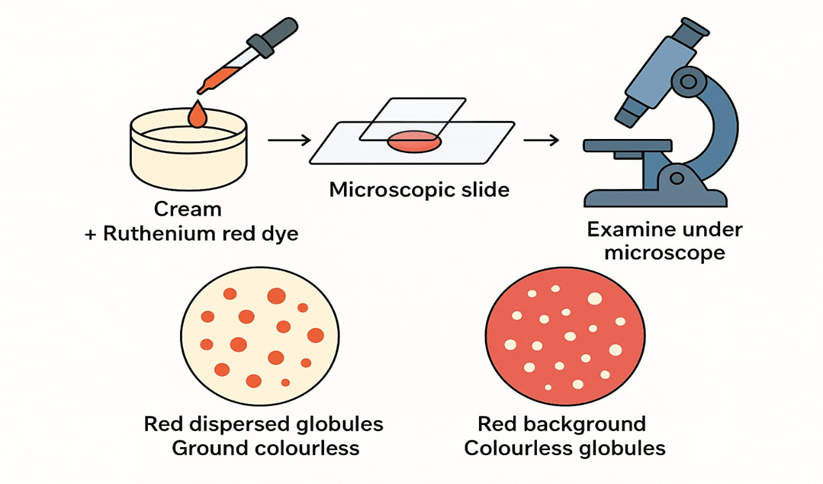
To determine the type of emulsion, the ruthenium red dye test was performed. A small quantity of cream was mixed with the dye, and a drop of the mixture was placed on a microscopic slide, covered with a cover slip, and examined under a microscope. If the dispersed globules appeared red with a colorless background, the formulation was identified as an oil-in-water (O/W) type cream. Conversely, if the background appeared red and the globules were colorless, it indicated a water-in-oil (W/O) type emulsion.
4) pH Determination:

The pH meter was calibrated using standard buffer solutions. Approximately 1 g of the cream was weighed and dissolved in 50 ml of distilled water. The pH of the resulting suspension was measured at 27°C.

5) Viscosity Measurement:

The viscosity of the formulation was determined using a rotational-type viscometer (Brookfield DVII+ Pro, spindle No. 7) at 25 ± 1°C. Measurements were taken in triplicate at 100 rpm, and the results were expressed in centipoise (cP).

6)  Spreadability:

One gram of the cream sample was placed between two glass slides measuring 20 cm × 20 cm. A weight of 100 grams was positioned on the upper slide to evenly spread the cream into a thin layer between the slides. Afterward, the weight was carefully removed, and the upper slide was attached to a stand without causing any disturbance. a weight of 30 g was tied to it. The time required for the upper slide to move a distance of 5.0 cm and completely separate from the lower slide under the influence of the attached weight was recorded.

S = \ frac {M \times {L} {T}

Where:

S = Spreadability

M = Weight tied to the upper slide (g)

L = Distance travelled by the slide (cm)

T = Time taken (seconds)

7)  Stability Studies:

Stability studies were conducted to assess the impact of temperature, humidity, and light on the drug product and substance, as well as to evaluate their overall quality. The stability of the formulated cream was examined in accordance with ICH guidelines. The final formulations were stored in their containers at room temperature (26 ± 2°C) and in a refrigerator (4 ± 2°C) for a duration of two months. At the end of the study period, the samples were analyzed for physical characteristics and viscosity.

8) Adhesion Test:

The results of the adhesion test for the cream formulation indicated that it possessed good adhesive properties, as evidenced by a value exceeding one second. This demonstrates that the cream is capable of maintaining effective contact with the skin, thereby enhancing its intended effectiveness.

Mechanism of Action

1.Antioxidant Activity:

Active constituents: Flavonoids (quercetin, kaempferol), tannins, and polyphenols.

Mode of action:

These phytochemicals effectively scavenge reactive oxygen species (ROS) and neutralize free radicals formed due to UV exposure, pollution, or oxidative stress.

By minimizing oxidative damage, they inhibit lipid peroxidation within skin cells and protect structural proteins like collagen and elastin from breakdown.

Consequently, the extract slows down the aging process and preserves the skin’s natural youthfulness and radiance.

i.e. Diminished fine lines, wrinkles, and overall dullness.

2. Anti-inflammatory Effect:

Active constituents: Ellagic acid and punicalagin.

Mode of action:

These compounds suppress the production of inflammatory mediators such as cyclooxygenase (COX) and lipoxygenase (LOX) enzymes.

They also downregulate pro-inflammatory cytokines like IL-6 and TNF-α, thereby reducing irritation, swelling, and redness of the skin.

i.e.Soothed, calm, and evenly toned skin.

3. Antibacterial and Antifungal Properties:

Active constituents: Alkaloids, tannins, and phenolic compounds.

Mode of action:

The bioactive molecules disrupt microbial cell walls and membranes, thereby inhibiting the proliferation of bacteria and fungi, particularly Propionibacterium acnes, responsible for acne.

This action prevents infections and helps in controlling breakouts, keeping the skin healthy and clean.

i.e. Clear, blemish-free, and healthier-looking skin.

4. Collagen Protection and Regeneration:

Active constituents: Ellagic acid and polyphenols.

Mode of action:

These compounds stimulate fibroblast cells, which are responsible for collagen production, enhancing skin firmness and elasticity.

They also inhibit matrix metalloproteinases (MMPs)—enzymes that degrade collagen and elastin—thus preserving the skin’s structural integrity.

i.e. Enhanced skin elasticity, reduced sagging, and visible anti-aging benefits.

5. Skin Brightening and Healing:

Active constituents: Polyphenols and antioxidant-like vitamins.

Mode of action:

The extract inhibits tyrosinase enzyme activity, thereby decreasing melanin production and helping to fade dark spots and pigmentation.

It also accelerates wound repair by stimulating the growth of keratinocytes and fibroblasts, promoting tissue regeneration.

i.e. Brighter, even-toned skin with improved healing capacity.

6. Moisturizing and Barrier Protection:

Mode of action:

The extract reinforces the skin’s natural lipid barrier, which helps reduce transepidermal water loss (TEWL) and maintains hydration levels.

In combination with the cream’s emollient base, it improves skin softness and texture, ensuring long-lasting moisturization.

i.e. Smooth, supple, and well-hydrated skin

Results and Discussion

The ethanolic extract of Punica granatum (pomegranate) leaves was successfully obtained as a dark brown semi-solid mass, indicating the presence of active phytoconstituents such as flavonoids and tannins with strong antioxidant potential. The extract was effectively incorporated into a stable herbal anti-aging cream using the oil-in-water (O/W) emulsion method.

The formulated cream showed desirable organoleptic characteristics—smooth texture, uniform color, pleasant odor, and homogeneous appearance—indicating successful emulsification. The pH (5.8–6.3) was within the acceptable skin range, ensuring compatibility and safety for topical application. Viscosity values confirmed appropriate consistency, allowing smooth application without greasiness.

The ruthenium red dye test identified the cream as an oil-in-water type, suitable for cosmetic use due to its light, non-oily nature. Spreadability and adhesion tests showed good spreading and adherence, suggesting effective coverage and prolonged contact on the skin. Stability studies over two months showed no phase separation, discoloration, or change in pH or viscosity, proving the formulation’s stability under different storage conditions.

Overall, the results demonstrate that Punica granatum leaf extract can be successfully formulated into a stable and effective herbal anti-aging cream with desirable physical, chemical, and aesthetic properties. Its natural antioxidant activity supports its potential use in preventing oxidative skin damage and delaying visible signs of aging.

CONCLUSION

The present study successfully formulated and evaluated an herbal antioxidant face cream using Punica granatum (pomegranate) leaves extract. The cream exhibited desirable physicochemical characteristics, including smooth texture, uniform consistency, stable emulsion type, and an acceptable pH compatible with skin physiology. Evaluation parameters such as spreadability, viscosity, and adhesion confirmed the cream’s suitability for topical application, while the irritation test demonstrated that the formulation was safe and non-irritant to the skin.

Antioxidant analysis using the ABTS method revealed that the pomegranate-based formulations possessed significant free radical scavenging activity, comparable to that of standard synthetic antioxidants. Among the tested formulations, F6 showed superior stability and antioxidant efficacy, highlighting the potential of pomegranate extract as a natural, effective, and safe ingredient for anti-aging cosmetic preparations.

Overall, the study validates that herbal formulations containing pomegranate extract can serve as promising alternatives to conventional synthetic creams, providing natural antioxidant protection and promoting healthier, more youthful skin.

REFERENCES

  1. Kalayc?o?lu, Z., & Erim, F. B. (2017). Antioxidant properties of pomegranate (Punica granatum L.) peels and extracts: Comparison with other natural antioxidants. Journal of Food Chemistry, 221, 126–133.
  2. Aguilar-Zárate, P., et al. (2017). Isolation and antioxidant activity of punicalagin from pomegranate peel. Industrial Crops and Products, 107, 564–571.
  3. Milani, A., et al. (2018). Comparative antioxidant potential of pomegranate and guava extracts. Phytotherapy Research, 32(4), 620–628.
  4. ICH Guidelines (Q1A(R2)). Stability Testing of New Drug Substances and Products.
  5. BPOM RI (2014). In Vivo Nonclinical Toxicity Test Guidelines.
  6. Anonymous. (2011). Indian Pharmacopoeia, Government of India, Ministry of Health and Family Welfar.
  7. Lachman, L., Lieberman, H. A., & Kanig, J. L. (1986). The Theory and Practice of Industrial Pharmacy (3rd ed.). Lea & Febiger.
  8. Gennaro, A. R. (2000). Remington: The Science and Practice of Pharmacy (20th ed.). Lippincott Williams & Wilkins.
  9. Brasil. Agência Nacional de Vigilância Sanitaria - ANVISA. Brasília; 2004. Cosméticos Guia de Estabilidade de Produtos Cosméticos. 1 5ª Ed: 15-35.
  10. Carneiro J, Gonçalves MM, Pereira VA. Development and Evaluation of an Anti-aging Cosmetic Formulation Exploring Antioxidant Potential of Vitis vinifera L. Int J Pharm Compd. 2020 Nov-Dec;24(6):515-518.
  11. Cavinato, M., Waltenberger, B., Baraldo, G., Grade, C., Stuppner, H., & Jansen-Dürr, P. (2017). Plant extracts and natural compounds used against UVB-induced photoaging. Biogerontology,18(4),499-516.
  12. Chang, M. (2015). Reducing microplastics from facial exfoliating cleansers in wastewater through treatment versus consumer product decisions. Marine Pollution Bulletin, 101(1), 330–333.
  13. Maluf DF, Gonçalves MM, D’Angelo RWO, Girassol AB, Tulio AP, Pupo YM, et al. Cytoprotection of Antioxidant Bio compounds from Grape Pomace: Further Exfoliant Phytoactive Ingredients for Cosmetic Products. Cosmetics. 2018; 5 (46): 1 -11.
  14. Milani LPG, Garcia NOS. Morais MC, Dias ALS, Olivera NL, Coneição EC. Extract from byproduct Psidium guajava standardized in ellagic acid: additivation of the in vitro photo protective efficacy of a cosmetic formulation. Brazilian Journal of Pharmacognosy. 2018; 28: 692 – 696.
  15. Perugini P, Bleve M, Redondi R, Cortinovis F, Colpani A. In vivo evaluation of the effectiveness of bio cellulose facial masks as active delivery systems to skin. J Cosmet Dermatol. 2020 Mar;19(3):725-735.
  16. Sharma P, McClees SF, Afaq F. Pomegranate for Prevention and Treatment of Cancer: An Update. Molecules. 2017 Jan 24;22(1):177.
  17. Vecino, X., Cruz, J. M., Moldes, A. B., & Rodrigues, L. R. (2017). Biosurfactants in cosmetic formulations: trends and challenges. Critical Reviews in Biotechnology, 37(7), 911–923.Zhang S, Duan E. Fighting against Skin Aging: The Way from Bench to Bedside. Cell Transplant. 2018 May;27(5):729-738.
  18. Poyrazoglu E, Gokmenw V, Artik N. Organic Acids and Phenolic Compounds in Pomegranates (Punica granatum L.) Grown in Turkey. Journal of food composition and analysis. 2002; 15 (5): 567 – 575.
  19. D. Dahiru and O. Obidoa, “Evaluation of the  antioxidant effects of Ziziphus mauritiana lam. leaf extracts against chronic ethanol-induced hepatotoxicity in rat liver,” African J. Tradit. Complement. Altern. Med., vol. 5, no. 1, pp. 39–45, 2008, doi: 10.4314/ajtcam. v5i1.31254.
  20. R. Bosch et al., “Mechanisms of photo aging and cutaneous photo carcinogenesis, and photo protective strategies with phytochemicals,” Antioxidants, vol. 4, no. 2, pp. 248–268, 2015, doi: 10.3390/antiox402024.
  21. Karthikeyan G, Vidya AK. Phytochemical Analysis, Antioxidant and Antibacterial Activity of Pomegranate Peel. Research Journal of Life Science, Bioinformatics, Pharmaceutical And Chemical Science, 2019; 5(1).
  22. Malviya S, Arvind, Jha A, Hettiarachchy N. Antioxidant and antibacterial potential of pomegranate peel extracts. Journal of food science and technology, 2014 Dec 5; 1: 4132-7.
  23. Samarakoon S, Chandola HM, Shukla VJ. Evaluation of antioxidant potential of Amalakayas Rasayana: A polyherbal Ayurvedic formulation. International Journal of Ayurveda Research, 2011 Jan 1; 2(1): 23.
  24. Khan JA, Hanee S. Antibacterial properties of Punica granatum peels. International Journal of Applied Biology and Pharmaceutical Technology, 2011; 2(3): 23-7.
  25. Sutar M, Chaudhari SR, Chavan MJ. Formulation and In Vitro Evaluation of Sun Protection Factor of Herbal Sunscreen Cream Containing Butea monosperma, Neolamarckiacadama and        Punica granatum extracts. Journal of Drug Delivery and Therapeutic,2019 Jul 15: 9(4):328-34.
  26. Flynn TC, Coleman WP. Topical revitalization of body skin. J Eur Acad Dermatol Venereol 2002; 14: 280-4.
  27. Sowa P, Rutkowska-Talipska J, Rutkowski K, et al. Optical radiation in modern medicine. Postep Derm Alergol 2013; 30: 246-51
  28. Svobodova A, Psotova J, Walterová D. Natural phenolics in the prevention of UV-induced skin damage. A review. Biomed Pap Med Fac Univ Palacky Olomouc Czech Repub 2003; 147: 137-45.
  29. Ichihashi M, Ueda M, Budiyanto A, et al. UV-induced skin damage. Toxicology 2003; 15: 21-39.
  30. Fisher GJ, Kang S, Varani J, et al. Mechanisms of photoaging and chronological skin aging. Arch Dermatol 2002; 138: 1462-70.
  31. Pawlaczyk M, Lelonkiewicz M, Wieczorowski M. Age-dependent biomechanical properties of the skin. Postep Derm Alergol 2013; 30: 302-6.
  32. Foldvari M. Non-invasive administration of drugs through the skin: challenges in delivery system design. Pharm Sci Technol Today 2000; 3: 417-25.
  33. Iqbal S, Bhanger M. Effect of season and production location on antioxidant activity of Moringa oleifera leaves grown in Pakistan. J Food Compos Anal 2006; 19: 544-51.
  34. Manguro LOA, Lemmen P. Phenolics of Moringa oleifera leaves. Nat Prod Res 2007; 21: 56-68.
  35. Anwar F, Latif S, Ashraf M, Gilani AH. Moringa oleifera: a food plant with multiple medicinal uses. Phytother Res 2007; 25: 17-25.
  36. Atif A, Naveed A, Muhammad SK. In vivo evaluation: the effects of a cream containing Acacia bark extract on skin melanin and erythema content. Postep Derm Alergol 2012; 29: 369-72.
  37. Visioscan® VC 98 and the Software SELS (Surface Evaluation of the Living Skin) Courage and Kazaka. 2009; 1-53.
  38. Béguin A. A novel micronutrient supplement in skin aging: a randomized placebo-controlled double-blind study. J Cosmetic Dermatol 2005; 4: 277-84.
  39. Rasul A, Akhtar N. Formulation and in vivo evaluation for anti-aging effects of an emulsion containing basil extract using non-invasive biophysical techniques. Daru 2011; 19: 344-50.
  40. Debowska R, Rogiewicz K, Iwanenko T, et al. Folic acid (Folacin) – new application of a cosmetic ingredient. Kosmetische Medizin 2005; 3: 16-22.
  41. Ishii H, Kitamura T, Todo H, et al. Combined effect of sodium chondroitin sulfate and sodium hyaluronate on skin moisturization following single and repeated application. Asian J Pharm Sci 2008; 3: 94-101.
  42. Lupo MP. Antioxidants and vitamins in cosmetics. Clin Dermatol 2001; 19: 467-73.

Reference

  1. Kalayc?o?lu, Z., & Erim, F. B. (2017). Antioxidant properties of pomegranate (Punica granatum L.) peels and extracts: Comparison with other natural antioxidants. Journal of Food Chemistry, 221, 126–133.
  2. Aguilar-Zárate, P., et al. (2017). Isolation and antioxidant activity of punicalagin from pomegranate peel. Industrial Crops and Products, 107, 564–571.
  3. Milani, A., et al. (2018). Comparative antioxidant potential of pomegranate and guava extracts. Phytotherapy Research, 32(4), 620–628.
  4. ICH Guidelines (Q1A(R2)). Stability Testing of New Drug Substances and Products.
  5. BPOM RI (2014). In Vivo Nonclinical Toxicity Test Guidelines.
  6. Anonymous. (2011). Indian Pharmacopoeia, Government of India, Ministry of Health and Family Welfar.
  7. Lachman, L., Lieberman, H. A., & Kanig, J. L. (1986). The Theory and Practice of Industrial Pharmacy (3rd ed.). Lea & Febiger.
  8. Gennaro, A. R. (2000). Remington: The Science and Practice of Pharmacy (20th ed.). Lippincott Williams & Wilkins.
  9. Brasil. Agência Nacional de Vigilância Sanitaria - ANVISA. Brasília; 2004. Cosméticos Guia de Estabilidade de Produtos Cosméticos. 1 5ª Ed: 15-35.
  10. Carneiro J, Gonçalves MM, Pereira VA. Development and Evaluation of an Anti-aging Cosmetic Formulation Exploring Antioxidant Potential of Vitis vinifera L. Int J Pharm Compd. 2020 Nov-Dec;24(6):515-518.
  11. Cavinato, M., Waltenberger, B., Baraldo, G., Grade, C., Stuppner, H., & Jansen-Dürr, P. (2017). Plant extracts and natural compounds used against UVB-induced photoaging. Biogerontology,18(4),499-516.
  12. Chang, M. (2015). Reducing microplastics from facial exfoliating cleansers in wastewater through treatment versus consumer product decisions. Marine Pollution Bulletin, 101(1), 330–333.
  13. Maluf DF, Gonçalves MM, D’Angelo RWO, Girassol AB, Tulio AP, Pupo YM, et al. Cytoprotection of Antioxidant Bio compounds from Grape Pomace: Further Exfoliant Phytoactive Ingredients for Cosmetic Products. Cosmetics. 2018; 5 (46): 1 -11.
  14. Milani LPG, Garcia NOS. Morais MC, Dias ALS, Olivera NL, Coneição EC. Extract from byproduct Psidium guajava standardized in ellagic acid: additivation of the in vitro photo protective efficacy of a cosmetic formulation. Brazilian Journal of Pharmacognosy. 2018; 28: 692 – 696.
  15. Perugini P, Bleve M, Redondi R, Cortinovis F, Colpani A. In vivo evaluation of the effectiveness of bio cellulose facial masks as active delivery systems to skin. J Cosmet Dermatol. 2020 Mar;19(3):725-735.
  16. Sharma P, McClees SF, Afaq F. Pomegranate for Prevention and Treatment of Cancer: An Update. Molecules. 2017 Jan 24;22(1):177.
  17. Vecino, X., Cruz, J. M., Moldes, A. B., & Rodrigues, L. R. (2017). Biosurfactants in cosmetic formulations: trends and challenges. Critical Reviews in Biotechnology, 37(7), 911–923.Zhang S, Duan E. Fighting against Skin Aging: The Way from Bench to Bedside. Cell Transplant. 2018 May;27(5):729-738.
  18. Poyrazoglu E, Gokmenw V, Artik N. Organic Acids and Phenolic Compounds in Pomegranates (Punica granatum L.) Grown in Turkey. Journal of food composition and analysis. 2002; 15 (5): 567 – 575.
  19. D. Dahiru and O. Obidoa, “Evaluation of the  antioxidant effects of Ziziphus mauritiana lam. leaf extracts against chronic ethanol-induced hepatotoxicity in rat liver,” African J. Tradit. Complement. Altern. Med., vol. 5, no. 1, pp. 39–45, 2008, doi: 10.4314/ajtcam. v5i1.31254.
  20. R. Bosch et al., “Mechanisms of photo aging and cutaneous photo carcinogenesis, and photo protective strategies with phytochemicals,” Antioxidants, vol. 4, no. 2, pp. 248–268, 2015, doi: 10.3390/antiox402024.
  21. Karthikeyan G, Vidya AK. Phytochemical Analysis, Antioxidant and Antibacterial Activity of Pomegranate Peel. Research Journal of Life Science, Bioinformatics, Pharmaceutical And Chemical Science, 2019; 5(1).
  22. Malviya S, Arvind, Jha A, Hettiarachchy N. Antioxidant and antibacterial potential of pomegranate peel extracts. Journal of food science and technology, 2014 Dec 5; 1: 4132-7.
  23. Samarakoon S, Chandola HM, Shukla VJ. Evaluation of antioxidant potential of Amalakayas Rasayana: A polyherbal Ayurvedic formulation. International Journal of Ayurveda Research, 2011 Jan 1; 2(1): 23.
  24. Khan JA, Hanee S. Antibacterial properties of Punica granatum peels. International Journal of Applied Biology and Pharmaceutical Technology, 2011; 2(3): 23-7.
  25. Sutar M, Chaudhari SR, Chavan MJ. Formulation and In Vitro Evaluation of Sun Protection Factor of Herbal Sunscreen Cream Containing Butea monosperma, Neolamarckiacadama and        Punica granatum extracts. Journal of Drug Delivery and Therapeutic,2019 Jul 15: 9(4):328-34.
  26. Flynn TC, Coleman WP. Topical revitalization of body skin. J Eur Acad Dermatol Venereol 2002; 14: 280-4.
  27. Sowa P, Rutkowska-Talipska J, Rutkowski K, et al. Optical radiation in modern medicine. Postep Derm Alergol 2013; 30: 246-51
  28. Svobodova A, Psotova J, Walterová D. Natural phenolics in the prevention of UV-induced skin damage. A review. Biomed Pap Med Fac Univ Palacky Olomouc Czech Repub 2003; 147: 137-45.
  29. Ichihashi M, Ueda M, Budiyanto A, et al. UV-induced skin damage. Toxicology 2003; 15: 21-39.
  30. Fisher GJ, Kang S, Varani J, et al. Mechanisms of photoaging and chronological skin aging. Arch Dermatol 2002; 138: 1462-70.
  31. Pawlaczyk M, Lelonkiewicz M, Wieczorowski M. Age-dependent biomechanical properties of the skin. Postep Derm Alergol 2013; 30: 302-6.
  32. Foldvari M. Non-invasive administration of drugs through the skin: challenges in delivery system design. Pharm Sci Technol Today 2000; 3: 417-25.
  33. Iqbal S, Bhanger M. Effect of season and production location on antioxidant activity of Moringa oleifera leaves grown in Pakistan. J Food Compos Anal 2006; 19: 544-51.
  34. Manguro LOA, Lemmen P. Phenolics of Moringa oleifera leaves. Nat Prod Res 2007; 21: 56-68.
  35. Anwar F, Latif S, Ashraf M, Gilani AH. Moringa oleifera: a food plant with multiple medicinal uses. Phytother Res 2007; 25: 17-25.
  36. Atif A, Naveed A, Muhammad SK. In vivo evaluation: the effects of a cream containing Acacia bark extract on skin melanin and erythema content. Postep Derm Alergol 2012; 29: 369-72.
  37. Visioscan® VC 98 and the Software SELS (Surface Evaluation of the Living Skin) Courage and Kazaka. 2009; 1-53.
  38. Béguin A. A novel micronutrient supplement in skin aging: a randomized placebo-controlled double-blind study. J Cosmetic Dermatol 2005; 4: 277-84.
  39. Rasul A, Akhtar N. Formulation and in vivo evaluation for anti-aging effects of an emulsion containing basil extract using non-invasive biophysical techniques. Daru 2011; 19: 344-50.
  40. Debowska R, Rogiewicz K, Iwanenko T, et al. Folic acid (Folacin) – new application of a cosmetic ingredient. Kosmetische Medizin 2005; 3: 16-22.
  41. Ishii H, Kitamura T, Todo H, et al. Combined effect of sodium chondroitin sulfate and sodium hyaluronate on skin moisturization following single and repeated application. Asian J Pharm Sci 2008; 3: 94-101.
  42. Lupo MP. Antioxidants and vitamins in cosmetics. Clin Dermatol 2001; 19: 467-73.

Photo
Nikita Pawar
Corresponding author

Dattakala College of Pharmacy, Swami-Chincholi, Daund, Pune 413130

Photo
Sejal Pawar
Co-author

Dattakala College of Pharmacy, Swami-Chincholi, Daund, Pune 413130

Photo
Sakshi Pabalkar
Co-author

Dattakala College of Pharmacy, Swami-Chincholi, Daund, Pune 413130

Photo
Shubhangi Pawar
Co-author

Dattakala College of Pharmacy, Swami-Chincholi, Daund, Pune 413130

Photo
Snehal Durande
Co-author

Dattakala College of Pharmacy, Swami-Chincholi, Daund, Pune 413130

Sejal Pawar, Nikita Pawar, Sakshi Pabalkar, Shubhangi Pawar, Snehal Durande, Formulation and Evaluation of Anti- Oxidant Herbal Face Cream by using Pomegranate Leaves Extract, Int. J. of Pharm. Sci., 2026, Vol 4, Issue 1, 2292-2305. https://doi.org/10.5281/zenodo.18339959

More related articles
Evaluation of Hepatoprotective Activity of Silybum...
Yashkirti Vishwakarma , Abhishek Shrivastava...
Formulation And Evaluation of a Polyherbal Anti-Ac...
Vijay Gadiwan , Ekta Waghmare, Shubham Shirsat , Om Ghuge, Sunil ...