

We use cookies to ensure our website works properly and to personalise your experience. Cookies policy
Chilkur Balaji College of Pharmacy, Aziznagar, Hyderabad, Telangana 500075.
The present study focuses on the formulation and evaluation of a cinnamon powder based nutraceutical suspension containing ascorbic acid (Vitamin C) and zinc sulphate for immune support. The formulation was developed to combine the health-promoting properties of cinnamon with the well-established immune-enhancing effects of vitamin C and zinc. Cinnamon possesses antioxidant, anti-inflammatory, and antimicrobial activities, while ascorbic acid and zinc play vital roles in maintaining normal immune function and protecting the body against oxidative stress. The suspension was prepared using cinnamon powder as the active herbal ingredient, ascorbic acid and zinc sulfate as nutraceutical components, xanthan gum as the suspending agent, glycerin as a wetting agent, sucrose as a sweetening vehicle, sodium benzoate as a preservative, and purified water as the vehicle. Different formulations were developed by varying the concentration of the suspending agent to obtain optimal physical stability and patient acceptability. The prepared formulations were evaluated for various physicochemical parameters including appearance, pH, viscosity, sedimentation volume, redispersibility, particle size distribution, flow rate, and drug content uniformity. Stability studies were also conducted to assess the physical and chemical stability of the suspension during storage. The results demonstrated that the optimized formulation exhibited good suspension characteristics, acceptable pH, uniform distribution of ingredients, satisfactory redispersibility, and enhanced stability. The study concludes that the developed cinnamon-based nutraceutical suspension containing ascorbic acid and zinc sulfate is a promising oral formulation for immune support. The combination of herbal and nutraceutical ingredients provides potential synergistic benefits, making the formulation suitable to promote overall health and immunity.
A pharmaceutical suspension is a biphasic liquid dosage form in which insoluble solid particles are uniformly dispersed in a liquid vehicle. Suspensions improve drug stability, allow flexible dosing, and are suitable for children and elderly patients. Cinnamon-based nutraceutical suspensions are developed to enhance immunity and overall health using natural bioactive compounds.
2. Pharmaceutical Suspensions
Suspensions are classified as oral, topical, parenteral, and ophthalmic. They may be flocculated or deflocculated. An ideal suspension should have slow sedimentation, easy redispersion, good stability, acceptable taste, and appropriate viscosity.
TYPES OF SUSPENSIONS:
A. Based on Route of Administration:
• Oral Suspensions.
• Topical Suspensions.
• Parenteral Suspensions.
• Ophthalmic Suspensions
B. Based on Particle Interaction:
• Flocculated Suspensions
• Deflocculated Suspensions.
3. Nutraceuticals
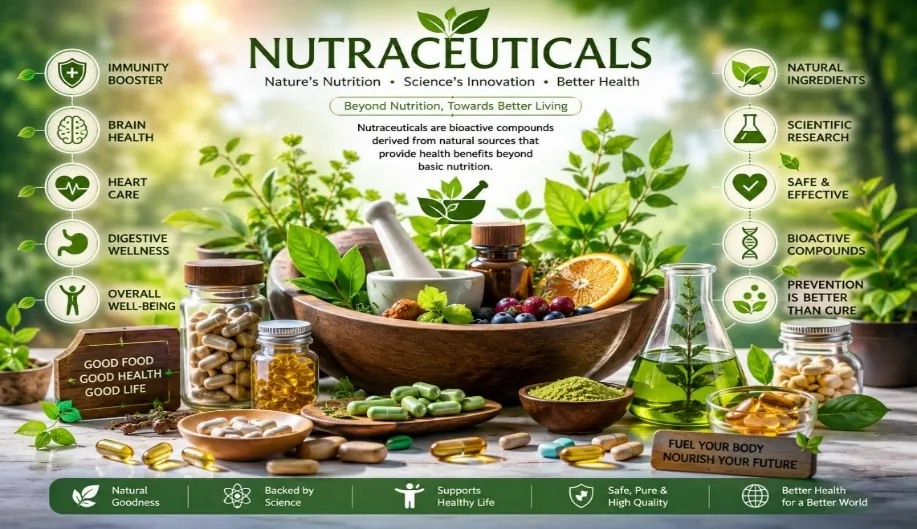
Nutraceuticals are products derived from natural food sources that provide health benefits beyond basic nutrition. They contain bioactive compounds such as vitamins, minerals, herbal extracts, probiotics, and antioxidants that help prevent diseases and promote wellness.
4. Cinnamon: Botanical Profile
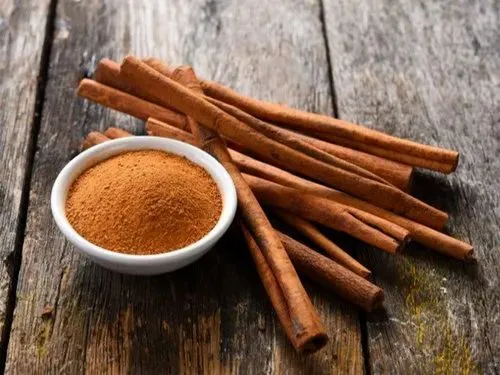
Cinnamon is obtained from Cinnamomum verum and Cinnamomum cassia. It belongs to the Lauraceae family and is cultivated in countries such as Sri Lanka, India, China, Indonesia, and Vietnam. It has long been used in traditional medicine for its therapeutic properties.
CINNAMON
Botanical Profile:
Taxonomy:
Kingdom : Plantae
Division : Magnoliophyta
Class : Magnoliopsida
Order : Laurales
Family : Lauraceae
Genus : Cinnamomum
Species : Cinnamomum verum, Cinnamomum cassia, and related species
Common Names:
• Cinnamon (English)
• Dalchini (Hindi)
• Tvak (Sanskrit)
• Karuvapatta (Malayalam)
• Lavangapatta (Marathi)
Geographical Distribution:
Cinnamon is cultivated in several tropical countries including:
• Sri Lanka
• India
• China
• Indonesia
• Vietnam
Sri Lankan cinnamon (Cinnamomum verum) is considered the highest quality due to its delicate flavour and lower coumarin content.
Phytochemical Constituents of Cinnamon:
The therapeutic potential of cinnamon is attributed to its diverse phytochemical composition.
Major bioactive compounds include:
• Cinnamaldehyde
Cinnamaldehyde constitutes approximately 60-75% of cinnamon essential oil and is responsible for its characteristic aroma and numerous pharmacological effects.
• Eugenol
Eugenol exhibits antimicrobial, anti-inflammatory, and Gastric properties
• Polyphenols
Cinnamon contains various polyphenolic compounds with potent antioxidant activity.
• Procyanidins
These compounds contribute to improved glucose metabolism and cardiovascular protection.
• Coumarin
Present mainly in cassia cinnamon.
Excessive consumption may cause hepatotoxicity, emphasizing the importance of selecting suitable cinnamon species.
• Flavonoids and Tannins
These compounds contribute to antioxidant and anti-inflammatory activities.
The synergistic action of these phytochemicals contributes to the nutraceutical value of cinnamon.
NUTRACEUTICAL SUPENSION:
Nutraceuticals are products derived from food sources that provide additional health benefits beyond basic nutrition. The term “nutraceutical” is a combination of the word nutrition and pharmaceutical. These products contain bioactive compounds that help in maintaining health, preventing diseases, and improving overall well-being. Nutraceuticals include vitamins, minerals, herbal extracts, probiotics, antioxidants, dietary fibers, and other naturally occurring substances
EFFECT OF CINNAMON FOR IMMUNE SUPPORT:
The immune system is a complex network of cells, tissues, and organs that protect the body against infections, diseases, and harmful foreign substances. Maintaining a strong immune system is essential for overall health and well-being. In recent years, nutraceuticals have gained significant attention as natural products that provide health benefits beyond basic nutrition. Among various nutraceutical ingredients, cinnamon has emerged as a promising natural agent due to its antioxidant, anti-inflammatory, antimicrobial, and immunomodulatory properties.
Cinnamon is obtained from the inner bark of trees belonging to the genus Cinnamomum. The most used species are Cinnamomum verum (true cinnamon) and Cinnamomum cassia (cassia cinnamon). Cinnamon contains several bioactive compounds, including cinnamaldehyde, eugenol, cinnamic acid, polyphenols, flavonoids, and proanthocyanidins, which contribute to its therapeutic effects. When
formulated as a suspension, cinnamon can be administered conveniently and may provide enhanced acceptability, especially for pediatric and geriatric populations.
A cinnamon suspension is a liquid dosage form in which finely divided cinnamon particles are dispersed uniformly throughout a suitable vehicle. Such formulations can serve as nutraceutical products designed to support immune health and overall wellness.
Role of Cinnamon in Immune Support
The immune-supporting properties of cinnamon are primarily attributed to its rich content of bioactive phytochemicals. These compounds help regulate immune responses and protect the body against oxidative stress and microbial infections and following properties:
Mechanisms by Which Cinnamon Suspension Supports Immunity
The immune-supporting effects of cinnamon suspension may occur through multiple biological pathways.
Enhancement of Antioxidant Defense Systems:
The polyphenolic compounds present in cinnamon stimulate endogenous antioxidant enzymes such as:
• Superoxide dismutase (SOD)
• Catalase
• Glutathione peroxidase
These enzymes protect immune cells from oxidative damage and improve their functional efficiency.
Regulation of Cytokine Production Cinnamon bioactive compounds can influence the production of cytokines, which are signaling molecules involved in immune responses. Balanced cytokine production helps maintain immune homeostasis and prevents excessive inflammatory reactions.
Protection Against Pathogenic Microorganisms
Cinnamon suspension may help suppress the growth of harmful microorganisms through disruption of microbial cell membranes and inhibition of essential microbial enzymes. This antimicrobial action contributes to enhanced immune defense.
Support for Gut Health
The gastrointestinal tract plays a crucial role in immune function. Cinnamon may promote a healthy gut environment by limiting the growth of harmful bacteria and supporting beneficial microbial populations. Improved gut health can positively influence systemic immunity.
Potential Health Benefits of Cinnamon Suspension
Regular consumption of a cinnamon-based nutraceutical suspension may offer several health benefits related to immune support:
Prevention of Common Infections
The antimicrobial and immune-enhancing properties of cinnamon may help reduce susceptibility to common bacterial and viral infections.
Reduction of Oxidative Stress
Cinnamon antioxidants help protect immune cells from free radical damage, thereby supporting effective immune responses.
Maintenance of Immune Balance
Through its immunomodulatory effects, cinnamon may help maintain a balanced immune system and prevent excessive inflammatory reactions.
Support During Seasonal Changes
Many individuals experience weakened immunity during seasonal transitions. Cinnamon suspension may serve as a supportive nutraceutical for maintaining immune health during such periods.
6. Pharmacological Activities
Cinnamon exhibits several medicinal properties:
7. Cinnamon for Immune Support
Cinnamon supports immunity by reducing oxidative stress, inhibiting inflammatory mediators, and preventing microbial infections. Its phytochemicals enhance antioxidant enzyme activity, regulate cytokine production, and strengthen the body's natural defense mechanisms.
8. ROLE OF VITAMIN C AND ZINC SULFATE
Vitamin C acts as a powerful antioxidant, promotes collagen synthesis, and enhances immune cell function. Zinc sulfate supports T-cell maturation, cytokine regulation, wound healing, and antimicrobial defense. Together, they provide synergistic immune-supportive effects.
Synergistic Immune-Supportive Effects of Ascorbic Acid and Zinc Sulfate:
The combination of Vitamin C and zinc provides enhanced immune support because their mechanisms complement one another.
The combination may reduce:
9 .Importance in Cinnamon Powder-Based Nutraceutical Suspension:
In a cinnamon-based nutraceutical suspension, ascorbic acid and zinc sulfate provide additional immune-supportive benefits.
Role of Cinnamon:
Cinnamon contains bioactive compounds such as:
• Cinnamaldehyde
• Eugenol
• Polyphenols
• Flavonoids
These compounds exhibit: -
• Antioxidant activity
• Anti-microbial activity
• Anti-inflammatory effects
A cinnamon nutraceutical suspension contains cinnamon powder or extract, purified water, suspending agents, preservatives, sweeteners, flavoring agents, and stabilizers. It offers better patient compliance, flexible dosing, and improved delivery of poorly soluble bioactive compounds.
10. Advantages
Disadvantages:
METHODOLOGY
Table: List of Ingredients and its Category in Cinnamon Suspension
|
S.No. |
Name of Ingredients/Drugs |
Category |
|
1. |
Cinnamon |
Anti-inflammatory, Antioxidant, Anti-microbial |
|
2. |
Ascorbic acid |
Enhance immune response and provides Antioxidant protection |
|
3. |
Zinc Sulfate |
Support Immune cell function and enzyme activity |
|
4. |
Xanthan gum |
High Viscosity Agent |
|
5. |
Sodium Benzoate |
Preservative |
|
6. |
Glycerin |
Wetting agent, Viscosity modifier |
|
7. |
Sucrose |
Mask the Bitter taste |
|
8. |
Distilled Water |
Liquid Vehicle |
FORMULATION OF CINNAMON NUTRACEUTICAL SUSPENSION:
Collection of Crude Drug:
The crude drug, Cinnamomum verum (Cinnamon) bark, was collected from a local herbal market and authenticated by a qualified botanist/pharmacognosist. The bark was carefully examined to ensure its quality and purity.
Collection of Other Ingredients:
Ascorbic Acid (Vitamin C) and Zinc Sulfate were procured from a reputed pharmaceutical supplier and used as received. All excipients, including suspending agents, sweeteners, preservatives, and flavoring agents, were obtained from standard chemical suppliers and were of pharmaceutical grade.
Preparation of Cinnamon Powder:
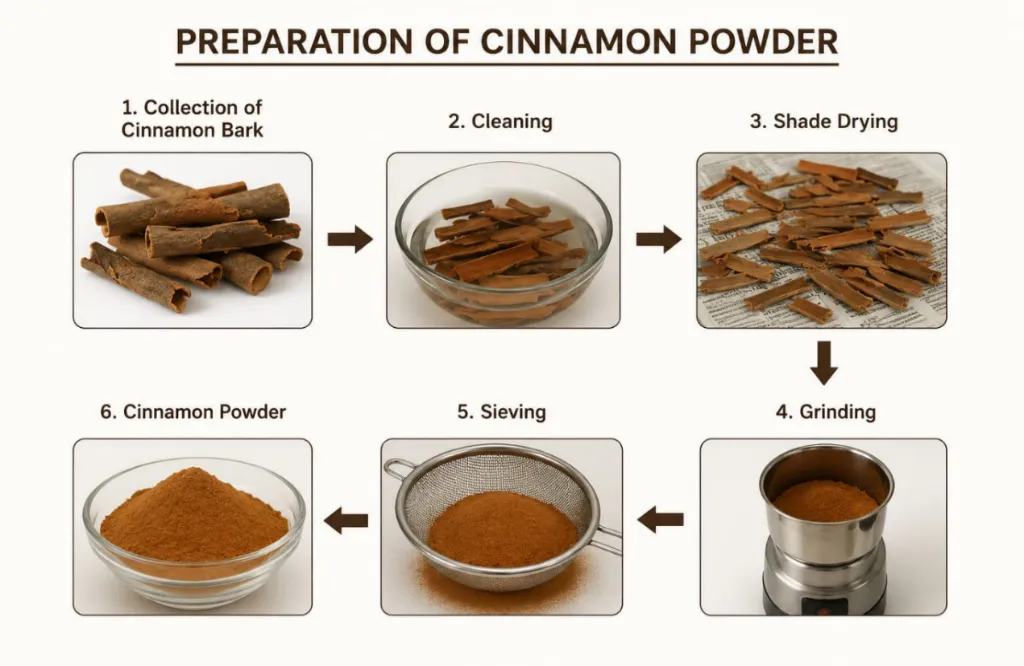
The collected material was cleaned thoroughly to remove dust, dirt, and other foreign matter and then shade-dried at room temperature for 7–10 days. The dried bark was pulverized using a mechanical grinder and passed through a suitable sieve to obtain a fine powder. The powdered cinnamon was stored in an airtight container in a cool and dry place until further use in the formulation of the nutraceutical suspension.
Formulation of Nutraceutical Suspension (100ml):
|
Name of Ingredients |
F1 |
F2 |
F3 |
F4 |
F5 |
|
Cinnamon powder |
1.0g |
1.5g |
2.0g |
2.5g |
3.0g |
|
Ascorbic acid |
0.5g |
0.5g |
0.5g |
0.5g |
0.5g |
|
Zinc sulfate |
0.1g |
0.1g |
0.1g |
0.1g |
0.1g |
|
Xanthum gum |
0.5g |
0.6g |
0.7g |
0.8g |
0.9g |
|
Glycerin |
10ml |
10ml |
10ml |
10ml |
10ml |
|
Sodium benzoate |
0.1g |
0.1g |
0.1g |
0.1g |
0.1g |
|
Simple syrup |
30ml |
30ml |
30ml |
30ml |
30ml |
|
Purified water |
q.s |
q.s |
q.s |
q.s |
q.s |
Procedure for Formulation of Nutraceutical Suspension:
1.Preparation of Xanthum Mucilage:
2.Preparation of Aqueous Phase:
3.Incorporation of Cinnamon Powder:
4.Preparation of Suspension:
5.Addition of Sweetening Vehicle:
6.Make Up the Volume:
7.Packaging:
- "Shake Well Before Use"
Storage conditions
- Batch number and date of preparation and expiry.
EVALUATION:
Evaluation Tests for Cinnamon-Based Nutraceutical Suspension Containing Ascorbic Acid and Zinc Sulfate for Immune Support
The formulated cinnamon-based nutraceutical suspension containing ascorbic acid and zinc sulfate should be evaluated for its physicochemical properties, stability, and quality to ensure safety, efficacy, and patient acceptability.
Organoleptic Evaluation:
Objective:
To assess the appearance and sensory characteristics of the suspension.
Procedure:
Acceptance Criteria:
The suspension should possess a pleasant color, characteristic odor, acceptable taste, and be free from visible contamination.
pH Determination
Objective:
To determine the acidity or alkalinity of the suspension.
Procedure:
Acceptance Criteria:
The pH should generally remain between 3.5–5.5 for Vitamin C and zinc-containing suspensions.
Sedimentation Volume:
Objective
To evaluate the physical stability of the suspension.
Procedure:
Formula:
F = Vu/ Vo
Where:
F = Sedimentation volume
Vu = Final sediment volume
Vo = Original suspension volume
Acceptance Criteria:
A higher sedimentation volume indicates better suspension stability.
Redispersibility Test:
Objective:
To determine the ease of redispersing settled particles.
Procedure:
Acceptance Criteria:
The sediment should redisperse easily without caking.
Viscosity Measurement:
Objective:
To determine the flow properties of the suspension.
Procedure:
Acceptance Criteria:
Appropriate viscosity prevents rapid sedimentation and improves pourability
Particle Size Analysis:
Objective:
To determine the average particle size and distribution.
Procedure:
Acceptance Criteria:
Particles should be uniformly distributed without aggregation.
Density Determination:
Objective:
To determine the density of the suspension.
Procedure:
Density (ρ) = Mass (m) / Volume (V)
Where:
ρ (rho) = Density (g/mL or g/cm³)
m = Mass (g)
V = Volume (mL or cm³)
Stability Studies:
The suspension is stored under different temperature conditions such as:
Refrigerated condition (4°C ± 2°C)
Room temperature (25°C ± 2°C)
Accelerated condition (40°C ± 2°C and 75% RH)
The formulation is periodically evaluated for changes in appearance, pH, viscosity, sedimentation volume, and drug content.
Microbial load test:
Objective:
Procedure:
Acceptance Criteria:
Should comply with nutraceutical microbial limits.
Uniformity of Content:
Objective:
To ensure uniform distribution of active ingredients.
Procedure:
Acceptance Criteria:
Drug content should not vary significantly among samples.
In-vitro Dissolution/Drug Release Study:
Objective:
To determine the release behavior of nutrients.
Procedure:
• Use USP dissolution apparatus.
• Maintain temperature at 37 ± 0.5°C.
• Use a suitable dissolution medium. Withdraw samples at predetermined intervals.
• Analyze Vitamin C and Zinc content.
Evaluation:
Determine cumulative percentage release.
Pourability Test:
Objective:
To determine the ease of pouring.
Procedure:
Significance
Ensure patient convenience and accurate dosing.
RESULTS AND DISCUSSION:
Formulation and Evaluation of Cinnamon-Based Nutraceutical Suspension for Immune Support
RESULTS:
Organoleptic Evaluation:
Organoleptic Properties of Cinnamon-Based Nutraceutical Suspension for Immune Support.
The formulated Cinnamon based nutraceutical suspension was evaluated for its physical properties such as Colour, Odour, state, and texture. The prepared suspension was found to be stable, smooth, and uniformly dispersed. The formulation exhibited a characteristic cinnamon Odour and brown Colour. Visual observation confirmed that the suspension showed no aggregation or caking and possessed good consistency suitable for oral administration.
Table: Organoleptic Properties of Cinnamon-Based Nutraceutical Suspension
|
S.NO. |
Specification |
Limit |
|
1. |
State |
Liquid Suspension |
|
2. |
Colour |
Brown |
|
3. |
Odour |
Characteristic |
|
4. |
Texture |
Smooth |
|
5. |
Appearance |
Uniform Dispersion |
Determination of pH:
The pH of the formulated Cinnamon based nutraceutical suspension for immune support was determined to evaluate the stability and suitability of the formulations for oral administration. The pH values of all five formulations were found to be within the acceptable range, indicating good stability and compatibility of the suspension. The observed pH values slightly increased with increasing concentration of cinnamon powder and xanthan gum. The formulations showed satisfactory pH suitable for nutraceutical preparations and patient acceptability.
Table: Determination of PH
|
S.NO. |
Formulation |
pH |
|
1. |
F1 |
5.6 |
|
2. |
F2 |
5.9 |
|
3. |
F3 |
6.1 |
|
4. |
F4 |
6.3 |
|
5. |
F5 |
6.5 |
Determination of Sedimentation Volume:
The sedimentation volume of the formulated Cinnamon based nutraceutical suspension for immune support was determined to evaluate the physical stability of the suspension during storage. Sedimentation volume was measured by observing the ratio of the final settled volume to the original volume of the suspension. The formulations showed good sedimentation behavior with easy redispersibility and no caking. Increase in xanthan gum concentration improved the stability and reduced the rate of sedimentation.
Table: Determination of Sedimentation Volume
|
Formulation |
Sedimentation Volume = (Fu/Fo) |
|
1 |
0.72 |
|
2 |
078 |
|
3 |
0.83 |
|
4 |
0.88 |
|
5 |
0.9 |
Determination of Viscosity:
The viscosity of the formulated Cinnamon based nutraceutical suspension for immune support was determined using a Brookfield viscometer to evaluate the flow behavior and stability of the formulations. The viscosity of the suspension increased with an increase in xanthan gum concentration, which helped in improving suspension stability and reducing sedimentation. All formulations showed acceptable flow properties and were easily pourable, indicating suitability for oral administration.
Table: Determination of Viscosity
|
S.NO. |
Formulation |
Viscosity |
|
1. |
F1 |
120 |
|
2. |
F2 |
145 |
|
3. |
F3 |
168 |
|
4. |
F4 |
190 |
|
5. |
F5 |
215 |
Determination of Stability:
The stability study of the formulated Cinnamon based nutraceutical suspension for immune support was carried out to evaluate the physical stability of the formulations during storage. The formulations were stored at room temperature and observed for changes in Colour, Odour, pH, sedimentation, and redispersibility over a period of 30 days. The prepared suspensions showed no significant change in physical appearance, pH, or consistency during the study period. All formulations remained stable with good redispersibility and without caking or phase separation.
Table: Stability Study of Nutraceutical
|
S.NO. |
Formulation |
Observation after Stability |
|
1. |
F1 |
Stable, Slight Sedimentation |
|
2. |
F2 |
Stable with Good Redispersibility |
|
3. |
F3 |
Stable, No Caking Observed |
|
4. |
F4 |
Highly Stable with Dispersion |
|
5. |
F5 |
Excellent Stability and Smooth Consistency |
DISCUSSION
Xanthan gum or other suspending agents improved the physical stability of the suspension by reducing sedimentation.
Sucrose enhanced palatability and patient acceptability.
The prepared formulation demonstrated satisfactory physicochemical properties and stability for nutraceutical use.
Cinnamon’s natural antioxidant properties make it a promising ingredient for immune-support formulations.
Overall, the study suggests that the cinnamon-based nutraceutical suspension is stable, effective, and suitable for oral administration.
CONCLUSION
The cinnamon-based nutraceutical suspension was successfully formulated and evaluated for its potential immune-supporting activity. The formulation was prepared using cinnamon as the main active ingredient along with suitable excipients such as suspending agents, sweetening agents, preservatives, and flavoring agents to improve stability, taste, and patient acceptability. The prepared suspension showed good appearance, uniformity, and satisfactory organoleptic properties including color, odor, and taste.
During evaluation, the formulation exhibited acceptable physicochemical properties such as pH, viscosity, sedimentation volume, and redispersibility. The suspension remained stable without significant caking, phase separation, or microbial growth during the storage period. The use of suspending agents like xanthan gum improved the physical stability of the preparation by reducing particle settling and maintaining uniform dispersion. Sucrose enhanced the palatability of the suspension, making it more suitable for oral administration.
Cinnamon contains important bioactive constituents such as cinnamaldehyde, polyphenols, and flavonoids, which possess antioxidant, antimicrobial, and anti-inflammatory properties. These constituents may help strengthen the immune system and protect the body from oxidative stress and infections. Due to these beneficial properties, cinnamon can be considered a promising natural ingredient for nutraceutical formulations aimed at immune support.
The study concludes that the formulated cinnamon-based nutraceutical suspension is stable, safe, and suitable for oral use. It demonstrated satisfactory evaluation parameters and potential health benefits. Therefore, this formulation may serve as an effective and patient-friendly nutraceutical product for supporting immunity and promoting general health.
Therefore, Formulation F3 was selected as the optimized formulation and can be considered the most suitable formulation for developing a stable and effective cinnamon based nutraceutical suspension for immune support.
REFERENCES

Gangidi Sireesha, Dr. Chandra Shekara Rao Baru, B. Shivani, G. Sree Ramya, J. Ruchitha, K. Poojitha, Ruksar Jahan, Formulation And Evaluation of Cinnamon Based Nutraceutical Suspension Containing Ascorbic Acid and Zinc Sulfate for Immune Support, Int. J. of Pharm. Sci., 2026, Vol 4, Issue 7, 3266-3281, https://doi.org/10.5281/zenodo.21393812
Severity: 8192
Message: substr(): Passing null to parameter #1 ($string) of type string is deprecated
Filename: frontend/article.php
Line Number: 706
Severity: 8192
Message: substr(): Passing null to parameter #1 ($string) of type string is deprecated
Filename: frontend/article.php
Line Number: 706
Severity: 8192
Message: substr(): Passing null to parameter #1 ($string) of type string is deprecated
Filename: frontend/article.php
Line Number: 706
 10.5281/zenodo.21393812
Severity: 8192
Message: substr(): Passing null to parameter #1 ($string) of type string is deprecated
Filename: frontend/article.php
Line Number: 890
Severity: 8192
Message: substr(): Passing null to parameter #1 ($string) of type string is deprecated
Filename: frontend/article.php
Line Number: 890
Severity: 8192
Message: substr(): Passing null to parameter #1 ($string) of type string is deprecated
Filename: frontend/article.php
Line Number: 925
Severity: 8192
Message: substr(): Passing null to parameter #1 ($string) of type string is deprecated
Filename: frontend/article.php
Line Number: 925
Severity: 8192
Message: substr(): Passing null to parameter #1 ($string) of type string is deprecated
Filename: frontend/article.php
Line Number: 925
Severity: 8192
Message: substr(): Passing null to parameter #1 ($string) of type string is deprecated
Filename: frontend/article.php
Line Number: 957
Severity: 8192
Message: substr(): Passing null to parameter #1 ($string) of type string is deprecated
Filename: frontend/article.php
Line Number: 957
Severity: 8192
Message: substr(): Passing null to parameter #1 ($string) of type string is deprecated
Filename: frontend/article.php
Line Number: 957