

We use cookies to ensure our website works properly and to personalise your experience. Cookies policy
Department of Pharmaceutics, Bharathi College of Pharmacy, Bharathinagara, Mandya, Karnataka, India 571422
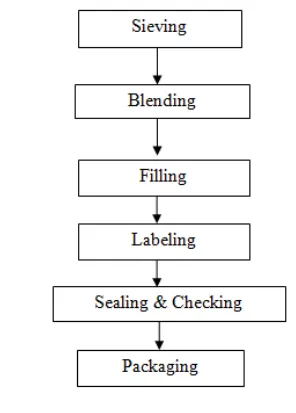
Dry powder for oral suspension provides an effective alternative by improving storage stability and allowing reconstitution immediately before administration. The formulation was prepared by the direct mixing method, in which accurately weighed and sieved ingredients were blended to obtain a uniform dry powder. Each batch contained 2.5 g of paracetamol for reconstitution to 100 mL, along with maltodextrin as a diluent, sodium carboxymethyl cellulose (Sodium CMC) as suspending agent. A factorial design approach was employed to optimize the concentration of critical formulation variables and to evaluate their influence on the physicochemical characteristics of the final product. The prepared powder was intended to be reconstituted with purified water before administration. The formulated dry powder was evaluated for pre-formulation parameters, including angle of repose, bulk density, tapped density, Carr's compressibility index, and Hausner ratio to assess powder flow characteristics. After reconstitution, the suspension was evaluated for appearance, pH, sedimentation volume, redispersibility, viscosity, reconstitution time, particle size, drug content, and in vitro drug release. The present study aimed to formulate and evaluate a pediatric paracetamol dry powder for oral suspension containing 125 mg of paracetamol per 5 mL after reconstitution. The optimized formulation is expected to provide satisfactory flow properties, rapid and uniform reconstitution, improved suspension stability, accurate dosing, and acceptable drug release. The developed dry powder for oral suspension may offer a stable, convenient, and patient-friendly dosage form for pediatric administration of Paracetamol while overcoming the limitations associated with conventional liquid formulations.
"A dry powder for oral suspension is a pharmaceutical dosage form composed of finely divided insoluble drug particles, generally ranging from 0.5 to 5 µm in size, that are reconstituted with a suitable aqueous vehicle to form a uniform suspension before use."1
Developing pharmaceutical formulations for pediatric patients is scientifically demanding because children have distinct physiological characteristics and therapeutic needs that differ from those of adults.2 Oral suspensions are widely preferred for pediatric patients because they are easier to administer than solid dosage forms, especially for children who have difficulty swallowing tablets or capsules.3 Compared with tablets and capsules, dry syrup may provide improved bioavailability since it is administered as a dispersed suspension after reconstitution, promoting more efficient drug dissolution and absorption.4
ADVANTAGE OVER CONVETIONAL SYRUP:
NEED FOR DRY POWDER FORMULATION
LIST OF EXCIPIENTS:
|
Ingredients |
Function |
|
Paracetamol |
API |
|
Maltodextrin |
Diluent |
|
Sodium CMC |
Suspending agent |
|
Aspartame |
Sweetening agen |
|
Sodium citrate |
Buffer |
|
SLS |
Wetting agent |
|
Sodium benzoate |
Preservative |
|
Purified water |
For reconstitution |
METHODOLOGY:
DIRECT METHOD: The flow chart for the direct method is given below.
PRE-FORMULATION STUDIES:
1. Organoleptic Evaluation: To assess the physical and sensory characteristics of the formulation.The prepared formulation was visually examined under normal lighting for color and appearance. Odor and taste were evaluated carefully to determine the overall acceptability of the formulation.11
2. Angle of Repose: To evaluate the flow properties of the dry powder blend.The angle of repose was determined using the funnel method by allowing the powder to flow freely onto a flat surface to form a cone. The height (h) and radius (r) of the cone were measured, and the angle of repose was calculated using the formula: θ = tan⁻¹ (h/r). Lower values indicate better flowability of the powder blend.
3. Bulk Density: To determine the packing ability of the dry powder under loose conditions.A known quantity of powder was transferred into a graduated cylinder without tapping, and the initial volume (V₀) was recorded. Bulk density was calculated using the formula:
Bulk Density = Weight of Powder / Bulk Volume (g/mL).
4. Tapped Density: To determine the packing ability of the powder after mechanical tapping. The graduated cylinder containing the powder was mechanically tapped until a constant volume was obtained. The final tapped volume (Vt) was recorded, and tapped density was calculated using:
Tapped Density = Weight of Powder / Tapped Volume (g/mL).
5. Carr's Compressibility Index: To evaluate the compressibility and flow characteristics of the powder blend. Carr's Compressibility Index was calculated using the bulk density and tapped density values according to the formula;
Carr's Index (%) = [(Tapped Density − Bulk Density) / Tapped Density] × 100.
6. Hausner's Ratio: To assess the flow behavior and interparticle friction of the powder blend. Hausner's Ratio was calculated using the bulk density and tapped density values according to the formula:
Hausner's Ratio = Tapped Density / Bulk Density.12
POST RECONSTITUTION EVALUATION:
1. pH of the suspension: The pH of the prepared suspension was measured using a calibrated digital pH meter at room temperature.13
2. Appearance: The prepared suspension was visually examined for color, clarity, uniformity, and the absence of lumps or caking.
3. Viscosity: Viscosity was measured using a Brookfield viscometer with a suitable spindle at a predetermined rotational speed (rpm).
4. Sedimentation Volume: The reconstituted suspension was stored in a graduated cylinder, and the sedimentation volume was recorded at specified time intervals. It was calculated using F = Vu/Vo, where Vu is the ultimate sediment volume and Vo is the original suspension volume.
5. Redispersibility: The number of manual inversions required to obtain a uniform suspension after sedimentation was recorded.
6. Stability Study: The formulation was stored at 25 ± 2°C/60 ± 5% RH and 40 ± 2°C/75 ± 5% RH, and evaluated periodically for appearance, pH, drug content, and dissolution.
7. In-vitro Dissolution Study: Dissolution was carried out using USP Apparatus II (Paddle method) at 37 ± 0.5°C, with samples withdrawn at predetermined intervals and analyzed using a UV–Visible spectrophotometer.14
CONCLUSION
The literature review suggests that paracetamol dry powder for oral suspension is a suitable dosage form for pediatric patients due to its improved stability and ease of administration. The selection of appropriate excipients is essential to achieve good palatability, reconstitution, and physical stability. Evaluation parameters such as flow properties, pH, viscosity, sedimentation volume, and drug content are important for ensuring product quality. Overall, the reviewed studies support the development of a safe, stable, and effective pediatric paracetamol dry powder suspension.
REFERENCES






Ranjeetha A R, Priyanka Raj G, Yashwanth R, Spandana Y B, Arpitha H R, Adarsh K P, Formulation and Evaluation of Paracetamol Fast Reconstituting Pediatric Dry Powder Susupension, Int. J. of Pharm. Sci., 2026, Vol 4, Issue 8, 702-706. https://doi.org/10.5281/zenodo.21802113
 10.5281/zenodo.21802113