

We use cookies to ensure our website works properly and to personalise your experience. Cookies policy
RJS College of Pharmacy, Kokamthan, Ahilyanagar, Maharashtra, India 423601
Ginger (Zingiber officinale Rosc.) belongs to the family Zingiberaceae. The health promoting perspective of ginger is attributed to its rich phytochemistry. This study aimed to review the current evidence on ginger effects as an anti inflammatory and anti oxidative. Ginger's strong phytochemical content—which contains substances that neutralize free radicals produced by biological systems—led to the discovery of its health benefits. The body's synthesis of prostaglandins and leukotrienes is restricted by gingerol, shogaol, and other related ginger compounds. Additionally, they have the ability to inhibit the synthesis of pro-inflammatory cytokines such TNF, IL-1, NF-B, and IL-8. As far as we are aware, NF-B activation is linked to several inflammatory conditions, such as cancer, kidney damage, and Alzheimer's disease.
The body's defense mechanism against damaging stimuli like infection, injury, irritation, or tissue damage is called inflammation. It is an immune system defense mechanism designed to eliminate dangerous substances and start the healing process. Redness, swelling, discomfort, heat, and loss of function are all signs of inflammation.
Prostaglandins, histamine, and leukotrienes are examples of chemical mediators that are crucial to the inflammatory response. Although synthetic anti-inflammatory medications are frequently used for treatment, they can have negative side effects such ulcers and stomach irritation. Because of their natural origin and improved safety profile, herbal anti-inflammatory medicines are becoming more and more popular. Because gingerol and shogaol block inflammatory mediators and lessen pain and swelling, ginger has anti-inflammatory properties
Inflammation may occur due to various physical, chemical, and biological factors. It is generally caused when body tissues are exposed to harmful conditions or injuries. Common causes of inflammation include:
Site of inflammation
An irritated area may be limited to a single tissue or it may affect the entire body. It is a postfix used to designate various limited irritations, such as dermatitis, colitis, hepatitis, myocarditis, vasculitis, and an inflamed appendix. But very few local aggravations, such pneumonia or asthma, deviate from this pattern. Relentless minimal annoyance can occasionally result in persistent foundational irritation due to physical proximity.
Increased blood circulation at the afflicted location causes redness and heat. The buildup of fluid in tissues causes swelling. Inflammatory mediators stimulate nerve terminals, which results in pain. Other symptoms of chronic inflammation include tissue damage, weariness, fever, and stiffness. Prolonged inflammation can impair quality of life and limit mobility.
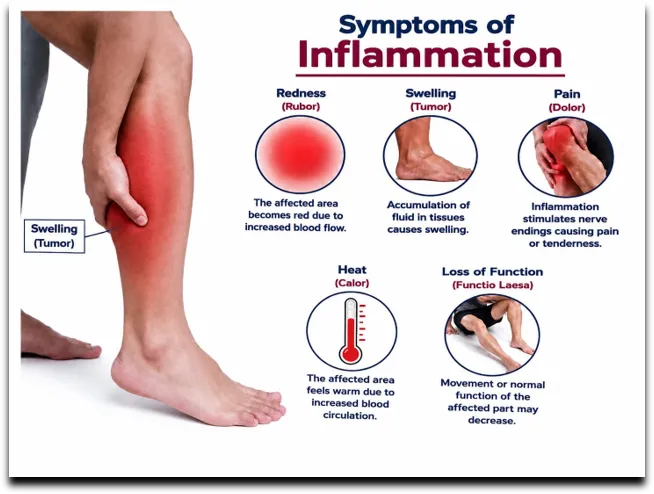
Fig No. 1.1: symptoms of Inflammation
Ginger :
Ginger (Zingiber officinale) is a well-recognized medicinal herb that belongs to the family Zingiberaceae. It is extensively utilized across the world not only as a spice in food preparation but also for its medicinal applications. The underground stem, known as the rhizome, is the most commonly used part of the plant and is characterized by its distinctive fragrance and sharp, spicy flavor. Ginger is primarily grown in tropical and subtropical climates, and India is among the major producers of this crop. For centuries, ginger has played an important role in traditional healing systems such as Ayurveda, Unani, and traditional Chinese medicine because of its broad therapeutic potential. Its medicinal effects are mainly attributed to bioactive compounds including gingerol, shogaol, and zingerone, which contribute to its various pharmacological activities.
In pharmaceutical practice, ginger is incorporated into several dosage forms such as powders, liquid extracts, essential oils, tablets, capsules, syrups, topical gels, and ointments. During formulation development, ginger extract is commonly obtained using solvents like ethanol through extraction techniques such as Soxhlet extraction. The resulting extract is then employed in the formulation of topical preparations, particularly anti-inflammatory gels. Additionally, ginger is frequently included in cosmetic products due to its ability to enhance skin condition, alleviate inflammation, and support wound repair.
One of the most significant therapeutic properties of ginger is its anti-inflammatory effect. It exerts this action by inhibiting the synthesis of inflammatory mediators such as prostaglandins and leukotrienes. This mechanism makes ginger effective in managing inflammatory disorders including arthritis, muscle aches, joint pain, and localized swelling. Ginger also possesses mild pain-relieving properties, which further contribute to its usefulness in such conditions. Furthermore, ginger exhibits strong antioxidant activity, which helps neutralize free radicals, reduce oxidative stress, and protect cells from damage, thereby promoting overall health.
In conclusion, ginger is a naturally derived, safe, and efficacious medicinal plant that offers numerous health benefits. When used in appropriate quantities, it produces minimal adverse effects and is well accepted in both traditional and contemporary medicine. Owing to its potent anti-inflammatory, antioxidant, antimicrobial, and digestive properties, ginger is regarded as an important herbal drug and is widely employed in the management of various health-related conditions.
Pharmacological activities of ginger (Zingiber officinal)
Ginger exhibits multiple therapeutic effects such as anti-inflammatory, antioxidant, antimicrobial, and analgesic activities. The anti-inflammatory action is mainly attributed to inhibition of prostaglandin and leukotriene synthesis by suppressing cyclooxygenase and lipoxygenase pathways. These mechanisms make ginger a suitable candidate for managing inflammatory conditions when applied topically.
Ginger’s anti-inflammatory activity :
Ginger and its active components have been shown in numerous studies to have anti-inflammatory qualities that may offer protection against conditions linked to inflammation. The anti-inflammatory effects were mainly caused via nuclear factor kappa light chain-enhancer of activated B cells (NF-B), protein kinase B (Akt), and phosphatidylinositol-3-kinase (PI3K). 6-Shogaol has demonstrated protective qualities against intestinal barrier disruption caused by tumor necrosis factor (TNF-) in human intestinal cell cultures. Additionally, it prevented Claudin-2 overexpression and Claudin-1 disintegration by blocking the NF-B and PI3K/Akt signaling pathways. Additionally, in the brain, ovaries, and uterus of rats treated with chlorpyrifos, a 6-gingerol-rich fraction decreased an increase in inflammatory markers such myeloperoxidase, NO, and TNF.
Renoprotective effect of ginger :
Ginger considerably lessens the severity of gentamicin-induced tubular damage and preserves renal cells. Ginger has no therapeutic properties, although it was useful as a preventative measure. After causing kidney damage with azathioprine, ginger (200 mg/kg) significantly lowers the concentration of urea and creatinine in the rat model and improves, restores, and recovers the damaged kidney tissue.
Ginger’s kidney protective effect :
The effectiveness of ginger on renal impairment has been shown in numerous studies. The studies show that ginger significantly protects renal cells and reduces the degree of tubular damage caused by gentamicin. Although ginger has no therapeutic qualities, it was helpful as a preventive.
Ginger’s anticancer effect :
Zerumbone, [6]-gingerol, [6]-shogaol, and [6]-paradol are among the anti-inflammatory and anti-tumorigenic compounds found in ginger. Colorectal, stomach, ovarian, liver, skin, breast, and prostate cancers are all slowed down by ginger and its bioactive ingredients.
Ginger’s antiemetic effect :
By increasing stomach tone and motility through anticholinergic and antiserotonergic actions, ginger (and its components) has peripheral antiemetic effects within the gastrointestinal tract. Additionally, it is said to enhance gastric emptying. Ginger's well-known ability to reduce symptoms of functional gastrointestinal disorders, such as dyspepsia, nausea, and abdominal pain, which are often linked to reduced gastric motility, can be explained by this combination of roles.
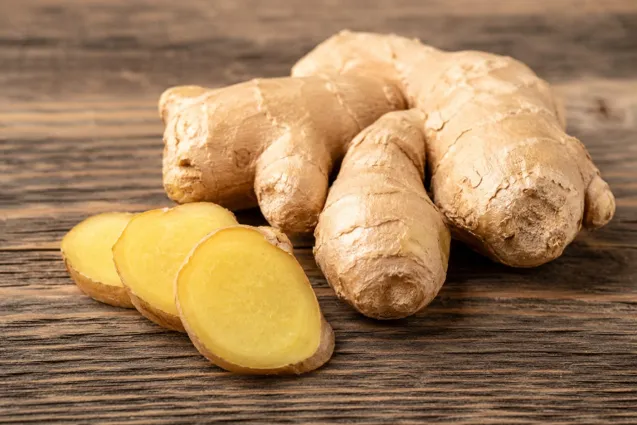
Fig No. 1.2 - Gingiber Officinale
Ginger’s effect on liver :
Dried ginger (Zingiber officinale) reduces INF and IL6 levels, improves degenerative changes, and inhibits inflammation. Liver damage could result from it. Inhibiting NF-B activation lowers levels of proinflammatory reactions, TNF, IL-6, and other inflammatory cytokines.
Ginger’s effect on diabetes:
In individuals with type 2 diabetes mellitus (T2DM), ginger consumption affects lipid profiles, insulin sensitivity, glycemic status, and other metabolic abnormalities. They are improved by lowering inflammatory chemicals including CRP, IL6, TNF, and others. An antagonistic impact against serotonin receptors is revealed. Interestingly, it lowers intestinal amylase and glucosidase activity, which lowers the absorption of glucose. Changes in astrocyte function may potentially be the cause of ginger's neuroprotective effects on the brains of streptozotocin-induced diabetic rats. damage response, lowering acetylcholinesterase (AchE) expression, and enhancing neuronal development. Ginger significantly lowered blood glucose, serum total cholesterol, LDL, VLDL, and triglycerides, and raised HDL in hyperglycemic rats, in models that are diabetic, deficient in the apolipoprotein E gene or those that have been fed a high lipid diet
Ginger effect on neurological degenerative diseases :
In animal models of dementia, 6-Shogaol, the active ingredient in ginger, lessens neuroinflammation and cognitive deficits. As a result, it significantly contributes to the reduction of symptoms in individuals with Alzheimer's and other neurological disorders. In animal models of dementia, it improves memory via reducing memory corruption and inhibiting glial cell activity.
Gel :
Gels are classified as semi-solid dosage forms in pharmaceutical science. They are commonly employed for topical use on the skin and are also utilized for oral and ophthalmic administration. These formulations are typically transparent or slightly opaque and possess a uniform, smooth texture, allowing them to be easily applied and evenly distributed over the affected area. Compared to creams and ointments, gels are often preferred because they are non-oily in nature, can be washed off easily, and impart a cooling sensation to the skin. A typical gel formulation consists of a suitable gelling agent such as Carbopol or hydroxypropyl methylcellulose (HPMC), a solvent system mainly composed of water, preservatives to prevent microbial growth, humectants like propylene glycol to retain moisture, and the required active drug or herbal extract.
Gels provide several benefits, including improved patient acceptability, simple application, and quicker drug release when compared with other topical preparations. They facilitate efficient penetration of the active substance through the skin, producing a localized therapeutic effect while minimizing systemic adverse reactions. The high water content of gels contributes to a calming and cooling effect, making them especially useful in the treatment of inflammatory conditions, burns, and various forms of skin irritation. Despite these advantages, gels also have certain drawbacks, such as limited occlusive properties and the risk of drying if not stored under appropriate conditions.
In recent times, the development of herbal gel formulations has increased due to their proven safety, therapeutic effectiveness, and reduced side effects in comparison to synthetic formulations. Plant-based ingredients such as ginger, aloe vera, and turmeric are frequently incorporated into gels because of their medicinal benefits. Overall, gels remain a highly important dosage form in pharmaceutical research and practice due to their ease of use, effectiveness, and patient-friendly characteristics.
Advantages of gels include:
Chemical Constituents of Ginger :
Ginger contains several important phytochemical constituents responsible for therapeutic activity. These active compounds possess anti-inflammatory, antioxidant, antimicrobial, and analgesic properties. Major chemical constituents of ginger include:
Evaluation Parameters :
Evaluation of the formulated gel is essential to ensure its quality, safety, and efficacy. Common evaluation tests include:
CONCLUSION
The formulation of an anti-inflammatory gel using Ginger officinale represents a promising herbal approach for managing inflammatory conditions. Various studies indicate that ginger possesses potent anti-inflammatory activity, and its incorporation into topical gel formulations enhances therapeutic effectiveness while reducing adverse effects. With proper formulation and evaluation, ginger-based gels can serve as a safe and effective alternative to synthetic topical anti-inflammatory agents. Further clinical studies are recommended to establish their long-term efficacy and safety.
REFERENCES


Sonali Kote, Namra Tamboli, Formulation and Evaluation of Anti-Inflammatory gel by using Gingiber Officinale, Int. J. of Pharm. Sci., 2026, Vol 4, Issue 8, 720-726. https://doi.org/10.5281/zenodo.21802350
 10.5281/zenodo.21802350