

We use cookies to ensure our website works properly and to personalise your experience. Cookies policy
Department of Pharmacy Practice, St. Johns College of Pharmaceutical Sciences, Yerrakota, Yemmiganur, Kurnool.
The human gut microbiota plays an essential role in maintaining overall health by supporting digestion, regulating immune function, and protecting against harmful microorganisms. An imbalance in these microbial communities, known as dysbiosis, has been associated with several gastrointestinal and systemic diseases. Fecal Microbiota Transplantation (FMT) has emerged as an innovative therapeutic approach that aims to restore a healthy gut microbiome by transferring processed stool from a carefully screened healthy donor to a recipient. Initially developed as a treatment for recurrent Clostridioides difficile infection, FMT has demonstrated high clinical success and is now being investigated for its potential role in conditions such as inflammatory bowel disease, irritable bowel syndrome, metabolic disorders, liver diseases, neurological disorders, and cancer. Although the therapy has shown encouraging outcomes, concerns regarding donor screening, long-term safety, standardization of procedures, and regulatory guidelines remain important challenges. This review summarizes the biological basis of FMT, donor selection, preparation and administration methods, current clinical applications, therapeutic benefits, safety considerations, recent advances, and future prospects. By bringing together current evidence, this review highlights the growing importance of FMT as a promising microbiome-based therapy and identifies areas that require further research to support its wider clinical use.
The human gastrointestinal tract contains trillions of microorganisms, collectively known as the gut microbiota, which play a crucial role in maintaining overall health. These microorganisms contribute to digestion, vitamin synthesis, metabolism, immune regulation, and protection against harmful pathogens. However, disruption of this microbial balance, known as gut dysbiosis, can occur due to factors such as antibiotic use, unhealthy diet, infections, and chronic diseases. Dysbiosis has been associated with several gastrointestinal and systemic disorders, including recurrent Clostridioides difficile infection, inflammatory bowel disease, irritable bowel syndrome, obesity, diabetes, liver diseases, and neurological conditions. As understanding of the gut microbiome continues to grow, restoring microbial balance has become an important therapeutic approach.
Fecal Microbiota Transplantation (FMT) is a microbiome-based therapy that involves transferring processed stool from a carefully screened healthy donor into the gastrointestinal tract of a recipient to restore a healthy intestinal microbial community. Initially established as an effective treatment for recurrent Clostridioides difficile infection, FMT is now being investigated for its potential in managing various gastrointestinal, metabolic, immune-mediated, and neurological disorders. Despite its promising therapeutic outcomes, challenges related to donor selection, safety, standardization, and long-term efficacy remain. This review discusses the biological basis, mechanism of action, clinical applications, therapeutic benefits, safety considerations, recent advances, and future prospects of FMT, highlighting its growing importance in modern medicine.
2. History of Fecal Microbiota Transplantation
The concept of fecal microbiota transplantation (FMT) is not new and has evolved over many centuries. Historical records suggest that one of the earliest documented uses of fecal material for therapeutic purposes occurred in fourth-century China. During this period, the physician Ge Hong described the use of a suspension prepared from human feces, commonly known as "yellow soup," to treat patients suffering from severe diarrhea and food poisoning. Although the mechanisms were not understood at that time, this practice reflected an early recognition that substances derived from healthy individuals could help restore intestinal health.
In later centuries, similar practices were reported in both human and veterinary medicine. Traditional healers used fecal preparations to manage gastrointestinal illnesses, and farmers observed that transferring intestinal contents from healthy animals to sick livestock could improve recovery. These observations provided early evidence that the intestinal microbial community played an important role in maintaining health.
The modern era of FMT began in 1958 when Dr. Ben Eiseman and colleagues reported the successful treatment of patients with severe pseudomembranous colitis using fecal enemas. This landmark study demonstrated that restoring the intestinal microbial balance could effectively treat life-threatening intestinal infections. As scientific understanding of the gut microbiome expanded over the following decades, researchers recognized that disruption of the normal intestinal microbiota was a major contributor to recurrent Clostridioides difficile infection.
During the early twenty-first century, advances in microbiome research renewed interest in FMT as a therapeutic option. Clinical studies consistently demonstrated high cure rates for recurrent Clostridioides difficile infection, leading to its acceptance in clinical guidelines worldwide. Improvements in donor screening, stool processing, and methods of administration, including colonoscopy, enema, nasoenteric tubes, and oral capsules, have further enhanced the safety and accessibility of the procedure.
Today, FMT is an established treatment for recurrent Clostridioides difficile infection and is being actively investigated for several other disorders, including inflammatory bowel disease, irritable bowel syndrome, metabolic diseases, liver disorders, neurological conditions, and cancer-related therapies. Ongoing research continues to refine FMT techniques and develop standardized microbiome-based treatments, marking an important step toward personalized medicine.
3. Mechanism of Action of Fecal Microbiota Transplantation
Fecal Microbiota Transplantation (FMT) works by restoring the normal balance of microorganisms in the gut. In conditions associated with gut dysbiosis, the diversity of beneficial bacteria decreases, allowing harmful microorganisms to multiply and cause inflammation. FMT introduces healthy donor microorganisms into the recipient’s intestine, helping to rebuild a stable and diverse microbial community.
The transferred beneficial bacteria provide colonization resistance by competing with harmful pathogens such as Clostridioides difficile for nutrients and attachment sites, thereby preventing their overgrowth and reducing infection recurrence. FMT also restores microbial metabolic activity by increasing the production of short-chain fatty acids (SCFAs) such as butyrate, acetate, and propionate, which support intestinal cell health and maintain gut function.
Additionally, FMT helps regulate the immune response by reducing excessive inflammation and promoting immune balance. It strengthens the intestinal barrier by improving mucus production and tight junction integrity, which decreases intestinal permeability and prevents the entry of harmful bacteria and toxins into the bloodstream.
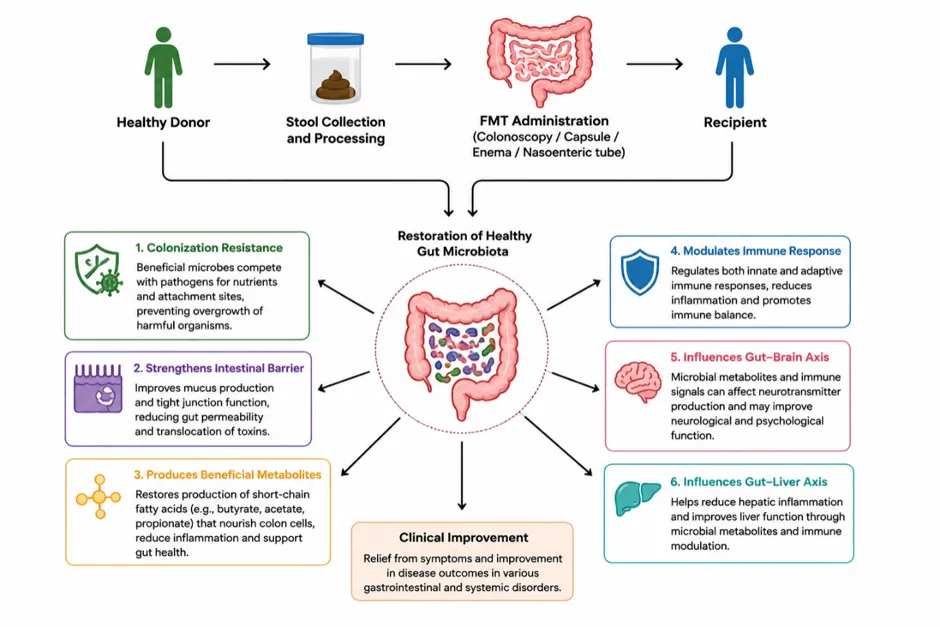
Fig.1 Mechanism of action of FMT
4. Donor Selection and Screening in Fecal Microbiota Transplantation
The success and safety of fecal microbiota transplantation (FMT) largely depend on the careful selection and evaluation of stool donors. Since FMT involves transferring microorganisms from one individual to another, proper donor screening is essential to prevent the transmission of infectious agents and undesirable health conditions. A suitable donor should have a healthy gut microbiome and an overall good health status to ensure the safety and effectiveness of the therapy.
Importance of Standardized Screening
Strict donor selection and screening protocols help minimize the risk of transferring infectious organisms, antibiotic resistance genes, or disease-associated microbial patterns to recipients. As research continues to expand the use of FMT beyond recurrent Clostridioides difficile infection, standardized donor evaluation methods have become increasingly important.
Overall, careful donor selection and comprehensive screening form the foundation of safe FMT practice. A well-screened donor provides a diverse and healthy microbial community that can help restore intestinal balance and improve clinical outcomes in recipients.
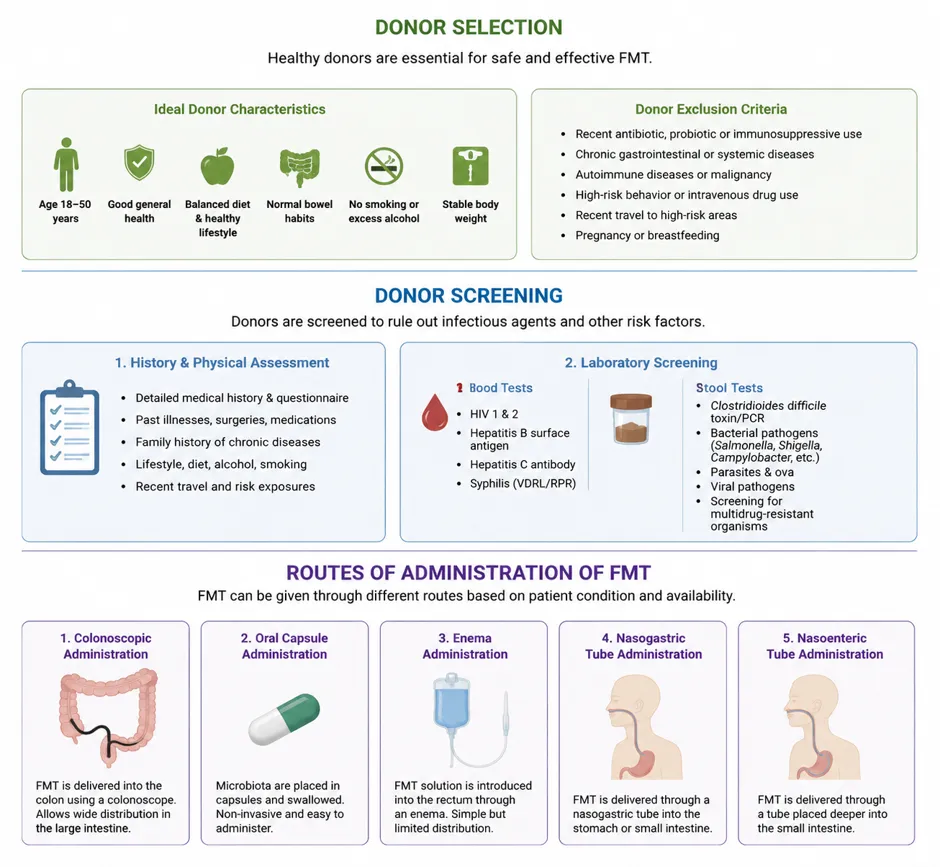
Fig.2 Donor selection, Donor Screening and ROA OF FMT
6. Preparation and Administration of Fecal Microbiota Transplantation
Preparation of Fecal Microbiota Transplant
The preparation of fecal microbiota for transplantation is a carefully controlled process that aims to preserve beneficial microorganisms while ensuring the safety of the recipient. After a donor successfully completes the required screening procedures, the stool sample is collected in a sterile container and processed under appropriate hygienic conditions.
The collected stool is usually mixed with a sterile solution, such as normal saline or another suitable diluent, to create a uniform suspension. This mixture is then filtered to remove unwanted solid materials while retaining the microbial population. The prepared microbiota suspension can be used immediately as a fresh preparation or stored under controlled conditions as a frozen preparation for future use.
Advances in FMT technology have introduced improved preparation methods, including frozen stool preparations, lyophilized (freeze-dried) microbiota products, and standardized microbiome-based therapies. Frozen preparations provide greater flexibility by allowing storage, transportation, and quality control before administration. Freeze-dried formulations have further improved patient convenience by enabling oral capsule delivery.
Methods of Administration of FMT
The route of administration is selected based on the patient's condition, clinical requirements, and healthcare facility availability. Different approaches are used to deliver the microbiota into the gastrointestinal tract.
i. Colonoscopic Administration
ii. Oral Capsule Administration
iii. Enema Administration
iv. Nasogastric or Nasoenteric Tube Administration
7. Current Clinical Applications of Fecal Microbiota Transplantation
Fecal Microbiota Transplantation (FMT) has gained significant attention as a microbiome-based therapeutic approach due to its ability to restore the balance of intestinal microorganisms. Initially developed for the management of recurrent Clostridioides difficile infection, FMT has shown promising results in several other gastrointestinal and systemic disorders. With increasing understanding of the role of the gut microbiome in human health, its clinical applications continue to expand.
1. Recurrent Clostridioides difficile Infection (rCDI)
The most established and widely accepted application of FMT is the treatment of recurrent Clostridioides difficile infection. Repeated antibiotic exposure can disrupt normal gut microbial diversity, allowing C. difficile to multiply and produce toxins that cause intestinal inflammation and diarrhea. FMT restores microbial diversity and enhances colonization resistance, preventing the growth of C. difficile. Clinical studies have demonstrated high success rates, making FMT an important alternative for patients with recurrent infection who do not respond adequately to conventional antibiotic therapy.
2. Inflammatory Bowel Disease (IBD)
Inflammatory bowel diseases, including ulcerative colitis and Crohn’s disease, are associated with alterations in gut microbial composition and immune dysfunction. FMT is being investigated as a potential therapy to restore microbial balance and reduce intestinal inflammation. Some clinical studies have shown improvement in symptoms and remission rates, particularly in ulcerative colitis; however, further research is required to determine optimal treatment protocols.
3. Irritable Bowel Syndrome (IBS)
Irritable bowel syndrome is a functional gastrointestinal disorder associated with changes in gut microbiota, intestinal sensitivity, and altered gut–brain communication. FMT has been explored as a method to modify the intestinal microbial environment and improve symptoms such as abdominal pain, bloating, and irregular bowel habits. Although some patients experience symptom improvement, results remain variable, and more standardized clinical trials are needed.
4. Metabolic Disorders
The gut microbiome plays an important role in regulating metabolism, energy balance, and inflammation. Research suggests that FMT may influence metabolic conditions such as obesity, insulin resistance, and type 2 diabetes by modifying microbial composition and improving metabolic pathways. Early studies have shown potential benefits, but FMT is not yet considered a routine treatment for metabolic diseases.
5. Liver Diseases
The connection between the gut and liver, known as the gut–liver axis, has increased interest in FMT for liver-related disorders. Altered gut microbiota contributes to inflammation and disease progression in conditions such as non-alcoholic fatty liver disease and liver cirrhosis. FMT may help by restoring beneficial bacteria, improving intestinal barrier function, and reducing harmful microbial metabolites. Further studies are ongoing to establish its clinical effectiveness.
6. Neurological and Psychiatric Disorders
The gut microbiome communicates with the central nervous system through the gut–brain axis. Changes in microbial composition have been associated with neurological and psychiatric conditions such as Parkinson’s disease, autism spectrum disorders, depression, and anxiety. FMT is being studied for its ability to influence neurological function through microbial metabolites, immune regulation, and neurotransmitter pathways. However, these applications remain experimental.
7. Cancer and Supportive Oncology Care
Recent research has explored the role of FMT in cancer treatment, particularly in improving response to immunotherapy. The gut microbiome can influence immune activity and the effectiveness of immune checkpoint inhibitors. FMT from donors with favorable microbiota profiles is being investigated as a strategy to modify the tumor immune environment and enhance treatment response.
8. Other Emerging Applications
FMT is also being explored in several other conditions, including:
7. Risks, Limitations, and Adverse Effects of Fecal Microbiota Transplantation
Although Fecal Microbiota Transplantation (FMT) has demonstrated significant therapeutic benefits, especially in recurrent Clostridioides difficile infection, it is not completely free from risks and challenges. Since FMT involves transferring a complex mixture of microorganisms from one individual to another, careful consideration of safety, donor screening, and long-term outcomes is essential. The increasing use of FMT in various diseases has highlighted several limitations that require further research and standardization.
1. Risk of Infection Transmission
One of the major concerns associated with FMT is the potential transmission of infectious organisms from the donor to the recipient. Even with strict screening procedures, unknown pathogens, newly emerging microorganisms, or antibiotic-resistant bacteria may remain undetected. Transmission of multidrug-resistant organisms has been reported in rare cases, emphasizing the importance of comprehensive donor evaluation and advanced screening methods.
2. Gastrointestinal Adverse Effects
The most commonly reported adverse effects of FMT are mild and temporary gastrointestinal symptoms. These may include:
These effects are usually self-limiting and resolve within a short period after treatment.
3. Transfer of Unwanted Traits
The gut microbiome is influenced by various factors, including metabolism, immunity, and disease susceptibility. Therefore, there is a concern that FMT could unintentionally transfer microbial characteristics associated with conditions such as obesity, metabolic disorders, or other health-related traits. Although evidence is limited, this remains an important area of investigation.
4. Lack of Standardization
A major limitation of FMT is the absence of universally accepted protocols regarding:
Differences in these factors can affect treatment outcomes and make comparison between clinical studies difficult.
5. Long-Term Safety Uncertainty
While short-term outcomes of FMT are well studied, the long-term effects of altering an individual's gut microbiome are not fully understood. Continuous monitoring is required to determine whether microbiome changes remain beneficial over time or contribute to unexpected health outcomes..
6. Patient Acceptance and Practical Challenges
Some patients may hesitate to undergo FMT due to concerns related to the origin of the treatment, despite its clinical benefits. Additionally, the procedure requires specialized facilities, trained healthcare professionals, and proper storage conditions, which may limit accessibility.
8. Recent Advances in Fecal Microbiota Transplantation
Fecal Microbiota Transplantation (FMT) has rapidly evolved from a traditional therapeutic approach to an advanced microbiome-based treatment strategy. These advancements aim to overcome the limitations of conventional FMT and establish more standardized and targeted microbiome therapies.
1. Development of Standardized Microbiota-Based Products
2. Oral Microbiota Capsules
3. Next-Generation Microbiome Therapeutics
4. Personalized FMT Approaches
9. Future Perspectives of Fecal Microbiota Transplantation
Fecal Microbiota Transplantation (FMT) is expected to become a more advanced and precise microbiome-based therapy in the future. Current research focuses on developing standardized microbiome products, synthetic microbial communities, and live biotherapeutic products to improve safety, consistency, and therapeutic outcomes. Advances in genomic sequencing and microbiome analysis may enable personalized FMT approaches by allowing selection of suitable donors or customized microbial combinations based on individual patient profiles. Artificial intelligence and bioinformatics may further support the prediction of treatment responses and identification of beneficial microbial patterns. Future applications of FMT may extend beyond gastrointestinal disorders to metabolic diseases, neurological conditions, autoimmune disorders, liver diseases, and cancer therapy. Improved regulatory guidelines, quality control measures, and next-generation microbiome therapies are expected to enhance the safety and wider clinical acceptance of FMT in personalized medicine.
CONCLUSION
Fecal Microbiota Transplantation (FMT) represents a significant advancement in microbiome-based medicine by restoring the balance of microorganisms within the gastrointestinal tract. Initially recognized as an effective treatment for recurrent Clostridioides difficile infection, FMT has demonstrated promising potential in various gastrointestinal and systemic disorders associated with gut microbiome disturbances.
The therapeutic benefits of FMT are mainly attributed to its ability to restore microbial diversity, enhance intestinal barrier function, regulate immune responses, and improve microbial metabolism. Advances in donor screening, preparation methods, oral microbiota capsules, and standardized microbiome products have improved the safety and accessibility of this therapy.
Despite its promising clinical outcomes, challenges such as long-term safety concerns, lack of standardized protocols, regulatory issues, and the possibility of transferring undesirable microorganisms remain important considerations. Continued research is essential to better understand the complex interactions between the gut microbiome and human health.
Future developments in personalized microbiome therapy, synthetic microbial communities, and advanced sequencing technologies may transform FMT into a more precise and controlled therapeutic approach. With further clinical validation and improved safety strategies, FMT has the potential to become an important component of modern personalized medicine for a wide range of microbiome-associated diseases.
REFERENCES


M. Amrutha, A. Prasanna, Dr. S. Rajesh Raja, U. Veeresh Kanna, A Review on Fecal Microbiota Transplantation: From Microbial Restoration to Emerging Therapeutic Applications, Int. J. of Pharm. Sci., 2026, Vol 4, Issue 8, 727-735. https://doi.org/10.5281/zenodo.21801923
 10.5281/zenodo.21801923