

We use cookies to ensure our website works properly and to personalise your experience. Cookies policy
Siddhi College of Pharmacy, Chikhali, Pune
The present study aimed to formulate and evaluate a herbal anti-inflammatory emulgel containing Boswellia serrata extract for topical drug delivery. Skin, being the largest organ of the body, serves as an effective route for topical administration due to avoidance of first-pass metabolism and improved patient compliance. Emulgel, a combination of emulsion and gel, provides dual controlled release and enhances the delivery of hydrophobic drugs through the skin. Boswellia serrata, widely used in Ayurveda, possesses significant anti-inflammatory, analgesic, and anti-arthritic properties due to the presence of boswellic acids. In the present work, different formulations of emulgel were prepared using hydroxy propyl methyl cellulose (HPMC) as the gelling agent and evaluated for physicochemical parameters such as appearance, pH, viscosity, spreadability, washability, stability, and anti-inflammatory activity. Among the prepared formulations, F1 containing 3 g of Boswellia serrata extract and 1.5 g HPMC exhibited optimum stability, moderate viscosity, good spreadability, easy washability, and higher percentage inhibition of protein denaturation. No significant phase separation or severe skin irritation was observed during stability studies. The study concluded that Boswellia serrata emulgel is a promising topical formulation for anti-inflammatory therapy with improved stability, patient acceptability, and enhanced delivery of poorly water-soluble herbal drugs.
The greatest sensitive organ in the body, the skin, has a pH range of 4.0 to 5.6. The skin is composed of four layers: subcutaneous connective tissue, viable dermis, viable epidermis, and non-viable epidermis. Topical drugs are absorbed in three separate ways: transcellular, intracellular, and follicular. Transcellular is the fastest and most direct route. Sweat glands and hair follicles are used in the follicular mechanism, although the intercellular method is the most often used. Topically applied formulations are delivered via the skin. Its primary advantage is that it bypasses first-pass metabolism.(1) A topical drug delivery system is a method of delivering medications through the skin for topical therapeutic effects. Pharmacists use the skin, one of the body's largest and most superficial organs, to administer a variety of medications. Typically, this system has a local impact on specific body parts. A topical drug is one that is applied topically to a specific area of the body. These topical treatments fall into a variety of categories, including gel, cream, lotion, liniment, solution, ointments, etc.(2)
Factors influencing the drug’s topical absorption:
Emulgel:
Transdermal therapy systems are made to administer medications to the systemic circulation through the skin in a controlled, continuous manner. For the delivery of hydrophobic drugs, emulgel has become a potential drug delivery method. Emulgel is the name given to the combination of gel and emulsion. Due to its dual release control method, emulsion in gel has become one of the most intriguing topical medication delivery systems. Actually, a traditional emulsion becomes an emulgel when a gelling ingredient is present in the water phase. Different medications are administered to the skin using both water-in-oil and oil-in-water emulsions. Additionally, they are highly skilled in penetrating the skin.(3) The emulsion's internal phase serves as a drug reservoir, releasing the medication to the skin gradually through the exterior phase. Furthermore, the drug particles are encapsulated in a cross-linked network formed by the gel matrix, which guarantees a regulated and extended release. Because of their bioadhesive qualities, emulgels increase the amount of time the drug is in touch with the skin, improving its therapeutic efficacy. Emulgels can be categorised as macroemulgels, microemulgels, or nanoemulgels based on the type of emulsion utilised. This adaptable formulation is a potential option for topical drug delivery because it is frequently used to administer a variety of therapeutic agents, such as NSAIDs, antifungal, antibacterial, and antiviral medications.(2) NSAIDs are included in topical formulations that use the skin as the drug's port of entry in order to deliver medications at the proper rates to maintain minimal plasma drug levels for therapeutic efficacy. On the one hand, topical applications of the medication have the potential benefit of delivering the medication directly to the site of action and for a prolonged duration at the site of inflammation, which primarily affects the joint and surrounding areas.(4) We have been using herbal remedies since ancient times since they have fewer negative effects, side effects, etc. India has a long history of using six different traditional medical systems. Of these, Ayurveda is the oldest, most well-known, used, and successful indigenous medical system. Unani, Siddha, homoeopathy, yoga, and naturopathy are the other complementary medical systems in India.According to archaeological evidence, the usage of medicinal herbs began around 60,000 years ago, during the Palaeolithic era. Herbal medicines have been documented for more than 5,000 years, beginning with the Sumerians. People have been aware of the use of plants for medicine since ancient times.(5) Traditional medicine, which is frequently the only readily available or reasonably priced type of healthcare in many countries, heavily relies on herbal medicine. Despite the widespread belief that herbal remedies are safe, they are often blended and made from plant sources, each of which has a distinct range of species, growing environments, and biologically active components.One significant potential advantage over conventional single-component pharmaceuticals is the presence of many active components in botanicals that, when combined, can generate a potentating effect that may not be feasible with any one compound. While bearing in mind the advantages of herbal medicines, we developed a herbal emulgel formulation that combined boswellia serrata and tested its capacity to treat inflammation against extracts.(6)
Emulgel → Emulsion + Gel
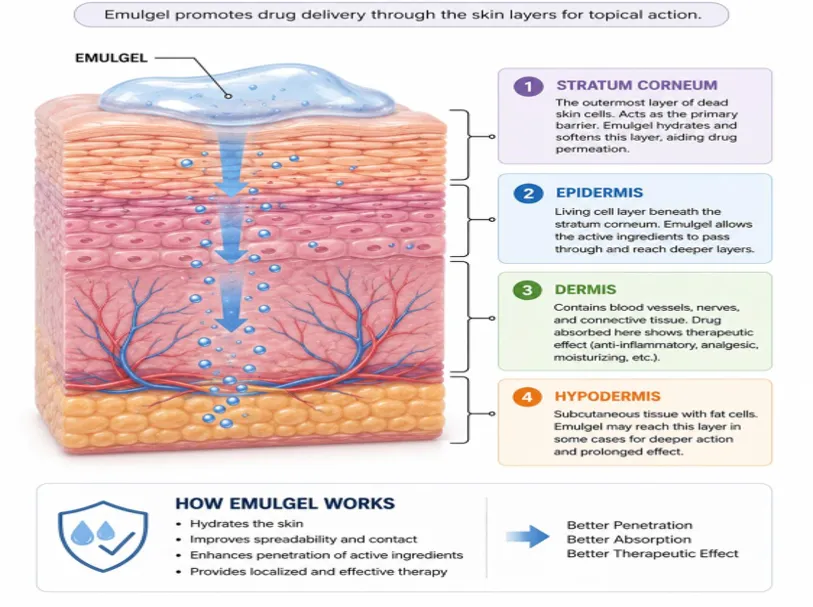
(The figure 1 shows the various layers of skin involved in the delivery of topical drug using emulgel formulation. The emulgel, when applied on the skin surface, comes in contact with the stratum corneum, the outermost protective barrier, which increases hydration and drug permeation. The active ingredients diffuse through the epidermis to the dermis where therapeutic effects such as anti-inflammatory activity occur. Deeper penetration may reach the hypodermis in some cases and give longer lasting localised action. The emulgel system improves the spreadability, absorption and effective delivery of herbal active ingredients)
In the Indian medical system known as Ayurveda, Boswellia serrata, Linn F (Burseraceae) is frequently employed as an anti-inflammatory, analgesic, anti-arthritic, and anti-proliferative agent . According to clinical research, the Boswellia serrata plant may help individuals with inflammatory bowel disease experience less diarrhoea . In terms of macrophage activation, a biopolymeric fraction of the plant has demonstrated a dose-dependent immunostimulatory effect.(7) Strong analgesic, anti-inflammatory, and anti-arthritic properties have been demonstrated in the gum of the Boswellia serrata tree, which grows throughout India. B. serrata contains β-configured pentacyclic triterpene acids, which are significant components of the extract. These acids include 11-keto-β-boswellic acid (KBBA), 3-acetyl-11-keto-β-boswellic acid (AKBBA), 3-acetyl-β-boswellic acid (ABBA), and β-boswellic acid (BBA).(8) According to both in vitro and in vivo research, formulations containing Boswellia serrata may block inflammatory pathways linked to the development of OA and reduce the catabolic activities of important inflammatory mediators in the early stages of the disease. In particular, Boswellia serrata extract's 3-O-Acetyl-11-keto-beta-boswellic acid (AKBA) inhibits 5-lipoxygenase, a major source of pro-inflammatory leukotrienes, to produce anti-inflammatory actions .Boswellia serrata extract is safe and beneficial for OA patients, according to a recent meta-analysis (2020).(9)Vesicles are cells, and phyto denotes plant. A lipophilic form of the medication is produced by phospholipids utilised to generate phytovesicles bound with the plant extract. It improves the anti-inflammatory properties of the Boswellia serrata gum extract by penetrating the skin efficiently due to its high lipid profile. Phytovesicles have many benefits and applications as compared to the traditional formulation. Herbal anti-inflammatory gels that use herbal extracts to increase patient compliance while being non-toxic, safe, and effective would be very acceptable.(10)More than 25 species, including Boswellia carteri, Boswellia sacra, and Boswellia papyrifera, are cultivated all over the world. BS is frequently grown in Gulf nations like Saudi Arabia and East Africa. It is extensively grown in the Indian states of Orissa, Bihar, Madhya Pradesh, Uttar Pradesh, Rajasthan, and Gujarat.The oleo gum resin is the dry exudate from the bark of Boswellia plants. Several extraction techniques, including solvent extraction, can be used to extract a specific pharmacological active ingredient. The extraction procedure, solvent extraction, and hydrodistillation. This extraction needs a variety of plant components, including the base, stem, leaves, and even a entire Boswellia plant. Several ailments can be treated with this substance. Inflammatory conditions including ulcers from colitis and Crohn’s disease. Essential oils and extracts are both utilised as mouth antiseptics. Cleaning and cough care for asthma.(11)
(Table 1: Taxonomical Hierarchy of Boswellia serrata)
|
Taxonomical Hierarchy |
Classification |
|
Kingdom |
Plantae |
|
Subkingdom |
Tracheobionta |
|
Division |
Magnoliophyta |
|
Class |
Magnoliopsida |
|
Order |
Sapindales |
|
Family |
Burseraceae |
|
Genus |
Boswellia |
|
Species |
Boswellia serrata Roxb. |
(Table 2: Morphological characteristics of boswellia serrata)
|
Part |
Description |
|
Plant type |
Medium sized deciduous tree |
|
Bark |
Thin, papery, peeling bark |
|
Leaves |
Compound, serrated leaves |
|
Flowers |
Small, white colored |
|
Resin |
Aromatic oleo-gum resin |
|
Odor |
Characteristic balsamic odor |
Advantages(12,13):
Disadvantages(12,14):
Rastinale of emulgel:
Certain medications that are applied to the skin or mucous membrane either pharmacologically alter an action in the tissues or enhance or restore a fundamental skin function. These products are referred to as dermatological or topical products.Often used topical medicines, ointments, creams, and lotions have a number of disadvantages. They have stability problems, a low spreading coefficient that necessitates rubbing, and a sticky character that makes patients uncomfortable when applied. All of these factors under the primary category of semisolid preparations have led to an increase in the use of transparent gels in pharmaceutical and cosmetic preparations. Hydrophobic medication delivery is a serious drawback of gels, despite their many benefits. In order to overcome this limitation and successfully integrate and administer even a hydrophobic medicinal ingredient through gels, an emulsion-based approach is being used.(15)
|
Sr no |
Ingredients |
|
1 |
Boswellia serrata |
|
2 |
HPMC |
|
3 |
Liquid Paraffin |
|
4 |
Glyceryl Monostearate |
|
5 |
Span 80 |
|
6 |
Propylene Glycol |
|
7 |
Methyl Paraben |
|
8 |
Propyl Paraben |
|
9 |
Triethanolamine |
|
10 |
Distilled water |
MATERIAL AND METHOD:
Material:
1) Boswellia serrata :
Synonym: Salai/Salai guggul,
Bio-source: Boswellia serrata is dried oleo-gum-resion obtained from stem bark of Boswellia serrata Roxb.
Family: Burseraceae
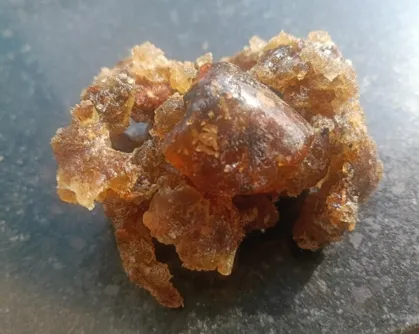
Boswellia serrata gum (Shallaki) used in this project was procured from the Commercial herbal supplier Value Life Essentials (100 g pack).boswellia is a tree with moderate to big branches that grows in arid mountainous areas of the Middle East, Northern Africa, and India.Two With 17 genera and 600 species scattered throughout all tropical climates, the Burseraceae family is represented in the plant kingdom.(16) In the full Freund's adjuvant-induced animal model of rheumatoid arthritis, Boswellia serrata exhibits effects on acute inflammatory parameters and tumour necrosis factor-α (Kumar, R. et al., 2019). According to Lee DM and Weiblatt M.E. (2011), rheumatoid arthritis (RA) is an inflammatory disease of synovial tissue that causes pain and joint deterioration. Constant inflammation of this tissue causes deformity by loosening joint ligaments and joint deterioration by eroding surrounding bones and cartilage (Matsumoto, I. et al., 2002). Nonsteroidal anti-inflammatory medications, corticosteroids, and disease-modifying anti-rheumatic medications are currently used to treat RA, however they all have negative side effects. It has been reported that the natural medication Boswellia serrata has anti-inflammatory properties.(17)
2) HPMC(Hydroxypropylmethyl cellulose):
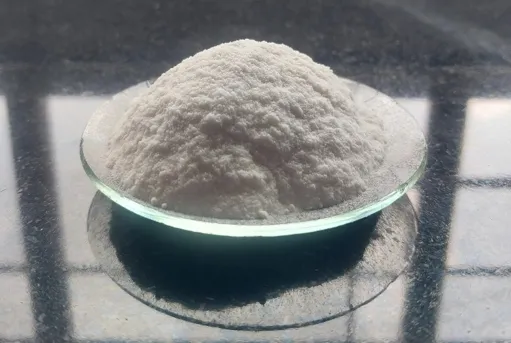
HPMC is a semi-synthetic gelling agent made from cellulose that is stable at pH 3–11 and resistant to phenol. This polymer produces a clear and neutral gel and has a stable viscosity on long-term storage . Film coating solutions using aqueous solvents employ low-viscosity HPMC, whereas.Organic solvents use high viscosity levels. Depending on the viscosity grade, the concentration.The film-forming solution for the film-coated tablet is made of 2–20% w/w (6). HPMC-based films has the qualities of a consistent, light, non-greasy coating with a pleasing texture, does not interact strongly with other components and water-absorbing surfactants, making it simple to spread, to offer lubrication, and to feel comfortable when applied in an occlusive state to the skin.(18)
3) Liquid Paraffin:
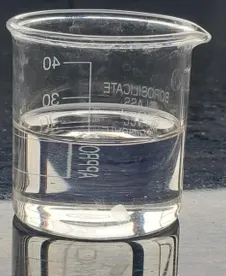
In semi-solid formulations, liquid paraffin is utilised as an emollient with a moisturising action that keeps skin from drying out by raising the skin's water content.(19) In addition to being a basis for lotions and ointments, liquid paraffin softens the skin.(20)
4) Glyceryl Monostearate:
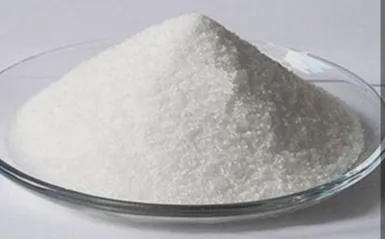
Glyceryl monostearate comes in a wide range of forms and is utilised in food, pharmaceutical, and cosmetic applications as nonionic emulsifiers, stabilisers, emollients, and plasticisers. It serves as a mutual solvent for polar and nonpolar substances that can create water-in-oil or oil-in-water emulsions, acting as an efficient stabiliser.Because of these characteristics, it can also be used as a solvent for phospholipids like lecithin or as a dispersion agent for colours in oils or solids in fats..(21)
5) Spaan 80:
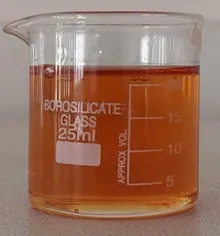
Pharmaceutical and cosmetic formulations employ Span 80 (Sorbitan monooleate), a non-ionic surfactant, as an emulsifying agent. Because of its low HLB value (4.3), it is mostly utilised to make water-in-oil (W/O) emulsions. It enhances the stability of formulations and offers good emulsifying, wetting, and dispersion qualities.(22)
6) Propylene glycol:
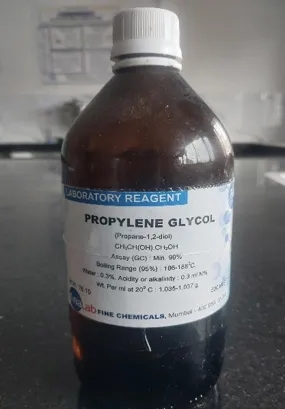
Pharmaceutical and cosmetic compositions frequently use propylene glycol as a humectant and solvent. It aids in moisture retention, enhances the formulation's texture, and makes the active chemicals more soluble. Propylene glycol improves the pH, viscosity, and clarity of gel formulations. Additionally, it helps make topical formulations more stable and spreadable.(23)
7) Methyl and Propyl paraben:
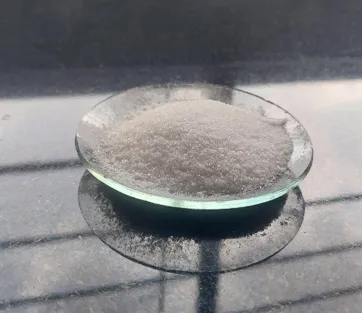
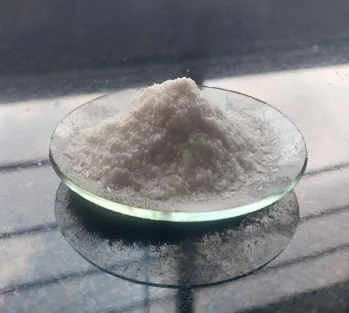
The parabens are one of the most commonly utilised classes of medicinal preservatives. They are the carboxylic esters of 4-hydroxybenzoic acid. Methyl paraben (MP) (E218) and propyl paraben (PP) are the most often used parabens.(E216), the corresponding sodium salts. The alkyl’s lengthChain, the less soluble it is in water. Therefore, a co-solvent like ethanol is typically needed.To make them more soluble, and it should be mentioned that sodium salts are less common in variousFormulations. They are typically regarded as manufactured substances, although in recent years, numerous.There were natural sources. The pharmaceutical and cosmetic industries favour them. due to their broad spectrum of antibacterial activity, excellent chemical stability across a wide pH range, and odourless and tasteless qualities. (24)
8)Triethanolamine:
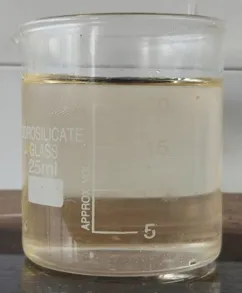
Triethanolamine is widely used in topical pharmaceutical formula-tions, primarily in the formation of emulsions. When. combined with a fatty acid in equimolar amounts, like stearic acid or oleic acid, triethanolamine forms an anionic soap having a pH of roughly 8, which might be applied as an emulsifying agent to produce fine-grained, stable oil-in-water emulsions. Concentrations that are typically used for emulsification are 2–4% v/v of 2–5 times that of fatty acids and triethanolamine. When it comes to mineral oils, 5% v/v of triethanolamine will be needed, with suitable rise in the quantity of fatty acid utilised. Getting Ready that contain triethanolamine soaps tend to darken on storage. However, discoloration may be reduced by avoiding exposure to light as well as metal and metal ion interaction. Additionally, triethanolamine is utilised in topical analgesic treatments and salt production for injectable solutions. It is also used in sunscreen preparations. Triethanolamine is used as an intermediate in the manufacturing of waxes, polishes, herbicides, textile specialities, surfactants, petroleum demulsifiers, toilet goods, cement additives, and cutting oils. Triethanolamine is also claimed to be used for the production of lubricants for the textile and rubber glove industries. Other general uses are as buffers, solvents, and polymer plasticizers, and as A humectant.(21)
9) Distilled water:
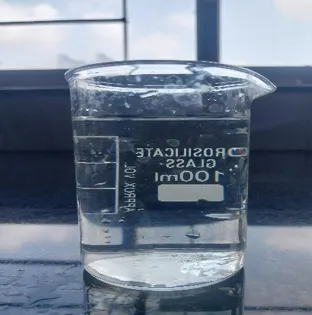
Distilled water, the formulation's solvent, supplies the aqueous phase needed for hydration. It ensures that the mixture is pure and free of impurities that could jeopardise the stability and moisturiser efficacy.Vaporised water that has been boiled and then transformed back into a liquid in a different container is referred to as distilled water. The initial Parts of the water are still in the container. that do not boil below the boiling point of water. Thus, distilled water is a type of purified water. Purified water is essentially free. of substances and microbes. Osmosis in reverse (moving water across a membrane to extract substances, minerals, and microbes), Ionisation is the process of employing an ioniser rather than a chemical to sanitise water).(25)
Method of preparation (26,27,28,29):
To extract the active ingredients, the Boswellia serrata resin was precisely weighed and steeped in ethanol for 24 to 48 hours.The concentrated extract was obtained by filtering the mixture and evaporating the solvent.For future formulation, the extracted material was appropriately kept.
Using a magnetic stirrer, the necessary amount of HPMC was gradually distributed in distilled water while being continuously stirred.For the dispersion to properly expand and create a smooth gel, it was set aside.
A beaker was filled with liquid paraffin and additional oil-soluble substances. A homogenous oil phase was created by gradually heating the mixture while stirring constantly.
In a different beaker, water-soluble components were dissolved in distilled water. The aqueous phase was supplemented with the produced Boswellia serrata extract. The combination was gradually heated until it reached the same temperature as the oil phase.
To create a stable emulsion, the aqueous phase was gradually introduced to the oil phase while being continuously stirred with a magnetic stirrer.
With constant stirring, the produced gel phase was gradually added to the emulsion.Until a homogenous Boswellia serrata emulgel was achieved, stirring was continued.For additional assessment research, the created emulgel was put into appropriate containers and maintained appropriately.
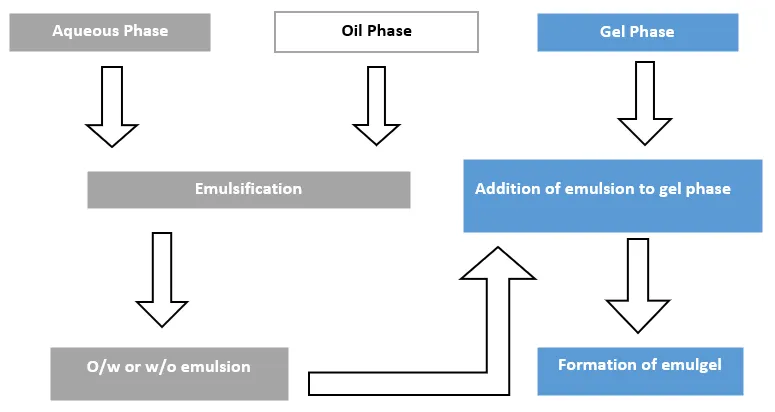
(Figure 2. Method of preparation )
FORMULATION TABLE:
|
Sr No |
Ingredients |
F1 |
F2 |
F3 |
Role |
|
1 |
Boswellia serrata |
3g |
3g |
4g |
Anti-inflammatory |
|
2 |
HPMC |
1.5g |
2g |
1.2g |
Gelling agent |
|
3 |
Liquid Paraffin |
6g |
5g |
7g |
Oil phase |
|
4 |
Glyceryl Monostearate |
2g |
1.8g |
2.2g |
Oil phase |
|
5 |
Span 80 |
0.5g |
0.6g |
0.7g |
Aqueous emulsifier |
|
6 |
Propylene Glycol |
3g |
3g |
3g |
Penetration enhancer |
|
7 |
Methyl Paraben |
0.18g |
0.18g |
0.18 |
Preservative |
|
8 |
Propyl Paraben |
0.02g |
0.02g |
0.02g |
Preservative |
|
9 |
Triethanolamine |
0.3g |
0.35g |
0.4g |
pH adjuster |
|
10 |
Distilled water |
13.5g |
14.05g |
11.3g |
Vehicle |
EVALUATION PARAMETERS (30,31,32,33,34,35,36):
This is mostly used to assess the colour, stability, texture, and smell of the emulgel.
Every prepared emulgel's pH is measured using a digital pH meter. Prior to employing a standard buffer solution, the pH meter is calibrated. After dissolving 1 gram of the formulation in distilled water to create a homogenous solution, it is set aside for two hours. The glass electrode is submerged in the suspension for two hours, and the pH is then determined.
The Brookfield Viscometer was used to measure the gel’s viscosity.
A wooden block with a glass slide attached to it and another glass slide with a fixed weight attached to it were used to test the emulgel's spreadability. One gram of emulgel was placed in the center of a circle with a diameter of two centimetres on the glass slide that is fastened to the wooden block. With a fixed weight of 200 g on the slide for five minutes, the second glass slide was carefully positioned above it. It was observed that the emulgel's diameter had increased.
A little amount of the produced formulation was applied to the skin, and it was then rinsed with water to establish the washability test. The skin was treated with a little amount of prepared formulations (gels) and then cleaned with warm water. The compositions ought to be easily cleaned.
In a clean beaker, 0.2 ml of egg albumin (fresh hen's egg) and 2.8 ml of phosphate buffer solution (ph.7,4) are added to create a reaction mixture.Two millilitres of the test extract at different concentrations (20, 40, 60, 80, and 100 μg/mL) were added to separate test tubes containing this prepared solution. Additionally, distilled water was used in place of the test extract to provide a control solution. Every reaction mixture was thoroughly mixed and adjusted to the necessary volume. To enable interaction between the protein and the test extract, the resultant reaction mixture was incubated at 37ºC for 15 minutes. and then cooked for five minutes to 70ºC.The samples were heated and then allowed to cool to room temperature. A UV-visible spectrophotometer was used to test each sample's absorbance at 660 nm.By comparing the absorbance of the test samples with that of the control, the percentage inhibition of protein denaturation was determined.
The produced emulgel was applied to the previously designated 1 square centimetre region on the dorsal surface of the left hand, and the time was noted. After that, the skin was checked for irritation, erythema, and oedema (if any) at regular intervals for up to 24 hours.
According to ICH guidelines, the gel was stored at 30°C±2°C/60% ±5% RH and 40°C±2°C/75% ±5% RH for the stability research. The formulation was evaluated for changes in viscosity, spreadability, pH, and physical appearance.
RESULT:
1. Physical apperance:
Emulgel formulation were light yellow preparation with smoothy and non – greasy apperance . Result have been shown in table 3.
(Table:3 Physical appearance of emulgel formulation)
|
Sr No. |
Parameter |
F1 |
F2 |
F3 |
|
1 |
Colour |
Light yellow |
Light yellow |
Light yellow |
|
2 |
Odour |
Characteristics aromatic odour |
Mild aromatic odour |
Characteristics aromatic odour |
|
3 |
State |
Semi-solid |
Semi-solid |
Semi-solid |
|
4 |
Consistency |
Smooth and non greasy |
Creamy and slightly oily |
Creamy and slightly oily |
2. pH measurement:
A pH meter was used to determine the prepared formulations' pH. The formulations' pH was between 5.0 and 7.0, which is regarded as appropriate to reduce the risk of skin irritation when applied to the skin.
(Table:4 pH measurement of emulgel formulation)
|
Sr No. |
Parameter |
F1 |
F2 |
F3 |
|
1 |
pH |
6.5 |
6.2 |
6.8 |
3. Viscosity test:
The Brook-field viscometer was used to conduct the testing.Result are given in table 5
(Table:5 viscosity test of emulgel formulation)
|
Sr No. |
F1 |
F2 |
F3 |
|
1 |
Moderate |
Low |
High |
4. Spredability test:
The spreadability of three formulation are shown in table 6.
(Table:6 Spreadability test of emulgel formulation)
|
Sr No. |
F1 |
F2 |
F3 |
|
1 |
Very good |
Good |
Moderate |
5. washability test:
The prepared emulgel showed good washability and was easily removed with water.Result are given in table 7.
(Table:7 Washability test of emulgel formulation)
|
Sr No. |
F1 |
F2 |
F3 |
|
1 |
Very good |
Good |
Moderate |
6. Egg albumin test:
The prepared Boswellia serrata emulgel showed good anti-inflammatory activity by inhibiting egg albumin denaturation.Result were given in table 8.
(Table:8 Egg albumin test of emulgel formulation)
|
Sr No. |
Parameter |
F1 |
F2 |
F3 |
|
1 |
% inhibition of protein |
82% |
68% |
74% |
|
2 |
Observation |
Excellent activity |
Good activity |
Moderate activity |
7. Stability test:
The prepared Boswellia serrata emulgel showed good stability with no significant change in colour, pH, consistency, and homogeneity during storage.Result were given in table 9.
(Table:9 Stability test of emulgel formulation)
|
Sr No. |
F1 |
F2 |
F3 |
|
1 |
Highly stable |
Stable |
Stable |
8. Irritancy test:
The formulation was found to be non-irritant and safe for topical application.Result were given in table 10.
(Table:10 irritancy test of emulgel formulation)
|
Sr No. |
F1 |
F2 |
F3 |
|
1 |
No irritation |
No irritation |
Slight redness |
DISCUSSION:
Boswellia serrata based herbal emulgel formulation and characterisation has overcome several important challenges in herbal topical formulations. Study of anti-inflammatory activity of emulgel of boswellia serrata.The formulation has been successfully incorporated with emulsion and gel technologies as evident from its physicochemical properties like optimal viscosity, spreadability, skin-compatible pH, and other evaluation parameters.Of note, the absence of irritation in human patch tests is a critical issue for topical products and indicates excellent patient acceptability.This research provides a basis for the development of herbal remedies for pain relief and to reduce the inflammation and better formulation is needed for further improvement.
CONCLUSION:
The prepared Boswellia serrata emulgel was successfully formulated for topical application with hydroxy propyl methyl cellulose as gelling agent. Formulation 1 containing 3g boswellia serrata and 1.5g HPMC shows best stability profile, Moderate viscosity and higher percentage inhibition of protein.The F1 and F2 formulation washed off very easily and did not irritate. Formulation F3 showed slight redness at all temperatures with no colour change and no signs of phase separation. F1 was more stable than F2 and F3 and The formulation had shown stability in colour, odour, pH, state and consistency in three different formulations. They passed all the tests they were given in the evaluation. The objective of the research work was to formulate and evaluate herbal anti-inflammatory emulgel of boswellia serrata.Boswellia serrata can be used as an anti-inflammatory for topical delivery.It was prepared successfully and was tested for real and selective parameters. Emulgel improves the topical delivery of poorly soluble drugs such as boswellia serrata.Emulgel is a new concept in topical delivery of medicine and is compatible with hydrophobic drugs. It can enhance the spreadability, adhesion, viscosity and extrusion.Emulgel is prepared by dispersing emulsion in gel base. It shows double control release effect. The emulgel technique helps to solve some problems like creaming, phase separation and improves its stability.
REFERENCES


Sayli Jadhav, Pooja Ligade, Seema Munjewar, Pravin Sable, Formulation and Evaluation of Herbal Anti-Inflammatory Emulgel of Boswellia serrata, Int. J. of Pharm. Sci., 2026, Vol 4, Issue 6, 1440-1453. https://doi.org/10.5281/zenodo.20565076
 10.5281/zenodo.20565076