
View Article

Abstract

Cold cream is a water-in-oil (W/o) emulsion. Also, it is known as a fatty cream according to European Pharmacopoeia. This study explores the formulation and evaluation of an herbal cold cream incorporating sandalwood oil, renowned for its therapeutic properties. Sandalwood oil, derived from the heartwood of Santalum album, possesses anti-inflammatory, antiseptic, and soothing qualities, making it an ideal candidate for skincare applications. The primary objective is to develop a cold cream that hydrates and protects the skin and provides the benefits of sandalwood oil. A cold cream base was formulated using natural ingredients such as beeswax, rose oil, and varying concentrations of sandalwood oil. The physicochemical properties, including pH, viscosity, spreadability, and stability, were assessed to ensure the formulation's suitability for topical application. Additionally, the antimicrobial efficacy of the cream was evaluated against common skin pathogens. Preliminary results indicate that incorporating sandalwood oil enhances the moisturizing and soothing properties of the cold cream without compromising its stability. Sensory evaluation by a panel of volunteers further affirmed the product's acceptability, highlighting its pleasant fragrance and non-greasy texture. The antimicrobial tests demonstrated significant inhibition of bacterial growth, suggesting potential benefits in preventing skin infections.

Keywords

Cold Cream, Orange Peel Extract, Sandalwood Oil, Rheological Studies.

Introduction

× Popup Image

Cosmetics are items that are typically used to both adorn and purify the skin. The word "cosmetics" comes from the Greek word "kosmesticos," which meaning "to adorn." The water in oil emulsion is called cold cream. Compared to other semisolid dosage forms or formulations, cold cream provides a longer contact time at the application site. They make the skin look elegant and keep it from being overly oily. Emollience is provided to the skin as a result of the oil phase. The purpose of cold cream is to moisturize dry skin and cool the body while also removing waste from pores and pores. It may be simply washed away and watered down. When used on the skin, they do not irritate.[1]] The skin receives additional conservation from the water phase. At body temperature, it becomes liquefiable. It enters the skin through the pores of the skin's epidermis. Cream is defined as semisolid emulsions which are oil in water (o/w) or water in oil (w/o) type and these semisolid emulsions are intended for external application. Cream is classified as oil in water and water in oil emulsion. It is applied on outer part or superficial part of the skin and its main ability is to remain for a longer period of time at the site of application. The function of a skin cream is to protect the skin against different environmental condition, weather and gives soothing effect to the skin. There are different types of creams like cleansing, cold, foundation, vanishing, night, massage, hand and body creams. The main aim of our work is to develop a herbal cream which can give multipurpose effect, like moisturizer, reduce acne and skin irritation, reduce skin diseases like eczema, psoriasis, dry skin, wrinkles, rashes etc. and also adding glow to the face. We have used two herbal ingredients in our preparation which are Neem, Almond. Neem is used as an antifungal and anti-inflammatory and it is also used to reduce scar, pigmentation, redness and itching of the skin The greatest cleaning solutions are soap, water, and cleansing lotions. Cream is referred to as a semisolid emulsion that is either of the oil in water (o/w) or water in oil (w/o) type and is made for external use. Cream is categorized as an emulsion of water and oil. It is applied to the outermost or most superficial layer of the skin, and its main benefit is that it lasts longer at the application site. The purpose of a skin cream is to protect the skin from various environmental factors, including weather, and to provide calming effects. There are many various kinds of creams, including hand, body, cleansing, cold, foundation, disappearing, night, and massage creams. From that time the materials which are used to promoting appearances or to beautify the skin are called as cosmetics. From ancient time till now people are still using polyherbal or herbal cosmetics for the beautification of skin. The use of herbal products as cosmetics is as prevalent in modern era as it was in ancient times. Herbal cosmetics are mostly preferred because of their less or nil side effects when compared to synthetic products and show enhanced effects upon application. The main aim of our work is to develop a herbal cream which can give multipurpose effect, like moisturizer, reduce acne and skin irritation, reduce skin diseases like eczema, psoriasis, dry skin, wrinkles, rashes etc. and also adding glow to the face. [2,3]. Herbal cosmetics are products intended to enhance and beautify human appearances, in order to nourish and moisturize the skin. Herbal cold creams are the herbal formulation that contained plant extracts, liquid paraffin as a lubricating agent, bees wax as stabilizer, methyl paraben as a antibacterial agent by using the water in oil method. This cold cream is prepared by using the neem oil and almond oil. After preparation of cream, cream were evaluated for different parameters like appearance, PH, viscosity, stability test, dye test, spread ability & Test for microbial growth. We have used two herbal ingredients in our preparation which are Neem, Almond. Aloe Vera gel is used as a moisturizer, to reduce pimples and acne and also used for treatment of burn wounds. Neem is used as an antifungal and anti-inflammatory and it is also used to reduce scar, pigmentation, redness and itching of the skin.

HUMAN SKIN

The skin is the body's largest organ. It covers the entire body. It serves as a protective shield against heat, light, injury and infection. The skin also:

  1. Regulates body temperature
  2. Stores water and fat
  3. Is a sensory organ
  4. Prevents water loss
  5. Prevents entry of bacteria
  6. Acts as a barrier between the organism and its environment
  7. Helps to make vitamin D when exposed to the sun

Advantages of Herbal Cold Cream

 1. It Prevents ageing and dehydration of skin.

2. As cold creams contain enough amount of water and oil, they keep skin safe from the rough environments.

3. They also keep skin moisturized and safe.

4. Cold creams are designed to remove makeup and smooth the skin.

5. Medicated cold cream is mainly used as topical pharmaceutical dosage form for the treatment of skin.

6. To help in the maintenance of moisture balance of skin and avoid rough skin co uses of cold cream (nonmedicated).

7. To provide an emollient effect and oily protective layer on the skin.

8. Also, provide a chemical barrier as with sun block ingredients.

9. As a carrier for drug substances such as diflucortolone valerate in medicated cream.

Ideal Properties Of Herbal Cold Cream

1. It should not normally be diluted.

2. The pH of the cold cream must be optimum from 4.6–6.0

3. Its consistency should be optimum so that it can be easily put out from the container and apply easily.

4. Should give a cooling effect on the skin after external application.

5. It must provide a thin waxy protective layer on the skin to protect the water evaporation from the skin surface.

 6. Should give a faster emollient effect, so that very dry skin can swell up and become soft within a short time.

7. Less greasy than ointment and easily spread on the skin.

8. It should be physically and chemically stable throughout its shelf-life.

9. The excipients should be compatible with each other. It should be sterile.

MATERIAL AND METHOD

Several materials used in the present study i.e., Almond oil, Borax, Beeswax, Rose water, Liq. Paraffin, were taken out from the Laboratory of Parmarth college of pharmacy, Hapur. And the extraction of neem leaves was done by the soxhlate extraction method. The details of the plant material used for the formulation of cold cream are mentioned below

A. Almond Oil

It's also anti-inflammatory and boosts immunity. Containing omega-3 fatty acids, almond oil might help you maintain healthy cholesterol levels and improve your memory. It may help lower your risk for diseases like cancer and heart disease.

Figure 1: Almond Oil

B. Neem Oil (Azadirachtaindica)

Neem oil is a naturally occurring pesticide found in seeds from the neem tree. Neem oil is a mixture of components. Azadirachtin is the most active component for repelling and killing pests and can be extracted from neem oil. The portion left over is called clarified hydrophobic neem oil.

Figure 2: Neem Oil

C. Borax

Borax, combined with wax, is used in many cosmetic products like creams, gels, and lotions. Borax's alkaline nature makes it a perfect ingredient in cleansers and toners. In cosmetic products, borax is sometimes used as an emulsifier, buffering agent, or preservative for moisturizing products, creams, shampoos, gels, lotions, bath bombs, scrubs, and bath salts. Borax is also an ingredient combined with glue and water to make “slime,” a gooey material that many kids enjoy playing with right from creams and body lotions to shampoos, bath gels. Given its mild and antiseptic nature, quite a few natural cosmetic products tend to include Borax as an essential ingredient as well.
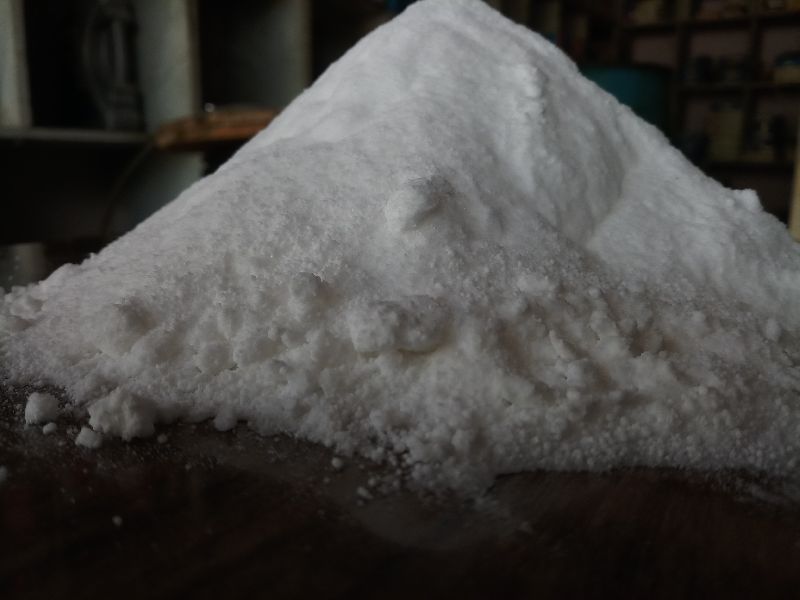
Figure 3: Borex

D. Beeswax

Ability to defend against the irritants when applied to skin, beeswax can serve as a layer of defence. It can sheild skin from harsh weather and environment pollutants. Beeswax can prevent moisture from evaporating from the hair, in addition to soothing and moisturizing the hair. In the skin beeswax can form a layer of protection. It also attract water since it is a humectant

Figure 4: Beeswax

E. Liquid paraffin

The highly refined mineral oil is also known as liquid paraffin, also known as paraffinum liquidium or Russian mineral oil, is used in cosmetic and medicine. Liquid paraffin used for cosmetic and therapeutic purposes should not be confused with paraffin (also known as kerosene) used as fuel. It is an oily, clear, colourless liquid made up of saturated hydrocarbon that comes from petroleum

Figure 5: Liquid Paraffin

F. Rose Water

Rose water is especially hydrating when combined with other moisturizing ingredients, such as ceramides or glycerin. “These help to moisturize the skin protect the skin barrier and prevent further water loss from the skin. The anti-inflammatory properties can reduce skin redness and puffiness. Rose Water Maintains the Skin's Natural pH Balance. Chemically produced soaps and cleansers disrupt the pH balance of our skin, making it prone to bacteria that cause various skin conditions like rashes and acne.

Figure 6: Rose Water

METHOD FOR EXTRACTION OF NEEM OIL

  • 100 g of dried and grind neem leaves powder was placed into the thimble and placed in the soxhlet chamber.
  • Sample was extracted in a soxhlet extraction system using 500 ml of solvent (ethanol).
  • The heating powder set with heating mentle.
  • The crude extract solution obtained and rotary evaporator used to remove the solvent and completely dried in an atmospheric oven.
  • Extract was then stored at room temperature before weighing gravimetrically to determine the yield.
  • The oil yield of extracted Neem oil was calculated by using the following equation:-

%oil yield =    (W1-W2) x 100

                           W1

Where W1 = sample weight initially placed in thimble

           W2 = sample weight after dried in the oven.                             
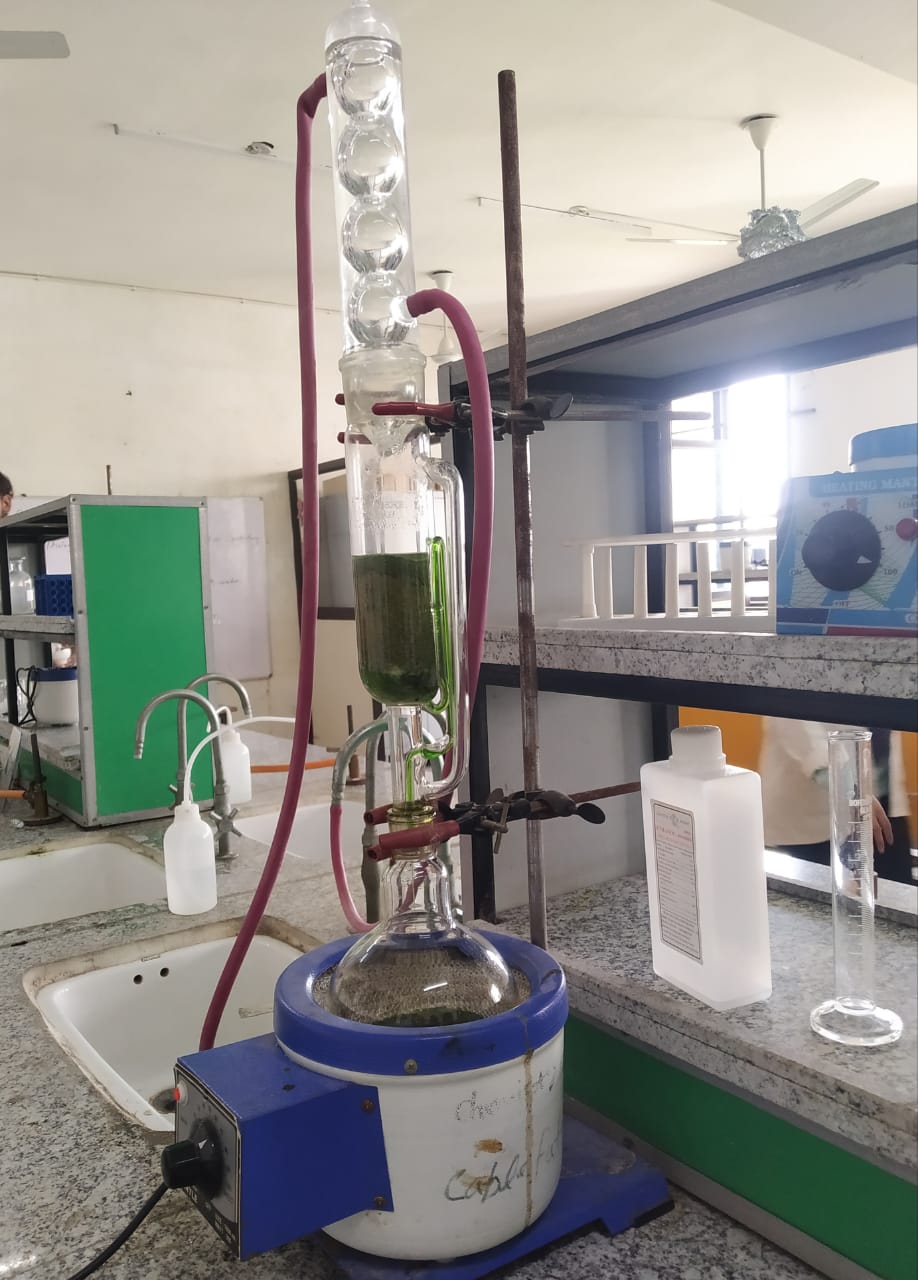
Figure 7: Soxhlet Apparatus
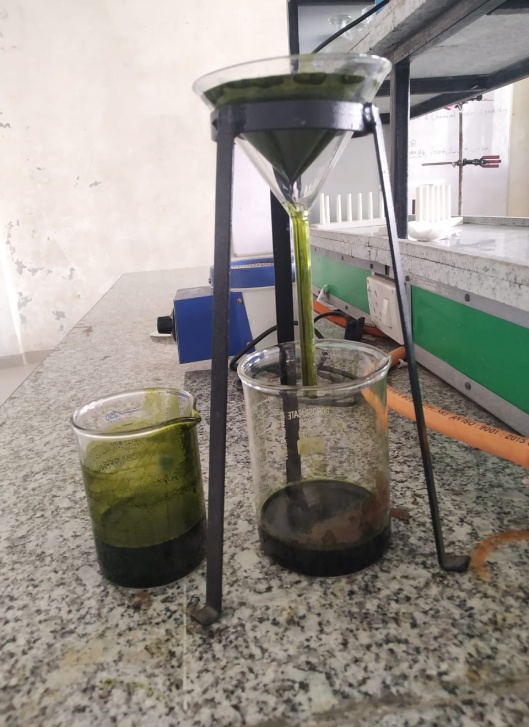
 

Figure 8: Neem Extract

METHOD OF PREPARATION

  • Take required quantity of Beeswax and Liquid paraffin in porcelain dish
  • Heat this mixture in water bath for melting purpose. Remove dish from water bath
  • Take Borax and distilled water in beaker. Heat this solution in water bath for about 75C.
  • This Borax solution added drop wise in porcelain dish with continuous stirring.
  • Add Methyl paraben in porcelain dish dissolved it.
  • Add Neem oil and Almond oil in this solution. Add perfume for fragrance.
  • Herbal Cold Cream was obtained.

Table 1: Composition of Herbal cold cream

Sr No.

Name of Ingredient

Scientific name

Quality (for 100gm)

Uses

1

Methyl

Paraben

methyl p-hydroxybenzoic acid

0.010 gm

Antibacterial

properties and Preservation

2

Borax

sodium

tetraboratedecahydrate

0.25 gm

Stability

3

Beeswax

Apiccerana, Apis Mel,

Apismellifera, ApisMellif

15 gm

emulsifying agent,

stabilizer

4

Liquid Paraffin

petrolatum

50 gm

Prevents skin itching

and lubricating agent

5

Neem Oil

Azadirachtaindica

23 gm

Prevent or even kill

fungus

6

Almond oil

Prunusdulcis var. dulcis.

25 gm

protective layer skin


Figure 9: Cold cream

EVALUATION OF HERBAL COLD CREAM

Morphological Evaluation

  • Physical properties: The cream was observed for the color, odor and appearance.

 Physicochemical Evaluation: -

  • Wash ability: The cream was applied on the hand and observed under the running. 
  • PH: The pH meter was calibrated with the help of standard buffer solution. Weight 0.5 gm of cream dissolved it in 50 ml of distilled water and its pH was measured with the help of digital pH meter.
  • Viscosity: Viscosity of the cream was determined with the help of Brookfield viscometer at 100 rpm with the spindle no. 63 .
  • Spread ability test: The cream sample was applied between the two glass slides and was compressed between the two-glass slide to uniform thickness by placing 100 gm. of weight for 5 minutes then weight was added to the weighing pan. The time in which the upper glass slide moved over the lower slide was taken as a measure of spread ability.

Spread ability=m *l/t

Where,

            M =weight tight to upper slide

           L =length moved on the glass slide

           T =time take

  • Irritancy test: Mark an area (1 sq.cm) on the left-hand dorsal surface. The cream was applied to the specified area and time was noted. Irritancy, erythema, edema, was checked if any for regular intervals up to 24 hrs. and reported. [25,26] 
  • Test for microbial growth: Agar media was prepared then the formulated cream was inoculated on the· plate’s agar media by steak plate method and a controlled is prepared by omitting the cream. The plates were placed in the incubator and are incubated in 37 0 C for 24 hours. After the incubation period, the plates were taken out and the microbial growth were checked and compared with the control.[23,24]
  • Dye test: The scarlet red dye is mixed with the cream. Place a drop of the cream on a microscopic slide, then covers it with a cover slip, and examines it under a microscope. If the disperse globules appear red the ground colorless. The cream is o/w type. The reverse condition occurs in w/o type cream i.e. the disperse globules appear colorless.
  • Homogeneity: Homogeneity was tested via the visual appearance and test.

RESULT AND DISCUSSION

Following evaluation parameters were performed to ensure superiority of prepared cold cream.

Morphological Evaluation

Herbal cold cream was evaluated for morphological parameters showed in the Table 2. The color of formulation was yellowish. The odor of prepared formulations was pleasant and good acceptable which is desirable to cosmetic formulations. Texture and smoothness were acceptable as per requirement of cosmetic formulations.

Table 2: Morphological Evaluation


        <a href="https://www.ijpsjournal.com/uploads/createUrl/createUrl-20250417132833-0.png" target="_blank">
            <img alt="Morphological Evaluation.png" height="150" src="https://www.ijpsjournal.com/uploads/createUrl/createUrl-20250417132833-0.png" width="150">
        </a>

  • Physiochemical Evaluation
  • PH: Herbal cold cream was evaluated for physicochemical parameters showed in the Table 3. The pH of the cream was found to be in range of 5.6 to 6.8 which is good for skin pH. The herbal formulation was shown pH nearer to skin required i.e. pH 6.65
  • Wash ability: Wash ability test was carried out by applying a small amount of cream on the hand and then washing it with tap water.
  • Viscosity: Viscosity of cream was done by using Brooke field viscometer at a temperature of 25 ? using spindle No. 63 at 2.5 RPM. According to the results all the formulations showed adequate viscosity.
  • Test for microbial growth: There were no signs of microbial growth after 24 hrs. of incubation a 37ºC and it was comparable with the control.
  • Spread ability test: The spread ability test showed that the formulated cream has good spread able property. The separate in the description of evaluation test lesser the time taken for separation of the two slides better the spread ability.
  • Dye test: The scarlet red dye is mixed with the cream. Place a drop of the cream on a microscopic slide covers it with a cover slip, and examines it under a microscope. The disperse globules appears colorless in the red ground i.e. w/o type cream.
  • Homogeneity: The homogeneity of the formulated cream was judged by the visual appearance and touch. The appearance and touch of the cream were good.

CONCLUSION

Natural remedies are more acceptable in the belief that they are safer with fewer side effects than the synthetic ones. Herbal formulations have growing demand in the world market. Herbal face packs are considered as sustaining and productive way to advance the appearance of skin. Herbal face packs or masks are used to stimulate blood circulation, rejuvenates those muscles and help to maintain the elasticity of the skin and remove dirt from skin pores. Thus, in the present work, it is a very good attempt to formulate the herbal face pack containing naturally available ingredients like neem, almond. It is suggested that the prepared formulation was physico-chemically and microbiologically stable, and possessed characteristics of a standard cosmeceutical's formulation for skincare.

REFERENCES

  1. Mukherjee, P. K. (2002). Quality control of herbal drugs: an approach to evaluation of botanicals. Business Horizons.
  2. UddanduSaheb*, AduriPrakash Reddy, K. Rajitha, B. Sravani, B. Vanitha,(2018). Formulation and Evaluation of Cream from containing plant extracts, World Journal of Pharmacy and Pharmaceutical Sciences, 7(5) :851
  3. ManishaYogeshSonalkar, SachinAnnasahebNitave. Formulation and evaluation of polyherbal cosmetic cream. World J Pharm PharmSci 2016;5:772-9.
  4. KalpeshChhotalalAshara. Importance of trituration technique on preparation and evaluation of cold cream. Inventi Rapid Pharm Tech 2013;1-2:2012.
  5. Akash S. Mali, Karekar P, Dr. Yadav A. V, Formulation and Evaluation of Multipurpose Herbal Cream, International Journal of Science and Research (IJSR)Volume 4 Issue 11, November 2015
  6. http://www.turmericforhealth.com/turmeric -benefits/6-benefits-of-topical turmeric-in cancer.
  7. N. Shah, B.M.Methal, (2006) A Handbook of Cosmetic, VallabhPrakashan
  8.              Akash S. Mali, Karekar P, Dr. Yadav A. V, Formulation and Evaluation of Multipurpose Herbal Cream, International Journal of Science and Research (IJSR) Volume 4 Issue 11, November 2015.
  9. Akhtar N, Khan BA, Khan MS, Mahmood T, Khan HMS, Iqbal M and Bashir S, Formulation Development and Moisturizing Effects of a Topical Cream of Aloe vera Extract, World Academy of Science, Engineering and Technology 75 2011
  10.              Sai Lakshmi Jyothirmai Kala* and SupriyaPalaparthi, FORMULATION AND INVITROEVALUATION OF POLY HERBAL ANTI AGING FACE CREAM, World Journal of Pharmaceutical ResearchVolume 6, Issue 13, 717-73
  11. B.S., Kalpesh K. Mehta, Anshu Gupta (2016). Dispensing Pharmacy A Practical Manual (p.p. 389-399). Pharma Med Press.
  12. Myers D, Surfactant Science and Technology, VCH Publishers: 1992, Pp. 209 247
  13. Sujith S Nair, Molly Mathew and Sreena K, Formulation and Evaluation of Herbal Cream containing Curcuma longa, INTERNATIONAL JOURNAL OF PHARMACEUTICAL AND CHEMICAL SCIENCES Vol. 1 (4) Oct-Dec 2012.
  14. Madalene CY Heng*, Topical Curcumin: A Review of Mechanisms and uses in Dermatology International Journal of Dermatology and Clinical Research 2017.
  15. Ashwini S. Dhase*, Somishwar S. Khadbadi and Shweta S. Saboo, Formulation and Evaluation of Vanishing Herbal Cream of Crude Drugs, American Journal of Ethnomedicine, 2014, Vol. 1, No. 5, 313- 318.
  16. Saraf, S., & Kaur, C. D. (2010). Phytoconstituents as photoprotective novel cosmetic formulations.Pharmacognosy reviews, 4(7), 1.
  17. B.S., Kalpesh K. Mehta, Anshu Gupta (2016). Dispensing Pharmacy A Practical Manual (p.p. 389-399). Pharma Med Press.
  18.              Shah RN, Methal BM, A Hand book of Cosmetics Page No.1 [6]. Myers D, Surfactant Science and Technology, VCH Publishers: 1992, Pp. 209?247
  19. TejswiniDevidasNavgire, MadhuriBaburaoPawarFormulation And Evaluation Of Cold Cream
  20. N. Shah, B.M.Methal, (2006) A Handbook of Cosmetic, VallabhPrakashan
  21. Saraf,   S.,            &Kaur,            C.        D.        (2010).Phytoconstituents       as photoprotective novel      cosmetic formulations.Pharmacognosy reviews,
  22. Myers D, Surfactant Science and Technology, VCH Publishers: 1992, Pp. 209?247.
  23. Nikhil Nitin Navindgikar, K.A. Kamalapurkar, Prashant S. chavan. Formulation and Evaluation of multipurpose herbal cream . Int J Curr Pharm Res, Vol 12, Issue 3, 25-30.
  24. Saraf, S., &Kaur, C. D. (2010). Phytoconstituents as photoprotective novel cosmetic formulations. Pharmacognosy reviews, 4(7), 1.
  25. K.Kokate ,A.P.Purohit, S.B.Gokhale (2014) Textbook of Pharmacognosy. NiraliPrakashan 50th edition, p.p. 9.1 & 14.132.
  26. S. Khadabadi, S.L. Deore, B.A. Baviskar.(2014), Pharmacognosy and Phytochemistry, A Comprehensive Approach, published by PharmaMed Press, 1st edition, p.p.8.4
  27. Panda, H. (2000). Herbal Cosmetics Hand Book. National Institute of Industrial Re
  28. Mali, A. S., Karekar, P., & Yadav, A. V. (2015). Formulation and evaluation of multipurpose herbal cream. International Journal of Science and Research, International Journal of Science and Research, 4(11), 1495- 1498.
  29. R. Patel, H. U.Momin, R.L. Dhumal, K, L. Mohite, (2017), Prepara preparation and evaluation of multipurpose herbal cream , Adv Pharm Life sci Res;5(1);27-32.
  30. Himaja, N. (2017). Formulation and Evaluation of Herbal Cream from AzadirachtaindicaEthanolic Extract. IJournals: Int J Res Drug Pharm Sci, 1(1), 23.

Reference

  1. Mukherjee, P. K. (2002). Quality control of herbal drugs: an approach to evaluation of botanicals. Business Horizons.
  2. UddanduSaheb*, AduriPrakash Reddy, K. Rajitha, B. Sravani, B. Vanitha,(2018). Formulation and Evaluation of Cream from containing plant extracts, World Journal of Pharmacy and Pharmaceutical Sciences, 7(5) :851
  3. ManishaYogeshSonalkar, SachinAnnasahebNitave. Formulation and evaluation of polyherbal cosmetic cream. World J Pharm PharmSci 2016;5:772-9.
  4. KalpeshChhotalalAshara. Importance of trituration technique on preparation and evaluation of cold cream. Inventi Rapid Pharm Tech 2013;1-2:2012.
  5. Akash S. Mali, Karekar P, Dr. Yadav A. V, Formulation and Evaluation of Multipurpose Herbal Cream, International Journal of Science and Research (IJSR)Volume 4 Issue 11, November 2015
  6. http://www.turmericforhealth.com/turmeric -benefits/6-benefits-of-topical turmeric-in cancer.
  7. N. Shah, B.M.Methal, (2006) A Handbook of Cosmetic, VallabhPrakashan
  8.              Akash S. Mali, Karekar P, Dr. Yadav A. V, Formulation and Evaluation of Multipurpose Herbal Cream, International Journal of Science and Research (IJSR) Volume 4 Issue 11, November 2015.
  9. Akhtar N, Khan BA, Khan MS, Mahmood T, Khan HMS, Iqbal M and Bashir S, Formulation Development and Moisturizing Effects of a Topical Cream of Aloe vera Extract, World Academy of Science, Engineering and Technology 75 2011
  10.              Sai Lakshmi Jyothirmai Kala* and SupriyaPalaparthi, FORMULATION AND INVITROEVALUATION OF POLY HERBAL ANTI AGING FACE CREAM, World Journal of Pharmaceutical ResearchVolume 6, Issue 13, 717-73
  11. B.S., Kalpesh K. Mehta, Anshu Gupta (2016). Dispensing Pharmacy A Practical Manual (p.p. 389-399). Pharma Med Press.
  12. Myers D, Surfactant Science and Technology, VCH Publishers: 1992, Pp. 209 247
  13. Sujith S Nair, Molly Mathew and Sreena K, Formulation and Evaluation of Herbal Cream containing Curcuma longa, INTERNATIONAL JOURNAL OF PHARMACEUTICAL AND CHEMICAL SCIENCES Vol. 1 (4) Oct-Dec 2012.
  14. Madalene CY Heng*, Topical Curcumin: A Review of Mechanisms and uses in Dermatology International Journal of Dermatology and Clinical Research 2017.
  15. Ashwini S. Dhase*, Somishwar S. Khadbadi and Shweta S. Saboo, Formulation and Evaluation of Vanishing Herbal Cream of Crude Drugs, American Journal of Ethnomedicine, 2014, Vol. 1, No. 5, 313- 318.
  16. Saraf, S., & Kaur, C. D. (2010). Phytoconstituents as photoprotective novel cosmetic formulations.Pharmacognosy reviews, 4(7), 1.
  17. B.S., Kalpesh K. Mehta, Anshu Gupta (2016). Dispensing Pharmacy A Practical Manual (p.p. 389-399). Pharma Med Press.
  18.              Shah RN, Methal BM, A Hand book of Cosmetics Page No.1 [6]. Myers D, Surfactant Science and Technology, VCH Publishers: 1992, Pp. 209?247
  19. TejswiniDevidasNavgire, MadhuriBaburaoPawarFormulation And Evaluation Of Cold Cream
  20. N. Shah, B.M.Methal, (2006) A Handbook of Cosmetic, VallabhPrakashan
  21. Saraf,   S.,            &Kaur,            C.        D.        (2010).Phytoconstituents       as photoprotective novel      cosmetic formulations.Pharmacognosy reviews,
  22. Myers D, Surfactant Science and Technology, VCH Publishers: 1992, Pp. 209?247.
  23. Nikhil Nitin Navindgikar, K.A. Kamalapurkar, Prashant S. chavan. Formulation and Evaluation of multipurpose herbal cream . Int J Curr Pharm Res, Vol 12, Issue 3, 25-30.
  24. Saraf, S., &Kaur, C. D. (2010). Phytoconstituents as photoprotective novel cosmetic formulations. Pharmacognosy reviews, 4(7), 1.
  25. K.Kokate ,A.P.Purohit, S.B.Gokhale (2014) Textbook of Pharmacognosy. NiraliPrakashan 50th edition, p.p. 9.1 & 14.132.
  26. S. Khadabadi, S.L. Deore, B.A. Baviskar.(2014), Pharmacognosy and Phytochemistry, A Comprehensive Approach, published by PharmaMed Press, 1st edition, p.p.8.4
  27. Panda, H. (2000). Herbal Cosmetics Hand Book. National Institute of Industrial Re
  28. Mali, A. S., Karekar, P., & Yadav, A. V. (2015). Formulation and evaluation of multipurpose herbal cream. International Journal of Science and Research, International Journal of Science and Research, 4(11), 1495- 1498.
  29. R. Patel, H. U.Momin, R.L. Dhumal, K, L. Mohite, (2017), Prepara preparation and evaluation of multipurpose herbal cream , Adv Pharm Life sci Res;5(1);27-32.
  30. Himaja, N. (2017). Formulation and Evaluation of Herbal Cream from AzadirachtaindicaEthanolic Extract. IJournals: Int J Res Drug Pharm Sci, 1(1), 23.

Photo
Shivam Kumar
Corresponding author

Parmarth College of Pharmacy, Hapur, Uttar Pradesh, 245101

Photo
Arun Kumar
Co-author

Parmarth College of Pharmacy, Hapur, Uttar Pradesh, 245101

Photo
Lav Kumar
Co-author

Parmarth College of Pharmacy, Hapur, Uttar Pradesh, 245101

Photo
Abhinit Kumar
Co-author

Parmarth College of Pharmacy, Hapur, Uttar Pradesh, 245101

Photo
Kaushal Kumar
Co-author

Parmarth College of Pharmacy, Hapur, Uttar Pradesh, 245101

Photo
Vikas Kumar
Co-author

Parmarth College of Pharmacy, Hapur, Uttar Pradesh, 245101

Shivam Kumar*, Arun Kumar, Lav Kumar, Abhinit Kumar, Kaushal Kumar, Vikas Kumar, Formulation and Evaluation of Herbal Cold Cream, Int. J. of Pharm. Sci., 2025, Vol 3, Issue 4, 2102-2110. https://doi.org/10.5281/zenodo.15234414

More related articles
Nanotechnology-Enabled Strategies for Sustained Re...
Darshan Jadhav, Rishikesh Bachhav, Khanderao Jadhav, Sheetal Gond...
A Novel Formulation and Evaluation of Polyherbal G...
Kanchan Jamkar, Dr Ramesh Ingole, Rodge Mohini, Wakte Sneha, Kad...
Agro-Waste Valorization of Pomegranate Peel: Isolation of Ellagic Acid and Devel...
Rasika Tilekar, Pramod Ingale, Swadeep Karpe, Atharva Naikare, Bhagyashri Gandhile...
A Critical Review on Characterization Methods of SMEDDS: Droplet Dynamics, Therm...
Yash Patel, Nitin G. Haswani, K. M. Agrawal, Amod Patil, Pritam Jain, Mahesh Bhagwat, Pranjali Linga...
More related articles
Nanotechnology-Enabled Strategies for Sustained Release of Poorly Soluble Drugs...
Darshan Jadhav, Rishikesh Bachhav, Khanderao Jadhav, Sheetal Gondkar...
A Novel Formulation and Evaluation of Polyherbal Gel Body Wash...
Kanchan Jamkar, Dr Ramesh Ingole, Rodge Mohini, Wakte Sneha, Kadam Priti, Khune Jayshree, Raut Sidh...
Nanotechnology-Enabled Strategies for Sustained Release of Poorly Soluble Drugs...
Darshan Jadhav, Rishikesh Bachhav, Khanderao Jadhav, Sheetal Gondkar...
A Novel Formulation and Evaluation of Polyherbal Gel Body Wash...
Kanchan Jamkar, Dr Ramesh Ingole, Rodge Mohini, Wakte Sneha, Kadam Priti, Khune Jayshree, Raut Sidh...