

We use cookies to ensure our website works properly and to personalise your experience. Cookies policy
D.S.T.S. Mandal’s College of Pharmacy, Solapur, 413004 Maharashtra, India.
Achyranthes aspera (Aghada), a medicinal plant traditionally used for various ailments, possesses several bioactive phytoconstituents associated with antioxidant, antimicrobial, and anti-inflammatory activities. The present study aimed to formulate and evaluate an herbal cream containing hydroalcoholic extract of Achyranthes aspera. The entire plant, excluding the roots, was collected from Solapur district, Maharashtra, shade-dried, powdered, and extracted using a hydroalcoholic solvent system (ethanol:water, 70:30) by cold percolation. Preliminary phytochemical screening indicated the presence of flavonoids, saponins, alkaloids, glycosides, terpenoids, and steroids. The hydroalcoholic extract was incorporated into a topical cream formulation along with turmeric as a natural coloring agent. The prepared cream was evaluated for physical appearance, homogeneity, spreadability, pH, dilution behavior, irritancy, viscosity, antioxidant activity, and antimicrobial activity. The optimized formulation exhibited a smooth and shiny appearance, pleasant odour, espresso colour, and a pH of 7.96. The formulation was further investigated for its antioxidant and antimicrobial potential using reducing power assay and agar well diffusion methods against Escherichia coli and Staphylococcus aureus, respectively. The findings suggest that Achyranthes aspera hydroalcoholic extract can be successfully incorporated into a topical herbal cream and may provide a promising natural formulation with potential antioxidant and antimicrobial properties
Medicinal plants have been used for centuries as an important source of therapeutic agents and continue to attract considerable interest because of their diverse phytochemical constituents and potential pharmacological activities. Plant-derived bioactive compounds such as flavonoids, alkaloids, saponins, terpenoids, and phenolic compounds have been associated with antioxidant, antimicrobial, anti-inflammatory, and wound-healing properties, supporting their potential application in modern pharmaceutical and topical formulations [1–3].
Achyranthes aspera commonly known as Aghada or Apamarga, belongs to the family Amaranthaceae and is widely distributed in tropical and subtropical regions, including India. It is traditionally used in various systems of medicine for the management of several disorders, including inflammation, skin ailments, microbial infections, digestive disorders, and other health conditions [4–6]. Different parts of the plant, including the roots, leaves, seeds, shoots, and aerial portions, have been investigated for their therapeutic potential [4, 7].
Phytochemical investigations of A. aspera have demonstrated the presence of several biologically active constituents, including saponins, alkaloids, flavonoids, steroids, terpenoids, phenolic compounds, and triterpenoids [4, 8, 9]. These phytoconstituents are considered to contribute to the diverse pharmacological properties reported for the plant. Previous studies have demonstrated antioxidant activity of A. aspera extracts, indicating their ability to scavenge free radicals and exhibit reducing potential [9–11]. The antioxidant activity of the plant may be associated with its phenolic and flavonoid constituents, which can contribute to the neutralization of reactive oxygen species.
In addition to antioxidant effects, A. aspera has demonstrated antimicrobial activity against several bacterial and fungal microorganisms [12–14]. Such antimicrobial potential, together with the reported anti-inflammatory and wound-healing properties of the plant, makes A. aspera a promising candidate for topical herbal formulations [6, 12, 15]. However, the therapeutic effectiveness of plant extracts may depend on the appropriate selection of dosage form and delivery system. Topical creams offer several advantages, including ease of application, patient acceptability, and direct application to the affected skin area.
The development of herbal topical formulations may therefore provide a suitable approach for utilizing the therapeutic potential of A. aspera while improving its convenience of administration. In the present study, a hydroalcoholic extract of Achyranthes aspera was prepared and incorporated into a herbal cream formulation. The extract was subjected to preliminary phytochemical screening, while the formulated cream was evaluated for its physicochemical characteristics, including appearance, homogeneity, spreadability, pH, dilution behavior, irritancy, and viscosity. The formulation was further assessed for its antioxidant and antimicrobial activities to explore its potential as a natural topical herbal preparation.
MATERIALS AND METHODS
Materials
Collection and Preparation of Plant Material
The entire plant of Achyranthes aspera excluding the roots, was collected from the Solapur district of Maharashtra, India. The collected plant material was shade-dried and subsequently powdered to obtain a coarse powder. The powdered material was stored in a closed container until further use.
Preparation of Hydroalcoholic Extract
A total of 70 g of coarsely powdered, air-dried Achyranthes aspera plant material was extracted by the cold percolation method using a hydroalcoholic solvent system consisting of ethanol and water in a ratio of 70:30. After completion of extraction, the filtrate was collected and evaporated to concentrate the extract. The resulting dry residue was used for further phytochemical analysis and herbal cream formulation.
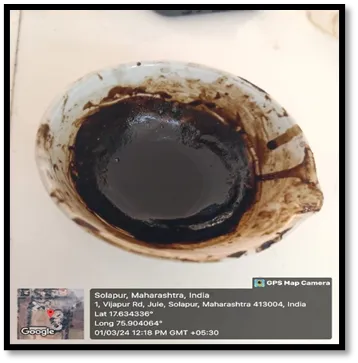
Figure 1: extraction of Achyranthes aspera
Preliminary Phytochemical Screening
The hydroalcoholic extract of Achyranthes aspera was subjected to preliminary phytochemical screening to identify the major classes of phytoconstituents. The extract was tested for flavonoids, saponins, alkaloids, glycosides, terpenoids, and steroids using standard qualitative chemical tests. Flavonoids were evaluated using ferric chloride and alkaline reagent tests; saponins by the foam test; alkaloids by Wagner's test; glycosides by the bromine water test; and terpenoids and steroids by Salkowski's test.
Preparation of Herbal Cream
The herbal cream containing Achyranthes aspera hydroalcoholic extract was prepared using an oil-in-water cream base. For preparation of the oil phase, white beeswax, stearic acid, and mineral oil were placed in a China dish and heated indirectly to approximately 70°C. The aqueous phase was prepared separately by mixing Achyranthes aspera extract, borax, glycerine, distilled water, and turmeric powder, followed by indirect heating to approximately 70°C. The aqueous phase was then continuously stirred into the oil phase at room temperature to form the cream. Propyl paraben was subsequently added as a preservative, and perfume was incorporated as required. The prepared formulation was transferred into a suitable clean container and stored for further evaluation.
Table 1: Formulation table for herbal cream
|
Sr. No. |
Ingridients |
Quantity (gm) |
||
|
|
|
Trial batch 1 |
Trial batch 2 |
Final batch |
|
1. |
White bees wax |
1 |
1 |
3 |
|
2. |
Steric acid |
0.5 |
0.5 |
1.5 |
|
3. |
Mineral oil |
2 |
2 |
6 |
|
4. |
Borax |
0.5 |
0.5 |
1.5 |
|
5. |
Glycerine |
0.5 |
0.5 |
1.5 |
|
6. |
Distilled water |
5.9 |
5.9 |
20 |
|
7. |
Achyranthes asperaextract |
1 |
1 |
3 |
|
8. |
Turmeric powder |
- |
0.1 |
0.3 |
|
9. |
Propyl paraben |
0.01 |
0.01 |
0.03 |
|
10. |
Perfume |
q.s. |
q.s. |
q.s. |
Evaluation of Herbal Cream
Physical Appearance
The prepared cream was visually examined for colour, odour, and general appearance. The formulation was also observed for its stability under different temperature conditions.
Dye Test
The type of cream was determined by the dye test using Sudan Red III. A small quantity of cream was placed on a glass slide, mixed with the dye, covered with a coverslip, and examined microscopically. The appearance of red-coloured dispersed globules against a colourless background indicated an oil-in-water (o/w) cream, whereas the reverse indicated a water-in-oil (w/o) cream.
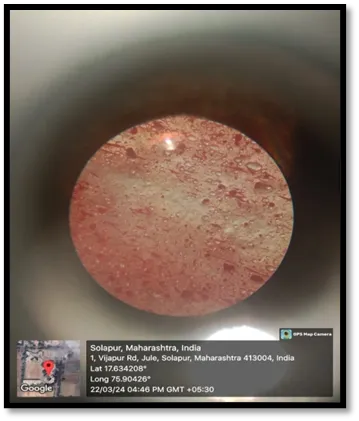
Figure 2: Dry test
Spreadability was evaluated by placing 50 g of cream between two glass slides and compressing it to obtain a uniform thickness using a 100 g weight for 5 min. The spreadability was determined using the equation:
S = M × L / T
Where S is spreadability, M is the weight attached to the upper slide, L is the length travelled by the slide, and T is the time required for movement.
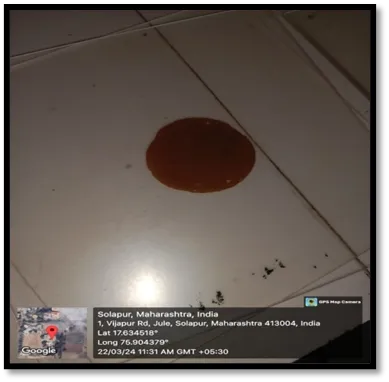
Figure 3: Spreadability
Determination of pH
The pH of the cream was determined using a digital pH meter. A 10% cream dispersion was prepared by diluting the formulation with distilled water and the pH was measured at room temperature.
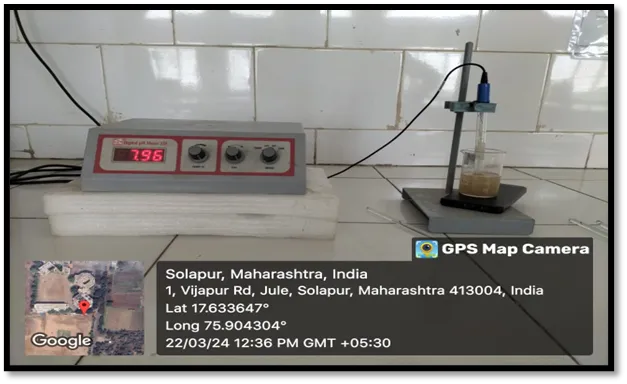
Figure 4: Determination of pH
Dilution Test
The dilution behaviour of the prepared cream was evaluated by attempting to dilute separate samples with water and oil. The dilution characteristics were observed to determine the type of emulsion.
|
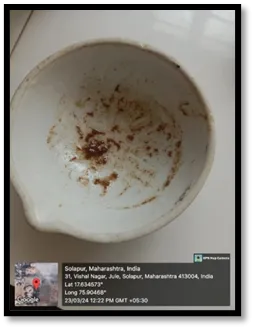
Figure 5: Oil Phase |
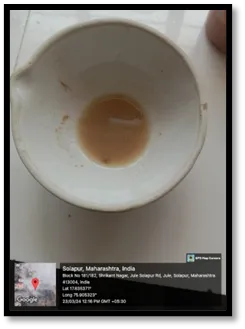
Figure 6: Water Phase |
Irritancy Study
The irritancy potential of the formulation was evaluated by applying the cream to a precisely incised area on the dorsal surface of the hand. The treated area was observed periodically for up to 24 h for any signs of irritation.
Homogeneity Test
The cream was examined visually and by touch to assess its homogeneity and uniformity. The formulation was evaluated for the presence of lumps, coarse particles, or phase separation.
Viscosity
The viscosity of the prepared cream was determined using a Brookfield viscometer. The cream sample was placed appropriately in the viscometer and the viscosity was measured using the instrument spindle.
Antioxidant Activity
The antioxidant potential of the Achyranthes aspera formulation was evaluated using the reducing power assay. In this method, 1 mL of plant extract solution at concentrations ranging from 100–500 mg/L was mixed with 2.5 mL of phosphate buffer (0.2 M, pH 6.6) and 2.5 mL of potassium ferricyanide solution (10 g/L). The mixture was incubated for 20 min at 50°C. Subsequently, 2.5 mL of trichloroacetic acid (100 g/L) was added, and the mixture was centrifuged or allowed to separate to obtain the supernatant. An aliquot of 2.5 mL of the supernatant was then mixed with 2.5 mL distilled water and 0.5 mL ferric chloride solution (1 g/L). The absorbance was measured at 700 nm using a UV-Visible spectrophotometer. Phosphate buffer was used as the blank, while ascorbic acid was used as the standard. Higher absorbance values indicated greater reducing power.
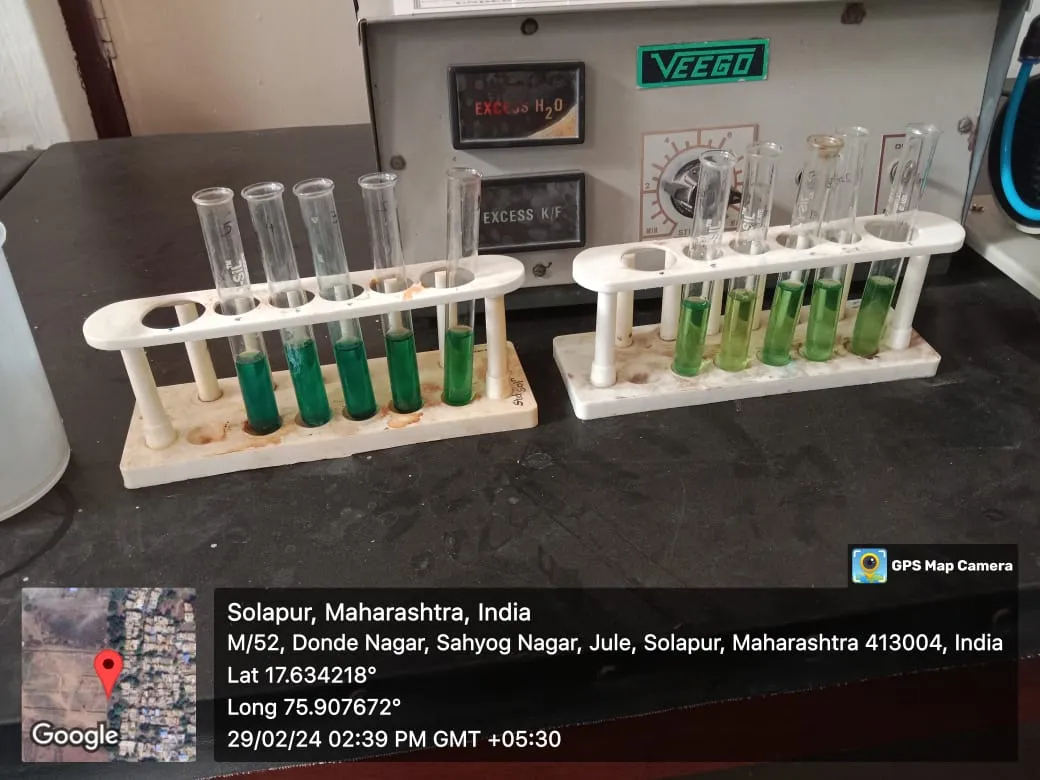
Figure 7: Antioxidant Activity
Antimicrobial Activity
The antimicrobial activity of the Achyranthes aspera formulation was evaluated against Escherichia coli and Staphylococcus aureus using the agar well diffusion method. The formulation was dissolved in DMSO, and nutrient agar plates were prepared. Approximately 50 µL of each bacterial inoculums was uniformly spread over the agar surface using a glass spreader. After approximately 5 min, wells were prepared using a sterile borer. The wells were filled with 50 µL of the prepared formulation at the selected concentrations. Azithromycin was used as the standard antibiotic. The plates were incubated at 37°C for 24 h, after which the zones of inhibition were measured to assess antimicrobial activity.
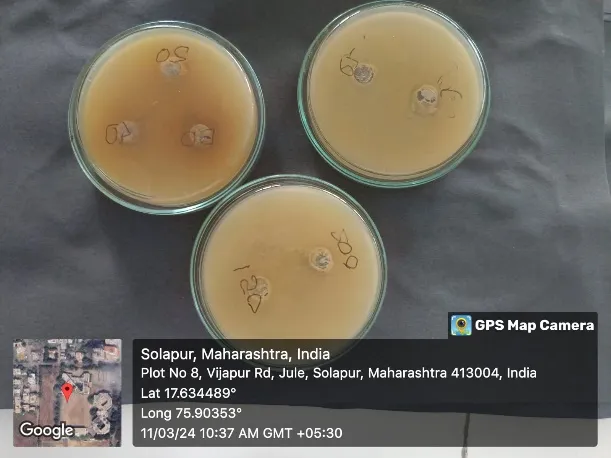
Figure 8: Antimicrobial test
DISCUSSION
The present study was undertaken to formulate and evaluate a herbal cream containing the hydroalcoholic extract of Achyranthes aspera. The plant material was extracted using a hydroalcoholic solvent system of ethanol and water (70:30), which enabled the preparation of an extract suitable for incorporation into a topical formulation. Preliminary phytochemical screening of the extract indicated the presence of flavonoids, saponins, alkaloids, glycosides, terpenoids, and steroids. The presence of these phytoconstituents supports the potential biological activity of the plant extract and provides a rationale for its use in a herbal topical preparation.
The hydroalcoholic extract was successfully incorporated into an oil-in-water cream base containing white beeswax, stearic acid, mineral oil, borax, glycerine, distilled water, turmeric, and propyl paraben. The prepared cream exhibited an espresso colour, pleasant odour, and smooth, shiny appearance. These characteristics indicate acceptable physical properties and suggest that the plant extract could be incorporated into the cream base without adversely affecting its general appearance. The formulation was also reported to remain stable under the tested temperature conditions.
The pH of the prepared formulation was found to be 7.96. The pH of a topical formulation is an important parameter because it can influence skin compatibility and formulation stability. The observed pH indicates that the formulation was near neutral and may be suitable for topical application; however, further detailed skin compatibility studies would be required to establish its safety conclusively.
The cream was further subjected to evaluation for spreadability, dilution behaviour, homogeneity, viscosity, and irritancy. These parameters are important for assessing the application characteristics, uniformity, consistency, and potential topical acceptability of a cream formulation. The formulation was reported to possess a smooth and homogeneous character. However, quantitative results for spreadability and viscosity and detailed observations from the irritancy study were not provided in the available report, limiting further interpretation of these parameters.
The antioxidant potential of the Achyranthes aspera formulation was investigated using the reducing power assay, with ascorbic acid used as the standard. The assay was based on the ability of antioxidant constituents to reduce ferric ions, with the resulting complex measured spectrophotometrically at 700 nm. The investigation of antioxidant activity is relevant because phytoconstituents such as flavonoids and other secondary metabolites identified in the extract may contribute to the reducing potential of the formulation. However, the numerical absorbance values and concentration-dependent antioxidant results were not available in the report; therefore, the extent of antioxidant activity cannot be quantitatively discussed.
The antimicrobial activity of the formulation was evaluated against Escherichia coli and Staphylococcus aureus using the agar well diffusion method, with azithromycin as the standard. The assessment was intended to determine the potential of the herbal formulation against selected bacterial strains. Although antimicrobial testing was performed, the actual zones of inhibition were not reported in the available results. Therefore, a definitive comparison between the formulation and the standard antibiotic cannot be made based on the available data.
Overall, the findings demonstrate the successful development of a herbal cream containing Achyranthes aspera hydroalcoholic extract with acceptable preliminary physical characteristics. The presence of several classes of phytoconstituents and the evaluation of antioxidant and antimicrobial properties provide a basis for further investigation of the formulation. Nevertheless, additional quantitative data and more comprehensive safety and efficacy studies are necessary to establish its therapeutic potential.
CONCLUSION
The present study successfully formulated a herbal cream containing hydroalcoholic extract of Achyranthes aspera. Preliminary phytochemical screening confirmed the presence of various bioactive phytoconstituents, including flavonoids, saponins, alkaloids, glycosides, terpenoids, and steroids. The prepared cream exhibited a smooth and shiny appearance, pleasant odour, espresso colour, and a pH of 7.96, indicating satisfactory preliminary physicochemical characteristics. The formulation was further investigated for antioxidant and antimicrobial potential. Based on the available findings, Achyranthes aspera hydroalcoholic extract shows promise as an ingredient in a topical herbal cream. However, further studies involving complete quantitative antioxidant and antimicrobial results, detailed stability testing, skin irritation assessment, and in vivo evaluation are required to confirm the safety, efficacy, and therapeutic applicability of the formulation.
ACKNOWLEDGEMENT
The authors express their sincere gratitude to the Principal, faculty, and technical staff of D.S.T.S. Mandal's College of Pharmacy, Solapur, for providing the necessary facilities and support essential for conducting and completing this research work. The authors are also deeply thankful to their project supervisor for valuable guidance, insightful suggestions, constructive feedback, and constant encouragement throughout the research. The authors further acknowledge the continued support, motivation, and cooperation extended by their family members and friends during the successful completion of this study.
REFERENCES





Narayane Ganesh, Mali Nikita, Alamad Abhishek, Kumbhar Bhaganna, Dr. V. Tegeli, Formulation and evaluation of Herbal cream containing Achyanthes aspera extract for the management of insect bites, Int. J. of Pharm. Sci., 2026, Vol 4, Issue 8, 1543-1550, https://doi.org/10.5281/zenodo.21850908
 10.5281/zenodo.21850908