

We use cookies to ensure our website works properly and to personalise your experience. Cookies policy
Ashvin College of Pharmacy, Manchi Hill, Sangamner, Ahilyanagar, Maharashtra 413714
Herbal cosmetics are becoming increasingly popular because they contain natural ingredients and provide better safety compared to synthetic cosmetic products. Herbal face packs are commonly used for cleansing, nourishing, and improving the appearance of the skin. These preparations help in removing dirt, excess oil, dead skin cells, and support healthy glowing skin naturally. The present study was carried out to formulate and evaluate a herbal face pack using various natural ingredients such as multani mitti, sandalwood powder, turmeric powder, neem powder, orange peel powder, and aloe vera powder. These herbal ingredients are known for their cleansing, antimicrobial, antioxidant, and skin nourishing properties. The herbal face pack was prepared by using simple mixing methods in suitable proportions to obtain a smooth and stable formulation. The prepared formulation was evaluated for different parameters including colour, odour, texture, pH, irritancy, washability, spreadability, and stability. The evaluation results indicated that the formulation showed good physical properties, acceptable pH, easy application, and no signs of skin irritation. Regular use of the herbal face pack may help in improving skin glow and maintaining healthy skin. The study concludes that the formulated herbal face pack is safe, economical, easy to prepare, and effective for cosmetic skin care applications. Herbal formulations can serve as a beneficial alternative to synthetic cosmetic products for maintaining naturally healthy and glowing skin.
Skin is the largest organ of the human body and plays an important role in protection against environmental pollutants, microorganisms, ultraviolet radiation, and harmful chemicals. Healthy skin is essential for maintaining overall appearance and confidence. Nowadays, various skin problems such as acne, dryness, pigmentation, dullness, and premature aging are increasing due to pollution, stress, unhealthy lifestyle, and excessive use of synthetic cosmetic products [1].
Herbal cosmetics are gaining popularity because they are prepared from natural ingredients and are considered safer with fewer side effects compared to chemical-based cosmetics. Herbal face packs are one of the commonly used traditional cosmetic preparations for skin care. They help in cleansing, nourishing, tightening, improving blood circulation, and enhancing skin glow naturally [2].
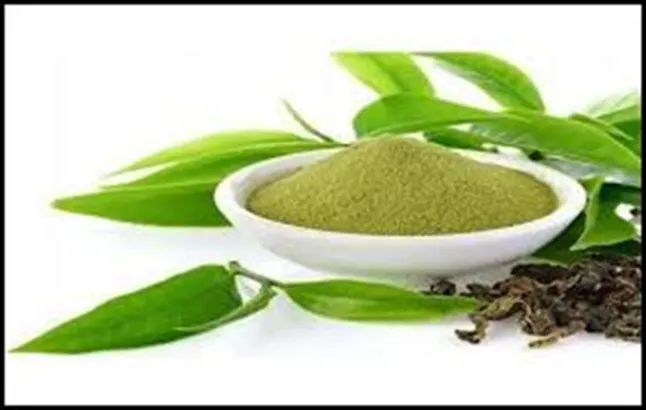
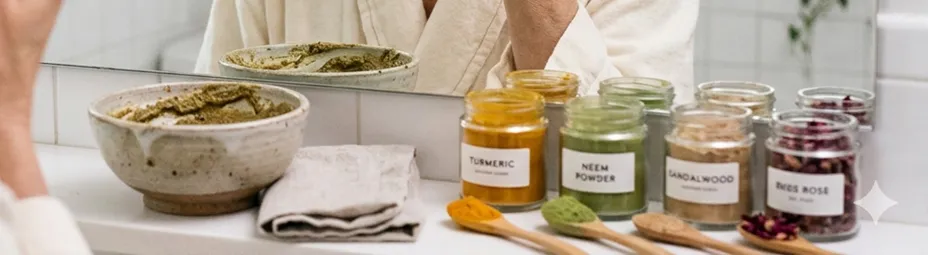
Importance of Herbal Face Pack
Advantages of Herbal Formulations
Multani mitti acts as a natural cleanser and absorbs excess oil from the skin. It helps in cooling and refreshing the skin.
Turmeric possesses antimicrobial and anti-inflammatory properties which help in reducing pimples and improving skin complexion.
Neem is widely used for its antibacterial and antifungal activities. It helps in controlling acne and skin infections.
Sandalwood provides cooling effect and improves skin smoothness and fragrance.
Orange peel contains vitamin C and antioxidants which help in skin brightening and removal of dead skin cells [4].
Need of Present Study
Due to increasing awareness about herbal cosmetics and harmful effects of synthetic chemicals, there is a growing demand for natural cosmetic preparations. Therefore, the present study was undertaken to formulate and evaluate an effective herbal face pack for glowing skin using safe and natural herbal ingredients. The study also aims to evaluate the quality and stability of the prepared formulation.
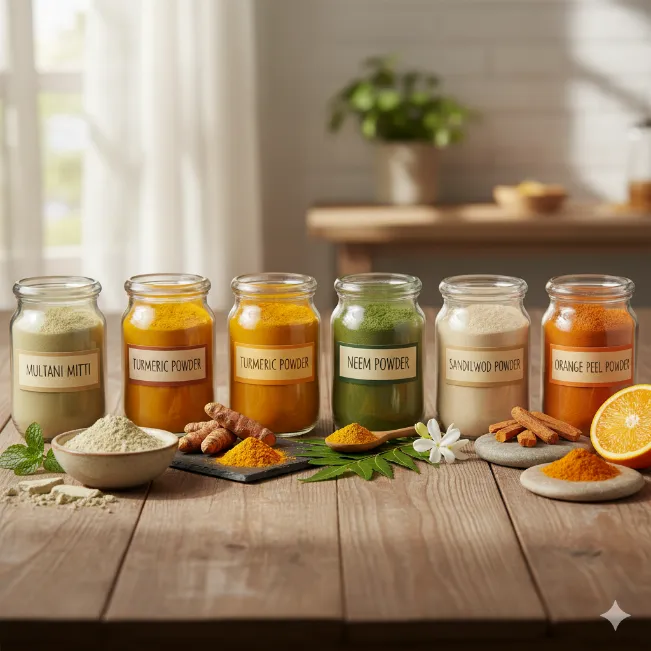
Several researchers have reported the effectiveness of herbal ingredients in cosmetic and skin care preparations. Herbal face packs are widely used because of their natural origin, safety, and beneficial effects on skin health.
A study conducted by Sharma et al. Reported that herbal formulations containing multani mitti, turmeric, and sandalwood showed significant cleansing and skin brightening effects. The formulation also exhibited good spreadability and user acceptability [5].
According to Patil and co-workers, neem and aloe vera possess strong antimicrobial and anti-inflammatory properties which are useful in reducing acne, skin irritation, and microbial growth on the skin surface [6].
Research carried out by Kulkarni et al. Demonstrated that orange peel powder is rich in vitamin C and antioxidants which help in reducing pigmentation, improving skin complexion, and promoting healthy glowing skin [7].
Another study revealed that herbal cosmetic preparations are preferred over synthetic products because they are associated with fewer side effects and better skin compatibility. Regular application of herbal face packs was found to improve skin texture, smoothness, and freshness [8].
A comparative evaluation study of herbal and synthetic cosmetic products indicated that herbal preparations are more economical, eco-friendly, and suitable for long-term use. The study also highlighted the growing demand for herbal cosmetics in the pharmaceutical and cosmetic industries [9].
From the available literature, it is observed that herbal ingredients possess significant cosmetic and therapeutic properties. Therefore, the formulation of a herbal face pack using natural ingredients can be considered beneficial for maintaining healthy and glowing skin.
|
Sr. No. |
Author & Year |
Study/ Research Title |
Herbal Ingredients Used |
Findings/ Outcome |
Ref. No. |
|
1 |
Sharma P. et al. (2021) |
Herbal cosmetics and their benefits in skin care |
Herbal cosmetic ingredients |
Reported beneficial effects of herbal cosmetics in maintaining healthy skin and improving skin appearance. |
[1] |
|
2 |
Patil A. et al. (2020) |
Natural ingredients used in herbal face pack formulations |
Natural powders and herbal ingredients |
Explained the importance of herbal ingredients in face pack preparation and skin nourishment. |
[2] |
|
3 |
Singh M. & Verma N. (2019) |
Evaluation parameters of herbal cosmetic preparations |
Herbal cosmetic formulations |
Discussed standard evaluation tests such as pH, irritancy, and stability studies. |
[3] |
|
4 |
Khan R. & Shaikh S. (2022) |
Role of herbal ingredients in glowing skin formulations |
Herbal skin care ingredients |
Highlighted the effectiveness of herbal ingredients in improving glowing skin and complexion. |
[4] |
|
5 |
Sharma D. et al. (2020) |
Formulation and evaluation of polyherbal face pack |
Multani mitti, turmeric, sandalwood |
Showed cleansing effect, skin brightening activity, and good spreadability of the formulation. |
[5] |
|
6 |
Patil S. & More K. (2021) |
Antimicrobial activity of neem and aloe vera in cosmetic preparations |
Neem, aloe vera |
Demonstrated antimicrobial and anti-inflammatory activities useful against acne and irritation. |
[6] |
|
7 |
Kulkarni A. et al. (2019) |
Cosmetic applications of orange peel powder in skin care products |
Orange peel powder |
Reported antioxidant activity and vitamin C content helpful in reducing pigmentation and improving complexion. |
[7] |
|
8 |
Gupta L. & Mehra V. (2020) |
Comparative study of herbal and synthetic cosmetics |
Herbal and synthetic cosmetics |
Found herbal cosmetics safer and more compatible with skin compared to synthetic products. |
[8] |
|
9 |
Reddy P. & Kumar S. (2021) |
Herbal cosmetic formulations: Current trends and future prospects |
Herbal cosmetic formulations |
Discussed increasing demand and future scope of herbal cosmetics in industries. |
[9] |
|
10 |
Joshi N. & Patel R. (2018) |
Objectives and applications of herbal cosmetic preparations |
Herbal preparations |
Explained objectives and applications of herbal cosmetics in skin care. |
[10] |
|
11 |
Desai T. & Shah H. (2020) |
Preparation methods of herbal face packs using natural powders |
Natural powders |
Described preparation techniques and methods for herbal face packs. |
[11] |
|
12 |
Verma P. & Singh R. (2019) |
Standard evaluation tests for herbal cosmetic products |
Herbal cosmetic products |
Reported standard tests including pH, consistency, irritancy, and stability evaluation. |
[12] |
|
13 |
Sharma K. & Rao M. (2021) |
Organoleptic evaluation of herbal cosmetic formulations |
Herbal cosmetic formulations |
Studied color, odor, texture, and appearance evaluation parameters. |
[13] |
|
14 |
Mehta S. & Kulkarni D. (2020) |
pH determination and skin compatibility studies of herbal preparations |
Herbal preparations |
Confirmed skin-friendly pH and compatibility of herbal cosmetic products. |
[14] |
|
15 |
Pawar G. & Jadhav V. (2021) |
Safety and irritancy studies of herbal topical formulations |
Herbal topical formulations |
Demonstrated safety and non-irritant nature of herbal formulations. |
[15] |
|
16 |
Kaur H. & Sharma V. (2020) |
Physicochemical evaluation of herbal face packs |
Herbal face packs |
Reported acceptable physicochemical properties and formulation stability. |
[16] |
|
17 |
Singh A. & Patel M. (2019) |
Stability and safety assessment of herbal cosmetic products |
Herbal cosmetic products |
Evaluated product stability and safety during storage conditions. |
[17] |
|
18 |
Naik P. & Bhosale S. (2021) |
Therapeutic importance of herbal ingredients in skin care formulations |
Herbal skin care ingredients |
Highlighted therapeutic properties such as antioxidant and antimicrobial effects. |
[18] |
|
19 |
Chavan R. & Patil D. (2020) |
Advantages of herbal cosmetics over synthetic products |
Herbal cosmetics |
Reported eco-friendly nature, safety, and long-term usability of herbal products. |
[19] |
|
20 |
More A. & Shinde S. (2022) |
Applications of herbal formulations in cosmetic industries |
Herbal formulations |
Discussed industrial applications and increasing market demand for herbal cosmetics. |
[20] |
|
21 |
Jain P. & Kumar R. (2021) |
Formulation and evaluation of herbal face pack for cosmetic applications |
Herbal face pack |
Successfully formulated and evaluated herbal face pack with good cosmetic properties. |
[21] |
Primary Objective
To formulate and evaluate a herbal face pack for glowing skin using natural herbal ingredients.
Secondary Objectives
Materials Used
The herbal face pack was prepared by using different natural ingredients obtained from local herbal and cosmetic suppliers. All ingredients were dried, cleaned, and finely powdered before use.
Table 1: Ingredients Used in Herbal Face Pack Formulation
|
Sr. No. |
Ingredient Name |
Quantity (% w/w) |
Role in Formulation |
|
1 |
Multani Mitti |
30% |
Cleansing agent |
|
2 |
Neem Powder |
15% |
Antimicrobial agent |
|
3 |
Turmeric Powder |
10% |
Anti-inflammatory agent |
|
4 |
Sandalwood Powder |
15% |
Cooling and fragrance |
|
5 |
Orange Peel Powder |
15% |
Skin brightening agent |
|
6 |
Aloe Vera Powder |
10% |
Moisturizing agent |
|
7 |
Rose Powder |
5% |
Refreshing and soothing effect |
he herbal face pack was prepared by using a simple dry mixing method.
Procedure
The prepared herbal face pack was evaluated for the following parameters:
|
Evaluation Parameters |
F1 |
F2 |
F3 |
|
Colour |
Light Brown |
Brownish Yellow |
Pale Green |
|
Odour |
Pleasant Herbal |
Mild Herbal |
Strong Herbal |
|
Texture |
Smooth |
Fine and Smooth |
Slightly Coarse |
|
pH |
6.4 |
6.8 |
6.5 |
|
Spreadability |
Good |
Excellent |
Good |
|
Washability |
Easily Washable |
Easily Washable |
Moderately Washable |
|
Irritancy Test |
No Irritation |
No Irritation |
No Irritation |
|
Stability Study |
Stable |
Stable |
Stable |
|
Smoothness of Powder |
Good |
Excellent |
Good |
The required quantity of herbal face pack was mixed with rose water to prepare a smooth paste. The paste was applied evenly on the face and allowed to dry for 15–20 minutes. After drying, it was washed with normal water and the skin was observed for glow and smoothness.
Evaluation Parameters and Results
The prepared herbal face pack was evaluated for different physicochemical and cosmetic parameters to determine its quality, stability, safety, and effectiveness.
The organoleptic properties such as colour, odour, appearance, and texture were evaluated by visual observation and sensory examination.
|
Parameter |
Observation |
|
Colour |
Light brown |
|
Odour |
Pleasant and characteristic |
|
Appearance |
Fine powder |
|
Texture |
Smooth and soft |
The formulation showed good appearance and acceptable sensory properties suitable for cosmetic application [13].
The pH of the prepared herbal face pack was determined by using a digital pH meter.
|
Parameter |
Result |
|
pH |
6.8 |
The pH was found to be near neutral, indicating good compatibility with skin and less chance of irritation [14].
Spreadability was evaluated by applying the prepared paste on the skin surface.
|
Parameter |
Result |
|
Spreadability |
Good |
The formulation spread easily on the skin and formed a uniform layer.
The applied face pack was washed with normal water to observe ease of removal.
|
Parameter |
Result |
|
Washability |
Easily washable |
The formulation was easily removed without leaving residue on the skin.
The herbal face pack was applied on a small area of skin to check irritation, redness, or itching.
|
Parameter |
Result |
|
Skin Irritation |
No irritation observed |
The formulation was found to be safe for topical application [15].
The prepared formulation was stored at room temperature and observed for changes in colour, odour, and texture.
|
Parameter |
Result |
|
Physical Stability |
Stable |
|
Change in Colour |
No significant change |
|
Change in Odour |
No significant change |
The formulation remained stable during the study period and showed good physical stability.
Overall Result
The prepared herbal face pack exhibited satisfactory physicochemical properties, good spreadability, easy washability, acceptable pH, and no skin irritation. The formulation was found to be safe, stable, and effective for improving skin freshness and glow.
The present study was carried out to formulate and evaluate a herbal face pack for glowing skin using various natural ingredients such as multani mitti, neem powder, turmeric, sandalwood powder, orange peel powder, aloe vera powder, and rose powder. Herbal ingredients were selected because of their beneficial effects on skin care and minimal side effects compared to synthetic cosmetic products.
The prepared formulation showed good organoleptic properties including pleasant odour, smooth texture, fine appearance, and acceptable colour. These characteristics indicate good quality and user acceptability of the herbal face pack [16].
The pH of the formulation was found to be near neutral, which is considered suitable for skin application. A proper pH helps in maintaining skin health and reduces the chances of irritation or dryness. The spreadability test showed that the face pack could be applied easily and uniformly over the skin surface.
The washability study demonstrated that the formulation was easily removable with water, which increases patient convenience during use. The irritancy test revealed that no redness, itching, or irritation was observed after application, indicating the safety of the formulation for topical use [17].
The stability study confirmed that there were no significant changes in colour, odour, or texture during storage at room temperature. This indicates that the prepared herbal face pack possesses good physical stability and can be stored safely for a suitable period.
The presence of herbal ingredients such as neem and turmeric may help in reducing microbial growth and skin inflammation, while orange peel and sandalwood may improve skin complexion and freshness. Multani mitti acts as a natural cleansing agent and helps in removing excess oil and dirt from the skin surface [18].
Overall, the study indicates that the formulated herbal face pack is effective, safe, economical, and beneficial for maintaining healthy and glowing skin naturally.
Advantages of Herbal Face Pack
Applications of Herbal Face Pack
Future Scope
The present study successfully formulated and evaluated a herbal face pack for glowing skin using natural herbal ingredients such as multani mitti, neem powder, turmeric, sandalwood powder, orange peel powder, aloe vera powder, and rose powder. The prepared formulation showed satisfactory physicochemical properties including good appearance, smooth texture, acceptable pH, easy spreadability, good washability, and absence of skin irritation.
The evaluation results indicated that the herbal face pack is safe, stable, economical, and suitable for cosmetic skin care application. The herbal ingredients used in the formulation possess cleansing, antimicrobial, antioxidant, soothing, and skin nourishing properties which help in maintaining healthy and glowing skin naturally.
The study concludes that herbal face packs can serve as an effective alternative to synthetic cosmetic products due to their natural origin, better safety profile, and fewer side effects. Regular use of the prepared formulation may improve skin freshness, smoothness, and overall skin appearance. Therefore, herbal cosmetic formulations have significant potential in modern skin care and cosmetic industries.
REFERENCES




Vishwajeet Rashinkar, Pratik Holkar, Somnath Gavhane, N. M Shaikh, Formulation and Evaluation of Herbal Face Pack for Glowing Skin, Int. J. of Pharm. Sci., 2026, Vol 4, Issue 5, 7181-7190. https://doi.org/10.5281/zenodo.20404989
 10.5281/zenodo.20404989