

We use cookies to ensure our website works properly and to personalise your experience. Cookies policy
Department of pharmacy, Shree Dev Bhoomi Institute of Education Science and Technology, Pondha, Dehradun, Uttarakhand-248007
The present study focuses on the formulation and evaluation of herbal hydrogel patches containing Aloe vera and Curcuma longa for wound healing applications. Herbal hydrogel patches were prepared using chitosan as the polymeric matrix along with Carbopol 934 through a polymerization technique. Three different formulations (F1, F2, and F3) were developed by varying the concentrations of polymer and herbal extracts. The prepared hydrogel patches were evaluated for various physicochemical parameters including physical appearance, thickness, weight uniformity, folding endurance, surface pH, moisture content, moisture uptake, drug content uniformity, skin irritation, and in-vitro drug permeation studies. All formulations exhibited satisfactory appearance, flexibility, and skin compatibility. Among the developed formulations, F2 demonstrated balanced physicochemical characteristics, satisfactory mechanical strength, appropriate moisture retention, and sustained drug release behavior. The incorporation of Aloe vera and Curcuma longa provided beneficial wound healing properties such as anti-inflammatory, antioxidant, antimicrobial, and tissue-regenerating effects. The study concluded that the developed herbal hydrogel patch could serve as a promising and patient-friendly wound dressing system for effective wound management and sustained topical delivery of herbal constituents.
Transdermal drug delivery system
Transdermal drug delivery system plays a crucial role in innovative drug delivery systems. Transdermal patches (also known as skin patches) utilize a specialized membrane to regulate the rate at which the liquid medication stored in the patch's reservoir can permeate the skin and enter the bloodstream [1]. Certain medications need to be mixed with agents, such as alcohol, that enhance their capacity to penetrate the skin for effective use in a skin patch. Transdermal drug delivery is a non-invasive technique for administering medications systemically by applying a drug formulation onto intact skin. The drug first penetrates the stratum corneum and subsequently moves through the deeper layers of the epidermis and dermis, without accumulating in the dermal layer [2]. Transdermal delivery not only facilitates a controlled and consistent administration of medication, but it also enables the continuous introduction of drugs with brief biological half-lives, thereby preventing the pulsed entry into systemic circulation that frequently leads to unwanted side effects [3]. Consequently, various types of novel drug delivery systems, including transdermal drug delivery systems, controlled release systems, and transmucosal delivery systems, have been developed. The transdermal drug delivery method offers several significant benefits, such as the reduction of hepatic first-pass metabolism, an increase in therapeutic efficacy, and the maintenance of stable plasma drug levels.[4]
The typical components utilized in the formulation of Transdermal Drug Delivery Systems (TDDS) are outlined as follows.
HYDROGELS
Hydrogels are three-dimensional hydrophilic polymer networks capable of absorbing and retaining substantial amounts of water or biological fluids. Their structural resemblance to natural living tissue makes them highly biocompatible and suitable for biomedical applications. Hydrogels maintain a moist wound environment, which is critical for optimal healing as it enhances epithelial cell migration, reduces dehydration of tissue, and minimizes the formation of scabs [6]. Due to their soft, elastic nature and high permeability to oxygen, nutrients, and bioactive compounds, hydrogels serve as ideal carriers for therapeutic agents such as herbal extracts, antibiotics, and growth factors. Their ability to provide controlled and sustained drug release at the wound site further enhances their role In advanced wound care management [7].
Advantages of Hydrogels [08,09]
Disadvantages of Hydrogels [10]
WOUND HEALING
Wound healing is a complex physiological process involving a sequence of overlapping phases: haemostasis, inflammation, proliferation, and remodelling. Effective wound care aims to restore the structural and functional integrity of the skin. Topical and transdermal systems play a crucial role in wound management by providing a moist environment, preventing microbial infiltration, accelerating tissue regeneration, and enabling controlled delivery of therapeutic agents [11].
Natural bioactive compounds such as Aloe vera, curcuma longa and other herbal extracts are widely incorporated into hydrogel patches due to their soothing, anti-inflammatory, antioxidant, and collagen-stimulating properties. Hydrogels, because of their high-water content, softness, biocompatibility, and oxygen permeability, are particularly suitable for wound healing applications. They maintain a moist wound environment, absorb exudates, and allow sustained drug release, thereby promoting faster epithelialization and improved healing outcomes [12].
METHODOLOGY
Preparation of Herbal Hydrogel Patch
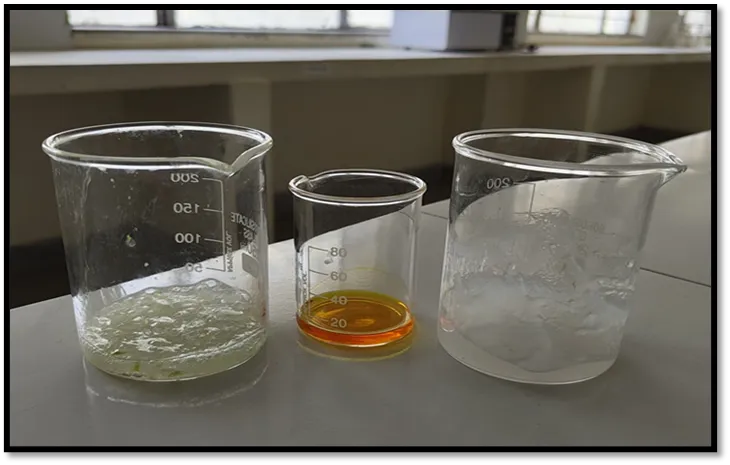
Fig1 : Preparation of components &polymer base for hydrogel patch
TABLE NO.1 - FORMULATION TABLE [20,21,22,23,24]
|
S.No |
Ingredients |
F1 |
F2 |
F3 |
Role |
|
1 |
Chitosan |
1.5g |
2g |
2.5g |
Pollymmeric Matrix Forming Agent |
|
2 |
Aloe vera extract |
0.5g |
1g |
1.5g |
Wound Healing, Moisturizing Agent |
|
3 |
Curcuma longa extract |
0.25g |
0.5g |
0.75g |
Anti-inflammatory |
|
4 |
Acetic acid |
40ml |
50ml
|
60ml |
Solvent for chitosan |
|
5 |
Carbopol 934 |
0.1g |
0.2g |
0.3g |
Gelling agent |
|
6 |
Ammonium persulfate |
0.1g |
0.2g |
0.3g |
Initiator |
|
7 |
Sodium hydrogen sulfite |
0.1g |
0.2g |
0.3g |
Co-initiator |
|
8 |
Cross-linking agent |
0.05g |
0.1g |
0.15g |
Cross-linking agent |
|
9 |
Distilled water |
40ml |
35ml |
40ml |
Vehicle |
|
10 |
Water: Ethanol (70:30) |
q.s |
q.s |
q.s |
Washing solution |
Evaluation of Hydrogel Patches: -
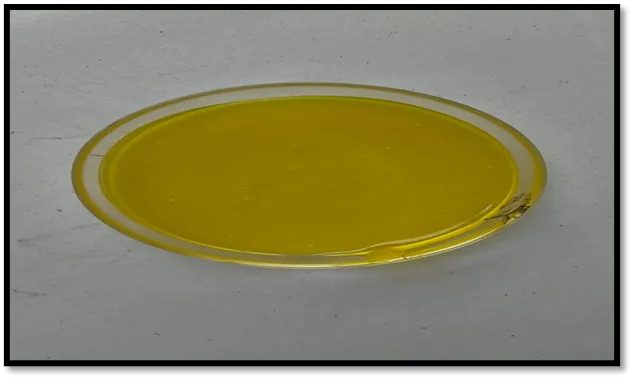
Fig 2 : Prepared herbal hydrogel patch containing aloe vera and curcuma longa.
TABLE NO.2 - RESULT DISCUSSION TABLE
|
EVALUATION PARAMETR |
F1 |
F2 |
F3 |
|
Physical Appearance |
Smooth &flexible |
Smooth &flexible |
Smooth, flexible& transparent |
|
Thickness |
0.48mm |
0.42mm |
0.51mm |
|
Weight uniformity |
220mg |
223mg |
248mg |
|
Folding endurance |
240 |
258 |
285 |
|
Surface pH |
6.5 |
6.5 |
6.8 |
|
Bio adhesive property |
Good adhesion on skin surface |
Good adhesion on skin surface |
Good adhesion on skin surface |
|
Skin irritation test |
No irritation |
No irritation |
No irritation |
RESULT
Three different formulations of herbal hydrogel patches containing Aloe vera and Curcuma longa were prepared and evaluated for their physicochemical properties and wound healing suitability. All formulations produced uniform hydrogel films with acceptable appearance and consistency. The prepared patches were smooth in texture, flexible in nature, and free from visible surface imperfections. Among the three formulations, F1 showed comparatively lower thickness and moderate flexibility, whereas F3 produced thicker patches with comparatively higher moisture absorption capacity. Formulation F2 exhibited balanced physical characteristics with satisfactory flexibility and uniform texture. The thickness values of the formulations ranged between 0.36 ± 0.02 mm and 0.51 ± 0.04 mm, while weight variation studies confirmed acceptable uniformity among the prepared patches. Folding endurance analysis demonstrated that all formulations possessed sufficient mechanical strength for handling and topical application. Moisture content and moisture uptake studies indicated that the hydrogel patches were capable of maintaining hydration, which is considered beneficial for wound healing applications. Surface pH values remained within the acceptable skin pH range, suggesting good dermatological compatibility. Drug content estimation confirmed uniform incorporation of the herbal constituents within the polymeric matrix. Swelling behavior was observed to increase gradually with higher polymer concentration, particularly in formulation F3. In-vitro permeation studies revealed prolonged release of active components from all formulations, with F2 showing a more controlled and sustained release profile compared to F1 and F3. No visible signs of irritation or discomfort were observed during skin compatibility testing. Based on the obtained evaluation results, formulation F2 was considered the most suitable formulation due to its balanced physicochemical and release characteristics.
DISCUSSION
The present investigation focused on the formulation and evaluation of three different batches of herbal hydrogel patches containing Aloe vera and Curcuma longa for wound healing applications. The prepared formulations, namely F1, F2, and F3, were successfully developed using the hydrogel polymerization method and evaluated for various physicochemical parameters. All prepared formulations exhibited satisfactory appearance, flexibility, and uniformity without visible cracks or air entrapment. Comparative evaluation revealed noticeable variations among the three batches due to differences in polymer and herbal extract concentrations. Formulation F1 showed comparatively lower thickness and swelling behavior, which may be attributed to the lower concentration of polymeric components. In contrast, formulation F3 demonstrated higher swelling capacity and moisture uptake due to increased polymer concentration, although the patch appeared comparatively thicker. Among all formulations, F2 exhibited balanced physicochemical properties with appropriate thickness, satisfactory flexibility, acceptable moisture retention, and good mechanical strength. Folding endurance results confirmed that the prepared patches possessed adequate elasticity for topical application and handling. Drug content analysis indicated uniform distribution of herbal constituents throughout the hydrogel matrix in all formulations. The surface pH of each formulation remained close to normal skin pH, suggesting compatibility with topical administration and minimal risk of irritation. In-vitro permeation studies demonstrated sustained release of active constituents from the hydrogel system. Formulation F2 showed a more controlled and prolonged drug release profile compared to F1 and F3, which may improve therapeutic effectiveness and reduce the frequency of application. Overall, the findings suggest that formulation F2 possessed the most suitable characteristics for wound healing applications.
CONCLUSION
The present study successfully developed and evaluated herbal hydrogel patches containing Aloe vera and Curcuma longa for wound healing purposes. Three different formulations, F1, F2, and F3, were prepared and assessed for their physicochemical characteristics, mechanical properties, moisture behavior, drug content uniformity, and in-vitro drug release profile. All formulations demonstrated acceptable physical appearance, flexibility, and compatibility for topical application. Comparative evaluation indicated that variation in polymer and herbal extract concentration influenced the overall properties of the hydrogel patches. Formulation F1 exhibited lower swelling and drug release behavior, whereas formulation F3 showed comparatively higher swelling capacity and moisture absorption due to increased polymer concentration. Among all prepared formulations, F2 was found to be the optimized formulation because it exhibited balanced thickness, satisfactory folding endurance, appropriate moisture retention, uniform drug distribution, and sustained drug release characteristics. The formulation also maintained a skin-compatible pH and showed no visible signs of irritation, indicating good dermatological safety. The combined incorporation of Aloe vera and Curcuma longa contributed beneficial wound healing properties such as anti-inflammatory, antimicrobial, antioxidant, and tissue-regenerating activities. The hydrogel system further supported prolonged retention of moisture and controlled release of active constituents at the wound site.
Overall, the developed herbal hydrogel patch may serve as a promising and patient-friendly wound dressing system for effective wound management. Further pharmacological and clinical investigations may be performed in the future to establish its therapeutic potential on a larger scale.
REFERENCES


Prithvi Raj, Neha Sodiyal*, Shivanand Patil, Formulation and Evaluation of Herbal Hydrogel Patch Containing Aloe vera and Curcuma longa for Wound Healing, Int. J. of Pharm. Sci., 2026, Vol 4, Issue 6, 4416-4425. https://doi.org/ 10.5281/zenodo.20736577
 10.5281/zenodo.20736577