

We use cookies to ensure our website works properly and to personalise your experience. Cookies policy
1Professor and Head of Department in Pharmaceutics, Shree Venkateshwara College of Paramedical Sciences, College of Pharmacy, Gobi, Tamil Nadu – 638455.
2,3,4,5,6Department of Pharmaceutics, Shree Venkateshwara College of Paramedical Sciences, College of Pharmacy, Gobi, Tamil Nadu – 638455.
The antibacterial potency of the deep eutectic solvent extract of Setaria italica husk was assessed against Staphylococcus aureus and Escherichia coli using Agar well diffusion method. The antibacterial activity of the extract displayed notable activity against Gram-positive organisms. The extraction process were carried out using a deep eutectic solvent with sonication. The Qualitative phytochemical analysis of the deep eutectic solvent extract of the setaria italica husk were confirmed the presence of phenolic acids and flavonoids. During the preparation of the ointment base - wool fat, hard paraffin, cetostearyl alcohol and yellow soft paraffin were used in different concentrations. The physical attributes of the ointment formulations, including colour, odour, consistency, pH, homogeneity, non-irritancy, washability, and spreadability were evaluated. In this study, the herbal ointment was prepared and evaluated using a deep eutectic solvent extract of Setaria italica husk, and it exhibited good physical properties. The deep eutectic solvent extract of Setaria italica husk demonstrated promising antibacterial activity; therefore, it may serve as a potential alternative antibacterial agents.
Herbal ointments have been extensively employed in traditional medicine for the management of diverse health conditions, particularly chronic skin disorders. As they are formulated from plant-derived ingredients, these ointments are commonly preferred among people looking for equivalent therapeutic options that may be associated with fewer adverse effects1.
The common name of Setaria italica is Foxtail Millet2. In the Poaceae family, the foxtail millet is an annual herbaceous plant3. Over 8000 years it has been cultivated. China is recognized as the origin of this plant4. Due to its nutritional value and delicious taste, Chinese people consumed it in form of porridge. It can easily adapted on the arid and semi-arid areas5.
Its de-husked grains contain plentiful source of bioactive compounds such as proteins, fats, amino-acids, phenolic compounds, sterols, phytic acids, minerals, and vitamins. In Chinese traditional medicine, it is considered to tonify the stomach, spleen, and also nourish the kidney3. In rural areas, it’s seeds have been employed as a traditional remedy for inflammation6.
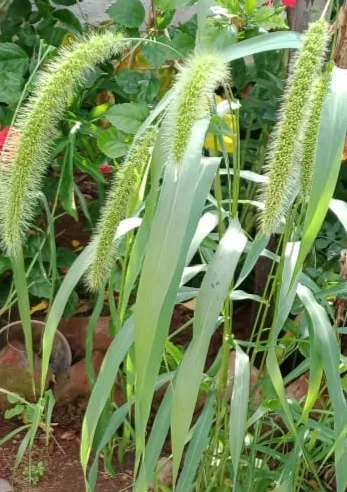
Figure 1: Setaria italica Plant
OINTMENT
Ointments are semi-solid7,8,9 dosage forms meant for external use on the skin and mucous membranes8,9. They are homogenous, viscous, semi-solid formulations10 that are generally greasy or oily in nature with high viscosity11. They typically contain one or more medicinal substances8 that are dissolved, suspended, or emulsified in a suitable ointment base7.Ointments may contain medication or remain unmedicated7. Non-medicated ointments are mainly used for their protective, soothing, or lubricating properties9.
MATERIALS AND METHODS:
MATERIALS:
The Hard paraffin, Wool fat, Yellow soft paraffin and Cetostearyl alcohol were purchased from Star Scientific, Erode, Tamil Nadu.
Plant material: The Setaria italica seeds were collected in the month of November from Savadipalayam Pudhur, Erode district, Tamil Nadu. These were authenticated by Research Officer (Botany), Siddha Medicinal Plants Garden, Mettur.
METHODS:
HUSK EXTRACT PREPARATION:
The Foxtail Millet husk were removed from the dried seeds. They were milled to elevate the surface area and to facilitate the extraction. The sample were stored in an air tight container. The deep eutectic solvent was prepared by combining the hydrogen bond donor (L-lactic acid) with the hydrogen bond acceptor (glycol) in a molar ratio of 1:2. The mixture was constantly agitated at 80 °C until a clear and homogenous solution was formed. Five grams of milled foxtail millet husk were mixed with 50 ml of deep eutectic solvent containing 20% water in a 100 ml beaker. The extraction process was then carried out using a sonicator for 30 minutes at 50 °C with an ultrasonic power of 300 W. After extraction, the mixture was centrifuged at 8000 rpm for 10minutes to obtain the supernatant containing the extracted polyphenolic compounds4.
PRELIMINARY PHYTOCHEMICAL STUDIES:
Phytochemical studies were carried out using deep eutectic solvent extract solution. From this solution, 2 ml was taken and mixed with specific reagents to detect the presence of phytoconstituents. Alkaloids were tested by 2 tests: Dragendorffs test (using dragendorffs reagent) and Mayers test (using mayers reagent). Flavonoids were tested by 2 tests: Sulfuric acid test (using H2SO4) and Alkaline reagent test (using NaOH and HCL). Tannins were tested using NaOH. Phenols were tested using neutral FeCl312. The observations were recorded accordingly13.
EVALUATION OF ANTI-BACTERIAL ACTIVITY OF EXTRACT:
Anti-bacterial activity is defined as the capacity of a substance to suppress or destroy bacteria14. These agents are sourced from natural biological materials15and are generally grouped into two main types: Bactericidal compounds, which directly kill micro-organisms, and Bacteriostatic compounds, which inhibits bacterial growth and reproduction14. The anti-bacterial activity of Setaria italica extract were measured by agar well diffusion method against Staphylococcus aureus (Gram +) and Escherichia coli (Gram -)16,17.
PROCEDURE:
The bacterial culture was inoculated onto petri-plates containing 20 ml of Muller Hinton Agar Medium17,18,19,20. Growth was adjusted according to McFarland standard, 0.5%20.Circular wells measuring approximately 10 mm in diameter were created using a sterile well cutter17,18 and varying concentrations of sample such as 25 µL, 50 µL and 100 µL were added20. The plates were then placed for incubation at 37 °C for 24 hrs17,18,19,20. The test was performed under sterile conditions, and the clear zones were measured in millimeters17,18. Streptomycin was used as a positive control.
OINTMENT FORMULATION:
The ointment base was initially prepared by accurately weighing grated hard paraffin and placing it in an evaporating dish over a water bath. The remaining ingredients were added to the melted hard paraffin and continuously stirred to ensure the uniform mixing. The prepared ointment base was allowed to cool21.
In the ointment base, the prepared extract was incorporated by trituration. The trituration was carried out using a mortar and pestle for 15 minutes to obtain a uniform mixture22,23. The final formulation was transferred to an airtight container for storage23.
Table 1: Ointment Base Formulation21
| S.No | Ingredients Name | Quantity to be taken |
|---|---|---|
| 1. | Wool fat | 1.5 g |
| 2. | Cetostearyl alcohol | 1.5 g |
| 3. | Hard paraffin | 1.5 g |
| 4. | Yellow soft paraffin | 25.5 g |
Table 2: Herbal Ointment Formulation21
| S.No | Ingredients Name | F1 | F2 | F3 |
|---|---|---|---|---|
| 1. | Ointment base | 30 g | 30 g | 30 g |
| 2. | Prepared plant extract | 1.44 g | 1.2 g | 0.96 g |
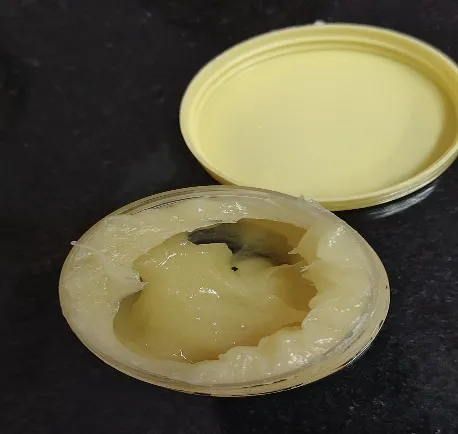
Figure 2: Formulated Herbal Ointment.
PHYSICAL EVALUATION:
ORGANOLEPTIC PROPERTIES: Physical parameters like colour, odour, nature, consistency, and grittiness were examined by visual examination.
pH: The digital pH meter was utilized to assess the pH of the formulated herbal ointment. The 50 ml of distilled water was employed to prepare the ointment solution. The prepared ointment solution were set aside for 2 hours. Afterthat, the pH was measured and the average pH value was calculated.
HOMOGENEITY: The ointment sample is placed between two transparent glasses, then observed visually. The ointment preparation is set to be a homogeneous if there are no visible particles.
SPREADABILITY: The spreadability was evaluated by positioning a sample between two slides. The slides were compacted to achieve a consistent thickness by applying a predetermined weight for a specific time interval. Spreadability was estimated by observing the elapsed time for spreading. Shorter the time, better the spreadability.
S=M.L/T
Where, M = Weight kept, L = length moved on glass slide, T = time taken21.
RESULT AND DISCUSSION:
Studies revealed that flavonoids, phenolic acids are known to exhibit potent anti-bacterial activity, which is beneficial for treating minor cuts and wounds, mild burns, boils and pimples, skin infections, cracked skin, insect bites, and rashes caused by bacteria.
PRELIMINARY PHYTOCHEMICAL STUDIES:
The preliminary phytochemical studies indicate that the deep eutectic solvent extract of Setaria italica have flavonoids and phenolic acids.
Table 3: Preliminary Phytochemical Studies of Herbal Ointment
| S.No | Secondary metabolites | Result |
|---|---|---|
| 1. | Phenolic acids | + |
| 2. | Flavonoids | + |
| 3. | Tannins | - |
| 4. | Alkaloids | - |
*Indication (+) present, (-) absent
ANTI-BACTERIAL ACTIVITY:
The extract showed anti-bacterial activity against both Staphylcoccus aureus and Escherichia coli. The zone of inhibition increased with increasing concentrations (25, 50, and 100 µg/mL), indicating concentration-dependent anti-bacterial activity.
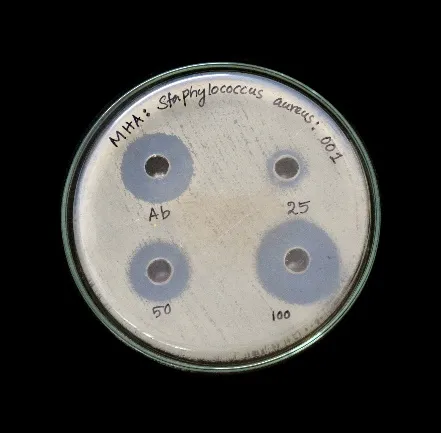
Figure 3: Zone of Inhibition Produced by the Extract Against Staphylococcus aureus Using Agar Well Diffusion Assay.
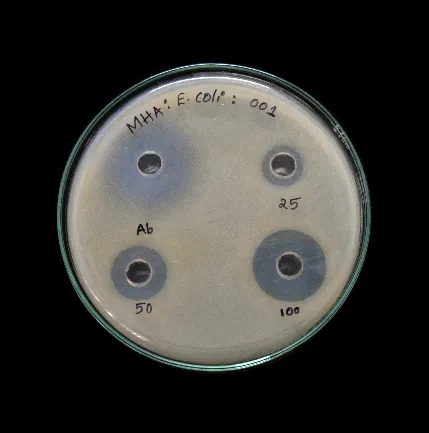
Figure 4: Zone of Inhibition Produced by the Extract Against Escherichia coli Using Agar Well Diffusion Assay.
EVALUATION TEST:
ORGANOLEPTIC PROPERTIES:
In this test colour, odour, texture and state of ointments are observed.
Table 4: Organoleptic Properties of Herbal Ointment
| S.No | Physical Parameters | F1 | F2 | F3 |
|---|---|---|---|---|
| 1. | Colour | Pale yellow | Pale yellow | Pale yellow |
| 2. | Odour | Odourless | Odourless | Odourless |
| 3. | Nature | Semisolid | Semisolid | Semisolid |
| 4. | Consistency | Smooth | Smooth | Smooth |
| 5. | Grittiness | No grittiness | No grittiness | No grittiness |
pH:
Table 5: pH Value of Herbal Ointment
| Formulation | Average pH |
|---|---|
| 1 | 5.59 |
| 2 | 4.0 |
| 3 | 4.27 |
HOMOGENEITY:
All Formulation showed homogenous distribution as confirmed by visual appearance.
SPREADABILITY:
Table 6: Spreadability of Herbal Ointment
| Formulation | Spreadability [g.cm/sec] |
|---|---|
| 1 | 16.03 |
| 2 | 15.65 |
| 3 | 13.43 |
CONCLUSION:
The present investigation successfully formulated and evaluated a herbal ointment enriched with deep eutectic solvent extract of Setaria italica (Foxtail Millet) Husk, with an emphasis on evaluating its anti-bacterial efficacy. Preliminary phytochemical studies confirmed the presence of flavonoids and phenolic acids, which are recognized for their potent anti-bacterial activity. The F1 is better than the F2 and F3. The formulated herbal ointment exhibited desirable physicochemical characteristics, including acceptable pH, smooth consistency, uniformity, and good spreadability, making it suitable for topical application. The extract possesses anti-bacterial efficacy against Staphylococcus aureus and Escherichia coli. The antibacterial activity of the extract displayed notable activity against Gram-positive organisms. The increase in the zone of inhibition with higher concentrations indicated a concentration-dependent effect. These results suggest that the extract contains bioactive compounds with potential anti-microbial properties.
CONFLICT OF INTEREST:
The authors have no conflicts of interest regarding the manuscript.
REFERENCES

Ilango K. B., Abitha K., Harini B., Harivarshan P. V., Ranjith Kumar B., Shanmugapriyan A., Formulation and Evaluation of Herbal Ointment Using Deep Eutectic Solvent Extract of Setaria Italica (L.) Husk, Int. J. of Pharm. Sci., 2026, Vol 4, Issue 11, 1186-1192. https://doi.org/10.5281/zenodo.23999601
 10.5281/zenodo.23999601