

We use cookies to ensure our website works properly and to personalise your experience. Cookies policy
School of Pharmacy, Rai University, Ahmedabad, Gujarat, India
Gingivitis is a very common gum disease which happens mostly because of the deposition of plaque and bacteria on the teeth surface. It causes swelling, redness, bleeding and discomfort in gums, and if it is not treated on time, it can slowly goes into periodontitis and tooth loss. Most of the available treatments uses chemical formulations like mouthwashes and antiseptics. Although these are effective, they also give problems like staining of teeth, change in taste and sometimes side effects when used for long time. Because of these reasons, there is a need to develop natural and more safer remedies for maintaining oral health. To prepare a herbal oral gel containing Mulethi (Glycyrrhiza glabra) extract and evaluate its therapeutic efficacy for the treatment of gingivitis. Mulethi is an established medicinal plant that has antibacterial, anti-inflammatory, and antioxidant effects. These properties can helps in reducing gum inflammation, controlling bleeding and stopping bacterial growth inside the mouth. In this formulation, Mulethi extract is mixed with suitable gel-forming agents and excipients to prepare a smooth gel having proper pH, thickness and spreadability. The gel can be applied locally on the gums which allow direct contact with the affected tissues and gives better healing effect. The prepared herbal gel is expected to be a safe, effective and economical option for oral care. It may helps in controlling gingivitis without producing harmful side effects and promote the use of traditional herbs in modern treatments.
Gingivitis is common gum problem seen in many people now days. It mainly happen because of plaque deposit on teeth and gums. Plaque is soft layer of bacteria that form when we not clean mouth properly. Slowly it harden and cause gum swelling, bleeding and bad smell [1]. In starting stage, gingivitis not give much pain, but if not treat early, it become periodontitis and can damage gums and teeth.
Good oral hygiene and use of right mouth care product are important to stop gingivitis. Many peoples now prefer herbal formulations for oral care because it safe and have less side effects compare to chemical product. Herbal medicine are made from plant extract which having natural chemical compound like flavonoids, tannins and glycosides etc. This compound help in killing bacteria, reducing swelling and also help for healing of gums.
Between many useful herbs, Mulethi (Glycyrrhiza glabra) is one of the popular herb use from long time in traditional medicine. It is also called Liquorice. Mulethi root contain active chemical like glycyrrhizin, glabridin, liquiritin etc. which have anti-inflammatory, antibacterial and antioxidant property [5]. Because gingivitis involve both infection and inflammation, Mulethi can be very good natural ingredient for oral gel [2,3].
Synthetic oral gels like those contain chlorhexidine or triclosan work good but they also make some side effect like irritation, tooth stain or change in taste after long use [4]. Herbal gels are better because they mild, safe and can use long time. It not disturb normal bacteria in mouth and keep oral health balance.
For making herbal oral gel proper knowledge of plant extract, its concentration and how it mix with gel base is important. Some study show that Mulethi oral gel reduce gum swelling and bacteria very effectively. Gels are also easy to apply and stay on gums longer time, so medicine work properly.
1.1 Concept of Gingivitis:
Gingivitis, also known as gum inflammation or the early stage of gum disease, is the inflammation of gingival tissues caused by bacterial plaque accumulation (Fig 1).
It is the initial and reversible stage of periodontal disease.
Gingivitis is reversible with good oral hygiene, but if untreated, it can progress to periodontitis, leading to permanent tooth loss [6].
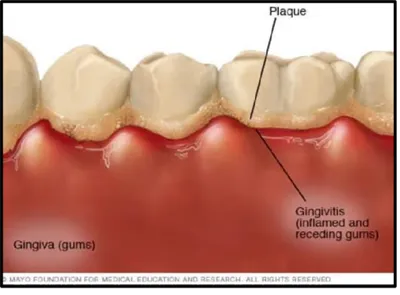
Figure 1: Illustration of gingivitis with plaque deposits and gingival inflammation
There are two primary categories of gingival diseases, each with numerous subgroups [7]:
1) Dental plaque-induced gingival diseases.
a) Gingivitis associated with plaque only
b) Gingival diseases modified by systemic factors
c) Gingival diseases modified by medication
d) Gingival diseases modified by malnutrition
2) Non-plaque induced gingival lesions
a) Gingival diseases of specific bacterial origin
b) Gingival diseases of viral origin
c) Gingival diseases of fungal origin
d) Gingival diseases of genetic origin
e) Gingival manifestations of systemic conditions
f) Traumatic lesions
g) Foreign body reactions.
1.4 Causes / Risk Factors [8,9]:
Nowadays many people is preferring herbal treatment for gingivitis because long use of chemical mouthwash or antiseptic gel can giving some side effects like tooth staining, taste disturbance and irritation of mucosa. Herbal plants are more safe and have natural anti- inflammatory and antibacterial action which helps to reduce gum infection in more gentle way. Therefore, understanding the concept of gingivitis is important for select proper herbal ingredient like Mulethi for preparing oral gel for its management.
2. LITERATURE REVIEW
|
SR.NO |
TOPICS |
AUTHORS |
JOURNALS |
REVIEW |
|
1. |
Licorice as a herbal extract in periodontal therapy |
Khan, S. F., Shetty, B., Fazal, I., Khan, A. M., Mir, F. M., Moothedath, M., Reshma, V. J., & Muhamood, M. |
Drug target insights
|
This article talk about the use of licorice root extract for gum disease treatment. Authors describe that Mulethi have strong antimicrobial and anti-inflammatory effect which help to control gingivitis. Study show that herbal products can be good alternate to chemical mouth gels. |
|
2. |
Therapeutic benefits of liquorice in dentistry
|
Sidhu, P., Shankargouda, S., Rath, A., Hesarghatta Ramamurthy, P., Fernandes, B., & Kumar Singh, A.
|
Journal of Ayurveda and integrative medicine
|
This review explain about how liquorice is use in dental field. It say that glycyrrhizin and flavonoids of Mulethi reduce mouth infection and heal oral wounds. Author told that it is safe and cheaper compare to chemical mouth rinse. |
|
3. |
Effect of liquorice (root extract) mouth rinse on dental plaque and gingivitis - A randomized controlled clinical trial
|
Sharma, S., Sogi, G. M., Saini, V., Chakraborty, T., & Sudan, J.
|
Journal of Indian Society of Periodontology
|
In this study, 30 peoples use mouth rinse made from liquorice extract for three weeks. Result show reduce in gum bleeding and swelling. No irritation or dryness seen. Study conclude that liquorice mouth rinse can be effective and safe for regular oral hygiene. |
|
4. |
The Power of Licorice (Radix glycyrrhizae) to Improve Oral Health
|
AlDehlawi, H., & Jazzar, A.
|
Healthcare (Basel, Switzerland)
|
This review tell about different benefits of licorice for oral disease. It discuss antimicrobial, antioxidant and anti-inflammatory action. Authors say that flavonoids and saponins are main active part. More clinical studies still needed for confirmation. |
|
5. |
Formulation and Evaluation of an Antimicrobial Mucoadhesive Dental Gel of Azadirachta indica and Glycyrrhiza glabra |
Jain, H. K., Swami P. N., Gujar K. N. |
International Journal of Applied Pharmaceutics |
This study developed a herbal dental gel using Glycyrrhiza glabra and neem extracts. The formulation showed good antimicrobial activity against oral pathogens and was effective for plaque and gingivitis management. |
|
6. |
Traditional uses, bioactive chemical constituents, and pharmacological and toxicological activities of Glycyrrhiza glabra L.(Fabaceae) |
El-Saber Batiha, G., Magdy Beshbishy, A., El-Mleeh, A., M. Abdel-Daim, M., & Prasad Devkota, H. |
Biomolecules |
The review explained the role of Glycyrrhiza glabra in periodontal diseases and gingivitis. Bioactive compounds such as glycyrrhizin and glabridin showed anti-inflammatory, antimicrobial, and anti-adherence properties useful in reducing gum inflammation and bacterial growth. |
|
7. |
Recent Development of Herbal Gel by Combination of Medicinal Plants in the Treatment of Periodontitis |
Rathore, C., Kumar, A., Pendyala, V., Jilani, A. K., Mukherjee, R. K., Badal, S., & Bansal, S. |
Journal of Neonatal Surgery
|
This research focused on herbal gel formulations containing Glycyrrhiza glabra along with aloe vera and turmeric. The gel demonstrated antibacterial, wound-healing, and anti-inflammatory effects beneficial for gingivitis and periodontitis treatment. |
3. AIM & OBJECTIVE
3.1 AIM:
To develop and evaluate a herbal oral gel containing Glycyrrhiza glabra (Mulethi/Licorice) extract for management of gingivitis by using its antimicrobial, anti-inflammatory and healing properties.
3.2 OBJECTIVES:
4. PHYTOCHEMICAL PROFILE
4.1 Phytochemical Profile of Mulethi (Glycyrrhiza glabra):
Mulethi also called as Glycyrrhiza glabra is one of very useful medicinal herb which is using from old ancient time in Ayurveda and Unani system (Fig 2). It is a sweet taste root belong to Fabaceae family. The part which mostly use for medicine purpose is dried root and stolon of the plant [5]. Mulethi root having many active chemical compound which responsible for its pharmacological actions like anti-inflammatory, antimicrobial, antioxidant and also healing property.
The main active compound present in Mulethi is glycyrrhizin (also called glycyrrhizic acid). It is one type of triterpenoid saponin which give sweet taste to root. After hydrolysis inside body, glycyrrhizin change into glycyrrhetinic acid which show strong anti-inflammatory and antiviral effect. Other compound found are liquiritin, liquiritigenin, glabridin, glabrol, isoliquiritin and glabrene. All these are flavonoid and isoflavonoid type compound which having antioxidant and antimicrobial activity [10].
Mulethi root also contain sugar, starch, tannin, resin, calcium, magnesium and some essential oil. The combination of these compounds make Mulethi a very powerful herb for both oral and general health care. The phytochemicals of Mulethi show synergistic action which means they work together to give better healing and protection effect on gums and oral tissue.
Table 1: Scientific Classification of Mulethi
|
Botanical name |
Glycyrrhiza glabra |
|
Family |
Fabaceae |
|
Synonyms |
Licorice, Mulethi, Yashtimadhu |
|
Part which are used |
Roots |
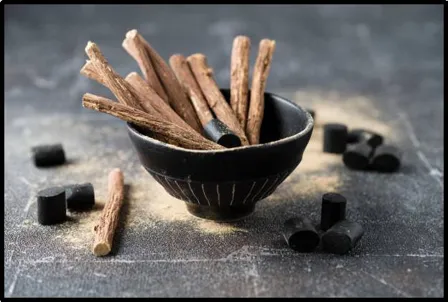
Figure 2: Mulethi (Glycyrrhiza glabra)
Main Active Constituents and Their Role:
Glycyrrhizin is one of the main active constituent of liquorice root, & it is responsible for its sweet kind taste. It has been studied a lot but still many things not clear, and it is known for anti-inflammatory, antiviral and immunomodulatory type properties [11]. It show anti-inflammatory effect by stopping formation of prostaglandins and reducing swelling in gums. It also has mild antibacterial and antiviral action (Fig 3).
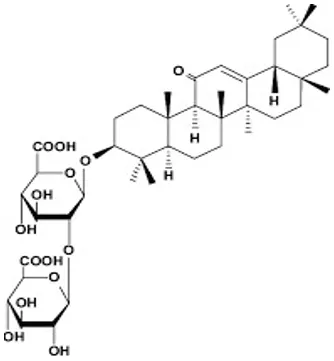
Figure 3: Structure of Glycyrrhizin
Liquorice root containing several flavonoids such as liquiritin, isoliquiritin, liquiritigenin and isoliquiritigenin. These flavonoids demonstrate antioxidant activity, and contributed to the anti-inflammatory and hepatoprotective effects of liquorice root [11].
Liquorice root contains triterpene saponins, such as glycyrrhizinic acid and glycyrrhetinic acid. They have an expectorant and anti-inflammatory action, whilst at the same time they may supply a certain amount of aid to the mucolytic activity of liquorice root [11].
Liquorice root contains polysaccharides such as licorice polysaccharides (LPs), which have immune-modulating actions and may increase the activity of macrophages and natural killer cells [12].
Liquorice root contain volatile oils like anethole, which gives it a characteristic aroma and also may have some antimicrobial properties inside it [11,12].
Liquorice root have different glycosides, including glycyrrhizinic acid glycosides, which can be contributing to its sweet taste and some medicinal properties of the liquorice root.
Characteristics:
It also contains the bioactive compounds of glycyrrhizin, liquiritin and liquiritigenin that helps with inhibition of pro-inflammatory mediators such as COX-2, TNF-α and IL-6. These phytochemicals help to minimize gum inflammation, redness and pain that arises with gingivitis. The relaxing effect also helps to reduce the inflamed gingival tissue and provides relief of inflammation [5,14].
Mulethi has profound antimicrobial effect on various oral pathogens like Streptococcus mutans, Porphyromonas gingivalis and Prevotella intermedia which are one of the major contributors for gingivitis and plaque. Mulethi reduce bacteria growth and prevent biofilm which help to prevents plaque accumulation and also support more healthy gingival tissues [5,13].
Mulethi is rich with flavonoids and phenolic compounds that showing strong antioxidant activity. These antioxidants helps to neutralizing the free radicals in the oral cavity, which is contribute to gingival inflammation and tissue breakdown. By reducing the oxidative stress, Mulethi is protecting the gum tissues from damage and support the gingival healing [5,14].
The saponins and flavonoids in Mulethi is promote faster healing of the inflamed gingival tissues. They helps in enhancing the collagen formation, epithelial regeneration and tissue repair, which is essential for recovering from the gingivitis- related damage. This also support in restoring the healthy gum structure [14].
Mulethi is widely used in mouthwashes, oral gels, herbal dentifrices and lozenges because of its soothing and protective effects on oral tissues. When applied topically in gel form, it help in reducing the inflammation, bacterial load and discomfort while support the overall gingival health [13].
Overall, Mulethi is a multi-action medicinal herb with significant anti-inflammatory, antimicrobial, antioxidant and healing properties, making it a promising natural ingredient for developing a herbal oral gel that is aim for managing gingivitis. Its safety, efficacy and broad pharmacological actions is contributing to its wide acceptance in oral care formulations.
Uses of Mulethi:
Liquorice root is a popular aid to calm digestive distress and discomfort such as heartburn, indigestion, nausea and gastritis. It have demulcent action that aids in coating stomach lining to reduce irritation and inflammation [5,14].
Glycyrrhizin prevents the growth and/or cause deaths of bacteria in the mouth that is responsible for causing tooth decay. It can be an active ingredient in natural toothpaste/mouthwash or for dental care to reduce cavities and gum diseases [5,14].
Liquorice root extracts have anti-inflammatory effect that may help to diminish inflammation in the body. Topically, it can be used to soothe skin irritations or taken internally to ease symptoms of inflamed conditions such as arthritis [5].
Liquorice root is known to be immune-modulating, which helps strengthen the body natural defenses against diseases and infections. It can be great as a preventative during cold and flu season, or used as therapy while you are in recovery from being ill [5,14].
4.2 Co-Active Ingredients:
4.2.1 Peppermint Oil:
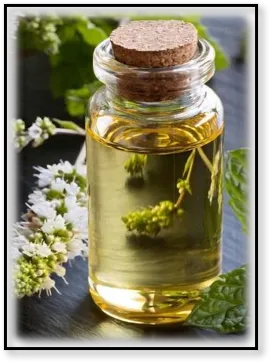
Figure 4: Peppermint Oil
Table 2: Scientific Classification of Peppermint
|
Botanical name |
Mentha piperita L. |
|
Family |
Lamiaceae |
|
Synonyms |
Balm mint |
|
Part which are used |
Leaves |
Constituent of Peppermint oil:
Uses:
Carbopol 934:
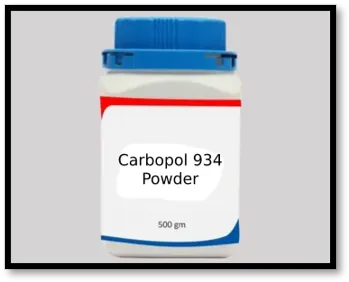
Figure 5: Carbopol 934
Sodium bicarbonate :
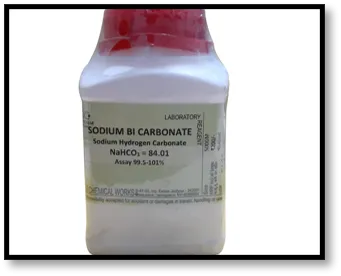
Figure 6: Sodium bicarbonate
Methyl paraben:
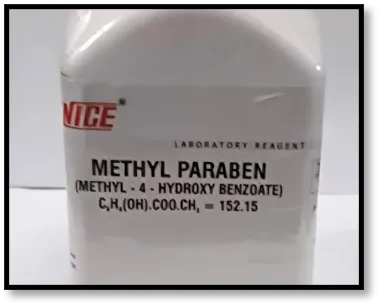
Figure 7: Methyl paraben
Propyl paraben:
Figure 8: Propyl paraben
4.4 ROLE OF INGREDIENTS: [33,34]
Table 3: Role of Ingredients
|
Sr. no. |
Ingredients |
Role |
|
1. |
Mulethi extract |
Active agent- antimicrobial, anti-inflammatory, antioxidant |
|
2. |
Peppermint oil |
Flavour and Fragrance |
|
3. |
Carbopol 934 |
Mucoadhesive polymer / Gelling agent |
|
4. |
Methyl paraben |
Anti-fungal preservative |
|
5. |
Propyl paraben |
Preservative |
|
6. |
Sodium bicarbonate |
Neutralizer & pH adjuster |
5. MATERIAL AND METHOD
5.1 SELECTION OF PLANTS: The plant selected for the present study was Mulethi (Glycyrrhiza glabra). It was selected on the basis of literature review because of its therapeutic properties and wide use in herbal preparations. Mulethi was used as the main active ingredient in the formulation.
5.2 COLLECTION OF PLANTS: The Mulethi (Glycyrrhiza glabra) roots were collected from Dholka, Gujarat, India. The collected roots were cleaned, dried, and powdered. The obtained powder was used for the preparation of the formulation.
5.3 AUTHENTICATION OF PLANTS: Plants were authenticated using its morphological, and physico-chemical parameters and maintained in the pharmacognosy department of school of pharmacy, Rai University, Dholka , Gujarat for further reference.
5.4 MATERIALS:
5.4.1 Apparatus:
• Beaker
• Glass rod
• Mortar pestle
• Conical flask
• Water-bath
• Measuring cylinder
• Weighing machine
5.4.2 Ingredients:
Active Ingredients:
• Liquorice root
• Peppermint oil
Excipients:
• Carbopol 934
• Methyl paraben
• Propyl paraben
• Sodium bicarbonate
5.5 FORMULA:
Table 4: List of contents of mulethi gel
|
Sr. No. |
INGREDIENTS |
QUANTITY |
|
1 |
Liquorice |
2 ml |
|
2 |
Peppermint oil |
q.s |
|
3 |
Carbopol 934 |
2g |
|
4 |
Methyl paraben |
0.2g |
|
5 |
Propyl paraben |
0.02g |
|
6 |
Sodium bicarbonate |
q.s |
|
7 |
Distilled water |
q.s |
5.6 METHOD OF PREPARATION OF EXTRACT
The extraction done by maceration technique which includes following steps:
Fresh mulethi roots were collected and cleaned. These roots were grinded into a paste which is then weighed.
↓
The powder of mulethi roots obtained by grinding and powder ingredients is placed in the glass container and solvent i.e., 300 ml of water is added ensuring that the powder is completely immersed.
↓
The container is then sealed to prevent evaporation and placed in cool and dark place for 2 days as the maceration process lasts for several days allowing solvent to slowly extract the bioactive compounds from the ingredients.
↓
After the maceration period the mixture is filtered to separate the liquid extract from the solid material. Filteration was done with the help of filter paper.
↓
This process was repeated for 2 more times i.e. after every filtration the residue was again immersed in 100 ml of water for the proper extraction.
↓
Filterate kept of water bath for 3 hours to concentrate the liquid extract.
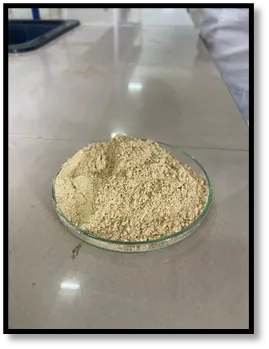
Figure 9: Liquorice root powder
5.7 Method of preparation of Gel
Preparation of Gel Base:
In a clean and dry container, add the required amount of distilled water.
↓
Slowly sprinkle Carbopol 934 into the water while stirring continuously to avoid clumping.
↓
Allow the Carbopol to hydrate for at least 1 hour until it forms a uniform gel.
↓
Once hydrated, add the herbal extracts (liquorice) to the gel base and mix thoroughly.
Incorporation of Active Ingredients:
Add peppermint oil to the herbal gel base and mix well to ensure uniform distribution.
Preservative Addition:
Dissolve methyl paraben and propyl paraben separately in a small amount of distilled water.
↓
Slowly add the dissolved preservatives to the gel base while stirring continuously to ensure even distribution.
pH Adjustment:
Gradually add sodium bicarbonate to the gel base while monitoring the pH using a pH meter or pH indicator strips.
↓
Adjust the pH to the desired range (typically around pH 6-7) by adding small amounts of sodium bicarbonate as needed.
Final Mixing:
Once all ingredients have been incorporated, mix the gel thoroughly to ensure uniform dispersion of all components
Table 5: Formulation of Herbal Gingivitis Gel
|
Sr. No. |
Materials Required |
Quantity to be weighed |
Batch 1 |
Batch 2 [Final Batch] |
|
1 |
Liquorice |
2 ml |
4 ml |
6 ml |
|
2 |
Peppermint oil |
q.s |
q.s |
q.s |
|
3 |
Carbopol 934 |
2 g |
2 g |
2 g |
|
4 |
Methyl paraben |
0.2g |
0.2g |
0.2g |
|
5 |
Propyl paraben |
0.02g |
0.02g |
0.02g |
|
6 |
Sodium bicarbonate |
q.s |
q.s |
q.s |
|
7 |
Distilled water |
q.s |
q.s |
q.s |
6. EVALUATION PARAMETERS & RESULT
The evaluation of Black catechu gel can involve various parameters to assess its quality, stability, and performance.
Table 6: Evaluation Parameters
|
6.1 |
Organoleptic properties |
|
1 |
Consistency |
|
2 |
Colour |
|
3 |
Odour |
|
4 |
Stickiness |
|
5 |
Homogeneity |
|
6.2 |
pH determination |
|
6.3 |
Spreadability |
|
6.4 |
Stability |
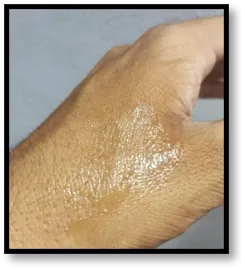
Figure 10: Application of gel on skin
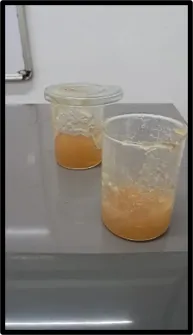
Figure11: Prepared 5% and 10% Mulethi Oral Gel Formulations
6.2 pH DETERMINATION: [37]
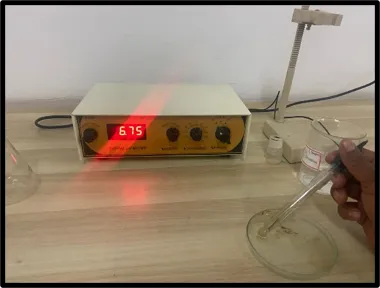
Figure12: PH
6.3 SPREADABILITY:
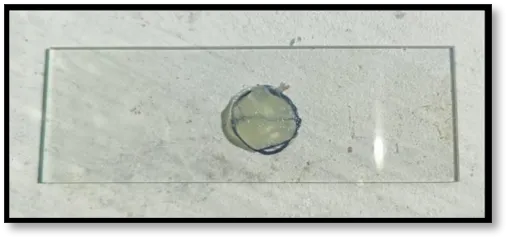
Figure 13: Spreadability testing
6.4 STABILITY TEST:
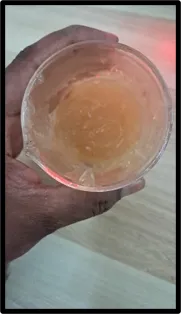
Figure 14: Product after formulating
6.5 RESULT:
Table 7: Result
|
SR. NO. |
PARAMETERS |
RESULT |
|
1 |
Consistency |
Good |
|
2 |
Colour |
Pale yellow |
|
3 |
Odour |
Slighty Sweet |
|
4 |
Homogeneity |
Good appearance + Aggregation |
|
5 |
pH |
6.75 |
|
6 |
Spreadability |
Easily spreadable |
|
7 |
Stability test |
Stable |
The present work on formulation and evaluation of a herbal oral gel containing Glycyrrhiza glabra for gingivitis are shows that herbal ingredients can really plays a useful role in oral care products. Gingivitis are a common gum issue that usually happens because of plaque buildup and bacterial growth, which lead to swelling, redness, bleeding, and discomforts in the gums. If it are not managed proper, it can slowly moves toward more serious periodontal problem.
In this study, the herbal gel was prepare successfully using suitable ingredients, and Mulethi extract was added because of its well-known medicinal propertys. The gel was tested for different quality parameter like pH, viscosity, spreadability, homogeneity, and appearances, and overall the results was found to be satisfactory for oral use. The pH was also find to be suitable for the mouth, which help in avoiding irritation and make it more comfortable for user.
The prepare gel showed good texture and was easy to applies, which help it stay in proper contacts with the affected gum area. The active compound present in Mulethi, especially glycyrrhizin, is mainly responsible for its antibacterial and anti-inflammatory effect. These property help in reducing bacterial growth, controlling inflammations, and supporting the healing of gum tissue, which overall improve oral health.
Overall, the study suggest that this herbal oral gel can be a safe and affordable alternatives to conventional chemical-based oral care products for gingivitis treatments. It also combine the benefits of traditional herbal medicine with modern formulation technique, which may improves patient acceptance and reduce side effect.
However, more detailed clinical study and long-term stability testing is still needed to fully confirms its effectiveness, safety, and practical uses on a larger scales.
REFERENCES



Kundan Gohel, Shivam Mali, Maurya Himanshui, Formulation and Evaluation of Herbal Oral Gel of Mulethi (Glycyrrhiza glabra) for Gingivitis, Int. J. of Pharm. Sci., 2026, Vol 4, Issue 7, 1300-1315. https://doi.org/10.5281/zenodo.21234217
 10.5281/zenodo.21234217